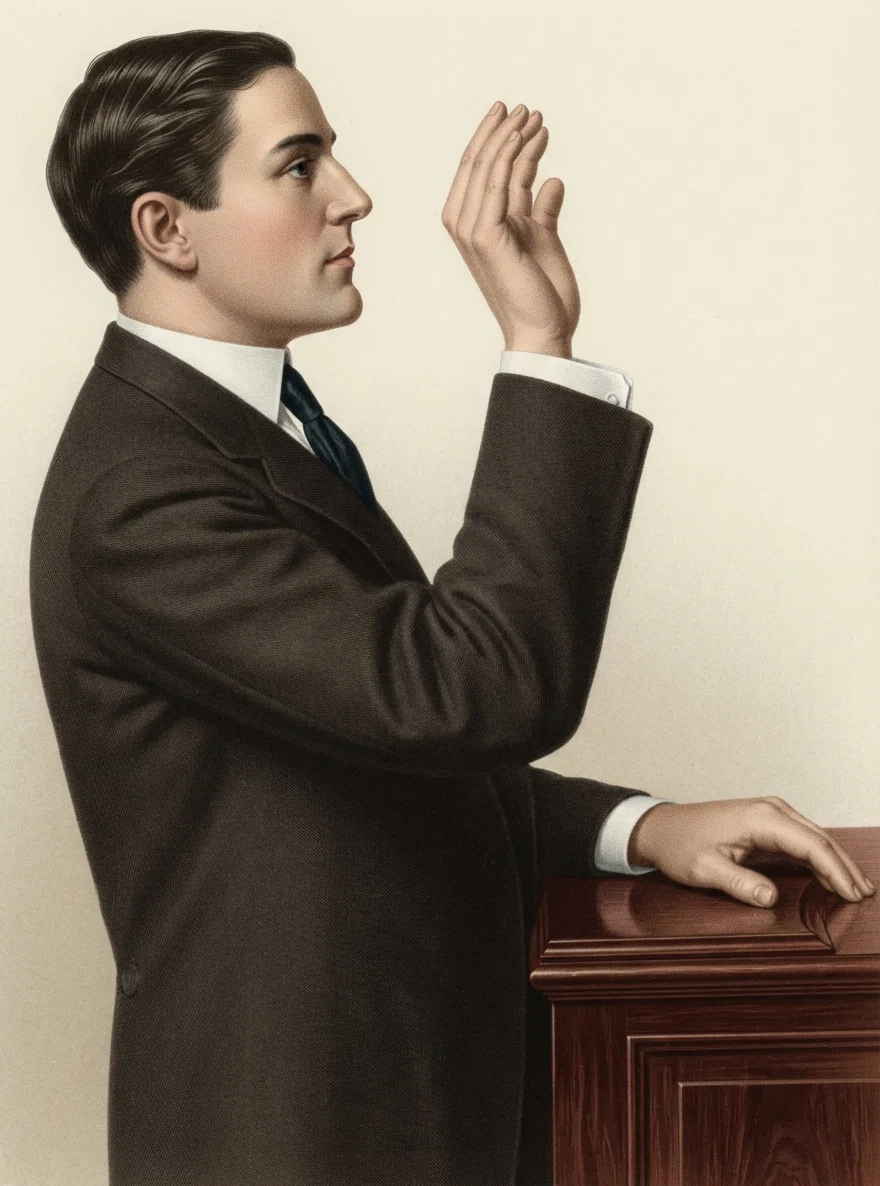
EVERY man has the natural, inherent right to live in peace and quietude the longest period of time natural law will allot to him under normal conditions.
He does not have inherent personal liberty to pursue a course of conduct that would shorten the days of his natural life, or the life of any other person; therefore we have municipal, state, national, and divine laws against suicide, fratricide, and all other commonly known forms of murder, each of which, simply stated, is only shortening the days of one's life or the life of another.
The fact that a means was used different from the usual, such as arsenic, ether, chloroform, the gun, or the dagger, to cause death, would in no way alter the decision of an unbiased court with the facts before it. Hence each state should have laws prohibiting also this form of murder.
The individual who is engaged in a traffic, or the state authorities who commercialize a business, that in the very nature of the pursuit dethrones reason, and shortens his own life and the lives of his customers, must stand criminalized, when tried before a national court of equity, for murder brought about by administering a cumulative poison.
Alcohol is a cumulative poison to every consumer. It dethrones the reason of the excessive consumer, hurling him headlong into untimely physical death and to eternal loss of soul. No man has a natural right to traffic in the bodies, minds, and souls of men — not even in his own.
Life and the normal use of the mind are natural rights that belong to every man. They are God-given; and no man should be deprived of them so long as he does not trespass upon the equal rights of other men. The man or woman who engages in the nefarious business of dealing out alcohol to his fellow men, is continuously trenching upon the rights of others.
The dealer in alcohol sets forth the claim that, being a free citizen, he has a right to traffic in alcohol for monetary gain so long as he pays his bills. Not so. He has no inherent right so to do. Is he entitled by nature to greater liberty and more personal right than are his customers? — No, he would not so claim.
To illustrate: A and B have equal rights to life, to liberty, and to their reason. A claims that he has the right to sell alcohol to B. B holds that he has the right to buy and drink it. A has the liberty to collect pay from B for the product. B, from personal choice, gives him money for and drinks the alcohol, but is deprived of his liberty to remain sober. Conclusion: A has taken from B his money, his liberty, his reason, his good name, his honor, his family's support and comfort, and in the final analysis, his life for time and for eternity. A has taken all this from B, under the pretext of personal liberty. He has no such liberty. God never gave such liberty to any man. Traffic in alcohol is simply robbing the man who purchases it, of his right to support his family, and to remain sober, retain his manhood, and live out his allotted number of days. From the standpoint of the rights and liberties of every man, which are equal by nature, no man has a natural right to be engaged in such traffic.
Dealer, would you have some one drop a weight on your head that would dethrone your reason, as you were on your way home from your daily vocation to greet a loving and expectant family?
Each lover of liberty should concede liberty to others. The love of money getting at the other man's cost, is the root of the alcohol traffic. Let us each live and contend for the liberty of the other man, possibly an unfortunate brother; and thus we shall come into living possession of a purer sort of liberty, more nearly that of the divine pattern.
"Whatsoever ye would that men should do to you, do ye even so to them."
"It is a fundamental principle of law that no man has a right to do that which injures another. But the men who drink liquor, invariably become an injury to others."
Passing the Painted Door
By John G. Wooley
WHERE the most men and the weakest men and boys must pass, the painted door is set swinging, to catch the poor, the ignorant, the reckless, the homesick, the discouraged, and silently shut them into the reek of a leprosy that eats off the fingers of opportunity, eats away the lips of truth, eats out the eyes of ambition and the heart of hope. Just at the point where Christian civilization ought to brace and cheer a faltering man, it shunts him downward, by the legalization of the saloon.—John G. Wooley.
"A LICENSED bar is not a kindergarten of sobriety."
They Are Partners
THE burial services of a drink victim were being arranged. The list of pallbearers was submitted to the bereaved wife. She stoutly objected to three men named, saying, "They helped kill my husband by voting for saloons." Their names were stricken from the list. Some said,
"She is hysterical and unreasonable." In point of fact, was she? Criminal law holds whoever aids an actor in destroying human life, as party to murder. Voters create saloons, and make saloon keepers, else there would be none. Don't let that fact escape your mind.
The Absurdity of It
"How absurd it is to license a man to make men drunk, and then fine men for getting drunk! I heard this illustrated many years ago, and I know no better illustration of the inconsistency of the policy. A man said it was like licensing a person to spread the itch through a town, and then fining the people for scratching. Suppose a man applied for a license to spread hog cholera throughout this country. Would you give him the license?—No. He could not bring enough money into the country to purchase a license to spread disease among the hogs. Why, then, will you license a man to spread disease among human beings—a disease that destroys the body, robs the mind of its energy, and undermines the morals of man?"
BECAUSE you cannot prohibit murder, why not license it?
Saloon Voters and Saloon Keepers
By Dr. J. H. Gambrell
Are people responsible for their deliberate acts? Are they responsible for the natural results of their acts? A "Simple Simon" must answer affirmatively. The laws of God and man hold that what one does through another, he does himself. Saloon keepers are agents of saloon voters. There is no escaping that fact, discreditable though it be to thousands who "stand well." Every saloon, and its output, represent each voter that helped create it. Saloon keepers and saloon voters are partners. No saloon voters means no saloons.
The law of equity — unbiased justice — ought to control human judgment and conduct. Is it just to outlaw and unauthorize saloon keepers, religiously and socially, while maintaining fellowship and comradeship with their partners? By what process of reasoning is the unjust, illogical thing done? The widow knew who helped kill her husband. She knew it just as she knew two and two make four. It is not just to denounce and ostracize saloon keepers, while making boon companions of their partners. Certainly the widow did right to object to murderers of her husband being made companions at his burial. There are others like her needed.—Dr. J. H. Gambrell.
“WE hang the murderer, jail the thief and the drunkard, but license the manufacturer of murderers, the makers of thieves and drunkards, and furnish the raw material from our homes out of which the thief, the drunkard, and the murderer are made.”
Shall We License Thievery?
THE laws of the country prohibiting stealing do not entirely prevent stealing; but nevertheless, I am opposed to licensing stealing, providing that all theft shall be restricted to certain authorized thieves, who can steal only between the hours of six A. M. to eleven-thirty P. M., except Sunday, when no stealing shall be done except by stealth, and entrance be made in all cases on that day by the back door, and at the thief's risk. I believe in laws that absolutely forbid theft at any hour, on any day of the week; and on the same ground, and just as positively, I believe in prohibition of the liquor traffic.
I do not know one good thing about a saloon. It is an evil thing, that has not one redeeming thing in all its history to commend it to good men. It breaks the laws of God and man; it desecrates the Sabbath; it profanes the name of religion; it defiles public order; it tramples underfoot the tenderest feelings of humanity; it is a moral pestilence that blights the very atmosphere of town and country; it is a stain upon honesty, a blur upon purity, a clog upon progress, a check upon the nobler impulses; it is an incentive to falsehood, deceit, and crime.—Bob Burdette.
If a tiger were after my boy, I would rather have a blind tiger than one which could see. Wouldn't you? If a tiger is blind, you must look it up. If it can see, it can look you up.
"YOU shall not press down upon the brow of American homes the crown of thorns plaited by the hand of the liquor traffic; you shall not crucify man upon a cross of high license."
Ferocious by Nature
"WHEN people speak of a place where liquor is sold without a license, what name do they use? Do they call the place a blind sheep or a blind goat? — No; they call it a blind tiger. They name it after an animal that is ferocious by nature. They know the nature of the saloon. Well, if a tiger were after my boy, I would rather have it a blind tiger than one which could see. Wouldn't you? If a tiger is blind, you must look it up. If it can see, it can look you up. The man who sells without a license must dodge around and keep himself concealed. The licensed saloon plants itself in the most conspicuous place, and sends out its invitation to all."
THE man who violates the liquor laws is not a Republican or a Democrat, but a criminal.
An Unprecedented Boom
By C. S. Longacre
C. S. LONGACRE
If the liquor money could be turned into legitimate and honorable American trades and industries, it would produce the greatest financial boom that this country has yet seen. The wheels of every factory and industry in America would buzz with activity; the marts of trade and commerce would be booming with merchandise; and the universal cry would not be, "Give me a job," but, "Give us more men." Only about five per cent of the money spent for liquor returns to the masses of the people and enters again into the legitimate channels of trade. The other ninety-five per cent goes to the liquor trust, and the government, to pay the salaries of the officials who collect the revenue and look after the criminals, paupers, insane, orphans, and other victims of this infernal business.
AGAIN and again we hear it said that "prohibition does not prohibit." Is it ever suggested that regulation does not regulate?
The Real Culprit
By A. C. Bane
IT is a worse offense to vote to license a saloon than it is to keep a saloon after it has been authorized by the people. The voter is the creator of the saloon, and the creator is more responsible than his creature. I would rather take my chances at the judgment bar of God with the saloon keeper than with the man who voted to make his saloon possible. We curse the saloon keeper for the evils that come from the saloon; the real culprit is the voter who gave him a license to run a saloon, and the government which shares the loot and divides the blood money with the maker and vender of the liquor. —A. C. Bane.
"JUST as surely as God is just, both the voter for the saloon and the drunkard will go to the same place at the last day."
A Colossal Crime
By Ervin S. Chapman
DRUNKENNESS is bad, drunkard making is far worse, governmental sanction and protection of drunkard making is infinitely more shameful and wicked. But for civil government, the divinely appointed agency for the promotion of human welfare, to attempt to make lawful, and to afford its protection to, the unspeakably infamous work of drunkard making, because the drunkard maker pays for permission to conduct that work, is a reproach and a disgrace the extent and depth of which cannot be expressed in human language. It is the colossal crime of the ages, the monstrosity of human history.—Ervin S. Chapman.
"THE United States Supreme Court says that 'no man has a natural right to sell liquor.' Yet we grant men a permission to do what they have no right to do."
A WORD TO OUR READERS
By Editor
We send no papers from this office to individuals without pay in advance. When persons receive copies without ordering them, they are sent by other parties, and we can give no information in regard to them. Persons thus receiving copies of the SIGNS are not indebted to the office, and will not be called upon to pay for them. Please read the papers you may receive, and hand them to your friends to read.
DATE OF EXPIRATION
The SIGNS wrapper bears date of last issue due on your subscription. Unless renewed in advance, paper stops with expiration date.
If herewith is an order blank, you will know you have overlooked sending renewal. You will not wish to miss a single issue. Back numbers often cannot be furnished.
SCRIPTURE QUOTATIONS
Our authority for the doctrines we teach is the Bible. Quotations are usually from the King James Version or the American Standard Revised.
FOR A GREATER FREEDOM
By M. C. W.
Is it not peculiarly fitting that July 4 should have been selected as the date on which to publish an issue of this journal devoted exclusively to the great prohibition movement that is in progress in this country? The fourth of July stands as a memorial of one of the greatest events in the history of nations. Great leaders in the cause of liberty had been working in England, Holland, Germany, and other countries of Europe; and their sentiments spread to this fair land, and took root strongly.
A nation was born, holding in its bosom the great results of the struggles of centuries. The tyrannies and the despotism of rulers was that against which the work for freedom had been waged; and a great nation emerged from the conflict, standing upon the broad principles of independence, efficiency, progress, and power. Freedom was granted to the individual to develop to the very best of his inherent powers his religious, moral, social, and physical life.
But another struggle is on. A greater freedom is needed for the human race. It is not freedom from tyrannical and despotic rulers; but it is freedom from the worst despot that has ever cursed humanity, and that is old King Alcohol himself.
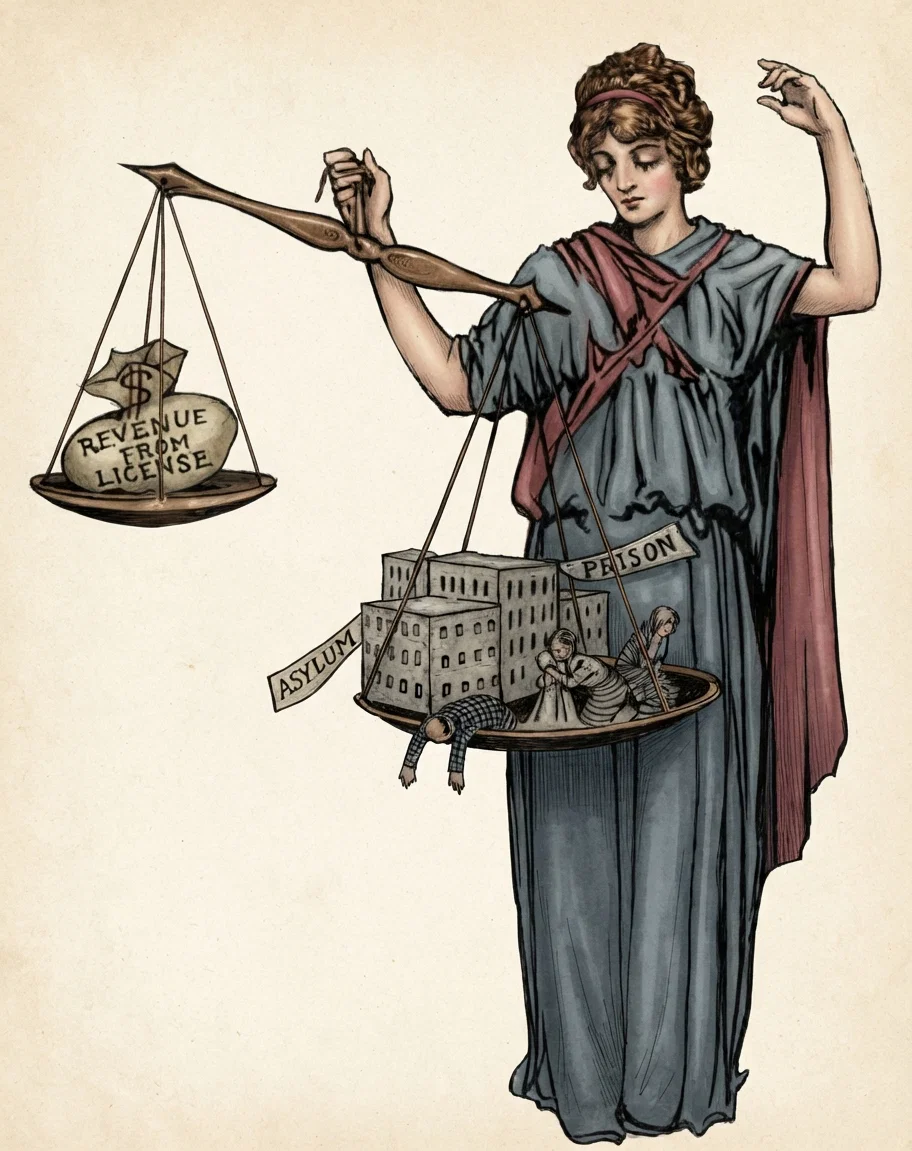
WEIGHED AND WANTING
The tyrant of rum not only holds the men of to-day over whom it can wield its power, but it reaches out into the future, to curse the children that are yet unborn. On this great Independence Day, let the hearts of all true lovers of liberty be gripped by a determination that will cause them to move forward to the still further liberty which will free our nation from the tyrannies of rum.
LIBERTY OR LICENSE?
PERHAPS one of the strongest appeals made by the liquor interests is on the ground of personal liberty; but really, what they mean by personal liberty is that the drunkard may be at liberty to drink, and that the liquor men may be at liberty to sell strong drink and make great hoards of money, regardless of the personal liberty of others.
In speaking for liberty, they appeal to a very popular sentiment in the mind of man; but true liberty is far broader than they represent it. It will grant the child of the drunkard bread enough to eat, and clothes enough to wear; it will grant that the drunkard's wife have a little rest and recreation from the grinding work of the washtub, and other hardships and perplexities that her drunken husband would impose upon her. Personal liberty implies freedom to receive and enjoy the eternal salvation of Christ, which the divine Book says is denied to "fornicators," "idolaters," "effeminate," "abusers of themselves with mankind," "thieves," "covetous," "drunkards," "revilers," and "extortioners." See 1 Cor. 6: 9, 10.
Note the company this Bible text places the drunkard in; and everybody knows that the text has it right. Drunkenness, adultery, covetousness, extortion, and all the rest of the list, go along with the drunkard. Personal liberty includes the privilege of being free from such things. Prohibition, then, stands for the personal liberty that is denied to a great class of individuals by the liquor interests.
A personal liberty that allows one individual to restrict and override the liberty of another is no personal liberty at all; it is marauding barbarism. It is on the same basis exactly as the personal liberty of the wolf that demands freedom to eat the lamb. The wolf may be at liberty; but what about the poor little sheep? The personal liberty of the liquor interests is on a par with that of the cannibal who demands freedom to eat his neighbor. Such undeniable facts show unmistakably that the liquor men have no argument at all. Every man's personal liberty ends where the other man's rights begin. Personal liberty is not license.
ALCOHOL THE SOUL DESTROYER
THE worst results of the use of alcoholic liquor are not physical or financial, bad as these are; yet either of these should be a decided deterrent or prohibition to its use.
The worst of all is alcohol's effect upon the morals. The narcotizing influence of the poison affects all the finer sensibilities of the moral nature. It benumbs and perverts them. The victim cannot "see straight"; he therefore cannot think straight. His mental and moral vision is corrupted, perverted, debased. His judgment is unbalanced. He may be as poor as poverty; he thinks himself rich. He may be weak; he thinks himself strong. He cannot see truth, and therefore he cannot know right. He has placed his soul in a perverted and perverting medium, and drifts on to destruction.
The holiest of home relations become a thing of naught. His ardent, heartfelt pledges to his wife are forgotten. His love for his children dies. He will sell the clothes off their backs, their beds from under them, their food from the table,—everything, in fact,—that he may feed the accursed demon which holds him enthralled.
How many of the perversions of theology there are to-day are engendered by men who drink wine! God's priests of old offered "strange fire" under the influence of wine drinking. How many of them are doing it to-day! It is useless to enlarge. All whose moral vision is not perverted, know that the moral effects of alcohol upon the soul of man are deceptive, debasing, disintegrating, devilish, destructive.
It is because of the fearful effect of drink on conscience and soul, that God places the drunkard in the category of those without hope, and issues His decided warnings against its use. Read these among many. To His priests He said: "Drink no wine nor strong drink, thou, nor thy sons with thee, . . . that ye may make a distinction between the holy and the common, and between the unclean and the clean; and that ye may teach the children of Israel all the statutes which Jehovah hath spoken unto them." Lev. 10: 8-11.
Through the wise man, who had experienced its evils in his own life, came these warnings:
"Wine is a mocker, strong drink a brawler; and whosoever erreth thereby is not wise." Prov. 20: 1. "Who hath woe? who hath sorrow? who hath contentions? who hath complaining? who hath wounds without cause? who hath redness of eyes? They that tarry long at the wine; they that go to seek out mixed wine. Look not thou upon the wine when it is red, when it sparkleth in the cup, when it goeth down smoothly: at the last it biteth like a serpent, and stingeth like an adder."
HOPE FOR THE DRUNKARD
Yet there is hope—hope in Him who can save from sin, who can create anew those who will die to self, who will yield all to Him, and let Him cleanse and re-create the soul and body which alcohol has wrecked. For thus the apostle says to those whom sin made wrecks in Corinth: "And such were some of you." Some of them were fornicators, some of them were extortioners, some of them were drunkards; but he continues: "But ye were washed, but ye were sanctified, but ye were justified in the name of the Lord Jesus Christ, and in the Spirit of our God." 1 Cor. 6: 11.
Prohibition may compel the soberness of the drunkard—thank God for that!—but it cannot save him. But in that soberness, the drunkard may come to Christ, the drunkard's Friend, and find hope and salvation. "And this, knowing the season, that already it is time for you to awake out of sleep: for now is salvation nearer to us than when we first believed. The night is far spent, and the day is at hand: let us therefore cast off the works of darkness, and let us put on the armor of light. Let us walk becomingly, as in the day; not in reveling and drunkenness, not in chambering and wantonness, not in strife and jealousy. But put ye on the Lord Jesus Christ, and make no provision for the flesh, to fulfill the lusts thereof." Rom. 13: 11-14.
These are the warnings of God, the great Judge, before whose tribunal all must come. These are the gracious God's invitations to us to come to Him while there is hope. He would stoop down and take us by the hand, and lead us to the light, to hope, to salvation from sin, to cleansing from iniquity, to a peace and joy that alcohol cannot give even temporarily, to blessed life and activity in the service of liberty, forevermore. M. C. W.
Revenue Is Blood Money
By George B. Thompson
THE claim is sometimes put forth that the saloon keeper and the brewer are the revenue producers. But they are not. They merely collect the revenue. The men who drink the accursed stuff are the ones who are the real revenue producers. Revenue is blood money. It represents the life, the tears, the agony, of tens of thousands of widows and orphans left to struggle alone with poverty, the husbands and fathers having gone down prematurely into drunkards' graves, lost forever. For a government to attempt to live upon such revenue is like a man living upon the blood sucked from his own veins. G. B. T.