Your ShelfYour Projects

Signs of the Times, Prohibition Special

A Bloody Record
Earlier text: The Liberty of the Other Man

Prohibition's Onward March

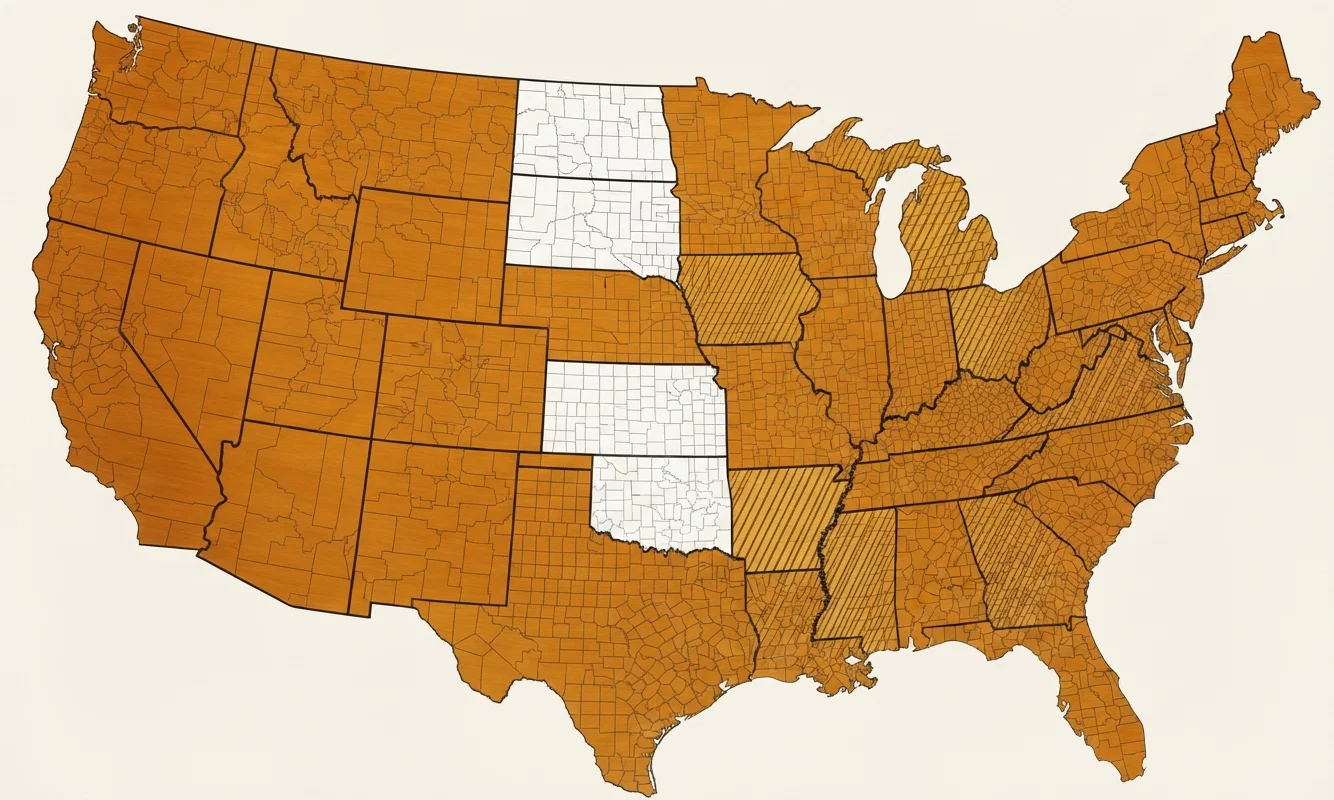
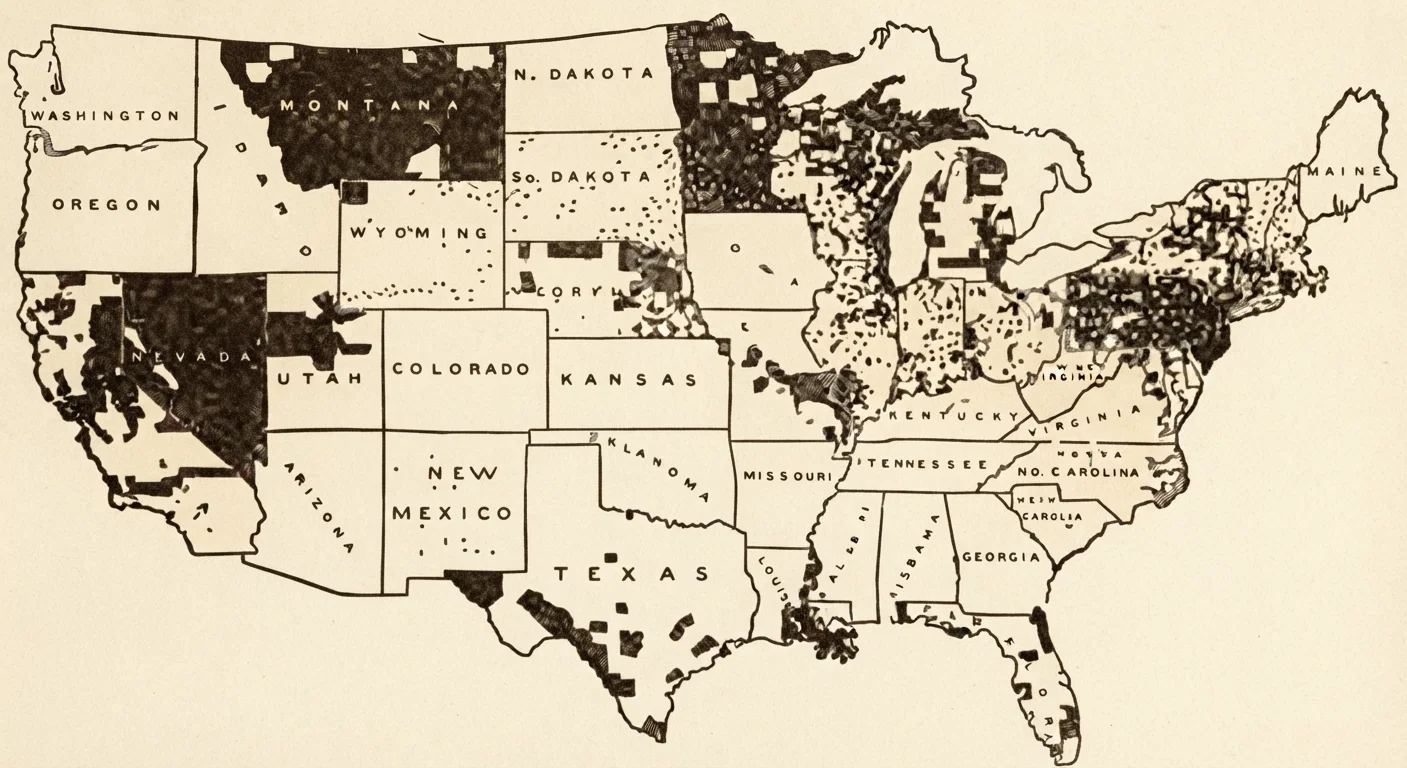
Left: Wet and dry map of the United States by states, January 1, 1893.
Right: Wet and dry territorial map, January 1, 1916. Such is the progress of prohibition.
Sixty million people in the United States live under prohibition laws.
One half of all the people now living in licensed territory in the United States live in four states,— New York, Pennsylvania, Illinois, and New Jersey.
One half of all the saloons in the United States are located in fourteen cities.
There are fewer saloons south of Mason and Dixon's line than there are in the city of Chicago.
Thirty-six states of this Union have fewer saloons in the aggregate than the city of New York.

Prohibition's Onward March

Eighty-Eight Empty Jails
The Hon. Arthur Capper, governor of Kansas, says:
In assessed valuation, prohibition Kansas not only is the richest state, but the assessed value of wealth is twice as high in Kansas as in the United States as a whole. It is of record that no state in the Union has a higher per capita of wealth or a lower per capita of liquor consumption.
The per capita liquor consumption in the whole country is $21. In Kansas it is $3.04. Thus Kansas saves thirty million dollars every year directly through prohibition. The indirect gain is not subject to computation, but is certainly greater still.
Kansas is not usually counted among the great manufacturing and industrial states, and it cheerfully admits that agriculture is its chief resource; but Kansas, by the last census, was the fourteenth manufacturing state, and its manufactured output was larger in value in proportion to the people employed in manufacturing enterprises than that of any other state except one. The Sante Fe Railroad says that labor is more efficient in Kansas than in other states traversed by this great system.
Putting the facts concretely, Kansas is —
The state which sends more boys and girls to university, college, and public school, in proportion to population (census 1910), and fewer men and women to prison and jail, than any other state in the Union.
The state which has the lowest percentage of crime, poverty, immorality, insanity, imbecility, and drunkenness.
The state which has the highest per cent of home owners. The last census showed Kansas first in home-owning citizens.
The state which has the largest per capita of wealth — $1,629.61 for every man, woman, and child within its borders.
The state in which banks and not saloons cash the workingman's pay checks, the same banks which in 1907, the panic year, sent the East fifty million dollars.
The state with fewer millionaires and fewer paupers than any other state.
The state which has one of the lowest death rates in the United States, only seven to the thousand, a percentage constantly decreasing.
One of the two states of the Union having the smallest number of persons who cannot read and write — less than two per cent of its population.
The state which was first successfully and completely to wipe out the abominable saloon traffic.
The state which for thirty-five years has not had a legalized saloon nor brewery, and now has eighty-eight city and county jails that are empty, thirty-two counties without a pauper, forty-eight counties out of one hundred and five which did not send a prisoner to the penitentiary last year, and twenty-two counties in which there have been no criminal prosecutions for more than a year.
Thirty-two counties in Kansas abandoned their public farms last year. According to the latest report of our State Board of Control, only 898 paupers were being cared for at county institutions.
When we banished the saloon in Kansas, the licensed segregated vice district went with it. Then we realized, as we never had before, that the saloon was and had always been the breeder of the gambler and the prostitute. The gambling house and the house of prostitution are so closely connected with and so dependent on the saloon, that when the saloon is compelled to move out of a community, they must go, too, as they have gone in our state. As Governor Stubbs, a former governor of Kansas, has said before me, prohibition is the doctrine of self-defense.
Every governor of Kansas for twenty years has said that prohibition is a great success.
Every state official who has spoken says that prohibition succeeds.
More than seven hundred Kansas editors and newspaper men in the state convention unanimously indorsed prohibition.
Every political party in Kansas favors the prohibitory law.
No minister in Kansas ever opens his mouth in favor of returning to the licensed saloon, nor any teacher.
The mothers of Kansas say they are satisfied to have their boys grow up without seeing the open saloon. They are not demanding that saloons be licensed in Kansas.
The president of the Kansas Retailers' Association says that prohibition pays.
The temperance society of the Methodist Church asked bank presidents in Kansas what they thought of prohibition. One hundred and sixty-six favored the law, while only six expressed doubts of its wisdom.
During its last session, the legislature, by unanimous vote in both houses, went upon record in a series of strong resolutions telling what prohibition has done for Kansas, and emphatically approving it.
Saloon cities which send out advertising literature do not boast of the large number of saloons within their borders, but cities in Kansas put "no saloons" first.
The desire of the people of Kansas is that you shall hear and know the truth about Kansas under prohibition, and then draw what conclusions may to you seem warranted.
If Russia can abolish a $450,000,000 per annum revenue from drink, while engaged in the most devastating war in history, and yet declare the surpassing prosperity of her people, it would seem that the United States, which claims to be civilized and Christian, would abolish her revenue of less than half that amount in time of peace.
© Underwood & Underwood, N. Y.

Never Again!

RUSSIA is so well pleased with the results of the prohibition of the manufacture and sale of vodka, the Russian national drink of the past, that she says its sale will never again be permitted. Prohibition in Russia has proved to be one of the greatest reforms in the history of the country, equaling if not exceeding that of the abolition of serfdom in 1861.
Since the outbreak of the war in 1914, at which time prohibition went into effect, the nation has been transformed mentally, morally, physically, and financially, almost beyond recognition. And why?—Because the consumption of vodka decreased in one year ninety-eight per cent. Those who have investigated for themselves say the change is marvelous, almost beyond comprehension. The number of professional beggars has been reduced about seventy per cent; crime has decreased two thirds in most places, and has disappeared entirely in others; prostitution has dropped almost one half; efficiency in all lines of work has greatly increased, and wages have been raised accordingly; savings deposits have risen enormously, being $12,150,000 more in the month of September, 1914—only a few weeks after the new order of things began—than for the same month the year before.
The story of Russian prohibition is truly stranger than fiction. The blessings that have come as a direct result of this wonderful temperance reform would fill more than one volume.
Although the prohibition of the manufacture and sale of vodka took from the Russian government a yearly revenue of $451,980,000, the officials are more than satisfied with the change. M. Bark, minister of finance, in behalf of the government, says:
"I find it necessary to announce categorically that all suspicions that the government intends to renew the sale of vodka, are unfounded. I categorically announce that the government will support prohibition, and that there is no chance of a return to the former state of affairs."
At another time, this same prominent government official gave still another reason for the continuance of prohibition, in the following statement:
"If I should propose to annul prohibition, there would be a revolution in Russia."
Dr. Rudnev, vice secretary of the Imperial Academy of Sciences, is reported to have said:
"Any one agitating for the return of drink in Russia ought to be lynched."
Even the terrible war is considered a blessing; because it brought prohibition. One of the peasants expresses his sentiments thus:
"The war has taken much from the village, but has replaced it by something new and beautiful; we see each other always sober."
China rose up and swept the opium industry off her map with astonishing celerity. The stroke of a pen has changed Russia from drunkenness, crime, and poverty to a sober, law-abiding, prosperous nation. Shame on us if we allow China and Russia to lead us longer in the matter of reforms! Let us strike this terrible drink curse, and strike it hard, and continue to strike it until it disappears forever from our fair land!
"The purpose of all government is the preservation of the public morals, the public health, and the public peace. But the liquor traffic destroys public morals, health, and peace."
Page 14
Page 14

Sober Facts for Grape Growers

STRONG moral and financial influences are working against the wine grape business, and it is decreasing in California. A few large manufacturing growers make all the money at present, and are raising all the fuss against prohibition.
Profit of the ordinary grower per acre is generally $0.00, minus the value of his labor. See Prof. F. T. Bioletti's statement in State Horticultural Commission bulletins for March and April, 1913.
Even successful manufacturing growers have had to depend largely on Asiatic and pauper labor to make a good showing. The future of the industry depends on increase of pauper labor and lowering the per capita wealth of the state. It cannot pay the American unemployed a living wage. In many cases, to let the hogs pick the grapes is the only way to make the grapes pay for the picking, such are the low prices offered.
Grape sirup, which can be made with simple apparatus, will net the grower more than wineries pay at present. Alfalfa, a quick-growing crop, will nearly everywhere yield more to the grower than wine grapes ever do, even when fully established. Wine grape stock can be profitably grafted with other grapes, even if prohibition fails to carry.
Regular prices of wine grapes are from $6.00 a ton ($30 an acre) to $22 a ton ($66 an acre), with next to no profit at best, while table grapes sell at not less than $30 a ton ($150 an acre), and give a good return. Profit on raisin grapes to the grower is from $12.50 to $135 to the acre. (Bioletti.)
In fewer years than the wine industry has had for growth, with no particular favor from the viticultural commission, with less acreage still than the wine vineyards, raisin and table grapes yielded a gross income of about $20,000,000 last year, as compared with less than $6,000,000 from wine manufactures. Of the former sum, a good profit went to the growers, while the payment of about $3,000,000 to the wine grape growers for their crop left them no profit at all.
The saloon is the indispensable vehicle of the white slave traffic; and without the saloon, the traffic could not endure. When the saloon was banished from Kansas, the licensed segregated vice district went with it. The dens were closed and boarded up.
Demand for raisin and table grapes is increasing, and may keep on indefinitely; while demand for California wine, to judge by output, is growing less and less. It is only inertia that now keeps the wine grape grower who is not also a distiller from changing to other crops. Thousands of acres in different parts of the state are being turned over from wine grapes to orchard and forage crops.
The last acre of the Vina Vineyard, in Tehama County, once regarded as the largest in the world, and till lately second in the state, was turned over to forage crops in April, because thirty years' trial has proved that wine grapes do not pay.
Even taking the liquor men's claim of $150,000,000 for the value of the wine industry investment at a conservative discount of 50%, and assuming two thirds of that to be in land value, it may be calculated that while 2.5% of the land value of the state (about 1.3% of improved farm acreage) is devoted to wine grapes, it is yielding the agriculturists only 1.5% of the total crop income—and that without margin of profit, be it remembered. This is a relatively small item, but it represents just so much waste.
Prohibition in the state works to increase the sale of harmless orchard products,—fruit juices, and canned, dried, and fresh fruit. Where harmful luxuries go out, helpful ones come in.
Alcoholic wine is a curse, and not a temperance drink. The sparkling products of the grape do more than their share in greasing the flume that speeds youth of both sexes to the maw of vice.
"We stand for the total abolition of a system inherently wrong, not for its reformation."

Among the Newspapers

METROPOLITAN dailies like the Philadelphia North American, the Chicago Herald, the New York Tribune, the Boston Record, the Kansas City Star, the Los Angeles Express, and more than eight hundred other papers having a combined circulation of more than five and one half million copies a day, together with hundreds of weekly papers, and the great majority of the magazines, refuse to accept any advertisements of alcoholic liquors.
"When the partnership of the liquor traffic with the civil government is dissolved, then those who ruin their fellow men by the sale of liquor will be alone responsible for that crime."
"It is not true that 'if you let the saloon alone, it will let you alone.' The saddest victims of its pitiless power are women and children who never cross its slimy threshold."

Portland's Forward Step

Mayor H. R. Albee of Portland
IN police circles, most tangible results are in evidence. The records show for the first two months of 1915 a total of 1,789 drunks and vagrants arrested; for the same period in 1916, a total of 450 arrests. Both county and city officers have been on the alert for violations; and where these have been discovered, if followed by convictions, as has been largely the case, heavy fines and jail sentences have been meted out.
As indicative of the business situation, a prominent merchant has just declared to me that collections are much better now than prior to the advent of prohibition; and, of course, I know this to be entirely true of general business. All the arguments that were used to defeat the prohibition measure, with which we are all so familiar, have proved to be no arguments at all, and have been thrown into the discard, never being referred to just now. I am reliably informed, for instance, that business men—merchants, etc.—are enjoying a greater volume of trade than formerly, financial conditions being considered, traceable to prohibition enforcement.
PROFITLESS WINE GRAPES
Men who used to drink up their earnings are now buying food and clothing and other necessities for their families. Stores with clean, new stocks are taking the place of old buildings which were formerly rented to saloons. Some of these ancient shacks, which could be rented only for saloon purposes, have been torn down, and replaced with new and substantial types of buildings.
As to moral conditions, they are much improved also. Underworld characters, both men and women, have been leaving Portland for other fields more to their liking, thus ridding this city of their presence and the results of their illegal workings.
There is no denying or gainsaying the good that is to result to this community from prohibition. The citizens cannot yet comprehend what a great forward step they have taken in this regard. It is one of the most wonderful advances Oregon ever made.
"The undeviating trend of civil government in the direction of human deliverance from the curse of the licensed rum shop must continue until that unspeakable iniquity is forever at an end."

Why Prohibition?

"BECAUSE it gives the drink-maddened man an opportunity to escape from the thraldom of the liquor traffic.
"Because it erects a barrier between the unpolluted lips and the intoxicating cup.
"Because it severs the shameful partnership between the government and King Alcohol.
"All who have the welfare of humanity at heart can ask for nothing else than the utter abolition of the traffic. May God hasten the day when the nations of both hemispheres shall be divorced from the infamous business of making drunkards."
"WE should demand that civil government perform its proper function of branding the liquor traffic as an outlaw, and driving it from beneath the protection of the law."

"And . . . He showed me the holy city." Rev. 21:10.

Large pictures of this subject 16 x 24 inches, printed on heavy coated paper. Sent postpaid in heavy mailing tubes for 15c or two for 25c. Address RENNINGS Pacific Press Mountain View, Cal.

AN OPPORTUNITY

TO DO MISSIONARY WORK

IN response to calls that appeared in the Coöperation Corner of the SIGNS bearing date of May 2 and 9, for donations to supply clubs of SIGNS to use in evangelistic efforts during the summer months, something like a score of workers have been supplied. We still have urgent calls we are unable to fill. We give a list of these below:
CLUB TIME CLUB TIME
Stemple White, Duluth, Minn. 50 3 mos. $15.00 J. D. Alder, Eureka, Cal.
G. A. Stevens, Morgantown, W. Va. 125 3 mos. 37.50 F. W. Rowland, St. Charles, Mich.
Sydney Scott, Memphis, Tenn. 100 3 mos. 30.00 J. C. Lawrence, Louisville, Ky.
Prof. Russell, Fallon, Nev. 15 3 mos. 4.50 B. F. Kneeland, Dubois, Pa.
O. F. Front, Lake Charles, La. 15 3 mos. 4.50 F. N. Johnson, Richmond, Va.
E. W. Wolfe, Cresco, Iowa. 100 3 mos. 30.00 C. H. Rittenhouse, John Day, Ore.
E. W. Catlin, Portland, Ore. 75 3 mos. 22.50 New York City,
Some of the above laborers have already begun their meetings, and are exceedingly anxious to have a good club of the SIGNS to use from the very beginning of their efforts. We hope that many will respond to these urgent calls for literature. JAMES COCHRAN, Circulation Manager.

Support Prohibition's Onward March!

"NO SALOON" TOWN

MOUNTAIN VIEW, California, located in the beautiful Santa Clara Valley, is one of the many "no saloon" towns that are looked upon as ideal places for a home. Especially is this true of persons who desire to live in a quiet community. Since the saloons have departed, the business blocks and streets have been greatly improved, and the residence section is filling up with very desirable citizens. As to the educational advantages, this goes without question, — a well equipped union high school and grammar school; also an intermediate S. D. A. school in town.
My object in mentioning the above is to call your attention to the fact that located here in this ideal town of health and happiness, I own a modern six-room cottage, which I am offering for sale at a very reasonable price. The lot has a 100-foot front, cement walks, fence, lawn, some thirty choice fruit trees, besides shade trees, berries, etc. This place is six blocks from the center of town, in an excellent community. Compared with other property values, it is well worth $2,500, but $2,250 will buy it. For further particulars, address E. F. Counter, 339 Mountain View Avenue, Mountain View, California.

California Dry, 1916—If So, Why?

WILL H. SPICER
BECAUSE those who've tried it, say "the water's fine."
Because the proposed laws are effective without being violent.
Because a dry state attracts more and better class immigration.
Because the state remembers prohibition in San Francisco A. D. 1906.
Because "Prohibition is a step of progress" is getting to be axiomatic in the West.
Because 355,000 who voted for California dry in 1914 will vote that way again.
Because the mothers of California have glimpsed a clean future for their children.
Because the reputation of some California cities has hurt the state as a whole.
Because business is getting down on "booze," and the "bums" it makes don't recommend it.
Because the place of the saloon is in outlawry, along with all other proved irreformables.
Because the nuisance, vice, and corruption attending the traffic in cities has forced state-wide action.
Because none of the 80,000 voters who omitted to vote on the question in 1914 will let slip another chance.
Because the majority that voted the red-light abatement law want to abolish the main adjunct of vice.
Because it is known that a wet state surrounded by dry territory becomes a dumping ground for social offscorings.
Because the grape growers' interest in continuing the wine industry is near the vanishing point, along with the profits therefrom.
Because the laws presented to the judgment of the people offer two good alternatives, one milder than the other, or make a splendid combination.
Because wine growers are tired of being bound to the wheels of the manufacturers' machine, and used as a mask by the "wide open" advocates.
Because of some 524,000 who voted against the severer laws of 1914, a great percentage are convinced that their objections to those measures do not apply now.
Because the State Federation of Women's Clubs of California, which entirely tabooed discussion of the subject in 1914, lacked but one vote of being unanimous in favor of the 1916 measures.
Because a large part of the 100,000, more or less, who might have voted and failed to do so in 1914, bestir themselves to act for the good of the state in the November elections, 1916.
Because voters at large realize that the important grape products are the raisins and table grapes, which yield much more profit, both per acre and in the aggregate, though at present they cover less ground, than the wine grapes.
Because though revenues, local and national, from liquor in California may have totaled $24,000,000 last year (federal tax on makers and dealers, duty on imported liquor, local license fees, and federal tax on production), a conservative estimate of the cash cost to the state of crimes entirely due to drink in the same period is $29,000,000,—and other damages, both state and private, still to be counted.
Because science and experience unite in proclaiming the expediency of real prohibition.

"Coming, as Sure as Fate"

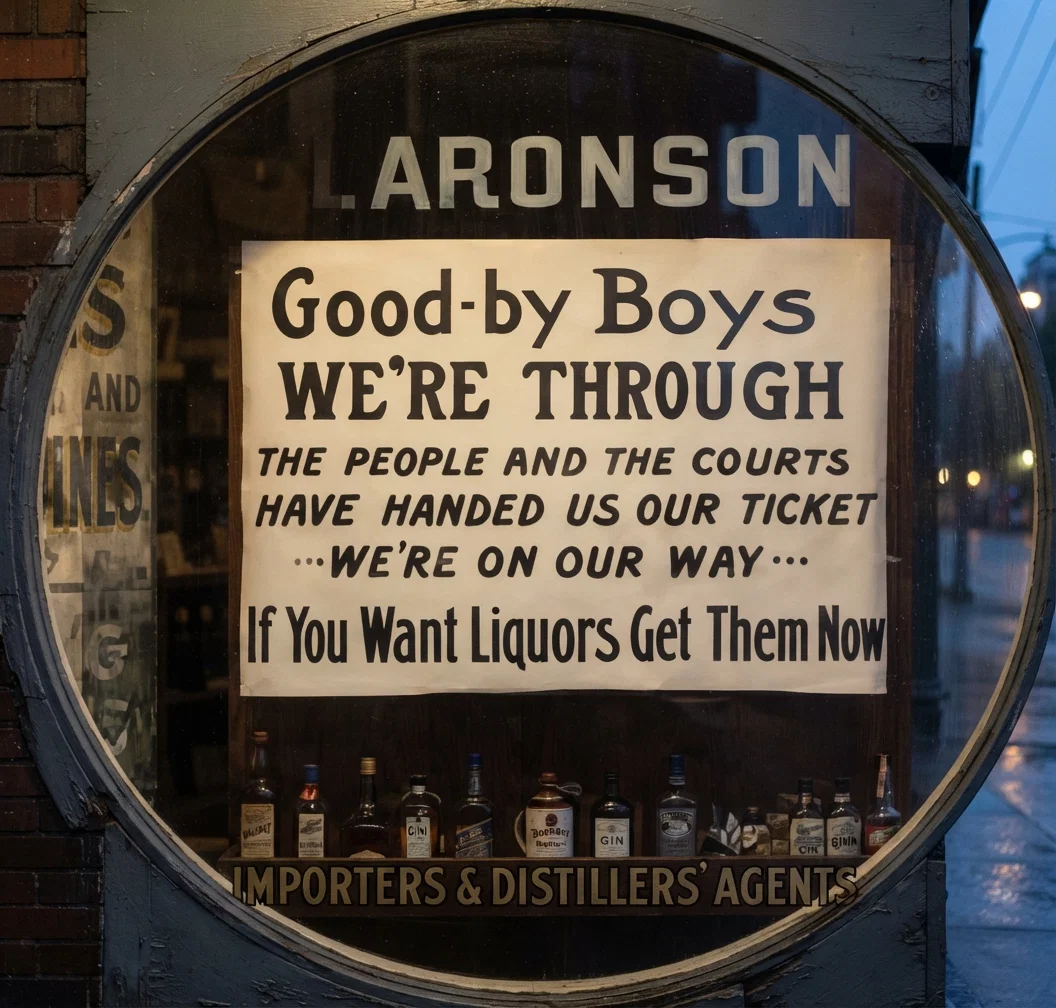
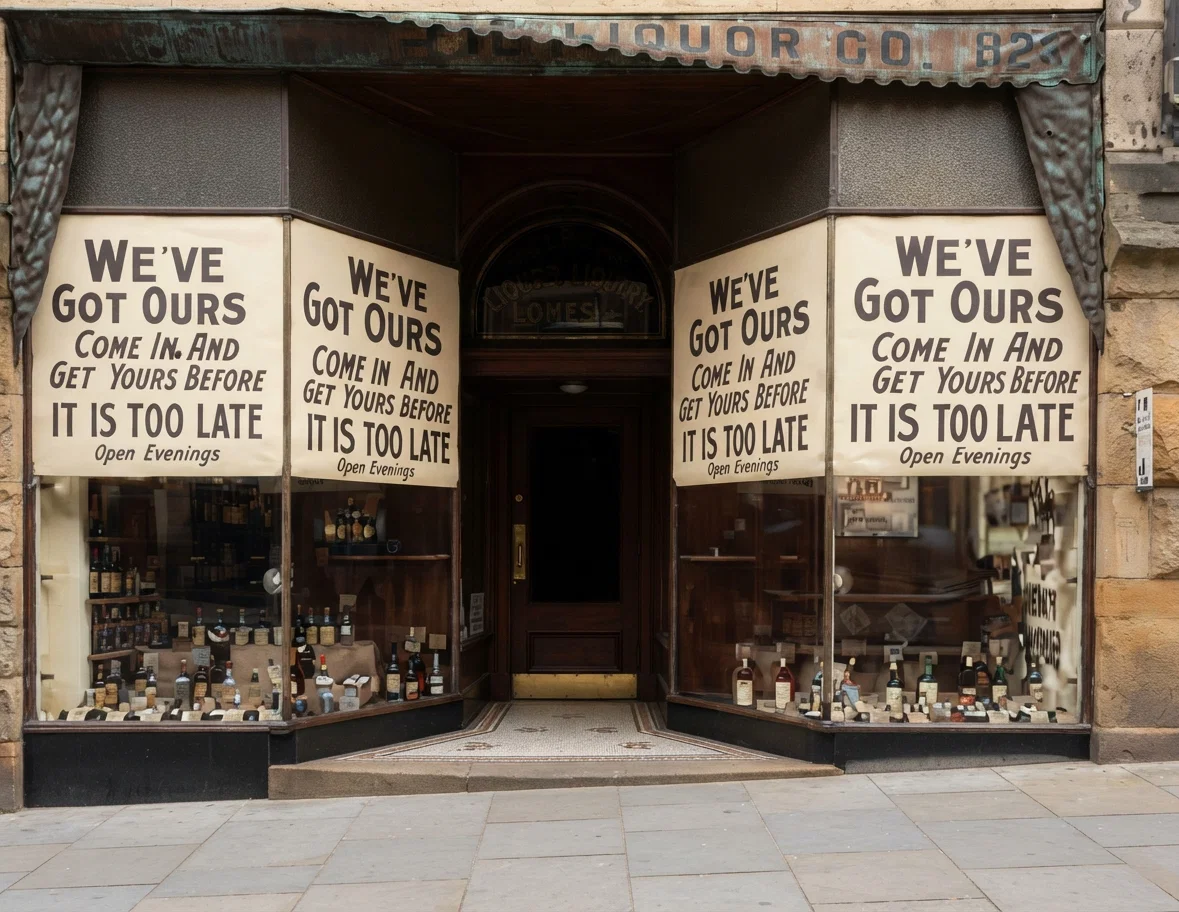
"I BELIEVE that I can read 'the handwriting on the wall,'" said a saloon keeper who has been in the business for twenty-two years. "I believe that the finish of the booze business is in sight, and I prefer to step from under before the roof falls in. I would not undertake to say when nation-wide prohibition is going to arrive; but it is coming, as sure as fate, and it is not many years away."
He continued: "I am going to get out, and advise every other man with money invested in it to do the same. John Barleycorn has had his day."
Without doubt this saloon keeper has expressed the sentiments of many others. "The handwriting on the wall" which indicates the doom of the "booze business"—a traffic that has no lawful right to exist either in this or in any other nation—is written larger and clearer each year. In fact, it is already so plain that "he may run that readeth it." And they are running, too, either into "wet" territory or into some business with a better prospect before it. The man before quoted also said, "I simply have decided to get out while the getting is good." All those who heed the ever increasing evidences of the progress of prohibition will do well to follow his example; for nation-wide prohibition "is coming, as sure as fate."
"LET the man who votes on the liquor question, vote as he would if he knew he would face the Judgment the next day, and that he would have to answer in harmony with the dictates of his own conscience instead of the lustful desires for greed and filthy lucre."

The Shadow of the BOTTLE

The story of crime, bloodshed, and wretchedness resulting from the liquor traffic as told by the cartoonist, the lecturer, and the statistician.
128 Pages and Two-Color Cover :: 64 Cartoons
A great work is yet to be done before Demon Rum is doomed. The success that has attended the fight against liquor ought to spur all good, clean, loyal men and women to increased activity. Complete victory is just ahead. Get into the fray without delay.
Better result-producing literature than "The Shadow of the Bottle" cannot be found.

25c a Copy, Postpaid

A special 12½¢ (carriage extra) rate is given on all orders of ten or more copies to one person.
Pacific Press Publishing Association MOUNTAIN VIEW, CALIFORNIA
Continue reading: Liquor's Last Stand