The Origin of Evil and Its Remedy

2%

Review and Herald Publishing Association · Takoma Park, Washington, D. C. · Feb 8, 1915

FromReview and Herald, Vol. 92, No. 7.

Read the full edition

The Origin of Evil and Its Remedy

A Bible Study

God's Character

1. What is the character of God? “Art thou not from everlasting, O Lord my God, mine Holy One? . . . Thou art of purer eyes than to behold evil, and canst not look on iniquity.” Hab. 1:12, 13.
2. With what kind of moral nature did God endow man when he created him? “So God created man in his own image, in the image of God created he him.” Gen. 1:27. “God made man upright.” Eccl. 7:29.
3. What are we told that God saw when he looked upon his finished work, including man? “And God saw everything that he had made, and, behold, it was very good.” Gen. 1:31.

The Character of the Angels

4. What did God create besides the earth and man upon it? “For by him were all things created, that are in heaven, and that are in earth, visible and invisible, . . . all things were created by him, and for him.” Col. 1:16.
5. How did the angels, as they were created, compare with man? “What is man, that thou art mindful of him? and the son of man, that thou visitest him? For thou hast made him a little lower than the angels.” Ps. 8:4, 5.

Sin of Men and of Angels

6. Do we find the human race upon the same moral plane now upon which the Creator originally placed them? “For all have sinned, and come short of the glory of God.” “They are all gone out of the way, they are together become unprofitable; there is none that doeth good, no, not one.” Rom. 3:23, 12.
7. What is said of some of the angels in regard to sin? “God spared not the angels that sinned, but cast them down to hell, and delivered them into chains of darkness, to be reserved unto judgment. The angels which kept not their first estate, but left their own habitation, he hath reserved in everlasting chains under darkness unto the judgment of the great day.” 2 Peter 2:4; Jude 6.

Sin Defined

8. What is sin? “Whosoever committeth sin transgresseth also the law: for sin is the transgression of the law.” 1 John 3:4.
9. As briefly stated by the Saviour, what does the divine law require? “Thou shalt love the Lord thy God with all thy heart, and with all thy soul, and with all thy mind. This is the first and great commandment. And the second is like unto it, Thou shalt love thy neighbor as thyself.” Matt. 22:37-39.
10. Since man was created upright in the beginning, how was he led into sin? “Now the serpent was more subtle than any beast of the field which the Lord God had made. . . . And the serpent said unto the woman, Ye shall not surely die; for God doth know that in the day ye eat thereof, then your eyes shall be opened, and ye shall be as gods, knowing good, and evil. And when the woman saw that the tree was good for food, and that it was pleasant to the eyes, and a tree to be desired to make one wise, she took of the fruit thereof, and did eat, and gave also unto her husband with her; and he did eat.” Gen. 3:1-6.

Satan and His Fall

11. Who was the real serpent who tempted our first parents? “He laid hold on the dragon, that old serpent, which is the Devil, and Satan, and bound him a thousand years.” Rev. 20:2.
12. What was the immediate cause of Satan's, or the dragon's, enmity against God, and against man, whom God had created in his own image? “There was war in heaven: Michael and his angels fought against the dragon, and the dragon fought and his angels, and prevailed not; neither was their place found any more in heaven. And the great dragon was cast out, that old serpent, called the Devil, and Satan, which deceiveth the whole world; he was cast out into the earth, and his angels were cast out with him.” Rev. 12:7-9.
13. What was the primary cause of Satan's enmity against God? “How art thou fallen from heaven, O Lucifer, son of the morning! . . . For thou hast said in thine heart, I will ascend into heaven, I will exalt my throne above the stars of God: . . . I will ascend above the heights of the clouds; I will be like the Most High.” Isa. 14:12-14. NOTE.—Lucifer was the angel name of the great leader in rebellion in heaven. After his fall, he was called Satan, a name which Cruden says “is a mere Hebrew word, and signifies an adversary, an enemy, an accuser.”
14. What do the Scriptures say of Satan before his fall? and what are we told was the cause of his fall? “Thou art the anointed cherub that covereth; and I have set thee so. . . . Thou wast perfect in thy ways from the day that thou wast created, till iniquity was found in thee. . . . Thine heart was lifted up because of thy beauty.” Eze. 28:14-17. NOTE.—Pride, envy, and covetousness filled Satan's heart before he committed any outward, overt act of rebellion; and these were sin.—“all unrighteousness is sin,” says the apostle. 1 John 5:17.

Freedom of Choice

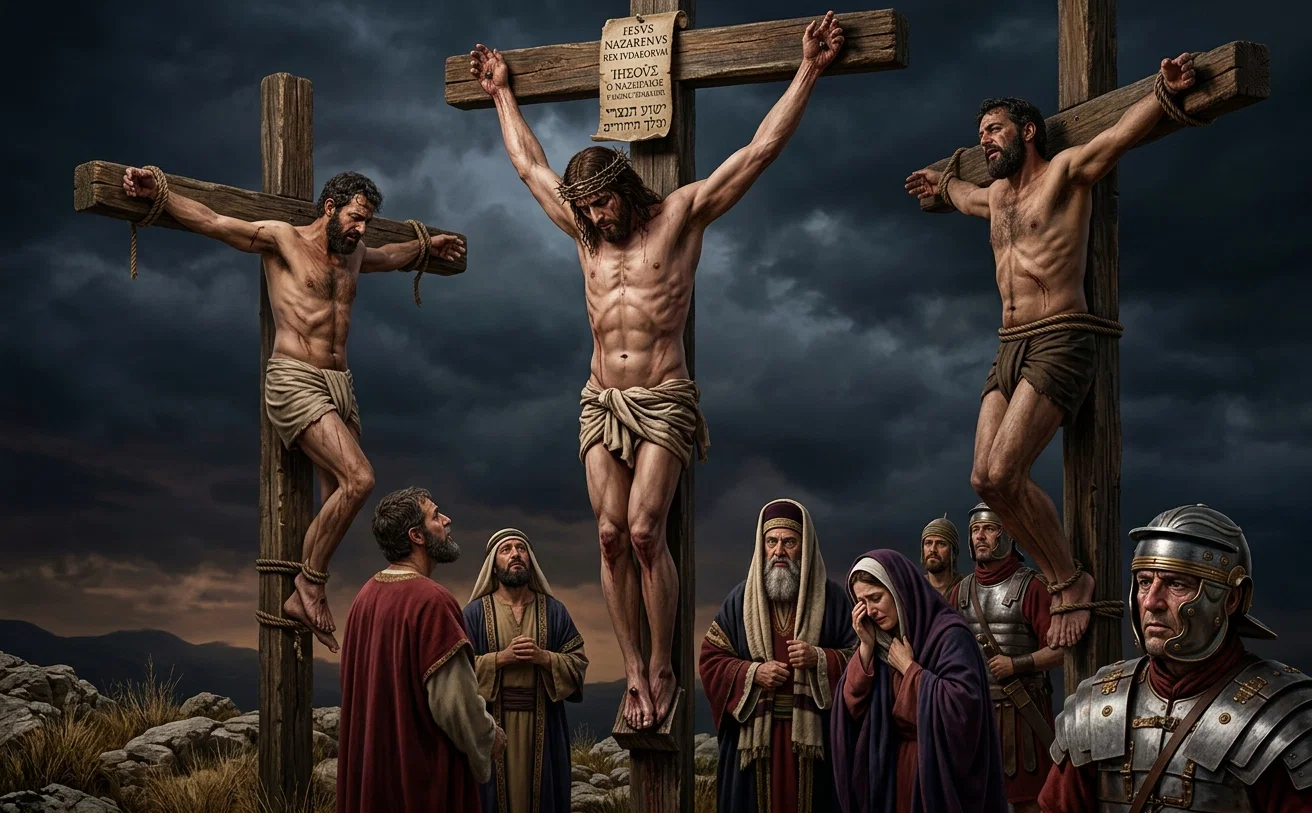
BEHOLD THE LAMB OF GOD, THAT TAKETH AWAY THE SIN OF THE WORLD
15. What kind of service only is acceptable to God? “If it seem evil unto you to serve the Lord, choose you this day whom ye will serve.” Joshua 24:15. “Elijah came unto all the people, and said, How long halt ye between two opinions? If the Lord be God, follow him: but if Baal, then follow him.” 1 Kings 18:21. “Behold, I have set before thee an open door, and no man can shut it.” Rev. 3:8. “Whosoever will, let him take the water of life freely.” Rev. 22:17. NOTE.—God desires and accepts only willing service, service inspired by love. “God is love,” and his great heart of infinite tenderness yearns for the love of his children, both of men and of angels, in the same way as the hearts of human parents yearn for the love of their children, though in infinitely greater degree.
16. Is there anything that God cannot do? “The word of God is not bound.” “If we believe not, yet he abideth faithful: he cannot deny himself.” 2 Tim. 2:9, 13. NOTE.—God being what he is, and his nature being as it is, he could not create moral beings without giving them freedom of choice. There is not and never could be any moral responsibility without freedom of the will. This being true, it follows that God is in no wise responsible either for Lucifer's rebellion in heaven or for man's sin upon earth. “I the Lord speak righteousness, I declare things that are right.” Isa. 45:19.

The Plan of Salvation

17. How do we know that God was not taken by surprise when man sinned? Because God is all-wise. He knows the end from the beginning. “I have declared the former things from the beginning, . . . and they came to pass.” Isa. 46:10.
18. What provision had infinite love and foreknowledge made for man's redemption, even before the fall? “All that dwell upon the earth shall worship him, whose names are not written in the book of life of the Lamb slain from the foundation of the world.” Rev. 13:8. “And I will put enmity between thee and the woman, and between thy seed and her seed; it shall bruise thy head, and thou shalt bruise his heel.” Gen. 3:15. NOTE.—We learn from Isa. 45:18 that the divine purpose in creating this world was that it might be inhabited by a race of beings loyal to their Creator. This plan involved everything necessary to its success. Therefore we might know, even if we had not been told, that when, in the council between the Father and the Son, it was decided to create man, the great plan of providing the sacrifice necessary for his redemption was made.
19. What moved the Father to make this sacrifice in behalf of fallen humanity? “God so loved the world, that he gave his only begotten Son, that whosoever believeth in him should not perish, but have everlasting life.” John 3:16.
20. What was the Son's attitude toward this great sacrifice of which he himself was the central figure? “For there is one God, and one mediator between God and men, the man Christ Jesus; who gave himself a ransom for all, to be testified in due time.” 1 Tim. 2:5, 6.
21. How do we know that the Father and the Son were associated in the creation of man? “And God said, Let us make man in our image, after our likeness.” Gen. 1:26. “Wherefore I was made a minister, . . . to make all men see what is the fellowship of the mystery, which from the beginning of the world hath been hid in God, who created all things by Jesus Christ.” Eph. 3:7-9.
22. What beautiful prophetic scripture shows that the Father and the Son are just as closely associated in the work of redemption? “Behold the man whose name is The BRANCH; and he shall grow up out of his place, and he shall build the temple of the Lord; . . . and shall sit and rule upon his [the Lord's] throne; and he shall be a priest upon his throne; and the counsel of peace shall be between them both.” Zech. 6:12, 13.
23. What is contemplated by the plan of redemption? “And she shall bring forth a son, and thou shalt call his name JESUS: for he shall save his people from their sins.” Matt. 1:21.
24. What does it mean to be saved from sin? “If we walk in the light, as he is in the light, we have fellowship one with another, and the blood of Jesus Christ his Son cleanseth us from all sin. . . . If we confess our sins, he is faithful and just to forgive us our sins, and to cleanse us from all unrighteousness.” 1 John 1:7-9.
25. What besides present salvation from the dominion of sin is included in redemption? “And this is the will of him that sent me, that every one which seeth the Son, and believeth on him, may have everlasting life; and I will raise him up at the last day.” John 6:40. “And if I go and prepare a place for you, I will come again, and receive you unto myself; that where I am, there ye may be also.” John 14:3.
26. What else is promised to those who shall be heirs of eternal life? “If ye have heard of the dispensation of the grace of God which is given me to you-ward: . . . That the Gentiles should be fellow heirs, and of the same body, and partakers of his promise in Christ by the gospel.” Eph. 3:2-6.
27. To whom does the apostle here refer? “For the promise, that he should be the heir of the world, was not to Abraham, or to his seed, through the law, but through the righteousness of faith.” Rom. 4:13.
28. How do we certainly know that we who are Gentiles by nature shall share in that promise? “Now to Abraham and his seed were the promises made. He saith not, And to seeds, as of many; but as of one, And to thy seed, which is Christ. . . . And if ye be Christ's, then are ye Abraham's seed, and heirs according to the promise.” Gal. 3:16, 29.
29. To whom does our Saviour himself say this inheritance will be given? “Blessed are the meek: for they shall inherit the earth.” Matt. 5:5.
30. When shall those who are saved from sin in this life be clothed with immortal life? “For ye are dead, and your life is hid with Christ in God. When Christ, who is our life, shall appear, then shall ye also appear with him in glory.” Col. 3:3, 4. “Behold, I show you a mystery; We shall not all sleep, but we shall all be changed, in a moment, in the twinkling of an eye, at the last trump: for the trumpet shall sound, and the dead shall be raised incorruptible, and we shall be changed.” 1 Cor. 15:51, 52.
31. When will the righteous receive their inheritance? “When the Son of man shall come in his glory, and all the holy angels with him, then shall he sit upon the throne of his glory. . . . Then shall the King say, . . . Come, ye blessed of my Father, inherit the kingdom prepared for you from the foundation of the world.” Matt. 25:31-34. And looking down the stream of time to the day when our returning Lord is about to be revealed, when his message to his waiting people is, “Surely I come quickly,” the beloved John, speaking for the latter-day church, responds, “Amen. Even so, come, Lord Jesus.” Rev. 22:20.