Your ShelfYour Projects

Review and Herald, Vol. 90, No. 38.

Fruit Cure, Healthful Cookery and Digestive Disorders Number

Review and Herald

Sep 18, 1913

Review and Herald Publishing Association · Takoma Park Station, Washington, D. C. · Sep 18, 1913

Fruit Cure, Healthful Cookery and Digestive Disorders Number

Read also “Questions and Answers,” “Chronic Constipation,” and “Reducing Meat Diet.” For real enjoyment, read “COTTER’S SATURDAY NIGHT” (revised).

SOME OCTOBER FEATURES

Attractive Three-Color Cover
Frontispiece: Florida Bananas
Medicinal Value of Fruits
Cure of Chronic Constipation
History and Nature of Fruits
Blowing Wind-Instruments for Health
Some Simple Fruit Desserts
A Delicious Fruit Drink
How to Make Coffee Cakes — No. 2
Tobacco and Alcohol
Reducing the Meat Diet
Proper Diet for Kidney Disease
Cotter’s Saturday Night (revised)
Use of Mineral Waters
Drinking at Meals
Treatment for Hookworm
Advice to a Dyspeptic
Digestive Disorders

FORTY-SEVEN ARTICLES

FULLY ILLUSTRATED

BE OUR AGENT

SEND 10 CENTS FOR SAMPLE COPY AND PARTICULARS. PLEASANT AND PROFITABLE WORK THE YEAR ROUND.
REMIT $1.00 FOR 20 COPIES; $2.00 FOR 50; $4.00 FOR 100; $8.00 FOR 200. FIFTY OR MORE, 4 CENTS EACH, POST-PAID.

PRICES, POST-PAID

Yearly subscription - - - - $1.00 Six months - - - - - - .50 (Subscriptions for less than six months not accepted) Three years (or 3 subs. 1 year) - - - 2.00 Five years (or 5 subs. 1 year) - - - - 3.00 20 copies ordered at one time - - - 1.00 50 copies ordered at one time - - 2.00 100 copies ordered at one time - - 4.00
NO EXTRA CHARGE ON FOREIGN SUBSCRIPTIONS

ORDER THROUGH OUR NEAREST AGENCY

(If you do not know the address of our Agency, ask “Life and Health,” Washington, D. C.)

LIBERTY

A MAGAZINE OF RELIGIOUS FREEDOM

SPECIAL

American Principles Number

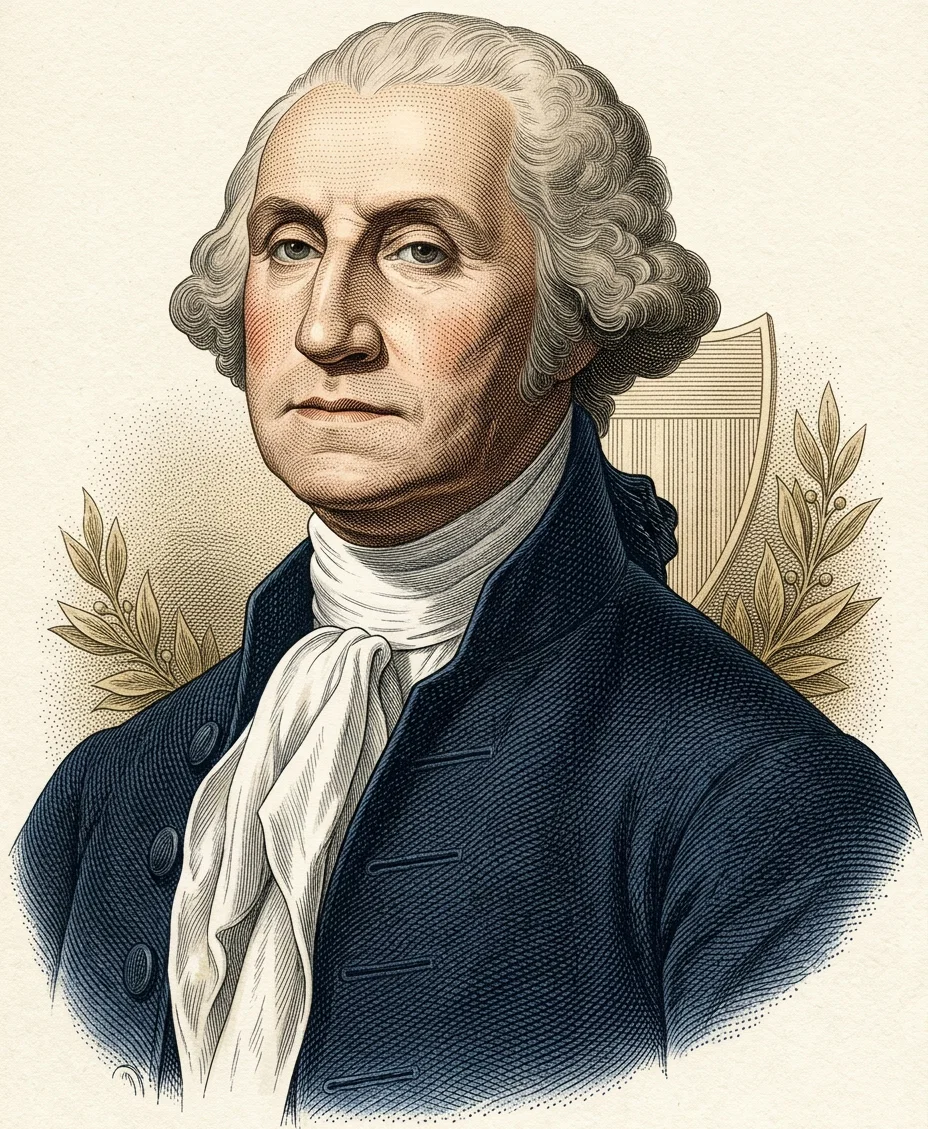
Striking Cover: Two-Color Portrait of Geo. Washington; Back-Page Cartoon, “Undermining the Foundations”

PARTIAL CONTENTS

Will “Christian Citizenship” Save the World? Catholics and Protestants Have Equal Rights Religion in the Public Schools American Principles of Freedom National Reformism — A Layman’s View Struggles for Freedom Congressman Bartholdt on Personal Liberty and Sunday Legislation Forces Antagonistic to America Freedom of Speech Religious Liberty in the Philippines Roger Williams, “the First American” World’s Christian Citizenship Conference Constantine’s Sophistry Practised on Americans Jefferson’s Prophecy Nearing Fulfilment Voluntary Religion an American Policy Mayor Gaynor’s Rebuke to a Religious Spy What Prominent Men Have Said About Religious Legislation and the Rights of the Minority (with portraits) The Liquor Traffic vs. Personal Liberty

AN ARSENAL OF EFFECTIVE RELIGIOUS LIBERTY AMMUNITION

The portrait and cartoon on the cover make this an easy seller. The articles are exceptionally valuable and interesting.
AGENTS WANTED EVERYWHERE IN AMERICA! Send ten cents for sample copy. Liberal terms to agents on yearly subscriptions. Write today for particulars.
Become our agent by sending $1.00 for 20 copies; $2.00 for 50; $4.00 for 100. We pay the postage and will ship to one or more addresses as desired. Send $2.00 for 10 yearly subscriptions for your friends.
PRICES, POST-PAID Yearly subscription - - - - $ .35 Three years (or 3 subs. 1 year) - - - - .90 Four years (or 4 subs. 1 year) - - - - 1.00 Ten years (or 10 subs. 1 year) - - - - 2.00 Ten copies, one year, to one address or more 2.00 (Subscriptions for less than one year not accepted) 20 copies ordered at one time - - - 1.00 50 copies ordered at one time - - - 2.00 100 copies ordered at one time - - - 4.00 NO EXTRA CHARGE ON FOREIGN SUBSCRIPTIONS

ORDER THROUGH OUR NEAREST AGENCY

(If you do not know the address of our Agency, ask “Liberty Magazine,” Washington, D. C.)

The Truest Heart Friend

WORTHIE HARRIS HOLDEN
There's many a smile that but covers A lonesome and grief-laden heart, There's many a feigning of laughter That shrouds where quick tear-drops would start;
The woe that lies deep in its hiding, Its secret too proud to bestow, Is the keenest and bitterest sorrow That human affection can know.
No grief hid from thee, Man of sorrows, Forever the truest heart friend; No mortal can fathom thine anguish That thronged all earth's path to its end.
'Tis joy on thy bosom reclining To sense thou art gracious and strong, And grantest each seeker thy blessing For solace and cheer all day long.
There's no aid like thine, blessed Saviour, No arm can support like thine own; Thou liftest us up from destruction To bring us at last to thy throne; And in thy compassion thou givest The soul who on thee will depend, Each morning some word for the weary To point them to Jesus, their friend.
Portland, Oregon.

A Reasonable Proposition

MRS. E. G. WHITE
STANDING before Ahab, Elijah demanded that all Israel be assembled to meet him and the prophets of Baal and Ashtoreth on Mt. Carmel. “Send,” he commanded Ahab, “and gather to me all Israel upon Mt. Carmel, and the prophets of Baal four hundred and fifty, and the prophets of the groves four hundred, which eat at Jezebel’s table.”
The command was issued by one who seemed to stand in the very presence of Jehovah; and Ahab obeyed at once, as if the prophet were monarch and the king a subject. Swift messengers were sent throughout the kingdom with the summons to meet Elijah and the prophets of Baal and Ashtoreth. In every town and village the people prepared to assemble on Carmel at the appointed time. As they journeyed toward the place, the hearts of many were filled with strange forebodings. Something unusual was about to happen; else why this summons to meet Elijah? What new calamity was about to fall upon the people and the land?
Before the drought, Mt. Carmel had been a place of beauty, its streams fed from never-failing springs, and its fertile slopes covered with fair flowers and flourishing groves. But now its beauty languished under a withering curse. The altars erected to the worship of Baal and Ashtoreth stood now in leafless groves. On the summit of one of the highest ridges, in sharp contrast with these, was the broken-down altar of Jehovah.
Carmel overlooked a wide expanse of country, and could be seen from a large part of the kingdom of Israel. At the foot of the mount there were vantage-points from which could be seen much of what took place above. God had been signally dishonored by the idolatrous worship carried on under cover of its wooded heights; and Elijah chose this elevation as the most conspicuous place to display God’s power and vindicate the honor of his name.
Early on the morning of the day appointed, the hosts of apostate Israel, in eager expectancy, gather near the top of the mountain. Jezebel’s prophets march up in opposing array. In regal pomp the king appears and takes his position at the head of the priests; and the idolators shout his welcome. But there is apprehension in the hearts of the priests as they remember that at the word of the prophet, Israel for three years has been destitute of dew and rain. Some fearful crisis is at hand, they feel sure. The gods in whom they have trusted have been unable to prove Elijah a false prophet. To their frantic cries, their prayers, their tears, their humiliation, their revolting ceremonies, their costly and ceaseless sacrifices, the objects of their worship have been strangely indifferent.

Standing Alone for God

Facing King Ahab and the false prophets, and surrounded by the assembled hosts of Israel, Elijah stands, the only one who has appeared to vindicate the honor of Jehovah. He whom the whole kingdom has charged with its weight of woe is now before them, seemingly without support, either human or divine; apparently defenseless in the presence of the men of war, the prophets of Baal, the monarch of Israel, and the surrounding thousands. But Elijah is not alone. Above and around him are the protecting hosts of heaven,—angels that excel in strength. Realizing his source of power, Elijah could say, “The Lord is with me as a mighty, terrible One: therefore my persecutors shall stumble, and they shall not prevail: they shall be greatly ashamed; for they shall not prosper: their everlasting confusion shall never be forgotten.”
In that vast multitude the prophet is undaunted. Unashamed and unterrified, he stands before the people, his countenance lighted with an awful solemnity. In anxious expectancy the people wait for him to speak. Looking first upon the broken-down altar of Jehovah and then upon the multitude, Elijah cries out in clear, trumpet-like tones, “How long halt ye between two opinions? If the Lord be God, follow him: but if Baal, then follow him.”
The people answer him not a word. Not one in that vast assembly dare utter a word for God, not one dare reveal loyalty to Jehovah. Like a dark cloud, deception and blindness had covered Israel. Not all at once had this fatal apostasy closed about them; but gradually, as from time to time they had refused to heed the words of warning and reproof that the Lord sent them. Each departure from right-doing, each refusal to repent, had deepened their guilt, and driven them farther from Heaven. And now, in this crisis, they refused to take their stand for God.
God abhors indifference and disloyalty in a time of crisis in his work. The whole universe is watching with inexpressible interest the closing scenes of the great controversy between good and evil. The people of God are nearing the borders of the eternal world; what is of more importance to them than that they be loyal to the God of heaven? All through the ages, God has had moral heroes, and he has them now; those who, like Josephand Elijah and Daniel, are not ashamed to acknowledge themselves his peculiar people. Such men make their wills and plans subordinate to the law of God. For love of him, they count not their lives dear unto themselves. Their work is to catch the light from the Word, and let it shine forth to the world in clear, steady rays. Fidelity to God is their motto.
The Lord prepares his messages to fit the times and occasions in which they are given. Sometimes his messengers are bidden to sound an alarm day and night, as did John the Baptist, who proclaimed to the assembled multitudes, ‘Prepare ye the way of the Lord.’ Then, again, he inspires men of action; men who will not be swerved from the straight line of duty, but who with divine energy will inquire, ‘Who is on the Lord’s side?’—men who will not stop merely with the inquiry, but who will demand that those who choose to identify themselves with the people of God shall step forward and reveal unmistakably their allegiance to the King of kings and Lord of lords.
While Israel on Carmel doubt and hesitate, the voice of Elijah again breaks the silence: ‘I, even I only, remain a prophet of the Lord; but Baal’s prophets are four hundred and fifty men. Let them therefore give us two bullocks; and let them choose one bullock for themselves, and cut it in pieces, and lay it on the wood, and put no fire under; and I will dress the other bullock, and lay it on wood, and put no fire under; and call ye on the name of your gods, and I will call on the name of the Lord; and the God that answereth by fire, let him be God.’
The proposal of Elijah is so reasonable that the people dare not evade it, so they find courage to answer, ‘It is well spoken.’ The prophets of Baal dare not lift their voices in dissent; and addressing them, Elijah commands, ‘Choose you one bullock for yourselves, and dress it first; for ye are many; and call on the name of your gods, but put no fire under.’
With terror in their guilty hearts, though outwardly bold and defiant, the false priests prepare their altar, laying on the wood and the victim; and then they begin their incantations. Their shrill cries reecho through the forests and the surrounding heights, as they call on the name of their god, saying, ‘O Baal, hear us!’ The priests gather about their altar, and with leaping and writhing and screaming, and with tearing of the hair and cutting of the flesh, they beseech their god to help them.
The morning passes, noon comes, and yet there is no evidence that Baal, whom the priests serve with frenzy and apparent sincerity, hears the cries of his deluded followers. There is no voice, no reply to their frantic prayers. The sacrifice remains unconsumed.
As they continue their frenzied devotions, the crafty priests are continually trying to devise some means by which they may kindle a fire upon the altar, and lead the people to believe that the fire has come direct from Baal. But Elijah watches every movement, and the priests, hoping against hope for some opportunity to deceive, continue to carry on the senseless ceremonies.
‘It came to pass at noon, that Elijah mocked them, and said, Cry aloud: for he is a god; either he is talking, or he is pursuing, or he is in a journey, or peradventure he sleepeth, and must be awaked. And they cried aloud, and cut themselves after their manner with knives and lancets, till the blood gushed out upon them. And it came to pass, when midday was past, and they prophesied until the time of the offering of the evening sacrifice, that there was neither voice, nor any to answer, nor any that regarded.’

A Short Sermon

Physicians

H. A. ST. JOHN
“Who forgiveth all thine iniquities; who healeth all thy diseases.” Ps. 103: 3.
By far, Jesus was the greatest physician the world ever knew. It seems to me that this must be conceded by every one. He practised in many places, had many hundreds of cases, and we know not a single instance of his losing a case. He was not a specialist, but succeeded equally well in healing all kinds of disease. The leper, deaf, dumb, blind, lame, and deformed all found in Christ a physician fully equal to their greatest need. He healed every one that came to him, and the cure was quick, radical, and complete. They were made every whit whole. All his healing was by the power of God through the ministration of holy angels. Only a touch, and darkened eyes could see his smiling face. Only a touch, and deafened ears could hear his words of grace. He needed not to make a diagnosis of any case, for he had but one remedy for all, and that was infallible.
The work of healing the sick is an important element in the science of salvation. Christ’s great commission to his church and children, to the end of the world, includes healing the sick as he healed them. It is an important part of the glorious gospel to a sinful and sickly world, and the Lord is disappointed and robbed of his glory when the gospel is preached and practised only in part. Christ has all power in heaven and earth today, and he is the same yesterday, today, and forever.
To the early Christian church, from Pentecost onward for a season, the great gospel commission was fully accepted, and acted upon. The disciples of Jesus, filled with the Holy Ghost and the power of living faith, went forth preaching the gospel and healing the sick, just as they had heard and seen Jesus do when they were in the school of Christ. But alas, then came a falling away through apostasy and false teaching, and living faith and power were lost.
But we are comforted with the assurance that the remnant church of the Christ will soon be anointed with the Holy Ghost and with power, as was her divine Lord, and go forth to all the world, with a whole gospel. The great commission will be fully accepted and obeyed; all its glorious promises will be fully verified to them; and earth will be lightened with the glory of God.

Gospel Finance—No 9

How Should the Tithe Be Computed?

E. K. SLADE
Many questions arise as to the proper way to determine what one's tithe should be or just what is to be counted as an income on which tithe is to be computed. Varied and vague ideas have been advanced which in some cases have led to confusion and discouragement. We have known of teachings on this point advocating the computation of tithe on certain transactions that would be a mathematical impossibility.
The Bible outlines our duty in this matter only in general terms, dealing with fundamental principles. The binding obligation and the sacredness of the requirement are clearly declared as well as the blessing or curse resulting from obedience or disobedience. That small items are to be taken into account is made evident by Christ's approval of the Pharisaical exactness in tithing the mint, cummin, and anise. This is where many fail. Any ordinary conscience will require an exact account of the smallest items in a financial settlement between man and man, but many professed Christians seem satisfied to adopt a most careless and inaccurate method of keeping and settling accounts with the Lord. The Bible teaching on this point clearly indicates that God requires honesty, accuracy, and liberality of his children. Anything short of this would rob the plan of its true purpose in the building of character.
If in all our churches each member would be honest and exact in his accounts and in the payment of a full tithe, we should see a large increase in our tithe receipts and a decided change in the spirituality of the churches. With many it has been a practise to hand in an even sum of money from time to time with a request that it be credited as tithe, while it does not represent one tenth of the income and has not been based upon an accurate account. Such a course may serve to soothe a troubled conscience, but it comes far short of satisfying God and serving his purpose in the plan. Many have treated this matter lightly and with laxness while consoling themselves with the thought that they are tithe-payers. As long as such laxness exists in our churches, the call for reform in this requirement will be heard.
This question of the proper and honest computation of the tithe especially relates to two classes. There are those who are conscientious and faithful, but who are in doubt and perplexity to know just what is required in certain transactions. With them it is a question ofduty not to be disregarded when understood. The other class is composed of those who fail to compute on a correct basis because they are not conscientious in the matter and do not keep a correct account, but pass in what they choose to call tithe, from time to time. From this class are those who lapse into much irregularity and failure entirely in tithe-paying, and who allow debts and private affairs to interfere with their duty to God. There is help for this class but more hope for the former.
It is in the purpose of God that we should benefit from working out what we believe to be right in this matter of computing tithe. It is left to the individual to do what he thinks is required. No man is to say just how another is to compute tithes. Words of inspiration on this point are very clear. “Of the means which are entrusted to man, God claims a certain portion—a tithe; but he leaves all free to say how much the tithe is and whether or not they will give more than this.”—“Testimonies for the Church,” No. 31, page 145.
“As to the amount required, God has specified one tenth of the increase. This is left to the conscience and benevolence of man, whose judgment in this tithing system should have free play.”—Id., Vol. III, page 394.
These words come with encouragement to the conscientious class, for they reveal the fact that God designs that we shall work out the problem in such a way as to rebuke selfishness and grow in benevolence. The temptation to be niggardly and dishonest is to be met in the strength of God and overcome by practising liberality. Where doubt exists as to what is really required it is stated, “In determining the portion to be given to the cause of God be sure to exceed rather than fall short of the requirements of duty.”
This arrangement is another evidence of divine wisdom in the plan. Man's benevolence is constantly to be brought into exercise. His decisions and practises in the computation of tithes will give ample opportunity for rebuking covetousness and cultivating liberality. There are those who pay a “liberal” or “honest” tithe based upon the principles set forth above. This class is found devoted and faithful and loyal to all branches of the work. Those who permit covetousness to govern them in their computations are inviting defeat to themselves as well as to the cause.

God's Weights and Measures

MRS. N. A. HONEYWELL
God weighs and measures. “He hath . . . weighed the mountains in scales, and the hills in a balance.” Isa. 40:12. The weight of the earth and each heavenly body is accurately fixed, for upon this depends the equilibrium of the universe. He “weigheth the waters by measure.” Job 28:25. It is estimated that during the recent flood in Ohio and Indiana 6,000,000,000,000 gallons of water fell, or enough to cover fifteen million acres of land to a depth of one foot. This would weigh about 25,000,000,000 tons, and yet God had it all weighed and measured.
Every government has its standards of weights and measures fixed by law, and God's government is no exception. God has scales in which he weighs moral worth, or character. He weighs the nations,—the men of high as well as of low degree,—and finds them lighter than vanity. They weigh absolutely nothing in God's scales. Isa. 40:15; Ps. 62:9.
The law of God is the standard of weights and measures in his government. Christ's character meets the standard in every particular; it is full weight and perfect measure. John 15:10. All have sinned and come short; all have failed to measure up to the standard. Rom. 3:23. The only way to make up the deficiency is to have Christ dwelling in us; and the more of Christ we have, the heavier will be our weight in the scales of heaven.
Some are so unwise as to measure themselves by others. 2 Cor. 10:12. If we do this, we shall place our standard too low, and shall be satisfied with ourselves and our own course of action. Prov. 16:2. But unless Christ is in it all, when weighed by God we shall be found wanting. “By him actions are weighed.” 1 Sam. 2:3. The motive which prompts the act determines the value of each act in the sight of God. “I the Lord search the heart, I try the reins, even to give every man according to his ways, and according to the fruit of his doings.” Jer. 17:10.
Every character is to be weighed, every one to be measured. Close and searching will be the test, exact will be the measurement. “Judgment also will I lay to the line, and righteousness to the plummet.” Isa. 28:17.
This work is now going on in heaven. The angel was commissioned to “rise, and measure the temple of God, and the altar, and them that worship therein.” Rev. 11:1.
Let us not give up in despair, feeling that we can never reach the standard, for God has provided the way. “Unto every one of us is given grace according to the measure of the gift of Christ.” Eph. 4:7. What is the measure of this gift? “In the gift of Jesus, God gave all heaven. . . . To human reasoning the whole plan of salvation is a waste of mercies and resources. Self-denial and whole-hearted sacrifice meet us everywhere. . . . The atonement for a lost world was to be full, abundant, and complete. Christ's offering was exceedingly abundant to reach every soul that God had created. It could not be restricted so as not to exceed the number who would accept the great Gift. All men are not saved; yet the plan of redemption is not a waste because it does not accomplish all that its liberality has provided for. There must be enough and to spare.”—“Desire of Ages,” pages 565, 566.
What kind of service are we rendering to God in return for all his gifts to us? Are we giving him “scant measure,” which is abominable in his sight? Micah 6:10, 11. “With what measure ye mete, it shall be measured to you again.” Matt. 7:2. The only measure of God's gifts to us is our capacity to receive. He gives his Spirit without measure (John 3:34); the latter rain is already falling, but what kind of vessel have we prepared to receive it? See 2 Tim. 2:20, 21. If it is only a pint cup, that will be our measure. The only way to receive more is to give more; for giving enlarges both our capacity and our desire to receive. “Give, and it shall be given unto you.” “For he that hath, to him shall be given.”
The things that weigh most in the Lord's scales are judgment, mercy, and faith (Matt. 23:23); so if we leave these out of our lives, we shall surely be found wanting. No amount of attention given to outward ceremonies will make up the deficiency. We need to use the faith which God has dealt to us (Rom. 12:3), and it will increase, bringing every other blessing with it.
The Lord weighs our paths (Isa. 26:7) and measures our tears. Ps. 56:8. He knows our strength and adapts the trial to it, for he has promised that he will not allow more to be placed upon us than we are able to bear. Job 6:2; 1 Cor. 10:13. If we endure the trial, however heavy it may seem, we shall find that it works out for us a far more exceeding and eternal weight of glory. 2 Cor. 4:17.
God's measuring rod is his law of love. It is only as his love dwells in us and we are rooted and grounded in it that we can begin to measure the breadth, and length, and depth, and height of God's gift to man in his Son. Eph. 3:17, 18.
Punta Gorda, Fla.

Catholicism and Americanism

L. L. CAVINESS
In Archbishop Ireland’s address at the Catholic Federation on “Catholicism and Americanism,” printed in the Catholic Standard and Times, is this interesting paragraph:—
“Church and state cover separate and distinct zones of thought and action; the church busies itself with the spiritual, the state with the temporal. The church and the state are built for different purposes,—the church for heaven, the state for earth. The line of demarcation between the two jurisdictions was traced by the unerring finger of him who is the Master of both; the law of God is, ‘Render to Caesar the things that are Caesar’s, and to God the things that are God’s.’”
After quoting Pope Leo XIII to the same effect, the archbishop continues:—
“The position of the Catholic Church, consequently of Catholics, toward the nation or state, is defined in clearest terms by the highest authority of the church. What is to be feared from the Catholic Church? To priest, to bishop, or to Pope, who—I am willing to consider the hypothesis—should attempt torule in matters civil and political, to influence the citizen beyond the range of their own jurisdiction, that of the things of God, the answer is quickly made: Back to your own sphere of rights and duties; back to the things of God!”
We are led to query why the Catholic press rejoices to print such news as this, which is taken from America (August 30):—
“Some time ago the anticlericals of Brazil, in imitation of their congeners in Europe, succeeded in having all the crucifixes removed from the courts. Now there is a universal protest against the outrage, and Sao Paulo has already brought back the sacred emblem. So also has San Salvador. The archbishop and the governor took part in the ceremony which marked the restoration in San Salvador.”
Does Archbishop Ireland forget that Leo XIII also said in his encyclical letter Longinque oceani, Jan. 6, 1895:—
“The church amongst you, unopposed by the Constitution and government of your nation, fettered by no hostile legislation, protected against violence by the common laws and the impartiality of the tribunals, is free to live and act without hindrance. Yet, though all this is true, it would be very erroneous to draw the conclusion that in America is to be sought the type of the most desirable status of the church, or that it would be universally lawful or expedient for state and church to be, as in America, dissevered and divorced. . . . She [the church] would bring forth more abundant fruits if, in addition to liberty, she enjoyed the favor of the laws and the patronage of the public authority.”
The archbishop goes on to speak of our republican form of government:—
“America is a republic; the spirit, the form of government is democracy,—the government of the people, by the people, for the people. Is there not here, it is asked, at least a touch of conflict between my religious faith and my civil and political faith? I tread upon easy ground, so plain are the teachings of the Catholic Church in favor of the rights of the people in matters of civil and political government. . . . In America the government is the republic—the government of the people, by the people, for the people. With you, fellow Catholics, with you, fellow Americans, I salute the republic. I thank God that the people of America are capable of possessing a government of this form. The republic—it is the fullest recognition of human dignity and human rights, the fullest grant of personal freedom, that due respect for the rights of others and the welfare of the social organism may allow.”
Though the archbishop quotes Pope Leo XIII, he does not quote the following, which occurs in that Pope’s encyclical on Christian constitution of states:—
“The sovereignty of the people . . . is held to reside in the multitude; which is doubtless a doctrine exceedingly well calculated to flatter and inflame many passions, but which lacks all reasonable proof, and all power of insuring public safety and preserving order. . . . The opinion prevails that princes are nothing more than delegates chosen to carry out the will of the people; whence it necessarily follows that all things are as changeable as the will of the people, so that risk of public disturbance is ever hanging over our heads.”
Evidently the Pope would not care to live in a republic. It is also very clear that the teachings of the Catholic Church are un-American in two so fundamental matters as its separation of church and state and its form of government.

Importance of Tithing and the Promptness Needed

WILLIAM COVERT
Providing funds for the sacred cause of God brings a divine consideration into all the business that a Christian does. The tithing question makes God a partner with man in all legitimate things. Therefore a Christian cannot follow a business that God cannot bless, neither can he in conscience take anything out of his business without accounting for it to God, because God is his partner.
From these considerations we know that a man cannot spend his time in idleness and be clear before God. His eating, his sleeping, his resting, and his working should all be talked over with the Lord, for he asks to be consulted and to be honored, and especially so since the interests of his cause are either forwarded or retarded according to the course men pursue in business.
God's people cannot be unfaithful now and at the same time carry the gospel quickly to all the world. Indeed, nothing short of a whole-souled, earnest devotion to all the varied interests of a world-wide message will suffice to accomplish the work that must be done.
The Scriptures teach and reason says that man's service in the support of God's cause should correspond to the light that shines upon his way. Jesus says, “Unto whomsoever much is given, of him shall be much required.” Luke 12:48. “Freely ye have received, freely give.” Matt. 10:8. A man's soul, like a lamp, is lighted to shine for the benefit of many. And when much truth is given to a man, that man is placed under great responsibility to others who need the truth which has been committed to him. Should he fail in passing it on to others who might be saved by it, he cannot long retain it in his own heart. The apostle was writing to encourage liberal giving and soul-winning work when he said, “He which soweth sparingly shall reap also sparingly; and he which soweth bountifully shall reap also bountifully.” 2 Cor. 9:6.
Since God ordained the tithe of man's income to be the financial support of gospel work, it is the Lord's sacred money reserved by him for the most sacred purpose known under heaven; and the man who uses it for secular purposes is charged by the Lord with robbing the treasury of heaven. It must be very grievous in the sight of God to see a professed Christian actually take money which Heaven decreed should be invested in soul-winning work, and use it in the ordinary affairs of life, leaving the unsaved to perish without the light of life. But many do it. They permit covetousness to control their souls, then rob the Lord and lose their hope of heaven. Their love for money crucifies their love for saving souls, and makes them doubt every promise written in the Bible. But the Christian who cultivates a spirit of hearty liberality in gospel finance, will find the very windows of heaven opened to him, and showers of blessings coming down like an avalanche from glory, until his largest measures are full and running over. Then it will come to pass that instead of asking to be excused from tithing and from giving, he will see ways and means to multiply these benefits so as to meet every call that the widening cause shall make.

When to Pay

Any one entrusted with conference or mission interests knows how important it is to have funds at hand to settle bills or to pay salaries when due. Business principles require promptness, but if funds are long withheld, it is impossible for the treasury department to be prompt.
The conference is to pay the salary to workers as often as once a month, and to settle accounts for purchases made when the bills are presented; but this cannot be done if tithes and other funds are held back. It is very embarrassing to have salaries due and no tithes on hand to pay them, or business accounts piling up and no money to cancel them. Canvassers, solicitors, and donors should forward funds without delay; and tithe-payers should turn in their holdings not less frequently than once a month. Those receiving a salary from the conference are not able to wait long for their money, therefore the tithe should be paid into the church treasury at the earliest opportunity, and then forwarded to the conference office in time for the laborer to receive it at the beginning of each month.

Christian Ambassadorship

Speaking to Christians, Paul says, “Our citizenship is in heaven.” Phil. 3:20, R. V. So it appears that the business of the Christian in this world is to look after the interests of God's kingdom here and not to benefit self. He is entrusted with the chiefest of heaven's work, and so should promote those things which strengthen the kingdom of heaven. He is an ambassador sent by the authority of heaven into this world to look after the interests that heaven is promoting here. The tithes and the offerings which get into his hands belong to the kingdom that sent him on his divine and royal mission, and he should not dare to use any of heaven's funds for his own selfish ends. If an ambassador sent from some European kingdom into our countryshould get into possession of money belonging to the kingdom that sent him, and should proceed to purchase stocks and lands in this country with it for himself, what would his kingdom do about it? Would he still be regarded as an honorable and loyal ambassador for the kingdom that sent him? The reader knows he would not; yet his conduct would in that case be no worse than the conduct of the man who selfishly uses the tithes and offerings which belong to the Lord's cause. Can the man who takes holy funds from God's work to build up his own business continue to hold his heavenly citizenship, and also be an honored ambassador for God's cause? God in his Word says that men who take these funds from his cause are robbing him. They are asked to return to the treasury what they have taken away, and bring with it a trespass-offering, as a confession of their sin in doing the deed. Who will do it?
Continue reading: The "I Come" Which Has Been