Your ShelfYour Projects

Signs of the Times, Vol. 37, No. 17.

Christ’s Sacrifice and Redemption

Signs of the Times

May 3, 1910

Pacific Press Publishing Association · Mountain View, California · May 3, 1910

Christ’s Sacrifice and Redemption
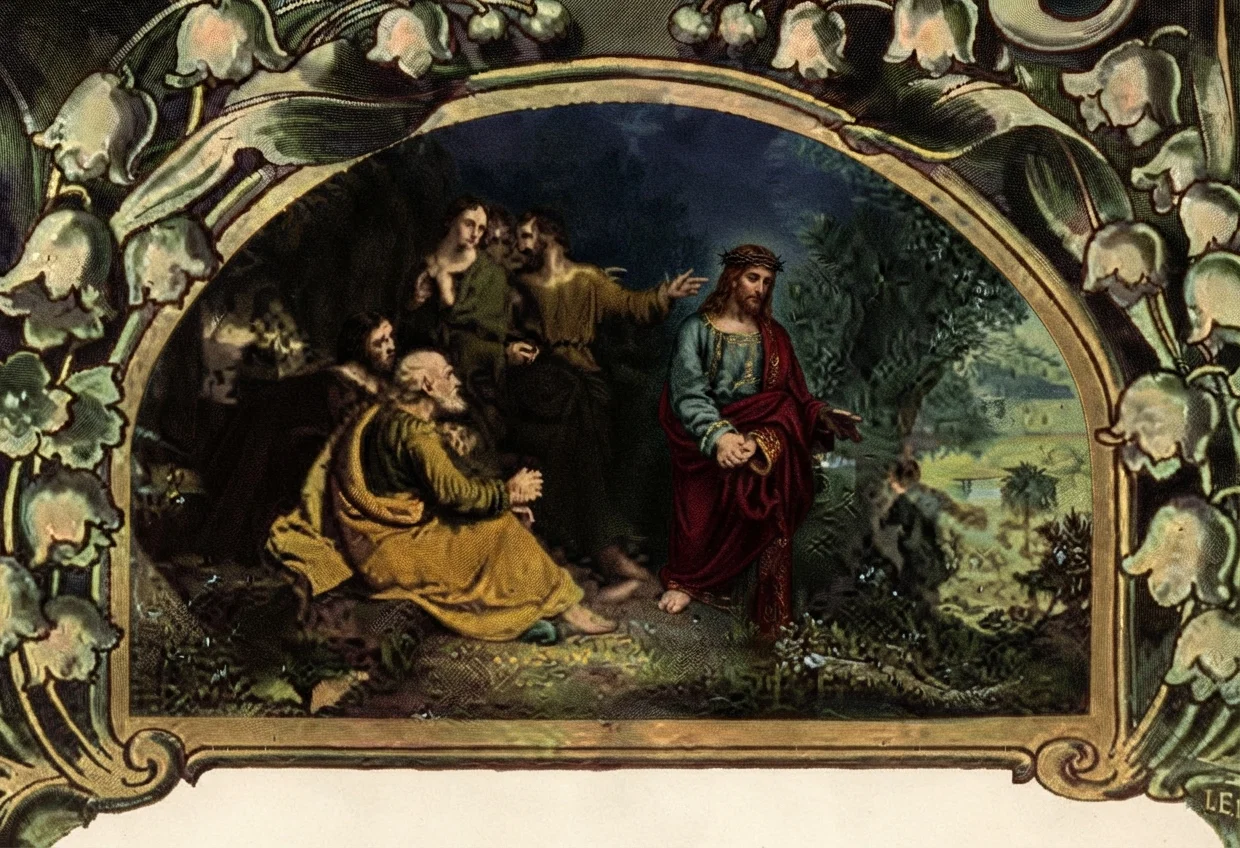
"Our Saviour Jesus Christ; who gave Himself for us, that He might redeem us from all iniquity, and purify unto Himself a peculiar people, zealous of good works." Titus 2:13, 14.
"He was wounded for our transgressions, He was bruised for our iniquities: the chastisement of our peace was upon Him; and with His stripes we are healed." Isa. 53:5.

Labor and Pain

(Author Unknown)
Labor is living and Pain is living; And Labor and Pain go hand in hand, And peer in the windows across the land: And so wherever Love is giving Labor for Pain or Pain for Labor, Each to the other is nearly neighbor; Yea, these are the millstones of the heart, Upper and nether, and never apart; And the grist of the grinded grain goes down In flaky showers from the kernels brown; But therefrom cometh, when all is said, The hope of the heart and the world's white bread.
The Vision of the Shepherds

"IF YE WILL INQUIRE, INQUIRE YE."

This Inquirers' Department is conducted for the purpose of helping those who are studying the Bible. The answers are oftentimes only suggestive. They are never to be considered infallible, only as they agree with the infallible Word. The writer who may answer them does not consider that his opinion is infallible. He will simply give the best that he has, and plead with the inquirer to search the Word. Such questions only will be answered as, to the editors, seem to minister to the good of the readers and to the mission of the paper. We can not answer repeatedly in the same volume questions upon the same scripture. The name and address must accompany question, not for publication, but as an evidence of good faith, and that answer may be made by letter if deemed advisable. No letters are answered which do not contain the name of the writer. It is well always to enclose stamp for reply.

3111.—Sanctification

Can any one be sanctified on earth, and if so, in what sense?
Yes, one can, and every one should be. We get many times an utterly wrong idea of the Bible meaning of sanctification. Sanctify in the Bible sense means set apart. Those whom God has sanctified are those whom He has set apart for Himself. The work is twofold. It is on man's part in yielding himself to God, utterly giving up all in purpose; in will he is sanctified to God. He consecrates himself. The Lord accepts of that consecration, and sets apart that individual to His own work. This does not mean that he is perfect; does not mean that he will not sin, or can not sin; it does mean that he is given to God for a definite work, a definite field; he is to train for larger and still larger usefulness. Every one who starts out in the Christian life and yields to God, turns away from sin to God, is by the Lord forgiven. If his faith grasps God's power he is regenerated, born again; and then when he gives himself to God, that is consecration on his part, and sanctification, or setting apart to God's work, on the part of himself and the Lord. So far as the will is concerned, it is done instantaneously when the man forms that purpose. So far as carrying it out is concerned, that occurs every day of his life. Sanctification is therefore an instantaneous work so far as purpose is concerned; it is a constantly progressive work in its carrying out.

3113.—Middle Wall of Partition

Will you please explain in the SIGNS what the middle wall of partition was that was broken down by Christ?
Our correspondent doubtless refers to Eph. 2:14: "For He is our peace, who hath made both one, and hath broken down the middle wall of partition between us." Now who are the two?—Primarily it is God and man. God is one. Man has separated himself from God by sin. Isa. 59:2. He has built up a wall of sin between himself and God. This was true of Gentile, it was true also of the Jew. Christ came to be sin for us in order that we might be made righteousness. 2 Cor. 5:19-21. Between the individual sinner and Christ it is a very simple thing to yield to the Lord Jesus, and He takes away the sin. The Jews themselves had built that sin up into a veritable system of human "works" in which they endeavored to save themselves by their own righteousness. They had made certain laws, they had added to the laws which God Himself had given; and by those ceremonial observances they had built up a wall which separated them from the simple, undeserved grace of Jesus Christ. Christ came that the sin might be taken away; not only the simple sin of the sinner, but the great system by which sin was entrenched among the Jews. Jew and Gentile could come alike, and were made one in Christ Jesus. "For by one Spirit are we all baptized into one body, whether we be Jews or Gentiles, whether we be bond or free; and have been all made to drink into one Spirit." 1 Cor. 12:13. "For there is no difference between the Jew and the Greek: for the same Lord over all is rich unto all that call upon Him. For whosoever shall call upon the name of the Lord shall be saved." Rom. 10:12, 13. God's grace, through faith in Christ, breaks down the wall, and brings all together to Him; so that in that church built by Christ there are no strangers and foreigners, no Gentiles and Jews, but all are "fellow citizens with the saints and of the household of God." The work of Christ Jesus broke down in His own flesh every barrier that separated the sinful man from God; and He did that in His own flesh in order that He might do it in the flesh of every other soul that would accept Him, whether Jew or Gentile. Therefore in accepting Him all distinction was broken down between parties in this world, so there should be no schism in the body.

3115.—Neglect of Duty. Ex. 4:24-26

Who was it the Lord sought to kill? And why was Moses called a bloody husband? W. P. M. L.
The record in Ex. 4:24-26 is certainly obscure. There is a difference between students as to whether the "him" refers to Moses or to Moses' son; yet all things considered it seems to refer to Moses. As Moses was going back to deliver the covenant people, it certainly was his duty to observe all the various ordinances of God, and among these was the circumcision of the first-born. This he seems to have neglected, perhaps through the solicitation of his wife; but when she learned how solemn and important was God's command, she herself took the matter into her own hand, and seemingly acknowledged to Moses her own wrong. Boothroyd translates, And she "cast herself at his feet and said, Surely a blood-bought husband art thou to me." The Revised Version renders, "A bridegroom of blood art thou." That is the covenant of which the circumcision was a token, and which stood for a complete cutting off from the world, and carried with it the idea of the shedding of blood. The principal thought that we can get out of the incident is that we should know that in all undertakings for God no duty should be neglected on our part.

3112.—Four Corners of the Earth

Does the expression in Rev. 7:1 indicate that the earth is square, or does it simply refer to the four cardinal points of the compass, north, east, south, and west?
The thought is of the different directions. "Four corners of the earth" simply is designed to embrace all the earth, north, east, south, and west, just as we have "four quarters of the earth" used in other passages, just as we commonly speak of "all quarters;" that is, all around, on every side. It is a common sort of expression among those who believe the earth to be round to say "from the four quarters of the earth," or north, east, south, and west. There is nothing in the language which would indicate in any way the shape of the earth.

3114.—Judging

Please harmonize 1 Cor. 5:9-13 with 1 Cor. 11:28. A READER OF THE SIGNS.
We do not know what our correspondent thinks is out of harmony. 1 Cor. 5:9-13 simply tells us just what the Christian's conduct should be regarding others. One should not keep company with fornicators; and the apostle goes on to declare that he does not mean we should not have anything to do with the people of this world, who are all sinners more or less. There are certain kinds of business that we must do with the world; yet that does not mean that we should be one of them. But if there are those who are professing to be religious, professing the name of Christ, and yet are guilty of these gross sins, and we know it, we are not to show them, by partaking with them, that we condone or excuse their evil deeds. It is the duty of the church, rather than to excuse such wrongs, to excommunicate those who are guilty of them, unless there is repentance. Only in that sense are they to judge. If the church has taken the proper course toward the erring one, they are in duty bound to carry that course to the very finish as shown in Matt. 18:15-17. That does not mean that we should hold hard feelings against him, nor does it mean that we should consider him outside of the pale of salvation. He is still a subject for labor and help.
1 Cor. 11:28 simply declares that a man should examine himself before he eats of the Lord's Supper. He should know whether he is in the faith. 2 Cor. 13:5. The one has reference to our duty toward our fellow men; the other our duty toward God as regards ourselves.

3116.—Death of Judas

Please harmonize Matt. 27:5, 8 and Acts 1:18. (1) In Matthew the thought is conveyed that the priests bought the field, and in Acts it appears that Judas purchased it. (2) Another seeming contradiction is that Matthew conveys the idea that Judas hung himself. In Acts another expression is that he threw himself down some precipice and was burst open, which would not likely occur if he hung himself.
W. P. M. L.
1. What a man does through his agency he is said to do himself. Take for instance Nathan's words to David: "Thou hast smitten Uriah the Hittite with the sword, . . . and hast slain him with the sword of the children of Ammon." 2 Sam. 12:9. Now David did not slay Uriah with the sword himself. The latter part of the verse explains the first part. So the money that Judas furnished purchased the field; the price for which he sold his Lord was used for the purchase of the ground, and in that way Judas is said to have purchased the field.
2. We see nothing inconsistent whatever with Judas so hanging himself that from that hanging he fell, and in falling burst asunder. In the rocky declivities and precipices around Jerusalem, he might have hanged himself, and in the very hanging the rope might have broken, and he, falling over some precipice, burst asunder as recorded in Acts 1:18. There are three or four suppositions which would make it very clear that there need be no contradiction.

Lawyers

3118.—J. A. H.—Lawyers. Luke 7:30.— The lawyers referred to in Luke 7:30 and elsewhere in the Gospels, were those who were well versed in the laws of the Jews. The meaning of the word is much the same as at the present time. Of those who were learned in the law many were scribes. They had copied the laws over and over again until they knew them well, consequently were counseled with over matters pertaining to the law. Their work probably did not lie outside of the laws of Moses and the traditions of the Jews.

3117.—Angels and Saints

Will you please explain Jude 14 and Zech. 14:4, 5? Does this refer to Christ's second coming? And does Zech. 14:4, 5 refer to the same event? We understand that at His second coming He is not to touch the earth.
Jude 14 evidently refers to the second advent of our Lord as recorded in Matt. 25:31, when the Son of Man shall come in His glory and all the holy angels with Him. The expression "saints" simply means holy ones, nothing more. A literal translation would be, "Behold, the Lord came amidst His holy myriads." See also Dan. 8:13, where we have the word "saint" referring to angel. Zech. 14:4, 5, without doubt refers to His coming at the end of the thousand years. At the first coming He does not come to the earth, but His people are caught up to meet Him in the air; but at the end of the thousand years He does come to the earth. His feet touch the Mount of Olives, the mount divides, and there is a very great plain; and then the city descends from God out of heaven, with all the saints who have been in heaven, and that great plain and the New Jerusalem constitute the camp of the saints and the beloved city spoken of in Revelation 20.

Service for Christ—Its Meaning

By Mrs. E. G. White
PRACTICAL Christianity means being laborers together with God every day; not working for Christ now and then, but continuously. A neglect to reveal practical righteousness in our lives is a denial of our faith and of the power of God. God is seeking for a sanctified people, a people set apart for His service, a people who will heed and accept the invitation, "Take My yoke upon you, and learn of Me."
How earnestly Christ prosecuted the work of our salvation! What devotion His life revealed, as He sought to give value to fallen man by imputing to every repenting, believing sinner the merits of His spotless righteousness! How untiringly He worked! In the temple and the synagogue, in the streets of the cities, in the market-place, in the workshop, by the seaside, among the hills, He preached the Gospel and healed the sick. He gave all there was of Himself, that He might work out the plan of redeeming grace.
Christ was under no obligation to make this great sacrifice. Voluntarily He pledged Himself to bear the punishment due to the transgressor of His law. His love was His only obligation. And without a murmur He endured every pang and welcomed every indignity that was part of the plan of salvation.
The life of Christ was one of unselfish service, and His life is our lesson-book. The work that He began we are to carry forward. With His life of toil and sacrifice before them, can those who profess His name hesitate to deny self, to lift the cross and follow Him? He humbled Himself to the lowest depths that we might be lifted to the heights of purity and holiness and completeness.
He became poor that He might pour into our poverty-stricken souls the fulness of His riches. He endured the cross of shame that He might give us peace and rest and joy, and make us partakers of the glories of His throne.
Should we not appreciate the privilege of working for Him, and be eager to practise self-denial and self-sacrifice for His sake? Should we not give back to God all that He has redeemed, the affections He has purified, and the body that He has purchased to be kept unto sanctification and holiness?
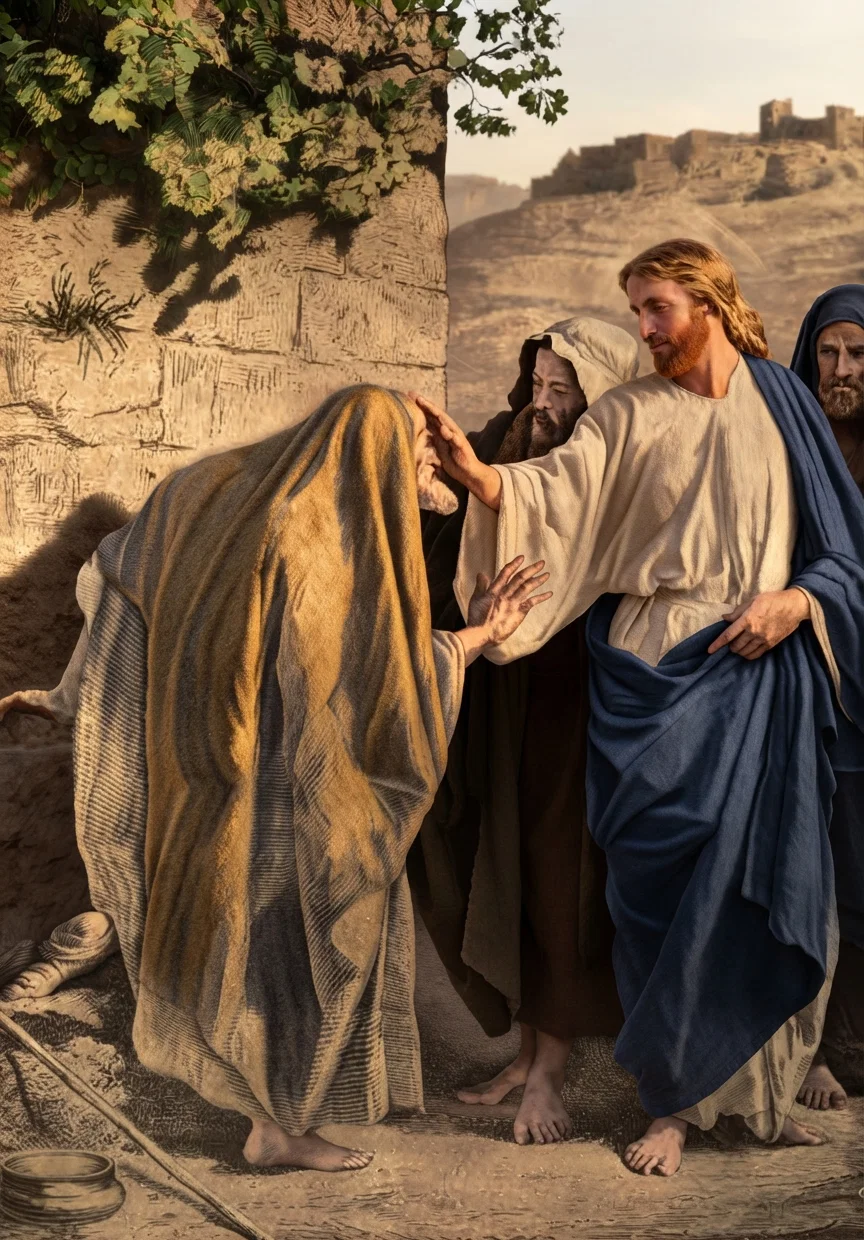
Jesus Healing the Leper. Matt. 8:1-3
The apostle Paul had learned the principles of true service when he wrote the words, "I am debtor to the Greeks, and to the barbarians; both to the wise, and to the unwise. So, as much as in me is, I am ready to preach the Gospel to you that are at Rome also. For I am not ashamed of the Gospel of Christ: for it is the power of God unto salvation to every one that believeth."
In what sense was Paul debtor both to the Jew and to the Greek? — To him had been given the commission, as it is given to every disciple of Christ, "Go ye into all the world, and preach the Gospel to every creature." In accepting Christ, Paul accepted this commission. He realized that upon him rested the obligation of laboring for all classes of men, — for Jew and Gentile, for learned and unlearned, for those occupying high positions and for those in the most lowly walks of life. From a zealous persecutor of the followers of Christ, Paul became one of the Saviour's most devoted and effective workers. Suddenly arrested in his career of persecution, he was given a view of the Saviour, and a complete transformation took place in him. Henceforth his life was wholly devoted to the Crucified One.
Paul's calling demanded from him service of varied kinds, — working with his hands to earn his living, traveling from place to place, establishing churches, writing letters to the churches already established. Yet in the midst of these varied labors, he declared, "This one thing I do." One thing he kept steadfastly before him in all his work, — to be faithful to Christ, who, when Paul was blaspheming His name and using every means in his power to make others blaspheme it, had revealed Himself to him. The one great purpose of his life was to serve and honor Him whose name had once filled him with contempt.
Paul's one desire was to win souls to the Saviour. Jew and Gentile might oppose him, but nothing could turn him from his purpose. Henceforth his testimony was, "Yea verily, and I count all things to be loss for the excellency of the knowledge of Christ Jesus my Lord: for whom I suffered the loss of all things, and do count them but refuse, that I may gain Christ, and be found in Him, not having a righteousness of mine own, even that which is of the law, but that which is through faith in Christ, the righteousness which is from God by faith."The responsibility of each human agent is measured by the amount of gifts he holds in trust. All are to be workers; but upon the worker who has had the greatest opportunities, the greatest clearness of mind in understanding the Scriptures, rests the highest responsibility. Every receiver must hold himself accountable to God, and use his talents for God's glory. Christian reader, let the great purpose that constrained Paul to press forward in the face of hardship and difficulty, lead you to consecrate yourself wholly to God's service. Whatever your hands find to do, do it with your might. Let your daily prayer be: "Lord, help me to do my best. Teach me how to do better work. Help me to bring into my service the loving ministry of the Saviour."

III. The Promised Work of the Spirit

By John Orr Corliss
It must seem reasonable to a reflecting mind, that so long as Christ remained on earth in person, His help could be secured only by journeying to the location of His temporal residence. This situation was not so inconvenient for those living in close proximity to His locality; but Christ came to be the "Saviour of the world." His mission of influence as "God with us," must therefore extend throughout the entire length and breadth of the territory of His operations, in order to work upon each individual in it. This made it necessary for some measure to be adopted by which all people in all parts of the world, might have their needs met at one and the same time. Inasmuch as this could not be done by Christ as a merely local deliverer, some universal current presence must do the work in His name, as His representative.
It was for this reason that the Saviour told His disciples that it would be advantageous to them for Him to go away from earth. So long as He was here in person, He was, perforce, His own representative; but upon going away He promised to send them another Comforter, which would be His witness to the truth of all things concerning Him. John 16:7; 15:26; 14:16. This word "another" signifies that there is more than one force engaged in behalf of the world's betterment. The Comforter, or Holy Spirit, to be given for man's benefit at the departing of Christ's person from earth, was therefore a permanent associate with Him in all His work.
When Christ created the world, in conjunction with the Father (John 1:1-3; Col. 1:13-16; Heb. 1:2), this same Spirit was present, and moved upon the face of the waters. Gen. 1:2. By the operation of this Assistant the heavens were decorated. Job 26:13. Having been so closely associated with God and Christ in their super-eminent work from the very beginning, the Spirit is distinctively fitted to be, and is therefore suitably designated, "Spirit of truth." Connected with the Father and the Word (Christ), the Spirit still agrees with their record; and in the courts of heaven these three constitute a trinity of eternal truth, being always and forever one in verity of purpose and effort. 1 John 5:7.
Because of this inseparable connection with all of Heaven's predestined plans, especially that of Christ's human birth, the invisible Spirit was called to sit upon human hearts, and there bear witness to an invisible Author's and Redeemer's love for a lost world, and thus gain men's consent to be restored to their holy nativity. Well may we say with the "sweet singer of Israel," "Such knowledge is too wonderful for me; it is high, I can not attain unto it." Ps. 139:6. But while the works of God are too wonderful to be "reckoned up in order," we can believe that all His "counsels of old are faithfulness and truth." We may therefore confidently affirm that God's "Spirit is truth." 1 John 5:6.
This is the nature of God's representative,—the "Comforter" which Christ vouchsafed to man, when He, in person, returned to His Father. The Lord Jesus had come to earth for a single purpose,—to demonstrate the love of Jehovah for fallen man. John 1:18; 3:16. This one thing must necessarily be kept before the human race, by an abiding witness; and so, the Saviour, knowing the time of His departure to be at hand, gave gentle notice of the situation to His disciples. But lest their sorrow become too great to bear, He graciously promised them to "pray the Father," who would give them an ever-abiding Comforter in His place. In one way this divine accompaniment was to be different from the Lord Himself. Christ had been visible to all classes of men, and had been known of them. But the "Spirit of truth" to succeed Him, was not to be seen or known by any outward appearance or arrangement. Such a privilege could be accorded only to those in whom the Spirit should dwell. John 14:17.
In other words, the reception of this wonderful grace was not to be in any physical sense, but wholly by the personal influence of an invisible, spiritual monitor. This was so new and strange a doctrine to the disciples, who had hitherto been comforted only by sympathetic counsel from the personal Saviour, that a grave question arose among them regarding it. One ventured to ask how it would be possible for Christ to show Himself to them, and prevent the world from seeing Him as well. Jesus explained by repeating that those who love Him would keep His words, and the Father in return would love such, and that He and Christ would come to them and live with or in them. Verse 23.
The Lord was even more explicit. He proceeded to state definitely that the Comforter to be sent in His name is the Holy Spirit; and that to each individual with whom He should dwell, He would teach all things, and bring to his remembrance all the things previously spoken by the Saviour while personally on the earth. Verse 26.
True to this promise, the Lord soon bowed in the presence of His followers, and lifting His eyes to heaven, said, "I have glorified Thee on the earth: I have finished the work which Thou gavest Me to do." Continuing, He prayed: "Now I am no more in the world. . . . Holy Father, keep through Thine own name those whom Thou hast given Me, that they may be one, as We are." John 17:4, 11. This was to ask that the witness-bearing Spirit from the throne of heaven be sent to the hearts of the disciples, to testify of the power of God to save from sin, through the name and merit of the Lord Jesus Christ. So for one to receive this Messenger into the heart, is to have "the witness in himself," that is, the witness within, of God's love and saving grace. This is a greater witness than that borne by one man to the ear of another; because the heavenly witness is an inward message, given to and impressed upon the heart,—the assurance of a continued, delightful oneness with God and with Christ.
The disciples had not long to wait for the realization of the Saviour's promise. The pentecostal season found them all together in anticipation of the blessings ever attending that occasion. As they continued in devotion, there was suddenly heard in their midst a heavenly sound like a mighty rushing wind, which came into every part of the room where they were. Not only so, but it filled each of the disciples with the Holy Spirit,—for such was the violent wind,—and they immediately became mouth-pieces of the witness-bearing Spirit of God. As the invisible Messenger from heaven came into these waiting servants of Christ, there were brought to them divided languages, appearing as gleams of fire, which burned into their very souls. This appearance of fire was the revelation of heavenly glory accompanying God's Messenger, and was designed to lighten the faces of the earthly agents, to give power to their message, as later was accomplished through the martyr Stephen.
It was indeed but the fulfillment of a prophetic utterance, when John, the forerunner of Christ, contrasted his mission with that of the Messiah. His office was to baptize with water only, but Christ was to baptize "with the Holy Spirit, and with fire." Matt. 3:11. As our God is a "consuming fire," so He "maketh His ministers a flame of fire." Heb. 1:7; 12:29. In His message to the Laodiceans, the last of the seven churches, the Saviour counsels them to buy of Him "gold tried in the fire,"—the true riches. What can this be but the indwelling of Christ the hope of glory? May every lingering soul plead for this, and none be satisfied short of the pentecostal grace.
Continue reading: IV. God's People Respond to the Call