Your ShelfYour Projects

Signs of the Times, Vol. 36, No. 36.

True Christian Ministry

Signs of the Times

Sep 15, 1909

Pacific Press Publishing Association · Mountain View, California · Sep 15, 1909

True Christian Ministry

And working together with Him We entreat also that ye receive not the grace of God in vain; Giving no occasion of stumbling in anything, That our ministration be not blamed; But in everything commending ourselves, As ministers of God, In much patience, In afflictions, In necessities, In distresses, In stripes, In imprisonments, In tumults, In labors, In watchings, In fastings; In pureness, In knowledge, In longsuffering, In kindness, In the Holy Spirit, In love unfeigned, In the word of truth, In the power of God; By the armor of righteousness on the right hand and on the left, By glory and dishonor, By evil report and good report; As deceivers, and yet true; As unknown, and yet well known; As dying, and behold, we live; As chastened, and not killed; As sorrowful, yet always rejoicing; As poor, yet making many rich; As having nothing, and yet possessing all things.

Question Corner

[To Our Inquirers.— (1) The name and address of all who ask questions must accompany questions, not necessarily for publication, in token of good faith, and that we may reply by letter if thought best. All communications will be considered confidential if so desired, and no name will be published unless requested. But we have no time to give to anonymous or unsigned epistles or articles. (2) Let the questions be to the point. Do not say, “Explain Josh. 7:1-8,” but state the thing upon which help is desired. (3) Questions cannot be answered immediately in this department. Sometimes it will mean a month or more of waiting. We cannot reply to the same question frequently. Read answers to other questions; you may find reply to yours. (4) Members of the Bible Band will kindly enclose stamp if answer is desired by letter. Others will please enclose ten cents. This does not begin to meet expenses oftentimes. (5) “Foolish . . . questions avoid.”]

2932.—“Lived Not Again.” Rev. 20:5.

Is the following expression, found in Rev. 20:5, spurious, as claimed by Millennial Dawnists: “But the rest of the dead lived not again until the thousand years were finished”? It is said: “They [the words] are not found in the oldest and most reliable Greek MSS., the Sinaitic, Vatican Nos. 1209 and 1160, nor in the Syriac MS.” G. H.
The simple facts are these:
1. The book of the Revelation itself is not in the Vatican MS. No. 1209, and so of course the fifth verse of chapter 20 could not be there.
2. Vatican MS. No. 1160 evidently omits it by mistake of copyist.
3. It is found in A Codex Alexandrinus of the fifth century.
4. It is found in B Codex Vaticanus of the seventh century.
5. The text is found in C Codex Ephremi Rescriptus, No. 9, probably of the fifth century.
6. Young’s “Bible Translation” translates it without question. Hinds’ Interlinear, Boothroyd, Rotherham’s translations from the Greek text by Tregelles, and from Wescott and Hort, considered to represent the cumulative Greek scholarship of the centuries on the New Testament, the same.
7. Dean Alford, a noted Greek scholar, while making vigorous comment on the text, does not even question its genuineness.
8. Both the English and American Revised Versions print the translation of the text without question. We can not enumerate the many who do the same. The text is not questioned by the best authorities.
The claim that the text is spurious is evidently to get it out of the way of the Millennial Dawn theory.

2933.—World’s Age.

What prophet prophesied that the world would stand six thousand years? J. J. W.
None of them so far as we know. There is nothing in the Bible which indicates that. The world in the sense of the earth, “abides forever.” The word “world” in the sense of age is used for different periods of this earth’s history, from various types and divisions of time like the week, the week of years, the jubilee and other figures, in connection with the one thousand years of Revelation 20. The world in the sense of the inhabited earth will probably exist about six thousand years. Some Bible students have concluded that the earth would continue in its present sinful condition about six thousand years. The one thousand years during which the earth would lie desolate would be the Sabbath of the earth. It would then rest. But as to there being any direct prophecy upon it, there is none.
That the earth will abide forever, as stated in Eccl. 1:4, is clearly evident from Isa. 45:18: “For thus saith Jehovah that created the heavens, the God that formed the earth and made it, that established it and created it not a waste, that formed it to be inhabited; I am Jehovah; and there is none else.”

2934.—Six Hundred Sixty-Six.

Please explain Rev. 13:18. A. A. O.
The verse reads: “Here is wisdom; let him that hath understanding count the number of the beast, for it is the number of a man, and his number is Six hundred threescore and six.” Just what this means in its fulness we do not know. We believe there is greater light upon it than any that has been yet given. There are some very striking things, however, that have been developed concerning the titles of the Papacy and the apostate powers. For instance, the sum of the Roman numeral letters in “Vicarius Filii Dei”—Vicegerent of the Son of God,—a title of the pope, amounts to 666. This is also traced by some in two or three other languages. This method of reckoning, however, has been carried so far as almost to bring it into ridicule and contempt. That, however, would not be final against its truthfulness. It is a question that is worthy of study, and the text itself implies that the wisdom of God will be in its unfolding.
This scripture and chapter 14, verses 10, 11, cover too much ground to be answered in this department. Later they will be treated more fully in regular articles in the SIGNS. In the meantime we suggest to our querist that he read what is said upon this in “Daniel and the Revelation,” by Uriah Smith.

2935.—Bread and Wine for Communion Service.

(1) Is yeast-bread proper for communion service? (2) What kind of bread should be used? (3) Should fermented or unfermented wine be used? A. D.
1. No; yeast- or sponge-bread or sponge-cake should not be used.
2. Unleavened bread only should be used. Shorten flour with olive-oil, salt it, roll it out into thin cakes, cut deeply into half- or three-quarter-inch squares, and bake moderately. This bread is unleavened, crisp, and palatable.
3. Unfermented wine alone should be used, the pure juice of the grape. This can be made and preserved in the fruit season the same as other fruit juices and fruit in general. It is usually procurable at good drug stores. Where this can not be procured, clean, good raisins may be boiled and the juice strained out. There should be no leaven or fermentation connected with the Lord’s Supper.

2936.—The Sabbath the Seal.

If the seventh-day Sabbath was the seal of God at Creation and is the same now, will not the law of God condemn the breakers of the Sabbath? And will they not be punished according to the law? A. L. B.
The Sabbath is God’s memorial of Creation. It is the seal of His law, because it tells us who the Lawgiver is—the Creator of the heavens and the earth. It condemns, always has condemned, and always will condemn, Sabbath-breakers; and yet God always takes into account in His judgment those who have light and those who have it not. He does not count as a Sabbath-breaker that soul that follows all the light he has. For that thing is a demonstration that he would observe the Sabbath if the Sabbath were made known to him. Consequently while the law condemns, God justifies through faith. As Jesus declares: “This is the judgment, that light is come into the world, and men loved the darkness rather than the light; for their works were evil. For every one that doeth evil hateth the light, and cometh not to the light, lest his works should be reproved. But he that doeth the truth cometh to the light, that his works may be made manifest, that they have been wrought in God” (John 3:19-21); that is, the very works in which their very imperfections are wrought in God because the heart is right, and the Lord regards the heart. 2 Chron. 16:9.

2937.—The Division Between Good and Evil.

Please explain Matt. 24:20. Some have concluded from this that half would be saved, half lost. J. B. H.
That is not the thought of the text. It is that when the cases of mankind are decided upon, it does not make any difference what worldly position a man may be occupying or just what he may be doing, the division will take place clearly and decidedly. And this is simply an illustration of what will occur when probation closes, not when Christ comes, but when Christ leaves His mediatorial seat. Then, two shall be in the field, one is taken and another left. The shop could have been as well named, or the store. The text simply indicates clear, final decision, but has nothing to do with numbers.

2938.—Cursing One’s Enemies.

Please explain why David, if he was a man after God’s own heart, prayed God to curse his enemies. See Psalm 109. Harmonize it with Prov. 24:17. F. A. A.
Psalm 109 is what is called one of the imprecatory psalms. It is not a prayer of David for himself. It is the inspiration of God speaking against those who deserve all those punishments. It is infinite justice saying that these curses came upon the men who thought to visit them upon others, and whose lives were evil and only evil. We read in 2 Sam. 23:2, “The Spirit of the Lord spake by me, and His word was in my tongue.” It was God saying what would come upon the wicked, not David’s prayer that it might come. This spirit of mercy and kindness was shown again and again in David’s life. Prov. 24:17 was very clearly demonstrated when Saul was slain. Saul had hunted David for years to slay him. David did not rejoice when Saul fell in battle. He mourned and wept.

OUR BIBLE BAND

Day Month Date Morning Evening
Su. Sept. 19 Eccl. 1, 2, 3 2 Cor. 11:16-33
Mo. " 20 " 4, 5, 6 " 12
Tu. " 21 " 7, 8, 9 " 13
We. " 22 " 10, 11, 12 Gal. 1
Th. " 23 Song 1, 2, 3 " 2
Fr. " 24 " 4, 5 " 3
Sa. " 25 " 6, 7, 8 " 4

Suggestive Notes

Our morning readings cover the books of Ecclesiastes and Canticles (or Song of Solomon). The book of Ecclesiastes was probably written by Solomon the son of David who was king in Jerusalem. They present before us the vanity of human life and the utter uselessness of all human pursuits apart from God. The internal evidence shows that it was written by Solomon after he had his unsatisfying experience in wealth and luxury and idolatry, and his heart was led away by his many wives. It gives us his conclusion in the 12th chapter: “Fear God and keep His commandments, for this is the whole duty of man.” There are some striking passages in the book. Excellent missionary instruction is also given in chapter 11.
The Song of Solomon is an Oriental love poem, setting forth in the warm coloring of the East the love of Christ for His church. It may have been some of the experiences of Solomon which are regarded as typical of Christ and His church. There are some very beautiful and poetic passages in the Song, as the picture of the spring in chapter 2. The triumph of the church is set forth in the 10th verse of chapter 6. Two passages that are commonly referred to the Lord are: “The chiefest among ten thousand,” “the One altogether lovely.”
The New Testament lessons conclude the book of Corinthians and include Galatians 1 to 4. The epistle to the Galatians was probably written in A.D. 58, addressed to those Christians which inhabited the regions of Galatia in Asia-Minor, settled originally by Gauls from the North. The church there consisted of some Jewish converts and some who were converted from heathendom. This is shown by the epistle itself.
In the first chapter the apostle gives us the ground of his commission, not revealed by man or through man, but directly from the Lord. He tells us of His experience with the apostles and those of repute at Jerusalem; reproves the apostle Peter for his dissimulation, and points out the great fact that the only life acceptable is Christ living in us; shows the Galatians that to go to any other means of justification is to repudiate Christ, and would turn them back into the idolatry from whence they came. This freedom in Christ is illustrated by the parable of Abraham’s two wives.

Christ Came to Break Sin’s Chain

By Mrs. E. G. White
“He warred with the evil one in our behalf.”
God so loved the world, that He gave His only begotten Son, that whosoever believeth in Him should not perish, but have everlasting life. For God sent not His Son into the world to condemn the world; but that the world through Him might be saved.”
A great and infinite sacrifice has been made in our behalf. We are the objects of God’s love, and He has shown to us that He identifies His interests with those of suffering humanity. As Christ has given Himself for us, we should place a proper estimate upon the soul. He has given us heavenly endowments, done everything that a God could do, in order that we might not perish, but have everlasting life, the life that measures with the life of God. Can our finite minds grasp this great and wonderful fact?—Not unless we empty ourselves of vanity and break away from the bondage of Satan.
The mission of Christ to the world was to break the chain of Satan from the soul, and to set at liberty those that are bound. It cost an infinite price to deliver the captives of Satan from the captivity of sin. In the councils of heaven it was determined that Christ should die for the sins of the whole world. He laid aside His royal crown, His royal robe, clothed His divinity with humanity, that He might touch humanity, and yet He was not received by the world. Goodness, mercy, and love attended His steps. He healed the sick, comforted the desponding, brought hope to the despairing, and preached the Gospel to the poor. Those who listened to His teaching did not need to consult a dictionary to find out His meaning. His words were so simple that a child could grasp His meaning. He did not take a text and then give a discourse on science, tho He could have opened the mysteries of science to the world. He could have told the world that of which they had not dreamed. He did not preach from a newspaper, but He bent His energies toward one object—the salvation of the lost. He did not build so grand a house of worship that the poor were excluded from its doors, but He sought the great thorofares of travel, and sought out the people, that they might hear the gracious tidings He had to bear to them. He would lead the multitudes to the seashore, and, in a fisherman’s boat, would put out a little from the shore, and there preach to the people who thronged His steps.
Ministers of the Gospel who believe that the end of all things is at hand, preach the Gospel in simplicity to the people, preach the truth as it is in Jesus. Christ prayed before leaving His disciples, “Sanctify them through Thy truth; Thy word is truth.” When the truth is received and believed, it will have a sanctifying effect upon the heart and character. Jesus came to earth that He might transform the character and develop in man the moral image of God.
O, we must not meet Jesus unready! We do not desire that you shall miss your way. If we knew the value of the human soul, we would not be indifferent to our own salvation or to that of others.
Jesus, the Prince of life, took the battle-field to meet and to contend with the prince of darkness, and to dispute his claims. From the time of His birth until He hung on Calvary’s cross He warred with the evil one in our behalf. His purity of character was a rebuke to the world, and men hated Him because of His divine and holy character. He did not come to our world as an angel of glory, but as a man. He was made in the likeness of sinful flesh, and condemned sin in the flesh. With His human arm He encircled the race, and with His divine arm He grasped the throne of the infinite, linked man with God, and earth with heaven. O, who are there who are colaborers with Christ, who are feeding the starving flock of God?
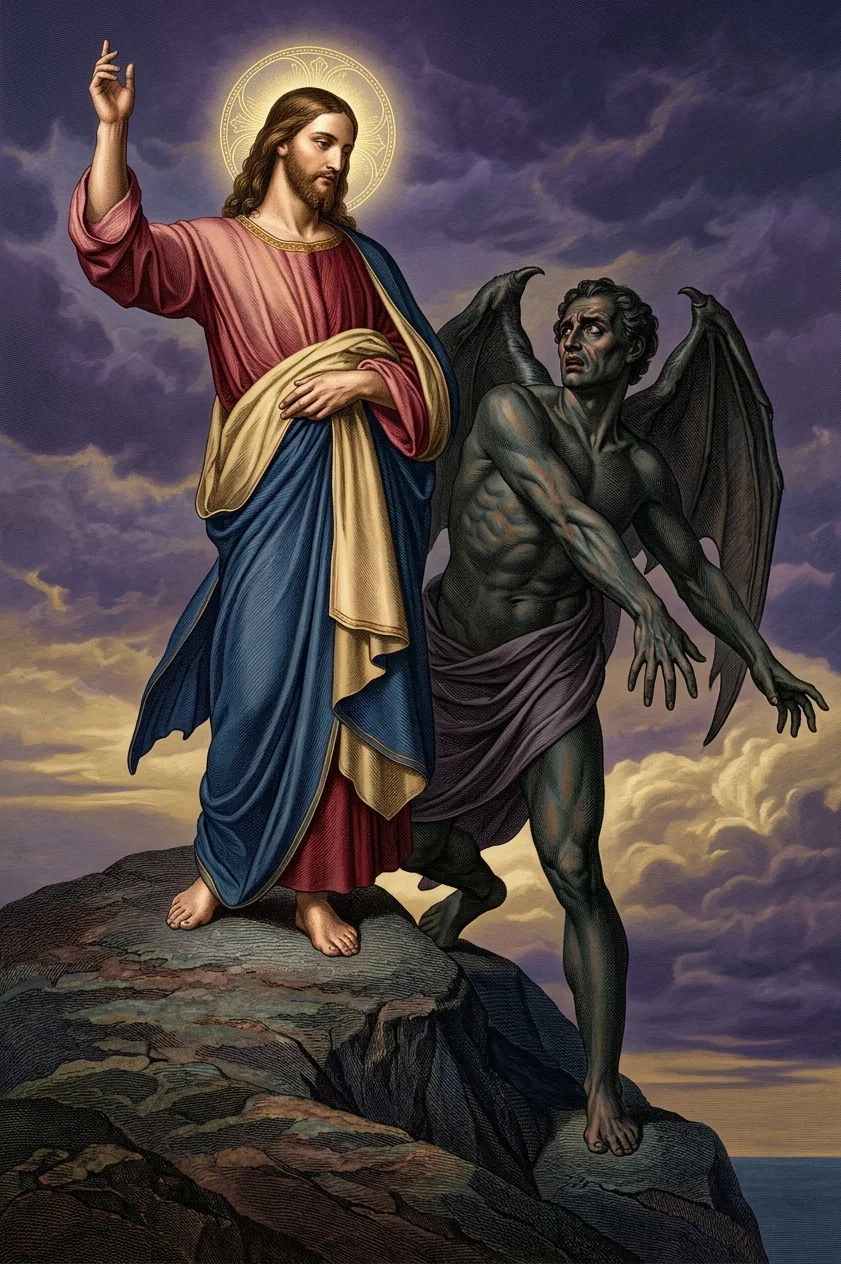
We read concerning the mission of Christ as it was announced by Himself in Nazareth, and can understand what is the character of the work that the follower of Christ must do: “And He came to Nazareth , where He had been brought up; and, as His custom was, He went into the synagog on the Sabbath day, and stood up for to read. And there was delivered unto Him the book of the prophet Esaias. And when He had opened the book, He found the place where it was written, The Spirit of the Lord is upon Me, because He hath anointed Meto preach the Gospel to the poor; He hath sent Me to heal the broken-hearted, to preach deliverance to the captives, and the recovering of sight to the blind, to set at liberty them that are bruised, to preach the acceptable year of the Lord.” The work of Christ was to rescue those who were bowed down by the power of Satan, and to set them free from his yoke of bondage. Then why is it that so many choose to remain bound to Satan’s chariot? Why is it that men do not accept of God’s promises?—The reason is that Satan is presenting to every human intelligence the temptations he presented to Christ in the wilderness, and they are carried away with his delusions. They look on the things that are temporal, and lose sight of that which is spiritual and eternal; they do not realize the value of the exceeding and eternal weight of glory. They permit the business of this life to engross their attention and to take up their time.
Christ has sent forth an invitation bidding men to the marriage supper of the Lamb, but, as it is represented in the Bible, “they all with one consent began to make excuse. The first said unto him, I have bought a piece of ground, and I must needs go and see it; I pray thee have me excused. And another said, I have bought five yoke of oxen, and I go to prove them; I pray thee have me excused. And another said, I have married a wife, and therefore I can not come.” These matters of temporal interest were of more value in the minds of those who were bidden to the wedding than the eternal weight of glory.
On every side we see that it is the affairs of this life that are engaging the minds and affections of men. Christ came to break the spell of infatuation that Satan has wrought upon the human mind. He came to bring eternity to our view, in order that we should not lose heaven out of our reckoning, but extend our vision beyond the things of this life.

The Sabbath Through the Ages

VIII. Christ and the Sabbath

By Charles L. Taylor
In the fulness of time the Son of God came to earth and tabernacled in “sinful flesh.” The Creator of the worlds, the Representative of God, the Maker of the Sabbath, became the Son of Man, and by “a life of perfect obedience to God’s law . . . set an example for every human being.”
His life was a complete fulfilment of the divine word given through David more than a thousand years before: “I delight to do Thy will, O My God; yea, Thy law is within My heart.” Ps. 40:8. “He made plain to men the character of God’s law and the nature of His service,” and thus He fulfilled also the prophetic announcement of Isaiah, “He will magnify the law, and make it honorable.” Isa. 42:21.
At the time when our Lord Jesus Christ took His place among men, the law of Jehovah, as taught by the rabbis of Israel, had become a curse rather than a blessing to mankind. “It had been loaded down with traditions,” and “utterly hidden beneath the rubbish of men’s inventions.” This was particularly true in the matter of the Sabbath, and hence it was that much of the Saviour’s work had for its object the exaltation of true Sabbath-keeping. As another has said, “We shall find that the Saviour never missed an opportunity to correct their false notions respecting the Sabbath; and that He selected, with evident design, the Sabbath as the day on which to perform many of His merciful works. It will be found that no small share of His teaching through His whole ministry was devoted to a determination of what was lawful on the Sabbath.” See Matt. 12:1-13; John 5:1-16; 9:1-14; and other passages.
Without danger of exaggeration, it may be said that the truths concerning the Sabbath, which Jesus so often and so forcibly enunciated, were considered by His people as the reason why He should be put to death. John 5:18. From the day that Jesus began to make plain the simple, sweet, beautiful Gospel truth of the Sabbath, the shadow of the cross began to fall across His path. And this is easily understood when we consider how vital to God’s people is the blessing of the Sabbath, and therefore important to the prince of evil that it be overthrown. Opposition to the true Sabbath has always been most bitter and relentless, instigated by him who sought from the beginning to overthrow the government of Heaven.
But while Jesus met most intense opposition regarding the proper observance of the Sabbath day, never once was the question of the day itself a matter of controversy. The Sabbath observed by the Master was identical with that which was kept by His people, the seventh day of the week, the Sabbath of the fourth commandment.
Turning to the record of His work, we find that Sabbath-keeping was the very habit of His life. “And He came to Nazareth, where He had been brought up: and as His custom was, He went into the synagog on the Sabbath day, and stood up for to read.” Luke 4:16. Very early in His ministry He specifically announced Himself as Lord of that Sabbath which was made for mankind at the beginning and which it was His custom to observe. Mark 2:28.
As Lord of the Sabbath, as author of the day itself, He emphasized the fact that its truest observance was but a requirement of the great law of which it was and is so important a part. When wrongfully accused because of healing the sick during holy time, He asked, “Is it lawful to do good on the Sabbath days, or to do evil? to save life, or to kill?” Mark 3:4. “Wherefore it is lawful to do well on the Sabbath days.” Matt. 12:12. Thus did Jesus “magnify the law [of the Sabbath] and make it honorable.” By both example and teaching He gave it its true setting in the Decalogue and in the realm of Christian experience. And can any one candidly say that we are not to follow in His steps?
But while our Lord so often and so lucidly set forth the Sabbath truth, we have no record that He ever gave a new Sabbath law. This was altogether unnecessary. The law of God thundered forth from Sinai was an eternal moral code, given by Himself for all mankind, and remaining unchangeable and unchanged forever. And besides this, Jesus came and dwelt among men not as a law-giver, but as a law-keeper. John 15:10. That He simply kept the Sabbath law that already was, is an incontrovertible argument in favor of the fourth commandment as given from Sinai. Certainly, Jesus sought earnestly to lead His people to know that He had not come to abolish or change the law as they knew it. Every tittle of its sacred “ten words” was as enduring as heaven and earth. Matt. 5:17, 18.
It is a remarkable fact that Jesus not only taught the Sabbath and sacredly observed it while He lived, but He made provision for its keeping after His return to His Father in heaven. Speaking of the time when Jerusalem should be destroyed, A.D. 70, He said, “But pray ye that your flight be not in the winter, neither on the Sabbath day.” Matt. 24:20. In other words, He instructed His children to pray in His name, to ask for His help, to enable them to keep the Sabbath in the time of stress and trial that was to come nearly forty years after His crucifixion. And do you suppose, dear reader, that He failed to answer their prayer which was offered in harmony with His word? The history of the destruction of Jerusalem shows that the children of God were mightily helped at that time in the matter of the Sabbath.
By His life the Lord Jesus set the seal of God’s everlasting approval upon faithful Sabbath-keeping. In this as in other parts of His blessed work He gave us an example. But not by His life only did He stamp the Sabbath as divine and eternal; by His death He made it a part of the new covenant experience. The blood of Calvary ratified that covenant, and the new covenant is God’s law written in the heart. Heb. 8:10. Just so surely as Christ died on the cross, so surely is the Sabbath of the Lord a part of the great work wrought in men’s lives by the operations of the Holy Spirit. All, therefore, who live under the new-covenant plan will be found in hearty and loving accord with the blessed Sabbath of God.
In this connection it may readily be seen that no change in the law of the Sabbath subsequent to the cross could for one moment receive the divine approval. After the blood was shed and the covenant ratified, the terms of the covenant remain fixed and absolute forever. Heb. 10:16, 17; Gal. 3:15. As the Sabbath was unchanged until Jesus died, and as it was a part of the great law which His death honored and sealed, itmust remain unchanged and a part of that law so long as the law itself continues.
Blessed Sabbath! Many indeed there are who now know it as a part of their new-covenant life, and many there are who will yet be caused to rejoice in the same blessing. Dear reader, if you are not one of those who already know, will you not receive the honor now?

Use of the Word “Dancing”

Dancing

By Bryn Mawr
“There is a way which seemeth right unto a man, but the end thereof are the ways of death.”

Use of the Word “Dancing”

Dancing has been practised by the human race for thousands of years. It was one of the rites of idolatrous worship among the Egyptians.
Demon worship is one of the earliest forms of idolatry. Dancing had its origin in demon worship. Job 21:7-15; Isa. 13:21. The word “dance” occurs seven times in the Scriptures; “danced,” six times; “dances,” four times; “dancing,” seven times.
In two instances, at least, the word “dance” is from the Hebrew word “Machol,” a musical instrument of “merry sound.” Ps. 149:150.
The word is used to contrast joy and sorrow. Jer. 31:13; Lam. 5:15.
It was customary for maidens to meet returning victors with dancing.
This custom was taken advantage of to provide wives for the remnant of the tribe of Benjamin, which had been almost annihilated for an infamously immoral crime. Judges 21:21-23.
Since that time, many thousands of innocent maidens, devotees of “Terpsichore,” have awakened to a less honorable experience “after the ball is over.”
David “danced before the Lord with all his might,” but there is no record that the Lord was pleased with the performance. Saul’s daughter Michal thought him very undignified, “despised him in her heart,” and rebuked him for unkingly behavior, likening his act to those of “vain” and “shameless fellows,” for which she suffered punishment; not for rebuking his behavior, but for slighting the kingly official dignity of the anointed of the Lord. 2 Sam. 6:14, 20-22.
David’s victories were celebrated by dancing, a reprehensible gloating over suffering and the destruction of human life, under the guise of victorious patriotism. 1 Sam. 18:6-8.
The word is applied to the harmless skipping about of children at play. Matt. 11:17; Luke 7:32. It was used in the expression of idolatrous worship, and so could not but be harmful and degrading. Ex. 32:19.
Herodias danced a lewd Oriental dance to gratify the depraved taste of a shamelessly licentious court. Matt. 14:6; Mark 6:22. Miriam went forth with “timbrel” and “all the women” to celebrate the glorious passage of the Red Sea; but we find no record that Miriam or the women with her, lolled in men’s arms in the dizzying whirl of the round dance, to the sensuous, intoxicating strains of the modern dance-music. Ex. 15:20.
Judges 11:34-40 records one of the saddest and most pathetic incidents in all the Scriptures, unforeseen circumstances turning a rash vow into a sorrowful event, the innocent suffering through yielding to social fashion.
Now comes a promised restoration of the virgin church, and the resultant joy is likened unto the merry-making of care-free youth. Jer. 31:4. And we have the further reference to merry-making at feastings and banquetings in Oriental social life. Luke 15:25.
The foregoing citations comprise all Scripture mention of dancing. In some cases several scriptures refer to the same incident.

Facts Disclosed

A thoro examination of these records discloses the following facts: (a) dancing was not always an expression of joy and gladness; (b) was sometimes connected with true worship, tho not a part of it; (c) was many times a part of idolatrous worship; (d) is oftener inferentially condemned than approved; (e) it is oftener associated with the evil than with the good; (f) there was never any mingling of the sexes except in the licentious orgies of idolatry; (g) maidens always by themselves; (h) young men nearly always by themselves, tho under some circumstances old men and young men danced together.
The permissible dances of those days connected with the true worship were very ceremonial occasions.
The social dances, then, as to-day, derived their character from the class giving them. Motion was the chief essential of the ancient dance.
Then the maid or man danced alone with or without music. The essentials of modern dancing are music, motion, and mingling of the sexes.
Music alone would resolve itself into an occasion of high pleasurable enjoyment to lovers of symphony. But it would not in any sense constitute a “ball,” even tho the music were in “valse,” “ragtime,” or devil’s “two-step.”
In this analysis, “music” being segregated motion—as exemplified in the extravagant gyrations at the modern dance—would appear in most ridiculous bass-relief, and for very silliness, it would not recommend itself to the omnivorous capacity for enjoyment of the “hoodlem world” itself. Having disposed of music and motion,—the “poetry of motion,” so-called,—let the reader apply the same rule of analysis to mingling of the sexes in the ballroom and elsewhere.

In Evil Custom

A man comes home, or enters a room, other than a ballroom, and find a wife, or sister, or dearly loved friend, clasped in the arms of “mutual friend” or “stranger,” minus the “inspiring” strains of music and entrancing motions of the waltz, and a dreadful tragedy would be the result.
But if it is right for your wife, sister, or fiancée, to be clasped in close embrace, in the arms of “mutual friend” or “stranger” with waltz music and movement, why not right anywhere?
Music, motion, and a ballroom ought not to constitute a license to do a thing that clean society pronounces unchaste in any other situation.
Custom makes it possible for a chaste, honorable woman or man to do in public, under the gaze of hundreds of curious eyes, with the essential auxiliaries of music and motion, that which they would scorn to do privily, without the concomitants of the “dance.”
Truly, the dance has strewn the world’s highway with sorrow and pain, ruin and death.
Surely the Christian must find a better way, even the way of Christ. In following Him, we will not find Him at the “dance,” the theater, or the card party. He is not there! Matt. 24:23.
Many try to find justification for a life of selfish pleasure in the Scriptures. Vain search; there is none. As well justify suicide by quoting Matt. 27:5 and Luke 10:37.

The Joy of My Lord

I HAVE heard of a city of light, With its streets made of glittering gold, Of the angels in garments of white, And the songs which shall never grow old. Fresh glories unfold in that city of gold, But the joy of my Lord will be mine O’er the lambs I have brought to His fold.
I have heard of a country so fair, With its hills and its valleys of green Covered over with flowers so rare, While the River of Life flows between. There the tree on its shore giveth life evermore, But the greatest of joys will be mine In the souls I have led to that shore.
Let them sing of the fruits and the flowers, And the mansions so beauteous and grand; Let them tell of the joys that await Those who enter Immanuel’s land; But the wonder I see is that Christ should use me, A poor sinner, to help some lost soul Share the joys of that beautiful land.
LUCINA MOON.

Prayer in Daily Habits

I HAVE so fixed the habit in my own mind, that I never raise a glass of water to my lips without asking God’s blessing. I never seal a letter without putting a word of prayer under the seal. I never take a letter from the post without a brief sending of my thoughts heavenward. I never change my classes in the section room without a minute’s petition for the cadets who go out and those who come in.—Stonewall Jackson.

Creedless Christians

We are weary of the specious plea of our “Disciples” friends that they, unlike others, have no human creeds. They have their creed, and it is human or divine according as it differs from or agrees with the true teachings of God’s word. And the same is true of all other denominations.— Word and Way.
Continue reading: No Day in Particular