Your ShelfYour Projects

Signs of the Times, Vol. 23, No. 7.

Temperance

Signs of the Times

Feb 18, 1897

Pacific Press Publishing Company · Oakland, California · Feb 18, 1897

Temperance

Editorial
Temperance.— “The fruit of the Spirit is love, joy, peace, long-suffering, gentleness, goodness, faith, meekness, temperance.” The last fruit of the Spirit named in the text is temperance. This does not mean that if there be other Christian graces, they are not the fruit of the Spirit; these are but samples of the fruit; for the tree of righteousness, the life of which is the Spirit of God, bears every good fruit. The fruit of the Spirit is all-embracing. From this Source of life springs everything that is good.
Temperance is defined as being “habitual moderation in regard to the indulgence of the natural appetites and passions.” A better definition is, perhaps, “the moderate use of that which is good, and total abstinence from all things evil;” or this: “The moderate and proper use of that which is good.” The original word in the text rendered “temperance” means “self-control;” and self-control, the control of self in God’s way, and according to his rule, includes all the above definitions and more. It means the subjection of human lust and passion to the will of God; for it is only the power of God in man that can control man.
Temperance is generally applied to the moderate use of, or total abstinence from, intoxicating liquors. That intemperance in appetite reaches its climax in such indulgence, that the victims wrecked and swept to eternal destruction number here their millions where elsewhere they number thousands, that no words can tell or brush portray the misery, agony, wretchedness, wo, and utter despair which everywhere follows the blasting, blighting, alcoholic fiend, need not be recounted here. All know more or less of the dread blight. Almost every home has seen or sadly felt its shame and wo. But intemperance in alcoholic drinks is the last mile in the journey, not the first. It is the fruit, not the seed sowing. It is the midnight, not the sunrise. It is the irresistible torrent, not the source of the stream.
Intemperance begins in the infant. Oftentimes it is taught it from the mother’s breast. Self is indulged. The appetite is perverted by too frequent feeding. While the little one should still be eating milk, its natural food, it is fed on spiced cakes or pies; it is given sips of tea or coffee; later it partakes of stimulating meats, irritating, spiced foods, pickles, has its cup of tea or coffee; and right here is taken the first step in intemperance. The appetite is perverted, becomes abnormal, craves stimulating, and various foods and drinks—the will becomes weakened; the child has never been taught self-control. And to such cases when the temptation to use tobacco, a stepping-stone to alcohol, is presented, the victim of perverted appetite and self-indulgence falls an easy prey. When the temptation is presented to drink beer or wine, or some of the lighter liquors, the same weak, self-indulgent appetite yields; and the occasional drinker becomes a moderate drinker, the moderate drinker a drunkard. The evil began in the home circle, around the family table. The fond but too unwisely indulgent parents, if they have not given the appetite to the son as an inheritance, have trained it in the first steps of the way of intemperance. These are facts for parents, Christian parents, to ponder.
“And every man that striveth for the mastery is temperate in all things. Now they do it to obtain a corruptible crown; but we an incorruptible.”
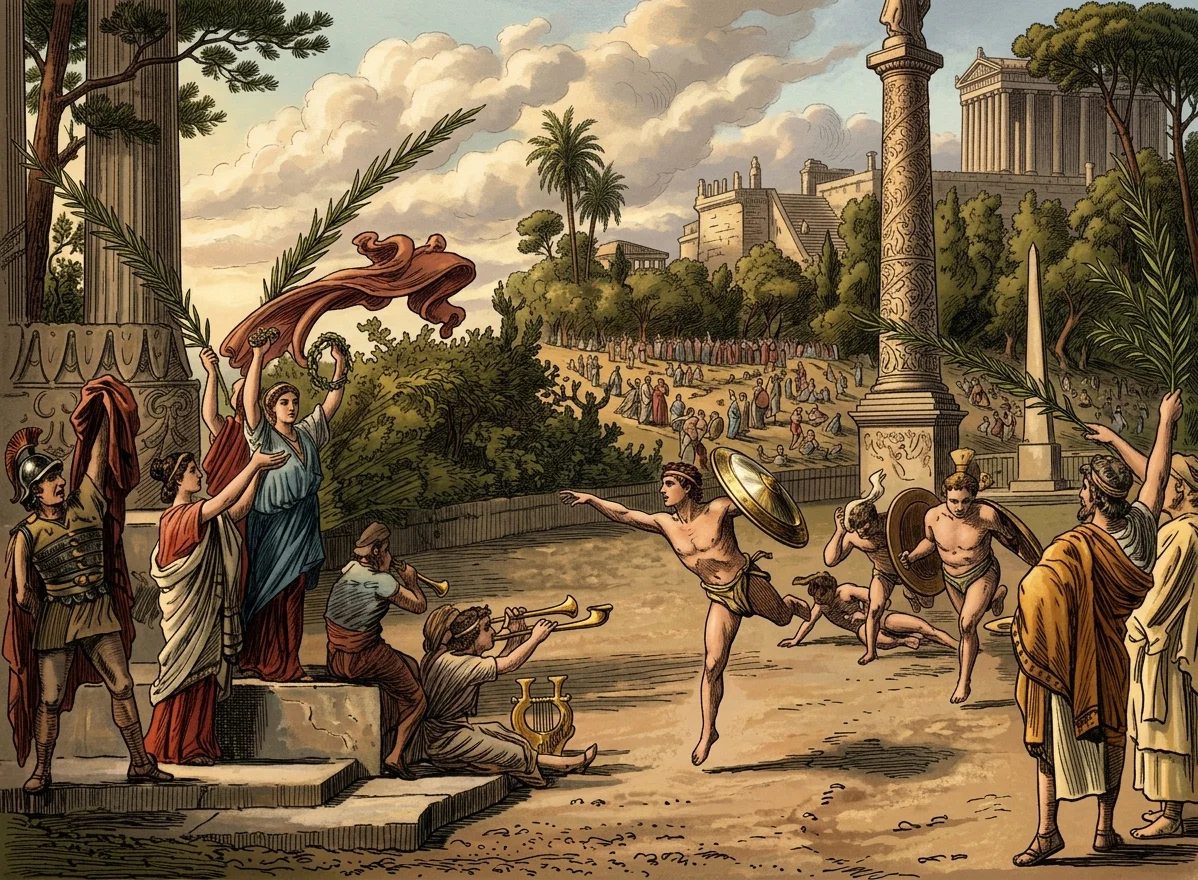
Christian Temperance is self-control for a high and noble purpose. The body is the temple of the Spirit of God, bought with the infinite price of the sacrifice of Christ. He desires to dwell therein. He would make every faculty of the mind, every power of the body, a trusted servant to do his will. He would have man by His power king over all base appetites and passion, controlling all, instead of being to them a slave. The apostle has given us an excellent and vivid illustration of this in the ancient games and races to which he refers in 1 Cor. 9:24–27:— “Know ye not that they which run in a race run all, but one receiveth the prize? Even so run, that ye may attain. And every man that striveth in the games is temperate in all things. Now they do it to receive a corruptible crown; but we an incorruptible. I therefore so run, as not uncertainly; so fight I, as not beating the air; but I buffet [“bruise,” margin] my body, and bring it into bondage; lest by any means, after that I have preached to others, I myself should be rejected.” R. V.
This striking simile, as others, can not be made to go on all fours, but note the following lessons:—
1. The Race.— The Christian race is not for a day, or an hour, or a few moments. It is a struggle, a contest for life with all the powers of evil. Its importance is infinite. All are in that race. The earth-life is the theater, men and angels the spectators. 1 Cor. 4:9.
2. The Crown.— The crown stands for the reward. In the Olympian games the crown won by the victor was wild olive; in the Pythian games, laurel; in the Numean, parsley; and in the Isthmian, pine. Altho these were all evergreens, they soon withered and faded. But the crown at the end of the Christian race is a “crown of righteousness” (2 Tim. 4:8), a “crown of life” (James 1:12), a fadeless “crown of glory” (1 Peter 5:4), an “incorruptible” crown (1 Cor. 9:25). And the crown is given the conqueror. It indicates a righteous character perfected, by the power of the endless life, a character transformed by God’s glory, pure and incorruptible. In the ancient games but one received a prize of all who entered at one time; but in the Christian race all may be victorious. “I therefore so run as not uncertainly,” says the apostle; “so fight I, as not beating the air.” So they ran in the ancient races. All were in doubt to the finish. There was but one crown—a corruptible one—waiting, and but one could wear it. But to the Christian race God calls all, and has a crown for every one he calls,—a crown of everlasting life.
3. The Preparation.— The striver for the mastery was temperate in all things. “Theregimen they were under,” says Rollin (vol. I, p. 47), “was very hard and severe. At first they had no other nourishment but dried figs, nuts, soft cheese, and a gross, heavy sort of bread called maza. They were absolutely forbidden the use of wine, and enjoined continence.” And all this for the honor of winning a race and a corruptible crown. So the pugilists of the present day, a class naturally self-indulgent, forego these pleasures, train for weeks and months, subject themselves to the severest discipline, that they may win a purse and a prize.
How much more ought the Christian to be temperate, to practise self-control. His opponents are not his fellows. He does not deprive a brother of a crown or a prize. His foes are the unseen spiritual powers of darkness, and the sensuality of the world, working through the lusts and passions inherent in the flesh. (See Eph. 6: 10–12; Col. 3: 5–14; 2 Cor. 10: 3–5; Rom. 8: 13; 13: 14.) The warfare is in the realm of thought and purpose, Christ dwelling within by faith (Eph. 3: 17), Christ living his life in us (Gal. 2: 20), and by the power of that life subjecting, crushing out, casting out, making to die, everything that rises up against God, and exalts itself against his holy will. It means self-denial of appetite, abstaining from everything which renders stupid the finer sensibilities, which makes gross the body, the temple of God, which excites or increases sensuality, which ministers to taste and desire rather than to strength and efficiency. It means control of habits of reading and thought; for there are fiction drunkards as truly as alcoholic drunkards. It means control in pleasure-seeking; for millions are intoxicated there. In short, it means that the whole man, body, soul, and spirit, shall be kept under that self-control that the Master’s voice may be heard, that his footsteps may be seen, that his hand may be felt, that every sense may be made responsive to his presence and guidance. “Whether therefore ye eat, or drink, or whatsoever ye do, do all to the glory of God.” 1 Cor. 10: 31.
Is it not worth while? Is not the reward, the gift, at the end sufficient? Nay, is it not worth the struggle, the discipline, the self-denial, the turning away from the thoughtless multitude, the giving up of evil habits of eating, drinking, reading, seeing, aye, all self-indulgence, and living for God’s glory? He takes from us no good thing. His ways are to the obedient sweet and pleasant, even tho they cost self-denial. His companionship, his indwelling, is worth more than all of earth. The clearer mind, the cleaner, better body, the purer soul, are worth more than all the pleasures of grosser sense the world can give. Temperance—self-control, by the Lord’s control—who would not possess it? “Who is wise, and he shall understand these things? prudent, and he shall know them? for the ways of the Lord are right, and the just shall walk in them; but the transgressors shall fall therein.”

“MUNICIPAL REFORM AND THE CHURCHES.”

We have received from Mr. Clinton Rogers Woodruff, chairman of the Publication Committee of the National Municipal League, Philadelphia, an article prepared for the National Municipal League, with the above title. It is written by Thomas N. Strong, the third vice-president of the national organization. Mr. Strong first sets forth the crying need of a reform in municipal government, a need which will be admitted by all. But while the need is admitted and realized, beyond a few ante-election promises, its admission thus far amounts to practically nothing. Mr. Strong says [Italics ours]:—
Local experience in Portland, Or., has been that boards of our best citizens, selected and appointed as public-spirited and disinterested men and taxpayers, for the carrying on of work in which every one was directly interested, have perhaps as often as our elected Common Council betrayed the interests of the city and used the powers given to them, not for the public good but for selfish interests, and this with rare exceptions is the common experience of cities with legislative boards and commissioners. However much the voters may be interested in selecting proper officials, can they guard against this abuse of power? Can they in any way compel their officers to do their duty? By a single deal the large taxpayers on the municipal board or committee can make directly or indirectly more money than the increase in their taxes so brought about would amount to in fifty years, and hence on such boards the pecuniary and personal interest of its members not only utterly fails to act as a check upon extravagance and corruption, but only promotes it, while the public, however keen its interest in the work may be, can not put intelligence and honesty into its servants, and only very rarely can discover, expose, or punish its guilty officers. Is then the case hopeless? Or can we bring into play some other agency or power commensurate with the evil sought to be removed?
Mr. Strong further points out a fact which the thoughtful observer will recognize, and that is the low political standard recognized as legitimate in American politics. He tells us that in America there has been developed a great deal of unreasoning admiration for the ward politician who in common parlance “gets there” by fair means or by foul, and there has also been developed an impression which largely possesses the public mind that to be successful as a politician it is not only necessary but right to be corrupt and dishonest, and that even upon these terms the “game is worth the candle.”
Therefore he concludes that “the disease is a moral one and must be met with moral remedies.” After raising the question whether there is an organization in this country that can grapple with the problem, he replies:—
Only one has the power. . . . The church membership and following is sufficiently numerous to impose its united will upon any political or municipal party in any city of the United States. It could, if united and determined, set up a political or a municipal ideal and compel politicians of every party to conform to it, and could so establish that ideal that all men would in municipal affairs live up to it. . . . The power existing and being adequate, it becomes a very practical problem of sociological engineering to determine how these reservoirs of moral power shall be brought to bear upon corrupt political traditions and ideals.
In the first place there is a churchly tradition coming down from the Dark Ages that the priest and minister must not concern himself too much with earthly affairs. This must be worn or cut away and the priest and minister ceasing to be of that fabled third sex must become a man of affairs and of the world. He must place himself under his share of the political burden, and as a teacher of the truth must speak fearlessly and apply the truth to modern conditions and necessities. . . . As suggested before, the church has a different standard of morals from either the merchant or the politician, and with this anomalous condition of the three existing moral standards [religious, business, political] the church is too well contented. The political standard sanctions bribery, corruption, theft, and violence so long as they prevail, and holds him a successful politician who so adroitly practises them as to keep out of the penitentiary and carry the day, and the church in practise as a whole really holds the same view, and makes no warfare upon its influential pew-holders who govern their public lives by such low maxims. Recognizing this false standard to be in existence, recognizing its baleful influence, recognizing it to be one of the great strongholds of evil, the church is withheld by man-made barriers from attacking it with full power.
And yet Mr. Strong hopes that by the “good engineering to control these great reservoirs of moral power,” a reform may be accomplished. He sees evidences of this:—
Nor are there wanting very plain signs that the church is awakening to its mission. In the movements of the last fifty years no modern sociological tendency is more marked than that which has been going on within the churches tending to withdraw them from merely theoretical into practical Christianity. There has been everywhere a wearing down of the barriers between the church and the world, and both have been gainers by the process.
The extracts quoted above give the gist of Mr. Strong’s essay. We admit the evil. We recognize the responsibility of the church with reference to much of the existing evil; but we believe that Mr. Strong and those working on the same lines are terribly mistaken in the application of the remedies. Consider—
1. Nearly all the men prominent in politics are members or pew-holders in some professedly “Christian” church. They are retained in these churches notwithstanding their political standard and practises. They are not only retained, but are flattered and honored. If the church in her inner life, where principles of truth, righteousness, and integrity alone should bear sway, can not effect reform in these men, how can she do it in the field of politics where expediency and policy bear sway?
2. “Our best citizens” in all cities are presumably church members, or men of high standing in church circles. If they now “betray the interests of the city,” and use “the powers given to them” “for selfish interests,” what reason have we to hope that they will not do the same if the church as a church place them in office? What additional moral power would the church in politics put into these “best citizens”?
3. If the pulpits of Christendom have done their duty in the past in proclaiming righteousness in view of eternal judgment, and this has been ineffectual to prevent fraud and betrayal of trusts on the part of her members, what right have we to expect that it will be more effectual when proclaimed from the rostrum than from the pulpit?
4. If “our best citizens,” church members, betray sacred trusts to further “selfish interests,” as Mr. Strong says they do, what right have we to expect that the other church members, when launched on the political sea, will do otherwise than our best citizens?
5. Whose “ideal” would be “set up”? On what ideal could all religious parties unite? And if the churches were united on a municipal ideal, what would prevent the scheming politicians every one from professing admiration to that ideal, swearing by it, professing the strictest sort of devotion to the church and political righteousness, and then after election do “practical politics” instead of carrying out, to their minds, impractical ideals?
6. Mr. Strong claims that “the church has a different standard of morals” from the men of the world, and yet he admits that “the church in practise” holds the political standard; andstill he sees signs of hope in the “wearing down of the barriers between the church and the world.” We confess we do not understand the ground of this reformer’s hope. The higher standard of the church seems to be that which pertains to the church alone, while the church at the same time holds another standard for the politician. To reform politics, therefore, the church must take control of municipal affairs as a church, with the municipal council as church wardens, deacons, or stewards. This is evident from the fact that in church capacity only is the high standard of morals held; for as soon as her children step outside of the church fold into the political field, she acquiesces in the standard of morals which there prevails and to which her children submit. Worse than this, the barriers between these standards are wearing down. The world with its motives and morals is in the church. In this we have Church and State union of the worst sort.
We might say much more along the same line. There was once a time when the elders and presbyters, the preachers and priests, left the pulpit, the ministry given of God (Matt. 28:19, 20; 2 Tim. 4:1–5) and concerned themselves with “earthly affairs.” The minister took upon himself “his share of the political burden.” He endeavored to put into the politics of government the moral standard of the church. The barriers wore down “between the church and the world.” The result was the disgraceful proceedings of the third and fourth centuries of the church, the corrupting of Christianity, and the fearful history of the Dark Ages. Are not the great denominations treading the same paths trodden by the bishops and their factions of the earlier centuries? Certainly the church and world are coming nearer together, there is “everywhere a wearing down of the barriers.” What is the effect? Let Dr. Moore, bishop of the Methodist Episcopal Church, editor of the Western Christian Advocate, of Cincinnati, Ohio, answer (we have not space to quote all):—
The class books are filled with names of unconverted men and women. Official members are to be found in box, dress circle, and parquet of opera and theater. Communicants take in the races, and give and attend card parties and dances. The distinction between the inside and outside is so obscure that men smile when asked to unite with the church, and sometimes tell us that they find the best men outside.
This witness is true; and the Methodist Church is no worse, we are constrained to believe, than others. But can a church of the above description reform the world? Nay, the world is deforming, has deformed, the church. Mingling in politics, out of her sphere, the church will rapidly grow worse, and partake more and more of the life of the world.
Could the church help in political matters?—Yes, but indirectly always. Let her do her appointed work. Let her ministers do theirs. Let them “preach the Word,” “preach the Gospel,” “preach Christ.” Let them follow the light of God’s word. Let them leave the criticism of the Old Book for the salvation of men. Let them enlist the church in this work. Let them warn against sin of every form and kind in view of the judgment to come. Such preaching will be the power of God unto the righteousness of salvation to all who believe, and it will have a restraining, holy influence upon those who do not believe a thousand times greater than a political church can have. Those who trust to political reform through the church will be terribly disappointed. Read its history in the Jewish nation, in the apostasy of the first centuries. The only true reform in which the church can take place and part is on Gospel lines according to the Word of God.

Bear Today’s Evils Patiently

Enjoy the blessings of this day, if God sends them; and the evils of it bear patiently and sweetly; for this day only is ours; we are dead to yesterday, and we are not yet born to the morrow.—Jeremy Taylor.

Question Corner

“Enquire, and make search, and ask diligently.”

No. 488. Gal. 4:21-28. The Two Covenants.

We give the passage below:—
“Tell me, ye that desire to be under the law, do ye not hear the law? For it is written, that Abraham had two sons, the one by a bondmaid, the other by a freewoman. But he who was of the bondwoman was born after the flesh; but he of the freewoman was by promise. Which things are an allegory: for these are the two covenants; the one from Mount Sinai, which gendereth to bondage, which is Agar. For this Agar is Mount Sinai in Arabia, and answereth to Jerusalem which now is, and is in bondage with her children. But Jerusalem which is above is free, which is the mother of us all. . . . Now we, brethren, as Isaac was, are the children of promise.”
1. “Under the law” means in a state of sin, not in harmony with the law. All who love sin and self hate God. And all who hate God’s ways love death. See Prov. 8:36. They do not desire condemnation of itself, but they desire the sin, which always leads to condemnation and the casting out of God’s kingdom.
2. Sarah was the freewoman, the lawful wife, and her child Isaac, born by the miraculous power of the Spirit of God, was the child of promise, the true and lawful heir.
3. Hagar (or Agar) was the bondwoman, whom Abraham, in fleshly wisdom and by fleshly works, thought to make the mother of the promised seed. But the son of Hagar, Ishmael, was a bondman, the child of the bondwoman.
4. Sarah represents the new covenant in Christ Jesus, made with Adam (Gen. 3:15), confirmed to Abraham (Gen. 22:17), and made sure by the death of Christ (Heb. 9:15, 24). This was the better covenant, established upon better promises, even the promises of God in Christ. These promises had power to change the heart, and write upon it God’s law, so that man might keep it. Heb. 8:8-12. The city of this new covenant is the New Jerusalem in heaven, which is free, even as all those born of God through faith in Christ are free. They are free because not under condemnation on account of sin. Their sins are forgiven, and they keep God’s law. 1 John 5:3. Like Isaac, the children of faith are the children of God’s promise.
5. Hagar represents the covenant made at Horeb, or Sinai (Ex. 19:3-8), in which the children of Israel promised to obey. They thought they could do it in their strength, even as Abraham thought God’s will could be accomplished through the son of Hagar. But in their own strength they failed. They did not have God’s power and promise and law in their heart, hence could not keep his law, and in their carnal hearts it brought them into deeper bondage to sin. And all who hope to be saved because they are Jews, or Abraham’s children according to the flesh, are children of bondage even as was Ishmael. The children of the old covenant are those who seek by their own works to do God’s will, hoping in themselves. This will always lead to the bondage of sin. And such doctrines will gender, or beget, children to bondage.
But to the righteous, “Ye are all the children of God by faith in Christ Jesus.” Gal. 3:26. This is the “faith which worketh by love.” Gal. 5:6. “This is the love of God, that we keep his commandments.” 1 John 5:3. But even as of old, those who hold to the old covenant of men’s doings will persecute those who believe in Christ, and do God’s will.

No. 489. Gal. 3:24, 25. Our Schoolmaster.

PLEASE explain Gal. 3:24, 25. J. M. B.
The text means, just what God has said over and over again, that the Spirit of God (John 16:8, 9) by means of the law convicts the sinner of sin (Rom. 3:20 and 7:7). But God does not convict of sin that the sinner may be discouraged or die, but to lead him to Christ. “Wherefore the law was our schoolmaster [pedagog, an officer that took the boys to school] to bring us unto Christ, that we might be justified by faith.” It so shuts us up that the only way from its condemnation is through Jesus Christ. Verse 25. “But after that faith is come, we are no longer under a schoolmaster,” no longer under the condemnation of the law. See Rom. 5:1 and 8:1. “Under the law” means under its condemnation.

No. 490. Heb. 7:12. What Law?

“For the priesthood being changed, there is made of necessity a change also of the law.” What law?—The law regulating the priesthood, and no other. According to the Levitical law the priesthood was vested in the tribe of Levi and the house of Aaron. Heb. 7:11. Jesus being of the tribe of Judah (verse 14), it is evident that he could not serve as priest at the altar under the Levitical law. But as the time came when he was to be priest on his Father’s throne (Zech. 6:12, 13; Heb. 8:1), he must necessarily serve under a different law. Hence the law of the Levitical priesthood here terminated, and the law of the royal priesthood of Christ began. The expression has no reference to the moral law.

No. 491. 1 Peter 1:22.

We do not know how this verse may be made plainer, or on what special point explanation is desired. The apostle tells the disciples that as they had, by the power of the Spirit, purified their souls by obeying the truth of the Gospel, by faith, of course (Acts 15:9), learning in this way to truly love their brethren, they should continue to love one another with a pure heart fervently. This obedience is yielding to do in simple faith whatever God commands. It is by thus doing that the truth of God comes in and takes the place of sin and selfishness. He who pauses at any command of God and refuses to obey, by so doing shuts his heart against God’s blessed presence, and remains unpurified.

No. 492. The Correct Name.

PLEASE inform me which is the correct name of the Baptist who was compelled by the Puritans to leave Massachusetts, William Rogers or Roger Williams? W. F.
The correct name is Roger Williams. He was born about 1600, and died at Providence, Rhode Island, April, 1683. The exact time and place of birth are in dispute. He was educated in the Church of England, took his university course at Cambridge, probably, and served as a clergyman. He could not, with his ideas of religious liberty, belong to the national church, and was compelled to sail for America, arriving in Boston, February, 1631. In October, 1635, it was by the General Court of Plymouth “ordered that the said Mr. Williams shall depart out of this jurisdiction within six weeks now next ensuing.” It was in 1639 that he became a Baptist. His views of religious liberty held previous to this were probably learned from that denomination.

No. 493. The Genealogies of Christ.

How do you harmonize the account of the genealogy of Jesus that Matthew gives with that of Luke? J. E. S.
Matthew is believed to give the genealogy of Joseph, Luke the genealogy of Mary. Heli is supposed to be the father of Mary, and the father-in-law of Joseph, and hence the grandfather of Jesus. Luke traces the pedigree back to the promise of the seed of the woman in the beginning, but through the males, as it was thus the genealogy was reckoned. Matthew traces the legal pedigree through Joseph.

No. 494. 1 Cor. 12:4-11. Gifts of the Spirit.

WILL you please explain 1 Cor. 12:4-11, concerning diversities of gifts, discerning of spirits, etc.? W. S. G.
We have not space in this column for this purpose. It will doubtless be considered in the SIGNS during the year. For a brief explanation see Bible Students’ Library No. 77, “The Talents,” price, 2 cents.

THE PAPAL ELECTION.

Now that the condition of Pope Leo XIII. is such that his death is expected to occur at any time, the matter of the election of his successor is beginning to be discussed. The present pope has ruled since 1878, but it is certain that he can not rule much longer. It is now reported that he has sent official notifications to the Catholic governments of Europe, Austria, France, Spain, and Portugal, that they can not exercise the right formerly claimed by them, to veto the election of the pope in case a man is elected to that office which they fear will be inimical to their interests. This statement calls up the manner of the election of the pope. The first bishop of Rome, who was nothing but a chosen presbyter, was selected by the Christians of that city, to take the lead in public worship, and to act as an overseer of the church. After the empire became nominally Christian, the emperor of Rome had much to do with the election of the bishop, or, as he finally came to be called, “pope of Rome.” Before the Papacy became independent of the eastern empires, in 753, the pope was chosen by the people of Rome, who were nearly all nominally Christian; but the emperor of the east reserved the right to veto or confirm the election. After the Papacy separated from the east, in 753, and joined itself to the nations of the west, the western monarchs claimed about the same right that the emperors of the east had done in regard to the Papacy. This right, tho rarely exercised, has never been given up by the monarchs of the west, and it is a matter of modern history that the emperor of Austria was strongly inclined to prevent Pope Pius IX., whom the present pope succeeded, from taking his seat after his election, because of the liberal principles which he at that time was known to hold and advocate. Great changes have taken place in the manner of electing a pope from what were practised in early times. Now the whole right to elect a pope rests in the College of Cardinals, composed of seventy persons, and, as these are almost entirely Italian, and the pope must be elected from one of their own number, the primacy is practically confined to men of the Italian race.
The special reason urged by the pope against any Catholic government taking any part, either by influence upon cardinals, a very common way, or by a veto, is that since these governments are now separate from the church, they have no right to meddle in the election of a pope. The principle of this contention is correct. Church officials, from the highest to the lowest, should be elected by the church, and civil governments should have nothing to do about it. The only reason why any government ever held that it had a right to participate in the election of a pope, was because of certain conditions which were the result of a union of these governments with the church, represented by the Papacy. One of these was that the Papacy claimed the right to appoint the bishops of the church in these various countries. In those days a bishop was a great man; he possessed a castle, had a host of armed retainers, and was, in fact, one of the peers of the realm. The monarchs of Europe thought that if the pope could thus appoint the lords of their empires, they, the kings, should have the right to have something to say about the election of the man whose power was continually thrust into their kingdom. Volumes have been written in regard to this question, and other questions of right and privilege growing out of the then mutual relations of the pope and the kings. The pope now claims that these relations are past, and that therefore the free action of the College of Cardinals in electing a pope must not be interfered with.
But we doubt very much if the Catholic Church is so separate from these governments as to warrant the pope in making such a statement. It is true that some of these governments are not openly pledged to maintain the Papacy as a civil power, and to do so while the Triple Alliance is in force, by any power, would be tantamount to a declaration of war upon the Alliance, since Italy, which forms one of the parties of the Alliance, holds the States of the Church as a part of its territory. But the results of the former Alliances of this government with the Papacy are still in existence. In some of these countries the bishops of the Catholic Church are still appointed by the pope. In Belgium the pope appoints whom he pleases, but the bishops’ salaries are voted in the annual budget, so that the Belgian Government will not pay a bishop who is obnoxious to it. In Austria the emperor selects three names for an appointment, and the pope appoints one of them. In all the Catholic countries the pope has some rights in the selection of bishops, and all the bishops consult him in regard to their respective fields, and the attitude they should take in their relation to the governments.
The very fact that the pope regards some of the governments of Europe as peculiarly Catholic, evinces that there is a distinct relation between the Papacy and those governments which does not exist between the Papacy and other powers. Now, so long as the Papacy has so much to do in the appointment of bishops in these countries, who wield so strong an influence upon the people, and thus affect government measures, keeping in force laws sustaining church dogmas and privileges fastened upon these governments, and embedded in their laws centuries ago, when the union between Church and State was much more marked than at present, it can hardly be truthfully said that there is not at present a union between the Papacy and these countries. There is such a condition as a tacit union without a specified treaty or “concordat,” as a treaty between the Papacy and the governments has been called. Hence, by virtue of the union which actually exists, these governments do have some right to take part in the election of a pope. Otherwise they have no compensation for the tremendous influence which the Papacy wields in those countries. It looks as tho the pope, while claiming all the advantages to the Papacy which come to it by a union to each of these governments, denies to these governments their right to interfere at all in church affairs, on the ground that such a compact does not exist. Evidently the death of the present pope will reopen the question of the relation of the Papacy to the governments of Europe, and very interesting developments may be expected.
M. E. K.

GOOD COUNSEL.

We clip the following from the Noblesville (Indiana) Ledger. It contains common sense, and the latter part of it is good advice from a political view point:—
“Man shall not live by bread alone, but by every word that proceedeth out of the mouth of God.” Matt. 4:4. “The words that I speak unto you, they are spirit, and they are life.” John 6:63. In the old book of the law we read these words: “And he said unto them, Set your hearts unto all the words which I testify among you this day, . . . because it is your life.” Deut. 32:46, 47. These scriptures settle forever the great question of life,—eternal life in the Word. That is, we have eternal life promised us through the Word by obedience. And when we have not his Word abiding in us, we are severed from the life of God, and are liable to do any wickedness.
Geikie in his Life of Christ, page 55, says: “That One who came not indeed to destroy the law and the prophets, but to free them from the perversions of rabbinical theology, should have been met by the bitterest hatred and a cruel death was only an illustration of the sad truth to which every age has borne witness, that ecclesiastical bodies who have the power to persecute, identify even the abuse of their system with the defense of religion, and are capable of any crime in their blind intolerance.”
And now, kind friends and good neighbors, let me appeal to you as the rulers of these United States of America. When you send your servant to the Legislature, and he should so far forget himself as to introduce a religious question into that assembly, as was done at the fifty-second Congress, call him home, put him to plowing or carrying the hod. It will do him good to work alongside of the poor toilers of earth for a time. Then before you send him back take him into your room and thoroughly instruct him. Tell him that our government is a civil and not a religious institution; then if he should say, “Why, our good minister brought this petition to us to make a Sunday law,” then tell your public servant, senator tho he may be, that he should be very kind to his old pastor, yet firm, and show him that he is out of his place; that the calling of a minister of Christ is a higher calling than even a senator, and that it is his glorious privilege to “preach the Word”—the Word of life—and thereby save souls from death; that these religious laws in colonial times burnt Spiritualists, whipped Baptists, and hanged Quakers; that religious liberty is the purchase of the Saviour’s blood and of millions of martyrs, and that Sunday laws are in a direct line with all the horrid persecutions of which history has furnished “an awful warning.”
Continue reading: SATAN’S POWER TO RULE