Your ShelfYour Projects

Signs of the Times, Vol. 36, No. 15.

Question Corner
Earlier text: Question Corner

The Great Threefold Message

By R. S. Owen
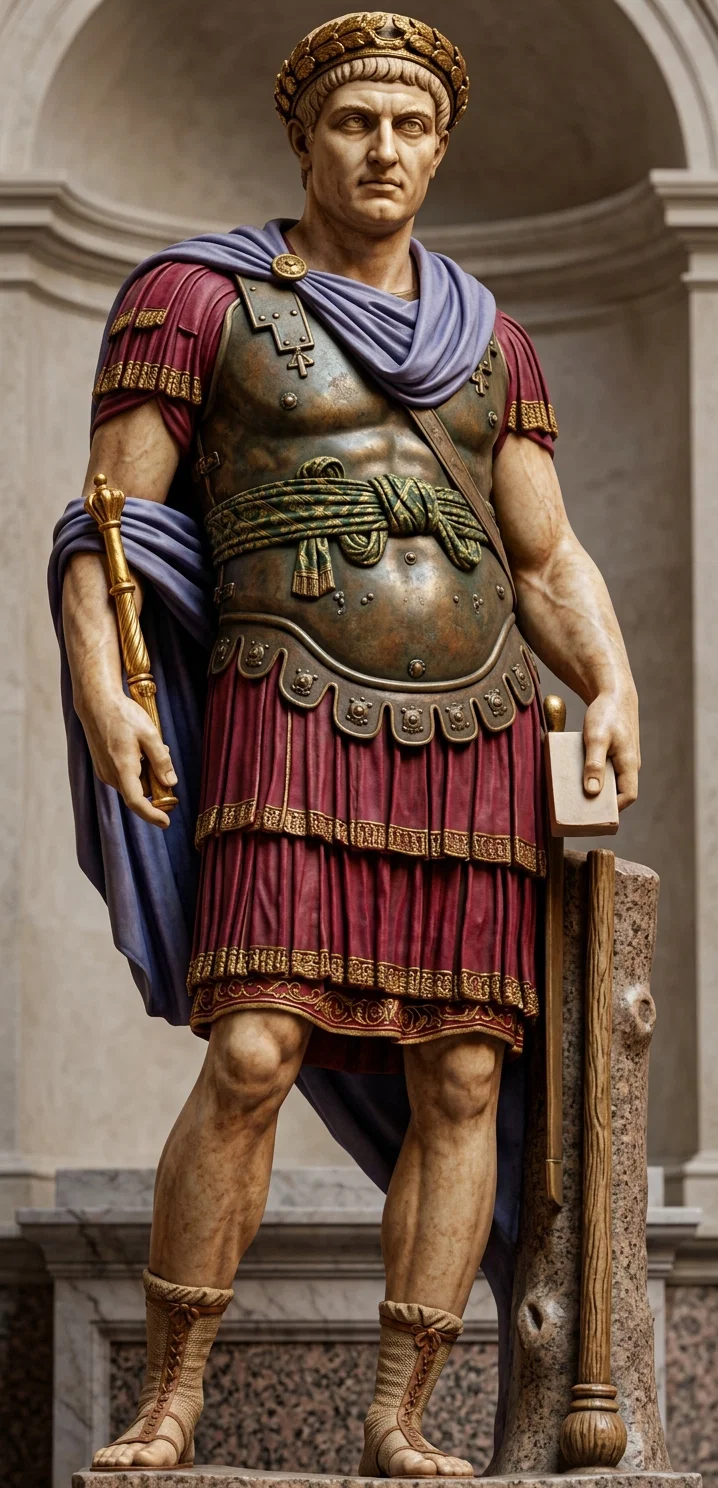
Constantine the Great.

VII. The Beast and the Image

The beast here referred to is the one to whom the image is made, for the text reads, “the beast and his image.” In Rev. 13:14 we find it stated that the image is made to the beast which had the wound by the sword and did live. Verse 3 reads: “I saw one of his heads as it were wounded to death; but his deadly wound was healed.” From this we learn that the image is an image to one of the heads, but an image to the head must in a certain sense be an image to the beast, for a beast must work through its head. And yet there must be some reason for thus stating that the image is made to the beast that was wounded and did live, and also that one of its heads was wounded and healed.

What Constitutes a Head?

Revelation 17:9 reads: “Here is the mind that hath wisdom. The seven heads are seven mountains, on which the woman sitteth: and they are seven kings,” or kingdoms. A woman represents a church (2 Cor. 11:2), and a mountain, a kingdom (Dan. 2:34, 35). Then a head is not a church alone, nor is it a kingdom alone, but it is a mountain (kingdom) on which a woman (church) sits, or a union of church and state. Thus we find that the image is to be made to a union of church and state, which union or head constituted the beast herein described and which has existed in the past and which has received a deadly wound. It was not the church nor was it the state that received the deadly wound, but the union of the two was so wounded that had no healing come the thing would have been forever dead. The state (civil power) has existed all along, and so has the church or religion, and the union of the two, altho having received a deadly wound, has been preserved in principle with sufficient life in it to finally produce an image. This image must be a union of the civil power with an ecclesiastical, not with the old, for that would be the thing itself instead of an image, but a union between the civil and another ecclesiastical power, which has in it so many of the characteristics of the old as to closely resemble it and thus constitute an image.
Going back in the history of the world to the third and fourth centuries of the Christian era, we find a church which was working in every possible way to bring to her support the civil power. This movement accomplished its purpose when the bishop and clergy of the Roman church sent a delegation to Constantine asking him to come to the rescue of the church, which he did, and there was effected a close alliance between that religion and the state. This alliance was strengthened from time to time by legislation favorable to the church and the clergy, until the time came when the church became the dominant factor in the alliance, and in that condition we see the figure of the revelator fulfilled — the woman sitting upon the mountain; that is, the church holding the supremacy over the civil power, so that it is subservient to her will and carries out her wishes.
But such a union of the civil power with the Christian religion must be destructive of both, for the sphere and operating principle of each are distinct and separate. The sphere of the civil is to restrain the evil; the sphere of the ecclesiastical is to cure the evil. The principle of the first is to administer punishment in justice for all civil offenses; the principle of the second is to present before men God’s mercy and forgiveness of all sins upon confession and true repentance. Both are ordained of God, and each is to serve God’s purpose in its own sphere; but the introduction of the principles of the church (mercy and forgiveness) into the civil affairs did defeat the object of the civil power and virtually set aside its authority, because it enabled the wickedest men in the Roman Empire, the worst criminals that age produced, to escape punishment and go free if they would only profess the established religion and claim the benefits of the mercy and forgiveness; while on the other hand, the introduction of the principles of the civil (punishment of the evil) into the church subjected the heretic, even the guilty of no civil offense, to the severest penalties of the law.
The Scriptures foretold a falling away which was to take place among the children of God and which would result in the development of the man of sin who would sit in the temple of God acting “as if he were God;” that is, exercising the rights and prerogatives which belong only to God. See 2 Thess. 2:3, 4, Douay translation. In this falling away, corrupt men became bishops of the Roman Church, assuming authority and power which did not belong to any man. By influencing legislation to back them up in this, they soon became recognized by powers of Western Europe as the head of all churches and the corrector of all heretics. The religion of Jesus was corrupted, persecution followed, and thousands of innocent persons were put to death for no other reason than that of not accepting the degenerate Christianity of the See of Rome, while unscrupulous, scheming knaves stood in high favor simply because they professed the established faith and allied themselves with the church.
All this was the direct result of the union of church and state; the church wielding the civil authority, and assuming the right to judge heretics and to forgive sins. This produced an almost intolerable state of affairs in Europe, and while she was thus groaning under this burden of oppression, and the waves of persecution were even sweeping farther and farther into Asia and Africa, America was discovered, and with open arms invited the oppressed of all lands to her borders. The purpose of the Pilgrim Fathers in seeking this country was to found a kingdom without a king, and a church without a pope. But alas, they had not fully learned the lesson, for in some of these colonies persecution was soon begun, and the Quakers, Baptists, and others suffered at its hand.
(To be continued.)

Jewish Sabbath Lights

ONE of the time-honored ceremonies of Jewish domestic life, the act devolving exclusively upon the mothers in Israel, is that connected with the blessing of the Sabbath lights.
On the eve of the Sabbath or festival, just as the shadows of the night are approaching, the Jewish matron prepares her Sabbath candles in silver candlesticks — generally heirlooms — and after they are lit announces with outstretched palms a blessing upon the Sabbath lights, in order to keep the light of the departing week-day from view, so that upon the removal of her hands she can immediately greet the refulgent light of the Sabbath — typical of joy, and purity, and rest.—Hebrew Standard.

Charity Thinketh No Evil

REMEMBER that charity thinketh no evil, much less repeats it. There are two good rules which ought to be written on every heart: Never believe anything bad about anybody unless you positively know it is true; never tell even that, unless you feel that it is absolutely necessary, and that God is listening while you tell it.—Henry Van Dyke.

Do Something for God

Be thy best thoughts to work divine addressed; Do something,— do it soon — with all thy might: An angel’s wing would droop if long at rest, And God Himself inactive were no longer blessed. — Carlos Wilcox.

Did Jesus Change the Sabbath?

If His law, the great Jehovah says: “My covenant will I not break, nor alter the thing that is gone out of My lips.” Ps. 89:34. Again: “All His precepts are sure. They stand fast forever and ever; they are done in truth and uprightness.” Ps. 111:7, 8.
Now could it be possible for Jesus to change the Commandments after God had given His word that they should stand fast forever and ever, and had sent Him to earth, that He might “magnify the law and make it honorable”? Isa. 42:21.
Jesus said, “For I came down from heaven, not to do Mine own will, but the will of Him that sent Me.” In the Sermon on the Mount He magnified the law. In the beginning of that sermon He said, “Think not that I am come to destroy the law, or the prophets: I am not come to destroy, but to fulfil. For verily I say unto you, Till heaven and earth pass away, one jot or one tittle shall in no wise pass away from the law, till all things be accomplished.” Matt. 5:17, 18. Has the heaven or the earth passed away? Have all things predicted by the prophets been accomplished?
Now if Jesus could have changed the law, and had done so after all God had said about its standing fast forever, and after all the promises Christ had made about doing His Father’s will, magnifying the law, and not destroying it; if He could have changed it, would it not have been a most dishonorable thing for Him to do? God’s government is founded in truth and uprightness; Jesus is the truth, and He and His Father are one. John 14:6; 10:35. Surely, He did not therefore change the Sabbath.
LUELLA L. HARMON.

The Uncertainty of Knowledge

I seized the opportunity some little while ago, on finding myself sitting next to a great physicist, of asking him a series of fumbling questions on the subject of modern theories of matter. For an hour I stumbled like a child, supported by a strong hand, in a dim and unfamiliar world, among the mysterious essences of things. I do not know that I acquired any precise knowledge, but I drank deep drafts of wonder and awe.
The great man, with his amused and weary smile, was infinitely gentle, and left me, I will say, far more conscious of the beauty and holiness of knowledge. I said something to him about the sense of power that such knowledge must give.
“Ah!” he said, “much of what I have told you is not proved, it is only suspected. We are very much in the dark about these things yet. Probably if a physicist of a hundred years hence could overhear me, he would be amazed to think that a sensible man could make such puerile statements. Power—no, it is not that! It rather makes one realize one’s feebleness in being so uncertain about things that are absolutely certain and precise in themselves, if we could but see the truth. It is much more like the apostle who said, ‘Lord, I believe; help Thou mine unbelief.’ The thing one wonders at is the courage of the men who dare to think they know.”— A. C. Benson.

Signs of His Coming—Peace and Safety

1. What proclamation did the prophet Joel foretell for the “latter days”?
“Proclaim ye this among the nations; prepare war; stir up the mighty men; let all the men of war draw near, let them come up. Beat your plowshares into swords, and your pruning-hooks into spears: let the weak say, I am strong.” Joel 3:9, 10.
2. At the same time, what will the people be saying?
“It shall come to pass in the latter days . . . many people shall go and say, Come ye, and let us go up to the mountain of Jehovah, . . . and He will decide between the nations, and will decide concerning many peoples; and they shall beat their swords into plowshares, and their spears into pruning-hooks; nation shall not lift up sword against nation, neither shall they learn war any more.” Isa. 2:3-4.
3. How is this latter prophecy being fulfilled?
By the establishment of The Hague Peace Congress, and by local peace congresses in many different countries. For many years Chili and Argentina were at war over their boundary line. It was considered a great victory for peace when the two nations were induced to erect a colossal statue of Christ on the disputed line, which had been fixed by arbitration instead of by war. On the very summit of the Andes it stands as it was erected March 13, 1904.
4. What has been the result?
For a time peace reigned in the two countries. The new battle-ships were sold, and the proceeds were turned to peaceful uses. Regiments of soldiers were mustered out, arsenals were turned into schools, and taxes were reduced. But now the war spirit is breaking out. Argentina is building battle-ships; in fact, all the South American governments are almost constantly in a turmoil of war and intrigue.
5. How are the great nations of earth showing that universal peace is not imminent?
Of the billion dollars appropriated by the last Congress in our own country, one half was for war purposes. England and Germany constantly strive to outdo each other in the matter of war preparations. By 1912 Germany will have seventeen battle-ships of the Dreadnaught class, and England will have twenty-two or more. Other nations are proportionately active.
6. Speaking of the time of the end, what did the prophet Isaiah say?
“Make an uproar, O ye peoples, and be broken in pieces; and give ear, all ye of far countries; gird yourselves, and be broken in pieces; gird yourselves, and be broken in pieces. Take counsel together, and it shall be brought to naught; speak the word, and it shall not stand!” Isa. 8:9, 10.
7. How were conditions of this same time described by Jeremiah?
“Then said I, Ah, Lord Jehovah! behold, the prophets say unto them, Ye shall not see the sword, neither shall ye have famine; but I will give you assured peace in this place. Then Jehovah said unto me, The prophets prophesy lies in My name; I sent them not, neither have I commanded them, neither spake I unto them; they prophesy unto you a lying vision, and divination, and a thing of naught, and the deceit of their own heart.” Jer. 14:13, 14.
8. When these conditions of federating and counseling and banding together for peace are manifest, for what may we look?
“When they are saying, Peace and safety, then sudden destruction cometh upon them, as travail upon a woman with child; and they shall in no wise escape.” 1 Thess. 5:3.
“Thus saith Jehovah concerning the prophets that prophesy in My name, and I sent them not, yet they say, Sword and famine shall not be in the land: by sword and famine shall those prophets be consumed.” Jer. 14:15.
9. What event will bring this “sudden destruction”?
“The day of the Lord so cometh as a thief in the night,” “when they are saying, Peace and safety.” 1 Thess. 5:2, 3.
“Look not on earth for strife to cease, Look not below for joy and peace, Until the Saviour comes again To banish death and sin.” H.

Shut in with Thee

By Mrs. L. D. Avery-Shuttle
I. WHEN angel fingers softly draw The somber curtain of the night, And o’er the landscape gently falls The pale moon’s soft and shimmering light, Then, O my Master, would I be Shut in with Thee.
II. I am so tired of serving, Lord, So weary; let me softly rest, E’en as the loved disciples lean Upon my blessed Master’s breast. I long for quiet; let me be Shut in with Thee.
III. Then canst Thou speak to me, dear Lord, And gently tell me all Thy love; Then canst Thou show me my mistakes, And all Thy wondrous goodness prove. And so I only long to be Shut in with Thee.
IV. Yes, I am tired to-night, my Lord, My only guest is sad-eyed Pain, And on my heart her hand is laid, And on my weary, weary brain, And O, my soul so longs to be Shut in with Thee.
V. Shut in with Thee; and all the world Shut out for one brief, blessed hour; I’d talk with Thee as Moses did, And realize Thy quickening power; I’d feel Thy love constraining me — Shut in with Thee.
VI. I need to hear Thy voice, O Lord, As Lazarus did, when dusty death Had laid him low, and Thy strange word Brought back again his fleeting breath; Or, like Jairus’ daughter, be Shut in with Thee.
VII. I care not what shall shut me in,— Soft draperies or prison bars,— It matters not; for on faith’s wing My soul shall mount beyond the stars. Then shall my thirsty spirit be Shut in with Thee.

The Moral Character of Men and Women

“WOMANHOOD is only safe morally where manhood is sound morally. No amount of fine theorizing, or the application of regulative experiments, can keep the sexes from rising or falling together.”

Influence

THE smallest bark on life's tumultuous ocean Will leave a track behind forevermore; The lightest wave of influence set in motion, Extends and widens to the eternal shore. We should be wary, then, who go before. The souls who yet may be; and we should take Our bearing carefully, where breakers roar And fearful tempests gather; one mistake May wreck unnumbered barks that follow in our wake.
— Sarah T. Bolton.

Behold, the Lamb of God

“BEHOLD” is preeminently a Bible word, occurring in our common version nearly thirteen hundred times. It is an emphatic word, calling one not to a mere glance, not simply to see, but to fix the attention upon, to see, observe, keep; to see so as to make it one’s own, to grasp by the sense of vision.
When, therefore, the messenger of God, with kindling eye and ringing voice, declared on that long-ago morning, as he stood by old Jordan’s side among his disciples, “Behold, the Lamb of God, that taketh away the sin of the world,” he called for no casual look, no mere glance of acquiescence, no mere look of curiosity or recognition. He desired his hearers to look, to grasp, to hold in comprehension, the Lamb of God, the world’s Saviour.
It is God’s cry of the ages to the children of men; for Jesus Christ is “the Lamb slain from the foundation of the world,” “who verily was foreordained before the foundation of the world, but was manifest in these last times to you.” When Abel offered the spotless lamb, he, as the messenger of God, pointed to the Infinite Sacrifice, and said, “Behold, the Lamb of God, that taketh away the sin of the world.” And every lamb offered subsequently, every kid of the goats, every sin-offering according to God’s direction, pointed forward to the great Antitype. When Moses lifted up the serpent in the wilderness, and asked the serpent-bitten host of Israel to look, there was life in the look; it was the type of the lifting up of Him who “became sin for us, who knew no sin, that we might be made the righteousness of God in Him.” Faith saw through the symbol to the mercy and power of the One symbolized.
“There is life in a look at the sacred cross, Jesus has said, ‘Look unto Me.’”
You can not take away your sin, it is a heavy burden weighing you down to perpetual slavery, sinking you beneath the water-floods to everlasting ruin. God does not demand that you shall rid yourself of this burden. He knows that you can not do this. You have no power to lift yourself above yourself. You seem to do it at times, but when strength is spent, you find yourself on the same old level of self. Give over the hopeless struggle. Yield your sins and will and way to God, and look and live. He will pardon; He will cleanse; He will save; if you will but look. Surely you can do that.
Moreover there is a principle involved in the looking. It was not a mere fact uttered by the apostle when he said, “But we all, with open face, beholding as in a glass the glory of the Lord, are changed into the same image from glory to glory, even as by the Spirit of the Lord.” “By beholding we become changed.” If we continually behold evil; our minds absorb the evil. Looking steadfastly at one color for a long time, we see it still when looking elsewhere. Other things are tinged with the same hue. The politician has looked on politics so long that he sees politics in everything, even in Christianity. The money-maker gluts his eyes with gold till he asks, “How much can I get out of godliness?” The mouser after the wickedness of the slums, and dark places of our cities, does not see the bright pearls and jewels of righteousness which God has placed in the highway of holiness, where the servant of God ought to be, and to which he ought to invite the weary wallowers of the mire. Just before him walks Jesus, and his cry ought to be, “Behold, the Lamb of God, that taketh away the sin of the world.”
Sinner, there is all hope for you in beholding the Lamb of God, in looking unto Jesus. It matters not what the sin may have been; give it up forever, and look unto Him with single eye, with open heart, and the divine rays of light will illuminate your whole being, shine away the darkness, and cleanse the sin. He invites, “Look unto Me, and be ye saved, all the ends of the earth; for I am God, and there is none else.” Would you make progress?—Continue “looking unto Jesus,” the Beginner and the Finisher of our faith. Let His light and beauty flood your soul. Does darkness settle around you? Let faith pierce the darkness, and behold the constant shining of the Sun of Righteousness “with healing in His beams.” Let riches tend to luxury and ease; let harlotry tend to sensuousness and destruction; in Jesus Christ is more joy than sin can give. “Behold, the Lamb of God.” Look constantly to Jesus. See what He endured that He might save you. Behold what He has in store for you. Let His sunlight of love flood continually your entire being, shining through you to others. By thus beholding you will become changed to the same image, and your whole life will be a constant transformation “from glory to glory.” “Behold, the Lamb of God, that taketh away the sin of the world.” “Looking unto Jesus the Author and Finisher of our faith.”

Not Place, but Principles

AMONG the myriads of worlds, doubtless, created of God, this planet revolted. Here the arch-enemy of righteousness — Satan — has put forth his mightiest efforts against God and His government. In this planet, therefore, God takes a peculiar interest. To this planet He gave His law with audible voice and engraved it upon tables of stone. To this planet of the myriads He sent His only begotten Son, the Anointed of the Father. To this world is He coming again to lift forever the curse of sin and bring harmony into the universe.
“Preposterous, incredible, unreasonable,” skeptics sometimes tell us, “that God should thus honor this mere speck in His universe.” Yet why should it be so considered? If the problem of sin must be worked out in God’s infinite realms, why not here?
Read of the great decisive battles of this world. How few of them occurred in places at all prominent. Since the decisive conflict, the place of battle became famous. Before the onset of opposing forces the place may even have been nameless. What was Arbela before Alexander the Macedonian and Darius the Persian measured forces for the empire of the world? What was Waterloo before Wellington defeated the great Napoleon there? Utterly insignificant of themselves were these places, but the questions there decided were momentous. World-empire was involved, and great principles were in the balance.
What does it matter to a ruler as to what place the enemy enters his dominion? It may be at a small hamlet in his outmost borders, but the problem is based on the same principles as tho his very capital had been entered. The problem of dominion, of right to rule, of strength of forces, of the government of the people, is the same in any parts of realm, and all his forces will be centered upon that spot till the question of supremacy is there settled.
So it is with this little earth. Here is waged the warfare between eternal Right and usurping Wrong; between everlasting Law and Life, and Perverted Law and Death; between Infinite Love and Selfishness. But in these principles are involved the dominion and existence of the universe. Thank God, every battle fought has given assurance of final and complete victory. Jesus Christ is our Captain, and He is ever victorious.

Witnesses for Christ

The work of Christ was simply a presentation to the world of what the Father is. The mighty miracles of Christ, His powerful life of righteousness, the gracious words that He spoke, every act of devoted love and mercy, were all to show lost and fallen mankind how much the Father in heaven loves us.
As we review these mighty works of Christ in manifesting the Father to the world, we should not overlook the great promise. We are too apt to think that the mighty works of Christ are ended. We look upon what the Master Himself did, and are lost in wonder and admiration. But do we grasp what He proposes to do through us?
The work of manifesting the Father to the world is not completed. Christ did His part while here upon earth, but He has seen fit to share this work with His followers. “Verily, verily, I say unto you, he that believeth on Me, the works that I do shall he do also; and greater works than these shall he do; because I go unto My Father.”
Most blessed promise! “He that believeth on Me,” says the Lord, “the works that I do shall he do also.” Repeat this promise o’er and o’er. Believe it. Feed upon it. And then let the mind be expanded to grasp the still greater promise, “And greater works than these shall he do; because I go unto My Father.”
The foundation of all the mighty works of Christ was His completely perfect life. And when He promises that we shall do theworks that He did, He gives us the assurance that we shall have power to live His perfect life.
This is the word of the Master, and it can not fail. But He must have a channel of purity and righteousness through which to work. And if we, as individuals, are to be the instruments of these greater works, we must first yield to His cleansing power so that He may prepare us for it.
Most inspiring are the promises of the Lord to every one of us! How they should fill us with the deepest devotion to His righteous cause!

Our Bible Band

Schedule for Week Ending April 24, 1909.

Day Date Morning Evening
Su. April 18 2 Sam. 3, 4, 5 Luke 14:25-35
Mo. " 19 " 6, 7, 8 " 15: 1-10
Tu. " 20 " 9, 10, 11 " 15:11-32
We. " 21 " 12, 13 " 16
Th. " 22 " 14, 15 " 17: 1-19
Fr. " 23 " 16, 17, 18 " 17:20-37
Sa. " 24 " 19, 20 " 18: 1-23

Suggestive Notes.

Our Old Testament lessons begin with the “long war” between the house of Saul and the house of David, 2 Samuel 3, and close with chapter 20. In this brief space is told the history of Abner’s revolt to David, the murder of Abner by Joab on account of the slaying of Saul’s son Ishbosheth, David’s capture of the city of Zion, his defeat of the Philistines, the bringing up of the ark, and the slaying of Uzzah; David’s plan to build a temple, his prayer and thanksgiving, his victories over various kingdoms, his kindness to Mephibosheth, a son of Jonathan, his war with Ammon and Syria, his awful sin against Uriah, the heavy disgrace and sorrow which came upon him on account of his sons Amnon and Absalom, his fleeing from Jerusalem, and war against Absalom, his victory over Absalom and his return to Jerusalem, with many other incidents in connection with these greater events. How strikingly is the lesson brought before us in the incident of the awful evil of a multiplicity of wives. All the miseries that came upon the king may be traced largely to this.
Our New Testament lessons begin with Luke 14:25 and close with the 23rd verse of Luke 18. In this week’s readings are found the parables of the prodigal son, the unjust steward, the rich man and Lazarus, striking lessons on prayer, the ingratitude of nine of the ten lepers who were healed, the likeness of the last days to the times of Lot and Noah, and the parable of the publican and the Pharisee. Truly a week of such lessons ought to bring the soul nearer to God and make it stronger for life’s conflicts.

Healers of the Breach

ONCE God’s people held His holy law in its integrity. Abel, Enoch, Noah, Abraham, Moses, Elijah, and all the prophets, even to Jesus Christ and His apostles, loved God’s law and observed His Sabbath. They did not even question it; they ever affirmed its authority. But in the Christian age a change came. “The foundations of many generations” in the church of God were broken up; waste places were made in the moral hedge; a breach was opened in the Decalogue, and the sign of the Creator has been obscured by a day which the apostasy claims as the mark of its power.
And yet God’s law is the same, immutable, perpetual, and is to be restored in His remnant church. Noble souls will seek out the truth, will turn from the errors of pagan apostasy, will “ask for the old paths, where is the good way” (Jer. 6:16), and will hold up to the world once more the banner of God’s truth.
Of this remnant, those who will break from every form of unholy tradition, the Lord says: “And they that shall be of thee shall build the old waste places; thou shalt raise up the foundations of many generations; and thou shalt be called, The repairer of the breach, The restorer of paths to dwell in.” And a prime condition is, “If thou turn away thy foot from the Sabbath, from doing thy pleasure on My holy day; and call the Sabbath a delight, the holy of the Lord, honorable.” Isa. 58:12, 13.
In Rev. 12:17 it is said of this remnant people that they “keep the commandments of God, and have the testimony of Jesus Christ.” Here also is predicted the persecution of those who observe the Sabbath of the Lord. It is said that “the dragon [the devil] was wroth with the woman, and went to make war with the remnant of her seed, which keep the commandments of God, and have the testimony of Jesus Christ.” The beginning of that wrath has been manifest the last few years in Maryland, Tennessee, Arkansas; and increasingly so in the effort to obtain religious legislation. On which side of this great struggle are you standing?

Life and Immortality

IMMORTALITY is not life nor is it eternal life; rather it is the result of eternal life perfected into character. Originally when man was in harmony with God’s eternal law he possessed eternal life. By transgressing or perverting that law he perverted the channel of God’s life, consequently perverted the life in Him. Man does not therefore possess life of himself. When, however, he fully yields to God and comes into harmonious relationship with his Maker, subject wholly to the eternal law of God, through Christ, by that very faith in the Lord Jesus he becomes possessed of eternal life. That eternal life he holds by faith. It will be made absolute when character is perfected. In other words God gives the power of His endless life to the believer in order that the believer may win immortality.

He Purposed in His Heart

TWO characteristics show themselves in the attitude which Daniel assumed when he was taken captive to Babylon. He recognized his position in the strange city, and evidently exercised tact in dealing with those over him, for he won them. His first test was the temptation to do wrong in partaking of the king’s dainties. This he could not do, and therefore “Daniel purposed in his heart that he would not defile himself with the king’s dainties.” He would not yield to do anything which he knew to be wrong; he purposed never to yield to any known sin.
Victory in this matter, which came when Daniel was but a young man, gave him power to stand when another great test came; it made the strong boy a stronger man. So when the decree went forth that every subject of the king of Babylon should cease praying to his gods and asking favors of any man, preferring all requests to the king, one man in that realm did “as he did aforetime.” Three times each day he knelt by his open window, and with his face turned lovingly toward Jerusalem, his boyhood home,—the sacred home of his fathers, the center of his people’s worship,—he “prayed, and gave thanks before his God.”
It was the purpose of his life being worked out in another phase, that he would never omit any known duty. Victory came in each case. Year after year the faithful man of God performed his duties, yielding to no temptation, neglecting no known duty. Kings died, changes came in the government, new officers were appointed; still Daniel was the most honored of all. A hostile nation took the kingdom; Daniel held his place still, the twofold purpose of his youth still his standard. What wonder that a greater King than these sent by the mouth of the angel of God the message, “O man greatly beloved, fear not!” H.

Christian Growth

THE essentials to health and growth are three: Food, air, and exercise. The food we eat determines in a large measure the state of our health; if it is poor, lacking in either quantity or quality, the system suffers. Those who live in close, poorly ventilated rooms suffer as a consequence. But tho food and fresh air are abundantly supplied, one can not enjoy the best of health without exercise; the muscles become soft, poisons accumulate, sickness results.
Thus it is with the physical man. And if we may properly speak of advancement in the Christian life as a growth, there must be a parallel in the means of growth. The Scriptures themselves furnish the evidence which shows the figure a true one.
Jesus Himself defined spiritual food: “Search the Scriptures, because ye think that in them ye have eternal life.” There is revealed the will of God, primarily His law, obedience to which is life eternal. “Thy words were found,” says the prophet, “and I did eat them; and Thy words were unto me a joy and the rejoicing of my heart.”
“Pray without ceasing,” the apostle Paul exhorts us. Breathe deeply of the life-giving currents of divine atmosphere. Open the windows and let in the fresh air—physical and spiritual. “Pray in every place,” “with all prayer and supplication praying at all seasons,” “pray one for another.”
And for exercise, follow the instruction of the Master, “Go work to-day in the vineyard.” Daily feeding upon the word of God will give strength for labor; much communion with God will give energy and wisdom for labor; labor will be the natural means of making use of the strength and vigor and wisdom. It is a well-balanced condition which can bring only good results.
Continue reading: Lincoln — Citizen, Patriot, Statesman, Martyr