Your ShelfYour Projects

Signs of the Times, Vol. 30, No. 45.

CONTENTS
Earlier text: CHRIST OUR RIGHTEOUSNESS

Blessings of Sabbath Observance

THE Sabbath is one of the two institutions in this earth of ours that have come down to us from the other side of the bonds of sin. The Sabbath, and marriage, were given in Eden.
It was Christ who laid the foundation of the Sabbath by resting from His great and inconceivable work of creation. We are sure that Christ had a part in the work that, when completed, called for a Sabbath, because the Scriptures declare, "He was in the world, and the world was made by Him, and the world knew Him not." John 1:10. Again, speaking of God, we read, "Who created all things by Jesus Christ." Eph. 3:9. There can be no stronger statement than that found in Heb. 1:1, 2.
There is one more question that may confuse some person as we consider Christ in the blessings of the Sabbath. In Gen. 1:1, it is stated that "God created the heaven and the earth." If God created these things, how can it be said that Christ created them? Answer: Christ inherits the names of His Father. "Being made so much better than the angels, as He hath by inheritance obtained a more excellent name than they." Heb. 1:4.
Speaking of the One who shall take the throne of David (Isa. 9:6, 7; Luke 1:31, 32), we read, "His name shall be called Wonderful, Counselor, The Mighty God, The Everlasting Father, The Prince of Peace."
Christ then, is called God; and He was the active agent in creating "all things." He who created all things, rested "from all His work which He had made." Gen. 2:2. This rest "from all His work" made it His rest day, or "Sabbath day," as Sabbath means rest. He therefore says, "The Son of Man is Lord also of the Sabbath." Mark 2:28. This, then, is one of the blessings of Sabbath observance, to know that we are following "in His steps." He also "blessed the Sabbath day." Ex. 20:11, last part; Gen. 2:3. Christ blessing the Sabbath day made it His "blessed" rest day. The blessing of Christ, in the Sabbath, rests upon all who, following "in His steps," enter into His rest.
In resting with Him a man must cease "from his own works, as God [Christ] did from His." Heb. 4:10.
There has been a serious failure to receive the blessing of Sabbath observance, by seeing in the Sabbath merely a physical rest from the strain of the week. We have heard speakers give statistics, hoping to prove that there is a financial gain to the Sabbath-keeper, because of his physical ability to accomplish more after the rest. We believe the blessing of the Sabbath can never be shared by the man who is looking for the physical rest, that he may be stronger to labor in days to come. The question of physical weariness or condition in any way, comes not into the Sabbath rest.
Christ gave the example of true Sabbath-keeping. If we get the blessing of that rest, it must be by entering "into His rest." It becomes then a question of importance to know the nature of that rest, or, it is evident that we can not enter into it. He did not rest because of weariness. "Hast thou not known? hast thou not heard, that the everlasting God, the Lord, the Creator of the ends of the earth, fainteth not, neither is weary?" Isa. 40:28. If weariness did not cause the rest, there must have been some object, or design, toward which to look, as the recurring Sabbaths should come to His creatures. Christ, who made the Sabbath, said, "The Sabbath was made for man." Mark 2:27. The blessing is for man.
Christ gave the Sabbath that man might know Him. "Moreover also I gave them My Sabbaths, to be a sign between Me and them, that they might know that I am the Lord that sanctify them." Eze. 20:12. "And hallow My Sabbaths; and they shall be a sign between Me and you, that ye may know that I am the Lord your God." Verse 20. How different this from the idea of the Sabbath being given for physical rest. The physical is renewed in the Sabbath only as it responds to the quickened and renewed mind which contemplates in this "sign," this pledge of the Lord, the glad and blessed assurance that He who finished the work of creation, will also perform a complete work in itself. Paul testifies of this when he says, "Being confident of this very thing, that He which hath begun a good work in you will perform it until the day of Jesus Christ." Phil. 1:6.
So, while here, surrounded by cares, perplexities, doubts, until the heart is almost overwhelmed, the Sabbath returns, and with it the remembrance that this blessed institution, which came from no human hand, still points to Him as the Lord, unwearied, "upholding all things by the word of His power," who "giveth power to the faint," and who gives the pledge of the power of the universe to the weakest of His creatures that, resting in Him, they shall prevail. These are some of the blessings of true Sabbath observance. But there are more.
To-day, the great mass of mankind have forgotten the true God. They have no conception of Christ. They are idolaters, worshiping the creature instead of the Creator. They turn to the sun, the moon, the stars, to the creatures of this earth, for help. Paul, speaking by the Spirit of God, says this idol worship is simply the worship of devils. 1 Cor. 10:19, 20.
Against all this flood of darkness, the Sabbath has been upreared, an everlasting memorial of the true God who "made heaven and earth, the sea, and all that in them is." No man can forget God until He forgets the true design of the Sabbath.
The Sabbath points to the God of a finished creation. "He rested and was refreshed." He contemplated with restful satisfaction His finished work. Then, as we enter into His rest, our souls are linked more closely with Him who upholds it all. Are we tempted to worship the sun, the Sabbath points to Him who made the sun. Do we turn to the moon, it points to Him who decreed the moon "to rule the night." Do we turn to the stars, they also are servants dependent upon that "word" which called them into existence.
The Sabbath, the everlasting sign of the true Creator, kept with Him who made it, and who alone is to be seen in it, will be a tie that can not be severed by foes, nor the combined powers of darkness, binding the creature to his Creator.
The Sabbath finds its power, its fortress, in Christ within by faith, in the depths of the heart. Its peace, its calm, no outward confusion can disturb.
One may, it is true, keep its hours, and yet, not find the Sabbath of rest. The Jews clamored for the Sabbath while plotting the death of Him who made it. They had a Sabbath with no Christ in it. But separate the object for its observance,—to "know" Him as "Creator," "Redeemer," "the Lord that sanctify" you,—from the hours that compose the Sabbath, and it becomes an empty husk, from which the grain has been taken.
Those who rest their Sabbath observance upon the decrees of men, will find outward conditions continually crossing their Sabbath calm, and will be led to seek civil power to enforce quiet, that they may have rest.
Those who receive the Sabbath from the Lord,—the knowledge of Christ as the great power of all, creating anew the image of Christ in the soul, will have no need for the puny arm of flesh. The power of God is theirs; the sign of His acceptance is in the depths of the heart, and this is a field where man's tribune, or armed hosts, are powerless to invade.

ADVENT SONG.

Thou art coming, O my Saviour! Thou art coming, O my King! In Thy beauty all resplendent, In Thy glory all transcendent, Well may we rejoice and sing! Coming! in the opening east Herald brightness slowly swells. Coming! O my glorious Priest; Hear we not Thy golden bell?
Thou art coming! Thou art coming! We shall meet Thee on the way, We shall see Thee, we shall know Thee, We shall bless Thee, we shall show Thee All our hearts could never say. What an anthem that will be, Ringing out our love to Thee, Pouring out our rapture sweet At Thine own all-glorious feet!
Thou art coming! Rays of glory Through the veil Thy death has rent, Touch the mountain and the river With a golden, glowing quiver, Thrill of light and music blent. Earth is brightened when this gleam Falls on flower and rock and stream; Life is brightened when this ray Falls upon its darkest day.
O the joy to see Thee reigning, Thee, my own beloved Lord, Every tongue Thy name confessing, Worship, honor, glory, blessing, Brought to Thee with glad accord. Thee, my Master and my Friend, Vindicated and enthroned. Upon earth's remotest end Glorified, adored, and owned! —Frances Ridley Havergal.

Looking for Christ’s Second Coming

I AM afraid we can not hope for much better times until the Lord Jesus Christ comes a second time. Often do I cheer myself with the thought of His coming. The shout shall be heard, 'Allelujah! allelujah! the Lord God Omnipotent reigneth!' For that day do I look; it is to the bright horizon of that second coming that I turn my eyes.—Charles Spurgeon.

The Return of the Lord

No MAN can be blind to the truth that the return of the Lord is the great hope of His church—that toward this glorious fact our minds are to be continually turned. In the thought of it is our highest joy.—Rev. W. H. Aitkin.

THE EARTH.

THE earth "shall wax old." Heb. 1:10, 11.
2. "The world [cosmos, arrangement] passeth away." 1 John 2:17.
3. "The works that are therein shall be burned up." 2 Peter 3:10; Mal. 4:1.
4. The time "when the Lord Jesus shall be revealed." 2 Thess. 1:7-10.
5. The Lord's people look for "a new earth, wherein dwelleth righteousness." 2 Peter 3:13.
6. The apostle John had a vision of this "new earth." Rev. 21:1.
7. "The wicked shall not inhabit the [new] earth." Prov. 10:28-30.
8. The wicked shall be "cut off." Ps. 37:22, 34.
9. But the Lord's people "shall inherit the land, and dwell therein forever." Ps. 37:9, 11, 18, 22, 29, 34; Matt. 5:5.
10. The new earth will be the old earth purified; for "He that sat upon the throne said, Behold, I make all things new." Rev. 21:5.

The Sabbath for All.

IN the very beginning of human history, the seventh day was set apart for a holy use. Mankind were so to regard it. Gen. 2:3; Mark 2:27. It was not, however, made obligatory on sinners; for the Word of God clearly says that "the carnal mind is not subject to the law of God, neither indeed can be." Rom. 8:7. No such person could possibly keep the day holy, as the commandment requires. Ex. 20:8. It was and is intended only for the people of God—the righteous. Eze. 20:12; Heb. 4:9. Yet we have just said it was intended for mankind—all men. It was given to Adam as the head of the race, and Jesus expressly states that it was made for man. Mark 2:27.
The reconciliation of this paradox lies in the fact that God purposed the righteousness of all. 2 Peter 3:9; 1 Tim. 2:4.

A Cause of Astonishment.

But, in looking over the practise of mankind from Adam till to-day, we find only a limited portion of the race even pretending to regard the seventh day as sacred. This fact has forced itself in almost every person that has given the subject of the Sabbath a moment's thought. Furthermore it is a fact that ought to cause astonishment,—the Lord of the universe leaving with man a memorial of all that He is in Himself, as Creator, and of all He is to man as his Redeemer; and the recipient of the precious gift seeming to ignore it almost utterly! Strange expression of loyalty or love! Has mankind done this wilfully?
For what does the name "mother" stand? For all that wealth of sympathy, self-devotion, self-sacrifice, love; for days of care, nights of watching, gentleness, tenderness, prayers, counsel, and never-failing, anxious concern. Suppose now the world were without water, and some mother-power should give a ceaseless supply, saying, "Take this and use it as a token of myself." Who would intentionally labor to cause the world to forget so sacred a memory?
Yet God is to man infinitely more than mother, and has left him a sign of all that is implied in "the Lord thy God." For it is said, "Hallow My Sabbaths; and they shall be a sign between Me and you, that ye may know that I am the Lord your God." Eze. 20:20. But now we see most of the world—the part we call heathen—with no Sabbath at all; and all the remainder, save a small remnant, honoring false sabbaths—days He never gave as a token of anything He ever did: The Scriptures are witness.

Why the Ingratitude, the Dishonor?

Has man shown this monstrous ingratitude? To know mother, was to love her. To know God is to love Him. No one can stand against a vision of God. At sight of Him who is love, the heart melts. No spirit so stubborn, so rebellious, but it changes to joyous, enthusiastic devotion and loyalty the instant God, in all the fulness of His attributes, is seen. No argument of reason can withstand character. So indeed His people are witnesses, and not defenders.
Why, then, the universal dishonor to God's sign? "An enemy hath done this," for man could not; an enemy who would not that man should know God. From the beginning Satan has sought to deceive mankind regarding the character of God. And, alas, the record is, He "deceiveth the whole world." Rev. 12:9. What if the world had retained the Sabbath? Every seventh day would have brought to mind the memory of what God is to us—Creator, and Redeemer, with all this includes. Thus it would have kept alive in the earth the knowledge of God—whom to know aright is life eternal. O, that the sinning ones would determine to be deceived no longer? Only a perverted idea of God can keep one from loving Him. Shall it be said that we loved to be deceived—loved falsehood more than truth, darkness more than light? What a fearful arraignment of reason!

Satanic Methods.

Let us note some of the windings of the "old serpent's" path as he has led the race to ignore or dishonor God's holy memorial. Perhaps no clearer illustration can be given of the subtle power of "the spirit that now worketh in the children of disobedience" (Eph. 2:2) to lead them captive at his will (2 Tim. 2:26). For it must be remembered that the great adversary has not set himself up in open and avowed opposition to what is right; that is, to the commandments of God. We do not, for example, find a moral code like the Decalogue, proclaimed by Satan as superior to the law of God. We do not find a religion published as the religion of the devil, with its churches, propaganda, sabbath, openly declared to be the rival of the service of God. Not at all. But instead of this we find all sorts of creeds, doctrines, and religions purporting to be the true worship of God. Nearly every false religion, without exception, is not an avowed rival of the worship of the true God, but is a perversion of such worship, claiming to be no perversion, but the true way.
HOW GOD'S SIGN HAS BEEN IGNORED By J. A. L. DERBY
Perversion is Satan's great method of deceiving mankind. But the important point is, that all this is wrought through man himself. Such is the power of the enemy of souls over the minds of men that his artful suggestions are made to appear reasonable and right. In modern phraseology, the person under Satan's control is morally hypnotized. So with God's great sign of His creative and redemptive power, little by little it was lost sight of, or displaced by some false day. To be without the Sabbath is heathenism; to observe a wrong day, apostasy; to keep the right day in the wrong spirit, covert rebellion and mockery. The heathen have no positive, that is, no arbitrary, institution significant of the true God. Even a child's curiosity will sooner or later be aroused to know the origin of the Fourth of July. Curiosity is the first step toward knowledge. But the heathen have nothing whatever to arouse even curiosity in a direction that can lead to a knowing of the true God—that is, to His sin-pardoning attribute. Nature testifies of power and divinity, but not of atonement.

Church Instead of God.

Now suppose we carry to such poor souls the first day of the week as their Sabbath. When they inquire its origin, what must be pointed out as their Saviour? A church; for every one acquainted with his Bible knows that the only authority for Sunday observance is a church. God never blessed, sanctified, hallowed, set apart, or rested, on Sunday. It lacks every element of the Sabbath.
It will be seen how peculiarly fitting it is that the institution which substituted Sunday for the Sabbath, places salvation in the church. The babe must be christened by the church; the child confirmed in the church; Sunday observance consists in attending church; marriage is no marriage if not solemnized by the church; the soul is safe if it receive the last rites of the church; and, finally, the graveyard must be owned by the church. This is church-salvation; not salvation by faith in Jesus Christ. Thus has Satan, by causing men to ignore the true sign of the source of redemption from sin, led them to place their hopes in that wherein is no salvation; for "neither is there salvation in any other; for there is none other name under heaven given among men, whereby we must be saved." Acts 4:12.

A Masterpiece of Satanic Ingenuity.

The study of the historical aspect of Sabbath perversion is the study of a masterpiece of Satanic ingenuity. The substitution of Sunday for the Sabbath was the sign of the finished work of apostasy in the early Christian church, as the Sabbath was the sign of the finished work of creation. It was Satan's proclamation that the mysterious workings of his iniquitous purposes to abolish the knowledge ofthe character of God, and the true way of salvation, had been crowned with success. Every principle of real Christianity had been perverted to construct a counterfeit having the form of godliness, but whose power is self.
Thus the world came to have as complete an illustration of the character of Satan as can be made from human material. And to this system of Satanic self-exaltation and self-salvation by use of church forms, he must come who looks for the significance of the Sunday sabbath. This is the philosophy of that historical development known as the church of Rome, whose history is summarized in the second chapter of 2 Thessalonians. Let the honest inquirer turn and read it there.
Three ways were open by which the enemy of God and man might obscure the meaning of the Sabbath;—to abolish the day altogether, as we find in heathenism generally; to substitute another day, as was done by the apostate early church; to retain the day, but make it a saving ordinance, as do Jews and some other seventh-day observers. That the tradition concerning the Sabbath was preserved even among some practically heathen nations until long after the founding of Babylon is proved by ancient Chaldean tablets dug up in recent years. But even the tradition died out in most of the world, centuries before Christ. Only the comparatively small nation of Israel retained the day. But even among them it came to be so much disregarded that special admonitions had to be sent them through the prophets Isaiah, Jeremiah, and Ezekiel. See Isa. 58:13, 14; 56:2-7; Jer. 17:21-27; Eze. 20:12, 20. Finally, as forewarned by Jeremiah (chapter 17:27), they were carried away into captivity to Babylon. 2 Chron. 36:21.

Over-Observance.

After the return from this captivity, remembering what had been the reason of their exile, a rigid observance of the law of God was determined on. Neh. 8:1-12; 10:31. The enemy of that law, finding he could no longer cause its neglect, devised a new plan—he pushed them on in their strictness until it resulted in fanatical over-observance. The rabbis loaded it with fanciful opinions of its import, which had little or no reference to the true one, and with oppressive ceremonial restrictions, as that it was unlawful for one to catch a flea on the Sabbath, unless it was actually biting him, or to eat an egg that had been laid on that day by a hen kept for its eggs only. Geikie compares this mass of senseless prohibitions to a mountain suspended by a thread. No wonder that when Jesus came as the very embodiment of the true Sabbath idea, He was persecuted. Matt. 12:1-13; John 5:10, and kindred texts. "He was in the world, and the world knew Him not." Thus was this great symbol again ignored. Then came the apostasy in the church, which we have mentioned, as Paul, in his letter to the Thessalonians, had foretold.

A Final Perversion

remained to be accomplished through this falling away, not this time the abandonment of the Sabbath, nor its Pharisaic observance, but the putting in its place of another day. This had been seen in prophetic vision, even as far back as the time of Daniel. The Sabbath is a part of the law of God. None can change that law except its Author. There is not one word of Scripture indicating such a change in the Ten Commandments. It follows that any power capable of really changing God's law must be greater than He. To displace the Almighty was the original aspiration of Lucifer. Isa. 14:12-14; Eze. 28:14, 15. For this fallen cherub to show his superiority to God, he must change His law, or lead men to think he had done so. This is what Daniel the prophet foretold. Dan. 7:25. It was not, however, to occur in his day, but when Rome, the fourth great kingdom mentioned in this chapter, should be divided. Verse 20.
The simple facts of history confirm the prophecy. But Rome at that time was literally the capital of the world; its power and influence filled the world. It is readily seen, therefore, why this was the capital city of the prince of darkness, the god of this world. 2 Cor. 4:4. Rev. 2:13. It was here Satan built up his spiritual kingdom on earth. There is no reason to believe that his seat has ever been moved from Rome. It is still, so far as we know, the center of his authority. But since it was this very authority that thought "to change the times and the law" (Dan. 7:25 R. V.), by substituting Sunday for the Sabbath, it follows that the former day was intended by him to be a sign of his power, as the Sabbath was a sign of the power of God. Thus we see to what a travesty on true worship the great deceiver has led the children of this world.

For What His Plot Has Been Laid.

"Thus your fine logic makes us all devil-worshipers," objects the keeper of the first day of the week. In form, even so, being deceived; in spirit, only so by persistence in the error after the deception is unmasked. But it is for this final denouement that the enemy's whole plot has been laid. Having got Christendom to accept a falsehood, he fortifies it with prejudice and passion, with financial interests, social and legal obligations, and with intimate worldly considerations of all sorts, so that when the grand issue, distinctly pointed out in the prophecies, does come, as he knows it will, he hopes to hold the world in a state of actual, conscious loyalty to himself. Dear reader, if to you the scheme has been laid bare, for you this is the hour of test. Only an inculcating love of truth can avail you now.
Remember the word: "Then shall that wicked be revealed, whom the Lord shall consume with the spirit of His mouth, and shall destroy with the brightness of His coming; . . . whose coming is after the working of Satan with all power and signs and lying wonders, and with all deceivableness of unrighteousness in them that perish; because they received not the love of the truth that they might be saved. And for this cause God shall send them strong delusion, that they should believe a lie; that they all might be damned who believe not the truth, but had pleasure in unrighteousness." 2 Thess. 2:8-12.
And the conflict deepens even now, for the old dragon is gone forth with great wrath, knowing that he hath but a short time;—gone forth "to make war with the remnant of her [the church's] seed, which keep the commandments of God, and have the testimony of Jesus Christ." Rev. 12:17. "And he causeth all, both small and great, rich and poor, free and bond, to receive a mark in their right hand, or in their foreheads." Rev. 13:16. The right hand is the symbol of labor; the forehead, the sign of belief. The present agitation for Sunday laws is, in the light of prophecy, nothing but the adversary's effort to enforce his sign. To whom, O reader, will you prove loyal?
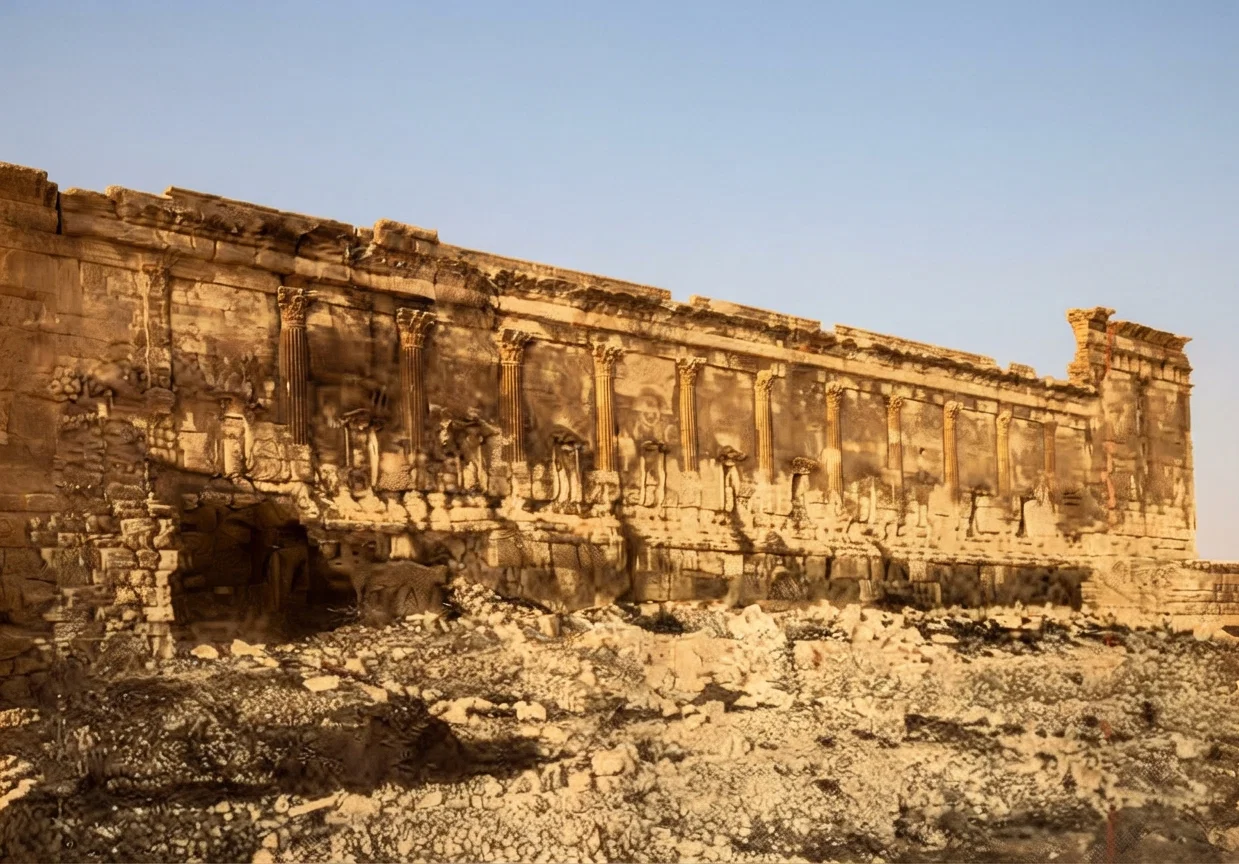
Ruins of Ancient Sun-temple at Palmyra.

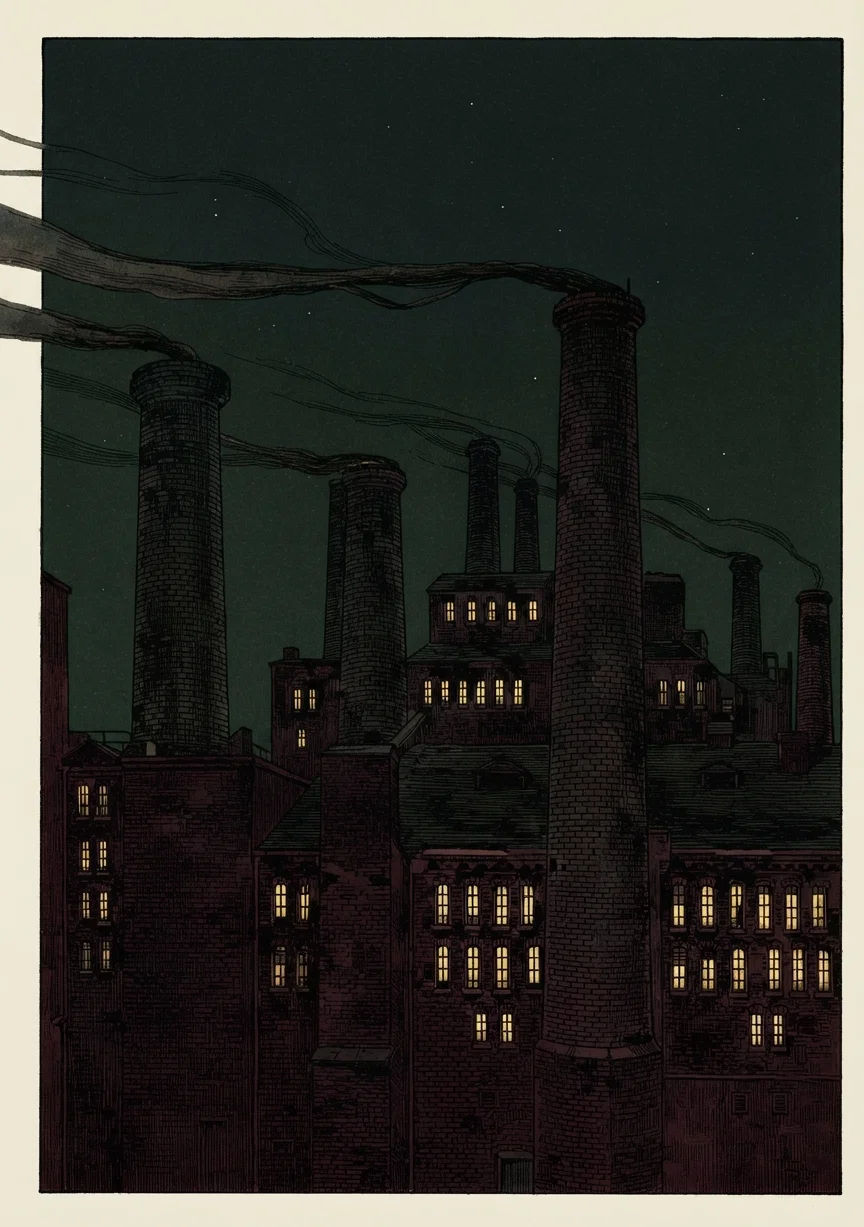
WEALTH and WAGE

LABOR REDUCED TO SLAVERY

BY WILLIAM N. GLENN
IN the beginning capital and labor were on an equality. The capital—the land, the air, and the sunshine—needed the application of labor to produce the best results in products; and, of course, labor would have been powerless without the capital. In course of time, however, the principles of selfishness and covetousness wrought a perversion of the true relationship of capital and labor.
These principles were of Satanic origin, and were transplanted in the human heart when man yielded to the influence of the tempter, choosing to be actuated by his nature rather than by the wise arrangement devised by the Creator. Some men imbibed more of a spirit of covetousness than others; and some were endowed with more ability to accumulate, and less scrupulousness as to methods, than others. These traits being dominant gave them an advantage over their fellows in the matter of adding to the natural proportion of capital; and the cultivation of such characteristics added more and more to the disposition to accumulate wealth, and to take advantage of those who were not so disposed, or had not the cunning to get gain for themselves or to resist the selfish methods of others.
Some men were inclined to look forward to future results and possibilities of deal, while others were content with daily necessities. It became necessary for the first class to obtain help, and the second class were deluded by the present gain of a daily wage instead of caring for their own proportion of the God-given capital. Such a lack of appreciation of the capital that came to them naturally, and by the wise providence of the common Father, would soon lead them to dispose of it for what would seem a present advantage. Having disposed of their patrimony, their dependence upon others for the privilege of labor for wages, in order to procure a living, was established.
While labor and capital are interdependent, the laborer, when isolated from his natural capital, realizes a burden of dependence, because his daily bread is dependent upon his daily wage instead of the union of his labor with capital of his own. The wage he can not get without the consent of some "capitalist" or "employer." The employer may be dependent on the labor of others in the care of his accumulated wealth, but as long as he has his original capital and his individual labor he need not be dependent on others for his living. It is this comparison of the two situations that shows conclusively the disadvantage of the man who trusts in wage-earning labor alone for the necessities of life.
The absolute dependence of the man who—by choice or by accident, by education or by instinct—has become permanently fixed as a laborer without capital, is aptly illustrated in the parable of the laborers in the twentieth chapter of the Gospel by Matthew. The illustration of this particular point is merely incidental, but it is forcible, nevertheless. The man who was in search of laborers went to the usual place several times during the day, and found some each time. Even at the eleventh hour he found some standing idle, and said to them, "Why stand ye here all the day idle?" And they answered, "Because no man hath hired us." What could indicate a more dependent condition? Nothing to do because no man hired them! no place where they could work without permission!
Such a condition came about naturally when men began to part with their natural capital, and to sell their segregated labor to men who were covetous enough and shrewd enough to gather in the capital of those who would dispose of it. It was but natural for the half-equipped class to become the servants of the doubly-equipped class. The one class being half-armed, and the other class doubly-armed, the result was inevitable. From the condition of hired servants it was but natural to further degenerate into bond-servants.
And this all came about through the want of appreciation of God's gift of capital in abundance for every one. The want of appreciation led to the wanton disposal of it to others, and finally to the slavery of labor thus wantonly bereft of independent occupation. The control that the capital class thus gained over the wage-earning class—over those whose main dependence is wage-earning—resulted in the gathering of the latter into companies, colonies, villages; and eventually there grew the large cities, with the one class in luxury, and the wage-earners grading down to straitened circumstances, and those whom no one hires, or who do not even want to hire, in penury and suffering. Such is the result of selling a birthright for naught in the beginning.
Continue reading: HOW GOD HAS HONORED THE SABBATH