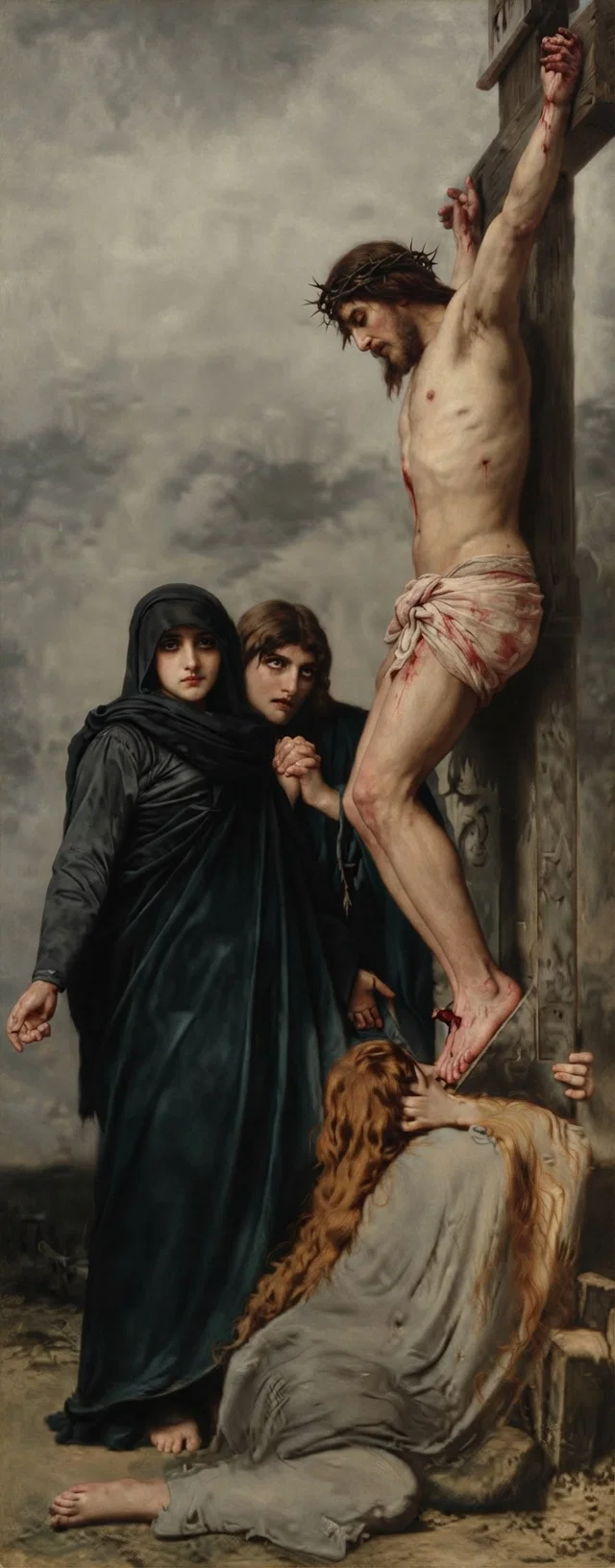
ALTHO man is a sinner and a child of death, yet there is hope; for Jesus "came into the world to save sinners." 1 Tim. 1:15. Even if sin be death, the dying for sin has been done by Him who knew no sin. 2 Cor. 5:21; Rom. 5:6. Besides this we may become the righteousness of God in Him and thus be connected again with eternal life. Rom. 5:21. The Word of God clearly reveals that righteousness is life. Prov. 12:31; Rom. 8:10. Therefore we have life, because the righteousness in Christ is ours. For "this is His name whereby He shall be called, THE LORD OUR RIGHTEOUSNESS." Jer. 23:6.
Christ is made unto us righteousness (1 Cor. 1:30); for it was considered both in His living and in His dying that all was done for us. So it is written that "while we were yet sinners, Christ died for us;" and "being reconciled [by His death], we shall be saved by His life." Rom. 5:8, 10.
The obedience of Christ in the flesh was performed for us; "by the obedience of One shall many be made righteous." Rom. 5:19. But His righteousness is also built up within the believer. As expressed by the apostle it is "even the righteousness of God which is by faith of Jesus Christ unto ["into" R. V.] all and upon all them that believe." Rom. 3:22.
All that Christ was when here in the flesh, and all that He is now, is imputed to the believer upon the exercise of faith. Following that event, the Gospel work of grace builds the righteousness of Christ into the life of him to whom it is imputed. Rom. 8:2-4. Faith begins a new life. "Ye are all the children of God by faith in Christ Jesus." Gal. 3:26. We are then baptized in Christ, and put on Christ. Verse 21. We are in Christ—joined to Him, and live by Him. Rom. 6:10, 11. Then His righteousness becomes ours. His standing in the law, and all His fulness, are gifts of His grace. The gift is not bestowed as something of only property value; but it is to be in-wrought, and grown into the very being of the receiver. It becomes that "good part" which can not be taken away. By this gift of imparted righteousness a man is made "more precious than fine gold; even a man than the golden wedge of Ophir." Isa. 13:12.
The Value of the Gift.
Earthly treasures and worldly blessings, such as money, houses, lands, stocks, reputation, and friends are but transient, and may pass in one day, to come to us no more. But the true riches are to become a part of the eternal completeness of man. Through the righteousness which is now ours in Christ, we are to be made enduring as eternity.
"He hath made Him to be sin for us, Who knew no sin; that we might be made the righteousness of God in Him." To do this for us, it became necessary for the Son of God to take man's place in the flesh, and in the law, and stand for him, and actually become man. To reach those far down in the fall, He left riches, glory, honor, and strength. "Forasmuch then as the children are partakers of flesh and blood, He also Himself likewise took part of the same. . . . For verily He took not on Him the nature of angels; but He took on Him the seed of Abraham. Wherefore in all things it behooved Him to be made like unto His brethren, that He might be a merciful and faithful high priest in things pertaining to God, to make reconciliation for the sins of the people." Heb. 2:14-17.
The prophet in vision (Isa. 53:2-8) saw our Saviour in this humble condition. He says: "He hath no form or comeliness; and when we shall see Him, there is no beauty that we should desire Him." Tho noble in bearing and countenance, yet He had not beauty to attract; so He was despised and rejected.
He was not possessed of wealth to recommend Him to the favor of the great. He was poorer than the beasts and the birds. Heaven with its glory and riches was given up that He might reach us. "He was wounded for our transgressions, He was bruised for our iniquities." "The Lord hath laid on Him the iniquity of us all." "And with His stripes we are healed." "For the transgression of My people was He stricken." The stroke fell upon Him that was due to us for our disobedience.
Having identified Himself with us, and become one of us, He really gave Himself to us and for us. As told by words inspired, He "gave Himself for us, that He might redeem us from all iniquity, and purify unto Himself a peculiar people, zealous of good works." Titus 2:14. Well then might the prophet say, "In the Lord have I righteousness and strength;" for Jesus Himself is ours. His righteousness in all its fulness He freely gives. "It pleased the Father that in Him should all fulness dwell." "Full of grace and truth." "Of His fulness have all we received." John 1:16.
He is now in heaven, to appear in the presence of God for us. Heb. 9:24. He is there to answer to our names, to stand in our stead. He is there to pass us through the judgment in His own righteousness—our Surety, our Advocate, our Obedience. In truth He is everything to us and all for us.
That righteousness made it impossible for Christ to be held in death, and if our faith holds to Him, we shall just as certainly pass through the portals of the tomb, or experience the transition from mortal to immortality at His coming. Only our choice to leave Him and trust in self can separate us from the power and the joy of that righteousness.
WHAT OF THE DEAD?
By A. O. Tait
By A. O. TAIT
How does the apostle Paul speak of the dead?
"I would not have you to be ignorant, brethren, concerning them which are asleep, that ye sorrow not, even as others which have no hope." 1 Thess. 4:13. He represents the dead as in a condition of unconscious sleep.
2. With what words does the apostle proceed to dispel the ignorance concerning those asleep in death?
"For if we believe that Jesus died and rose again, even so them also which sleep in Jesus will God bring with Him." 1 Thess. 4:14. The believer in Christ is so fully connected with the Master that death can not hold him in this sleep of death. Just as Jesus was brought from the tomb by the power of His Father—even so will all who sleep in Jesus be brought forth to immortality.
3. Do the righteous dead—those who fall asleep in Christ—go to heaven as soon as they die?
"For this we say unto you by the word of the Lord, that we that are alive, that are left unto the coming of the Lord, shall in nowise precede them that are fallen asleep." 1 Thess. 4:15, R. V. Those living on the earth when the Lord comes the second time will not precede, or go to heaven in advance of, those who have fallen asleep. This is the plain statement of the text. And since there is this possibility clear down at the end of time for the good among the last generation of men to go to heaven before those who have died, it is plain that the dead are not yet passed to their reward.
4. In what manner will both the living and the dead go to their eternal home?
"For the Lord Himself shall descend from heaven, with a shout, with the voice of the Archangel, and with the trump of God; and the dead in Christ shall rise first; then we that are alive, that are left, shall together with them be caught up in the clouds, to meet the Lord in the air; and so shall we ever be with the Lord." 1 Thess. 4:16, 17.
5. Is there any remembrance in death?
"In death there is no remembrance of Thee; in the grave who shall give Thee thanks?" Ps. 6:5.
6. Do the dead praise the Lord?
"The dead praise not the Lord, neither any that go down into silence." Ps. 115:17. The dead go down into "silence;" they do not go to an abode of bliss, where they are praising the Lord, neither do they go to a place of torture, where they are cursing Him. They are "asleep;" they are "silent."
7. In praising the Lord for sparing his life, what did Hezekiah say of his soul?
"Thou hast in love to my soul delivered it from the pit of corruption; for Thou hast cast all my sins behind Thy back. For the grave can not praise Thee, death can not celebrate Thee; they that go down into the pit can not hope for Thy truth. The living, the living, he shall praise Thee, as I do this day." Isa. 38:17-19. Then, Hezekiah's soul was in danger of corruption in the "pit" or grave. Observe the text closely, for it declares it plainly.
8. Are you ready to ask, "Do you believe that all our dead friends are lying in the cold and gloomy grave?"
The grave may seem cold and gloomy to us who are alive and conscious, but to those who are both dead and unconscious it is a peaceful sleeping room.
Sentimental questionings may keep you from seeing truth, but the fact that you do not see it does not change the truth one whit?
LIFE AND IMMORTALITY
By G. B. Thompson
By G. B. THOMPSON
GLORIOUS beyond description was man's Eden home. Beauty of which the sinful heart of man can not now conceive adorned the earth everywhere. Beautiful shrubs, and delicately-tinted and fragrant flowers were seen on hill and dale, by river and lake. In the garden was "every tree that is pleasant to the sight, and good for food." Gen. 2:9. To all save one, man had free access. He could pluck the fruit of the tree of life, and "eat, and live forever." Everything teemed with joyous, happy life. There was nothing to mar the happiness of the race. Sin, with all its terrible results, was unknown. Then, as a reminder that He was the Sovereign and Creator of all, the Lord made the Sabbath, and gave it to man as he stood in his primeval innocence in his Eden home. Gen. 2:1-3.
But to-day how changed the scene! Because of disobedience a remorseless tyrant reigns in the earth. In the midst of the garden the Lord reserved for Himself one tree, and commanded man not to touch it. "But of the tree of the knowledge of good and evil, thou shalt not eat of it; for in the day that thou eatest thereof thou shalt surely die." Gen. 2:17. But man disobeyed this injunction of his Creator; he took of the forbidden fruit, and ate. "Therefore, as through one man sin entered into the world, and death through sin; and so death passed unto all men, for that all sinned." Rom. 5:12. As a result of this transgression we see the seared touch of the pitiless foe—death—upon all creation. His relentless clutch none can escape.
God not Surprised.
Eat and die was an irrevocable decree. "The wages of sin is death" (Rom. 6:23)—eternal death, and separation from God. The very day man disobeyed God, and ate of the tree of the knowledge of good and evil, the sentence of death passed upon him. But sin did not take God by surprise, and find Him unprepared for the terrible emergency. It was foreseen in the councils of eternity, and a plan was formed to meet this crisis of the universe. In solemn compact the Father and His Son had agreed that, in the event of sin entering their domain, the Son would give Himself to meet the claims of the broken law. When man sinned, that very day Christ gave Himself a ransom for all. The only-begotten Son of God stepped into the yawning chasm, and received the stroke; the sword of justice fell, and He became the Victim, the "Lamb slain from the foundation of the world." Rev. 13:8.
What Man Lost by Sin.
Man lost his innocence, his home, his life. He forfeited all through transgression. We may well believe that there was sorrow in heaven while Jehovah said, "Behold, the man is become as one of us, to know good and evil; and now, lest he put forth his hand, and take also of the tree of life, and eat, and live forever: therefore Jehovah God sent him forth from the Garden of Eden to till the ground from whence he was taken. So He drove out the man; and He placed at the east of the Garden of Eden the cherubim, and the flame of a sword which turned every way, to keep the way of the tree of life." Gen. 3:22-24.
How vain to talk, as some do, of sinners living forever in torment. No man, without Christ, can live forever. That man might not eat, and live forever, was why God sent him forth from the garden. None have since passed that sword of flame, and sin, bless the Lord, is not immortalized. "He that obeyeth not the Son shall not see life, but the wrath of God abideth on him." John 3:36.
The One Hope of Life.
But in the Gospel there is hope for all. "Who saved us, and called us with a holy calling, not according to our works, but according to His own purpose and grace, which was given us in Christ Jesus before times eternal, but hath now been manifested by the appearing of our Saviour Christ Jesus, who abolished death, and brought life and immortality to light through the Gospel." 2 Tim. 1:9, 10. Two things, life and immortality, are brought to man through Christ. "He that believeth on the Son hath eternal life." John 3:36. "The thief cometh not, but that he may steal, and kill, and destroy; I came that they may have life, and may have it abundantly." "My sheep hear My voice, and I know them, and they follow Me: and I give unto them eternal life." John 10:10, 27, 28. "He that hath the Son hath life; he that hath not the Son of God hath not the life." 1 John 5:12. God, through Christ, gives us life now, that we may serve and obey Him. Through faith we can now lay hold upon eternal life. "The gift of God is eternal life." Rom. 6:23.
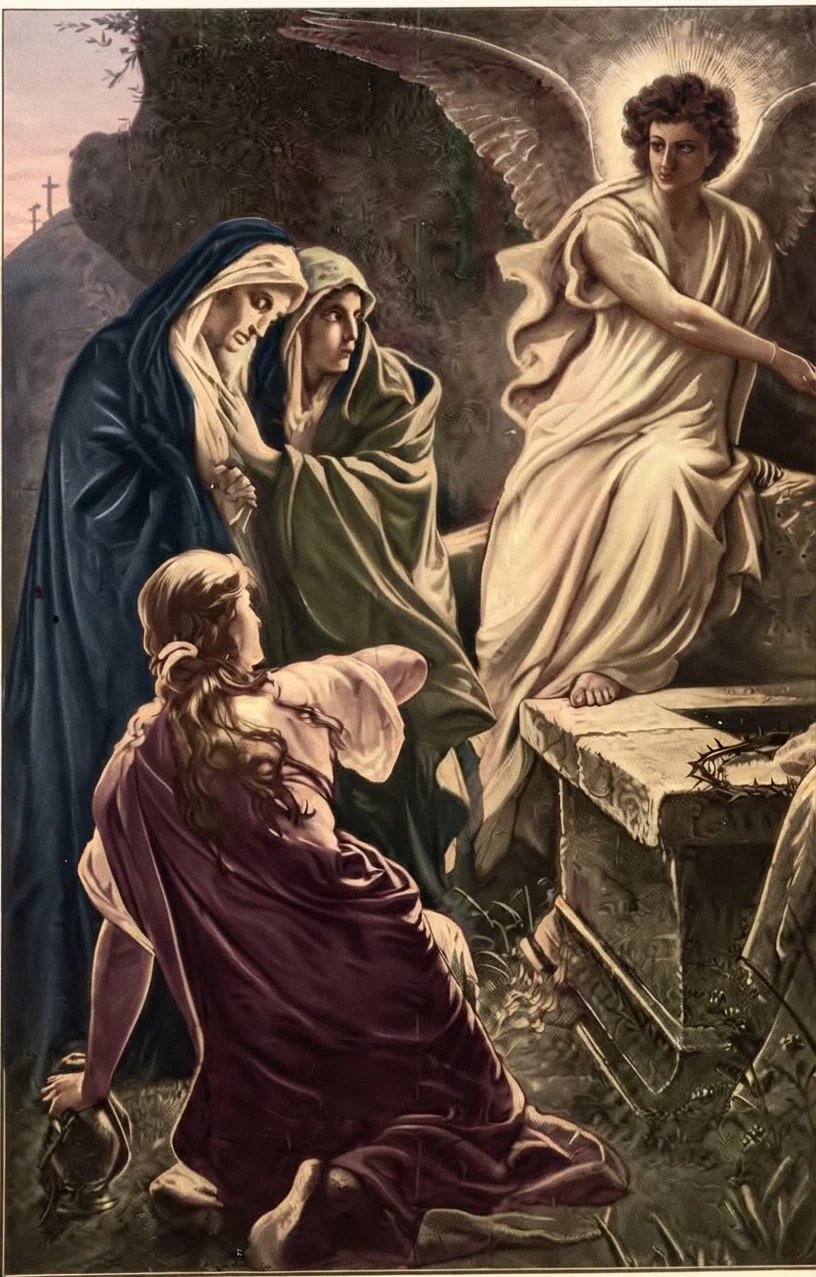
He is not here, but is risen.
The gift of immortality will be bestowed upon the righteous only at the resurrection of the just. When the Lord is revealed from heaven with all the angels of His power, He "shall fashion anew the body of our humiliation, that it may be conformed to the body of His glory, according to the working whereby He is able even to subject all things unto Himself." Phil. 3:21. "Behold, I tell you a mystery: We shall not all sleep, but we shall all be changed, in a moment, in the twinkling of an eye, at the last trump; for the trumpet shall sound, and the dead shall be raised incorruptible, and we shall be changed. For this corruptible must put on incorruption, and this mortal must put on immortality. But when this corruptible shall have put on incorruption, and this mortal shall have put on immortality, then shall come to pass the saying that is written, Death is swallowed up in victory." 1 Cor. 15:51-54.
We Have a Wonderful Saviour.
He is worthy of our worship. He is the Creator, the Law-giver, the Redeemer, the Life-giver. He was associated with the Father in the creating of the worlds. It was His voice which evoked order from chaos, and brought into existence all the worlds which shine in the unmeasured regions of space, which, from the top of burning, quaking Sinai, proclaimed to quailing humanity the precepts of the Decalogue (Neh. 9:12-14).
It was His finger that traced the imperishable precepts of this law on the enduring stone. Ex. 31:18. This same heavenly One, when man was lost, "without hope," laid aside all the glory of heaven, and came to dwell in the cold, barren regions of a sin-cursed earth, where the very atmosphere was tainted with the miasma of iniquity, and the world, once fair and beautiful, was devastated by the awful ravages of the cruel monarch, Death, and used only as a burial-ground for the victims of Satan's merciless hate.
He did all this because He loved the sinner. With an unwavering faith He met the foe, and vanquished him. He voluntarily went down into his stronghold, the grave, to cope with him who has the power of death, and, in open conflict with the powers of hell, He wrenched from Satan the keys of Hades, and came forth a victor. He was stronger in death than the enemy. Since His ascension He has sent back from the throne of omnipotent power the cheering words: "I am He that liveth, and was dead; and, behold, I am alive forevermore, Amen; and have the keys of hell and of death." Rev. 1:18. Let Satan now do his worst. Let him lock within the embrace of death our loved ones. The key to their prison house is in
safe hands. Erelong He who holds the key will come, and, bursting the gates of the tomb, will set the captives free.
Man's Hope Is in the Resurrection.
When the Life-giver shall come, His voice will pierce the long galleries of death's funereal abode, and millions of captives who sleep "in Him," will come forth from the bursting graves, and, with the living righteous, meet the Lord in the air. Well has Bishop Thomas said:
"I have sat silent and solitary in my closet, and thought over, one by one, my Saviour's miracles; I have pictured to my mind the Almighty, moulding6the earth of the fresh creation into a human form, and then breathing the breath of life into the nostrils of Adam; but never has my heart been so agitated as when I thought of Jehovah coming forth, at the
blast of the last trumpet, to summon together the scattered dust of the corpse, and mould it into a body spiritual, incorruptible, immortal, radiant as the sun, and fashioned after the glorious body of the God-man.”
And, reader, this power displayed by Christ in the creation and resurrection is for us now, to change our hard hearts, to give us victory over sin, and create us anew in Christ Jesus. Paul prayed that he might “know Him, and the power of His resurrection.” Phil. 3:10. It is the same power that converts the soul, causing the stormy, sinful passions to subside, that brings the dead from their graves in the last day. The Gospel is the power of God unto salvation (Rom. 1:16). Redemption and creation are wrought through the same power, and the Sabbath, being the sign of creative power, became the sign of redemption as well.
CHRIST REVEALED IN THE SABBATH
By Alonzo T. Jones
By ALONZO T. JONES
It is written: "Hallow My Sabbaths; and they shall be a sign between Me and you, that ye may know that I am the Lord your God." There is, therefore, that about the Sabbath by which he who hallows it may know, not only that the Lord is God, but that the Lord is his God. But to know God is to know not only that He is, but also what He is; for His name is not simply "I AM," but "I AM THAT I AM,"—I am what I am, I am that which I am,—so, that "he that cometh to God must believe that He is, and that He is a rewarder of them that diligently seek Him,"—must believe not only that He is, but also what He is. Therefore as the Sabbath is a sign which God has set, by which those who hallow it may know that He is the Lord their God; it follows with perfect certainty that there is in the Sabbath that by which those who hallow it may find the knowledge of God.
What There Is in the Sabbath.
Let us, therefore, look at the Sabbath as God made it; and at what the Lord did in the making of it by which it became the Sabbath of the Lord. First, He created all things; then He ceased from His works and rested the seventh day; He then blessed the seventh day; He made it holy, and sanctified it. The Sabbath, therefore, is—
1. The reminder of God as Creator; it is the reminder of His creative power manifested; for it is a sign between Him and His people forever, because that "in six days the Lord made heaven and earth, and on the seventh day He rested, and was refreshed." Ex. 31:17.
2. In the Sabbath is God's rest; "for He spake in a certain place of the seventh day on this wise, And God did rest the seventh day from all His works. And in this place again [He spoke of the seventh day on this wise], They shall not enter into My rest." Heb. 4:4, 5.
3. In the Sabbath is God's blessing; for He "blessed the seventh day, and sanctified it, because that in it He had rested from all His work which God created and made." Gen. 2:3.
4. In the Sabbath is God's holiness; for He "hallowed" (made holy) the Sabbath day. But it is only the presence of God which makes anything holy. When Moses, attracted by the curious sight of the bush burning with fire yet not consumed, turned aside and approached to behold, "God called unto him out of the midst of the bush, and said, Moses, Moses. And he said, Here am I. And He said, Draw not nigh hither; put off thy shoes from off thy feet, for the place whereon thou standest is holy ground." Ex. 3:4, 5. That place was made holy ground solely by the presence of "Him who dwelt in the bush."
And as it is the presence of the Lord which makes holy; that which made holy the seventh day, the Sabbath of the Lord, was the presence of Him who rested the seventh day from all His works.
5. The Sabbath has in it God's sanctification; because He not only blessed the seventh day, but sanctified it,—set it apart unto the holy use and service of the Lord,—that His presence might dwell therein; for it is not merely the transient presence, but the abiding presence, the special dwelling of God in a place, which sanctifies; for it is written; "Israel shall be sanctified by My glory;" for "I will dwell among the children of Israel, and will be their God." Ex. 29:43 (margin), 45.
Thus connected with the Sabbath there is the creative power of God; the rest of God; the blessing of God; the presence of God which makes holy; and the continuing, dwelling, presence of God which sanctifies.
And all this is precisely, and in order, what is found in Christ by the believer in Jesus.
Christ in the Sabbath.
God's rest is in the seventh day; and God's rest is in Christ. It is impossible for God's rest to be in antagonistic places; for as with God "there is no variableness neither shadow of turning," God's rest is the same wherever it may be. Therefore, God's rest being ever the same, God's rest in the seventh day, and God's rest in Christ, is precisely the same rest. And this, being impossible to be in antagonism, is in perfect unity, and therefore demonstrates that the Sabbath is in Christ and CHRIST IS IN THE SABBATH.
God's Promises to the Believer.
The Sabbath, truly understood, means all of Christ; and Christ, truly understood, means all of the Sabbath. And neither can be truly understood without the other. The Sabbath is God's sign, and Christ is God's sign. Christ is God's sign spoken against, and the Sabbath is God's sign spoken against: and all, "that the thoughts of many hearts may be revealed." Luke 2:34, 35. Yet ever He is indeed "the glorious Lord" (Isa. 33:21); and ever "His rest," His Sabbath, is indeed "glorious." Isa. 11:10.
"Let us therefore fear, lest, a promise being left us of entering into His rest, any of you should seem to come short of it. . . . For we which have believed do enter into rest." "And hallow My Sabbaths; and they shall be a sign between Me and you, that ye may know that I am the Lord your God." "The seventh day is the Sabbath of the LORD THY GOD."
"Thus saith the Lord, Keep ye judgment, and do justice; for My salvation is near to come, and My righteousness to be revealed. Blessed is the man that doeth this, and the son of man that layeth hold on it; that keepeth the Sabbath from polluting it, and keepeth his hand from doing any evil." Isa. 56:1, 2.
"If thou turn away thy foot from the Sabbath, from doing thy pleasure on My holy day; and call the Sabbath a delight, the holy of the Lord, honorable; and shalt honor Him, not doing thine own ways, nor finding thine own pleasure, nor speaking thine own words: then shalt thou delight thyself in the Lord; and I will cause thee to ride upon the high places of the earth, and feed thee with the heritage of Jacob thy father; for the mouth of the Lord hath spoken it." Isa. 58:13, 14.
"For as the new heavens and the new earth, which I will make, shall remain before Me, saith the Lord, so shall your seed and your name remain. And it shall come to pass, that from one new moon to another, and from one Sabbath to another, shall all flesh come to worship before Me, saith the Lord." Isa. 66:22, 23.
CHURCH and STATE
By W. A. Colcord
By W. A. COLCORD
CHURCH and STATE By W. A. COLCORD
THE church and the state are two institutions ordained of God for important ends. Both exist and are necessary because of sin. Each occupies a real field and fulfils a mission peculiar to itself. While doing their heaven-appointed work, neither conflicts with the work and mission of the other. On the contrary, each, in doing its appointed work, is indirectly a help to the other.
When sin entered the world, selfishness and death entered. To restrain men from carrying out their selfish natures, civil government was ordained. To save men from final ruin and eternal death, the church was instituted.
That the well-disposed may know what they may do, and the evil-disposed what they must not do, laws must be formulated, and order maintained in the world.
That all may know that "the wages of sin is death; but the gift of God is eternal life through Jesus Christ our Lord," the Gospel must be preached unto men.
The church, therefore, is God's life-saving agency in the world.
The state is His law and order society.
The church saves men from sin.
The state protects men against crime.
The church saves from eternal destruction.
The state saves from temporal despoliation.
As a warning against sin, the church proclaims the wrath of God and final and eternal destruction.
As a warning against crime, the state sets forth the terrors of the law and temporal punishment.
As an incentive to holy living, the church holds forth the cross and the crown.
As an encouragement to civility and a law-abiding life, the state promises liberty, peace, and protection.
To convict of sin and convert the soul, God has placed in the hands of the church "the sword of the Spirit, which is the Word of God." Eph. 6:17.
For the punishment of them that do evil, and as a terror to evil-doers, God has placed in the hands of Caesar the sword of steel. "He beareth not the sword in vain." Rom. 13:4.
Stating the object of His mission, and thus of the church, Christ said: "The Son of Man is not come to destroy men's lives, but to save them." Luke 9:55. "For God sent not His Son into the world to condemn the world; but that the world through Him might be saved." John 3:17.
As the basis of civil government, immediately after the Flood, God laid down the law, "Whoso sheddeth man's blood, by man shall his blood be shed." Gen. 9:6.
The church preaches the Gospel.
The state administers civil law.
The church is the pillar and ground of the truth.
The state is the protector of human rights and the bulwark of society.
In the performance of its work, no carnal weapon has been vouchsafed to the church. When Peter took the sword, the Lord told him to put up again the sword into its place. Matt. 26:52.
The state in its work may use force. Its officers bear not the sword in vain.
The ambassador of Christ is to preach the Gospel "with the Holy Ghost sent down from heaven." 1 Peter 1:12.
The civil ruler is "the minister of God, a revenger to execute wrath upon him that doeth evil." Rom. 13:4.
As the church can not rightfully use the power of the state for the furtherance of its ends, neither can the state properly, by its own power, attempt to accomplish the work of the church. Each has its specific and God-given work, and has been given its proper and appropriate means of accomplishing it.
Each should recognize the presence and rightful domain of the other. The church is to teach every soul to "be subject unto the higher powers," to "honor the king," to "be subject to principalities and powers, to obey magistrates," and to pray "for kings, and for all that are in authority; that we may lead a quiet and peaceable life in all godliness and honesty." Rom. 13:1; 1 Peter 2:17; Titus 3:1; 1 Tim. 2:2.
On the other hand, the officers of the state are sent, not only "for the punishment of evil-doers," but "for the praise of them that do well." 1 Peter 2:13, 14; Rom. 13:3.
While there is to be no marriage or alliance between the two,—no bartering of the power and influence7of the one for the power and influence of the other,—each, in doing its appointed work, is a help to, and support of, the other.
Such, in brief, is the model church and the model state.