Your ShelfYour Projects

Review and Herald, Vol. 87, No. 17.

A Morning Resolve

Review and Herald

Apr 28, 1910

Review and Herald Publishing Association · Takoma Park Station, Washington, D. C. · Apr 28, 1910

A Morning Resolve

WILL this day try to live a simple, sincere, and serene life; repelling every thought of discontent, anxiety, discouragement, impurity, and self-seeking; cultivating cheerfulness, magnanimity, charity, and the habit of holy silence; exercising economy in expenditure, carefulness in conversation, diligence in appointed service, fidelity, to every trust, and a childlike trust in God. And as I can not in my own strength attain this measure of wisdom and power, I make humble and firm resolve to seek all these things from my Heavenly Father in the name of His Son, Jesus Christ, and through the mystic and mighty energy of His Holy Spirit.
— John H. Vincent.

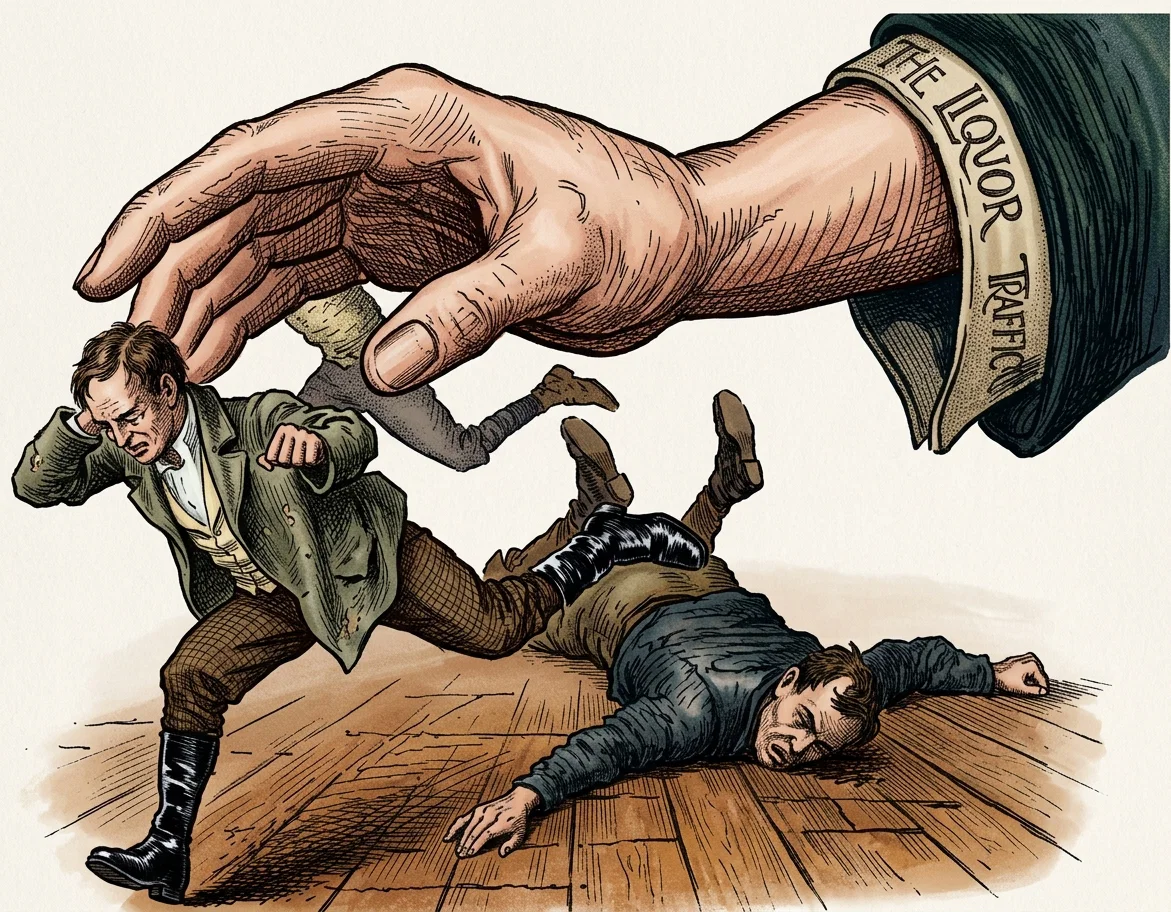
Send in your order to-day for

TEMPERANCE TORCHLIGHTS

the handiest hand-book for the temperance worker ever published. Studies, stories, songs, poems, and useful information on temperance topics. Testimony from the world's greatest statesmen, physicians, and ministers. Nothing tedious, nothing tiresome, but an array of attention-holding anecdotes, and clearly presented facts and statistics. Read what others say about it:

An Inspiration

The fund of information it contains will inspire the advocates of temperance to work with greater zeal, and it will lead many who are now halting and indifferent to take a firm stand for the temperance cause.—A. G. DANIELLS, President General Conference, Introduction in “Temperance Torchlights.”

Stubborn Facts

This little book presents in forceful manner a striking array of stubborn facts, showing the evils of not only the liquor traffic but of intemperance generally speaking; and these truths are set forth in a ringing manner which compels attention. In the interests of humanity, and for the uplift of multitudes who have fallen low through intemperance, I pray that “Temperance Torchlights” may be scattered broadcast.—FREDERICK GRIGGS, Secretary Educational Department.

A Genuine Gem

What especially impresses me is the amount of valuable temperance information the little volume contains. It is a genuine little gem, and will wonderfully help in the great work of educating and arousing the people to their duty along the lines of true Christian temperance.—W. H. HECKMAN, President Eastern Pennsylvania Conference.

Practical Suggestions

The Temperance worker will find here a great array of facts and figures for use in the temperance warfare, as well as many practical suggestions on how to do effective work. The beautiful poems, stories, and songs help us to feel the power and pathos of this great question, and furnish young people and others with excellent materials for temperance programs.—M. E. KERN, Secretary Young People's Missionary Volunteer Department.

Wins Its Way

Its general construction, convenient size, statistics, history, etc., will readily help to win its way everywhere. All should procure a copy, and inform themselves upon this important subject.—H. W. HERRELL, President Virginia Conference.
The book not only meets my fullest expectations, but all that has been written about it comes far short, to my mind, of expressing its value.—MORRIS LUKENS, President Indiana Conference.

Sparkles With Light

It is one of the breeziest little books we have seen for a long time. It just sparkles in every paragraph with light and truth upon the great problem it designs to meet. It is a mine of treasure to every speaker and teacher who desires to be fully fortified for the temperance work.—C. H. EDWARDS, President Southern New England Conference.
It ought to be in the hands of everybody in the land, whether they are Seventh-day Adventists or not. It is an excellent book to place in the hands of those who are interested in temperance work. I shall do all in my power to assist in its circulation.—C. McREYNOLDS, President Wisconsin Conference.
It ought to be in the hands of all the people. I purpose to use my influence in getting the book in the hands of all as far as possible.—J. J. IRWIN, President North Michigan Conference.

A Live Wire

Surely it is a live wire on temperance, it is filled with most striking and comprehensive statements, the statistics and sayings from prominent people are so well arranged as to make it a veritable cyclopedia of temperance information. It should be in the hands of tens of thousands.—G. W. WELLS, President North Carolina Conference.
This collection of choice nuggets from the masters should inspire temperance advocates to work with renewed zeal for the cause of health and temperance.—G. H. HEAD, Editor of Life and Health.

Order at Our Risk.

If “Temperance Torchlights” is not just what you want, send it back, either to us or to your Tract Society, and your money will be refunded.
PRICE, IN CLOTH, 50 CENTS

ORDER THROUGH YOUR TRACT SOCIETY

MRS. E. G. WHITE

Co-operation

MRS. E. G. WHITE

“GRACE and peace be multiplied unto you through the knowledge of God, and of Jesus our Lord, according as his divine power hath given unto us all things that pertain unto life and godliness, through the knowledge of him that hath called us to glory and virtue; whereby are given unto us exceeding great and precious promises: that by these ye might be partakers of the divine nature, having escaped the corruption that is in the world through lust.”
“Partakers of the divine nature.” Is this possible? Of ourselves we can do no good thing. How, then, can we be partakers of the divine nature?—By coming to Christ just as we are, needy, helpless, dependent. He died to make it possible for us to be partakers of the divine nature. He took upon himself humanity, that he might uplift humanity. With the golden chain of his matchless love he has bound us to the throne of God. We are to have power to overcome as he overcame. To all he gives the invitation: “Come unto me, . . . and I will give you rest. Take my yoke upon you, and learn of me; for I am meek and lowly in heart: and ye shall find rest unto your souls. For my yoke is easy, and my burden is light.”
In order to be partakers of the divine nature, we must co-operate with God. Man is no passive being, to be saved in indolence. Let no one think that men and women are going to be taken to heaven without engaging in the struggle here below. We have a battle to fight, a victory to gain. God says to us, “Work out your own salvation with fear and trembling.” How?—“For it is God which worketh in you both to will and to do of his good pleasure.” Man works, and God works. Man is called upon to strain every muscle, and to exercise every faculty, in the struggle for immortality; but it is God who supplies the efficiency.
God has made amazing sacrifices for human beings. He has expended mighty energy to reclaim man from transgression and sin to loyalty and obedience; but he does nothing without the co-operation of humanity. Paul says: “This one thing I do, forgetting those things which are behind, . . . I press toward the mark for the prize of the high calling of God in Christ Jesus.” The Christian life is a battle and a march. In this warfare there is no release; the effort must be continuous and persevering. It is by unceasing endeavor that we maintain the victory over the temptations of Satan. Christian integrity must be sought with resistless energy, and maintained with a resolute fixedness of purpose.
“Ye are God’s husbandry, ye are God’s building.” This figure represents human character, which is to be wrought upon point by point. Each day God works on his building, stroke upon stroke, to perfect the structure, that it may become a holy temple for him. Man is to co-operate with God, striving in his strength to make himself what God designs him to be, building his life with pure, noble deeds.
No one is borne upward without stern, persevering effort in his own behalf. All must engage in the warfare for themselves. Individually we are responsible for the issue of the struggle; though Noah, Daniel, and Job were in the land, they could deliver neither son nor daughter by their righteousness.
There is a science of Christianity to be mastered,—a science as much deeper, broader, higher, than any human science as the heavens are higher than the earth. The mind is to be disciplined, educated, trained; for we are to do service for God in ways that are not in harmony with inborn inclination. Often the training and education of a lifetime must be discarded, that one may become a learner in the school of Christ. Our hearts must be educated to become steadfast in God. We are to form habits of thought that will enable us to resist temptation. We must learn to look upward. The principles of the Word of God,—principles that are as high as heaven, and that compass eternity,—we are to understand in their bearing on our daily life. Every act, every word, every thought, is to be in accord with these principles.
The precious graces of the Holy Spirit are not developed in a moment. Courage, fortitude, meekness, faith, unwavering trust in God’s power to save, are acquired by the experience of years. By a life of holy endeavor and firm adherence to the right, the children of God are to seal their destiny.
Wrongs can not be righted, nor can reformation of character be made, by a few feeble, intermittent efforts. Sanctification is the work, not of a day, or of a year, but of a lifetime. The struggle for conquest over self, for holiness and heaven, is a lifelong struggle. Without continual effort and constant activity, there can be no advancement in the divine life, no attainment of the victor’s crown.

Judge Not

C. P. BOLLMAN
The Bible injunction, “Judge not, that ye be not judged,” is not designed to teach indifference to sin, nor a failure to recognize sin as such when it appears either in our own lives or in the lives of others.
To close our eyes to sin, to refuse to see that transgression is sin, is something akin to refusing to see an open ditch by the highway. He who closes his eyes to the ditch is in danger of falling therein; and he who closes his eyes to sin, who refuses to recognize wrong where wrong exists, and who apologizes for evil, is likely sooner or later to fall into that sin himself.
It is not true that seeing sin in others is evidence, as some are teaching, that the one who sees it is himself guilty of the same or of a like sin. To establish such a proposition would be to paralyze all effort for the uplifting of others. The apostle does not say, Brethren, if a man be overtaken in a fault, ye which are spiritual, close your eyes and refuse to see the evil; but he does say: “Brethren, if a man be overtaken in a fault, ye which are spiritual, restore such an one in the spirit of meekness; considering thyself, lest thou also be tempted.” Gal. 6:1.
Moral principle does not change. That which was moral principle under the Levitical system is moral obligation now. In the words quoted from Gal. 6:1 the apostle only puts in other phrase the injunction of Lev. 19:17: “Thou shalt not hate thy brother in thine heart: thou shalt in any wise rebuke thy neighbor, and not suffer sin upon him.”
Instead of becoming partakers in sinby recognizing and rebuking it, it is by this very means that we clear ourselves of participation in the sins of others; while even silently to acquiesce in wrong-doing is to become a partaker in the sin. “If wrongs are apparent among his people, and if the servants of God pass on indifferent to them, they virtually sustain and justify the sinner, and are alike guilty, and will just as surely receive the displeasure of God; for they will be made responsible for the sins of the guilty.”—“Testimonies for the Church,” Vol. III, page 266.
Again: we are told that “the close work of the Spirit of God is needed now as never before. Stupidity must be shaken off. We must arouse from the lethargy that will prove our destruction unless we resist it. Satan has a powerful, controlling influence upon minds. Preachers and people are in danger of being found upon the side of the powers of darkness. There is no such thing now as a neutral position. We are all decidedly for the right, or decidedly with the wrong. Christ said, ‘He that is not with me is against me; and he that gathereth not with me scattereth abroad.’”—“Gospel Workers,” page 86.
But it may be asked, If we are to be thus on the alert to see and to rebuke sin, what becomes of the injunction, “Judge not”? Properly understood and conscientiously obeyed, there is no conflict in the instruction quoted from the Bible and the Testimonies. James 2:4 affords us an inspired comment, as it were, upon our Saviour’s injunction, “Judge not.” In rebuking some who were taking a wrong course, the apostle says: “Are ye not then partial in yourselves, and are become judges of evil thoughts?”
It must be remembered that it does not necessarily follow that because one does wrong, he intends wrong. While we are in no case to excuse sin or to lower the standard of Christian living, calling sin righteousness, putting evil for good, or calling good evil, we are not to attribute evil motives where it is possible no evil was intended. It is frequently the case that individuals are betrayed into sin by the deceptions of the enemy. Such persons are to be labored for and with, but are not to be harshly condemned. Such labor should be bestowed wisely, judiciously, and in the spirit, not of the accuser, but of the Master.
Only God can weigh the motives; hence only God can determine the degree of guilt. A wrong act, or even a wrong course of conduct extending over some time, may appear to us to be much worse than it really is, or than it is intended to be by the one who is at fault in it; or such act or such course of conduct may be worse than it appears to us, because of the evil motive back of it, which we can not see. It is the motive that determines in very large measure the degree of guilt. God alone can read the motive; hence God alone can judge the sinner.
Let not the reader misunderstand us in this; conscience is not the standard. It is not true that it makes little or no difference what one believes and practises so long as he is sincere in it. Believing that a thing is right does not make it right. The law of God is the standard; and sin is sin whether we recognize it or not; and when recognized, it is to be confessed, repented of, and put away, no matter how good the intentions when the act was done. See Leviticus 4, 5, especially chapter 4: 22-24, 27-29.
But while ignorance does not transform unrighteousness into righteousness, the Lord does take into account the motives and the sinner’s opportunities to know the right, and above all, the intents of the heart—that is, whether or not the will is surrendered to the divine will. The principle is set forth by our Saviour in these words: “That servant, which knew his Lord’s will, and prepared not himself, neither did according to his will, shall be beaten with many stripes. But he that knew not, and did commit things worthy of stripes, shall be beaten with few stripes. For unto whomsoever much is given, of him shall be much required.” Luke 12: 47, 48.
It is well, however, to remember in this connection that wilful ignorance, indulged for the purpose of escaping moral obligation, is itself rebellion against God, and that we shall be held responsible for that which we might have known of God’s will but refused, and for the good we might have done, but for which we were too indolent to prepare ourselves, or for which we refused to prepare that we might escape responsibility. May God help us to sense the solemnity of the times in which we are living.
Nashville, Tenn.

The Pleasure of God

CHAS. P. WHITFORD
“THOU art worthy, O Lord, to receive glory and honor and power: for thou hast created all things, and for thy pleasure they are and were created.” Rev. 4: 11.
The text states that all things were created for God’s pleasure. Then is not God selfish? We answer most emphatically, No. “God is love” (1 John 4: 8), and “love seeketh not her own.” 1 Cor. 13: 4, 5. Love is always seeking to promote the happiness of the object loved. Then it follows that the pleasure of God was the giving of life to intelligent creatures that he might have the privilege of loving them and promoting their happiness throughout eternity.
“The Lord hath appeared of old unto me, saying, Yea, I have loved thee with an everlasting love: therefore with loving-kindness have I drawn thee.” Jer. 31: 3.
“For God so loved the world, that he gave his only begotten Son, that whosoever believeth in him should not perish, but have everlasting life.” John 3: 16.
“Wherefore he is able also to save them to the uttermost that come unto God by him, seeing he ever liveth to make intercession for them.” Heb. 7: 25.
Nothing can be more evident than that God loves us, but do we love him? Nothing but love will satisfy love, therefore if we answer the object of our creation, it will be necessary to give God our hearts’ best affections and the best energy and strength of our lives.
Miami, Fla.

Light of the Lord

WM. COVERT
“God is light, and in him is no darkness at all.” 1 John 1: 5. David in song proclaimed, “The Lord is my light,” and said, “In thy light shall we see light.” Ps. 27: 1; 36: 9. Viewing with enlightened eyes those things which have been illuminated by the light of God, we behold light in God’s light. And to those who submit their faculties unto the Lord, it is said, “He shall bring forth thy righteousness as the light, and thy judgment as the noon-day.” Ps. 37: 6.
The man is a highly favored citizen who has the privilege of living by the side of a truly good man, because the shining of that good man’s life is a light so steady and so strong that often theweak and the wavering are enabled to find their homeward way by its illumination.
David announced that his candle would be lighted by the Lord (Ps. 18: 28), and Job, when speaking of the early, favored days of his life, said it was when God’s candle shone upon his head that he walked by its light through the darkness. Job 29: 3.
A community of people with their candles lighted by the Lord and flames brightly burning is likened unto a well-lighted city built upon a hilltop. In such a case the light can not be hid. Matt. 5: 14. The light of God is concealed and eternal. Its power and its brightness are unapproachable by mortal man. 1 Tim. 6: 16. But a knowledge of the moral sum of this light and glory which emanates from the throne of God is manifested to Christian men through the gospel of Jesus Christ by making this glory to shine in the heart. See 2 Cor. 4: 1-7.
So literally and physically true did the Lord make the daylight of his presence to glow, that while the plague of midnight darkness prevailed in Egypt, there was the pleasant light of open day in the houses where Israel dwelt. Ex. 10: 22, 23. The plague of darkness in Egypt was a synonym of the awful sins of its people, and of the consequent mental darkness which enshrouded their minds. But the moral and mental condition of Israel was favorable to light,—they were willing to learn,—therefore God let darkness envelop the Egyptians, while sun, moon, and stars shone with their usual splendor for the people of Israel. In this instance God withheld the shining of the sun from the wicked Egyptians, because their mental and moral condition was better expressed by gloom and darkness than by joy and light.
But we change the view by looking forward to the day of triumph, when the light of God’s glory and the lamp of his life shall so fill the world that the people will need no sun to shine by day nor candle power at eventide, for there shall be no dark night then, because God’s glory will be the light of all men in that day.
Chicago, Ill.

In the Street

“Son, go work to-day in my vineyard.” Matt. 21:28.
L. D. SANTEE
AROUND me, before me, behind me, I am meeting with many a face, And the tears fill my eyes till they blind me, For on each one has sorrow left trace; For many the eyes that look weary, And the face that is shadowed with care: Their lives may be loveless and dreary, And their burdens heavy to bear.
We meet, and we pass, we are strangers, And perhaps we shall meet not again. For each life is shadowed with danger, And each joy is mingled with pain.
I can see a weariness showing In the tread of the hurrying feet, And my heart is with pity overflowing For those that I pass in the street.
And I wonder how many have treasures Laid up in the kingdom above, And how many find their chief pleasure In trusting in Christ and his love, And how many ne’er have been given The light to the Christian allowed, That have no knowledge of heaven, Of those that I meet in the crowd.
Around me, before me, behind me, I am meeting with many a face, But the tears cease to flow, that did blind me, As I think that Christ and his grace Is offering salvation to many, To those who are stricken and bowed, And I ask myself oft, Are there any That I can help here in the crowd?
Moline, Ill.

Fulfilling Signs of the End

EVA L. BOWEN
“But thou, O Daniel, shut up the words, and seal the book, even to the time of the end: many shall run to and fro, and knowledge shall be increased.”
There are in this verse three tokens of the time of the end: (1) Certain prophecies of Daniel, until then sealed, not understood, will be opened; (2) many shall run to and fro; (3) knowledge shall be increased. By the fulfilment of these things we may know that the time of the end has come.
The words to Daniel were, “Shut up the words, and seal the book, even to the time of the end.” He had just been having a vision which greatly perplexed him. “I heard,” he said, “but I understood not: then said I, O my Lord, what shall be the end of these things? and he said, Go thy way, Daniel: for the words are closed up and sealed till the time of the end.”
Now the book of Daniel as a whole has never been sealed. Portions of its prophecies have always been understood; but not until the beginning of the nineteenth century was the meaning of that part which perplexed Daniel, known. Then within a few years, men living in every part of the globe began to study that portion, and, entirely independent of one another, gave to it the same interpretation. William Miller in America, Edward Irving in England, Archibald Mason in Scotland, Joseph Wolff in Asia,—these, with many others, received, during the first half of the last century, the same light on those portions of Daniel which were to be closed till the time of the end.
“Many shall run to and fro, and knowledge shall be increased.” Some writers explain this as a running to and fro through the Bible, a searching of its pages, and thus knowledge of its truths being increased. The words may have that meaning. Certain it is that in the early part of the nineteenth century there was a great awakening in Bible research. The study for the interpretation of the prophecies of Daniel would necessitate that. And as men were beginning to receive light upon the prophecies of the Bible, societies for its distribution were being organized. In 1804 the British and Foreign Bible Society was founded, and within the next twenty-five years similar societies sprang up in all parts of Europe; and in 1816 the American Bible Society was organized. So it is true that knowledge of the Bible has been increased.
But there is another application of those words, “Many shall run to and fro, and knowledge shall be increased.” That was to take place at the time of the end, when also the prophecies of Daniel were to be opened to the understanding of men. We have seen that they were unfolded during the first half of the past century, and just as surely as one part of this verse was fulfilled, did the other come to pass. For, as God was giving to some men light upon the Bible, he was working upon the minds of others in another way; and gradually there came into use the improved modern methods of travel and communication by means of which the last warning message might be quickly given to the world.
In 1819 the first ocean steamer plowed its way across the Atlantic. In 1820 the typesetting machine was invented, the use of which has greatly facilitated printing. In 1832 the first telegraph message was sent; and the words of that message were, “What hath God wrought!” In 1866 the laying of the Atlantic cable was completed. And so one might go on, and enumerate an almost endless list of modern inventions which have greatly lessened labor, time, and distance.
This unequaled advance along all scientific lines is aptly described by Dr. Pierson in his “New Acts of the Apostles.” I quote from page 39 of that book:—
“This is the world’s golden age so far as invention and discovery, intelligence, and material progress can bring it. Measured by achievement; each year is a century. This is the age of railway and steamship; photograph and phonograph; telescope and microscope; spectroscope and spectrum analysis; audiphone and microphone; . . . steam printing-press and machine typesetter; typewriter and sewing-machine; of the discovery of forty new metals, and the revolution of chemical science; of the ocean cable and the signal service; of anesthetics, and a score of new sciences and arts; of cheap postage and the universal postal union; . . . of machine work instead of hand work; of free schools and universities for the people. . . . Most wonderful of all, this is the age of electricity, which already serves man as motor, messenger, and illuminator, and is to be applied . . . to no one knows to how many other uses.”
“Robert Mackensie, in his graphic sketch of the ‘Nineteenth Century,’ calls this feature of our times ‘the great outbreak of human inventiveness which left no province of human affairs unvisited.’” And Gladstone said that “one decade of years from 1875 to 1885 witnessed a forward stride of the race more gigantic than all the previous ages of history.”
Thus have the words of God to Daniel been fulfilled. The great increase of scientific knowledge which was to mark the time of the end is the leading characteristic of our own day. Those prophecies of Daniel which were to be sealed till the last days of time have been opened within the past century. The great clock of time is about to strike the closing hour of this earth’s history. Wherever one turns, he may see, written in glowing letters by the finger of God, “Behold, I come quickly.” “Be ye therefore ready.”
Takoma Park, D. C.

M. E. EMMERSON

Persevere

M. E. EMMERSON

To stay close by a thing when it runs smoothly can not truly be called perseverance. If everything went nicely at all times, never would we have occasion to use the word persevere. The word in itself suggests difficulties, and when turned to resources, perseverance must be employed continually.
The road to true success is strewn with thorns and hedged in on every side,—barriers on the right hand and on the left. However, the path behind is generally open to the one who is tired of striving, and, sad to say, many turn to travel the downward road after spending some time in climbing the rugged path which leads to endless day.
The prize awaiting the brave, persevering traveler is great. "God soloved the world, that he gave his only begotten Son, that whosoever believeth in him should not perish, but have everlasting life." Everlasting life may be obtained. God's gift is eternal life through his Son. How great the gift! Can it be measured?
Yes, the prize is great. No mortal mind can comprehend its grandeur. We try to imagine its beauty and durability, but the tongue can not frame words to express the effect produced upon the soul. Some of its glories have been seen, and are partially described in Holy Writ. But “eye hath not seen,” neither “hath ear heard,” what God hath in store for the brave and persevering. Think of the dwelling-places the saints, together with the angels, will have,—the city, the New Jerusalem. John beheld its wonderful walls decked with all manner of precious stones, its gates of pearl, and streets of pure gold, like unto transparent glass. He saw the tree of life, and the river of life proceeding from God's throne. The throne, he said, had a rainbow about it. Aye, and more than this, he saw that which no language can describe.
Our eyes drop again to the road that must be traversed in order to reach this home. Many footprints, stained by blood, show that soldiers of the cross have gone before. Wrecks of manhood on the right and on the left show that many have fallen. The road becomes still more dangerous. Satan watches to destroy, and only the unseen angels keep him from taking the pilgrim's life as he presses his way homeward. 'The angel of the Lord encampeth round about them that fear him, and delivereth them.' This precious promise is for every true, persevering soul. So let us take courage and travel on. The way is rough, but it can not be long.
Kolo, Basutoland, Africa.
Continue reading: Summer Comfort and Health