When the Jews returned from Herod, bringing the Saviour again to Pilate, he was very much displeased, and asked what they would have him do. He reminded them that he had examined Jesus, and had found no fault in Him. He told them that they had brought complaints against Him, but that they had not been able to prove a single charge.
And, furthermore, they had taken Him to Herod, who was a Jew, like themselves, and he had found in Him nothing worthy of death. But to pacify the accusers, he said:—
“I will therefore chastise Him, and release Him.”
Here Pilate showed his weakness. He had acknowledged that Christ was innocent; then why should he punish Him? It was a compromise with wrong. The Jews never forgot this through all the trial. They had intimidated the Roman governor, and now pressed their advantage until they secured the condemnation of Jesus.
The multitude clamoured more loudly for the life of the prisoner.
While Pilate was hesitating as to what he should do, there was brought to him a letter from his wife, which read:—
“Have thou nothing to do with that just man; for I have suffered many things this day in a dream because of Him.”
Pilate turned pale at this message; but the mob became more urgent as they saw his indecision.
Pilate saw that something must be done. It was customary at the feast of the passover to set at liberty one prisoner, whom the people might choose. The Roman soldiers had recently captured a noted robber, named Barabbas. He was a degraded ruffian and a murderer. So Pilate turned to the crowd, and said with great earnestness :—
“Whom will ye that I release unto you? Barabbas, or Jesus which is called Christ?”
They replied, “Away with this man, and release unto us Barabbas.”
Pilate was dumb with surprise and disappointment. By yielding his own judgment and appealing to the people, he had lost his dignity and the control of the crowd. After that, he was only the tool of the mob. They swayed him at their will. He then asked :—
“What shall I do then with Jesus which is called Christ?”
With one accord they cried, “Let Him be crucified.
“And the governor said, Why, what evil hath He done?
“But they cried out the more, saying, Let Him be crucified.”
Pilate’s cheek paled as he heard the terrible cry, “Let Him be crucified.” He had not thought it would come to that. He had repeatedly pronounced Jesus innocent, and yet the people were determined that He should suffer this most terrible and dreaded death. Again he asked the question :—
“Why, what evil hath He done?”
And again was set up the awful cry, “Crucify Him, crucify Him!”
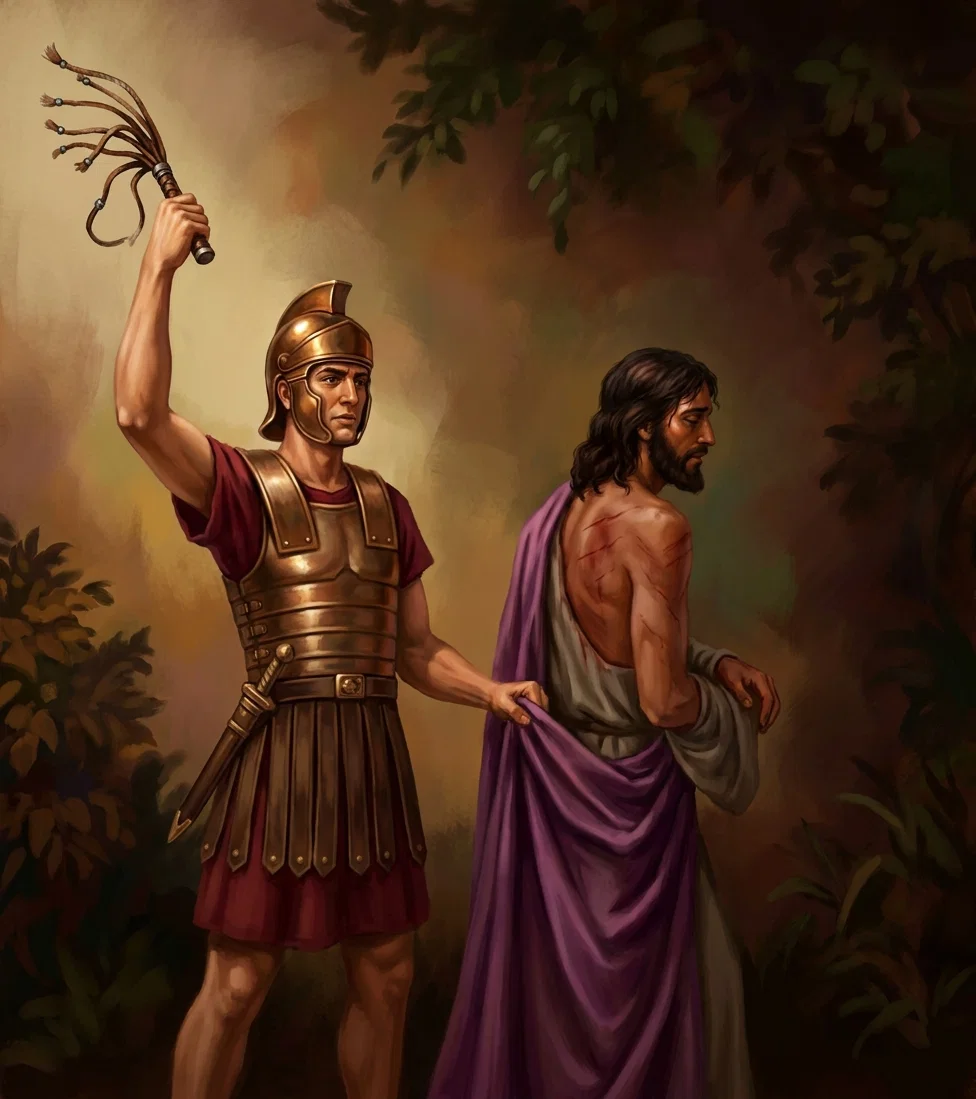
Pilate made one last effort to touch their sympathies. Jesus was taken, faint with weariness and covered with wounds, and scourged in the sight of His accusers.
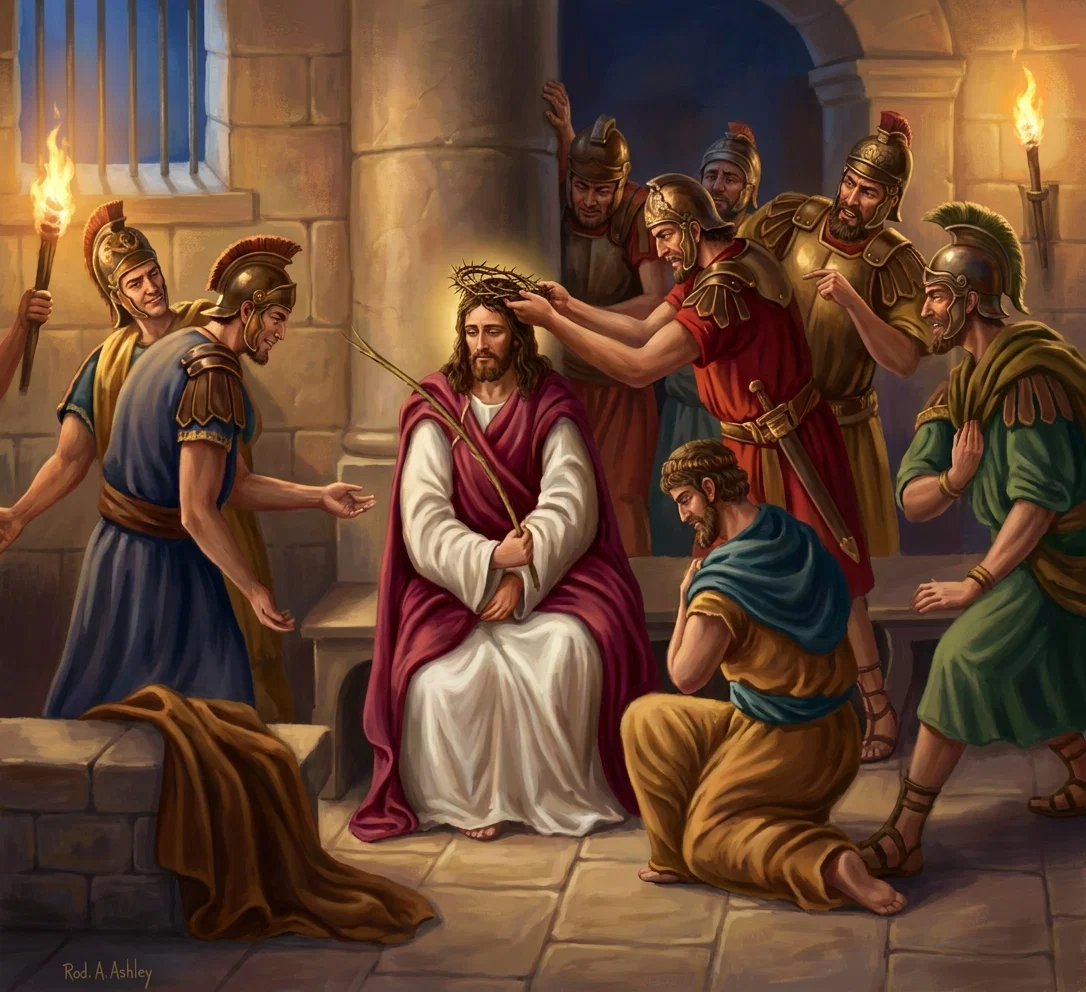
“And the soldiers platted a crown of thorns, and put it on His head, and they put on Him a purple robe, and said, Hail, King of the Jews! and they smote Him with their hands.”
They spit upon Him, and some wicked hand snatched the reed that had been placed in His hand, and struck the crown upon His brow, forcing the thorns into His temples, and sending the blood trickling down His face and beard.
Satan led the cruel soldiery in their abuse of the Saviour. It was his purpose to provoke Him to retaliation, if possible, or to drive Him to perform a miracle to release Himself, and thus break up the plan of salvation. One stain upon His human life, one failure of His humanity to bear the terrible test, and the Lamb of God would have been an imperfect offering, and the redemption of man a failure.
“And the soldiers plaited a crown of thorns, and put it on His head.”
But He who could command the heavenly host, and in an instant call to His aid legions of holy151angels, one of whom could have immediately overpowered that cruel mob,—He who could have stricken down His tormentors by the flashing forth of His divine majesty,—submitted with dignified composure to the coarsest insult and outrage.
As the acts of His torturers degraded them below humanity, into the likeness of Satan, so did the meekness and patience of Jesus exalt Him above humanity, and prove His kinship to God.
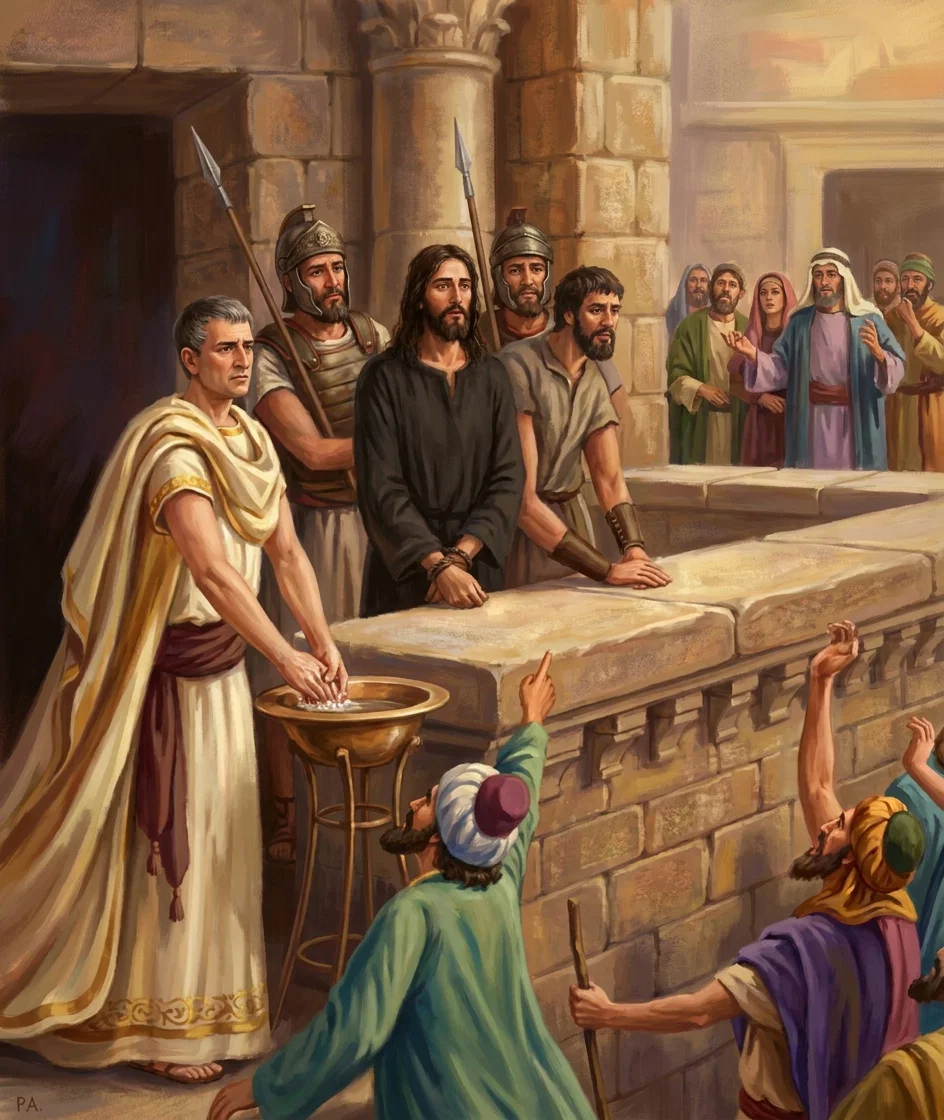
Pilate was deeply moved by the uncomplaining patience of the Saviour. He sent for Barabbas to be brought into the court; then he presented the two prisoners side by side. Pointing to the Saviour, he said in a voice of solemn entreaty, “Behold the man.” “I bring Him forth to you, that ye may know that I find no fault in Him.”
There stood the Son of God, wearing the robe of mockery and the crown of thorns. Stripped to the waist, His back showed the long, cruel stripes from which the blood flowed freely. His face was stained with blood, and bore the marks of exhaustion and pain; but never had it appeared more beautiful. Every feature expressed gentleness and resignation, and the tenderest pity for His cruel foes.
In striking contrast was the prisoner at His side. Every line of the countenance of Barabbas showed him to be the hardened ruffian that he was.
Among the beholders there were some who sympathised with Jesus. Even the priests and rulers were convicted that He was what He claimed to be. But they would not yield. They had moved the mob to a mad fury, and again priests, rulers, and people raised the cry:—
“Crucify Him, crucify Him!”
At last, losing all patience with their unreasonable, vengeful cruelty, Pilate said to them:—
“Take ye Him, and crucify Him; for I find no fault in Him.”
Pilate tried hard to release the Saviour; but the Jews cried out :—
“If thou let this man go, thou art not Cæsar’s friend; whosoever maketh himself a king, speaketh against Cæsar.”
This was touching Pilate in a weak place. He was already under suspicion by the Roman government, and he knew that a report of this kind would be his ruin.
“When Pilate saw that he could prevail nothing, but that rather a tumult was made, he took water, and washed his hands before the multitude, saying:— “I am innocent of the blood of this just person; see ye to it.”
In vain Pilate tried to free himself from the guilt of condemning Jesus. Had he acted promptly and153firmly at the first, carrying out his convictions of right, his will would not have been overborne by the mob; they would not have presumed to dictate to him. His wavering and indecision proved his ruin.
He saw that he could not release Jesus, and yet retain his own position and honour. Rather than lose his worldly power, he chose to sacrifice an innocent life. Yielding to the demands of the mob, he again scourged Jesus, and delivered Him to be crucified. But in spite of his precautions, the very thing he dreaded, afterward came upon him. His honours were stripped from him, he was cast down from his high office, and, stung by remorse and wounded pride, not long after the crucifixion he ended his own life. So all who compromise with sin will gain only154sorrow and ruin. “There is a way which seemeth right unto a man, but the end thereof are the ways of death.”
“I am innocent of the blood of this just person.”
When Pilate declared himself innocent of the blood of Christ, Caiaphas answered defiantly, “His blood be on us, and on our children.”
And the awful words were echoed by the priests, and re-echoed by the people.
It was a terrible sentence to pass upon themselves. It was an awful heritage to hand down to their posterity.
Literally was this fulfilled upon themselves in the fearful scenes of the destruction of Jerusalem, about forty years later.
Literally has it been fulfilled in the scattered, despised, and oppressed condition of their descendants since that day.
Doubly literal will be the fulfilment when the final accounting shall come. The scene will then be changed, and “this same Jesus” will come, “in flaming fire taking vengeance on them that know not God.”
Then they will pray to the rocks and mountains:— “Fall on us, and hide us from the face of Him that sitteth on the throne, and from the wrath of the Lamb; for the great day of His wrath is come.”
CALVARY.
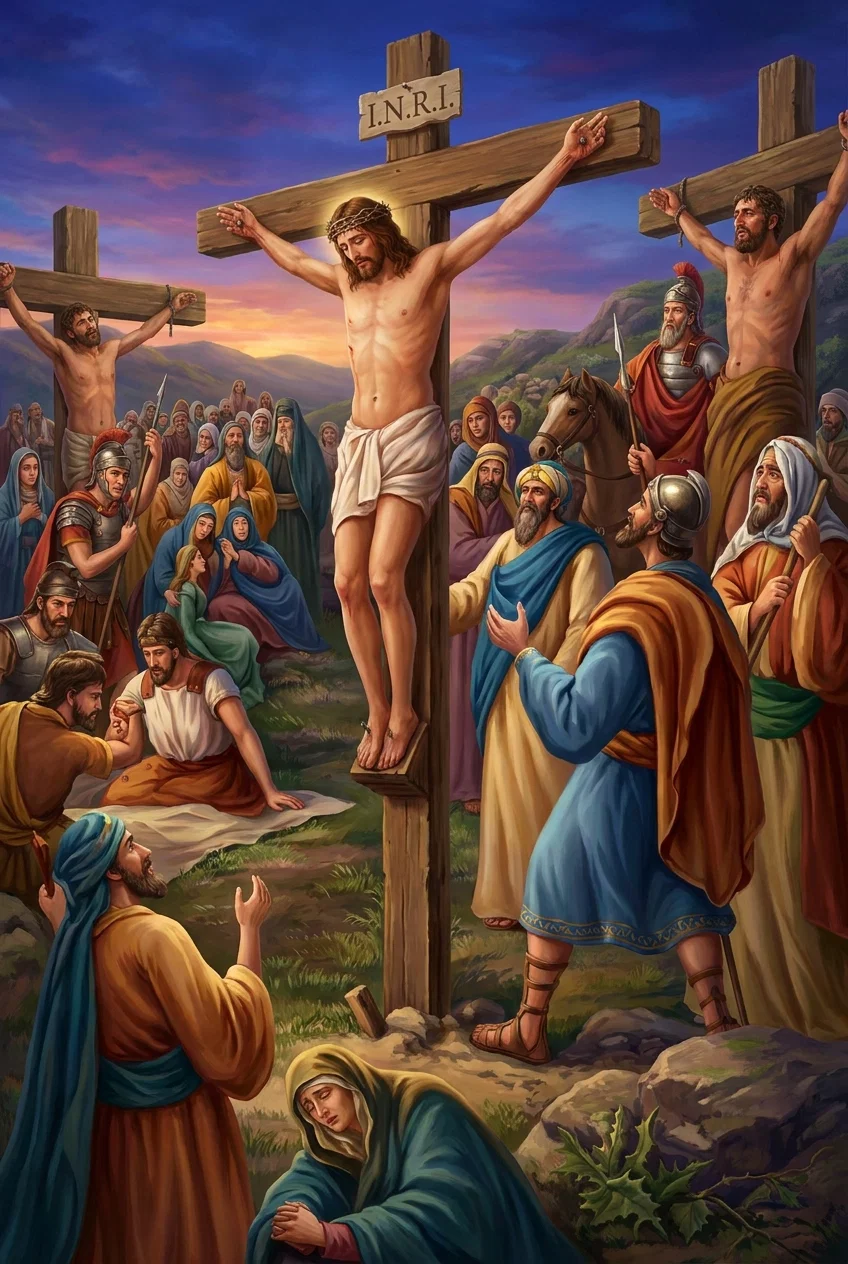
JESUS was hurried to Calvary amid the shouts and jeers of the crowd. As He passed the gate of Pilate's court, the heavy cross which had been prepared for Barabbas was laid upon His bruised and bleeding shoulders. Crosses were placed also upon two thieves, who were to suffer death at the same time with Jesus.
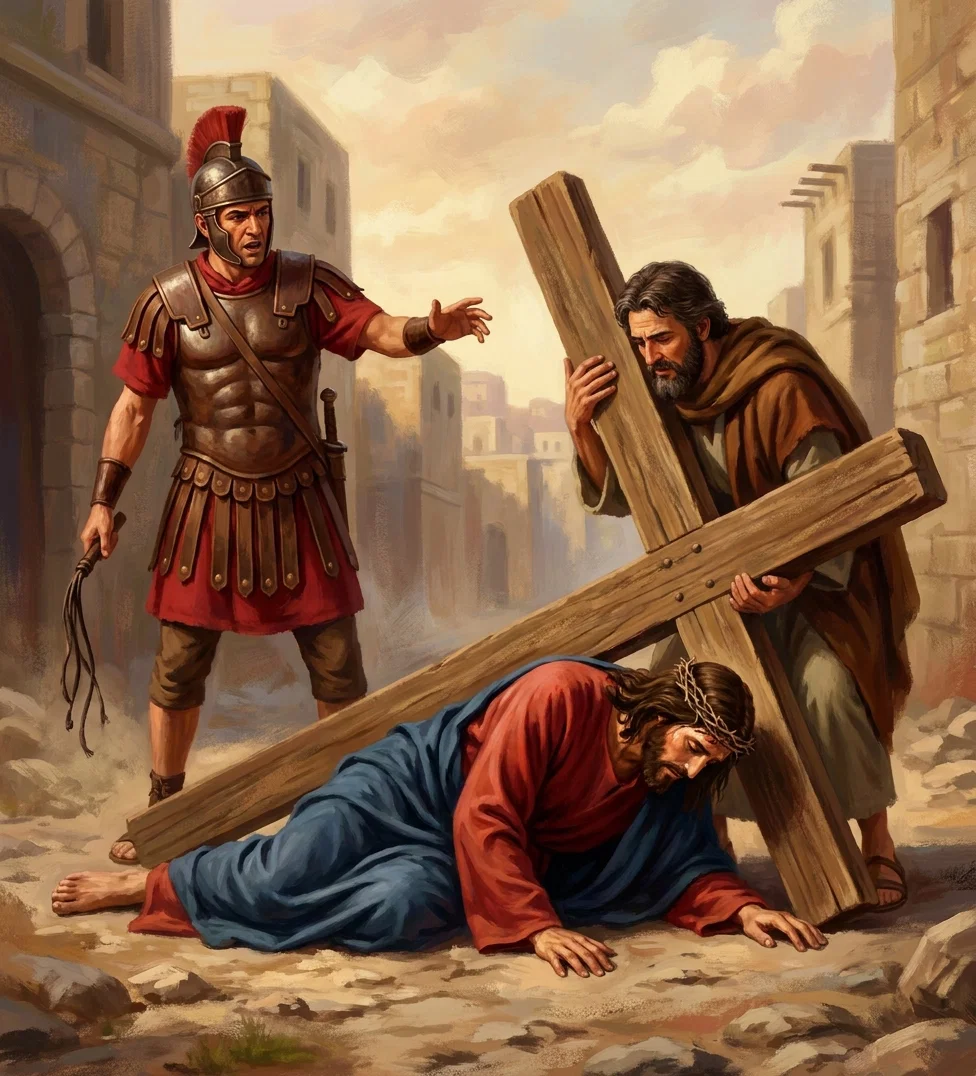
The load was too heavy for the Saviour in His weary, suffering condition. He had gone but a few rods when He fell fainting beneath the cross.
When He revived, the cross was again placed upon His shoulders. He staggered on a few steps, and again fell to the ground as one lifeless. His persecutors now realised that it was impossible for Him to go farther with His burden, and they were puzzled to find some one who would carry the humiliating load.
Just then they were met by Simon a Cyrenian, coming from the opposite direction. Him they seized and compelled to carry the cross to Calvary.
The sons of Simon were disciples of Jesus, but he himself had not accepted the Saviour. Simon was ever after grateful for the privilege of bearing the156cross of the Redeemer. The burden he was thus forced to carry became the means of his conversion. The events of Calvary and the words uttered by Jesus led Simon to accept Him as the Son of God.
The Crucifixion.
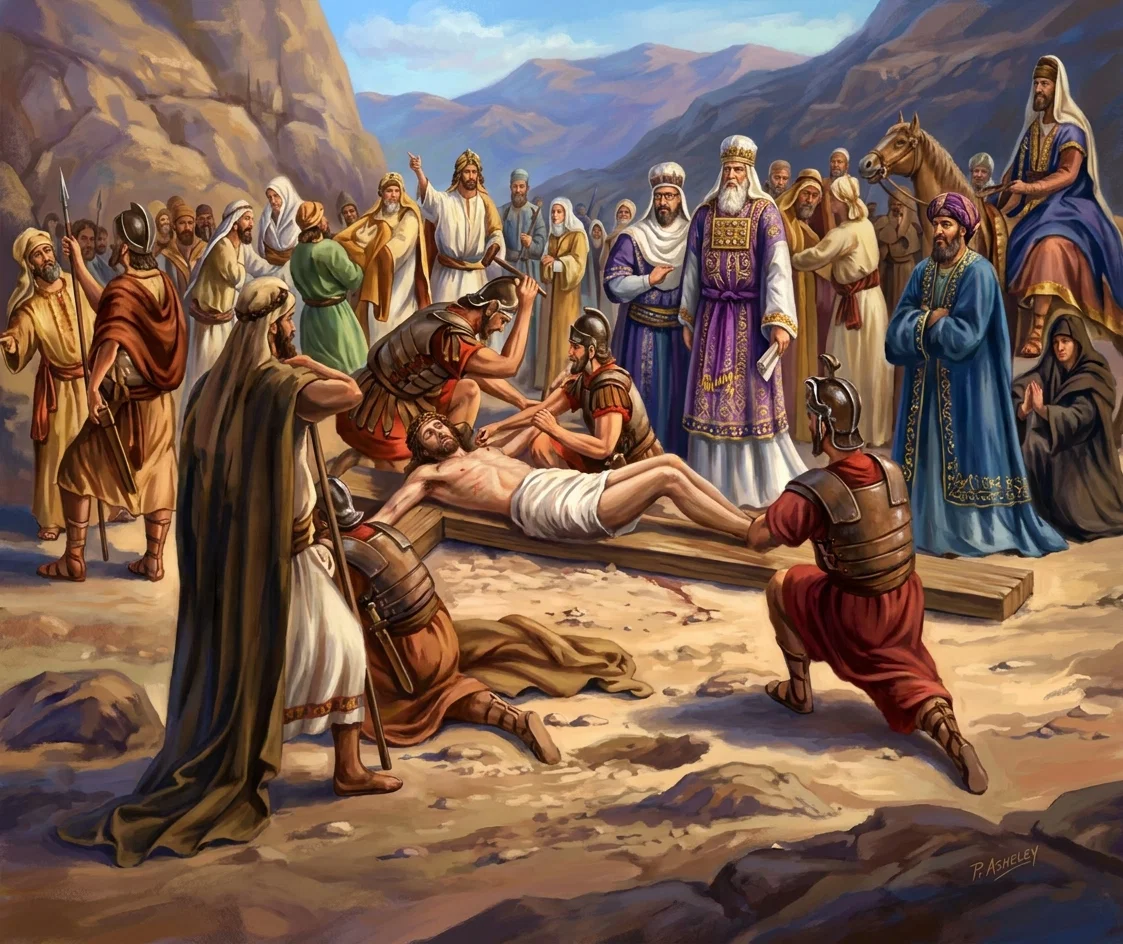
Arriving at the place of crucifixion, the condemned were bound to the instruments of torture. The two thieves wrestled in the hands of those who stretched them upon the cross; but the Saviour made no resistance.
The mother of Jesus had followed Him on that awful journey to Calvary. She longed to minister to Him as He sank exhausted under His burden, but she was not allowed this privilege.
At every step of that wearisome way she had looked for Him to manifest His God-given power, and release Himself from the murderous throng. And now that the final scene was reached, and she saw the thieves bound to the cross, what an agony of suspense she endured!
Would He who had given life to the dead suffer Himself to be crucified? Would the Son of God suffer Himself to be thus cruelly slain? Must she give up her faith that He was the Messiah?
She saw His hands stretched upon the cross,—those hands that had ever been reached out to bless the suffering. The hammer and the nails were brought, and as the spikes were driven through the tender flesh, the heart-broken disciples bore from the cruel scene the fainting form of the mother of Jesus.
The Saviour made no murmur of complaint; His face remained pale and serene, but great drops of sweat stood upon His brow. His disciples had fled from the dreadful scene. He was treading the wine-press alone; and of the people there were none with Him.
As the soldiers were doing their work, the mind of Jesus passed from His own sufferings to the terrible retribution that His persecutors must one day meet. He pitied them in their ignorance, and prayed:—
“Father, forgive them; for they know not what they do.”
Christ was earning the right to become the advocate for men in the Father's presence. That prayer for His enemies embraced the world. It took in every sinner who had lived or should live, from the beginning of the world to the end of time.
Whenever we sin, Christ is wounded afresh. For us He lifts His pierced hands before the Father's throne, and says, "Forgive them; for they know not what they do."
As soon as Christ was nailed to the cross, it was lifted by strong men, and with great violence thrust into the place prepared for it. This caused intense suffering to the Son of God.
Pilate then wrote an inscription in Latin, Greek, and Hebrew, and placed it upon the cross, above the head of Jesus, where all might see it. It read:—
“Jesus of Nazareth the King of the Jews.”
The Jews requested that this might be changed. The chief priests said:—
“Write not, The King of the Jews; but that He said, I am King of the Jews.”
But Pilate was angry with himself because of his former weakness. He also thoroughly despised the jealous and wicked rulers. So he answered:— “What I have written I have written.”
They pierced My hands and My feet.
The soldiers divided the clothing of Jesus among themselves. One garment was woven without seam,160and about this there was a contention. They finally settled the matter by casting lots. God's prophet had foretold that they would do this. He wrote:—
“Dogs have compassed Me; the assembly of the wicked have enclosed Me; they pierced My hands and My feet. . . . They part My garments among them, and cast lots upon My vesture.”
As soon as Jesus was lifted up on the cross, a terrible scene took place. Priests, rulers, and scribes joined with the rabble in mocking and jeering the dying Son of God, saying:—
“If Thou be the King of the Jews, save Thyself.”
“He saved others; Himself He cannot save. If He be the King of Israel, let Him now come down from the cross, and we will believe Him. He trusted in God; let Him deliver Him now, if He will have Him; for He said, I am the Son of God.”
"And they that passed by railed on Him, wagging their heads, and saying, Ah, Thou that destroyest the temple, and buildest it in three days, save Thyself, and come down from the cross."
Christ could have come down from the cross. But if He had done this, we could never have been saved. For our sake He was willing to die.
"He was wounded for our transgressions, He was bruised for our iniquities : the chastisement of our peace was upon Him ; and with His stripes we are healed."
DEATH OF CHRIST.
In yielding up His precious life, Christ was not upheld by triumphant joy. His heart was rent with anguish and oppressed with gloom. But it was not the fear or the pain of death that caused His suffering. It was the crushing weight of the sin of the world, a sense of separation from His Father's love. This was what broke the Saviour's heart, and brought His death so soon.
Christ felt the woe that sinners will feel when they awake to realise the burden of their guilt, to know that they have forever separated themselves from the joy and peace of heaven.
Angels beheld with amazement the agony of despair borne by the Son of God. His anguish of mind was so intense that the pain of the cross was hardly felt.
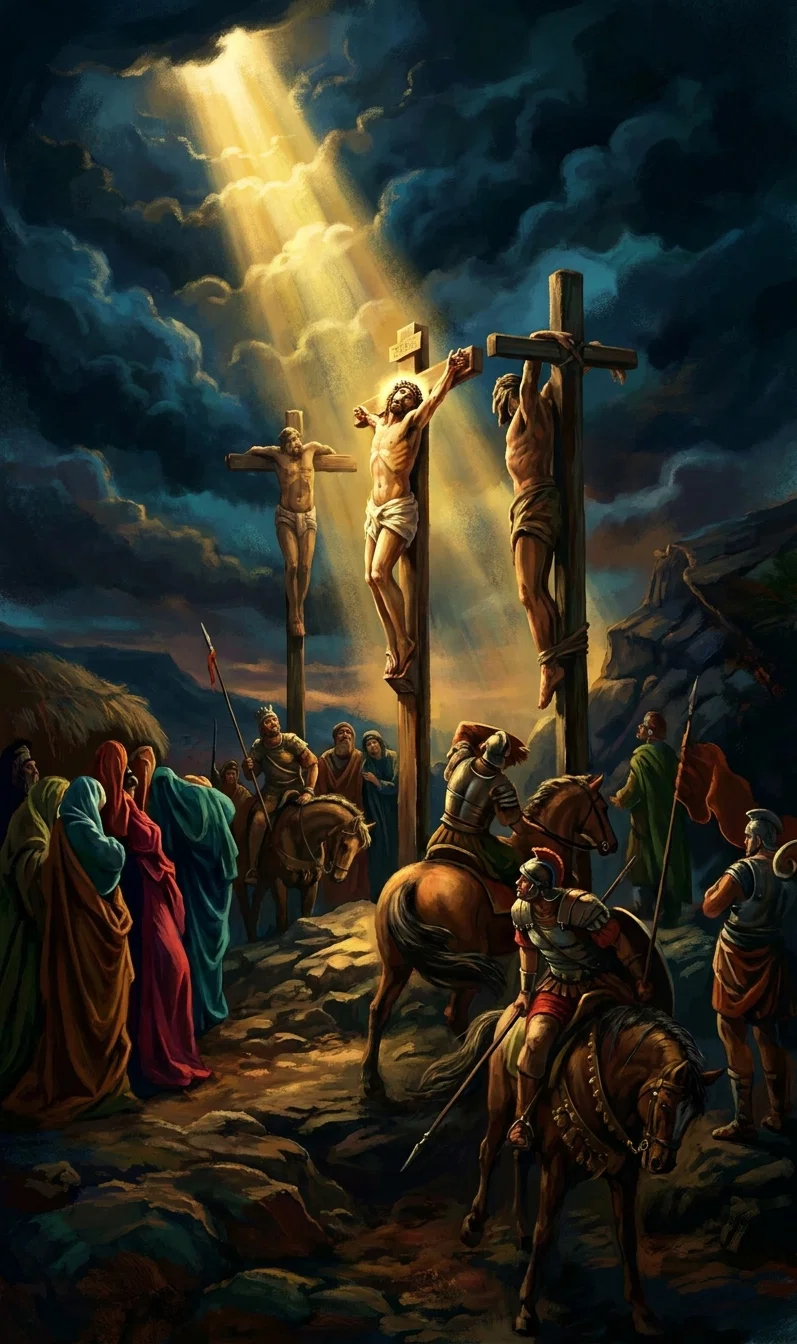
Nature itself was in sympathy with the scene. The sun shone clearly until midday, when suddenly162it seemed to be blotted out. All about the cross was darkness as deep as the blackest midnight. This supernatural darkness lasted fully three hours.
Darkness on Calvary
“About the cross was darkness, as deep as the blackest midnight.”
A nameless terror took possession of the multitude. The cursing and reviling ceased. Men, women, and children fell upon the earth in abject terror.
Lightnings occasionally flashed forth from the cloud, and revealed the cross and the crucified Redeemer. All thought that their time of retribution had come.
At the ninth hour the darkness lifted from the people, but still wrapped the Saviour as with a mantle. The lightnings seemed to be hurled at Him as He hung upon the cross. It was then that He sent up the despairing cry:—
“My God, My God, why hast Thou forsaken Me?”
In the meantime the darkness had settled over Jerusalem and the plains of Judea. As all eyes were turned in the direction of the fated city, they saw the fierce lightnings of God’s wrath directed toward it.
Suddenly the gloom was lifted from the cross, and in clear, trumpet-like tones, that seemed to resound throughout creation, Jesus cried:—
“It is finished.” “Father, into Thy hands I commend My spirit.”
A light encircled the cross, and the face of the164Saviour shone with a glory like the sun. He then bowed His head upon His breast and died.
The multitude about the cross stood paralysed, and with bated breath gazed upon the Saviour. Again darkness settled upon the earth, and a hoarse rumbling like heavy thunder was heard. This was accompanied with a violent earthquake. The people were shaken into heaps by the earthquake. The wildest confusion and terror ensued. In the surrounding mountains, rocks were rent-asunder, and went crashing down into the plains below. Tombs were broken open, and many of the dead were cast out.
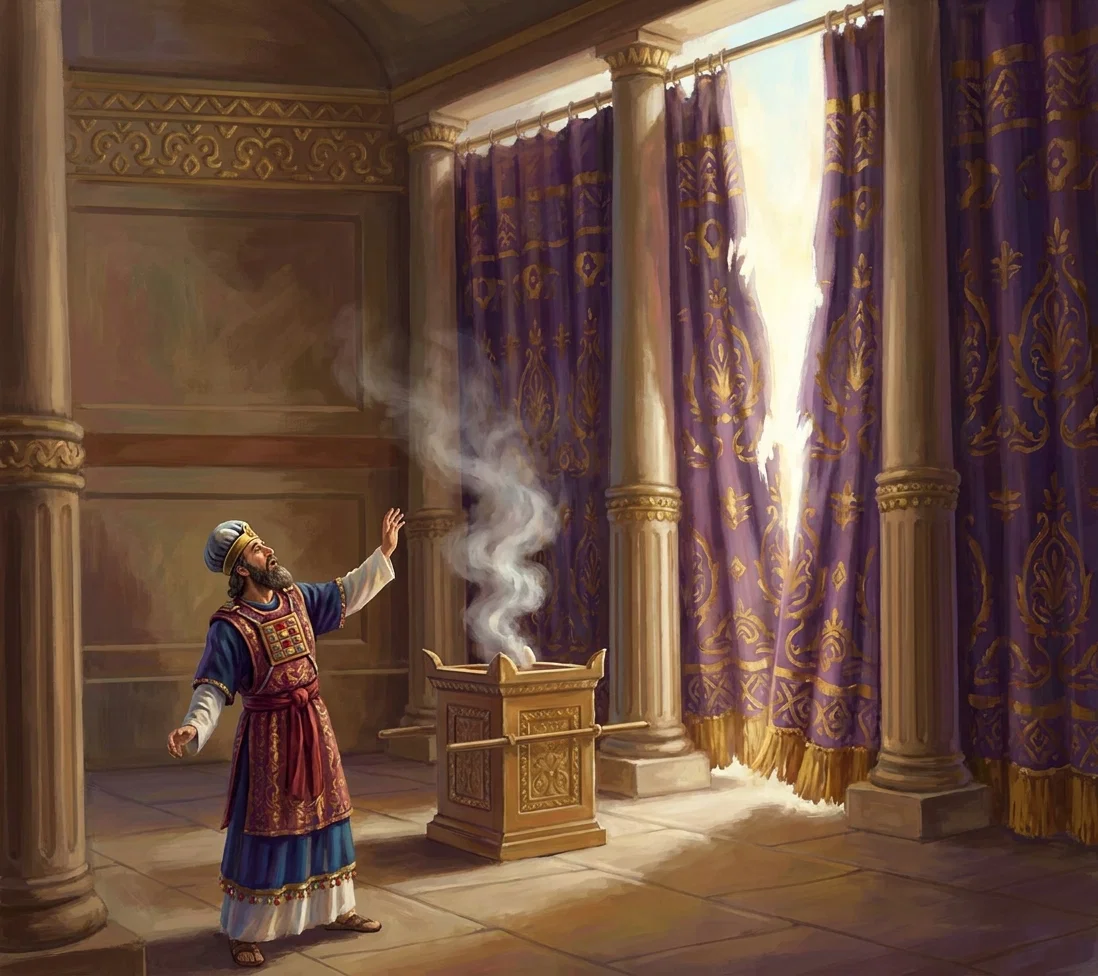
“The vail of the temple was rent in twain.”
Creation seemed to be breaking into atoms. Priests,165rulers, soldiers, and people, mute with terror, were lying prostrate upon the ground.
At the time of the death of Christ, some of the priests were ministering in the temple at Jerusalem. They felt the shock of the earthquake, and at the same moment the vail of the temple, which separated the holy from the most holy place, was rent in twain from top to bottom by the same bloodless hand that wrote the words of doom upon the walls of Belshazzar's palace.
The most holy place of the earthly sanctuary was no longer sacred. Never would the presence of God again overshadow that mercy-seat. Never would the acceptance or displeasure of God again be manifested by the light or shadow in the precious stones in the breastplate of the high priest.
Henceforth the blood of the offerings in the temple was of no value. The Lamb of God, in dying, had become the sacrifice for the sins of the world.
When Christ died upon the cross of Calvary, the new and living way was thrown open to Jew and Gentile alike.
Angels rejoiced as the Saviour cried, "It is finished!" The great plan of redemption was to be carried out. Through a life of obedience, the sons of Adam might be exalted finally to the presence of God.
Satan was defeated, and knew that his kingdom was lost.
IN JOSEPH’S TOMB.
REASON against the Roman government was the crime for which the Saviour was condemned. Persons put to death for this cause were buried in a place set apart for such criminals.
John shuddered at the thought of having the body of his beloved Master handled by the unfeeling soldiers, and buried in a dishonoured grave. But he saw no way to prevent it, as he had no influence with Pilate.
At this trying time, Nicodemus with Joseph of Arimathea came to the help of the disciples. Both of these men were members of the Sanhedrim, and were acquainted with Pilate. Both were men of wealth and influence. They were determined that the Saviour’s body should have an honourable burial.
Joseph went boldly to Pilate, and begged from him the body of Jesus. Pilate, after learning that Christ was really dead, granted this request.
While Joseph was gone to Pilate for the Saviour's167body, Nicodemus was making ready for the burial. It was the custom of those times to wrap the bodies of the dead in linen cloths, with precious ointments and sweet spices. This was one method of embalming. So Nicodemus brought a costly gift of about a hundred pounds’ weight of myrrh and aloes for the body of Jesus. The most honoured in all Jerusalem could not have been shown more respect in death. The humble followers of Jesus were astonished to see these wealthy rulers taking such an interest in the burial of their Master.
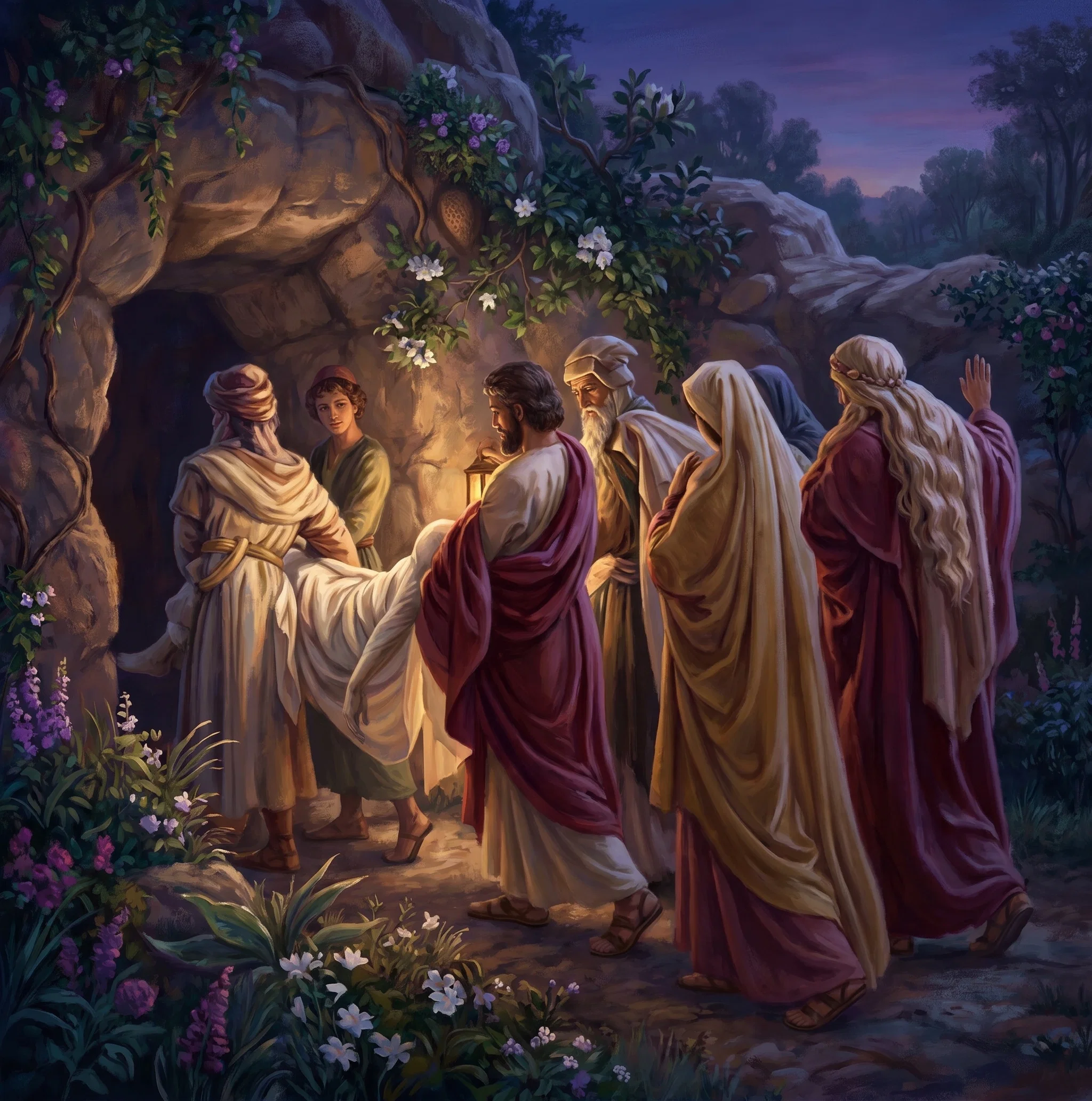
The Redeemer was born to the tomb.
The disciples were overwhelmed with sorrow at the death of Christ. They forgot that He had told them it was to take place. They were without hope.
Neither Joseph nor Nicodemus had openly accepted the Saviour while He was living. But they had listened to His teachings, and had closely watched every step of His ministry. Although the disciples had forgotten the Saviour’s words foretelling His death, Joseph and Nicodemus remembered them well. And the scenes connected with the death of Jesus, which disheartened the disciples, and shook their faith, only proved to these rulers that He was the true Messiah, and led them to take their stand firmly as believers in Him.
The help of these rich and honoured men was greatly needed at this time. They could do for their dead Master what it was impossible for the poor disciples to do.
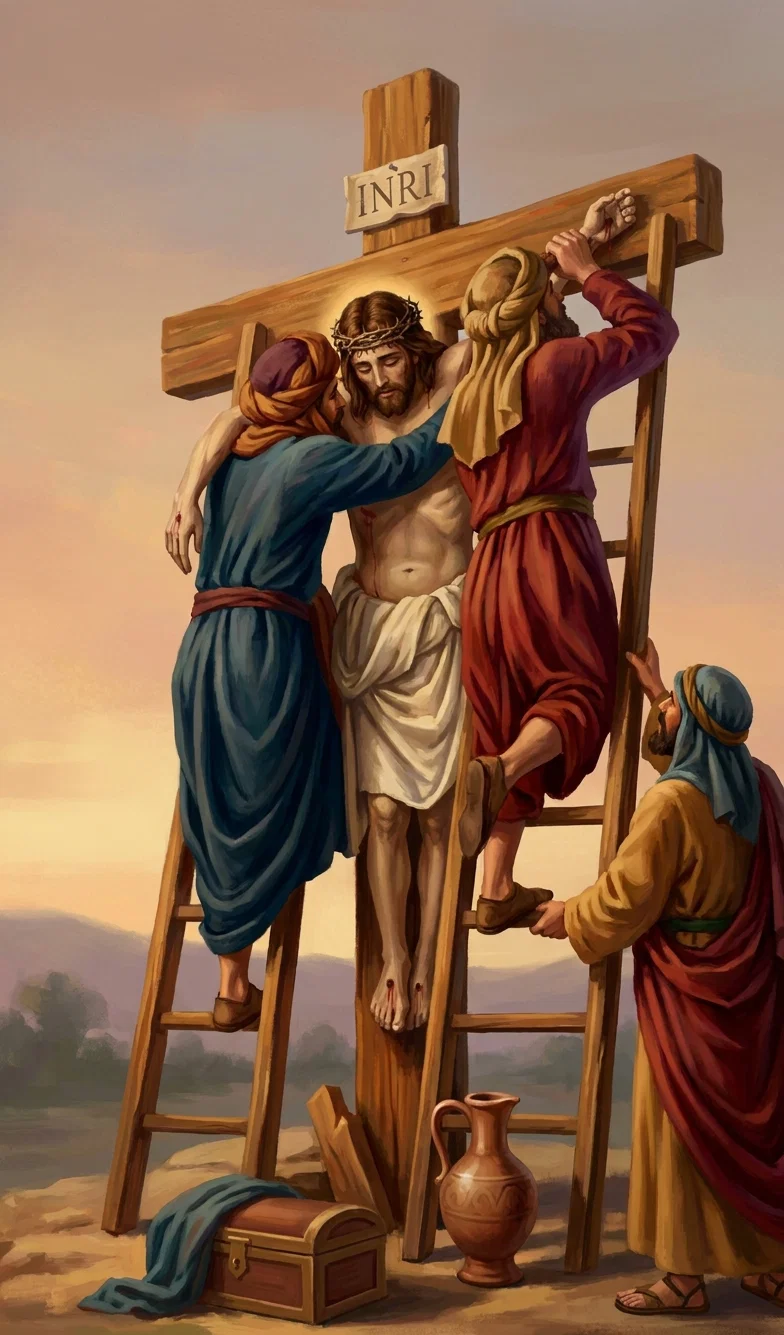
Gently and reverently they, with their own hands, removed the body of Christ from the cross. Their tears of sympathy fell fast, as they looked upon His bruised and torn form.
Joseph owned a new tomb hewn in a rock. He had built it for his own use; but he now prepared it for Jesus. The body, together with the spices brought by Nicodemus, was wrapped in a linen sheet, and the Redeemer was borne to the tomb.
Although the Jewish rulers had succeeded in putting Christ to death, they could not rest easy. They well knew of His mighty power.
Some of them had stood by the grave of Lazarus,169and had seen the dead brought back to life, and they trembled for fear that Christ would Himself rise from the dead, and again appear before them.
They had heard Him say to the multitude that He had power to lay down His life and to take it again.
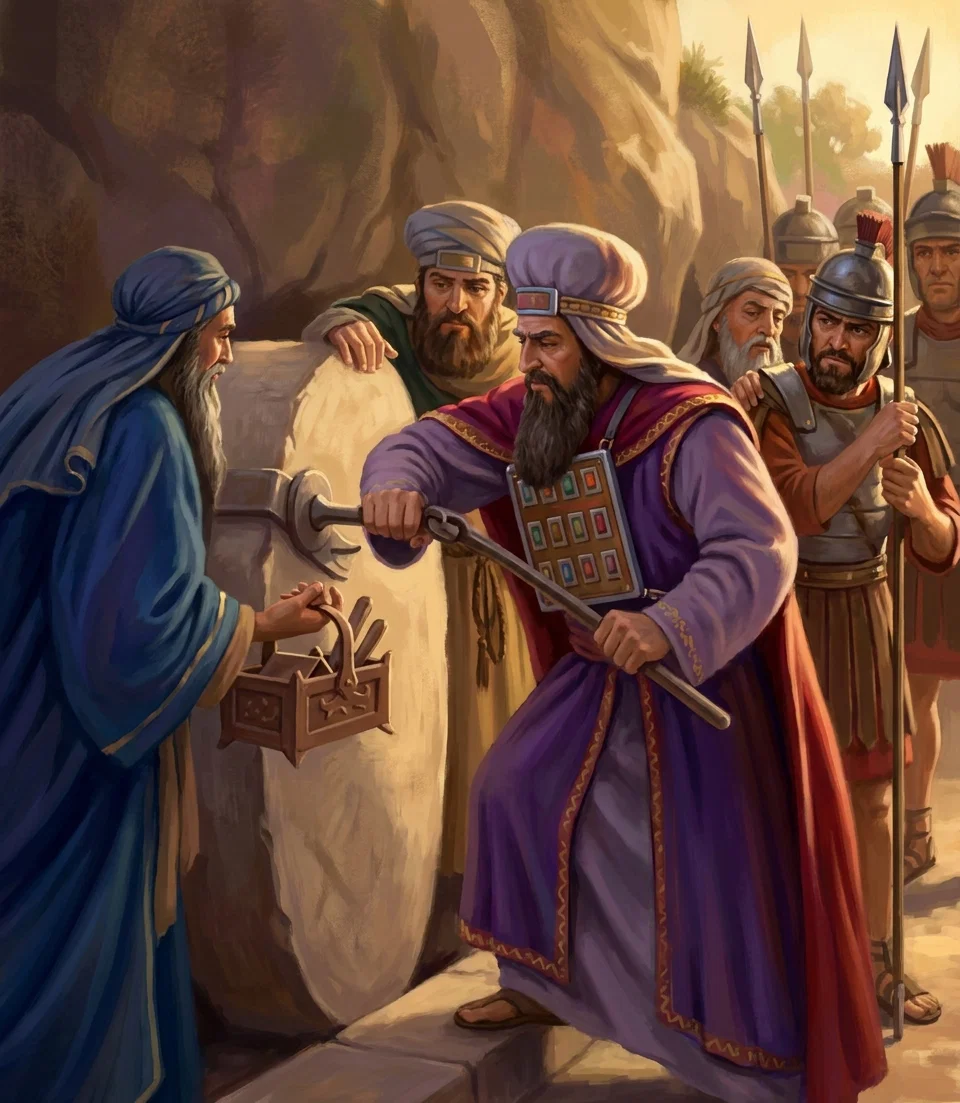
Sealing the stone, and setting a watch.
They remembered that He had said, “Destroy this temple, and in three days I will raise it up,” and they knew that He was speaking of His own body.
Judas had told them that Christ had said to His disciples on their last journey to Jerusalem:— “Behold, we go up to Jerusalem; and the Son170of man shall be betrayed unto the chief priests and unto the scribes, and they shall condemn Him to death, and shall deliver Him to the Gentiles to mock, and to scourge, and to crucify Him: and the third day He shall rise again.”
They now remembered many things He had spoken which foretold His resurrection. They could not forget these things, however much they desired to do so. Like their father, the devil, they believed and trembled.
Everything declared to them that Jesus was the Son of God. They could not sleep, for they were more troubled about Him in death than they had been during His life.
Bent on doing all they could to keep Him in the grave, they asked Pilate to have the tomb sealed and guarded until the third day. Pilate placed a band of soldiers at the command of the priests, and said:—
“Ye have a watch, go your way, make it as sure as ye can. So they went, and made the sepulchre sure, sealing the stone, and setting a watch.”