Your ShelfYour Projects

Signs of the Times, Vol. 37, No. 41.

A Song of Praise

Signs of the Times

Oct 18, 1910

Pacific Press Publishing Association · Mountain View, California · Oct 18, 1910

A Song of Praise

"I will extol Thee, my God, O King; And I will bless Thy name forever and ever. Every day will I bless Thee; And I will praise Thy name forever and ever. Great is Jehovah, and greatly to be praised; And His greatness is unsearchable. One generation shall laud Thy works to another, And shall declare Thy mighty acts. Of the glorious majesty of Thine honor, And of Thy wondrous works, will I meditate. And men shall speak of the might of Thy terrible acts; And I will declare Thy greatness. They shall utter the memory of Thy great goodness, And shall sing of Thy righteousness. Jehovah is gracious, and merciful; Slow to anger, and of great loving-kindness. Jehovah is good to all; And His tender mercies are over all His works. All Thy works shall give thanks unto Thee, O Jehovah; And Thy saints shall bless Thee. They shall speak of the glory of Thy kingdom, And talk of Thy power; To make known to the sons of men His mighty acts, And the glory of the majesty of His kingdom. Thy kingdom is an everlasting kingdom, And thy dominion endureth throughout all generations. Jehovah upholdeth all that fall, And raiseth up all those that are bowed down. The eyes of all wait for Thee; And Thou givest them their food in due season. Thou openest Thy hand, And satisfiest the desire of every living thing. Jehovah is righteous in all His ways, And gracious in all His works."

Our Bible Band for 1911

Schedule for Week Ending October 29 Sunday | October 23 | John 9, 10 Monday | “ 24 | “ 11, 12 Tuesday | “ 25 | “ 13-15 Wednesday | “ 26 | “ 16-18 Thursday | “ 27 | “ 19-21 Friday | “ 28 | Psalms 90-94 Sabbath | “ 29 | “ 95-100
John 9-21 inclusive are scheduled for our readings for the first five days of the week, altho a mistake was made by not putting the last chapter of John in the printed schedules. It was omitted by oversight. Note the last verse of chapter 20. There we have set before us the purpose in writing the book. These things are written that we may believe that Jesus is the Christ, and that believing we may have life through His name. Psalms 90-100, filled with splendid spiritual, devotional food, conclude the week.

Our Bible Band for 1911

THAT means you; for surely you wish to join. How many are keeping up to schedule this year? How many, like slow trains, are always behind time?
Does it discourage you? It ought not. It ought to make you more determined “to make good,” to start again, to keep up.
Some of our readers have thought the readings too long. Of course each day’s reading can be accomplished in from ten to twenty minutes. But there are those who feel that this time is not sufficient to put upon so long a lesson, yet they have no more time.
Well, we have these suggestions to offer, and we want your opinion. We have thus far followed three plans in reading the Bible: (1) Morning readings in the Old Testament; evening readings in the Psalms and the New Testament. (2) Reading the Bible through in the Biblical order of the books, equalizing the reading for each day as well as unbroken chapters would permit. (3) Reading the Bible in chronological order so far as unbroken books would permit, with reasonable effort to equalize each day’s reading without breaking chapters.
For 1911 we present to our readers the following propositions:
1. Shall we follow any of the above plans in the year to come? If so, which? Designate by number.
2. Or shall we take two years for reading the Bible through instead of one, following the Biblical order of books? Answer by yes or no.
3. Shall we take two years for reading the Bible through, and follow the chronological order of books? Answer by yes or no.
Answer by postal card. You need not repeat the question; answer by number, and please answer. We will let the majority decide at the end of three weeks from the time this appears.
We shall endeavor to connect with this reading course, as in the past, that which will be of value to our readers. If the course is for two years, more space for suggestive comment will be given in the SIGNS OF THE TIMES.
If we adopt the two-year course, in Biblical order of books, one year’s readings will reach from Genesis to about the 107th Psalm. Let us hear from all soon.

Question Corner

"IF YE WILL INQUIRE, INQUIRE YE."
This Inquirer's Department is conducted for the purpose of helping those who are studying the Bible. The answers are oftentimes only suggestive. They are never to be considered infallible, only as they agree with the infallible Word. The writer who may answer them does not consider that his opinion is infallible. He will simply give the best that he has, and plead with the inquirer to search the Word. Such questions only will be answered as, to the editors, seem to minister to the good of the readers and to the mission of the paper. We can not answer repeatedly in the same volume questions upon the same scripture. The name and address must accompany question, not for publication, but as an evidence of good faith, and that answer may be made by letter if deemed advisable. No letters are answered which do not contain the name of the writer. It is well always to enclose stamp for reply.

3263.—Hell and Punishment

You say that the Bible does not teach that the soul is immortal. Then what was Jesus talking about in Mark 9:43-48? What was the undying worm but the undying soul that will be cast into hell where the fire will never go out? Man's flesh and body may be ashes on this earth for a while, but the soul and hell are in a different place. T. B.
The Scriptures expressly tell us that "the righteous shall be recompensed in the earth: much more the wicked and the sinner." Prov. 11:31. If God's great plan both classes will be rewarded where they did their deeds. The 37th Psalm repeats the thought over and over again that the wicked shall be punished here; after that will come the eternal reward and kingdom of the righteous. Consequently there is no special place apart from this earth which is called hell, where the wicked will be in misery forever.
The whole thing would not be difficult to understand if man would but take into consideration the figure which the Lord uses. The word from which "hell" comes in Mark 9:43-48 is "Gehenna," which comes from the Hebrew words meaning "the valley of Hinnom." This valley, referred to several times in the Old Testament as the valley of the son of Hinnom, lay just east of Jerusalem, and seems to have been a beautiful place. But in it were built up the high places of Baal, and these apostate Jews caused their sons and their daughters to pass through the fire unto Molech. See Jer. 32:35. Because of the abominations which Israel committed there, that valley was desecrated, and called the Valley of Tophet, and the Lord declared that it should become the "Valley of Slaughter," where the carcasses of His people should be meat for the fowls of heaven. It afterward became a place where the offal of the city, the carcasses of malefactors, and the dead bodies of beasts, were cast. Upon these, two agencies of destruction preyed: First, the worm, constantly devouring the putrid carcasses, could be spoken of as the undying worm. Secondly, to avert pestilence, constant fires were kept burning to consume what the worms did not devour; and as these fires were ever burning, they could be said to be unquenchable. Therefore neither fire nor worm represents what was cast into this pit of destruction, but the agencies of destruction. They represent that which will utterly annihilate the soul, or the person. See Isa. 51:6, 8, in which it is declared, "The moth shall eat them up," and "the worm shall eat them." The same figures are used in the last verse of the last chapter of Isaiah, in which we are told that these agencies of destruction prey not upon living souls, but upon dead "carcasses."
But will the fire ever burn?—No. And will the worm never die?—Yes. Just the same as the unquenchable fire which burned up Jerusalem went out. Compare Jer. 17:27 with 2 Chron. 36:19, 21. Just the same as the eternal fire which consumed Sodom went out when the city was burned. Jude 7. This apostle speaks of those cities as "suffering the vengeance of eternal fire." Peter tells us they were turned "into ashes." 2 Peter 2:6. That is, the punishment will endure just as long as those cities remain destroyed, which will be through all eternity. But the fires were long ago quenched under the waters of the Dead Sea. So when the worm has done its work it, too, will die. But until the work is done, no power in the universe apart from God can stay the destruction. The same thought is emphasized in Matt. 3:12, where the wicked are likened to chaff, and we are told that God will burn up the chaff with unquenchable fire. That fire will be kindled by the presence of God, and that presence of God will save His people.

3266.— What Is Lawful in Marriage?

In 1 Cor. 7:27 it is said: "Art thou bound unto a wife? seek not to be loosed. Art thou loosed from a wife? seek not a wife." And verse 28 says: "And if thou marry, thou hast not sinned; and if a virgin marry, she hath not sinned. Nevertheless such shall have trouble in the flesh: but I spare you." Now if a man's wife has left him of her own will and the man has taken another woman, does Paul mean by the 28th verse that there is no sin in doing this? What does he mean that such shall have trouble in the flesh?
The mere fact that a wife leaves her husband does not give him the right to marry. She is his wife still altho she has left him. In verse 11 we read, "But and if she depart, let her remain unmarried, or be reconciled to her husband: and let not the husband put away his wife." The Lord in Matt. 5:32 gives us the only true cause for divorce, and that is fornication, or transgression of the marriage vow. Where the wife or the husband has proved false in this respect the other party may secure divorce and marry again, according to our reading of the scripture. But the mere leaving of either party does not leave the other free to marry without divorce, nor does it indicate divorce unless there has been transgression of the seventh commandment. The trouble in the flesh to which the apostle refers seems to be simply that which follows all marriages in the added anxiety of rearing of children, etc. The 28th verse would seem to refer to those who had purposed marriage but who had refrained from it for the Lord's sake.

3262.—The Holy Ghost

Are the three terms "Holy Ghost," "Holy Spirit," and "Spirit of Truth" synonymous? A. L. K.
They are synonymous. It is quite impossible to give any description or definition that will cover the fulness of the Spirit of God. The expression in 1 John 5:7, "There are three that bear record in heaven, the Father, the Word, and the Holy Ghost: and these three are one," is admitted, as far as we know, by all Biblical scholars, to be spurious. The verse is not found in any of the earlier manuscripts. God's Spirit is not confined to heaven; it is that which connects both Him and our Lord Himself with His children. The great life bond that binds together all who are in Christ Jesus, is the Spirit of God, the Spirit of Christ, the Spirit of Truth, the Comforter. It is the great all-comprehending life and power of God which makes present with every one of God's children both Father and Son.

3264.—The Hundred Years of Isa. 65:20

When will the prophecy of Isa. 65:20 be fulfilled? If this prophecy meets its fulfilment after the millennium, does the expression, "The child shall die an hundred years old," refer to the time "Satan shall be loosed a little season," and does it limit this "little season" to a hundred years? A. L. K.
We have answered this question very frequently, and twice, we believe, in this volume. Would say briefly that it seems to us that it comes in the close of the day of the Lord, after the thousand years of Rev. 20:4, and that it limits the time of the "little season" to the hundred years in general terms. For a fuller exposition see SIGNS OF THE TIMES of April 19, 1910, Question No. 3097.

The 6,000 Years

3265.—The 6,000 Years

When does the 6,000 years of this earth's history expire? G.
This we do not know. There are various systems of chronology, some making it a hundred or more years in the future, some of them contending that the 6,000 years are already in the past. Taking all things into consideration, the very best information at hand would indicate that the 6,000 years are nearly expired; but just when they will expire is unknown to mortals. The Lord has set no time for His coming for human beings. He tells us when that day is near, and admonishes us to be ready.

The Father's Duty

By Mrs. E. G. White
THE history of Samuel, the pure, noble-hearted prophet, and of Moses, the holiest of men, the most illustrious of leaders, shows how great is the mother's power to mold the character of her child, even in its earliest years. During this period her influence is paramount to all other. Even the infant in her arms will catch her spirit, and copy her deportment. It is important that mothers understand their duty, and that they seek wisdom and grace from God to perform their sacred work to His acceptance.
But great as is the work of the mother, it should never be forgotten that the father also has a part to act in the education and training of his children, and that he is under the most solemn obligation to perform that work with fidelity. Especially as the children advance in years is the father's influence needed, in union with that of the mother, to restrain, control, and guide. Parents little realize the harm done by withholding from their children needed and wholesome restraint, and allowing them to grow up with uncontrolled passions, and selfish, debasing habits.
The course of Eli—his sinful indulgence as a father, and his criminal neglect as a priest of God—presents a striking and painful contrast to the firmness and self-denial of the faithful Hannah. Eli was acquainted with the divine will. He knew what characters God could accept, and what He would condemn. Yet he suffered his children to grow up with unbridled passions, perverted appetites, and corrupt morals.
Eli had instructed his children in the law of God, and had given them a good example in his own life; but this was not his whole duty. God required him, both as a father and as a priest, to restrain them from following their own perverse will. This he had failed to do. His sons were impatient of control, and he weakly resigned the reins to them, and suffered them to pursue their evil ways at pleasure. The fond father overlooked the faults and sins of their childhood, flattering himself that after a time they would outgrow these evil tendencies. He did not regard his children as a sacred trust which God had committed to his care, to be returned with interest; but he looked upon them as his own. Hence, instead of seeking guidance and help from God, and following the instructions given in His Word, Eli chose his own way of management, that most agreeable to his ease-loving disposition. Had he taught his sons to obey their father, they would have learned to obey God; but by permitting them to disregard his commands, he taught them to disregard the commands of their heavenly Father. Thus their evil habits strengthened with their years; and when they reached manhood, they were ready to defy all authority, both human and divine.
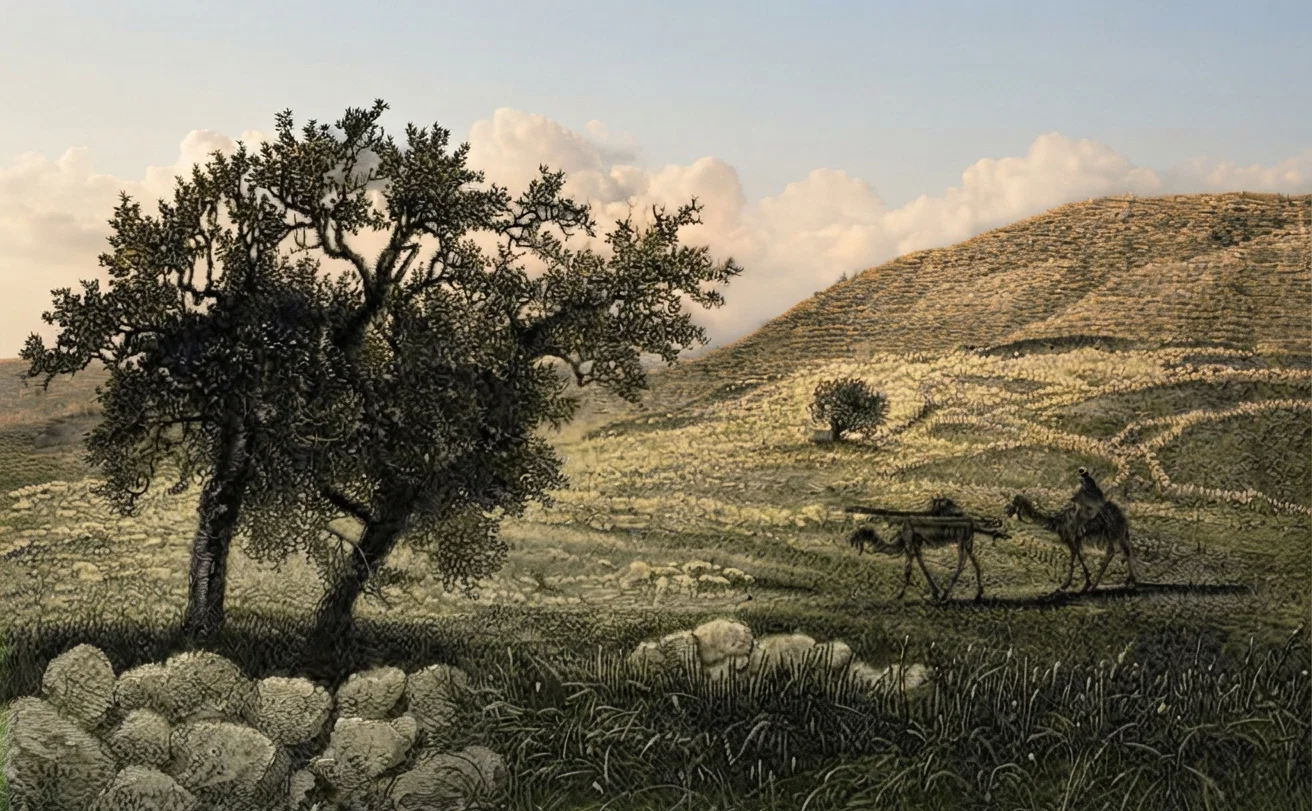
Seilun, on the site of Shiloh, where the sacred tent and the ark remained for four centuries. Here lived Eli.

Wholesome Restraint Needed

God requires every parent not only to give his children right instruction and a good example, but with promptness and decision to restrain their inclination to do evil. The fact that Eli stood in holy office, caused his lax discipline, and the selfish, irreverent, licentious course of his wicked sons, to exert a corrupting influence upon the whole nation. All parents should strive to make their families patterns of good works, perfect Christian households. But in a preeminent degree is this the duty of those who minister in sacred things, and to whom the people look for instruction and guidance. The ministers of Christ are to be examples to the flock. He who fails to direct wisely his own household, is not qualified to guide the church of God.

The Place to Begin

Christian parents, if you desire to work for the Lord, begin with your little ones at home. If you manifest tact and wisdom and the fear of God in the management of your children, you may be intrusted with greater responsibilities. True Christian effort will begin at home, and go out from the center to embrace wider fields. A soul saved in your own family circle or in your own neighborhood, by your patient, painstaking labor, will bring as much honor to the name of Christ, and will shine as brightly in your crown, as if you had found that soul in China or India.
The Lord will not pass unpunished the neglect of parents to train their children for His service. By kind and judicious management, fathers as well as mothers should bind their children to them by the strong ties of reverence, gratitude, and love, and should kindle in their young hearts an earnest longing for righteousness and truth. While the mother seeks to implant good principles, the father should see that the precious seed is not choked by the growth of evil. His sterner discipline is needed that his children may learn firmness and self-control amid the allurements to sin which must be met on every hand.

An Important Work

Let parents beware how they undervalue or neglect their work. Great is the reward of fidelity, terrible the penalty of unfaithfulness. One child wisely educated—trained to love and practise the right because it is right—may impart to thousands the blessings which he has received. Through his influence and example, the lessons of uprightness, purity, and devotion that shaped his own character, are permitted to shed their precious light far and wide.How many faithful and honored workers for God and humanity have been given to the world as the fruit of a godly training in childhood! It was said of Timothy, the beloved colaborer with Paul, that he knew the holy Scriptures from a child, and that the faith which dwelt in his mother and grandmother, was revealed also in him. The influence of faithful Christian parents can never lose its power. A young man when about to be ordained as a Christian minister, stated that at one time he had been well-nigh led to adopt the principles of infidelity: "But," he added, "there was one argument in favor of Christianity which I could never forget, and that was the consistent conduct of my own father. Through that I was at length won to the Saviour."
By neglect of duty, parents exert a far-reaching influence for evil. One ungodly, disobedient son may lead many souls in the path of iniquity. Each of these will corrupt others; the evil traits cherished will be transmitted to posterity; and thus iniquity is constantly increasing and multiplying, and all because parents choose the way which is easiest at the moment, the way of gratification and indulgence, and look not to the misery in store for themselves, their children; and their children’s children.
The solemn warnings contained in the Word of God, the judgments visited upon the indulgent father and his rebellious sons, should arouse parents from their stupor, and lead them to see and feel their duty to give to their children, by right education and discipline, correct habits and sound principles. Christian father, labor kindly, patiently, for the welfare of your children. Seek to turn their hearts to the bright beams of the Sun of Righteousness. Teach them by precept and example, that the spirit of Christ is the spirit of doing good.

A Trust Committed

To every father and mother is committed a little plot of ground before their own door. It is their work to clear it from noxious weeds, and to mellow the soil, that the precious seed may take root and flourish there. To do their work faithfully will be far more pleasing to God than to go on a mission to some foreign land, leaving the home field neglected. The work of Christian ministers and parents should begin with their own children. Present to the church and to the world a well-disciplined family, and you present one of the strongest arguments in favor of Christianity.
If parents who are following Eli’s example of neglect, could see the result of the education they are giving their children, they would feel that the curse which fell on Eli would assuredly fall on them. The sin of rebellion against parental authority, lies at the very foundation of the misery and crime in the world to-day. In His holy law God Himself speaks to children: "Honor thy father and thy mother." Again, by the pen of an apostle He commands them, "Children, obey your parents." The Old and the New Testament alike teach respect and obedience to parents, and also admonish all to reverence and honor the aged, to tenderly protect and cherish those whose heads are white and whose steps are feeble. If children were trained according to the teachings of God’s Word, they would manifest a deference for superiors, a propriety of deportment, and a beauty of character that would make them beloved by their associates, and beloved of God.

An Underlying Cause

There is a cause for the spirit of insubordination that exists in the family and the state, and that threatens to overthrow the very foundations of government. It is to be found in the growing disregard for the law of God. In ancient times parents were commanded to diligently teach its sacred precepts to their children, that they might thus become acquainted with the character of God, and His claims upon them. But men have become wiser, in their own conceit, than their Maker. Many have set aside the law of God, and have followed their own judgment in preference to His revealed will. How terrible have been the results of this teaching upon the youth! Self-indulgence, dissipation, profanity, and even greater crimes prevail to an extent that is frightful to contemplate.
The Lord holds parents and guardians responsible for the children under their care. He has not left us in uncertainty concerning the characters that He will accept. Nothing less than purity in thought, word, and deed, will meet the divine standard. The Word of God sets forth in unmistakable language the duties of parents. If they will faithfully perform these duties, His Spirit will crown their efforts with success. Those words of holy writ are as true now as when first uttered by the wise man, "Train up a child in the way he should go: and when he is old, he will not depart from it."

Under the Law and Under Grace

By T. Godfrey
FOR sin shall not have dominion over you: for ye are not under the law, but under grace. What then? shall we sin, because we are not under the law, but under grace? God forbid.” Rom. 6:14, 15. It is evident that the above scripture does not apply to the unregenerated soul, but must have its application in those who have been reconciled to God through the blood of the everlasting covenant, and the washing of regeneration; as we see from a careful reading of the context, in connection with the text, which says, “Let not sin therefore reign in your mortal body, that ye should obey it in the lusts thereof. Neither yield ye your members as instruments of unrighteousness unto sin: but yield yourselves unto God, as those that are alive from the dead, and your members as instruments of righteousness unto God. For sin shall not have dominion over you: for ye are not under the law, but under grace. What then? shall we sin, because we are not under the law, but under grace? God forbid.” Rom. 6:12-15.
Before sin entered into the world, man was in perfect harmony with the law of God, the law witnessing to his righteous character; but as soon as he disobeyed God, he was brought under the law, under the dominion of sin, under the sentence of death, the law testifying to his guilt. For he had transgressed the law that demanded the life of the transgressor. The Word of God says, “The soul that sinneth, it shall die.” Eze. 18:4, 20. “For the wages of sin is death.” Rom. 6:23. Therefore the law speaks to those who are under the law, under the dominion of sin, under the sentence of death. Says the apostle Paul, “Now we know that what things soever the law saith, it saith to them who are under the law: that every mouth may be stopped, and all the world may become guilty before God.” Rom. 3:19.
By the act of disobedience, Adam brought sin and death upon the whole human family. Therefore the whole family came under the dominion of sin, under the sentence of death. The Word of God says, “Wherefore, as by one man sin entered into the world, and death by sin; and so death passed upon all men, for that all have sinned.” Rom. 5:12.
Now the transgression of the law is sin. The apostle John says, “Whosoever committeth sin transgresseth also the law: for sin is the transgression of the law.” 1 John 3:4. After the fall of man, man could not save himself. He could not earn eternal life by works. The law could not be abrogated, nor the sentence annulled. So to save a fallen world from sin and death, and to uphold the honor and integrity of His throne, God sent His Son into the world to die for a fallen race. Jesus says, “God so loved the world, that He gave His only begotten Son, that whosoever believeth in Him should not perish, but have everlasting life.” John 3:16. Says the apostle Paul: “But when the fulness of the time was come, God sent forth His Son, made of a woman, made under the law [subject to death], to redeem them thatwere under the law, that we might receive the adoption of sons. And because ye are sons, God hath sent forth the Spirit of His Son into your hearts, crying, Abba, Father. Wherefore thou art no more a servant, but a son; and if a son, then an heir of God through Christ.” Gal. 4:4-7.
“Christ hath redeemed us from the curse of the law, being made a curse for us: for it is written, Cursed is every one that hangeth on a tree: that the blessing of Abraham might come on the Gentiles through Jesus Christ; that we might receive the promise of the Spirit through faith.” Gal. 3:13, 14. “For He hath made Him to be sin for us, who knew no sin; that we might be made the righteousness of God in Him.” 2 Cor. 5:21.
“There is therefore now no condemnation to them which are in Christ Jesus, who walk not after the flesh, but after the Spirit. For the law of the Spirit of life in Christ Jesus hath made me free from the law of sin and death. For what the law could not do [could not pardon the sinner], in that it was weak through the flesh, God sending His own Son in the likeness of sinful flesh, and for sin, condemned sin in the flesh: that the righteousness of the law might be fulfilled in us, who walk not after the flesh, but after the Spirit.” Rom. 8:1-4. “Do we then make void the law through faith? God forbid: yea, we establish the law.” Rom. 3:31.

Labor On

By Pearl Waggoner
LABOR on a little longer. Swift the day is fleeting by; Even now the shades of evening Can be seen across the sky.
Labor on, for night is coming, When earth's work must all be done. Weary not; the time is shortening, And the crown is almost won.
Labor on,—the world is waiting; Look around, the fields are white. O, how few are those who labor! Yet each moment brings the night.
Rouse thee, then, to new endeavor; Labor on,—the field is wide. Courage take from this assurance, Angel help is by thy side.
Labor on, nor grow disheartened By the roughness of the way. Many sheaves—the worker's guerdon— Shall be thine at close of day.
Continue reading: The Hope of the Papacy