Your ShelfYour Projects

Signs of the Times, Vol. 23, No. 2.

Long-suffering of God.—

Signs of the Times

Jan 14, 1897

Pacific Press Publishing Company · Oakland, California · Jan 14, 1897

Long-suffering of God.—

Editorial

Long-suffering.—
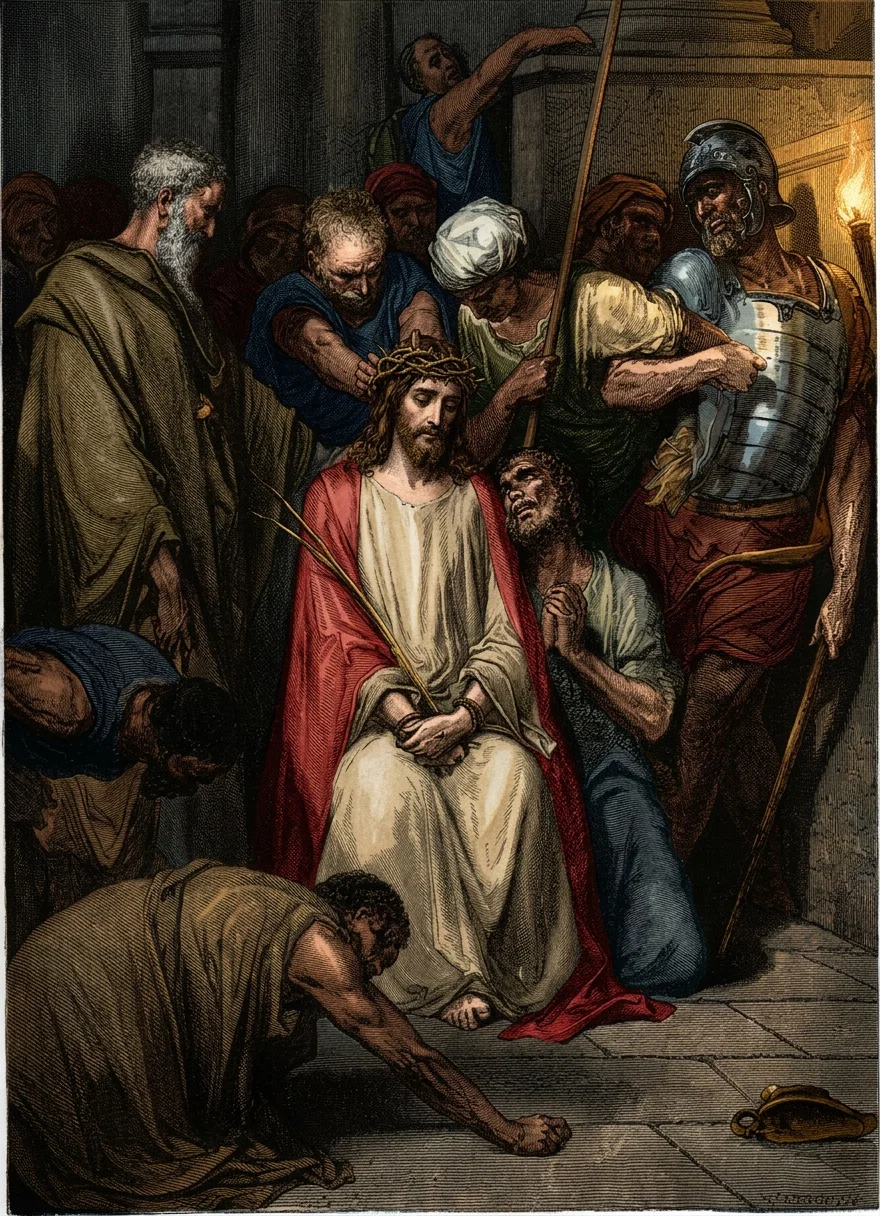
“The fruit of the Spirit is . . . long-suffering.” “Long-suffering” means “suffering long; bearing injuries or provocations for a long time; patient; not easily provoked.” It is “a patient holding out under trial,” exercised especially toward persons.
A token of God's long-suffering: “They stripped Him, and put on him a scarlet robe. And when they had platted a crown of thorns, they put it upon His head, and a reed in His right hand; and they bowed the knee before Him, and mocked Him, saying, Hail, King of the Jews! And they spit upon Him, and took the reed, and smote Him on the head.” Jesus said: “Father, forgive them; for they know not what they do.”
Long-suffering, in the light of our text, is not merely to suffer long. The wicked often suffer long. The transgressor of physical law becomes a hopeless wreck, and suffers all his life, complaining all the while he suffers. This is not the long-suffering of the Spirit. There are many who are grievously wronged for long years by others, who suffer greatly from these wrongs, who are oppressed, maligned, defrauded, persecuted; and these wrongs arouse within them bitter feelings of enmity and revenge. This is not the long-suffering of the Spirit.

Long-suffering of God.—

The long-suffering of the Spirit is the long-suffering of love. It dwelt first in God. It is an attribute of his character; for “God is love,” and “love suffereth long, and is kind; love envieth not; . . . seeketh not its own, is not provoked, taketh not account of evil.” 1 Cor. 13:4–6, R. V. This is love. The Lord thus declared his glory, his character, his name to Moses: “The Lord, the Lord God, merciful and gracious, long-suffering, and abundant in goodness and truth.” Ex. 34:6. “The Lord is long-suffering and of great mercy.” Num. 14:18. “But thou, O Lord, art a God full of compassion, and gracious, long-suffering, and plenteous in mercy and truth.” Ps. 86:15. God is long-suffering because he is full of compassion and gracious. Grace is undeserved favor; mercy bestowed upon those undeserving.

God’s Long-suffering

is his kindness and mercy exercised toward men who are all unmindful of his goodness. Day by day he gives them life; they use it regardless of the Giver. He gives light, and men employ the precious agency in selfishly seeking their own without a thought of God. He has filled the earth with life and beauty, with harmony and music, from the majestic voice of the thunder to the trilling of the song-bird, and the murmur of the wind in the shrubbery. He has painted gorgeous and beautiful pictures on fleecy cloud and star-gemmed sky, on land and sea. He has filled the air with the fragrance of a myriad flowers. He has manifested life in forms manifold. He has given man eyes to see, ears to hear, nerves to feel and taste, and tongues to speak of his goodness and praise; the earth is full of his glory. But man brings the harsh and selfish discord of sin into God’s harmony, and foul odors into God’s fragrance. He mars the beauty of God’s pictures. He uses the breath of life to curse God and his name. All the powers of his being, by which and through which God might be glorified, he prostitutes to the service of self and sin and evil; and God suffers it all and is kind. Even the pain that follows sinning is God’s blessed and merciful warning to withdraw from the way of wickedness, and seek him. Would that men could realize that “every good gift and every perfect gift is from above, and cometh down from the Father of lights, with whom is no variableness, neither shadow of turning.” James 1:17. If they did, they would not despise the “riches of his goodness and forbearance and long-suffering,” but would realize that “the goodness of God,” thus manifested, leads “to repentance.” Rom. 2:4.

God’s Object.—

God’s object is to win men to repentance, to save men from sin and sinning. Men—good men—look upon the evil in the world, the oppression of the poor and weak, the crushing out of nations and people, and wonder how it is that God can suffer such things. “How long, O Lord, how long?” is the cry of the centuries from the oppressed and persecuted of every land. Often the crime and the wickedness rouse the professed followers of the Long-suffering One to take up the weapons of carnal warfare, and “crusades” arewaged against the “ungodly.” But these always result in more harm than good to the cause of Christ. If the life of the sufferer is hid with Christ in God, no power can destroy him, or pluck him out of the hand of Infinite Love. As in the case of Paul, he may know that Christ shall be magnified in him, whether by life or death. Phil. 1:20. We may feel as did impetuous and warm-hearted Peter when we see our Lord in the persons of his followers insulted and betrayed by the ungodly, but the Master bids us put up our sword. If the sword is our trust, we shall perish with it. The cup of persecution must be quaffed by the church as by its Head. As he prayed concerning his enemies, “Father, forgive them; they know not what they do;” so will the church pray concerning her enemies. Meeting bludgeon with blow, sword thrust with stab, may break the persecutor’s head or spill his life blood, but it will not win his heart or save his soul. This is God’s object, to save. “The long-suffering of our Lord is salvation” to every soul who can be reached by him. In justice God could have destroyed Saul, the persecutor; in long-suffering he saved him. His long-suffering is the reason why we are saved.

Our Example.—

“If, when ye do well, and suffer for it, ye take it patiently, this is acceptable with God. For even hereunto were ye called; because Christ also suffered for us, leaving us an example, that ye should follow his steps; . . . who, when he was reviled, reviled not again; when he suffered, he threatened not; but committed his cause to him that judgeth righteously.” 1 Peter 2:21–23, margin. Here is our example. Through all the centuries of sin before he came; from the manger to the desert of temptation; from the desert of temptation to the Garden of Gethsemane, in the arrest, the mock trial before the Sanhedrin, the clamor before the Roman governor, the scourging, the bearing of the cross, the piercing of the nails, and the shameful death; from the Crucifixion until the present, as he has suffered in sympathy with his saints,—in it all is the long-suffering of God manifested toward us and the world for our salvation and the salvation of all. And it will be toward each one till every deed of God’s love is rejected, and man chooses wrath instead of mercy. How long-suffering, then, ought we, recipients of God’s wondrous goodness, to be to our fellows; “with long-suffering, forbearing one another in love” (Eph. 4:2); “strengthened . . . unto all patience and long-suffering with joyfulness” (Col. 1:11); “put on therefore, as the elect of God, holy and beloved, bowels of mercies, kindness, humbleness of mind, meekness, long-suffering; forbearing one another, and forgiving one another, if any man have a quarrel against any; even as Christ forgave you, so also do ye” (Col. 3:12, 13). This is Christlikeness, this is Christianity. This long-suffering is the fruit of the Spirit of God within.

LETTER AND SPIRIT.

“But now we are delivered from the law, being dead to that wherein we were held; that we should serve in newness of spirit, and not in the oldness of the letter.” Rom. 7:6, margin.
What is the thing in which we were held, and to which we are now dead?—The seventh chapter of Romans is but an expansion of the sixth chapter, where we read that we are “dead to sin” (verse 2), and that “he that is dead is freed from sin” (verse 7). “Likewise reckon ye also yourselves to be dead indeed unto sin, but alive unto God through Jesus Christ our Lord.” Verse 11.
We are dead unto the sin which held us, because sin also is dead by Christ. “Knowing this, that our old man is crucified with him, that the body of sin might be destroyed, that henceforth we should not serve sin.” Rom. 6:6. And so “we are delivered from the law.” It had been transgressed, and therefore it demanded our death; “for the wages of sin is death.” Rom. 6:23. But now that we are dead, it pursues us no further; it has executed the penalty on us, in Christ. “The law hath dominion over a man as long as he liveth.” When he is dead, there is nothing more that it can do to him.
“I am crucified with Christ; nevertheless I live; yet not I, but Christ liveth in me.” Gal. 2:20. That is a good reason why the vengeance of the law no longer pursues us. The man who committed the sin is dead, and the man who now lives is a “new man,” walking “in newness of life.” The old life was a life of sin; the “new man” is after God “created in righteousness and true holiness.” Eph. 4:22–24. Since “the new man” has not transgressed the law, he is as a matter of course free.
But the law is not dead. It is as much alive as it ever was. The new man is free from it simply because he is walking in harmony with it. The new man is under as much obligation to keep the law as the old man was; the difference between them is that the new man does his duty, while the old man did not, and could not. The old man was “not subject to the law of God,” being opposed to the Holy Spirit. The new man is alive through Christ, who died “that the righteousness of the law might be fulfilled in us, who walk not after the flesh, but after the Spirit.” Rom. 8:4.
“If ye be led of the Spirit, ye are not under the law.” Gal. 5:18. But the verse last quoted tells us that “the righteousness of the law is fulfilled” in those who walk after the Spirit. Therefore we are taught most plainly that the only ones who are “not under the law” are those in whom the righteousness of the law is fulfilled. The transgressors of the law are the only ones who are “under the law.” Those who are “delivered from the law” are the ones who are keeping it “in spirit and in truth.”
This is shown in the statement that we are delivered from the law, in order “that we should serve in newness of spirit, and not in the oldness of the letter.” We still serve, but as free men, and not as slaves. It is a spiritual service, that is, a real service; for only that which is spiritual is real.
“For we know that the law is spiritual.” Rom. 7:14. It follows, therefore, that when we were serving in oldness of the letter, we were not really keeping the law; for since the law is spiritual, it necessarily requires spiritual service. So it is only when we are delivered from the law that we keep it.

Unlike Human Law.

The common opinion in regard to the letter and the spirit of the law, is most erroneous. The error arises from supposing that the law of God is similar to human laws. It is quite common to speak of the spirit of a law made by man, when all that is meant is the intent of the law. Thus: No human law is perfect; its framers can not possibly foresee all the circumstances that may arise to be judged by it. Then, too, the language of the law may be obscure. So the judge often finds it necessary to decide what was the intent of the lawmakers. A man might be technically or literally a violator of a law, while still acting fully in harmony with the intent of its framers. This is what is meant by the mistaken use of the term “letter and spirit,” as applied to human laws.
Now the great difference between the nature of human laws and the divine law is that there is no spirit to the former, while the latter is wholly spiritual. Spirit is life; but there is no life in human laws. They can not give life. No man can get anything more out of a human law than he puts into it. If men ignore any human law, then it is said to be “a dead letter.” But it has no more life in itself when it is obeyed than when it is disregarded; the life is in the people, who make their acts conform to the words of the law.
The law of God is wholly different. It is alive whether people regard it or not. It is alive because it is spiritual. The man who serves in “the oldness of the letter” does not really serve at all, because, no matter how good his purpose, or how strong his endeavors, to keep the law, he is simply reproducing himself, and not the law. In trying to do what the law tells him to do, he is merely doing what his own nature allows him to do. While in a carnal state, he is “not subject to the law of God, neither indeed can be.” Rom. 8:7.

“The Law Is Life.”

But “the law of the Spirit of life in Christ Jesus” (Rom. 8:2) gives freedom from this bondage, so that “the righteousness of the law may be fulfilled in us.” The real law is the life of God in Christ, and that gives life. What is termed “the letter” of the law of God is the verbal statement of the law. This is not the law itself, but only the form of it, as the apostle said the Jews had “the form of knowledge and of the truth in the law.” Rom. 2:20. The verbal statement of the law bears the same relation to the law itself that the photograph of a man has to the man himself. It is but the shadow.
A shadow is the exact image of the substance. The words of the divine law, being “the form of knowledge and of the truth,” might be compared to a statue, rather than to a photograph. It has the form and features, and differs from the reality only in having no life. So when we speak of the spirit of God’s law, we mean the law itself, and not merely the intent of the law. The intent of the law may be learned from the words, since God is notsubject to human limitations, but knows what is needed, and can say just what he means.
From the words of the law of God we may know exactly what we should do, for it is a perfect form. But it is only in Christ that we find the living substance. The law in Christ is not only living, but it gives life. It performs itself in those who submit to it, because it is God’s own life. It is not less than the letter; it is not something different from the letter; but it is simply the living thing which the letter perfectly describes. E. J. W.

Freedom in Christ’s Service

THERE is no bondage in Christ’s service; therefore, brother, if you feel bound or enslaved in your work, you are not doing Christ’s service. Either you need different work or a different spirit.

WHOM SHALL WE HEAR?

“Verily, verily, I say unto you, He that heareth My word, and believeth on Him that sent Me, hath everlasting life, and shall not come into condemnation; but is passed from death unto life. Verily, verily, I say unto you, The hour is coming, and now is, when the dead shall hear the voice of the Son of God; and they that hear shall live.” John 5 : 24, 25.
The voice which we are to hear is always the voice of the Son of God. Only that voice will give life; only they that hear that voice shall live. If man speaks, he is to be but the mouthpiece; the voice is to be God’s. “If any man speak, let him speak as the oracles of God.” 1 Peter 4 : 11. If any one speaks with his own voice, him we are not to hear.
Some of the Samaritans believed on Christ because of what was told them by the woman whom Christ met at the well. But “many more believed because of his own word; and said unto the woman, Now we believe, not because of thy saying; for we have heard him ourselves, and know that this is indeed the Christ, the Saviour of the world.” Their faith rested on the true foundation,—Christ’s word. No belief that does not rest on this will be enduring.
When many of Christ’s disciples turned from him because they could not receive his sayings, and Jesus had asked the twelve if they also would go away, Peter said, “Lord, to whom shall we go? thou hast the words of eternal life. And we believe and are sure that thou art that Christ, the Son of the living God.” There was none other than Christ who had the words of eternal life; there is none other now. And those who hear his words, believe and are sure that he is the Son of God. They have a knowledge that is possessed by none others.
Jesus said, “My sheep hear my voice, and I know them, and they follow me.” John 10 : 27. When the true Shepherd “putteth forth his own sheep, he goeth before them, and the sheep follow him; for they know his voice. And a stranger will they not follow, but will flee from him; for they know not the voice of strangers.” Verses 4, 5. The true Shepherd “calleth his own sheep by name.” This is how they know his voice. He speaks directly to them, to each one individually, and they know it. This is how we know the voice of the Son of God.
And for that voice, and that only, we are to listen. Many voices are crying, many saying, “Lo here!” and “Lo there!” but the Shepherd’s voice is different from them all. That is the voice of One whom, when we hear it, we know to be acquainted with us,—with our past lives, and the motives and thoughts and perplexities of our individual hearts. He knows us by name; and if we will hear his voice, he will make known unto us his name. And “his name, through faith in his name,” shall make us whole, as it did the cripple at the beautiful gate of the temple. Acts 3 : 16.
E. J. W.

Question Corner

“Enquire, and make search, and ask diligently.”

No. 455. Affliction of Job.

WOULD like to know how long Job was afflicted. T. M. B.
The only knowledge we have of the affliction of Job is found in the book of Job and two or three references to it in other books, as for instance, Eze. 14: 14-20; James 5: 11. We do not know how long his affliction continued. And yet, it was probably just as long as was for his good and God’s glory.

No. 456. Dates Relating to Cyrus.

(1) PLEASE tell the difference in time between the date of the decree in the time of Daniel when Cyrus entered on the duties of his office as king of Babylon, and those of Ezra and Nehemiah. How many edicts were there? (2) What does the expression “only a swing of thirteen years” mean? A. C. H.
1. We do not know just what our querist refers to by “the decree in the time of Daniel,” but suppose he has reference to the decree, or commandment, of Dan. 9: 25, to restore and build Jerusalem. The first partial decree relating to that work was that of Cyrus, B.C. 536 (Ezra 1: 1-3), in the first year of his reign, not as a king of Babylon, but as ruler of Medo-Persia. The second “decree” was in the reign of Darius Hystaspes, really a renewal of the decree of Cyrus, B.C. 520. Ezra 6. The third and fullest decree, covering all contained in the former decrees and much more, granting the Jews not only the privilege of rebuilding the temple and city, but restoring the government, was by Artaxerxes Longimanus, B.C. 457. This decree is found in Ezra 7. The three decrees of the Persian king made up “the commandment of the God of Israel” (Ezra 6: 14), which, of course, was not complete till filled out by its most important installment, the decree of Artaxerxes. It is from this latter date, B.C. 457, that the 2,300 days of Dan. 8: 14 are reckoned.
2. We do not know the origin or meaning of any such expression as you name.

No. 457. Type and Antitype.

WHERE in the Old Testament is the prophecy of Christ’s saying, “A bone of him [Jesus] shall not be broken,” as given in John 19: 36? TRUTH SEEKER.
See Ex. 12: 46; Num. 9: 12; Ps. 34: 20. There may have been other prophecies then extant, now lost to us, which predicted this; but to our minds the passages relating to the paschal lamb are very clear prophecies of our Lord’s death. Christ is “our Passover” (1 Cor. 5: 7), and the slaying of the paschal lamb was a type and prophecy of his death.

No. 458. The Mistake of 1843.

WHAT was the mistake of time which caused the change of expectation on the part of William Miller and others, from the spring of 1843 to the autumn of 1844? Was this mistake caused by the difference between Old Style and New Style? A. C. H.
The 2,300 days, or years, of Dan. 8: 14 began in B.C. 457. If we take 457 from 2,300, it leaves 1,843. But the 2,300 years were full years, and the mistake was made in not recognizing this. If they began at the beginning of B.C. 457, they would end at the close of A.D. 1843. But as nearly half of the year was gone before the decree of Artaxerxes went into effect, it will be easily seen that the 2,300 full years from the middle of B.C. 457 would reach over into the next year, 1844. The Old Style or New Style had nothing to do with it.

No. 459. “Heart,” “Bowels,” etc.

PLEASE explain the use of the words “heart,” “bowels,” and “belly” in passages like Prov. 4: 23; 1 John 3: 17; John 7: 38, and many similar passages. L. C. G.
These terms are used as we use “heart,” “bowels,” “breast,” etc., indicating the seat of the feelings, emotions, affections, mind, intellect. The use of the term originated, doubtless, from the fact that violent passion or strong emotions affect the heart, bowels, etc.

No. 460. Commanding to Abstain from Meats.

PLEASE explain 1 Tim. 4: 3, 4. Does it mean that all animals are to be used as food, if we are thankful for them? What church or creed forbids those things? J. B. V.
1. The word translated “meats” does not necessarily refer to flesh foods. It simply means foods. So now the English use “meat.” It is common to hear farmers in parts of England speaking of giving their horses their meat, meaning hay and grain.
2. We should understand the foods to be eaten were limited by the expression, “sanctified by the word of God and prayer,” in verse 5. What food God has so sanctified or set apart for us is good if it be received with thanksgiving.
3. All these things in a limited degree have been done in the Roman Catholic Church, and will be more fully as time progresses. Celibacy of priests and nuns, stated fasts, the fearful deceptive errors, the leaguing with demons through so-called saint worship, are all fulfilled, tho ignorantly, in that church.

No. 461. What Is the Vail?

PLEASE explain 2 Cor. 3: 13-18. Does it have reference to the ceremonial law. What is the vail? J. B. V.
It is not possible to give an adequate explanation of the passage named in this department; it involves an examination of the whole chapter. But, briefly, to the children of Israel the glory of God was to them the glory of condemnation. To Moses, who believed God, it was the glory of righteousness. The children of Israel, in their sins to which they clung, plead, “Let not God speak with us, lest we die” (Ex. 20: 19), while Moses prayed, “I beseech thee, show me thy glory” (Ex. 33: 18). God withdrew in a measure from the one party, but he revealed himself in Moses as the Lord our Righteousness. The shining of Moses’ face was the outshining of the glory within. That glory condemned the Israelites, and they desired it vailed so they could not see it, while God desired them to receive it in their hearts, that the glory of condemnation might become the glory of righteousness. That vail represented their unbelief, which they interposed between themselves and God’s righteousness. Had they prayed, “Take the sin away, show me thy glory, let it be revealed in me,” they would have seen the end of sin and condemnation; it would have been abolished by the presence of God within. Their minds were blinded; when they read the Scriptures, they could see nothing that brought them the righteousness and life of God. But at any time when their heart would turn to the Lord, the darkness of unbelief would flee, the glory of condemnation would have no glory, by reason of the excelling glory of righteousness, and the bond-slave of sin would find freedom in Jesus. God’s revelation of his glory may at first condemn, but it is revealed that we may be made righteous. Do not turn from it; let it shine away the darkness and sin of the soul.

Another “Deplorable Fact.”—

Says a Christian Endeavor exchange: “It is a deplorable fact that all reverence for holidays, which should be sacred to a Christian people, has been buried beneath the world of amusement.” There is no question as regards the world of amusement; it buries nearly everything good and useful, sacred and common; but it is a “deplorable fact” that the church is elevating as sacred, days the appointment of which is wholly of man. Who has required us to observe as sacred Thanksgiving Day, Decoration Day, or Christmas? Of course it is good to give thanks; and the Christian ought to do it every day; and no law can compel the unthankful to be thankful any day. Decoration Day has its memories sacred to many mourning homes, but it is not a sacred day religiously. “Christmas” brings us legitimately the fun, the mirth, the amusements, the feasting, gluttony, drunkenness, from the old pagan Roman Saturnalia. The deplorable thing is that all that should be named Christian, connected with which is not a fact to support it. These man-made institutions generally succeed in blinding men’s minds to vital truths which God has clearly revealed.

CHRIST AND THE LAW.

The True Relation between the Law and the Gospel.

Clear views concerning God’s plan of salvation for us enable us to co-operate intelligently with him in this work. In his word God has made a revelation of his purpose concerning man, and has set forth the means of accomplishing that purpose, and in the life of Christ, our Example, we have the perfect illustration of its meaning. We may therefore confidently look to the instruction of God’s word, as illustrated in the life of Christ, for light upon every question pertaining to our salvation.
Man was created perfect in his being and in harmony with God; but “all have sinned, and come short of the glory of God” (Rom. 3:23), and the Gospel is God’s means for restoring in man and to man what was lost through sin. It is defined to be “the power of God unto salvation to every one that believeth” (Rom. 1:16); and the reason for this is stated to be because “therein is the righteousness of God revealed from faith to faith” (verse 17). But this righteousness which is the power of the Gospel, is inseparable from Christ, “the power of God” (1 Cor. 1:24), who is “the Lord our righteousness” (Jer. 23:6), “who of God is made unto us . . . righteousness” (1 Cor. 1:30).
Thus it appears that the Gospel becomes the power of God unto salvation because of the righteousness which is revealed in it, and that this righteousness is found only in Christ. God has said, through the prophet, “Thy people also shall be all righteous” (Isa. 60:21); we are also commanded, “Be ye therefore perfect, even as your Father which is in heaven is perfect” (Matt. 5:48); and this righteousness and this perfection are revealed in the Gospel of Christ, which is “God’s joyful message . . . concerning his Son, Jesus Christ our Lord.” “For God, who commanded the light to shine out of darkness, hath shined in our hearts, to give the light of the knowledge of the glory [righteousness, or character] of God in the face of Jesus Christ.” This is the Gospel.

Function of Law and Gospel.

But because “a man is not justified by the works of the law, but by the faith of Jesus Christ” (Gal. 2:16), and because we “are not under the law, but under grace” (Rom. 6:14), some have fallen into the error of supposing that Christians have nothing whatever to do with the law of God. It is therefore well worth our while to consider the purposes served by the law, and the relation between the law and the Gospel. The Scripture says, “By the law is the knowledge of sin” (Rom. 3:20); and, “All unrighteousness is sin” (1 John 5:17). Thus sin (unrighteousness) is revealed by the law, and righteousness is revealed in the Gospel. The one shows the need, and the other supplies the need. The one makes known the disease (sin), and the other provides the remedy (righteousness of Christ). The law reveals sin or unrighteousness by defining righteousness. “Righteous art thou, O Lord, and upright are thy judgments. Thy testimonies that thou hast commanded are righteous and very faithful.” “My tongue shall speak of thy word; for all thy commandments are righteousness.” Ps. 119:137, 138, 172.
In the law is set forth the standard of that righteousness which God requires of us, and the object of Christ’s work for us is that that righteousness, defined by the law and revealed in the Gospel, may be fulfilled in us. “For what the law could not do, in that it was weak through the flesh, God sending his own Son in the likeness of sinful flesh, and for sin, condemned sin in the flesh; that the righteousness of the law might be fulfilled in us, who walk not after the flesh, but after the spirit.” Rom. 8:3, 4.
The work of Christ in behalf of man is more than to pay the penalty for a broken law. It includes the bringing of man into harmony with that law. For this it became necessary not only that righteousness should be imputed to us, but that it should also be imparted to us: not only that Christ should live for us, but that he should live in us. Thus Christ fulfilled the law (Matt. 5:17) by keeping his Father’s commandments (John 15:10), in order that he, by dwelling in our hearts by faith (Eph. 3:17), might become the law written in our hearts (Heb. 8:10), that so “we might be made the righteousness of God in him.” 2 Cor. 5:21. Thus God, who requires the righteousness of the law in our characters, has made provision that this righteousness shall be brought to us in Christ, who is the center of the Gospel.
Let it be clearly understood that righteousness does not come by the law. The scripture says, “If righteousness come by the law, then Christ is dead in vain.” Gal. 2:21. It is “the righteousness which is of God by faith” which we must have, and we receive this righteousness as the free gift of God in receiving Jesus Christ; but if we abide in Christ, if the love of God dwells in us, our feelings, our thoughts, our purposes, our actions will be in harmony with the will of God as expressed in the precepts of his holy law. We do not earn salvation by our obedience; for salvation is the free gift of God, to be received by faith. But obedience is the fruit of faith. That so-called faith in Christ which professes to release men from the obligation of obedience to God, is not faith, but presumption. Thus righteousness by faith is the character of God, expressed in the precepts of his law, wrought out for us in the life of Christ, wrought out in us through faith in Christ, and expressed before the world in a life in harmony with the law of God.

The Law a Witness.

When this experience is attained by faith, the next purpose of the law is to witness to the genuine character of the righteousness thus received. “But now the righteousness of God without the law is manifested, being witnessed by the law and the prophets.” Rom. 3:21. The law reveals sin by defining righteousness, by showing us the character of God. The Gospel reveals righteousness. We receive this righteousness as the free gift of God in receiving Jesus Christ. Then the same law which revealed our need of righteousness bears witness to the fact that the righteousness which we have received through faith in Christ is the very righteousness that it demands, but can not confer. This was God’s plan for all who would believe in Christ. God offered them in his Son the perfect righteousness of the law. If they would open their hearts fully to receive Christ, then the very life of God, his love, would dwell in them, transforming them into his own image; and thus through God’s free gift they would possess the righteousness which the law requires.

What Did Christ Abolish?

The purpose of Christ’s work for us has been strangely perverted. It is true that he came to “abolish” something, and to “take away” something, and to “destroy” something, and “to change” something; but it is important that we know just what it was that he abolished, and what it was that he took away, and what it was that he destroyed, and what it was that he changed. Let the Scripture make the matter clear. In 2 Tim. 1:10 it is said of our Saviour, Jesus Christ, that he “hath abolished death, and hath brought life and immortality to light through the Gospel.” Death is the result of sin. “Sin, when it is finished, bringeth forth death.” James 1:15. But “sin is the transgression of the law.” 1 John 3:4. Christ came to abolish that which is the result of being out of harmony with the law, and he did it, not by abolishing the law, but by bringing us into harmony with the law.
What did Christ come to take away?—“Whosoever committeth sin transgresseth also the law; for sin is the transgression of the law. And ye know that he was manifested to take away our sins.” 1 John 3:4, 5. Sin is lawlessness. Christ was manifested to take away, not the law, but lawlessness.
What did Christ come to destroy? Not the law. “Think not that I am come to destroy the law, or the prophets; I am not come to destroy, but to fulfil.” Matt. 5:17. The true answer is found in another scripture: “For this purpose the Son of God was manifested, that he might destroy the works of the devil.” 1 John 3:8. What are the works of the devil?—Those that are contrary to God’s law. “The devil sinneth from the beginning.” And sin is always “the transgression of the law.” Furthermore, Christ came to destroy the devil himself. Satan had introduced into this world a course of action contrary to God’s law, and Christ’s work was to put an end to that course of action and the cause of it. In order to do that, he took our flesh, “that through death he might destroy him that had the power of death, that is, the devil.” Heb. 2:14.
As the result of Christ’s work, something is to be changed. What is it?—First, our characters: “But we all . . . are changed into the same image from glory to glory.” 2 Cor. 3:18. Second, our bodies are changed. “We look for the Saviour, the Lord Jesus Christ; who shall change our vile body, that it may be fashioned like unto his glorious body.” Phil. 3:20, 21.
It thus becomes evident from the teaching of the Scriptures that Christ came to abolish, not the law, but death; to take away, not thelaw, but our sins; to destroy, not the law, but the devil and his works; to change, not the law, but us. He did all this “by the sacrifice of himself.” If the law could have been changed or abolished, Christ need not have died.
Thus the Gospel is God’s provision not merely for fulfilling the requirements of the law for us in Christ, but also fulfilling the requirements of the same law in us, and this is accomplished by receiving Christ, the very embodiment of the law, into our hearts by faith, so that it is no longer I that live “but Christ liveth in me.” Gal. 2:20. The fruit of such a union with Christ is seen in a life which is in harmony with the same law which was the inspiration of his life. This brings us to the conclusion that
The Gospel Is Simply the Law in Christ, and therefore an attempt to abolish the law is an attempt to abolish Christ and the Gospel, and an attempt to change the law is an attempt to change the character of Christ and to thwart the purposes of the Gospel. A heart filled with love to Christ and the Spirit of Truth will seek no such results, but will thankfully say, “Abundant peace have they who love thy law; and it is no stumbling-block to them.”
W. W. PRESCOTT.

“I KNOW THY WORKS.”

In busy days or stilly night A voice I ofttimes hear— A still, small voice in tones so light, Yet bringing wholesome fear,— “I know thy works.”
Not only fear that voice doth bring, But hope and joy as well; Tho marred by self my offering, The motive he can tell, And bless my work.
He knows the ill his children do, He knows the good and true; Chaff from the wheat he winnows out, Gives meed to me and you, And owns our work.
JULIA H. DUFFIE.
Continue reading: OUR DIVINE SUFFICIENCY