Your ShelfYour Projects

Signs of the Times, Vol. 40, No. 48.

Christ’s Temptation in the Wilderness
Earlier text: The People of the Valleys

PROPHECY

A Large Part of the Bible Is Prophetic—The Prophecies Throw a Clear Light into the Future and May Be Understood

PROPHECY is defined to be "a declaration of something to come; a foretelling; a prediction; especially, an inspired foretelling."
Those who have given the Bible anything more than a passing notice are well aware that it abounds with prophecy; that prophetic declarations are to be found in almost every book from Genesis to Revelation. Indeed, some books contain but little else than prophecy. The books of Daniel and the Revelation are of this class. In these are to be found long chains of prophecy which foretell many of the principal events of the world's history from six hundred years before Christ to the end of the world. Such lines of prophecy, showing, as they do, the position of the human family in the stream of time, must be of the greatest importance to all. We may not see the meaning and value of the inspired prophecies, but that does not affect the question. The fact that the blind do not see the sun, in no way affects that great body, which is of so much value. Those who are blind sustain the loss. So it is with those who pay no attention to the prophecies of the Bible.

BOTH PROPHETS AND ANGELS STUDIED THEM

The apostle Peter tells us that not only the prophets "inquired" and "searched diligently" for an understanding of the prophecies, but that even "the angels desire to look into" them. 1 Peter 1: 10-12. When the Saviour was on earth, He called the attention of His disciples to events then transpiring in fulfilment of prophecy, and declared that "many prophets and kings" had "desired to see" them. Luke 10: 24.
It is certain, from these statements, that angels, prophets, and kings were deeply interested in prophecy — in the Lord's "declarations of things to come."
But we are told by many, even ministers of the gospel, that we can not understand the prophecies, and that therefore it is of but little use to notice them. This is not the opinion of a few only; it is wide-spread. To say that the prophecies can not be understood is to charge God with trifling with men. It represents Him as having given the human family a book, the most of which would be of no possible use to them, simply because He put it in a form impossible to be understood. Why were all the prophecies written? What are they for? Have they any meaning? If it be true that we can not understand them, then they only occupy space, have no meaning, and are of no value. This we can not believe to be the case.

CAN A REVELATION BE A HIDDEN MYSTERY?

It is admitted, by all believers at least, that the Bible is a revelation from God to man. But what shall we say of a pretended revelation that is so dark and hidden that its meaning can not be understood? Webster says of revelation: "Specifically, to communicate that which could not be known or discovered without divine or supernatural instruction." "To reveal is literally to lift the veil, and thus make known what was previously concealed." The Bible, being a revelation of many things of both the past and the future, must "lift the veil," and make known to man that which could not be discovered without divine instruction.
And this is just the object for which the prophecies were given. The Lord assigns the following reason why an outline of the world's history was given to Nebuchadnezzar in his dream of the great image:
"As for thee, O king, thy thoughts came into thy mind upon thy bed, what should come to pass hereafter: and He that revealeth secrets maketh known to thee what shall come to pass." "But there is a God in heaven that revealeth secrets, and maketh known to the king Nebuchadnezzar what shall be in the latter days." Dan. 2: 29, 28.
This scripture states most emphatically that the object of this line of prophecy was to "lift the veil" and disclose the future. How wrong, then, must be the teaching that prophecy can not be understood, and therefore is of no value!
Moses says, "The secret things belong unto the Lord our God: but those things which are revealed belong unto us and to our children forever, that we may do all the words of this law." Deut. 29: 29. If revelations and prophecies "belong" to us, we certainly are not on forbidden ground when we are seeking and teaching their meaning. On the contrary, we are but doing our duty, and using them as the Lord designs we should.

"HE REVEALETH HIS SECRET"

In Amos 3: 7 the Lord says, "Surely the Lord God will do nothing, but He revealeth His secret unto His servants the prophets." When inviting the sinner to come to Him and live, the Lord lifts the veil, and makes known to him what the future will be to the righteous. Before He brings His judgments on the wicked, He reveals His purpose through His servants the prophets. The dealing of God with past generations illustrates this important truth. The Flood was stayed until the people had been warned one hundred and twenty years; then the impenitent perished in their sins. The Bible declares that Noah was a preacher of righteousness. 2 Peter 2: 5. What did he preach? — The prophecy of a coming flood.
But the people would not believe him. They no doubt charged him with foolishness in saying so much about that prophecy. And "as the days of Noah were, so shall also the coming of the Son of man be."

THE LIGHT THAT SHINES INTO THE FUTURE

The apostle Peter highly commends the prophecies, and admonishes all to take heed to them. He says, "We have also a more sure word of prophecy; whereunto ye do well that ye take heed, as unto a light that shineth in a dark place, until the day dawn, and the day-star arise in your hearts." 2 Peter 1: 19. In the preceding verses, he has endeavored to give unmistakable evidence that Jesus was the Son of God. He points to the scene on the mount of transfiguration, and says that he was an eye-witness of Christ's glory, and that he heard the voice of God which came from heaven, saying, "This is My beloved Son, in whom I am well pleased." Then he says, "We have also [in addition to the above evidence] a more sure word of prophecy." He points to the prophecies of the Old Testament that reveal the time, place, manner, etc., of the first advent of Christ, and says these, as fulfilled by Him, are "more sure," bear stronger testimony, than any other evidence. He then adds, "Whereunto ye do well that ye take heed, as unto a light that shineth in a dark place, until the day dawn, and the day-star arise in your hearts." Every one knows the object of a light in a dark place. It is to show us where we are and what to do. So the prophecies are to show us where we are in the world's history, and the work we should do to meet the mind of God.

THE BOOK OF REVELATION

Many people have the impression that the book of Revelation is so mysterious and dark that no one can understand it. This is a strange position to take with reference to this book. It is called "the Revelation" — literally, "the veil lifted," and that made known which was previously concealed. The introduction of this wonderful book runs thus:
"The Revelation of Jesus Christ, which God gave unto Him, to show unto His servants things which must shortly come to pass; and He sent and signified it by His angel unto His servant John: who bare record of the word of God, and of the testimony of Jesus Christ, and of all things that he saw. Blessed is he that readeth, and they that hear the words of this prophecy, and keep those things which are written therein: for the time is at hand." Rev. 1: 1-3.
The Father "lifted the veil," and made known to His Son the contents of this book. Christ gave the same to His angel, who gave it to John, and he wrote it out for the world. Then a gracious blessing is promised to those who read and hear the words of the prophecy, and keep the things written therein. From these plain statements, who can say that the book is only a mystery, and that it is useless to study it?

SUFFERING A GREAT LOSS

From these considerations, it is evident that those who set the prophecies of the Bible aside suffer great loss. It has pleased the Lord to communicate His purposes to the human family, that they might understand His ways. Referring to Daniel's prophecies, the Saviour says, "Whoso readeth, let him understand." Matt. 24: 15. After all that God has done to lift the veil of futurity, after He has told us we can understand, and after He has pronounced a blessing on all who read and keep the prophecies, it is surely a great wrong to claim that they can not be understood, and that those who endeavor to explain them are on forbidden ground. Concerning the book of Revelation, the Lord said to John, "Seal not the sayings of the prophecy of this book: for the time is at hand." Rev. 22: 10.
A. G. D.

A WORD TO OUR READERS

We send no papers from this office to individuals without pay in advance. When persons receive copies without ordering them, they are sent by other parties, and we can give no information in regard to them. Persons thus receiving copies of the SIGNS are not indebted to the office, and will not be called upon to pay for them. Please read the papers you may receive, and hand them to your friends to read.

DATE OF EXPIRATION

The SIGNS wrapper bears date of last issue due on your subscription. Unless renewed in advance, paper stops with expiration date.
If herewith is an order-blank, you will know you have overlooked sending renewal. You will not wish to miss a single issue. Back numbers often can not be furnished.

SCRIPTURE QUOTATIONS

Our authority for the doctrines we teach is the Bible. Quotations are usually from the King James Version or the American Standard Revised.

SUBSCRIPTION RATES

Three months . . . . . . . . . . . . . . . . . . . . . . . $0.50 Six months . . . . . . . . . . . . . . . . . . . . . . . . . . . . .90 One year (50 numbers) . . . . . . . . . . . . . . . . . . . . . 1.75 With "Questions and Answers" . . . . . . . . . . . . . . 2.00 With Bible Atlas (maps only) . . . . . . . . . . . . . . . 2.25 With Bible Atlas (maps and text) . . . . . . . . . . . 2.50 With Bible Dictionary . . . . . . . . . . . . . . . . . . . . 2.50
1. One new yearly subscription and one renewal, or two new, sent at one time, $3.00.
2. Two new yearly subscriptions and one renewal, or three new, sent at one time, $4.00.
3. Three new yearly subscriptions and one renewal, or four new, sent at one time, $5.00.
Five or more copies to one person, six months, each $0.60.
Five or more copies to separate addresses, six months, each $0.65.
Weekly and Monthly SIGNS one year, $2.25.
G. C. HOSKIN, Circulation Manager.

THE THIEF ON THE CROSS

Did He Ascend with Christ to Paradise on the Day of the Crucifixion?

IN answering the request of the dying thief, "Lord, remember me when Thou comest into Thy kingdom," Jesus said, "Verily I say unto thee, To-day shalt thou be with Me in Paradise." Luke 23:42, 43.
Those who believe in the immortality of the soul and consciousness in death, and that all who die enter upon their reward at death, claim to find in this text proof for their doctrine. One writer, George F. Pentecost, says, "This saying of Jesus to the thief disposes of the foolish doctrine of the sleep of the dead." Jesus, they say, told this dying, penitent thief that he would be with Him that very day in Paradise; consequently he did not really die, but his immortal spirit entered upon all the fulness of celestial bliss before sundown that day.
We frankly admit that from the casual reading of this text alone, apart from the consideration of any other scripture, or any reflection as to the terrible consequences involved in such a conclusion, one might be led to believe that there is some basis for the claim put forth in reference to the inherent immortality of the soul.

ONE OF THE GIBRALTARS—WILL IT STAND?

This is one of the Gibraltars of consciousness in death. If this citadel can be destroyed, there is no other that is stronger.
By careful and candid investigation of the text, however, we find that it contains no proof for consciousness in, or reward at, death. The following are some of the reasons:

TIME OF THE REWARD

1. The time of reward is at the second coming of Christ, and not at death. Jesus said, "I will come again, and receive you unto Myself; that where I am, there ye may be also." John 14:3. When He comes, "then He shall reward every man according to his works." Matt. 16:27. Having received from His Father the kingdom, He will bring the reward of the penitent thief with Him then, as well as that of the unnumbered millions who have died in Christ. It is folly to think of Jesus coming at the last great day, with the reward of all the righteous dead, when they have all been in heaven, singing songs of praise, some of them several millenniums. Such teaching makes this great and solemn event a farce.

WHEN DID THE THIEF DIE?

2. There is no evidence that the thief died the same day he was crucified. In fact, there are strong probabilities that he did not; for those who suffered crucifixion, usually lingered in agony on the cross for several days. The fact that Christ died that same day was a matter of astonishment to the Jews, because it was an uncommon occurrence. The sins of men broke His heart, and He died sooner than those with whom He was crucified. Surely if the thief did not die the day he was crucified, he could not be in glory with his Redeemer that day. No argument is needed to prove this.

WHEN DID CHRIST GO TO PARADISE?

3. Besides, Jesus did not ascend to Paradise, where His Father was, that day. On the day of His resurrection, when He appeared to Mary, He said to her, "Touch Me not; for I am not yet ascended to My Father: but go to My brethren, and say unto them, I ascend unto My Father, and your Father; and to My God, and your God." John 20:17. How, then, could the thief be with Him in Paradise that very day? — It was impossible. To claim that the thief was with Jesus in Paradise when he himself was not dead, and when Jesus had not yet ascended, would be more "foolish" than to believe in the sleep of the dead.

A SIMPLE EXPLANATION

4. The true explanation is a simple one. The punctuation of the text is unfortunate, and as a result, a different meaning is conveyed from what was intended when the Saviour spoke to the dying thief. Place the comma after the word "to-day" instead of before it, and all will be clear — "Verily I say unto thee to-day, Thou shalt be with Me in Paradise." That is, I tell you to-day, even while hanging on the accursed cross, forsaken and rejected of men — even to-day, regardless of all these circumstances, I tell you that when I receive from My Father the kingdom, your request will be granted, and you shall be with Me there.
Punctuation was not invented for many hundreds of years after the Saviour's time. The comma was not used until the fifteenth century. Then men used the best judgment they had when they punctuated the Holy Scriptures, the same as they do to-day in punctuating that which is printed. The punctuation of the Bible is not any more inspired than that of any other book, and it is perfectly proper to correct that which is an evident error, and which causes the Bible to contradict itself.

A SCHOLAR'S SUGGESTION

Rotherham, in his excellent translation of the New Testament, while he punctuates the text as in the Authorized Version, says this in a foot-note:
"It is left for the reader to determine whether the words 'this day' should be joined (a) with the former part of the sentence, or (b) with the latter. In favor of (a) may be urged (1) the fact that semeron, 'this day,' does not always stand first in the clause to which it belongs (see Luke 2:11; 5:26; 22:34; Acts 20:26; 22:3; 24:21; 26:29); (2) that being essentially a demonstrative word, it will bear any reasonable stress which may be laid upon it, whether it be placed before or after the words which it qualifies; (3) that it is far from meaningless if regarded as belonging to the opening words of asseveration ('Thou dost ask to be remembered then: verily thou art assured now. As on this the day of My weakness and shame, thou hast faith to ask, I this day have authority to answer'); (4) that the latter part of the verse is thus left free to refer to the very matter of the supplicant's request ('Thou dost ask to be remembered when I come in My kingdom; thou shalt be remembered then, and with distinguished favor: thou shalt be in My kingdom; shalt be with Me in the very Paradise of My kingdom, in the garden of the Lord — Isa. 51:3 [Sept., paradeisos]; Eze. 36:35; compare Gen. 2:8 [Sept., paradeisos]; 3:2 [Sept., paradeisos]; Rev. 2:7 — in that most central and blessed part of the coming kingdom, of which thou dost believe Me to be the destined King.')"
This explanation, which is in full accord with facts, makes a beautiful harmony of the Scriptures, and conveys the true meaning of the Saviour's words.

BEHOLDING HIS GLORY

The Mighty Transformations That Are Wrought

"WE all, with open face beholding as in a glass the glory of the Lord, are changed into the same image from glory to glory." What a marvelous statement that is! In this sinful world, man may behold the glory of the Lord. In fact, the one who believes in Christ, actually by faith beholds that glory, looks upon it, sees it—God's own glory, "the glory of the Lord."
But we are told that this glory is seen by reflection,–"as in a glass." The glory of God is reflected from somewhere into our open faces. What is the means by which God reflects His glory to His children?
We know that the revelation of Christ's life is a revelation of God's glory. The Holy Spirit takes the things of Christ, and shows them to us. John 16:14. From every page of the Bible the glory of the Lord shines. As the old hymn phrases it:
"A glory in the Word we find, When grace restores our sight; But sin has darkened all the mind, And veiled the heavenly light. "When God's own Spirit clears our view, How bright the doctrines shine! Their holy fruits and sweetness show The Author is divine. "How blest are we, with open face To view Thy glory, Lord, And all Thy image here to trace, Reflected in Thy word! "O teach us, as we look, to grow In holiness and love, That we may long to see and know Thy glorious face above."
Also from the book of nature, as from one vast reflector, shines the glory of the character of God. "For the invisible things of Him, even His eternal power and Godhead, from the creation of the world are clearly seen, being understood by the things that are made." Rom. 1:20 (paraphrased). Not many study nature, science, material things, to obtain this reflection of the light of God; and one whole denomination denies the verity of material things, declaring that theyare antagonistic to the character of God, and teach perverted views of God. Not so says the Word.

NATURE SHOULD TEACH US

From the vast field of nature we may gather great facts which make clear to us God's wisdom, His goodness, His love, His care, His providence. As Christ in His parables announces, God does these things in nature to show us how much more He will do for our souls. For example, "If God so clothe the grass of the field, which to-day is, and to-morrow is cast into the oven, shall He not much more clothe you, O ye of little faith?" The humble flowers of the meadow rebuke us, then, by saying to us, as Christ plainly teaches, "O ye of little faith." The sparrows teach us that not one hair of our head can be disturbed without the knowledge and permission of God. The Lord makes His sun to rise on the evil and the good, and sends rain on the just and on the unjust.
Thus from the life of Christ, from the records of the Word, from the world of nature, the light of God shines, and "their harp-line of melody has gone out into all the earth, and their words to the end of the world."

4235 — THE THIRD HEAVEN

What is the third heaven spoken of in 2 Cor. 12:2? I had always supposed that there was but one heaven. What are the other two?
2 Cor. 12:2-4 makes it quite clear that the third heaven is the place where God dwells. The apostle was caught up to the third heaven; and giving further explanation of it, he says that he was caught up to Paradise, and heard words which it is not possible (margin) for a man to utter. In Rev. 2:7 we are told that the tree of life is in the midst of the Paradise of God; and in the twenty-second chapter of Revelation we are told that the river of life proceeds from the throne of God, and that in the midst of the street and on either side of the river is the tree of life. Putting these texts together, we learn that Paradise is where the tree of life is, and that the tree of life is on either side of the river of life, which proceeds from the throne of God. So it would seem very plain, from these scriptures, that the third heaven, or the Paradise of God, is the place where God Himself dwells.
There have been a great many speculations concerning the heavens. The Jews had a list of seven heavens; the Mohammedans also have the same; and while the Scriptures, as shown in the foregoing, are quite clear in telling that the third heaven is where the throne of God is, they make no mention of anything beyond that. The Scriptures make no mention of a first and a second heaven, and therefore they do not specifically tell what God regards the first and the second heaven to be. But in the first chapter of Genesis it is stated that "in the beginning God created the heaven and the earth," also that He made the firmament. It has been usually considered, by Bible students, that passages of this character refer to the first and the second heaven, or to the atmosphere that surrounds this earth, as the first heaven, and then the planets of our system, and possibly the nearer stars, as forming the second heaven, while the third heaven is the place in His great universe where God Himself dwells. This distinction, however, can not be based upon definite Scripture statement which will say in just so many words what the first and the second heaven are, but we do have the foregoing clear Scripture teaching as to what the third heaven is. And what God has so clearly revealed, is the thing that we should accept and dwell upon, and there may not be particular value in speculating upon what He has not revealed.
Men have brought endless and useless discussions and strifes into the Christian world by trying to teach doctrines that could not be found plainly revealed in the sacred Book.

CHANGED BY BEHOLDING

But not only may we see the glory of God with open face, but as we thus behold His glory we are changed — changed into the same image, from glory to glory — from God's glory there to God's glory in us; changed, also, into the same image from our attainments yesterday into our attainments of to-day, and thus onward day by day, until we become completely like Him, and see Him as He is.
Shall we not, then, all with open face behold that glory, look upon it, avoiding that which would veil the glory, and hide it from us, and prevent the wonderful change from taking place? For "the god of this world hath blinded the minds of them which believe not, lest the light of the glorious gospel of Christ, who is the image of God, should shine unto them." 2 Cor. 4:4.

4234—"IN THE MIDST OF THE STONES OF FIRE"

What is meant by Eze. 28:14, last clause, "Thou hast walked up and down in the midst of the stones of fire"?
T. C. B.
Under the symbol of the king of Tyrus, a portion of the twenty-eighth chapter of Ezekiel is talking about Satan. He is said to seal up the sum, "full of wisdom, and perfect in beauty." It is said of him that he has been in Eden, the garden of God. The text tells of the wonderful beauty that infinite power and wisdom had given to the person of Satan. Among other things, it says that he had walked up and down in the midst of the stones of fire.
The Scriptures speak of God dwelling in light which no man can approach. 1 Tim. 6:16. When Christ comes, it is said, the wicked will be destroyed by "the brightness of His coming." 2 Thess. 2:8. And again, "The Lord Jesus shall be revealed from heaven with His mighty angels, in flaming fire taking vengeance on them that know not God, and that obey not the gospel of our Lord Jesus Christ." And the prophet Ezekiel had a view of this exceeding brightness in which God dwells, for he says, in describing God sitting upon His throne, "I saw as it were the appearance of fire, and it had brightness round about." Eze. 1:27. The second verse of the eighth chapter of Ezekiel also speaks of the brightness surrounding the person of God "as the appearance of fire." In Revelation 22 we are told that the city of God will not need the light of the sun, for the throne of God and of the Lamb will be there, and will give the light. In other words, the brightness of the person of our divine Father, the infinite Creator, shines above the brightness of the sun.
This indescribable glory that shines from the person and the presence of the Father, and of His Son, our Lord and Saviour Jesus Christ, is beautifully reflected in all the precious stones and gems that adorn the dwelling-place of God, the city of the great King.
Shut away in this dark world of sin, we have but little conception of the brightness that surrounds the infinite King of eternity. We have little conception of the immortal power that will be given to the redeemed, and that is now possessed by the unfallen beings, which enables them to behold the great shining of His glory. To our enfeebled and darkened conceptions, God speaks of it as flaming fire, and it was in the midst of this blazing and flaming glory that Satan had walked, and from which he deliberately departed through sin. And it is into the presence of this great glory that the redeemed are to be finally brought.

4236 — MELCHIZEDEK

What is the interpretation of Melchizedek? Who was he? Could a primate from another world have any jurisdiction over the inhabitants of this world without involving the Lord in the charge of usurpation?
The interpretation of the word "Melchizedek," as given by Young, and corroborated by other authorities, is, "My king is righteousness." The word occurs but twice in the Old Testament (Gen. 14:18; Ps. 110:4). In the New Testament, it occurs in the book of Hebrews only, where the apostle Paul is discussing the priesthood. It is in the sixth and the tenth verse of the fifth chapter, in the twentieth verse of the sixth chapter, and in the first, tenth, eleventh, fifteenth, seventeenth, and twenty-first verses of the seventh chapter. All that we may know of Melchizedek is found in these verses, and it is more than probable that this is one of the things that the Bible mentions only incidentally, and which will be understood and studied much more fully in the world to come.

Our Bible Band

SCHEDULE FOR WEEK ENDING DECEMBER 20, 1913

Sunday December 14 Rev. 5; Ps. 123, 124 Monday " 15 Rev. 6; Ps. 125, 126 Tuesday " 16 Rev. 7; Ps. 127, 128 Wednesday " 17 Rev. 8; Ps. 129, 130 Thursday " 18 Rev. 9; Ps. 131, 132 Friday " 19 Rev. 10; Ps. 133, 134 Sabbath " 20 Rev. 11; Ps. 135
Our readings for the week include Revelation, chapters 5 to 11 inclusive, covering the seven seals, God's great sealing work, the seven trumpets, the vision of the mighty angel of Revelation 10, and the two witnesses. Wonderful prophecies are they all, pregnant with meaning for these days.
Our readings in the Psalms include 123 to 135, several of them psalms of the restoration from the Babylonian captivity.

THE OBSCURING VEIL

Unbelief now, as in the days of Moses, will put a veil over the face, and hide the glory of the Lord, and we shall not be changed from glory to glory by His blessed Spirit. However, if the gospel be thus hid (2 Cor. 4:3), "it is hid to them that are lost," and lost indeed they are if thus from them it is hid.
But, thank God, if we have faith, if we believe God's promises, He "who commanded the light to shine out of darkness, hath shined in our hearts, to give the light of the knowledge of the glory of God in the face of Jesus Christ." And "we have this treasure in earthen vessels, that the excellency of the power may be of God, and not of us." 2 Cor. 4:6, 7.
Truly this excellency of power is from God, but it is for us, and it will change us, and make us like Him, "according to the working whereby He is able even to subdue all things unto Himself." Phil. 3:21.
L. A. R.

Moving the World

A MAN can never move the world who lets the world move him.—Martin Luther.

UNREST YET PROGRESS IN HONAN

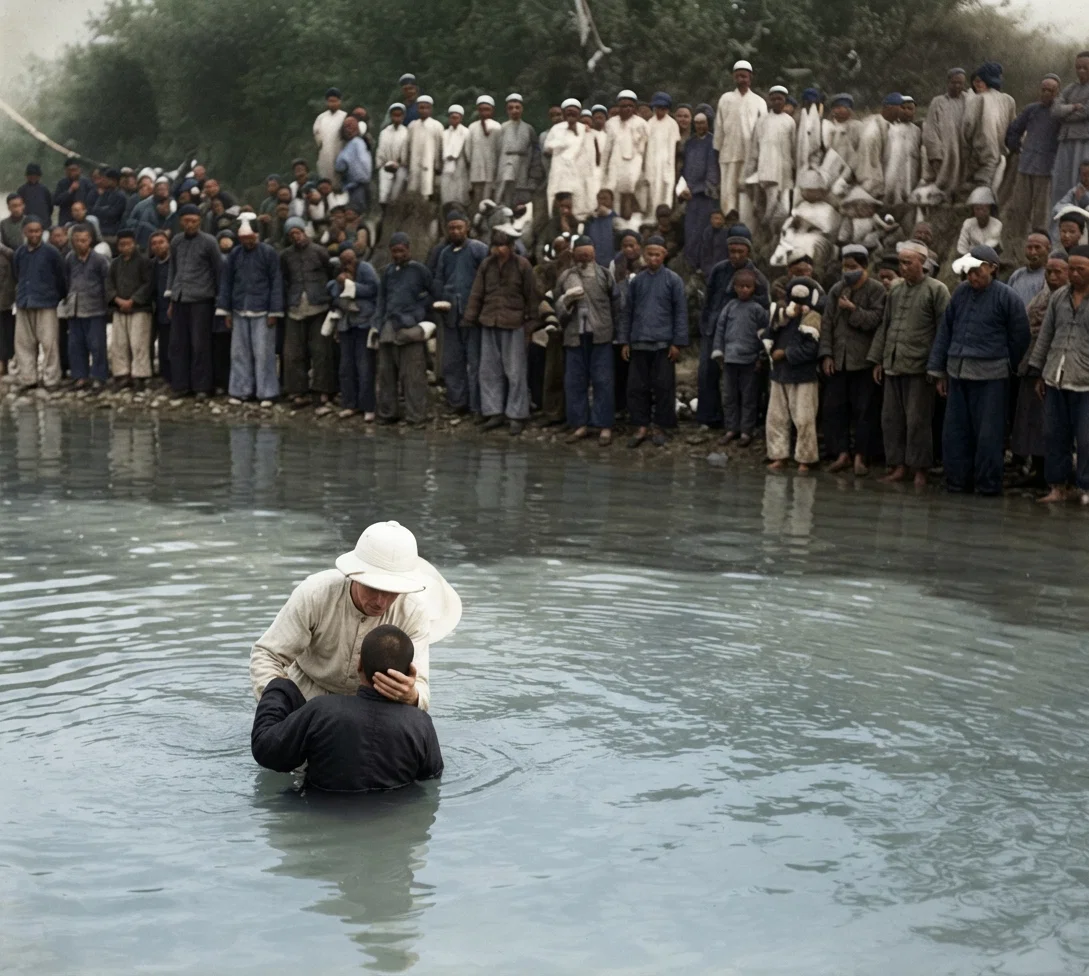
We were happily surprised to find so many in attendance at the Honan meeting. There has been such a condition of unrest that not many were expected to attend. One hundred forty were present from the beginning. This number increased until at the last Sabbath services one hundred sixty were with us. This is one of the oldest missions we have in China. It has shown excellent progress for the labor bestowed. The people show an intelligent Christian experience. At this meeting there were twenty-four native Chinese laborers present. The evangelists rendered acceptable assistance in the preaching services. Elders Cottrell and Westrup and the writer were the foreign laborers.
At this meeting twenty-eight were baptized, and a very solemn ordinance service was held the last Sabbath. Three or four of the recent converts to the faith give promise of making excellent evangelists and colporteurs.
Elder Westrup has manifested a real devotion to the work here, remaining for almost two years without his wife's assistance. Mrs. Westrup is still in America, on account of a serious nervous difficulty. The work is on a good basis in this province. The school and foreign buildings are almost completed. They are comfortable, economically constructed, and well adapted to the needs of the work.
This is my first trip into Central China, and I am well pleased with the organization of the work and the progress made. I have seen a few of China's millions and noted their needs, and can truly say that both are great and worthy of our best endeavors. Let us show our faith in a soon-coming Saviour by our works. R. C. PORTER.
BAPTISM, GENDEA MISSION, AFRICA

Missions

This gospel of the kingdom shall be preached in all the world; . . . then shall the end come.—Jesus

Progress in Borneo — Baptism in the South China Sea

IN company with a young Chinese man, I left Sandakan August 2, for a visit to some of the coast towns of British North Borneo. We spent one day in Kudat, and one in Jesselton, at which places we sold a good number of our Chinese books and pamphlets, besides visiting interested ones. Our next stop was at Labuan. At this place, loving hospitality was shown us by Brother Wong and family, who were the first Sabbath-keepers in Borneo. We greatly enjoyed the nine days that we spent at the home of this family, and appreciated the privilege of studying the Word together, and singing many of the songs of Zion. As this family had not yet been instructed on all points of truth, I gave a study on baptism one evening. After the study, we read several passages of Scripture on the wearing of jewelry. The mother and the three oldest daughters wore earrings, and I did not know how they would receive the study. The next morning, however, all four appeared without earrings. This experience brought great joy to me. They are all willing and anxious to obey the instruction given in God's word. August 12 we went a distance of about two miles from their home, and the father, mother, three daughters, and En Fook, the young man who accompanied me from Sandakan, were baptized in the waters of the South China Sea. All returned home happy in the Lord.
Photo by Paul Thompson
THE THREE SONS OF YUAN SHIH KAI
Photo by Paul Thompson THE THREE SONS OF YUAN SHIH KAI
On our return to Sandakan we found that the night services at the hall, which are conducted by Brother Chan, were well attended. There is a good interest here, in spite of the fact that a great deal is done to keep the people away from our meetings.
R. P. MONTGOMERY.
Japanese Colporteurs ready for trip

Helping the Sick—Interesting Progress in South Africa

BOTH Brother and Sister E. C. Silsbee are doing all they can among the sick. This week they have visited and given treatment to three serious cases. Brother Silsbee has various experiences, as I suppose is common to all missionaries. A few weeks ago he was called from work in the garden to make a coffin for a little child that had just died. The relatives were so pleased that they asked him to preach a sermon at the grave. This gave opportunity to tell of the state of the dead and the resurrection to about one hundred people, including the chiefs of several villages. Brother Silsbee also had the honor of drawing a tooth for Josephine, one of the widows of Lerothodi, a former paramount chief of Basutoland.
I have been interested in watching Brother Silsbee translate and print a chart of the Ten Commandments which he is using in the church services.
Last week a minister of the Jerusalem Church came representing his people, and asking that they be admitted to our church. He has nine ministers under him, with five hundred members, and he says they are in harmony with the Sabbath truth. Brother Silsbee told him they would need more instruction first, and he is planning to visit them. This is the second visit from this man, asking the same thing.Brother Lazarus and Brother Peter are having good times in the school and colporteur work. At our last Friday evening meeting, Lazarus told of one man who was very anxious to have a Sesuto copy of "Daniel and the Revelation." This man said if even one copy could be translated for him, he would give three pounds for it. Several near here are interested, and we pray they may be led to accept the whole truth.
FANNY C. BOURNE.
Continue reading: Encouragement in Central China