Your ShelfYour Projects

Signs of the Times, Vol. 38, Nos. 43, 44.

Signs of the Times
Earlier text: Signs of the Times
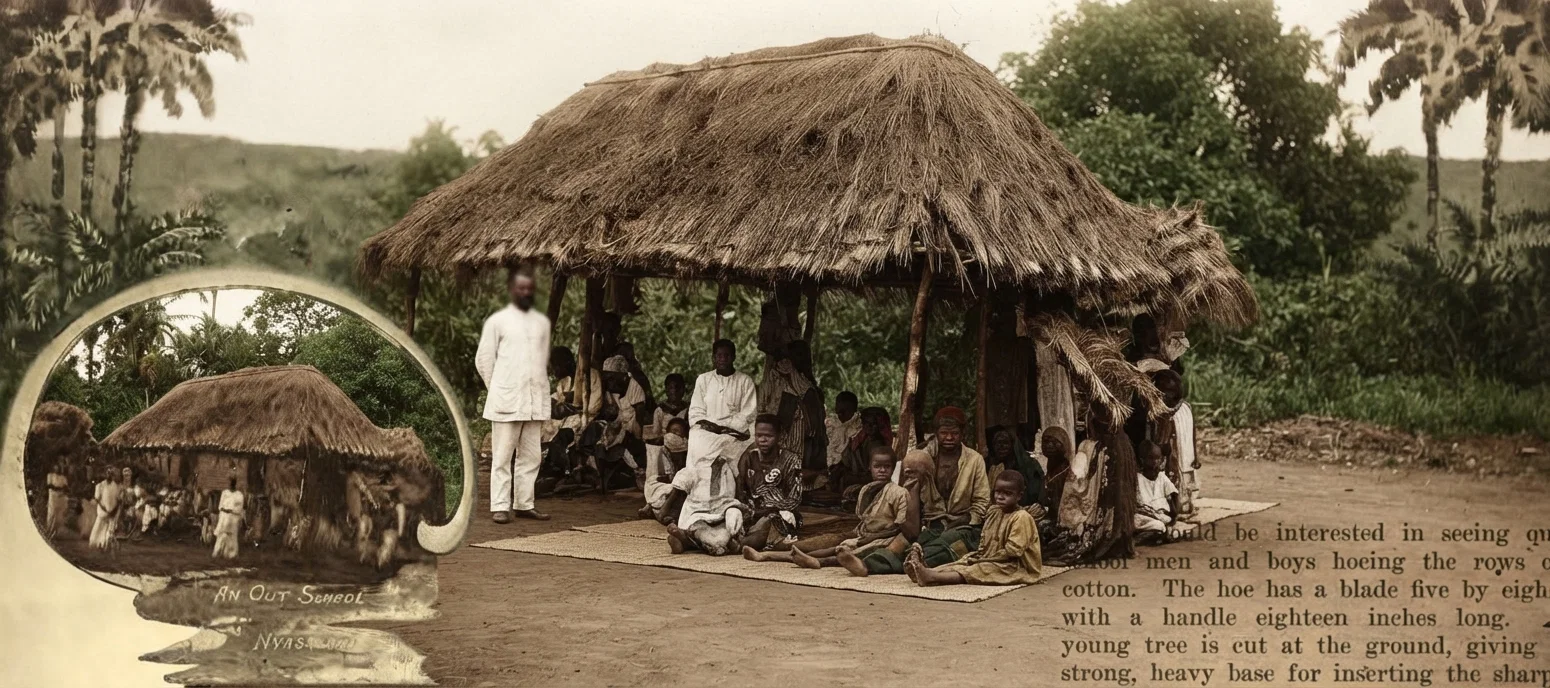
AN OUT SCHOOL NYASALAND

The Year in West Africa

THE last year has been one of unusual severity, the death-rate being the greatest for many years. While we mourn the loss of Sister French, one of our mission staff, we yet have witnessed many tokens of the protecting hand of God over the workers.
The addition of our factory to our industrial school is proving a great help to the training work. The factory is turning out wagons, carts, platform-trucks, and doing much repair work. With the farm and factory in connection with our Waterloo school, we have facilities to train the African boys into useful, practical men, while still continuing their study and training for school and evangelistic work.
The calls from the interior keep coming urgently for the extension of our work. Three years ago a man of the Mendi tribe came from two hundred miles in the interior to see his nephew, who was in our school. This man had been taught to read, and we supplied him well with our literature. As a result he now reports that he has accepted fully this message of the Lord's soon coming, and now he is anxious for a station to be opened in his village.
A paramount chief of the Timni tribe came in to Freetown not long since, on invitation of the governor, to attend a reception in honor of the Duke of Connaught, who was visiting Sierra Leone. This chief's son had for some time been in our school and factory. The father was pleased with the progress the son has made, and is urging us to open work in his country.
We hope that the gain from our factory will enable us next year to open two new stations in response to these calls. Difficulties abound, but the prospects are bright, and our trust is in God. We greatly need men and means to meet the calls.
D. C. BABCOCK.
Freetown, Sierra Leone.

Developing Mission Industries

Nyasaland
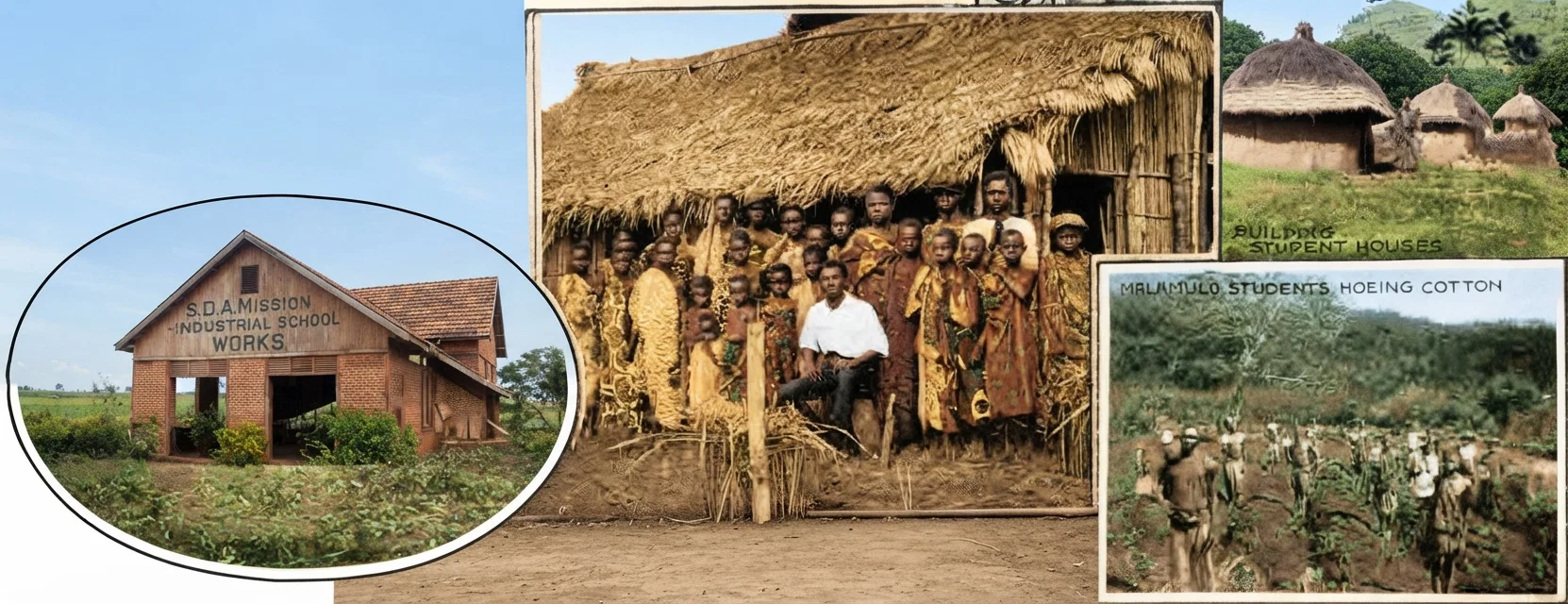
Our first paying industry was a dairy, which now yields an income of one hundred dollars per month. Apparently this can be still further increased, as we have more calls for our butter than we can supply. It is used by many of the government people eighty miles away, at Blantyre. Our carriers are met midway.
Last year we planted twenty-five acres of cotton, from which we had a crop of two tons. It paid well on account of rather high prices. This year we have in seventy acres. Cotton-growing is now taking a leading place in Nyasaland industries. The rubber industry also is a rising one.
A GOLD COAST SCHOOL
A GOLD COAST SCHOOL
You would be interested in seeing our school men and boys hoeing the rows of cotton. The hoe has a blade five by eight, with a handle eighteen inches long. A young tree is cut at the ground, giving a strong, heavy base for inserting the sharpened hoe shank. The shank is heated red-hot, and burned into the handle at the proper angle, about thirty-five degrees.
We have sent to Blantyre for a two-wheeled cultivator to try this year, and intend to do some plowing next season. We are now breaking oxen for this work.
As our school and farm work develop, we must have more helpers. We now have 1,521 pupils enrolled in our two mission stations, with their twenty-six village out-schools. We employ fifty-five native teachers and assistants in this work.
We are calling on our Mission Board for an appropriation for printing a reader and hymn-book, and series of outline Bible lessons for use in our village schools. We have duplicated these with the typewriter, but now they should be printed.
J. C. ROGERS. Malamulo Mission, near Blantyre.

A Call to Christians

From Greenland's icy mountains, From India's coral strand, Where Afric's sunny fountains Roll down their golden sand, From many an ancient river, From many a palmy plain, They call us to deliver Their land from error's chain.
Can we whose souls are lighted With wisdom from on high,— Can we to men benighted, The lamp of life deny? Salvation, O, salvation! The joyful sound proclaim, Till earth's remotest nation Has heard Messiah's name.
— Bishop Reginald Heber of India.

Among the Basutos with the Message of Christ's Coming
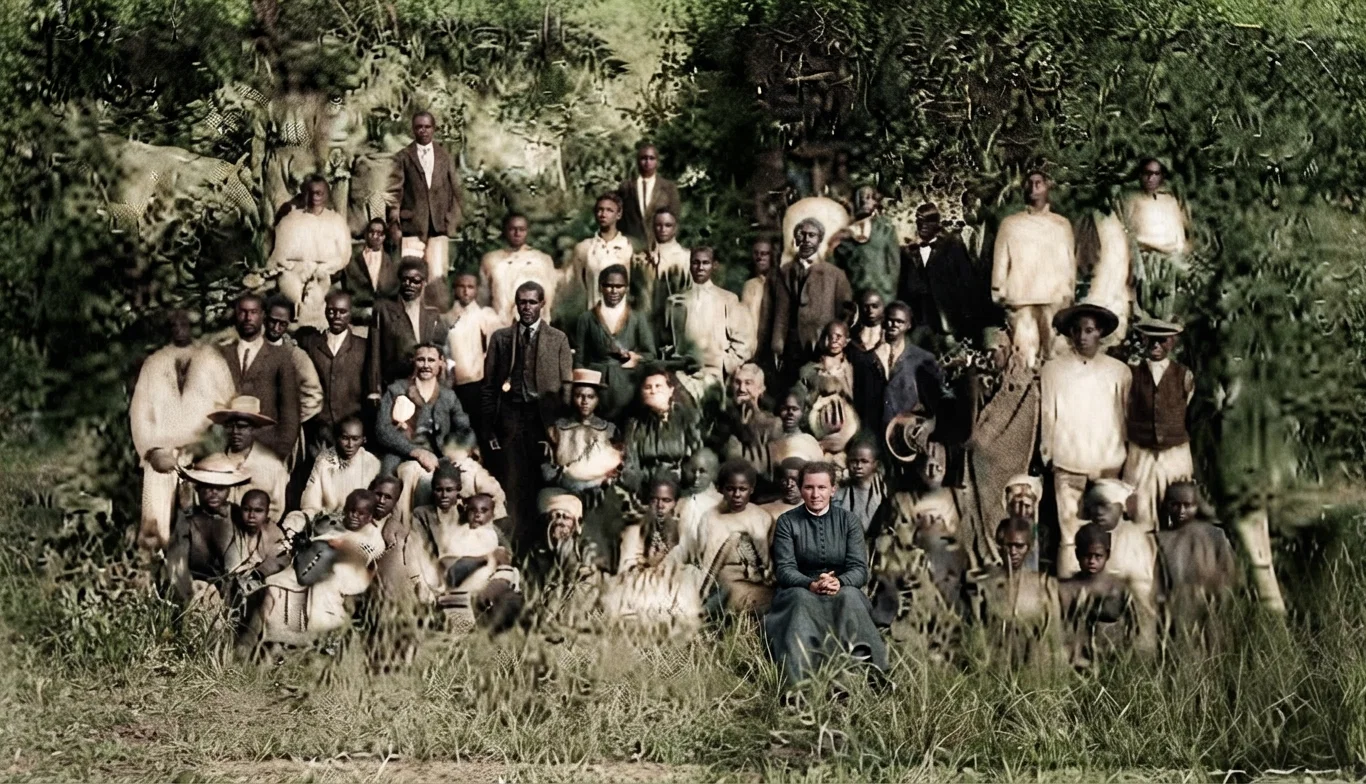
HEARTS in Basutoland are awakening to the message of the soon-coming Saviour.
One Friday we reached the home of a leading chief. He gave us welcome, and spread for us the bed of cow skins upon the floor.
The following morning being the Sabbath, we asked the privilege of holding a service, which was granted, the chief himself attending. I spoke on the coming of Christ, and impressed upon them the importance of seeking power from God to stand in that great day so near to come.
After the service, one man came twice, and said repeatedly, "How sweet those words were! and God sent you here." He continued, "I never heard it before."
The chief spoke: "Two nights ago I had a dream. A messenger came from heaven to me and said, 'You must seek more power.' I said to the messenger, 'What power must I seek?'" At this he awoke, and wondered what the dream could mean; for he said it was not as tho he had dreamed. When I came that night, he felt sure that I was the messenger, and consequently granted me, tho a stranger, the privilege of holding a meeting. After the meeting, he said: "Now I know what power God wants me to seek. It is power to stand in that day near to come." He said he believed the messenger God had sent. Many others expressed their thankfulness to God that we had come, and invited us to come often.
SOLUSI MISSION SCHOOL, MATABELELAND
ANGONI CHIEF NYASALAND
Sunday morning we started for home; but we were called aside by another chief, who lived about three miles from the one we had just visited. On reaching his place, we were surprised to find six persons, including the chief, keeping the Sabbath. They had heard of the Sabbath truth through reading our books, and through our native boys. I spoke to them that morning, and also in the afternoon. Both services were well attended.
At the close the chief came to me and said, with tears in his eyes: "We have no shepherd. There are six of us keeping the Sabbath; and will you not send us a teacher to tell us more about this truth?" He then took me out and showed me a house, which he told me he would give for a church building, and said a house was ready any time a native missionary could be sent. Then he took me to a thirty-acre field, and said: "This field belongs to the missionary you send. I will furnish oxen to plow this field; and in whatever way we can help the missionary, we will."
M. E. EMMERSON.

No More the Death's-Head

JUST now a bright young man has been in to tell me that never again will he worship the death's-head, or skull, but that he now desires to be fully instructed in the way of the truth of God, and to be baptized. Thus we are gladdened as in ones or twos souls break away from heathenism.
This situation is the most elevated of our East African missions, 4,800 feet up among the Pare Mountains. We have had three out-schools to build, and roads to construct. We have just dedicated a fine chapel, surrounded by other mission buildings, the school, the pupils' quarters, the workshop, the barn, the wood-shed, and the dwelling. Thus we have a place for divine worship with the pupils and workmen morning and evening, and with the people of all the neighborhood from Sabbath to Sabbath.
MARANATHA MISSION Kaffir Country Cape Colony
My wife and I are cheered as we see evidence that the Spirit of God is working upon hearts. M. PONIG.

By the Wayside

ONE of our native women converts, Maria by name, started to visit a neighbor who was ill. On the way a heathen woman accosted her. A report of the conversation will show what these new converts from heathenism have to meet:
Maria: "Why do you interrupt me?"
Heathen woman: "I wish to tell you something."
Maria: "But I am in haste, as I desire to visit one who is ill."
Heathen woman: "But sit down a moment."
The request was somewhat unwillingly complied with, and the heathen woman began to speak of very commonplace matters. Finally,—
Maria: "What did you desire to tell me? for I must hasten."
Heathen woman: "Well, I will tell you: You will now have no more children looking like you."
Maria: "Why not?"
Heathen woman: "You have forsaken the spirits of our ancestors, and bring no more offerings to them."
Maria: "But God will be with me."
Heathen woman: "However, our spirits will prevent this anyhow."
Maria: "Tell me, as I became a Christian, was I a child, or was I grown up?"
Heathen woman: "You were grown up."
Maria: "Had I not always appealed to the spirits of our ancestors in all my distress, as you all?"
Heathen woman: "Yes, you had."
Maria: "Well and good; but they did not help me. You remember that three of my children died, and the spirits did not help me. But since I have been a disciple of Christ, my fourth child has remained alive."
After Maria had given further testimony in behalf of her Lord, the old heathen woman acknowledged: "Truly, your God is more mighty than the spirits; but how can I pray to Him? I can not now learn to read."
Maria: "Have you not formerly prayed to the spirits?"
Heathen woman: "Yes."
Maria: "Well, then, in the future bring all these requests to the God who is really able to hear them."
Such experiences as these fill the hearts of us missionaries with the greatest joy; for we often must watch over these young Christians who have just been received into the church of Christ direct from heathenism, with fear and trembling, because they are just like the tenderest of plants, and every evidence of their growth fills us with unspeakable gratitude.
E. KOTZ. Friedenstal, German East Africa.

Pegging Out New Stations

FROM over the Zambezi River, word comes that our chain of stations is reaching out toward the Kongo border. W. H. Anderson, superintendent of the Northwest Rhodesia missions, writes from Pemba, north of Victoria Falls:
"The railway now extends into the Kongo from this side; and I shall try to make a trip up there soon, to see what the openings are in that field. Last year Brother Campbell pegged out nine out-stations down along the Zambezi, and we plan to have six occupied this year. Then we plan to occupy more stations north of the Kafui River, where Brother Robinson has three schools running. Some of our natives, I rejoice to report, are becoming soul-winners, and are beginning to lead their own people into the light. We shall now be able to devote more of our time to training workers, of which an army is needed to publish the message of truth in all the field."
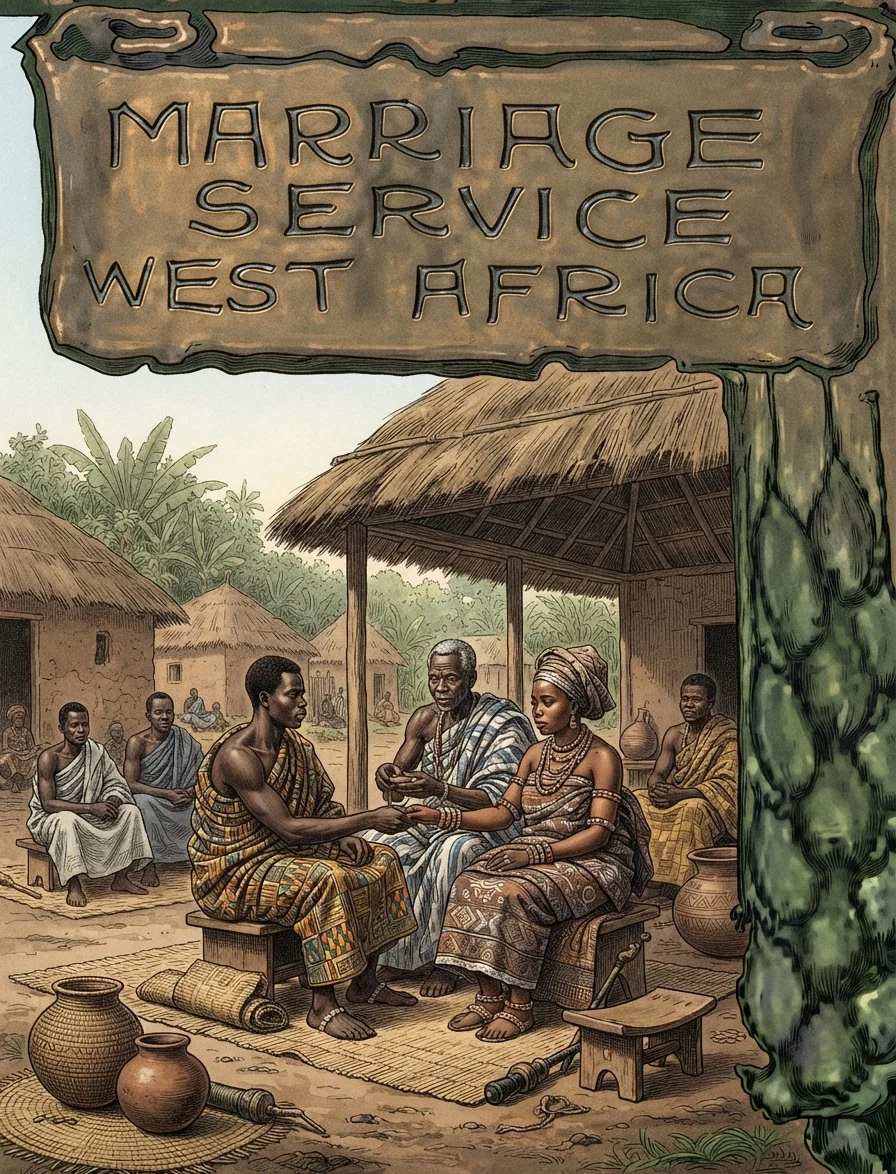
MARRIAGE SERVICE WEST AFRICA

Visiting Out-Stations in the Wilds Beyond the Zambezi
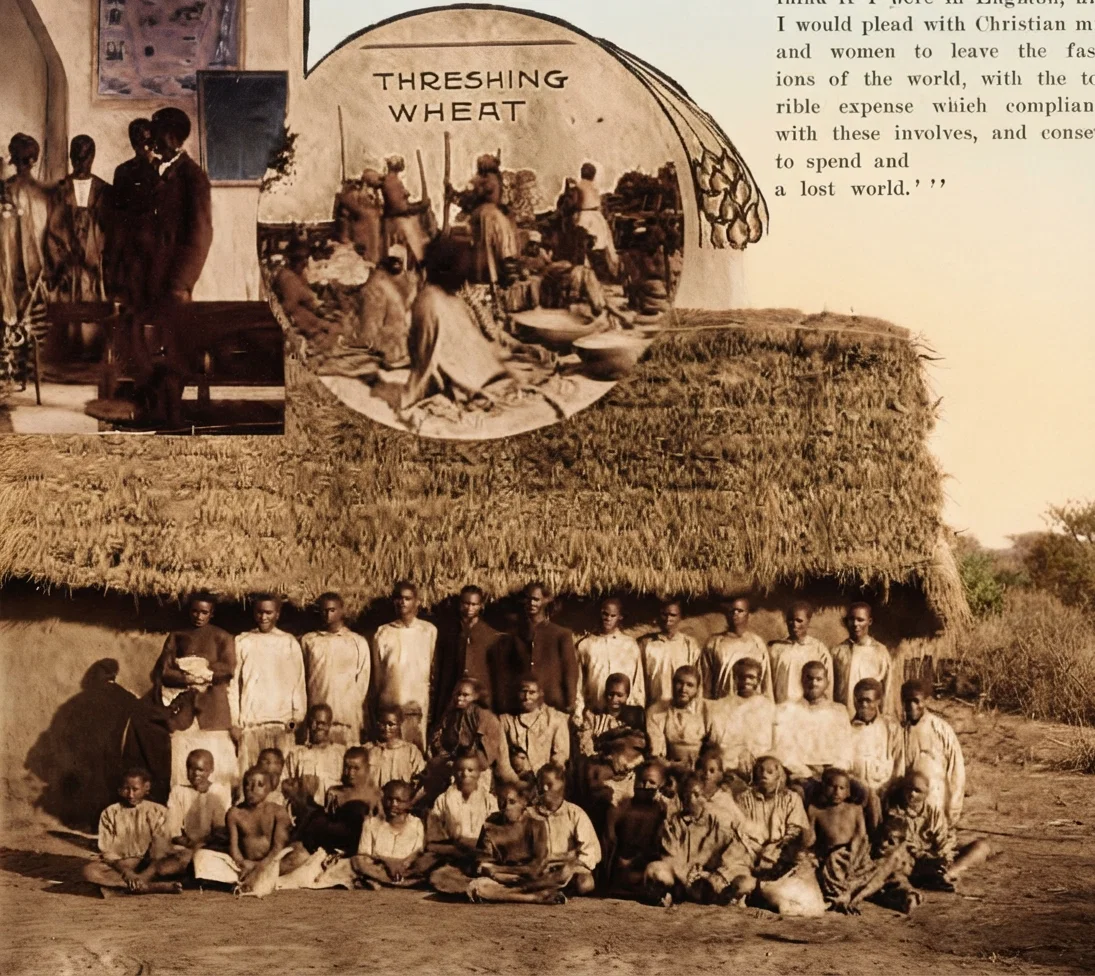
REPORTING a trip among the out-stations in Northwest Rhodesia, Brother E. C. Silsbee writes:
"After dark we were beset with lions that seemed to want an ox for supper. As a rule, they do not attack a team (we had eighteen oxen) when on the move, so we kept going. Sometimes they would be following us, and sometimes they were alongside the wagon out in the bush. It was too dark to shoot at them; and the occasional crackling of bushes near at hand, on one side or the other, made things interesting, and sent the dog fairly into convulsions.
"But the Lord protected us, and after two or three hours of this kind of trekking we arrived safe at the out-school. The next day we were kept busy. From this school we loaded and took five thousand pounds of mealies [corn] across to another school. It was a big load, and we were 'stuck' in the rivers several times. One place was where some time before a lion had chased Pastor Anderson to his wagon and carried off one of his oxen. So we built two fires to keep them away, and carried the mealies up the steep river bank till the oxen could pull the rest. Later we stuck in a sand ridge, where we stopped all night, tiger-cats and hyenas giving us a royal if not a harmonious serenade. And here we broke our water jug and lost our water.
"The next stop for the day was at a salt spring, where we had nothing but warm water from a hot salt spring to drink. But when the sun is hot here one can drink anything that is wet and drinkable. After this for two days we almost famished for water. At one place we were sure we would find water and plenty of it; but after trekking twenty or thirty miles with the joyful anticipation of having a good drink when we came to this well-known watering-place, lo, we found it dry.
"We had twenty miles farther to trek, which also must be done in the middle of the day, before we could get water. Tired, hungry, and thirsty, and our oxen also nearly famished, we started on again. I hurried on ahead of the wagon to the next out-school, to send water and fresh oxen to meet the boys I had as drivers; and I nearly fainted with the heat and a burning fever before I reached the station. Finally I came to a native village, or kraal, near the school, and had a drink. O, it was so good! After seeing that relief was sent from the school to meet the wagon, I lay down to rest."
ELD. ANDERSON'S MISSION SCHOOL
Liwonde a Yao, Rescued from Islam, in Moslem and Native Dress

Native Dress

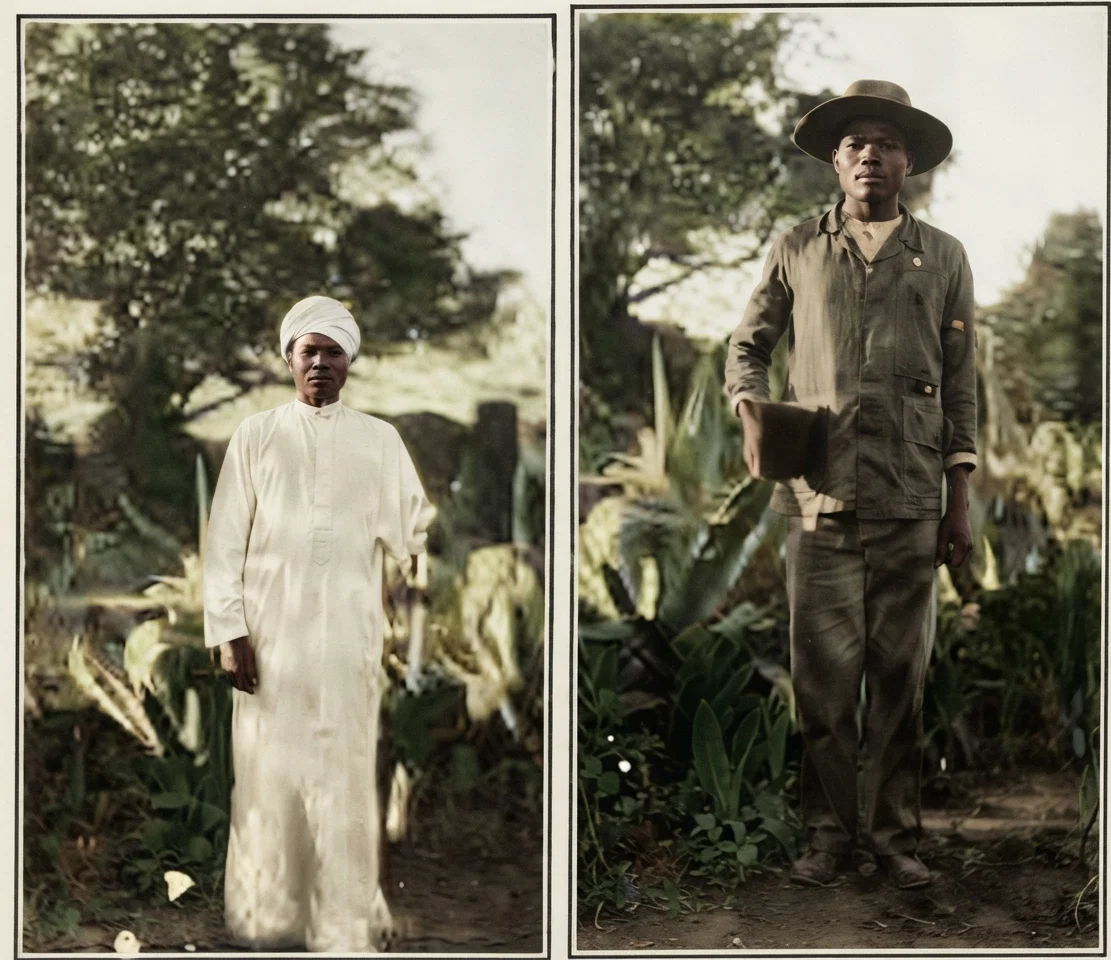
He came to us for work as overseer in our cotton field. He had been initiated into the Mohammedan faith, and was following it as best he knew. Very shy at first, after a while he was seen on the back seat in our meetings. Later he offered himself for enrolment in the candidates' class. It was my privilege to baptize him with twenty-four others. May he be as good seed to multiply into many from Islam, which counts its millions in Africa.

Africa Is Calling

ONE hundred sixty-eight millions of souls in Africa sit in heathen darkness.
Their great need should be a mighty appeal to every devoted child of God to aid in sending to them the message of salvation.
It is marvelous, the way in which the providence of God is opening ways by which the Gospel may find access to heathen hearts.
A missionary in Kaffirland found that after all his sacrifice of home associations, native land, and the association of white people to bring a knowledge of salvation to those in the darkness of heathenism, they did not appreciate his coming. They would neither hear his message, nor permit their children to attend his mission school. He was greatly disappointed, but not discouraged. He remembered that when the Master came even to His own, His own received Him not. He prayed, visited, and labored from hut to hut for months with little results. At last a drought came. Their cattle began to suffer for want of food, and the natives themselves were facing starvation. One day two tribes, led by their chiefs, came to ask the white missionary to pray for rain. He recognized God's hand in this overruling providence. He sought wisdom of God to know how to use it to the best account to find entrance to the hearts of these heathen tribes with the Gospel. He first read the Bible to them, dwelling especially upon the mission of Christ and the importance of faith in Him on their part if his prayer should be answered. He read to them the story of Elijah's prayer and the cloud as large as a man's hand which brought an abundance of rain.
While he was pleading with them to believe in God when he prayed, they could see a cloud arising from behind where he was standing. The missionary did not see it, but he prayed in faith, and before his prayer was finished God sent an abundant shower to refresh that parched land. From that time those tribes regularly gathered from week to week to hear the Word of God. Their children were sent to the mission school, and the work prospered.
R. C. PORTER.

Our First Abyssinian Station

WE are glad to report a dwelling-house for two families nearly completed, and a school building, with three rooms and a tokul, or native kitchen, where students prepare and eat their food. These, with our barn, granary, implement room, and a good well, represent hard labor, everything being built of stone, with the roof and ceiling of zinc and sheeting. All the trade work, as the masonry and carpentry, have been done by the missionary staff.
Our last year's grain crop was good, considering that it was our first year. We feel thankful to God for His sustaining grace.
We have a good class of students; and as we have but fairly begun, we expect a yet larger training school work, from which we believe fruit will appear in due time.
A. GRUNDSET.
Asmara.

Alexander Mackay on Christian Sacrifice

“Alexander Mackay, writing from Uganda, in Central Africa, home to England, says, ‘I often think if I were in England, how I would plead with Christian men and women to leave the fashions of the world, with the terrible expense which compliance with these involves, and consent to spend and be spent in saving a lost world.’”

How One Heathen Woman Found the Lord

We have just received a letter written by one of our Chinese sisters in Hunan:
"I have truly learned to trust our heavenly Father. I can not be thankful enough for His goodness to me. My mother-in-law has come home to live with me, therefore I am unable to be in the school this year. Pray for me, that I may grow in grace, and be a witness for the Lord no matter where I am."
When I first saw this woman, seven years ago, she had never heard the Gospel. She was as unhappy as a woman could be. She was born in an educated family, and married an official's son, but he had deserted her. Her mother-in-law is one of the most wicked women I have ever seen. She cursed Shao Nai whenever occasion offered, and, had she dared, she would have beaten her; but Shao Nai's parents being well-to-do, she dared not do this.
When we arrived in Hunan, Shao Nai was living alone. She could not read, and had nothing to live for, and spent the most of her time smoking her pipe. She was then sallow looking, and her heart was full of hatred for the foreigner and the Gospel. She cursed us when we came to live in the compound next to hers.
She was then thirty-eight years old. She expected we would treat her harshly; but when we did not, her interest soon got the better of her. She would come in alone when sick people came to the dispensary, and soon she began to take an interest in that work. Later she was persuaded to learn to read. Since then she has learned the Chinese characters. She has read much of the Bible, and has become a sincere Christian. She has taught the younger girls in our school to read, and has studied some geography and mathematics herself. She learned to write the Romanized, spelling the sounds of the Chinese with our letters. No more tobacco, no more curses now; she is a happy woman, with something to live for, and enjoys working for the salvation of her sisters. She expected to be back to work in the school; but as her letter indicates, she is hindered in this by the return of her brutal mother-in-law, now old, whom she must care for in her home. Still she writes with full submission, "Pray for me, that I may be a witness for the Lord no matter where I am."
BERTHA L. SELMON, M.D.
Shanghai.

China's Need of the Word of God

THE last score of years has wrought wonderful changes for the better in the great nation of China. Its formal ritual of dead service has proved powerless to keep the nation and the people apace with the world's progress. Its study of the classics, which for centuries have been its Alpha and Omega of learning, is rapidly declining in popularity, and the government is establishing a new order of things along educational lines; the old examinations are being abolished, hundreds of foreign teachers have been brought to China to help inaugurate the new régime, while thousands of Chinese young men have been sent abroad to study in the universities of Japan, Europe, and America. Railroads have been built, a new army and navy are created and organized, and China is breaking with the past.
Now is the time for Christian people to unite their forces in one mighty conquest of China and her people,—not by war and bloodshed, but by flooding the land with the Word of God. His Word is doing a mighty work in the East; and if ever there was a call to duty from God to His church it is at the present time. Wherever the Word of God is preached with power and in the Spirit of God, hearts are regenerated and a new life is begun. In scores of communities, individuals and collections of individuals are calling for the foreign teacher to come and expound the Word of God to the people.
The temples representing the ancient religions of the empire, are neglected, and thousands of souls are looking for light. They know there is something better than what they have, and they believe it is to be found in the religion taught by the Man of Calvary.
To gather these people to hear the Word of God, is not a great task. In many places they flock to hear; they come for many miles on foot, in or on donkey carts and wagons, longing to be taught the way of God.
It is wonderful what these dear people know and can learn from the Word of God, while unable to read a character. I have seen old women from sixty to seventy years of age, who never learned a character to read, recite chapter after chapter, verse by verse, from the Bible. As the prophet said, "Thy words were found, and I did eat them;" it is true of this people at this time.
If the Christian church does not press in now and lead this people to a fuller knowledge of God and His Word, they will fail to meet the opening providences of God. The rock of which Xavier cried, "O when shall it be riven!" is already riven, and the church of God is called upon to enter China and give this people, as never before, the Scriptures. If this be done, then we may confidently look for the fulfilment of that prophecy in Isa. 66:7, 8.
Surely, China's greatest need is the Word of God; and as surely as God has wrought this wondrous opening and opportunity for His church, He is now calling His people to service in their behalf.
Shanghai. I. H. EVANS.
COUNTRY CHAPEL SOUTH CHINA
Continue reading: A Chinese Brother's Gift