IN Judson's day, the Karens first came into contact with the missionary. When first discovered, it was found that their traditions told them of creation, a sinless pair in the garden, the fall, the Flood, and other things of which the Scriptures speak. In all essentials, the account they have is in agreement with the Word.
Added to this they say that the knowledge of the true God was lost to them through disobedience and a failure to prize His revelation as its worth demands. They say that the Lord offered the Bible to the other nations, but that it was refused by the natives of India,—by the Burmese, and by the rest. At last it was offered to the Karens, the "younger brother" among the tribes. It was accepted, but not heeded and followed. But God promised that He would again visit them and restore what had been taken away by "white men from the west."
They seem different from most heathen people. Even those who have little sympathy for missionary effort as a whole, admit that in the case of the Karens the results seem to have justified the efforts.
Ever since we first learned of this intensely interesting people, we have pleaded for some one to come and bear to them the knowledge of the Lord's return. Repeatedly we have mentioned them in the articles prepared for publication. Again and again we have presented them before the Mission Board. During a furlough in the home land, we spoke of them whenever opportunity presented. Yet after all these years we have no one who can speak to the Karens in their own tongue.
H. H. VOTAW.
BURMA
H. C. MENKEL, M.D
By H. C. Menkel, M.D.
Mohammedan ruler, and is a testimony to the value of Christian medical institutions, where the intelligent classes of Indian peoples may be brought in contact with strong Christian influence.
This was further demonstrated when, a few weeks later, her highness made the proposition that we come to her State and conduct another just such institution, she agreeing to supply all the funds for building and equipment. The importance of this invitation is emphasized by the fact that conditions in this particular State have not been favorable for the entrance of Christian missions.
Our sanitarium work has exerted a favorable influence among the Indian people, and it ought to have help for the extension of its operations.
H. C. MENKEL, M.D
A Mighty Man of Prayer
THE first Karen convert to Christianity was Ko-thahbyu, whom Judson bought as a slave and kept three years before he was truly converted. Then his whole heart was given to God, and his life devoted to his people. Often he spent whole nights in prayer to God for his countrymen. His life was one of travail for the souls of the Karens, and God gave him much fruit.
An Indian Queen's Request
"I WANT to know when you pray, so that I may pray at the same hour."
The speaker was the female Mohammedan ruler of a native State, whose son was at our Mussoorie Sanitarium.
"I am told that the workers of the sanitarium pray for their patients every morning," she said, "and that you especially pray for my son's recovery. I believe God hears you pray; and I want to know the hour, that I may pray at the same time."
This was a remarkable concession to Christian prayer, coming from a distinguished and educated
SOUTH AMERICA
By J. W. Westphal
"The Continent of Opportunity"
WELL has the great South American continent been recently so named. In missionary terms it has been the "Neglected Continent." But for this very reason, the new times of awakening and development make it truly the land of blessed opportunity. Railway development is making new regions quickly accessible, and the people have receptive minds.
For the stronger pushing of our evangelistic work, the field has this year been organized into two great union conference divisions. The Brazilian Union includes the self-supporting conferences and the missions in the various States of Brazil; and the South American Union, the conferences and missions of Argentina, Uruguay, Paraguay, Chile, Bolivia, Peru, and Ecuador.
Thousands of dollars' worth of literature have been placed in the hands of the people by our faithful colporters. There are difficulties, plenty of them. Thus, the past year Argentina suffered drought, and because of the failure at harvest our brethren have had their resources cut down. Notwithstanding this, by faith we are seeking to follow the counsel of the Lord, "Enlarge the place of thy tent, and let them stretch forth the curtains of thine habitations: spare not, lengthen thy cords, and strengthen thy stakes."
J. W. WESTPHAL.
Diamante, Argentina.
A Brazilian's Question
By F. W. Spies
AGAIN and again we meet with experiences which show that the Spirit of God is stirring up hearts to inquire for the very truths that are to be made clear in these days. For example, just now from the Sao Paulo Mission comes the news of a certain native who could not read, but who was a Christian believer. One day he asked the elder of his church how it was that when the elder read from the Bible, it always spoke of Sabado (Sabbath), and not of Domingo (Sunday). His elder told him that the Bible did not speak of the first day of the week as a day of rest, but only of the seventh. But notwithstanding this acknowledgment on the part of the elder, he tried to convince the unlettered man that he ought to keep Sunday. The latter, however, could not see how this could be, in view of what the Bible said of the Sabbath. Not being able to satisfy the man, the elder told him he had better go to those Adventists, who keep the Sabbath; he told him where he could find them. The man then went sixteen miles, to where our brethren lived, and asked them to explain the Sabbath question to him, which they gladly did. He then begged that they write out the proofs on paper, giving the reasons why we observed the Sabbath, so that he might take them home with him, and have some one read them to him and his family. This was done, and he, like the eunuch of old, went his way rejoicing, and is to-day keeping the Sabbath with his family.
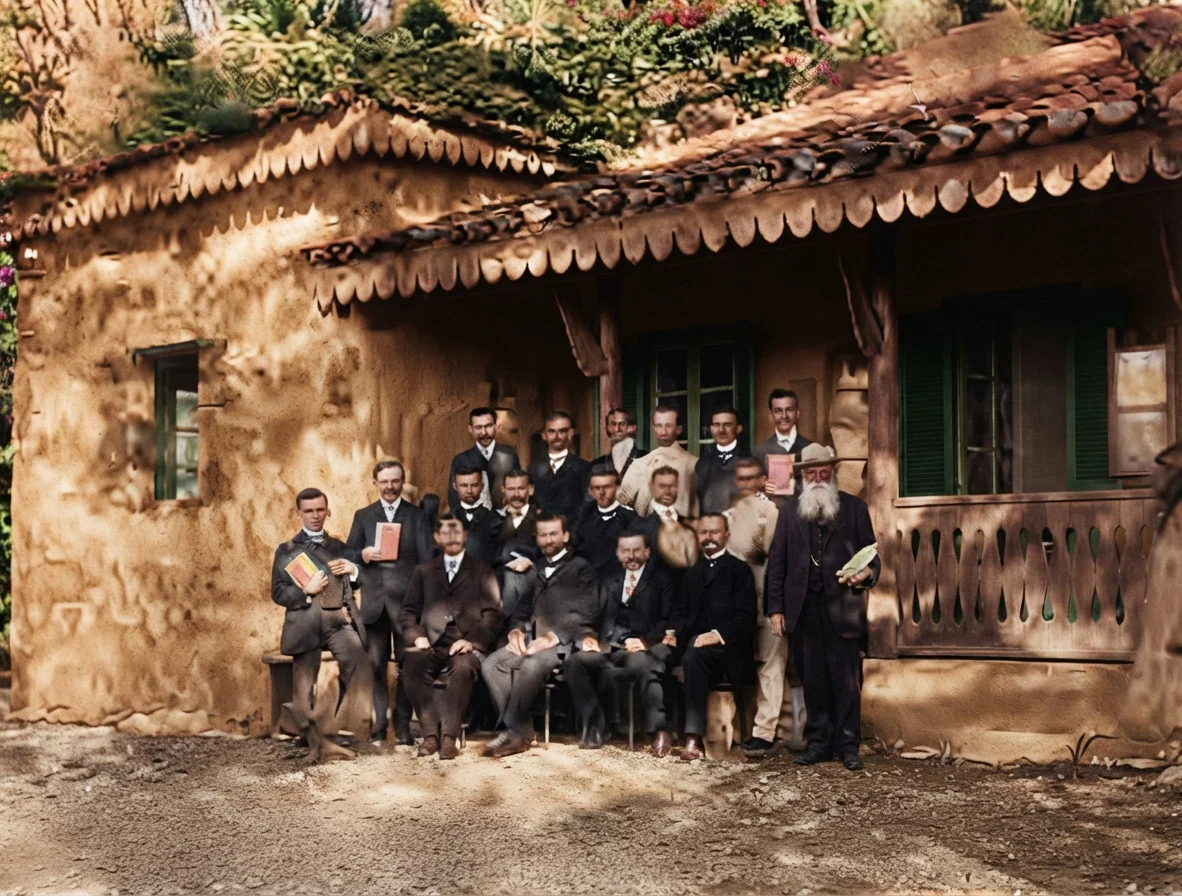
GROUP OF COLPORTERS ON THE PORCH OF OUR BRAZILIAN PUBLISHING HOUSE, SAN BERNARDO
Calls keep coming to us from many places, but which, on account of lack of laborers, we are unable to fill. In the interior of the State of Bahia, there are persons who, for three long years, have been begging that some one come to them, that they might be baptized.
Brazil, with its twenty-one millions, not including perhaps a million or more Indians roaming its immense forests, deserves our consideration as a needy field.
F. W. SPIES.
Rio de Janeiro.
A Medical Evangelist Among the Aymaras of Peru
By F. A. Stahl
"THIRTY more ready for baptism!" With this cry I was greeted by the Indian brethren by Lake Titicaca, in the Peruvian Andes, four months after a former stay among them. It was true. Thirty more were walking in the light, meeting at the altar of prayer morning and night, and worshiping on the Lord's holy Sabbath.
I found many more awaiting instruction and treatment. Calls came in to visit the sick. On23reaching their homes, I would find, instead of one person, five or ten others, who had been brought from still more distant parts. After attending the sick, a meeting would be called for. The people never tired of hearing about Jesus, and that He was soon coming back to earth.
INTERIOR OF OUR ARGENTINE PRINTING OFFICE
At one place, a boy eight years old was brought to me. Disease had destroyed the sight of both eyes, and he was sobbing as if his heart would break. I drew the little fellow close to me, and explained that if he gave his heart to the Lord, and remained faithful, Jesus would soon take him to a new home, and his sight would be restored. The child stopped weeping; his face lighted up as this new hope came to him — the "blessed hope," the same that cheers our hearts.
Every day more people came long distances, bringing their sick, two and three days' journey. But the sad part of it was, we had no place to keep them, nor had we the proper food for them. Twenty-two patients were compelled to lie on the bare ground in a school building, without sufficient covering. I had used up everything available of which to make bandages and compresses. Finally, I asked Brother Comacho, our chief brother here, if the people would stop coming soon.
"No," he said; "the people will return to their homes and tell others in still more distant parts."
I told him that it was better that I should leave for the present, and that I would present their needs to our conference brethren, and the Lord willing, I would soon return to fit up a place where the sick could be cared for. All we need is a plain two-story building, fitted up to give the most simple of our treatments; board beds, which we will make ourselves; and then provide these sick with clean, well-cooked food, as the case may demand.
Some may wonder why they are sick; but this is no secret. It is because of their ignorance of the laws of health. Cleanliness is something they do not understand. To help them, I formed what I called a "washing class." It was very amusing, at the same time pathetic, to watch an Indian scrub one part of his face or hands until told that it was time to move on. What they need is simple, loving instruction in the principles of right living, and how to believe on the Lord Jesus.
The sunset burns across the sky;
Upon the air its warning cry
The curfew tolls, from tower to tower.
O children, 'tis the last, last hour!
The work that centuries might have done
Must crowd the hour of setting sun;
And through all lands the saving Name
Ye must, in fervent haste, proclaim.
Ere yet the vintage shout begin,
O laborers, press in, press in,
And fill unto its utmost coasts
The vineyard of the Lord of Hosts!
It is a vineyard of red wine,
Wherein shall purple clusters shine;
The branches of His own right hand
Shall overspread Immanuel's land.
The fields are white to harvest. Weep,
O tardy workers, as ye reap,
For wasted hours that might have won
Rich harvests ere the set of sun.
We hear His footsteps on the way!
O, work, while it is called to-day,
Constrained by love, endued with power,
O children, in this last, last hour!
—Clara Thwaites.
Send the Gospel Faster
"WITH gasping breath upon a dying bed, not long to live, a Hindu woman whispered, 'Tell your people how fast we are dying, and ask them if they can not send the Gospel a little faster.'"
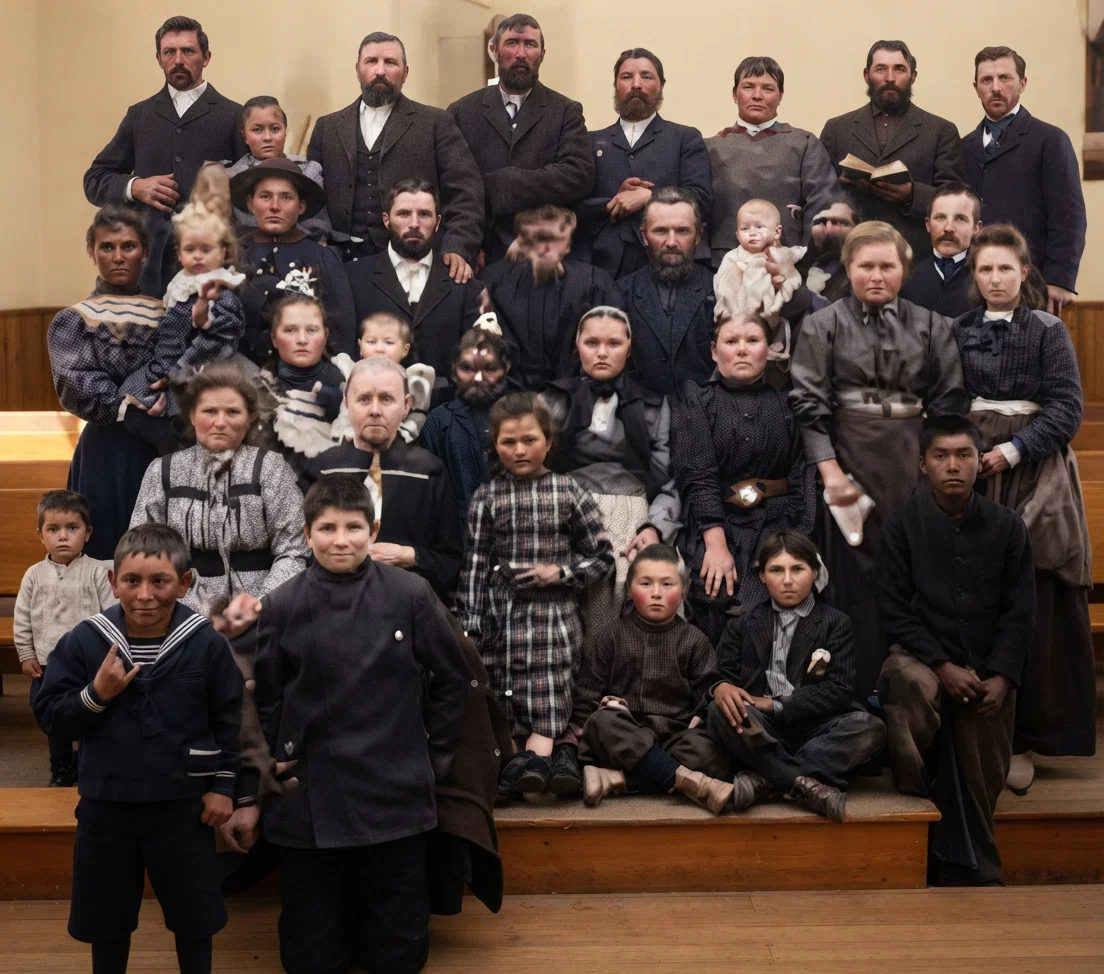
OUR FIRST VENEZUELAN COMPANY
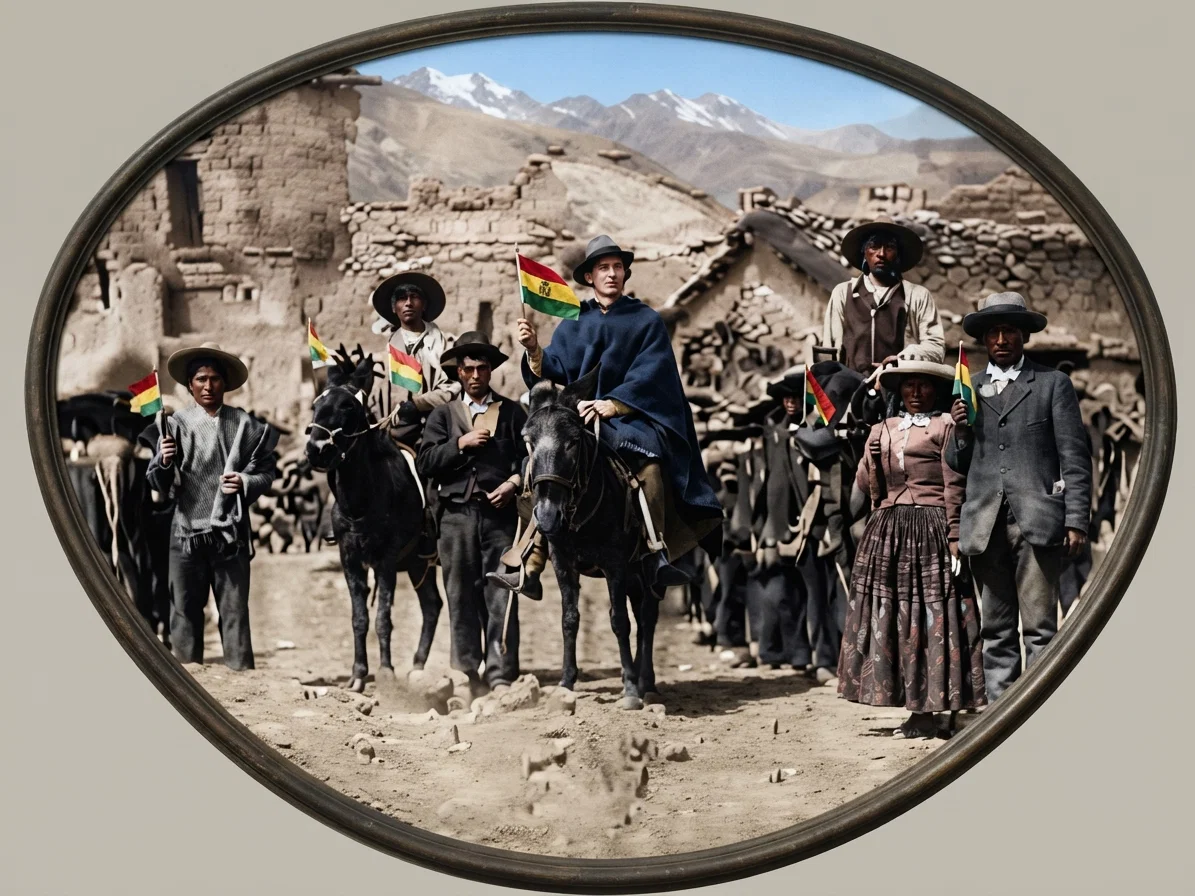
PERUVIAN INDIANS WITH FLAGS meeting the missionaries
Roughing It in Bolivia
By Otto H. Shultz
A Colporter's Experience
AFTER having worked some time round about Cochabamba, selling many of our publications, I left for Oruro in the midsummer. The route lay over the mountains, in regions of ice and snow. Cold and rushing mountain streams had to be crossed, sometimes many in a day; and at times the path along a chasm narrowed down to less than a foot, with the torrent thundering hundreds of feet below.
There are no houses for shelter from the weather. The mountains are bare, affording only moss as food for the llamas. One day I reached an Indian hut. I was tired, hungry, and cold. Inside I found a company of Indians lying on the ground, drinking and making hideous noises blowing on cow-horns. With the noise they kept me awake all night.
In many places the Indians are half wild, with long hair, and dirty and lazy. They spend much time in drinking, chewing coca, and smoking. Reaching at last an Indian town, I found it a most fanatical and hostile place. Many threats were uttered. One Indian seized my hat and wanted to fight. To impress the people that I had no fear, I walked up and down the main street so boldly that no one threatened me again. The angel of the Lord, I was assured, was by my side. But I could buy no food.
That night I lay on the ground, in a house, with a stone under my head; but cold and hunger forbade sleep. I prayed God to send me food; and in a little while a white man came to the place and knocked on the door and brought me some food and a lighted candle. Thus God answered my prayer again.
I was safely brought through to Oruro. I very much need a good brother whose trust is in the Lord, to join me in the work.
OTTO H. SHULTZ.
Cochabamba.
In South America’s Metropolis
By C. E. Knight
THE longer I live in Buenos Aires, the more I think of that phrase in Revelation 14, “to every nation, and kindred, and tongue, and people;” because it seems that they are all here in this great city. All of the prominent nationalities are represented, and many of the lesser. The population of this city has increased from 547,144 in 1890, to 1,302,855 in 1910, Buenos Aires being surpassed in rapidity of growth only by the city of Chicago. The following figures illustrate the growth of immigration into Argentina:
The boats come in from Europe loaded with those seeking homes in this newer part of the New World.
SOUTHERMOST CHURCH IN PATAGONIA SOUTH AMERICA
Our own church-membership is English, North American, German, French, Spanish, Italian, Portuguese, Argentinian, Belgian, Austrian, Danish, Norwegian, Chilean, and Armenian. Our services in the city are held in three localities, and we are about to open a fourth. The following incident shows how the Lord works to give the increase:
An Italian family joined one of our companies, and later moved to a suburb almost wholly Italian. Soon their life of obedience created an interest among their neighbors. A minister was called for, to hold meetings. This interest increased until
about thirty adults had united with them in their worship. All are Italian, and it is likely we shall soon organize a purely Italian church.
C. E. KNIGHT.
Buenos Aires.
Opening Work in Venezuela
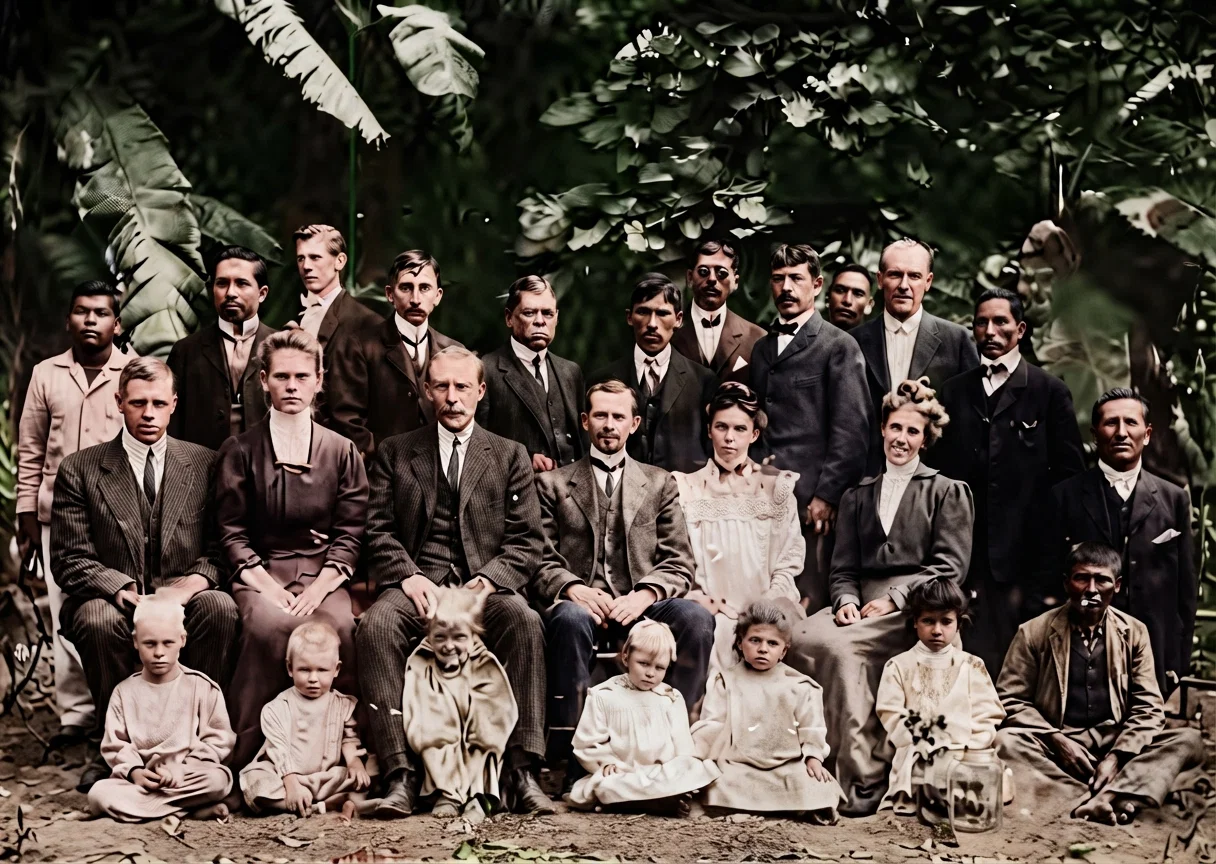
HERE is a country larger than any in Europe save Russia. On these shores Columbus touched the American mainland, in 1498. Venezuela has had a troubled history that has retarded its progress. Since it was declared a republic in 1830, there has been an average of one revolution every two years. We pray now for more peaceful times in which to preach the Gospel message.
WORKERS AT A GENERAL MEETING IN PERU
A large part of this great country is still in its primitive state, inhabited only by Indians. Some of these in the remote parts are of the lowest type of cannibals.
Missionary Giving and Gospel Need
“MANY times as much money is puffed away in tobacco smoke by the men in America in one year as the church gave in a century to evangelize the world.”
“A CONGREGATION of 125 Christian Chinese gave $2,000 for foreign missionary work in one year.”
“IN China there is one ordained minister to every 1,000 people.”
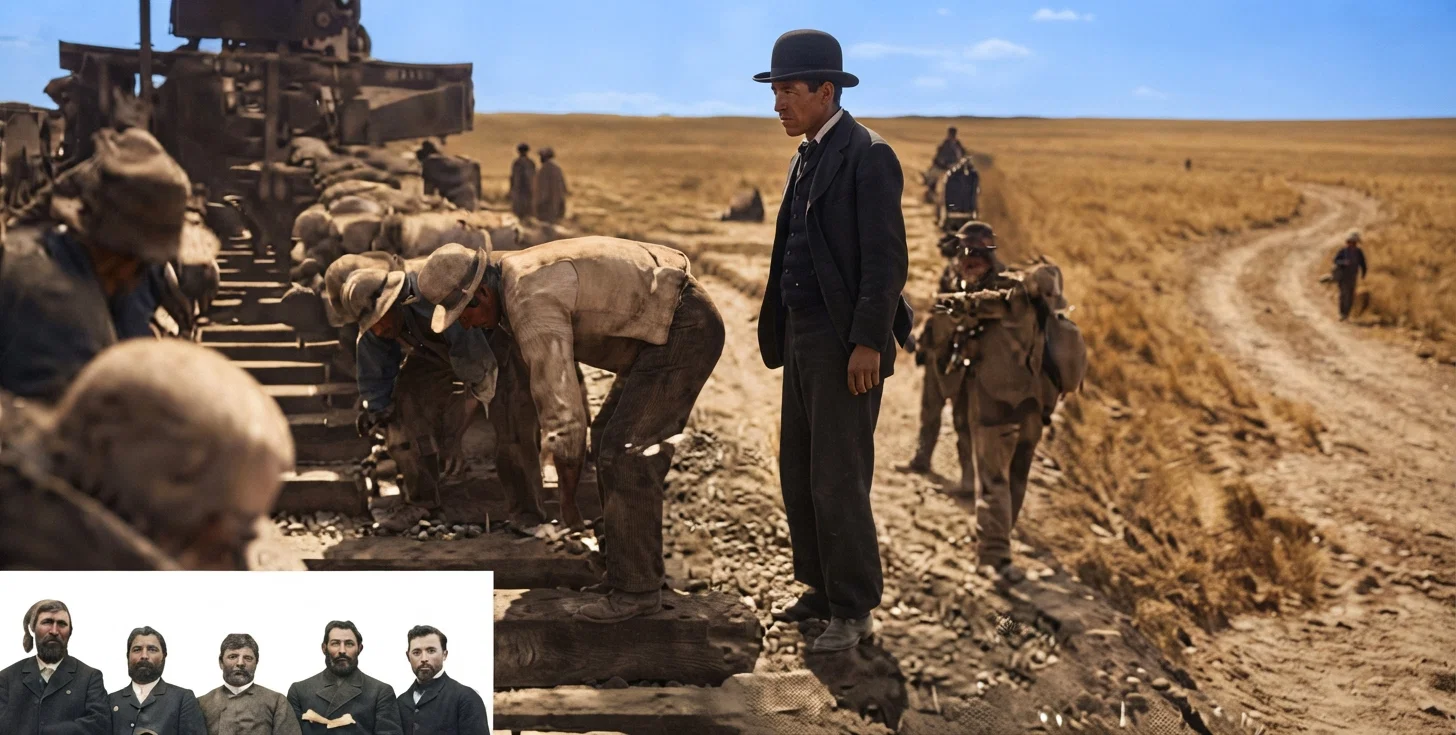
TRACK LAYING OVER BOLVIAN PLAINS
By F. H. Lane
Preparing the way for the message in Bolivia.
Health conditions are not of the best. This is to be expected of the hot and swampy lowlands; but in the highlands, where the climate is all that could be desired, there is sad neglect of sanitary provisions. Caracas is a fair example. It is a city beautiful for situation, 3,000 feet above sea-level, with good water and drainage; but there is much sickness and death in the poorer districts, because of the uncleanly conditions amid which the people live.
The people of Venezuela are chiefly Spanish and Indian, with some Negroes. There seems to be no organized system of general education. It is said that taking the country as a whole, less than five per cent can read and write.
There is said to be four hundred miles of railway in the country, in five or six widely separated sections. Of roads there is no general system, those that exist turning into mere paths a short distance from the towns.
Thus it can be seen that Venezuela can be classed as one of the very difficult fields to cover with Gospel effort.
Infidelity is a strong and growing factor. A large part of the people have no place in their lives for religion. The government itself runs lotteries and gambling enterprises. Yet here, too, are many whose hearts hunger for the truth of God.
We arrived here with no knowledge of the language, but trusting in God to lead us. In a little less than eight months our first little church was organized, and the hearts of the believers are full of courage as we seek to spread the message of the coming Saviour.
F. H. LANE.
Caracas.
What Can I Do?
By Daniel March
If you can not be the watchman,
Standing high on Zion’s wall,
Pointing out the path to heaven,
Offering life and peace to all;
With your prayers and with your bounties
You can do what heaven demands,
You can be like faithful Aaron,
Holding up the prophet’s hands.
While the souls of men are dying,
And the Master calls for you,
Let none hear you idly saying,
“There is nothing I can do!”
Gladly take the task He gives you,
Let His work your pleasure be;
Answer quickly when He calleth,
“Here am I, O Lord, send me.”
— Daniel March.
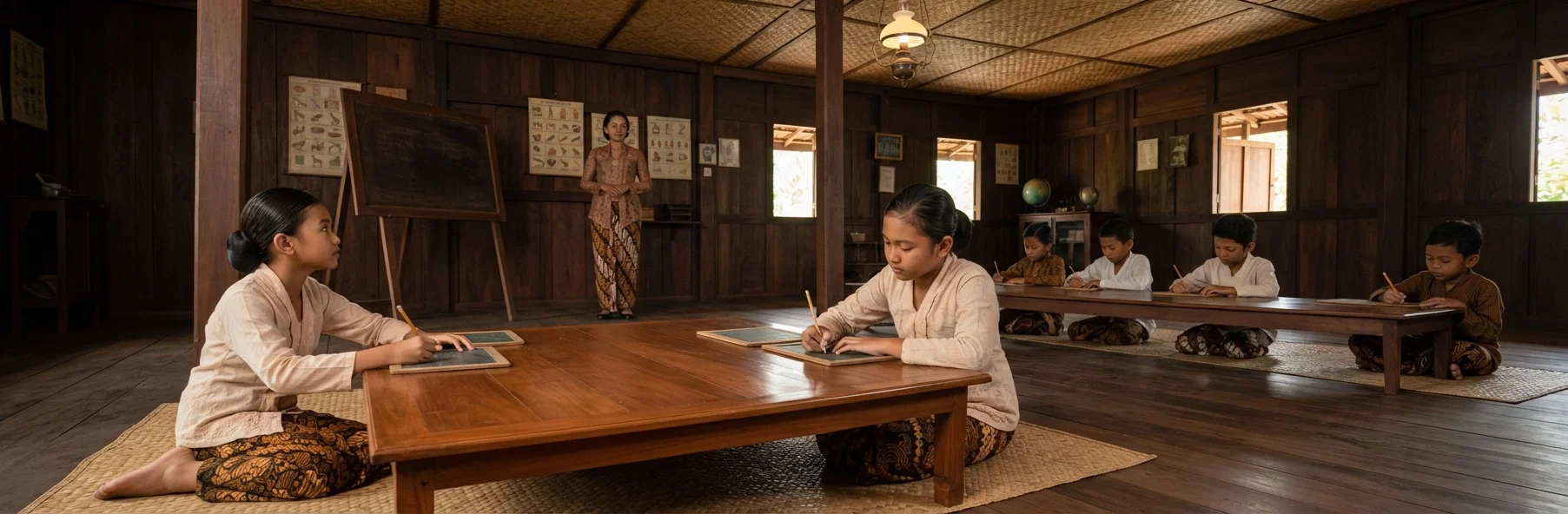
MALAY MISSION SCHOOL SOEMBER WEKAS JAVA
A Sumatra Malay
By Bernard Judge
Is it possible, I wonder, to give you a description of the Malay character as we find it here? Here comes a Malay now.
He approaches within a few yards, and with a polite bow, raises his hand in salute, saying "Tabeh tuan" (good morning, master). If he receives a reply, he comes a little closer. On asking what his quest may be, usually the reply is, "I request a little help, sir."
His appeals, his gestures, his deep earnestness, cause you to feel that his story is perfectly true. He receives the gift with thanks (tho originally there was no word for "Thank you" in the Malay language), politely salutes, bows, and is gone. But probably if you have believed that fellow, you have believed a rogue. No sooner is he gone than he laughs, as he thinks how easily you were imposed upon. The idea that he is loved for the Master's sake is an incomprehensible idea to the Malay.
You know, of course, that the Malay is a Moslem. Mohammedanism has been here for over three hundred years, but it has had no power to save a man or to change his character. But there is a power—the Gospel of Christ—that can change these hearts. Some gems lying amidst the rubbish and dust of Sumatra will shine throughout the eternal ages, to the glory of Him who has found and cleansed them by His own blood. Will you take some shares in this mine? We need facilities, and we need workers.
BERNARD JUDGE.
Padang, Sumatra.
In Populous Java
By P. Tunheim
WHAT can we do among so many? This is the question that comes to us in Java, with its thirty-seven millions. "Pray ye the Lord of the harvest."
As we watch the harvesting of the vast rice fields, which is done by cutting carefully one handful at a time, we wonder when it will all be gathered. But it is not left to one or two to perform this tedious task; a large number come together, till the yellow field is a moving mass of people, and in a very short time all the precious grain is gathered. So it will be when the prayer for many laborers is answered; souls will be gathered, not wholesale, but one by one, till the field is reaped and the precious grain is stored in the heavenly garner.
During the four years of our labor in Java, some have been gathered and are in training for reapers. At our mission home at Soember Wekas, we have a little school, with an enrolment of twenty-five children.
The other evening at our prayer-meeting, many prayed for one of the sisters who has been very ill, but who is now, through prayer, much better. One boy showed his faith, thanking the Lord for having already made her better. The simplicity of faith with which these children approach God in their prayers is very touching.
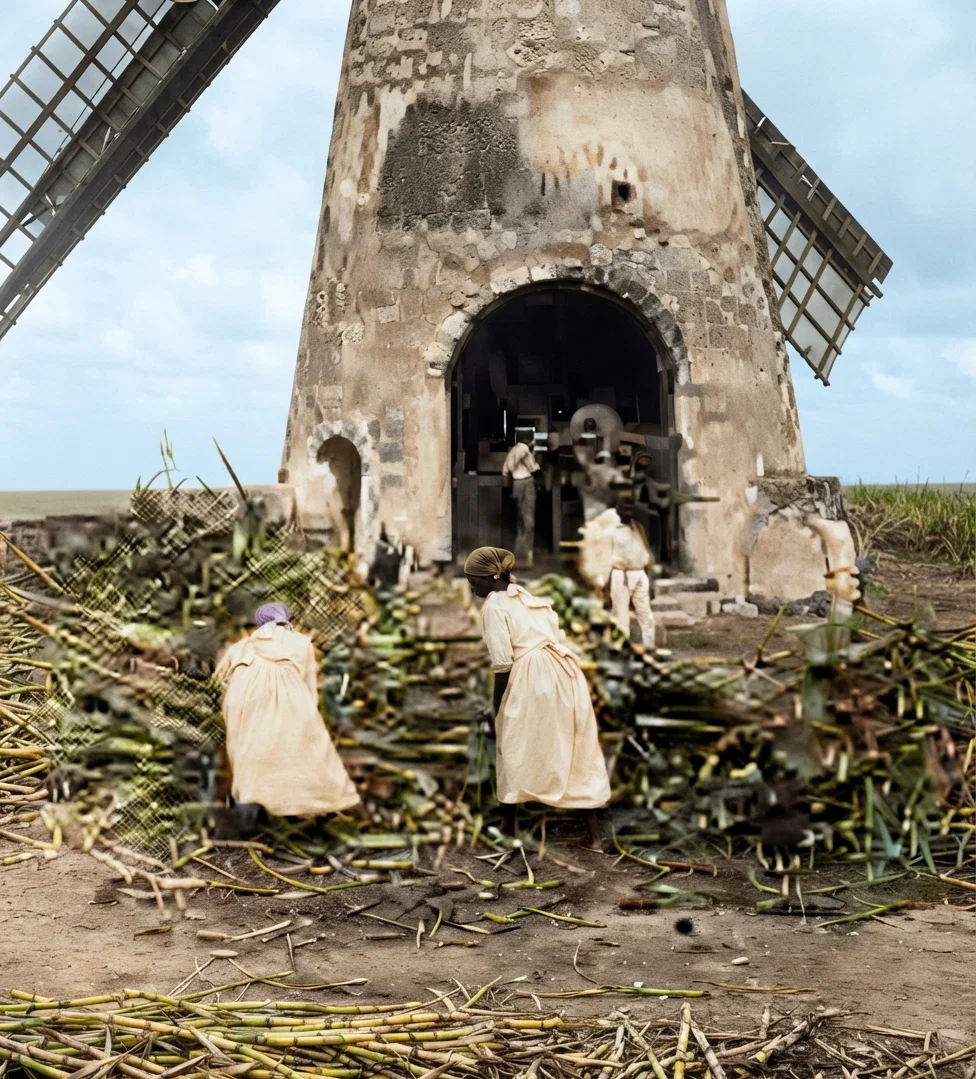
BARBADOS SUGAR CANE MILL
The teacher of this school, and his wife, came to us about a year ago. He was a staunch Mohammedan, but since coming to us has shown a deep interest in the teachings of Christ, and has now openly expressed his desire to be a true follower of the meek and lowly Jesus. His prayers are simple and earnest, and the interest he takes in his work proves the genuineness of his profession. It means much for a young man like this to step out boldly from the superstition of Mohammedanism; because in so doing he lays himself open to bitter persecution, even by his nearest relatives.
But we are of good courage. The Gospel of Christ possesses a power which man does not, and God is able to work, even as in times past, marvels with a few. He can multiply the seed sown, and accomplish a great work with small means.
P. TUNHEIM.
Soember Wekas.
The Power of the Voodoo
By W. J. Tanner
No ONE can be long in Haiti without finding that the cult of voodooism is a powerful evil. In every case where we have come in contact with it in our Gospel work, we have been able, however, by the power of the Word of God, to make headway against it.
To those who have never studied the workings of this African cult, its hold upon its votaries is incomprehensible. The sway of the papa-loi, or priest of voodoo, is absolute over all members of the sect. He is believed to possess charms, or to have power to pronounce imprecations that will bring health, happiness, riches, or poverty, and even death—immediate or lingering—at will. The natural result is that the voodoo priest or priestess is the most feared and the best obeyed personage in Haiti.
Even those who have no confidence in the extraordinary pretensions of the papa-lois fear them, and for very good reasons. Writers generally agree that the voodoo priests have secret knowledge of plants that produce poisons of which the pharmacopoeia is silent; and all are persuaded, who have lived any length of time in the country, that the mystic spell that is invoked against an enemy is something enforced by more material agencies.
Such being the unsavory reputation of voodooism, is it any wonder that not only the lower classes, but also the more intelligent Haitians, fear the25power and influence of this base fetishism that has taken such deep root in the republic?
The light of Gospel truth alone can dispel the darkness of voodooism; the hammer of God's Word, and nothing less, can break its chains and set its captives free. We have been able to cover but little ground, comparatively; but what we have seen in the salvation of souls and the transformation of life by the power of God's Word, shows us what can be done with more men and more means. The harvest truly is great, and ripe; but the laborers are few.
W. J. TANNER.
Cape Haitien, Haiti.
A Long Step
By Mrs. E. Judge
I NO longer worship the idol at my home," said one of the students in our English class the other morning.
He is a young Chinese, of whom we have many in Sumatra. In fact, most of those who attend our meetings and our classes are Chinese. It would do your hearts good to see the eager and interested faces, as some Bible lesson is presented to them. A number come long distances, and have been regular attendants for months.
The remark of the young student means a long step from darkness toward the light. Our regular Sabbath-school attendance has been increasing; and we are encouraged by the indications of a seeking after the peace of God, which none of these souls can find among their idols.
Mrs. E. JUDGE.
Padang, Sumatra.
Reformation of Life
By R. W. Munson
THE father of a Baba-Chinese family had been bitterly opposed to Christianity; but when on his death-bed, he cried to God to have mercy on him, and to forgive and save him. He found peace with God, and exhorted his family.
In his death, light broke into the home. Members of the family were reconciled to enemies, and all began earnestly to seek the Lord, and to keep the Sabbath in compliance with the father's wishes. Two men and two women of the family have been baptized.
Thus the Lord is calling hearts from among these mixed multitudes. At a recent baptismal service, three different peoples were represented among the candidates, the Baba-Chinese (a mixture of the Chinese and Malay who speak the Malay tongue), the Menadomese, and the Eurasians. We see that it is not a surface work when the Spirit of the Lord converts these hearts. They give up tobacco and liquor, and keep God's Sabbath conscientiously.
Bible workers and colporters are entering the work, and we are publishing in Romanized Malay, Arabic Malay, Chinese, and Romanized Sudanese.