SEVENTEEN years ago a friend of mine, who was a Christian, told me to read the Bible. I at once bought one, and after reading it day and night for a year and two months, decided to believe. Then I sought my friend for advice, and in our conversation I asked, “Is to-morrow [Sunday] the Sabbath?” He replied saying that to-day was the true Sabbath but that to-morrow was the Lord’s resurrection day. I then asked him why he transgressed the Sabbath. As he replied that “altho we transgress the Sabbath we do no sin,” I asked him if he ever read James 2:10 and Matt. 5:19, and whether he thought we did no sin altho we transgressed all the commandments. I told him that I would not keep the resurrection day, and without further conversation I returned home.
There were no Sabbath-keepers in Korea at that time; and so, because of the teaching of a church which violates the fourth commandment, I remained an unbeliever for fourteen years and three months. But when, in March, 1909, an evangelist came to my village teaching the true Sabbath, I at once became a Christian, and am rejoicing in the truth. (Signed) KIM CHYONG SYONG.
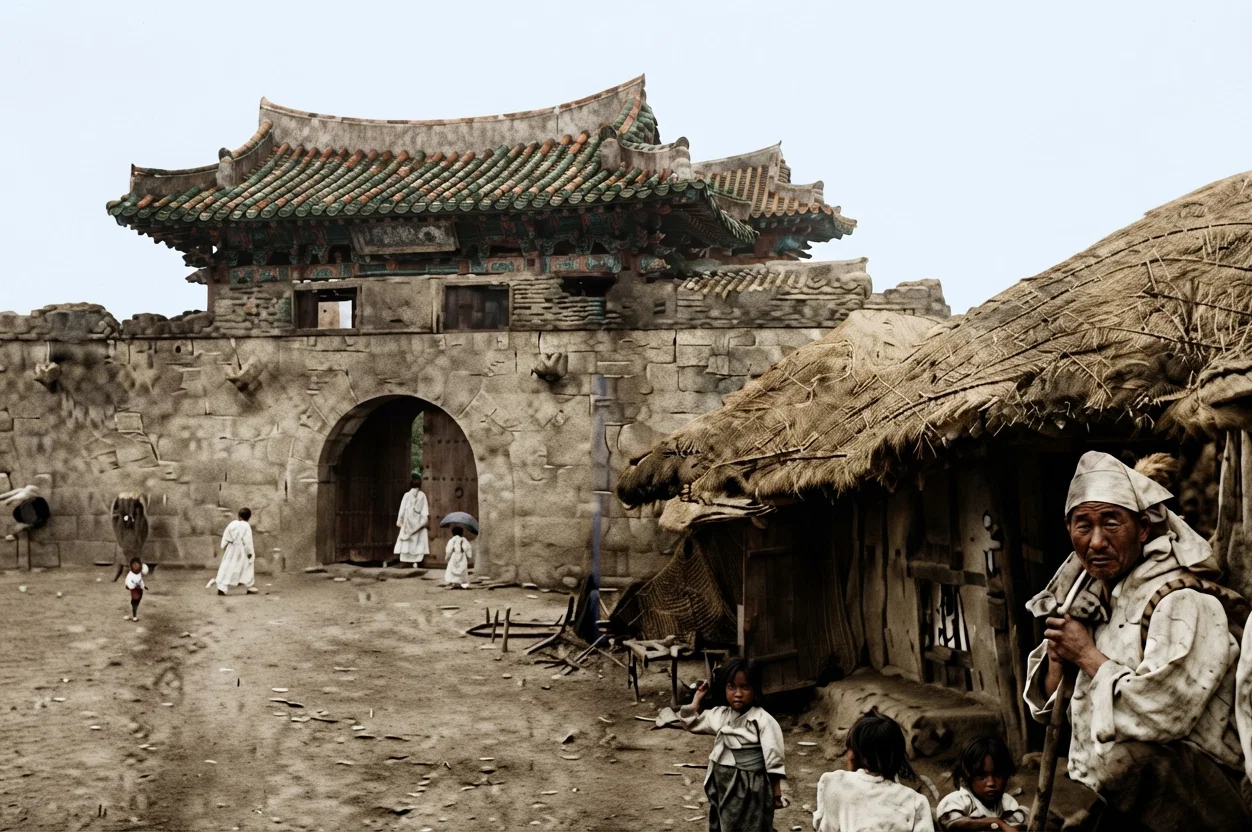
A Gate of Forai, Korea, a good illustration of the open doors to the ‘Hermit Kingdom’
Dispensary Ministry in Korea
By R. Russell, M.D.
IN one week recently we had four hundred patients at our Soonan dispensary.
We pray that God may bless the ministry to their souls as well as their bodies. Three months ago a woman came with paralysis. She made so rapid progress that in three weeks she was able to return home. Yesterday her mother came to tell us that the patient, her husband, and the mother had decided fully to follow the Lord.
Last week a man was struck by a train, and we thought he must die. But after a few days’ care, one of our students staying by him, he was able to go home. Last Sabbath afternoon a man came from a village fifteen li away, saying his wife had every appearance of death. We reached the place and found a most serious condition, but being just in time, were able to bring relief, and I think she will recover. So we returned glad at heart, tho we lost our way in the night and mired in the rice fields several times.
As we see these poor souls in their need, we think, What more can we do? We see a healthy growth in our Soonan church. As both Mrs. Russell and I teach some in our school, we have more than we can handle, and long for a female nurse to join in the work.
R. RUSSELL, M.D.
Soonan.
The Power of Prayer
The weary ones had rest, the sad had joy that day — I wondered how;
A plowman, singing at his work, had prayed,
"Lord, help them now."
Away in foreign lands they wondered how their single word had power;
At home, the Christians, two or three, had met to pray an hour.
Yes, we are always wondering, wondering how, because we do not see
Some one, unknown perhaps, and far away, on bended knee.
— Selected.
Go Where No One Else Will Go
By Mary Lyon
If you want most to serve your race, go where no one else will go, and do what no one else will do.—Mary Lyon.
OFF BEATEN PATHS IN ASIA
By Mrs. J. T. Boettcher
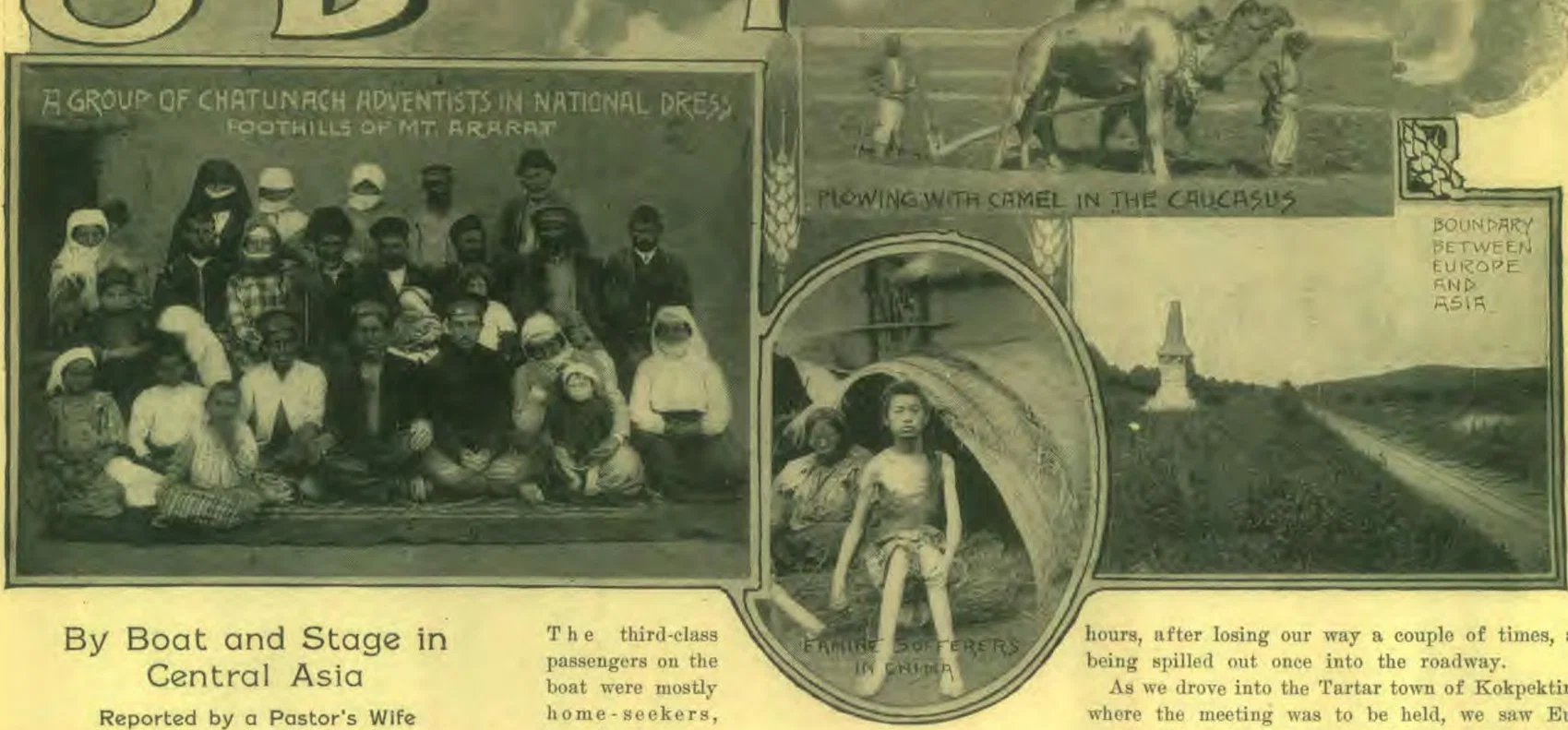
A GROUP OF CHATUNACH ADVENTISTS IN NATIONAL DRESS FOOTHILLS OF MT. ARARAT
By Boat and Stage in Central Asia
Reported by a Pastor's Wife
ONE of our general Siberian meetings was held near the Tartar town of Kokpektinsk, not far from the Chinese border. The nearest point by rail was the city of Omsk, a thousand miles short of our destination. The route lay up the river Irtish by boat, the river steamers being built after the American style, with electric lights and every modern convenience. There was a strange contrast between the boat and its surroundings as we sailed up the river. On the right were the Cossack lands, with their primitive towns and villages; and on the left we passed the Kirghizen and Tartar dwellings, generally consisting of dilapidated mud huts. But Russian-German emigrants are pushing into this far-off country and establishing homesteads.
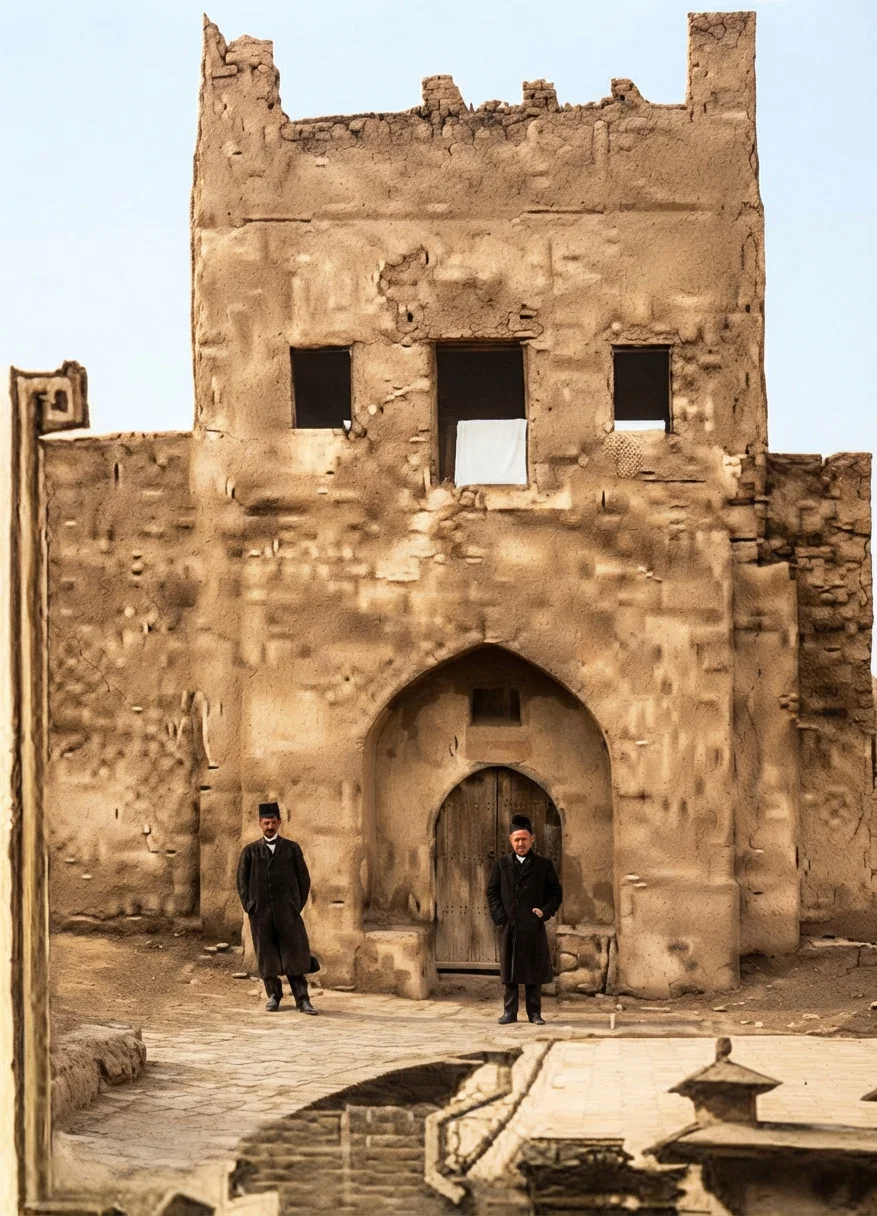
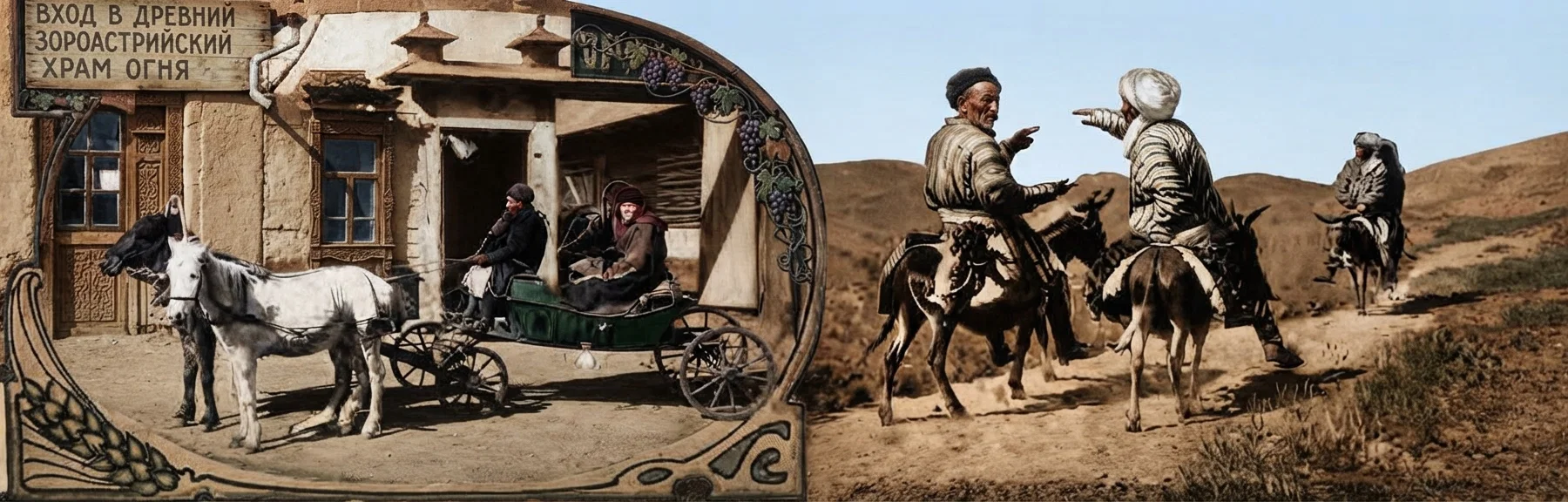
ENTRANCE TO ANCIENT ZOROASTRIAN FIRE TEMPLE
The third-class passengers on the boat were mostly home-seekers, bravely bringing European civilization into the heart of Asia. At almost every port our ship unloaded American foreign machinery,—hay-rakes, self-binders, mowers, etc. As the boat called at ports, we distributed Russian papers; and often, as we left, we could see the people gathering in groups, while one read aloud as others listened.
After five days we reached Semipalatinsk, and transferred to a smaller river boat. The heat was intense, the thermometer in our cabin often registering as high as 106 degrees F. Here we met brethren who had come fifty miles to meet us, knowing that our boat would stay some time in the harbor.
We had expected one of the brethren to go on with us to the general meeting; but he reported times so hard on account of the drought that he felt he could not go. However, as meetings were held, and the blessing of the Lord came in, this brother, with tears, said, "Forgive me; I will go with you to this meeting." He did go, and was ordained as a local elder, and is joining in carrying forward the work in this part of Asia, the Lord blessing him in his service. He speaks both German and Russian well.
Two days further by boat, and then we took the Kirghizen stage for one hundred fifty miles through the Altai Mountains to the place of general meeting.
These stages are curious affairs. Each one carries two passengers. They have four wheels, with poles stretched across the axles, between these poles a big willow basket being fixed. There are no springs nor seats. It was an exciting ride, as these Kirghizen horses go swiftly up-hill or down-hill, stopping not for ditches, stones, or small rivers. About every twenty-five miles we changed horses, wagons, and drivers. There was no slackening of speed when night came on. The one hundred fifty miles was made in twenty-four hours, after losing our way a couple of times, and being spilled out once into the roadway.
TRAVELING BY STAGE SIBERIA
As we drove into the Tartar town of Kokpektinsk, where the meeting was to be held, we saw Europeans with modern wagons and horses camped upon the steppe. My husband called out, "That must be the brethren come to get us." He was right; and all rejoiced at meeting with those of like precious faith.
Our way now lay across the steppes, with no villages nor settlements, but only now and then a Kirghizen tent, with herds of cattle. The mountains rose bare and high on every side; everything was still.
But thirty miles from the Tartar town we came to a Russian-German colony, where our meeting was held. More than half the settlement are Seventh-day Adventists. With tears of joy, they told us that they had sometimes feared they never would be visited by our ministers. They were hungry for the preaching of the Word, and wanted meetings day and night.
The meetings were held in a tent. The Spirit of God was present, souls were converted, and all were revived and refreshed. They were instructed and organized, and plan to carry forward aggressive work throughout the settlement, and out among their Mohammedan neighbors.
Thirteen of the brethren, with their horses and wagons, accompanied us when the time to return came, showing a shorter way through the mountains, and bringing us in their comfortable wagons. Most of the time we were riding through valleys, the great summer pasturing ground of the Tartars and Kirghizen. Immense herds of cattle and camels were grazing, with the shepherds' tents scattered all about the valleys. Both people and cattle were astonished as our sudden appearance disturbed the unbroken silence of their homes. But the inmates of the tents were always friendly and hospitable.
I saw few beds in Siberia, and none in any of the inns at which we stopped in Central Asia. These inns are kept by Russians, and as a rule are surprisingly clean and comfortable. They were often carpeted, and contained a table, chairs, and some13kind of couch. Often plants were blooming in the windows, and always the icons—holy pictures—were on the walls, as well as portraits of the czar and czarina.
A Group of Hindustani Believers in North India
The rooms in these inns, or stage-coach stations, were free and open to us, as are the waiting-rooms in a railway station. Even tho we arrived in the middle of the night, waking the household, we were always patiently served. The men of our party lay upon the floor to sleep, while I took possession of the couch.
Our workers experience great blessings as they go among the people over these Siberian roads and rivers; and more than once the people of an inn have been so anxious to hear the Gospel message that they have refused to bring out the horses until they had had another meeting. Our workers and members are scattered from Russian Asia away across to Manchuria, by the Pacific.
MRS. J. T. BOETTCHER.
Riga, Russia.
Why Have You Waited So Long?
By Editor
THE following dialog, told by Dr. Edgerton R. Young, missionary among the Indians, illustrates what is true of other peoples who have waited long in darkness for latter-day Christianity to respond to the Master’s command, "Go ye into all the world." We hope this typical appeal will touch many hearts.
"Missionary," said a savage, stalwart looking Indian to him, "gray hairs here, and grandchildren in the wigwam, tell me that I am getting to be an old man; and yet I never before heard such things as you have told us to-day. I am so glad I did not die before I heard this wonderful story. Yet I am getting old. Gray hairs here, and grandchildren yonder, tell the story. Stay as long as you can, missionary; tell us much of these things; and when you have to go away, come back soon."
"He turned as tho he would go back to his place and sit down," said Dr. Young in narrating the story, "but he only went a step or two ere he turned round and said:
"‘Missionary, may I say more?’
‘Talk on,’ I replied; ‘I am here now to listen.’
‘You said just now, "Notawenan" [Our Father].’"
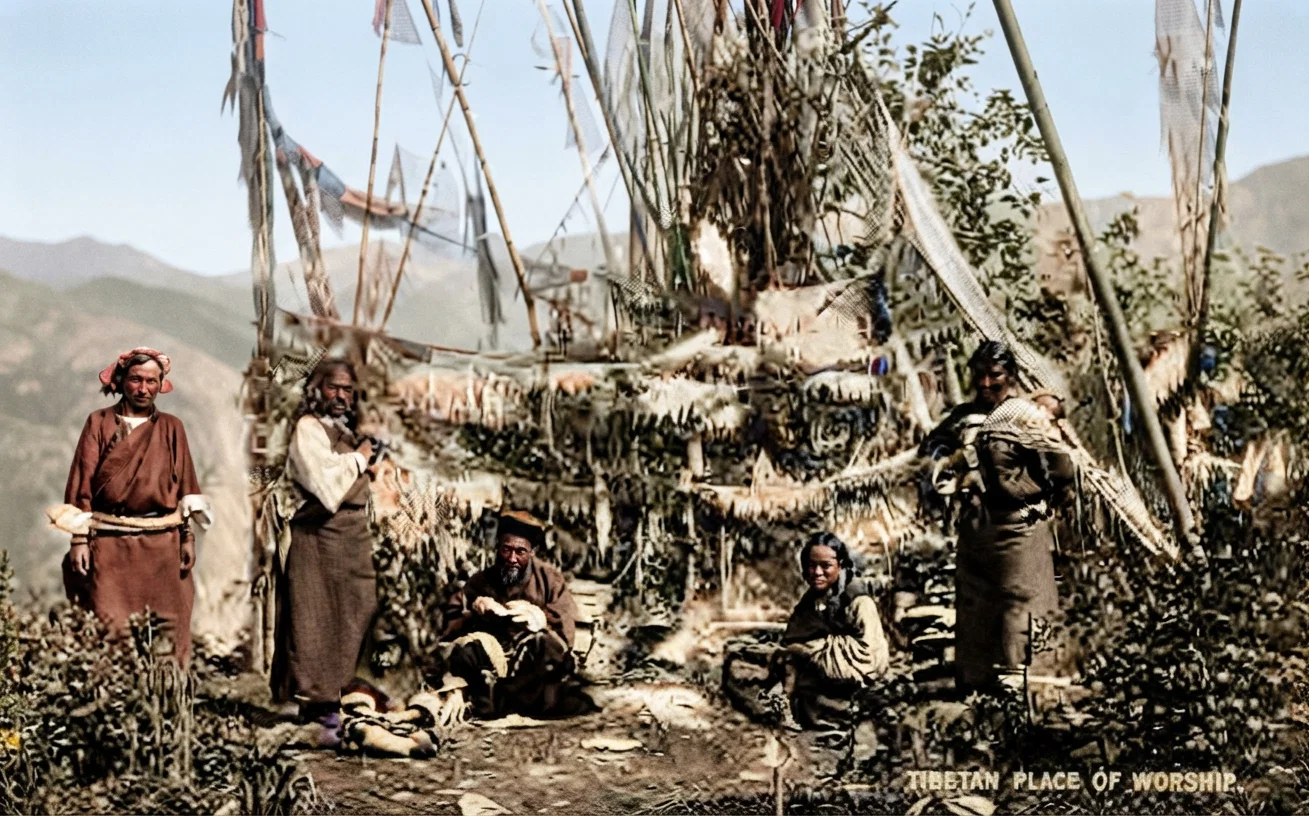
TIBETAN PLACE OF WORSHIP.
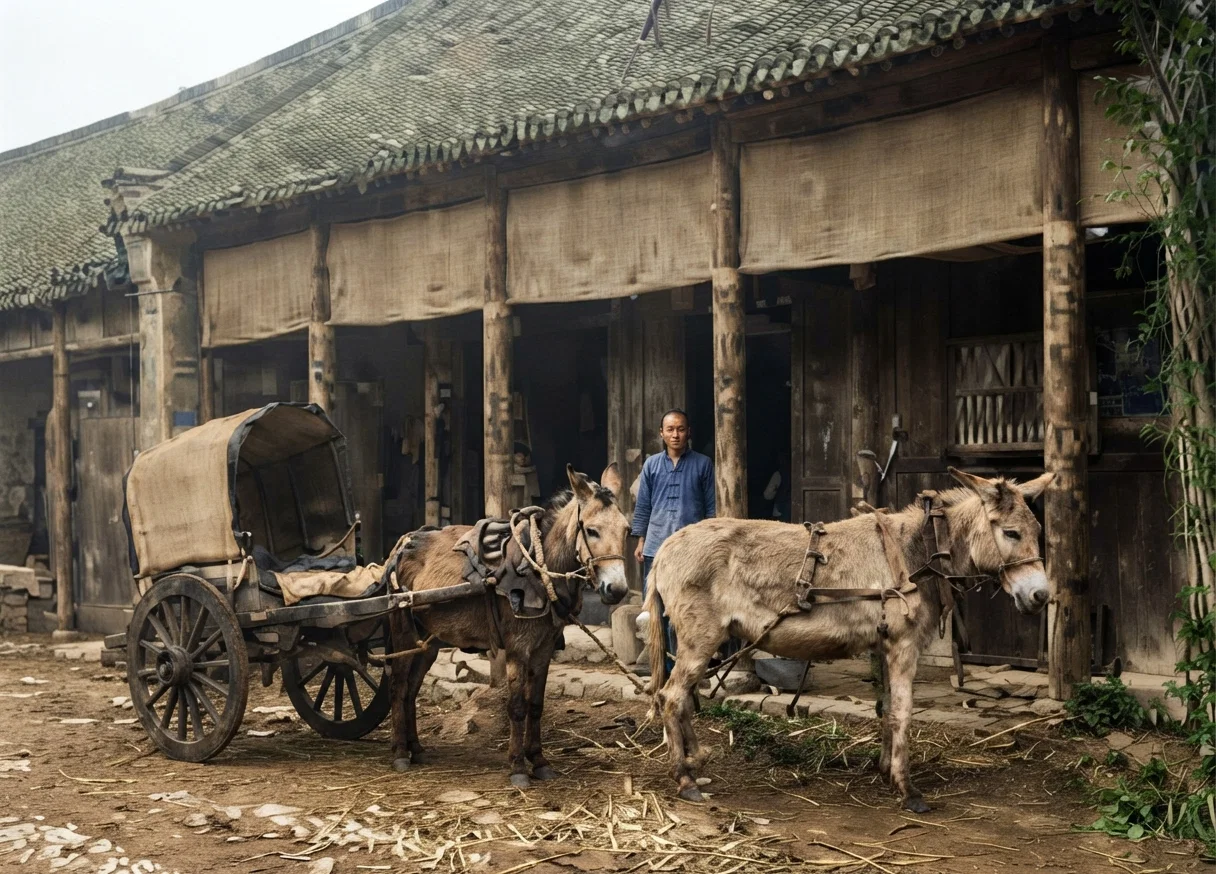
Mule Cart in Central China
"‘Yes, I did say, "Our Father."’
‘That is very new and sweet to us,’ he replied. ‘We never thought of the Great Spirit as Father. We heard Him in the thunder, and saw Him in the lightning and tempest and blizzard, and we were afraid. So, when you tell us of the Great Spirit as Father—that is very beautiful to us.’
Hesitating a moment, he stood there, a wild, picturesque Indian; yet my heart had strangely gone out in loving interest and sympathy to him. Lifting up his eyes to mine again, he said:
‘May I say more?’
‘Yes,’ I answered; ‘say on.’
‘You say, "Notawenan" [Our Father]; He is your Father?’
‘Yes, He is my Father.’
Then he said, while his eyes and voice yearned for the answer, ‘Does it mean He is my Father—poor Indian’s Father?’
‘Yes, O yes!’ I exclaimed, ‘He is your Father, too.’
‘Your Father—missionary’s Father—and Indian’s Father, too!’ he repeated.
‘Yes, that is true.’
‘Then we are brothers!’ he almost shouted out.
‘Yes, we are brothers,’ I replied.
The excitement in the audience had become something wonderful, and when the conversation with the old man had reached this point, and in such an unexpected and yet dramatic manner had so clearly brought out not only the Fatherhood of God, but the oneness of the human family, the people could hardly restrain their expressions of delight.
The old man, however, had not yet finished; and so, quietly restraining the most demonstrative ones, he again turned and said:
‘May I say more?’
‘Yes, say on; say all that is in your heart.’
Then came his last question, which millions of weary souls dissatisfied with their false religions are asking:
‘Missionary, I do not want to be rude; but why has my white brother been so long time in coming with that Great Book and its wonderful story?’"
On the Caspian
By F. F. Oster
BAKU, or Bad-kuba, as the Persian calls it, meaning "weather-beaten," is a cosmopolitan city on the west coast of the Caspian Sea. A strange contrast between Oriental and Occidental life greets the eye. One needs but to compare "New Town," with its fine shops, paved streets, fashionable folk, and large steamer-filled harbor, with "Old Town" and its quaint bazaars, little workshops, and Persian life, and one sees the wonderful progress made under Russian rule.
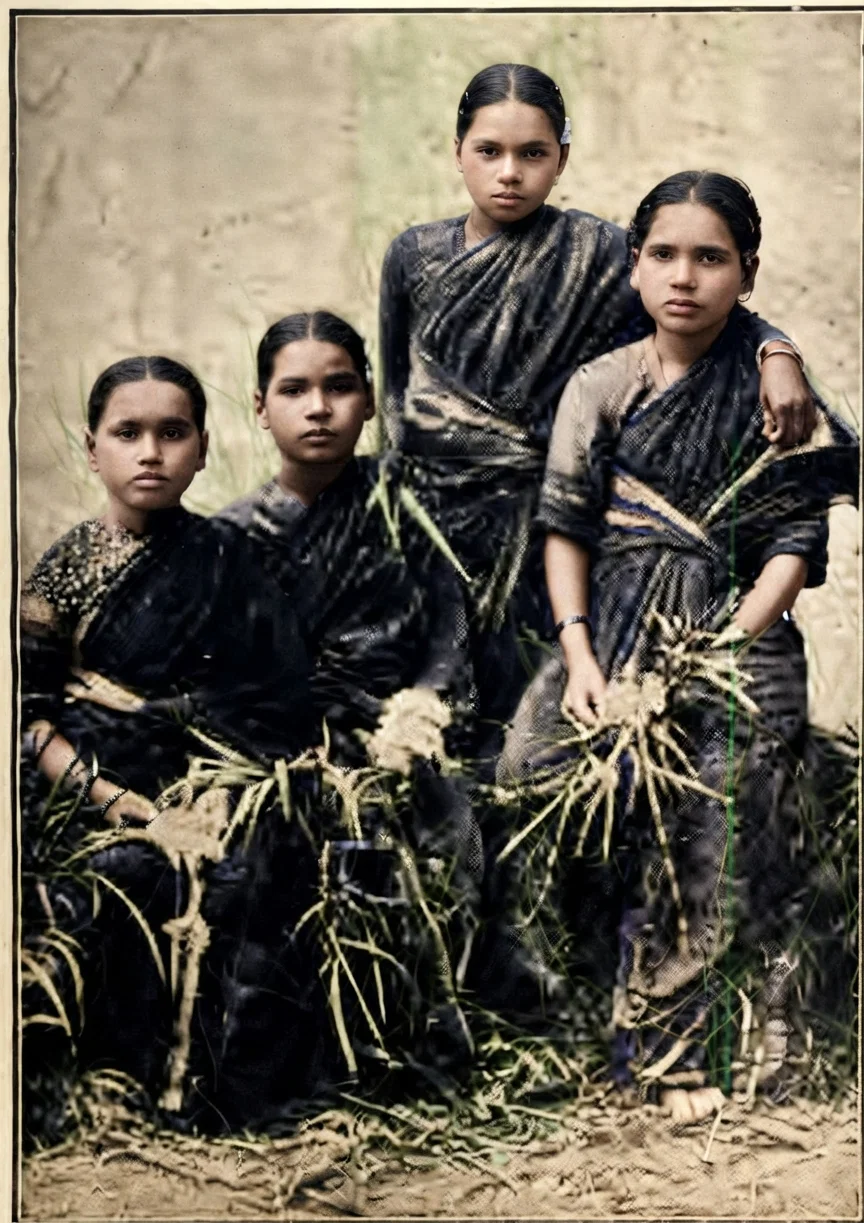
A Group of Child Widows
A short time ago a little company of us gathered on the sandy beach, and there in the blue waters of the Caspian a number of souls were buried with their Lord in baptism. Our Seventh-day Adventist people are scattered all through this region, from Mt. Ararat on the northwestern, to Askabad on the northeastern border of Persia. Brethren dressed in strange costume, but with faces beaming with the joy of the Lord, have visited us from both of these remote places.
The calls for help can not be filled. At one place our Russian worker preached hour after hour, without an intermission, to over a hundred attentive listeners, who wished to hear more and more. The believers are just as earnest and truth-loving as they are in any land. Thus out over the border-land of the Caucasus and of Persia, we hear the warning message sounding.
Baku. F. F. OSTER.
Tashkent
By G. Dail
THIS remarkable old Tartar town, in Turkestan, with an area nearly equal to that of Paris, with the roofs of the houses generally covered with flower beds, is the headquarters of our new Central Asiatic mission field, which, with the Volga, the Ural, the West Siberian, and the East Siberian field, now forms our Siberian Union Mission.
The dearth of Gospel laborers for these great fields is heartrending. To be present in missionary councils and witness the urgency with which the superintendents of the various fields call for laborers, leaves an impression that one does not forget. These men grasp for the available helpers as a drowning man grasps at a straw.
G. DAIL.
Away to the Field
By Charles A. Smith
By Charles A. Smith
Loitering still in the market-place,
Idling the moments by,
Listlessly dreaming, while sinks the sun
In the glowing western sky,
Still there comes to thy drowsy ears
The Master's urgent cry,
As He earnestly calls thee to the field,
Ere the harvest-time pass by.
Think you the Master will gently come,
Softly will smooth the way,
Pleadingly ask that you will go
To the harvest-fields away?
Waste not thy time in such idle dreams.
To the mart He comes no more;
He is out in the fields with the workers there,
Who gather the golden store.
Softly the shadows dim the plain,
Silently sinks the sun;
Only the moments now remain
Ere time's long day is done.
Speed ye to answer the Master's call
That comes from the field away.
O, hasten to gather the gleanings in,
For the harvest ends with the day!
China’s Growing Population
“The populousness of China may be inferred from the striking remark of Professor Giles, of the University of Cambridge, at Columbia University, New York City, that ‘if the Chinese should begin to file past a given point to-day, the procession would never end, as the next generation would begin to pass on as soon as the present had gone by.’”
In Old Jerusalem
By Ludwig Krug
Many sick and lame in the ancient city of Jerusalem and about its gates have found healing or relief of their pains at our health institution. As we secure an entrance among the various nationalities by the medical missionary work, we hope to see many souls converted to the Lord Jesus. We are thankful to our brethren for the financial aid that has enabled us to provide new quarters for our work.
Ludwig Krug.
Jerusalem.
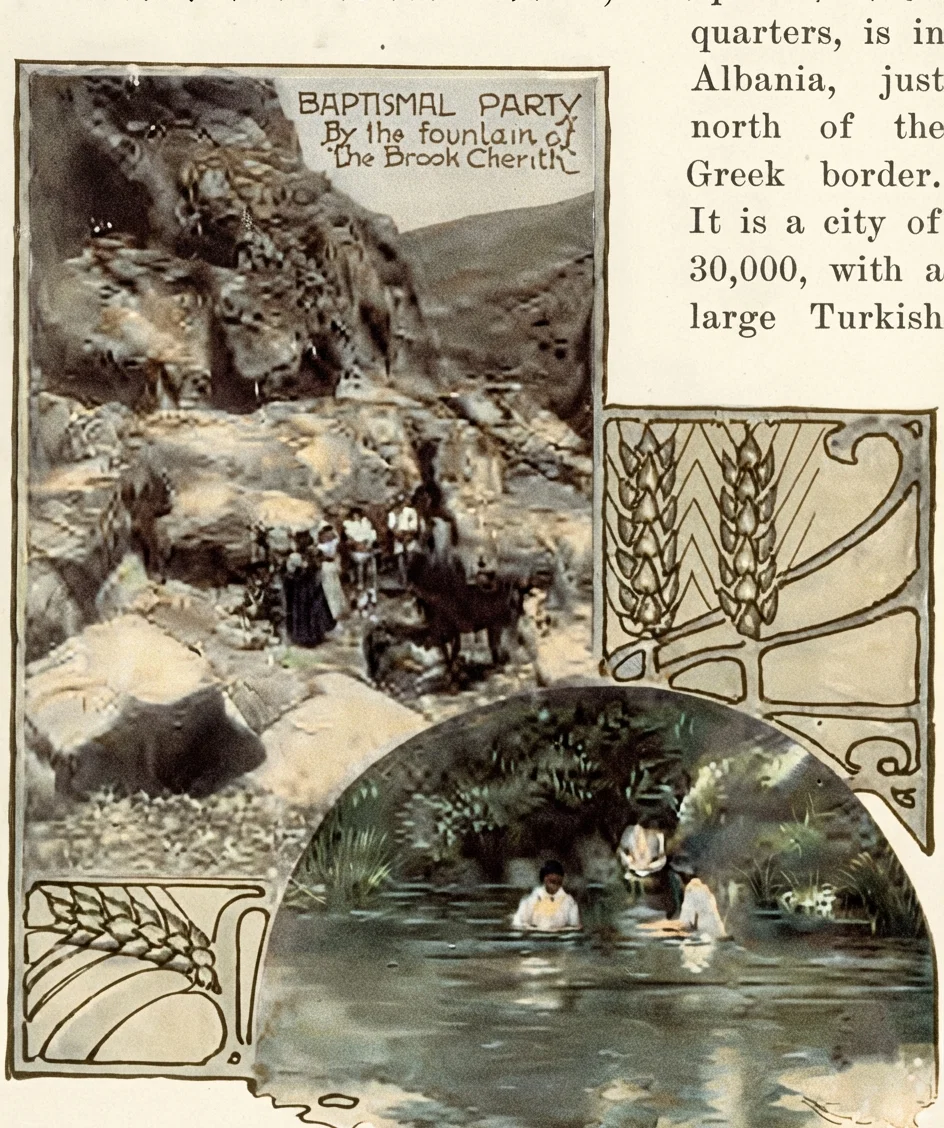
A Baptism in "the Brook Cherith"
By W. C. Ising
It was "by the brook Cherith, that is before Jordan," that Elijah found refuge, the Lord sending him food by the ravens. Still the waters of Cherith flow on to the Jordan.
Two believers in Jerusalem were awaiting opportunity to follow their Lord in baptism. We could find no place about Jerusalem where there was sufficient water, and so our party went by donkeys down through the rocky roadways to the fountain of the brook Cherith, about two and a half hours' journey. Here, among scenes made famous by the sacred story, these believers in Christ Jesus were "buried with Him by baptism," and rose again to "walk in newness of life."
This search for a place of baptism illustrates the text, "And John also was baptizing in Ænon near to Salim, because there was much water there." John 3:23.
Our numbers are few, and the conditions difficult; but in nearly every place occupied by our workers in the Syrian-Egyptian mission during last year, some Gospel fruit has appeared; namely, in Beirut, Jerusalem, Joppa, Luxor (ancient Thebes), and Alexandria.
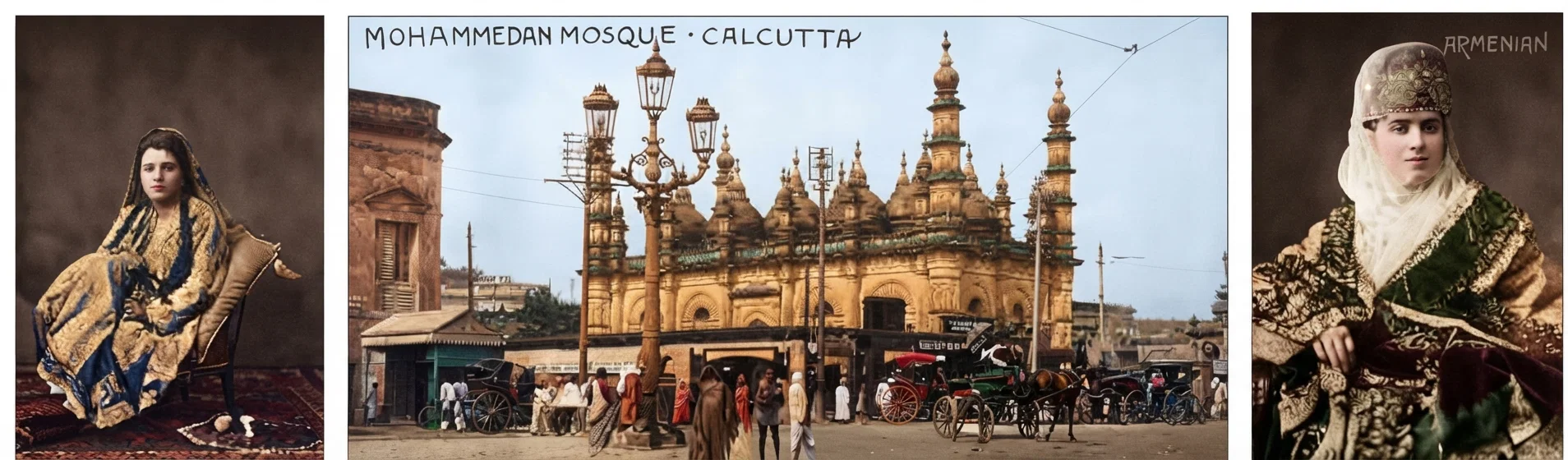
Work in the Levant touches a great mixture of peoples. We have a representative in ancient Damascus. Here is a word from Brother Gabestian, sent from Bagdad, on the Tigris: "Present my best salaams to all the brethren in Christ."
Colporter Zachary bears testimony: "I am a native of Ispahan, Persia. The blessed truth caught me two years ago in Cairo."
And this word comes from our Brother Hasso: "I am of Mosul (Nineveh). The truth of the third angel's message (of Revelation 14) has found me while studying pharmacy in Beirut." So from lands of the earliest history, souls are gathering to the cry of the last Gospel message.
W. C. Ising.
"To the Greek"
By R. S. Greaves
At the beginning of the present year a new Greek mission was organized, which includes also Macedonia and Albania. Janina, our present headquarters, is in Albania, just north of the Greek border. It is a city of 30,000, with a large Turkish garrison. Nearly all speak Greek, including the Moslem people.
BAPTISMAL PARTY By the fountain of the Brook Cherith BAPTISM IN THE BROOK CHERITH
The general formalism among the Greek Orthodox is fairly illustrated by the remark of a young business man the other day. "I don't care much for religious reading," he said; "that isn't in my line." Then, not to be misunderstood, he added, "But I'm a good Christian; I belong to the Orthodox Church." Tho this people seem among the last to be quickened by the message for these times, I am persuaded a great work will yet be done in these regions from which the Macedonian call sounded in apostolic days.
Janina, Albania.
R. S. GREAVES.
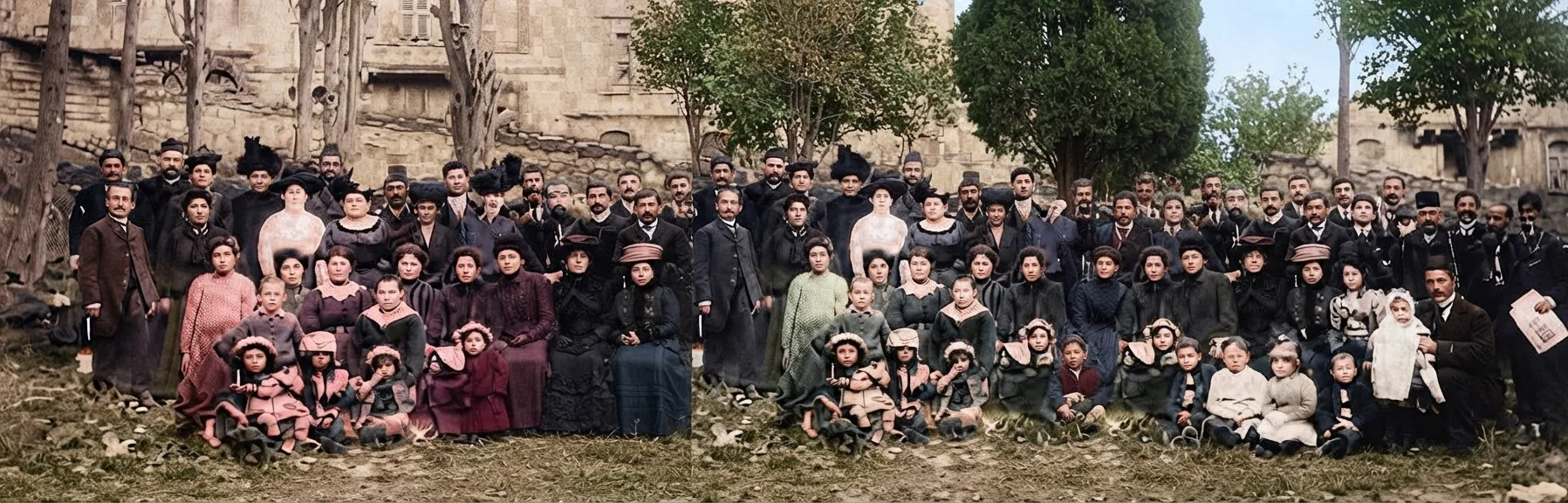
A CHURCH GROUP IN CONSTANTINOPLE
The Work and Instruction of the Great Missionary
AND Jesus went about all the cities and villages, teaching in their synagogs, and preaching the Gospel of the kingdom, and healing every sickness and every disease among the people.
But when He saw the multitudes, He was moved with compassion on them, because they fainted, and were scattered abroad, as sheep having no shepherd.
Then saith He unto His disciples, The harvest truly is plenteous, but the laborers are few;
Pray ye therefore the Lord of the harvest, that He will send forth laborers into His harvest.
And Jesus came and spake unto them, saying, All power is given unto Me in heaven and in earth.
Go ye therefore, and teach all nations, baptizing them in the name of the Father, and of the Son, and of the Holy Ghost:
Teaching them to observe all things whatsoever I have commanded you: and, lo, I am with you alway, even unto the end of the world. Amen.
Why Did You Not Come Sooner?
At a meeting of the British and Foreign Bible Society, the bishop of Selkirk, whose diocese is in Alaska and the Far Northwest, spoke as follows:
"I shall never forget an old Eskimo coming to me the very first time I visited Kittygagzyooit on the Arctic Coast. He asked me why it was that I had not come sooner, as I had been living in the same country. He said, 'Did you know this good news then?' I said, 'Yes, I have known it from boyhood.' 'And your fathers before you?' 'Yes, they knew it.' 'Then why was it that you did not come sooner? I thought that it was, perhaps, only a few winters since you knew; and you knew all this time! Why was this good news not brought to us sooner?' What could I do but bow my head in shame, and pray that God might use us, as a Christian people, more and more to extend the work of the Bible Society!"
Dr. Josiah Strong asks: "What are the churches for but to make missionaries? What is education for but to train them? What is commerce for but to carry them? What is money for but to send them? What is life itself for but to fulfil the purpose of foreign missions, enthroning Jesus Christ in the hearts of men?"
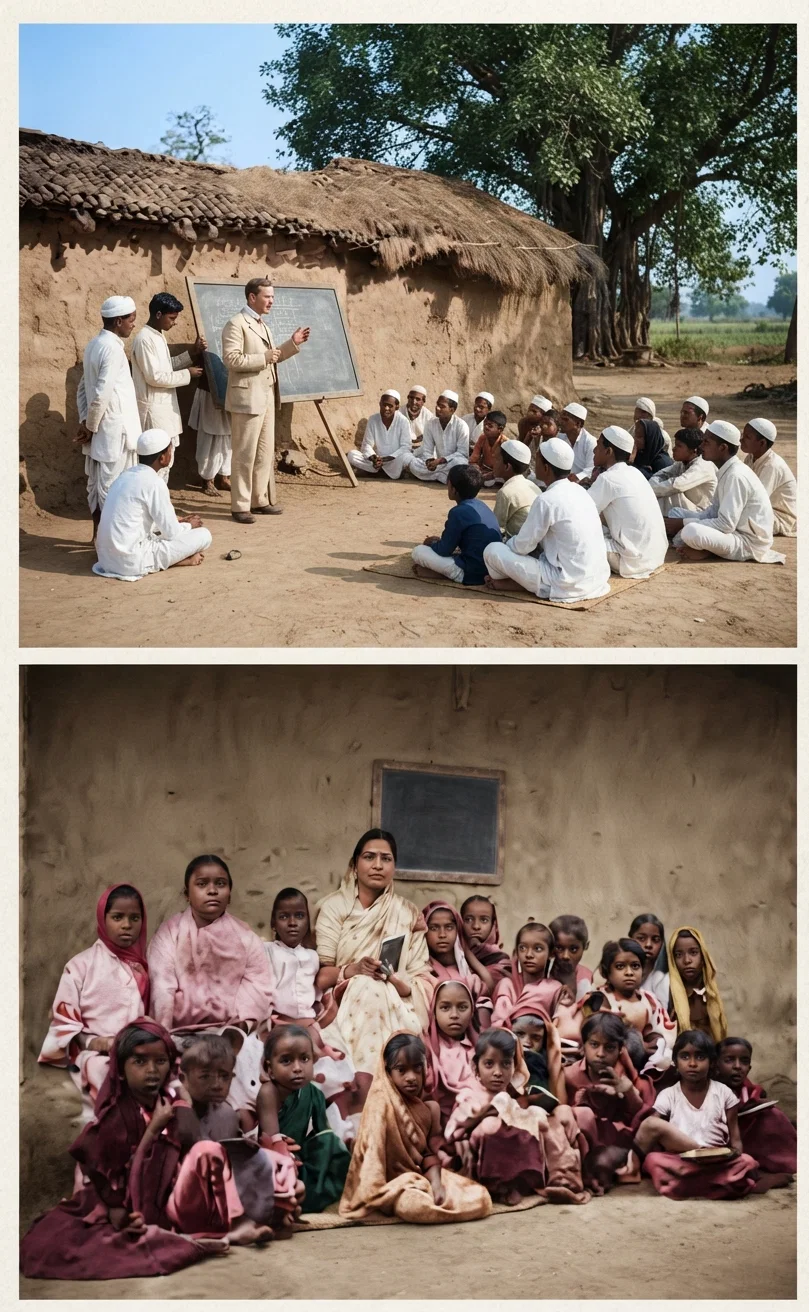
Mohammedan Village Schools, India
By Della Burroway
A CALL for a school came from a Mohammedan village six miles away. We attempted to fill it, even bringing a teacher up from Calcutta. The villagers tried to put up a school building in three different places, but each time were forced to give up. One site was near a tank where high caste Hindu women bathed. Another was a government grazing ground. And the third time they were not permitted to get water for mixing the mud. Just at the time when all looked dark we were asked to open up school in a Mohammedan village near the Karmatar bazaar. A large house was offered us by a cripple who is very favorable to Christianity and who is highly respected by both Hindus and Mohammedans. He called the villagers together, and decided to open two schools, one for girls and one for boys.
The people were a bit fearful at first to send their girls, as no girl had ever been educated in Karmatar before. The first day we did not have more than twenty in the two schools. To-day we have twenty-two girls and fifty boys. From the first day the Bible has been taught, and appreciated by the children. School always opens with prayer. Tho we are only beginning, these children can tell about the birth of Jesus, and His childhood and miracles, as readily as our Christian children in the home land.
IN TOUCH WITH THE MOSLEMS
DELLA BURROWAY.
Karmatar, West Bengal.
PREACHING TO MOSLEMS INDIA MOHAMMEDAN GIRL'S SCHOOL BENGAL INDIA