"When I went to Ambrim three years ago, we saw people on shore all lying under arms. We hesitated to go on shore, and whenever we approached them, they would rush to the shore and draw up their canoes. For hours they acted in that26way. At last two men came off in canoes, with shaking and trembling limbs, and one called:
TWO FIJIAN DELEGATES
"You missionary?"
"Yes, I am a missionary."
"You true missionary?"
"Yes."
"You no got revolver?" I bared my body and showed I had none.
"You no come steal boys or woman?"
"No; we come to tell you about God."
"Then he cried: 'Me savvy you! You true missionary! You brought Missi Gordon who come here long, long ago!'"
"I said, 'Yes;' and with one rush the two men came in their canoes, and leaped into our boat, and one called ashore, 'Missi! Missi! Missi!' and something else that we did not understand."
"Soon the cry was taken up along the shore of the island. You heard it echoed everywhere; 'Missionary! Missionary!' The people then piled up their rifles and crowded together as we came near the shore. When we got there they rushed in, and took our boat up onto the beach."
"As soon as I got out, I saw a painted, forbidding looking savage making at me. I kept my eye on him, for I did not know what he was after. He seized me by the arm, and began in broken English:"
"'Me die for missionary! Me die for missionary! Me no got a missionary! Me no got a missionary! Me die for missionary!'"
"I said, 'We can not give you a missionary.'"
"'Do, do, do!' he said, looking at the young men with us."
"I said they were for another island. He replied: 'You stop 'long o' me. Me die, me die, me want missionary to teach o me.'"
"When we went to the boat, he said, 'When you come with missionary?'"
"I said, 'We can not for a year!'"
"'O,' he said, 'me want missionary; me die for missionary; not say year!'"
"As we left the island, crowds caught at me to keep me back, and the last sight that I had was that of the old chief sitting there on the beach, silent and despairing; and his plea is still ringing in my heart. The anxiety of the heathen lies at the feet of Jesus. That is my one consoling thought. And He will answer their need."
Cuba
By E. W. Snyder
THE Cuban believer is earnest. It is very inspiring to attend the weekly missionary meeting of our Havana church, and hear the relation of experiences in working for others.
It is not without opposition that the believers maintain their faith in Bible truth. A young man, only seventeen years of age, whose family are all opposed to his obeying the Gospel, has encountered much persecution. His father endeavored to force him, one Sabbath day, to work; but our brother stoutly refused, saying to his father that while he would engage in different industries, the study of the Bible mold the sentiment of the people to higher ideals of Christian living.
E. W. SNYDER.
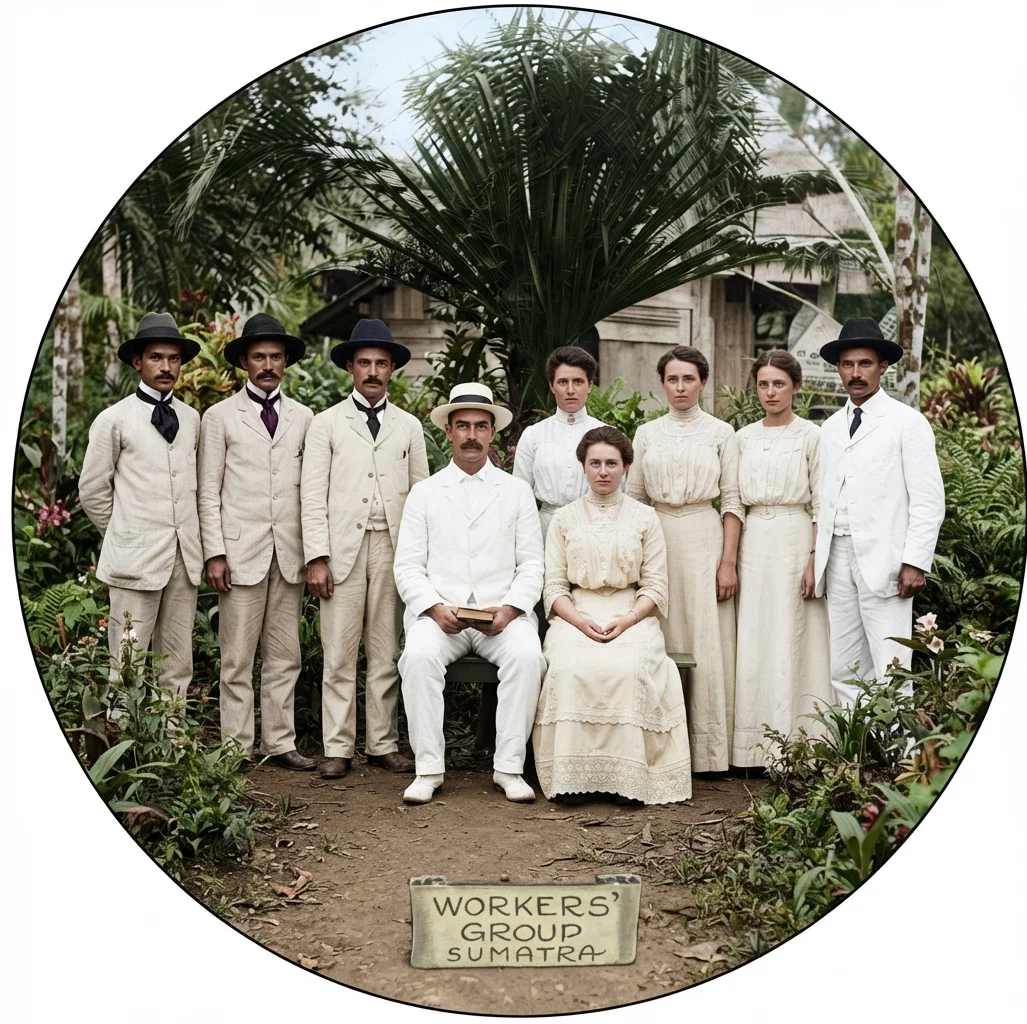
WORKERS' GROUP SUMATRA
A Peep at the South Sea Islander
By Mrs. Maybelle H. K. Sterling
SOMETIMES it seems that the Maoris have one meal a day, and that is all day long; and then again they will live with a scarcity of food.
Only this morning a Maori came to the mission to get the missionary to come and see a sick baby. It was found to be nearly delirious from teething and poor feeding,—not the lack of food, but rather the superabundance. The Maoris love their children, and in their mistaken kindness are often imprudent. Often their houses are in such condition, and so poorly lighted and ventilated, that it almost makes one sick to remain long inside. Not all are like this. Some are quite cleanly.
It is true that the Maoris seem much more subject to disease now than in former years, and no doubt it is due to the evil ways of the foreigner which they have adopted. Many subsist much of the time upon tea and bread, or coffee and bread, which they purchase from the many tea-shops. This can be procured by going out and gathering a few coconuts, five or six, and taking them to the shop in exchange for a cup of tea and a generous piece of poorly made bread.
This little description would be incomplete without mentioning their feasts. These are a great thing in the Maoris' minds. If a man wants to build a house he makes a feast. Many come to the feast and work hard on the house for a short time, and then leave. The house then stands in its unfinished condition till another feast is made. Feasts are made at marriages, deaths, Christmas, and New Year's. At these times large native ovens are made by digging holes and partly filling them with stones. These are heated with fire, after which the food to be cooked is laid upon the hot stones and covered with leaves. Sometimes cows are cut up and baked in these ovens, but always a generous number of pigs are baked whole, and bunch after bunch of bananas, and poe, or native pudding. At a funeral women come bringing a piece of white cloth, expecting to get some pig; while the men who make the coffin and prepare the grave also expect a generous allowance. As a rule, the richer the man or the higher his position, the more pigs are expected, and the larger the attendance at the funeral.
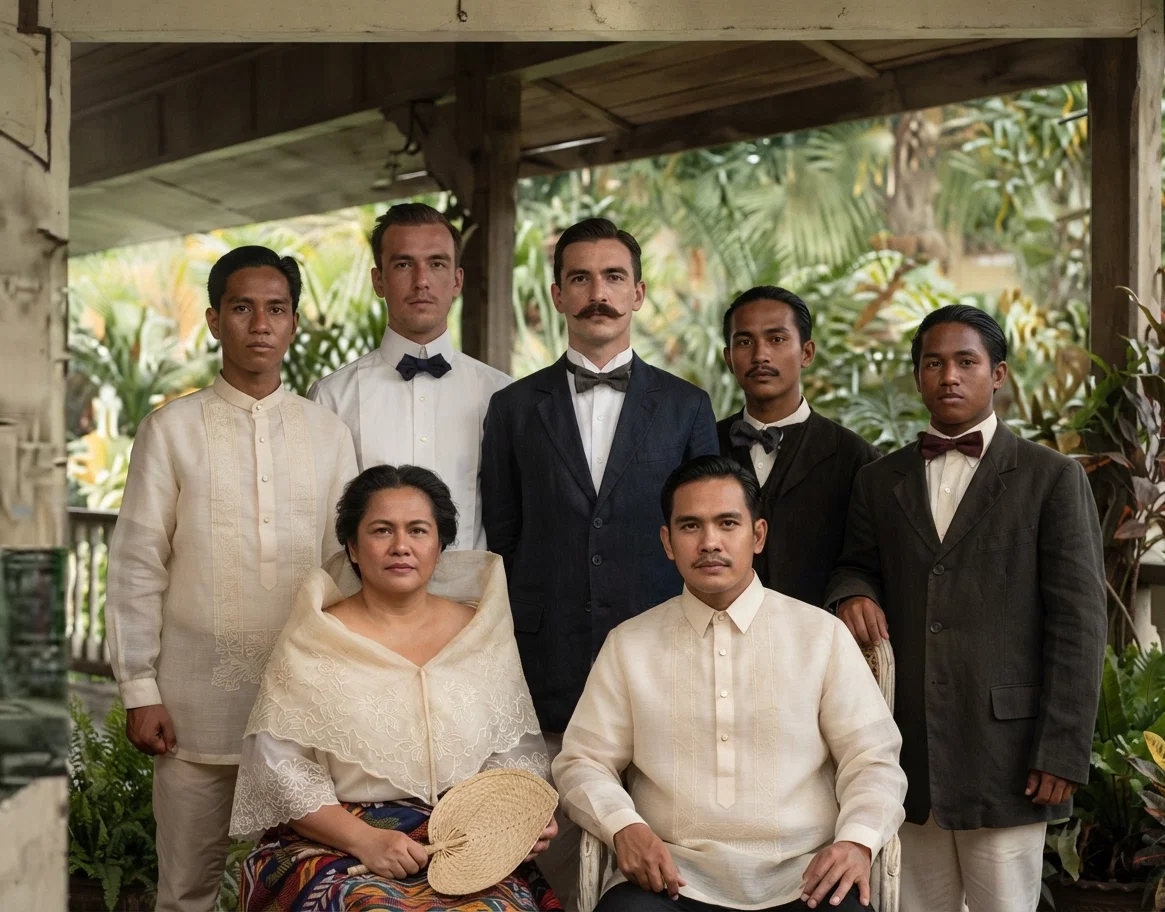
WORKERS IN THE PHILIPPINES
All the time the need of teaching these poor people how to care for themselves, is impressively forced upon us, as we work for their souls.
MRS. MAYBELLE H. K. STERLING.
Rarotonga, Cook Islands.
In New Guinea
By Bennie Tavodi
By a Fijian Teacher
WE see that the people are beginning to understand why we came two years ago to live among them. At first the boys at our Bisiatabu station laughed during worship, now they reverence; they used to talk during service, now they rebuke others for talking; before they did not know what it was to confess a fault; now they admit wrong-doing.
When they first came to Bisiatabu they used to say, "Misi Ka ena gabu", (this is Mr. Carr's place); now they say, "Dirava ena gabu" (this is God's place). At first we were delighted to hear any of them speak the name of Jesus; but now they can tell us what Jesus did to save them from their sins. When we think of the generations these people have been in utter darkness, now that we see them beginning to appreciate the things of God, it is wonderful in our eyes.
With two of the boys I made a trip far into the mountains to preach to the people; and I realize that the Holy Spirit used us to tell the people of Jesus. I was pleased to hear the boys tell their people of what they had seen and heard at the mission. And the Lord protected and brought us home in safety.
Bennie Tavodi.
Bisiatabu, New Guinea.
Porto Rico
By William Steele
THIS is a land of fruits and flowers, and all that delights the eye. The people respond slowly to the Gospel. Last year we held meetings, for a short time, in Arecibo. One day a man who lives twelve miles in the country, passed the place of our meeting, and hearing us sing, entered. He at once became interested. He continued coming to the meetings, walking the entire distance from his home; accepted the Gospel, and was baptized. Not long afterward, a young man from a town at some distance, heard of a people who kept the Bible Sabbath. He attended meetings regularly for a week, and went back home, beginning to teach what he had learned, with the result that several have been converted and baptized.
We believe great possibilities are before us here.
William Steele.
A Tehuantepec Welcome
By George W. Caviness
I HAVE this year again visited the Isthmus of Tehuantepec, Southern Mexico. On my arrival at one place, where a family had long been interested in the advent truths, I had the most touching reception I ever received.
Two of the brothers met me at the station; and as we reached the gate of their home, the whole family came to meet me. After shaking hands all round, one of the brothers began a sweet Spanish hymn of welcome. To the strains of this we marched into the house, and there remained standing until the song was finished, when a short prayer was offered. There was a sweetness and tenderness about it that brought tears to the eyes.
The people gathered in for public meetings and listened with deep interest. It was inspiring to present to them the truth, and to see the eagerness with which many received it. Frequently after a meeting they would say, "What preaching! how clear! how simple!" We now have four small companies of believers in this region.
These people are largely Zapotecan Indians, and are of a serious, religious disposition. It was from this State and race that President Juarez, the great reform president of Mexico, came. They are an intelligent and capable people. Their life and customs are very simple and patriarchal.
G. W. CAVINESS.
Tacubaya, Mexico City.
English School Work in Guatemala
By J. G. Pettey
THE school year in Guatemala lasts eleven months; but, after all, no more days of school are taught here than in the United States in a nine months' session, for there are many holy days and holidays, and even whole weeks of vacation. The patrons pay tuition by the calendar month for the entire twelve months.
It is customary here that the girls and boys attend separate schools. We, however, have both in our school, but for the most part they are kept in different classes and rooms. The Spanish children are very quick to learn the English. The school has become self-supporting, and perhaps this year will yield a little increase. Many opportunities for good are presented to the Christian teacher in these lands.
J. G. PETTEY.
Guatemala City.
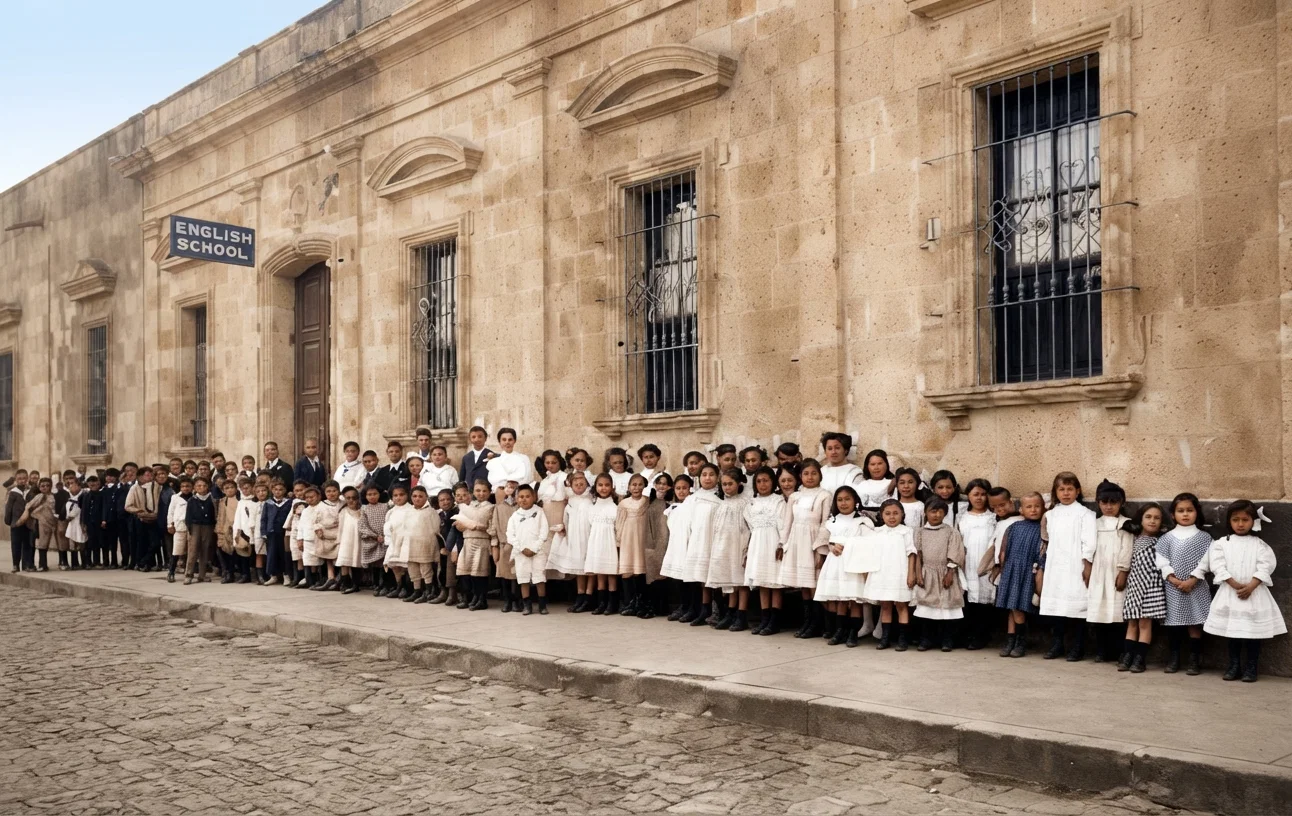
GUATEMALA CITY ENGLISH SCHOOL
GUATEMALA INDIAN MAYOR OF A TOWN
On the Isthmus
By H. C. Goodrich
WE have here swarms of peoples and tongues, gathered from all parts of the world. In the Canal Zone the Chinese fill our shops, and work our gardens. Turbaned Arabians drive our carts. Greeks, Syrians, and East Indians sell marvelous cloths and laces from house to house. In Panama Spaniards are the police, and fill government offices. Germans, English, and French fill the better business places, while Americans are prominent in places of trust along the canal. And everywhere, in every place where man can serve his fellow man, is the Negro.
Such a field presents opportunity everywhere for the earnest Gospel worker. During the past year our Christian colporters have sold $17,519 worth of books and periodicals, the larger portion being in the English language. And many of these publications have been sent by purchasers to their friends in the many islands of the Caribbean Sea. Thus the influence of work done here reaches out through all the West Indies.
H. C. GOODRICH.
Cristobal, Canal Zone.
Teaching the Guatemala Indian
By W. E. Hancock
THE Indians of Guatemala are very easily impressed by any kind of illustration. Not only are they susceptible to object-lesson teaching, but they are capable of expressing their ideas in objects and pictures. They do not understand abstract reasoning, or fine distinctions of doctrinal points, but they do catch readily an idea illustrated by a picture or an object.
A few weeks ago, four Indian workmen were putting some electric lights in the house in which we live. One of our prophetic charts illustrating the historical prophecies of Daniel and the Revelation, was on a table in the room where one of them was working. He noticed it, and wanted to know what it meant. I began to explain to him the great image of Daniel 2, when suddenly I found myself surrounded by all four of the mozos, or workmen. Their eyes fairly danced as I explained in a simple way the different lines of prophecy. They wanted to buy the chart at once. I told them I could not sell it to them, but invited them to come again and hear more concerning these prophecies which show that the end is near.
W. E. HANCOCK.
Among Seamen, in the Great Ports
By Capt. J. L. Johnson
" 'CORAL Leaf,' ahoy! Take a line for us, please. This is a beautiful morning, shipmate. Are all hands on board?"
"We be all here, sir."
"What nationality is the crew composed of?"
"English, German, Danish, and Portuguese."
"We wish to give you some choice reading-matter which will no doubt interest all hands."
This is the work that the motor launch Liberty, now in the port of New York, has been engaged in for the last sixteen years in the different ports on the coast, helping to give the message of the soon-coming Lord.
CITY MISSION WORK
Some time ago we visited the steamship Lord Stanley, and placed in the hands of the crew a supply of literature. The captain was very indifferent, in fact refused even to accept the SIGNS after carefully looking it over; but he made this remark: "You Seventh-day Adventists are an aggressive lot of people." "Why do you say this, captain?" I asked. "Why, we meet you folks in every part of the world," he replied. Before the steamship Stanley sailed, we had the privilege of placing in the captain's hands a tract on every point of these advent truths. After examining the same, he remarked, "What a beautiful lot of subjects to read on!"
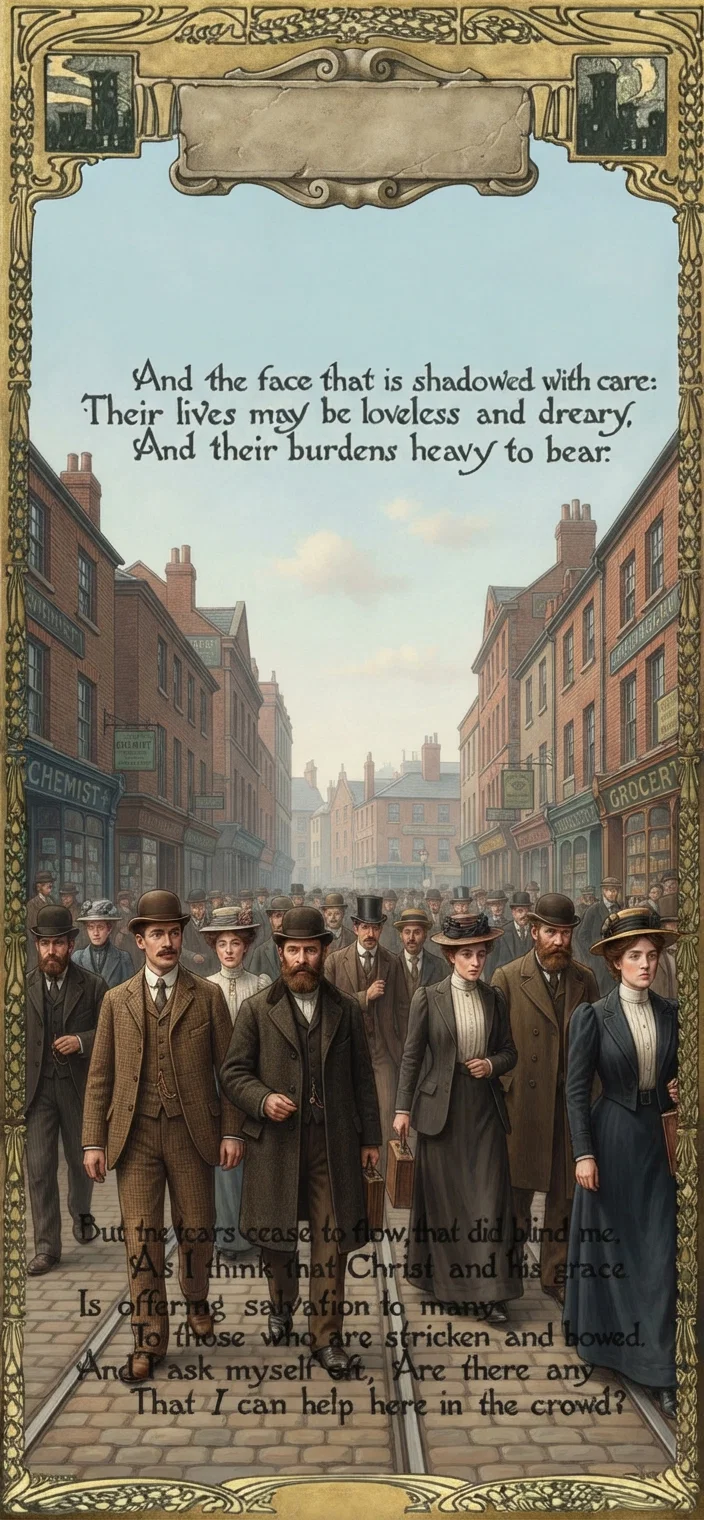
IN THE STREET
Son, go work to-day in my vineyard. Matt 21:28
L. D. SANTEE
The message is onward with rapid power to earth's remotest bounds, and there can be no stop until the earth is lightened with its glorious truths and Jesus comes.
Hardly a day passes but we hang up the prophetic chart and call attention to the prophecies and the grand time we are living in; and we have many a glad response to the truths presented.
CAPT. J. L. JOHNSON.
Motor Launch Liberty.
NEW YORK HARBOR BOAT "LIBERTY"
Conditions Existing in Our Large Cities
By Ellen G. White
THE intense passion for money-getting, the thirst for display, the luxury and extravagance,— all are forces that, with the great mass of mankind, are turning the mind from life's true purpose. They are opening the door to a thousand evils. Many, absorbed in their interest in worldly treasures, become insensible to the claims of God and the needs of their fellow men. They regard their wealth as a means of glorifying self. They add house to house, and land to land; they fill their homes with luxury, while all about them are human beings in misery and crime, in disease and death.
By every species of oppression and extortion, men are piling up colossal fortunes, while the cries of starving humanity are coming up before God. There are multitudes struggling with poverty, compelled to labor hard for small wages, unable to secure the barest necessities of life. Toil and deprivation, with no hope of better things, make their burden heavy. When pain and sickness are added, the burden is almost unbearable. Careworn and oppressed, they know not where to turn for relief.
The Scriptures describe the condition of the world just before Christ's second coming: "Ye have lived in pleasure on the earth, and been wanton; ye have nourished your hearts, as in a day of slaughter. Ye have condemned and killed the just; and he doth not resist you." James 5:5, 6.
The spiritual darkness that covers the whole earth to-day is intensified in the crowded centers of population. It is in the cities of the nations that the Gospel worker finds the greatest impenitence and the greatest need. In these same wicked cities there are presented to soul-winners some of the greatest opportunities. Mingled with the multitudes who have no thought of God and heaven, are many who long for light and for purity of heart. Even among the careless and indifferent, there are not a few whose attention may be arrested by a revelation of God's love for the human soul.
The cities everywhere are calling for earnest, whole-hearted labor from the servants of God.
The conditions that face Christian workers in the great cities, constitute a solemn appeal for untiring effort in behalf of the millions living within the shadow of impending doom.
With heart and soul and voice they must respond to the summons of the Master of the vineyard to enter the cities, and work as laborers together with God for the winning of precious souls.
MRS. E. G. WHITE.
Opportunities at Home
THE gift we should pray for is vision. Missionary work lies all around us. The story is told of a German girl in a large American city who prayed for years that she might be sent to a foreign field as a missionary. One morning, after her usual prayer, it seemed almost as if the Lord were talking to her, and her thoughts ran something like this:
"Where were you born?"—"In Germany."
"Where are you now?"—"In America."
"Who lives in the room next to yours?"—"A Swede girl."
"Is she a Christian?"—"No."
"Who lives in the flat below?"—"An Irish family."
"Christians?"—"No."
"Who lives next door?"—"Italians."
"Christians?"—"No."
"Have you ever done any missionary work in this neighborhood?" And she was obliged to answer with shame and humiliation, "No."
In a foreign land, in the midst of foreigners who knew nothing of God, she had not recognized her opportunity. Is she the only one of whom that could be said? How is it with you?—The Youth's Comrade.
City Work
WHEN Admiral Foote was in Siam he invited the royal dignitaries to a dinner on his vessel. As soon as the guests were seated at the table, he, as was his invariable custom, asked a blessing upon the food. The king in surprise said he thought only missionaries asked blessings. "True," replied the admiral quietly, "but every Christian is a missionary."
Keep It Warm by Working
Mrs. Ann Hasseltine Judson wrote while in Burma: "Nothing do I dread so much as becoming cold and worldly-minded, and losing the life of religion in the soul. Tho I have but few temptations, I find that the innate depravity of my heart is constantly showing itself in some way or other. I find it is just as necessary to watch and pray and guard against easy besetting sins in this heathen land as in any other situation. O for a more holy heart, more fervent love to God, and more ardent longings for the promotion of His cause!"
That is the spirit which ought to possess not only Christians in mission fields, but Christians at home.
"The missionary enterprise is not man's work, to be picked up and dropped at will. It is not natural, but supernatural; not a human, but a spiritual movement."