Your ShelfYour Projects

Review and Herald, Vol. 87, No. 44.

The Fields are White
Earlier text: The Fields are White

The Significance of the Great Foreign Missionary Movement of To-Day
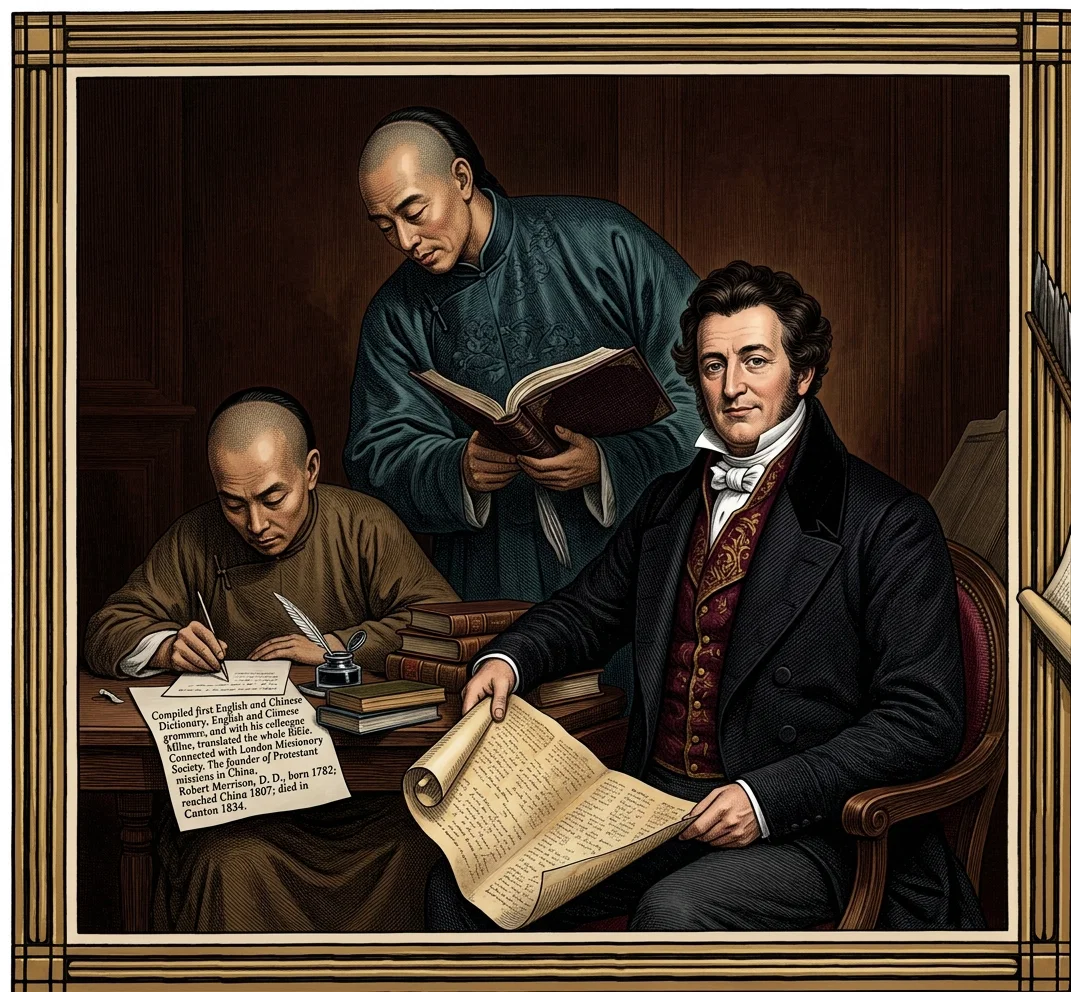
ROBERT MORRISON, D. D.
The greatest missionary movement ever known in the history of the church is now being carried forward; and its objective is the greatest work ever undertaken by the followers of the Master,—“the evangelization of the world in this generation.” This movement began a little more than a century ago, and has steadily grown and spread out until it now covers the face of the whole earth. The Missionary Review of the World for January, 1910, gives the following information regarding this “century of foreign missionary achievement:”

1810

“Nearly every country in Asia and Africa was closed to the gospel.
“The church did not believe in foreign missions.
“There were practically no Protestant Christians in heathen lands.
“Only one hundred foreign missionaries had been sent out.
“The Bible was translated into only sixty-five languages.
“Only a few thousands of dollars were given yearly for foreign missions.
“There were no medical missionaries.
“There were no mission hospitals nor orphanages.
“There was no native Christian ministry.
“There were no mission presses nor agencies for preparing and distributing Christian literature in non-Christian lands.”

1910

“Practically every nation in the world is open to missionaries.
“All evangelical churches are interested in missions.
“More than two million Protestant Christians have been gathered in heathen lands, besides all who have died in the faith.
“The Bible has been translated into about five hundred languages and dialects.
“Total foreign missionary contributions amount to $25,000,000 annually.
“Thousands of medical missionaries in heathen lands treat three million patients a year.
“There are four hundred mission hospitals and over five hundred orphanages and asylums in foreign lands, operated by missionaries.
“There are over six thousand unmarried women missionaries to heathen women and children.
“There are about ninety-three thousand native pastors, evangelists, etc., working among their own people.
“There are nearly thirty thousand schools and colleges conducted by Protestant missionaries in foreign lands.
“There are over one hundred sixty publishing houses and mission presses, and four hundred Christian periodicals are published in the mission fields.
“Thousands of college students are in the mission field, and thousands are preparing to go.”
From this it is seen that this century of foreign missionary endeavor has wrought marvelous changes, and the results would have undoubtedly been increased in proportion to an increase of effort. But what has been accomplished is a summons, a trumpet call, to the whole Christian church to make a supreme effort in behalf of all the non-Christian peoples of the world.
“The evangelization of the world in this generation” is now the appropriate and universal watchword of missionary leaders. The time has come for this work to be done, and the providences of God have so shaped the affairs of the world, and provided the resources in the church, as to make this glorious achievement altogether possible.
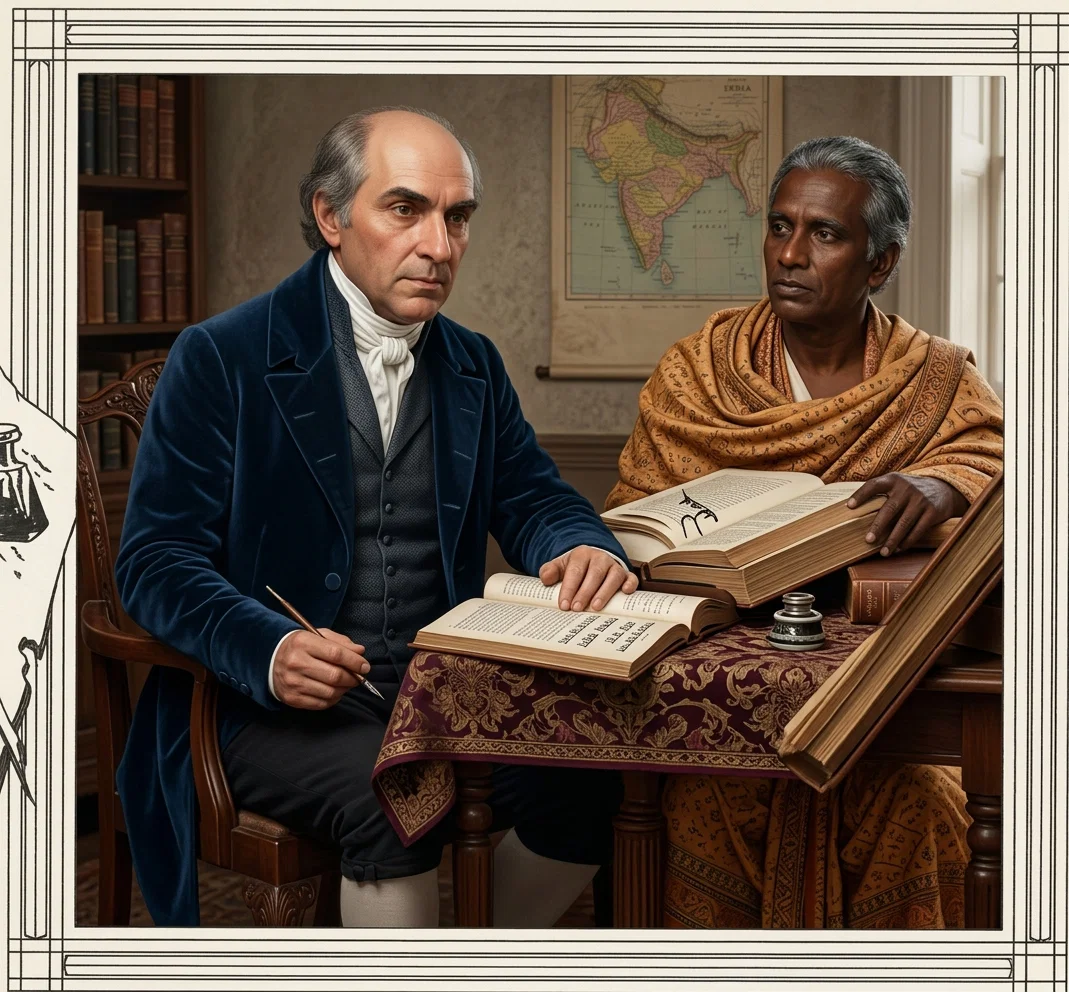
CAREY AND HIS PUNDIT
To accomplish this more workers, larger contributions, and a larger measure of the Holy Spirit’s power for efficient service, are needed. The church has the money to give and the workers to send. The Holy Spirit has already been given to the church, and awaits its demand and reception.
The remarkable condition we are now facing is the fulfilment of both prophecy and promise made by our Lord to his church. The hour has come when all the world must hear the gospel of a crucified and risen Christ.
To participate in such a work is the greatest privilege that comes to any one on earth. All who are faithful in doing their part will share in the glorious triumph that will follow.
A. G. DANIELLS.

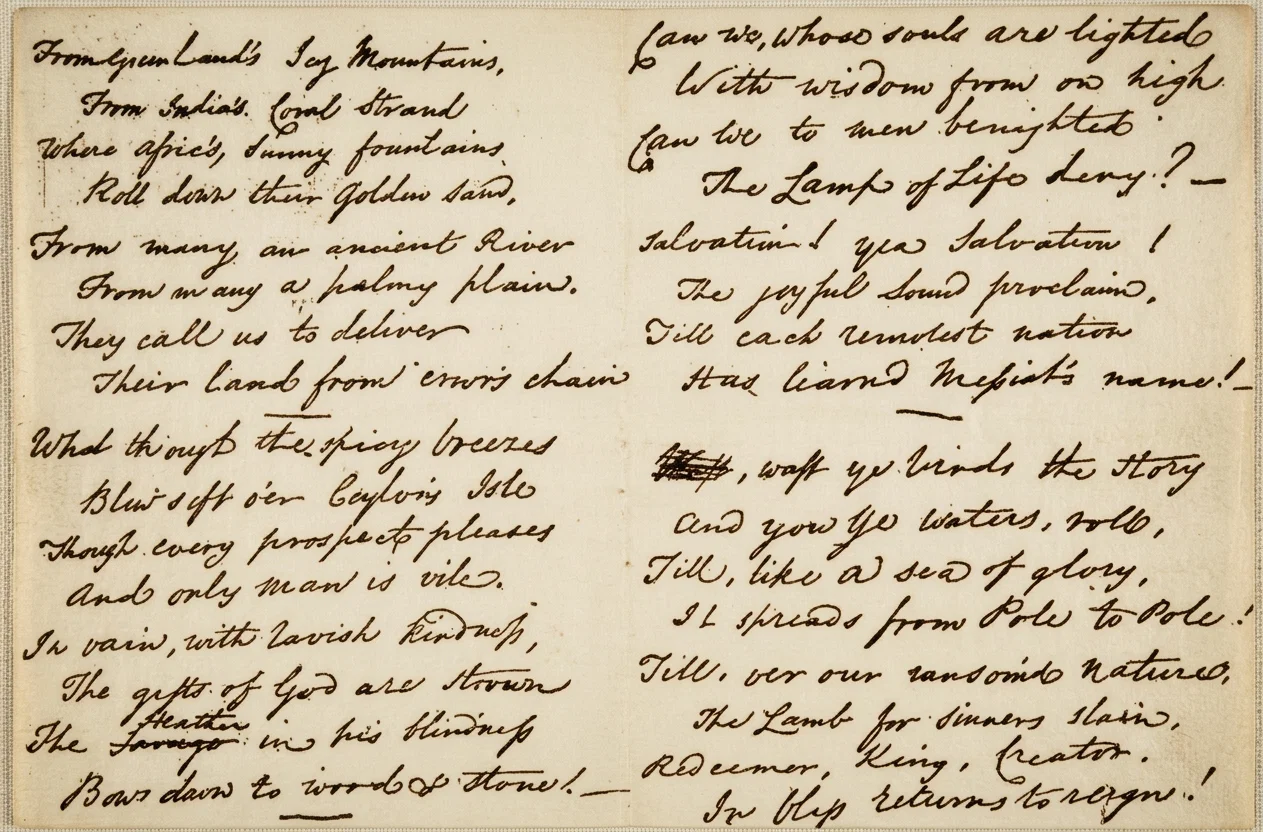
Bishop Heber’s Great Missionary Hymn

ONE day in 1819, Reginald Heber, then a rector of the Church of England, was visiting his father-in-law, Dean Shipley. The dean was preparing for a missionary meeting next day and asked Heber to write “something for them to sing in the morning.” Heber retired to a table in another part of the room. Shortly the dean inquired, “What have you written?” Heber read three verses. “That will do very well,” said the dean. “No, no, the sense is not complete,” replied Heber, and added the fourth verse. The dean insisted that he should desist from his purpose to add yet a fifth, and so was completed the hymn that has been the battle-hymn of the missionary movement. The above facsimile shows the manuscript just as it left Heber’s hand that evening at Wrexham, England.

Last Year's Offering

FOR the third time the REVIEW AND HERALD becomes a special messenger to the friends of the gospel in informing them of the work being done, and the progress made, by this people in carrying the gospel of the kingdom to the nations of the world, the accomplishment of which is to immediately precede the coming of our Lord in glory.
We are encouraged to again thus present the progress of the work and some of the interesting experiences of the missionaries in distant lands, because of the hearty reception given, and the interest manifested in previous efforts of this character, and the very substantial financial assistance rendered by our friends on these occasions. As a result of the distribution of the Thanksgiving number of the REVIEW AND HERALD in 1908, the Mission Board received assistance in its work to the extent of $44,983.10. In the fall of 1909 the story of the denomination's work in mission fields was again sent out in the “Harvest Ingathering” number of the same paper. This issue appeared to be received with an interest at least equal to that accorded its predecessor, about seven hundred thousand copies being sent out from this office. It is too early to say what the result of this will be in donations, as remittances are still coming in from every conference in America; but up to the present writing, $40,765 has been received. While we are pleased to avail ourselves of these opportunities to impart to those interested some knowledge of the progress of our work, we also greatly appreciate the financial assistance rendered by our friends in carrying forward this great movement. It is in the wisdom of God that the plan of salvation has been so arranged that every one may have some part therein, not only in the enjoyment of its blessings and provisions, but also in extending it to others. For it was to this that our Lord most particularly referred in the parable of the talents, when he likened himself to a nobleman going into a far country, first calling his servants to him, and imparting to every man some portion of his goods, over which he was expected to act as steward, and for which he would eventually be required to render an account and increase.
It would be very gratifying to us if we could report in this paper the results of the gifts received in the saving of souls; but that is something that eternity alone can reveal. It will, however, doubtless afford satisfaction to many to know that these donations, gathered generally in small amounts but from many sources, have enabled the Mission Board greatly to enlarge its work in a number of mission fields, as shown in the following statement, giving receipts and disbursements of the General Conference funds in the past five years:—
RECEIPTS                 DISBURSEMENTS Deficit, Jan. 1, 1905                             $ 47,965.50 1905 ........ $172,948.17                     143,796.86 1906 ........ 212,296.85                     163,755.56 1907 ........ 232,956.47                     253,445.74 1908 ........ 270,405.96                     272,873.08 1909 ........ 371,381.29                     351,414.61
For the year 1910, the definite appropriations made, and provision for the expansion of the Mission Board operations in new fields, will call for disbursements in excess of $400,000.
Another item of interest to those of our friends who have assisted us by their gifts, is that by their liberality we were enabled in 1909 to send from America eighty-six missionaries and their families, besides largely increasing our force of native workers in China, India, Japan, Korea, and Africa. These are all now actively at work in their different fields, proclaiming the gospel of Jesus Christ, and the message of his soon-coming and everlasting kingdom.
It is not now, and perhaps never will be, the privilege and duty of the majority of the readers of this paper to leave their homes to carry the gospel to the heathen; but we may all have a part in this work, and thus enter into the toil and sacrifices of others. God's plan in this is so ordered that in the proper use of the means with which we are entrusted, we may become workers together with our Lord and his servants in the salvation of men.
In view of this, we feel free to extend again to all who may feel so disposed, an invitation to contribute to this work.
W. T. KNOX.

The New Testament and the Reformation

“THE publication of the New Testament constitutes an important epoch in the Reformation. . . . When the Bible began to be read in the households of Christendom, Christendom was changed. There were thenceforth new customs, new manners, new conversations, a new life. With the publication of the New Testament the Reformation came forth from the school and the church, and took possession of the firesides of the people.”

A Cree Indian Retrieves the Bible

“A CREE INDIAN and his son, fishing in the Northwest of North America some years ago during the winter season, traveled on snow-shoes across the plains, thinking that they carried what they called the “Book of Heaven” in their pack. When they reached a hunting-ground one hundred forty miles distant from the fishery, they found that the book had been left behind. One of them went back, walking two hundred eighty miles through the wild country, to regain that Bible left behind.”

The Century of Bible Circulation

IT is by no mere chance that the “century of missions” has been also the “century of Bible distribution.” The British and Foreign Bible Society, established in 1804, is the parent of all the societies printing the Scriptures. When it was founded, not a newspaper in London noted the fact. Hardly any one, perhaps, understood what a great movement was begun. One man, George Burden, secretary of the London Missionary Society, wrote in his diary:—
“MARCH 7, 1804.—Memorable day! The British and Foreign Bible Society founded. I and others, belonging to the Tract Society, had long had it in view; and after much preparation, in which we did not publicly appear, a meeting was called in the London Tavern, and the Society began with a very few. . . . Nations unborn will have cause to bless God for the meeting this day.”
Now in over five hundred languages, the Word of God, in whole or in part, is speaking the message that transforms the life. From eight to ten or more languages are being added every year. Our own missionaries have had a small part in this. It is a wonderful thing when, for the first time, a portion of the Book of God is put into the language of a people who never before heard it. Let us hasten the glad tidings to those still in darkness.

The Book Talks

WHEN for the first time an African village was shown a book, and heard the missionary reading the Scriptures in their own tongue, they cried out: “The book talks! the white man has a book that talks!” And indeed the Bible is a book that talks. It is the “living Word,” not as the books of men.
“We know the Word you teach is good,” said heathen chiefs who came to one of our missions in German East Africa to plead for a school.
The late John G. Paton, the apostle of the New Hebrides, in the South Pacific, said that an old Aniwan chief had helped him to translate the first little Scripture portion. At last the book was printed. Dr. Paton said:—
“Namakei came to me, morning after morning, saying, ‘Missi, is it done? Can it speak?’
“At last I was able to answer, ‘Yes!’
“The old chief eagerly responded, ‘Does it speak my words?’
“I said, ‘It does.’
“With rising interest, Namakei exclaimed, ‘Make it speak to me, missi! Let me hear it speak.’
“I read to him a part of the book, and the old man fairly shouted, in an ecstasy of joy, ‘It does speak! It speaks my own language, too! O, give it to me!’
“He grasped it hurriedly, turned it all round every way, pressed it to his bosom, and then, closing it with a look of great disappointment, handed it back to me, saying, ‘Missi, I can not make it speak! It will never speak to me.’
“‘No,’ said I; ‘you don’t know how to read it yet, how to make it speak to you; but I will teach you to read, and then it will speak to you as it does to me.’
“‘O missi, dear missi, show me how to make it speak!’”

The Anvil of God's Word

LAST eve I stood before a blacksmith's door, And heard the anvil ring its vesper chime; Then, looking in, I saw upon the floor Old hammers, worn with beating years of time.
“How many anvils have you had,” said I, “To wear and batter all these hammers so?” “Just one,” he answered; then, with twinkling eye, “The anvil wears the hammer out, you know.”
And so the Bible, anvil of God's word, For ages skeptic blows have beat upon; And though the noise of Paine, Voltaire, was heard, The anvil is unworn,—the hammers gone.
Apprentice blows of ignorance, forsooth, May awe with sound, and blinding sparks death-whirled; The Master holds and turns the iron, his truth, And shapes it as he wills, to bless the world.
— L. B. Coke.

The Buried Bible

THE pagan forces in Madagascar rose against the Christians in 1835, drove out the missionaries, and sought to destroy every Bible. The cause of Christ seemed doomed to destruction.
“But before the last missionaries left the island, they buried in the earth seventy copies of the whole Bible, and stored in various hiding-places several cases of New Testaments, Psalters, and other portions. These books, which passed stealthily from hand to hand, and were read in secret at the peril of the owners’ lives, became the fuel which kept the sacred fire burning. When the missionaries returned, in 1862, they found that the little band of Malagasy Christians had grown from two hundred to over two thousand. The Malagasy Bible had been its own missionary.”
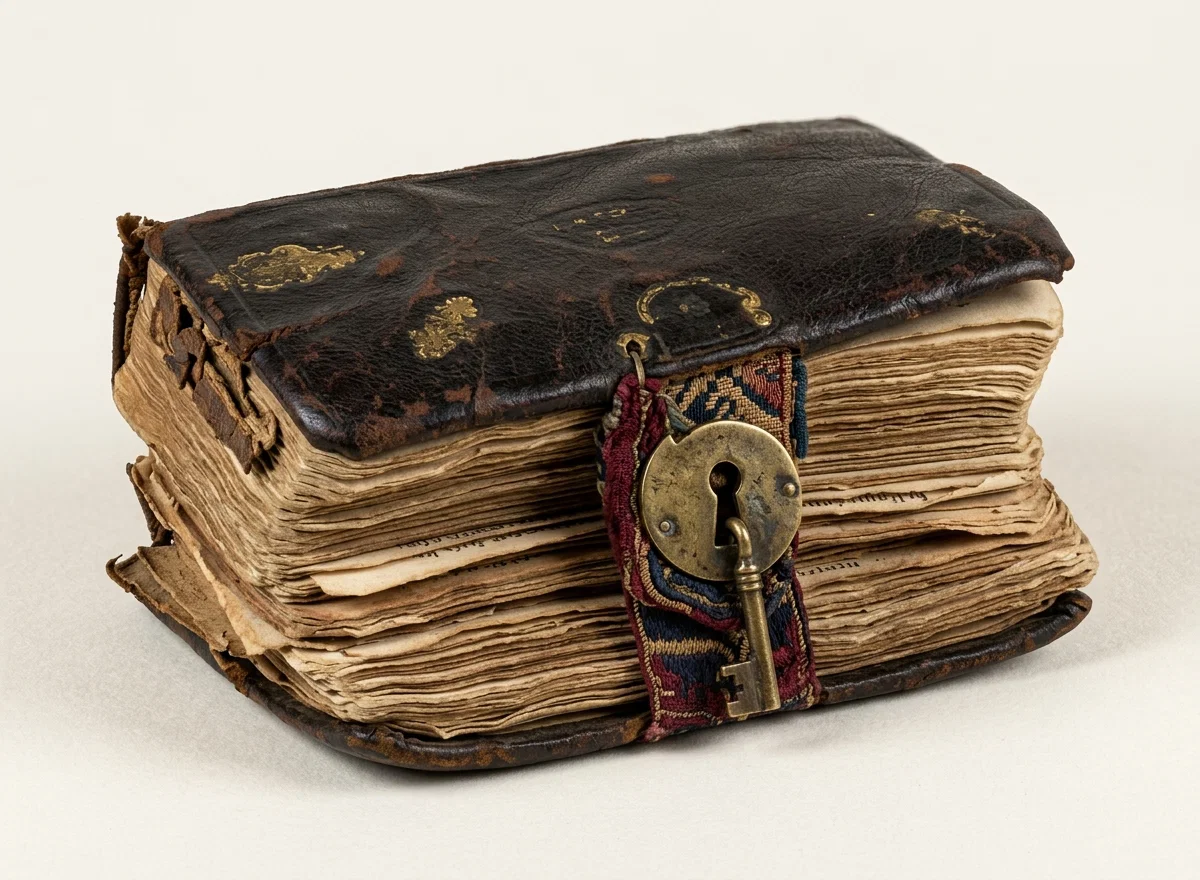
One of the treasures of the Bible House, London, is one of these buried Bibles. This copy of the Word was hidden in a cave which had served as the village smallpox hospital, fear of the place keeping out the spies of the persecuting officials, while the Christian believers found in it the light and comfort of heaven. The same blessed Word to-day is suited to every age and every condition.
THE BURIED BIBLE
THE BURIED BIBLE
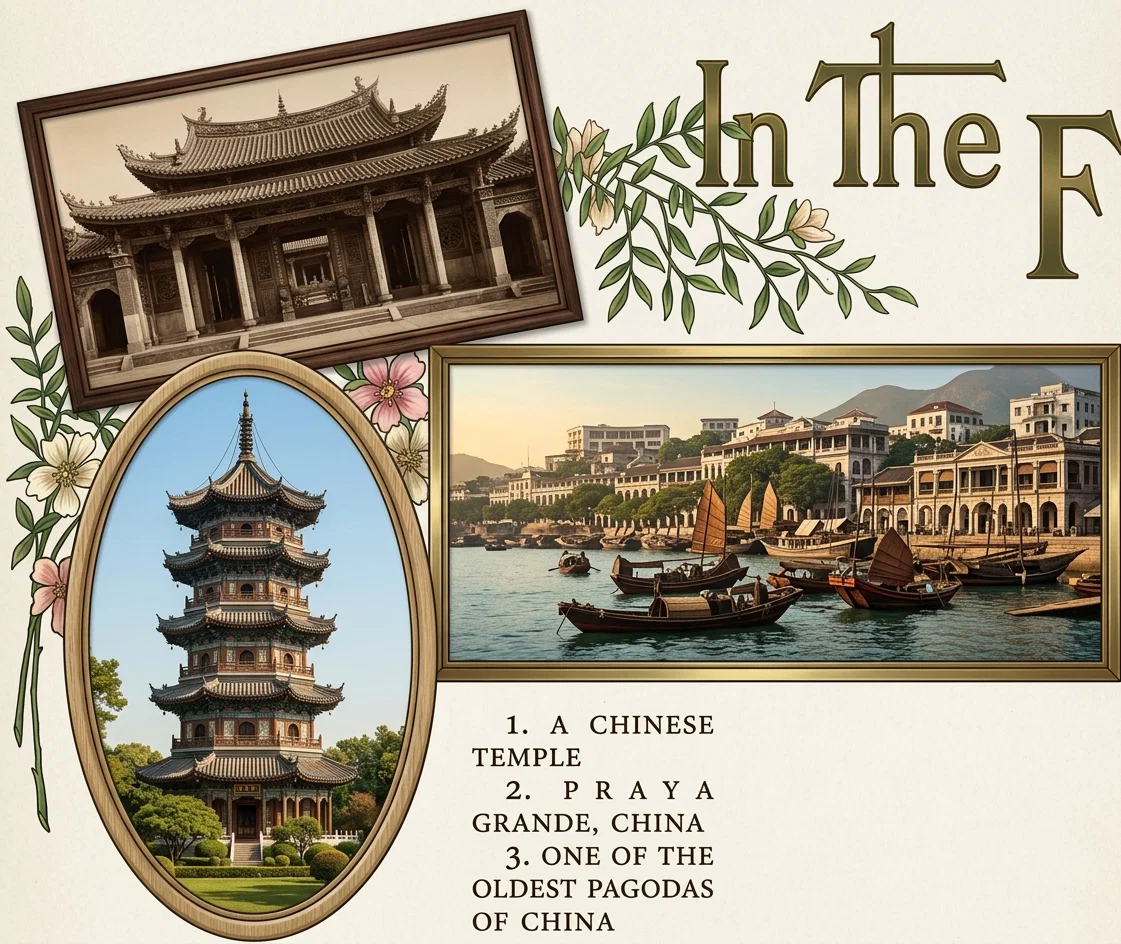
1. A CHINESE TEMPLE
2. PRAYA GRANDE, CHINA
3. ONE OF THE OLDEST PAGODAS OF CHINA
  1. A CHINESE TEMPLE
  2. PRAYA GRANDE, CHINA
  3. ONE OF THE OLDEST PAGODAS OF CHINA

Asking to Be Led Out of Hinduism

WE were visiting our station in the Tinnevelli district, South India, when we were informed that a delegation of five Hindu men had come to see us. They had worshiped idols all their lives, but had found no light in idol-worship, and wished to be taught how to become Christians. We explained that we could hardly open another station just now.
The leader said: “We have one hundred fifty children to send to your school; and now our hearts are inclined to turn from our idols, our minds are receptive, and we want to become Christians; but if we wait, we may lose our interest and not feel the need of turning from our idols. Now God has moved us.”
It would have touched any one's heart to see the disappointment in those men's faces as they realized that we were unable to help them. When we asked what they could do to assure us of their interest in the work, they promised two acres of land, but said they were too poor to put up buildings or to make a school self-supporting. There are four castes among them, and they have held aloof from one another for centuries; but they declare that all are now willing to worship and become Christians together.
Now is the time to give help to these people. Their hearts have been made tender by the Spirit of God, and with faithful labor many would be brought into the light of the gospel.
Lucknow.    W. W. MILLER.

The Wealth of the East

SOME centuries ago Marco Polo sent forth from the cells of a Venetian prison wonderful tales of a far East. Twenty years at the court of Kublai Kahn had made him familiar with wealth such as no king of the West might show. He told of ivory couches enshrouded with marvelous tapestries wrought in needlework; of sparkling jewels, cut with consummate skill and set in the yellowest of gold. All this he had seen, and he desired the newer world of Europe to share in the treasures he had discovered.
You all know the story and the sequel as well. The world was stirred to a maritime activity never known before. Commerce with the East became the great world project. Men like the “Merchant of Venice” risked all in ships, that perhaps they might come to share in this wonderful wealth.
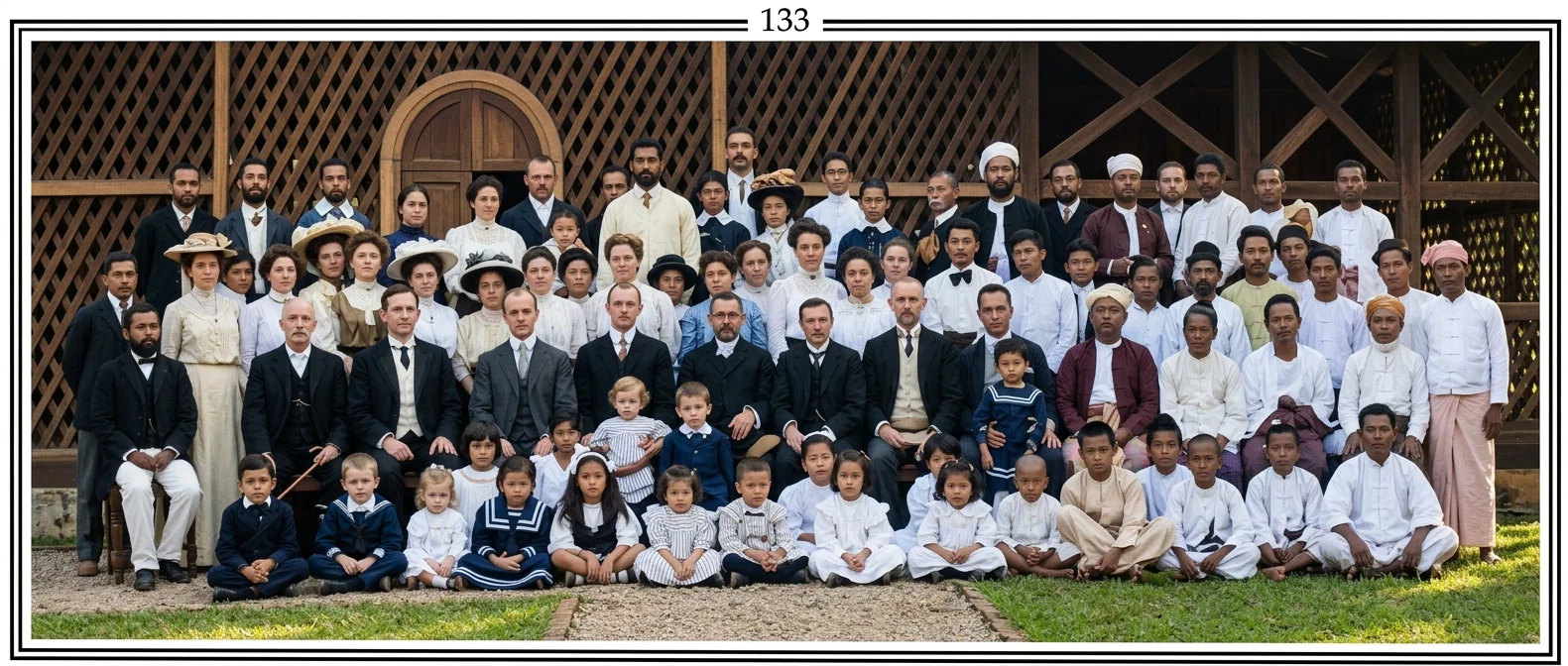
BELIEVERS ATTENDING A GENERAL MEETING IN BURMA
It called for bold spirits to brave the sea in those days; but men were not wanting, neither was money slow to come; for was there not untold treasure to be won? More ships, and more, followed those which never returned. The way was too long; there must be a shorter route. More men, more money, were needed. Men began to lose heart before the prodigious undertaking.
“I pledge my jewels!” It was a woman’s voice that bridged the crisis; for to her the enterprise was not merely commercial; she hoped that by this means the emblem of the cross might come to overshadow this rediscovered world.
In the Temple of Five Hundred Genii, in the city of Canton, a time-worn, smoke-begrimed bust of Marco Polo rests in the midst of a long line of Chinese gods; and as I have watched the incense smoke curling about this decidedly Western figure, in its equally decided Oriental setting, I have wondered at the ever-widening circle of influence this one man was able to create, and that, too, principally while a prisoner under the ban of his state. I have wished that our missionaries might emulate the irrepressible Venetian; that they might be so importunate, so insistent, in representing the actual possibilities of conquest for the kingdom of heaven, that there shall be created in the hearts of those in the home land an undying enthusiasm, which time shall not diminish, and an unflinching zeal, which no difficulties can checkmate.
Do you believe the great mines of the far East are worth the cost of working? Gems not to be bought for the worth of a whole world are lying in therough of heathenism, waiting. I have seen some that have been gathered, and testify to you that they compare favorably with any in our Western lands. Here, for instance, is a cluster of six. How our hearts beat with joy as we gathered on the banks of the river just outside the village of San-li-ti-en, in the province of Honan, to see them washed in the crystal stream, by baptism into Christ. That they were real gems no one could doubt who witnessed the shining faces that rose to newness of life.
One was Tsai. It was a sharp contest for a time as to which kingdom should have his service. Relatives besought and commanded, and held out official responsibilities in the province. But he esteemed “the reproach of Christ” the greater treasure, and is associated with editorial work on our Chinese paper. Another was Wang, son of a merchant. Father and son were traveling far from home when they came into a gospel meeting. So fascinated were they that it was decided to remain at the inn another day, and come to the meeting that night. Then the sojourn extended to ten days; and when the father had to go on, the son remained at the mission. He, too, is now connected with the publishing work.
Space forbids further details; but through the evangelistic work and the school work and by all means, jewel after jewel has been collected, daily increasing in value.
“Have you really found anything in China worth your effort?” one man asked me. “Yes; a hundred times yes,” I answered. For one of these souls the Master himself would have come from heaven to earth.
MRS. EMMA T. ANDERSON.
Canton.
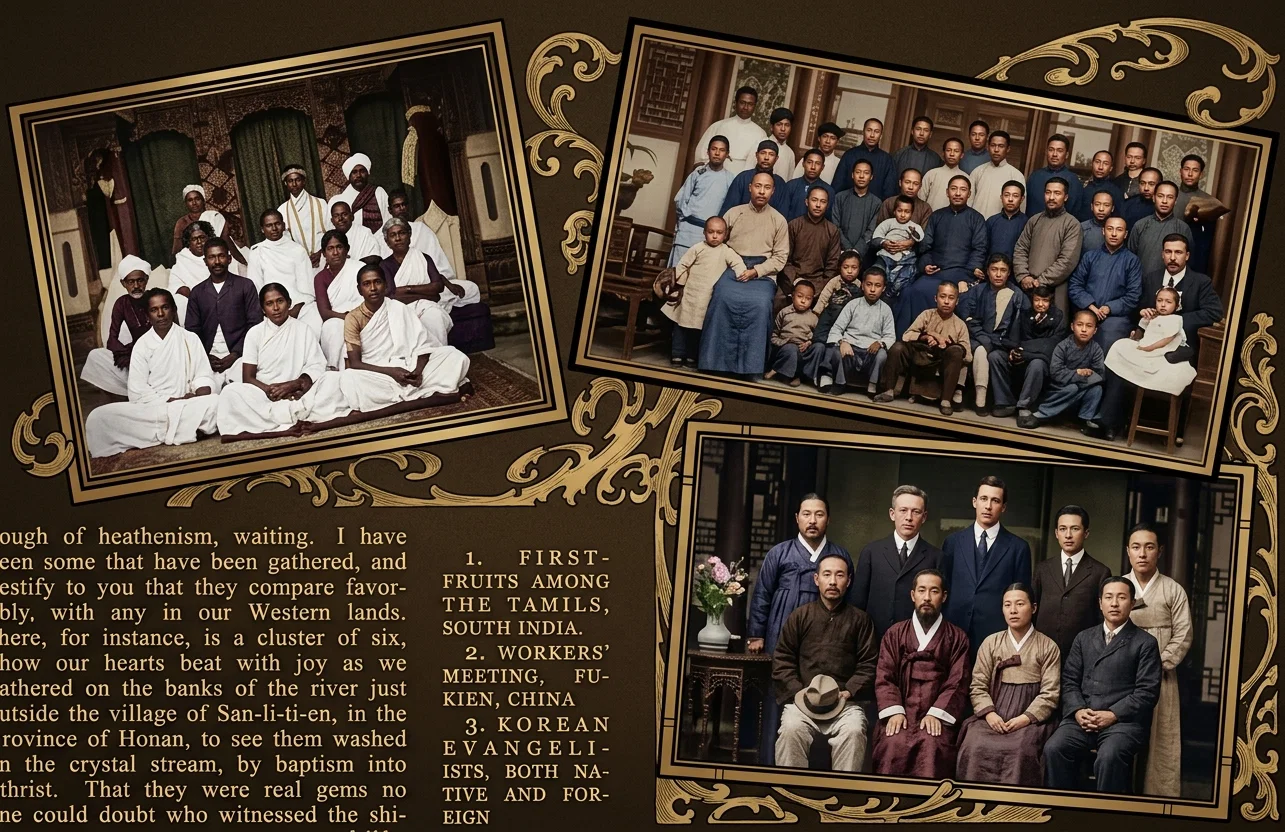
1. FIRST-
FRUITS AMONG
THE TAMILS,
SOUTH INDIA
2. WORKERS’
MEETING, FU-
KIEN, CHINA
3. KOREAN
EVANGEL-
ISTS, BOTH NA-
TIVE AND FOR-
EIGN
1. FIRST- FRUITS AMONG THE TAMILS, SOUTH INDIA 2. WORKERS’ MEETING, FU- KIEN, CHINA 3. KOREAN EVANGEL- ISTS, BOTH NA- TIVE AND FOR- EIGN

A Japanese Farmer's Experience

Translated from Owari No Fukuin ("Gospel for the Last Days").
It was the busy time of setting our rice. I planned to finish setting a certain ground by Friday; but being unable to do so before the Sabbath, had the rice-plants pulled, expecting to continue the work after Sabbath. But on Sabbath it began to rain, continuing for a week, flooding the land. Then I finished setting the rice. But the plants that had lain for a week looked very bad. Some of my neighbors mocked me for what they called my foolishness in keeping the Sabbath, and indeed the plants did look half dead.
It worried me somewhat to be thus mocked. But nature helped my rice-field; and when harvest came, I had the best crop in the whole village. Thereby I learned this lesson: That while everybody desires to have a good crop, our efforts do not entirely decide the result. And now I give this testimony, that if we only work, and trust in God, he will harmonize our efforts with the work of nature. This is truly wonderful.
K. NEMOTO.

A Land of Unevangelized Villages

WE were prospecting for a new headquarters site in eastern Bengal, Brethren A. G. Watson, L. G. Mookerjee, and I, traveling much by boat on river and canal. On our way to Madaripur we passed thousands of villages swarming with Bengali people. The vast majority of them know nothing of Christ and the gospel. As we saw these countless villages, and realized that beyond the mile or two of our vision, on each side, lay hundreds of miles in the same condition, we had brought home to our hearts very forcibly the great work before us, and the need of more laborers for the Lord's harvest. When will these millions for whom Christ died receive the warning? Who will accept the burden, and come over and help us give the last message of mercy before it is too late? My dear brother or sister, as you read of these millions who sit in darkness, ask yourself the question, Have I done my duty by them? or is God calling me to bring to them the light of life?
J. C. LITTLE.
Barisal, Bengal.

The “Name” Unknown

“Does this Jesus live in Poona?” This was the question asked in one village, as we were seeking to locate a new station among the Marathi-speaking people of western India. No Christian had ever entered their village, they told us. They had never even heard of the Name by which alone men can be saved.
In one town a deputation of the Mohar caste came, promising that if we would but start a school for their boys, they would permit us to take in also the Mang boys—of a lower caste—to sit alongside their own. “Kindly grant our petition,” was their parting word; “for no one takes an interest in us, no one cares for us.”
G. F. ENOCH.
Indapur.

The Teacher's Wife Knew

We have had the privilege of seeing our language teacher give his heart to the Lord. The teacher class is the hardest class to reach, and we feel greatly encouraged at seeing this man decide for Christ.
One of the best evidences we have of his true conversion is the testimony of his wife. She has told her neighbors, “Surely my husband is a different man since he became a Christian; he is so good to me.” Then she told of the many things her husband did for her that the ordinary Chinese husband would not think of doing for his wife.
The change in her husband has made the wife anxious to study the gospel, and now she is learning to read.
F. A. ALLUM.
Cheo Chia K’o, Honan.

A Heathen Mother's Example

ONE day as I walked through the grounds of a large Buddhist temple, I noticed a mother, with a baby strapped on her back, approach the bronze image of Buddha. She took the heavy ropehanging in front of the bell, and struck it two or three times to awaken the god, if perchance he might be sleeping. Before the bell had ceased vibrating, clapping her hands together, she bowed as she offered up her petition. Her baby was only about two years old; but as soon as the mother had finished, she put the baby's hands on the rope, and helped her strike it. Then the child put its hands together, and bowed its head also for a moment or two.
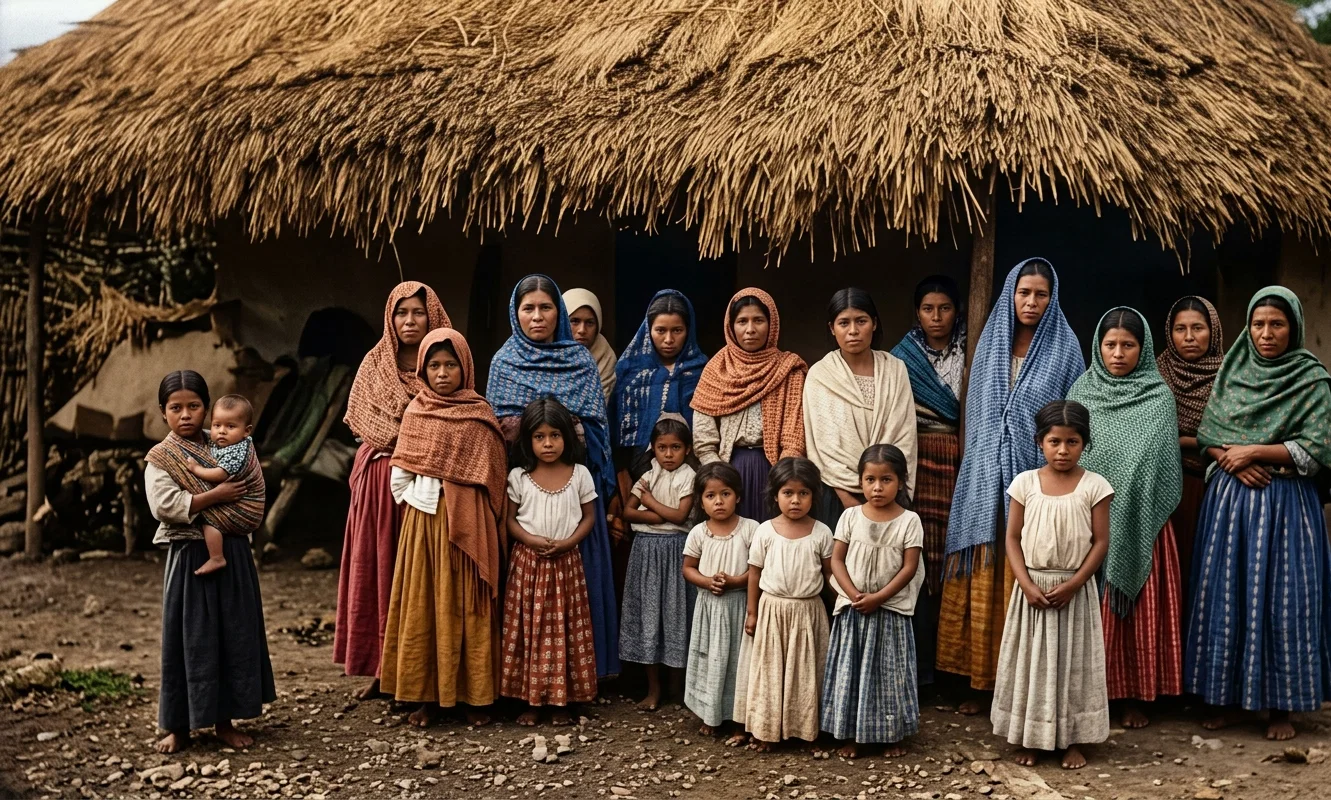
WORKING WOMEN AND CHILDREN OF MEXICO
Those who serve Satan are wiser than many Christians. O that Christian parents would as faithfully instruct their children to reverence Jehovah and his worship! Shall it be said of us that the heathen are wiser in their generation than we?
W. C. DUNSCOMBE, M. D.
Tokyo, Japan.
Continue reading: Home Life in Chang-Sha, the Center of the Recent Uprising