Home Life in Chang-Sha, the Center of the Recent Uprising
By Dr. Emma P. Laird
THE women of Chang-sha enjoy considerable liberty, though foot-binding and other customs confine them closely to their homes. In the better families, women seldom go on the streets except in covered sedan-chairs. In wealthy homes, children are reared by a wet-nurse. Relieved of care and responsibility, the mothers readily resort to the water-pipe for smoking tobacco, or card-playing and other kinds of gambling; and, alas! too often they fall victims to the terrible opium habit, which has slain myriads.
I have been inviting the women and children to my home two afternoons each week, for Bible study, prayer, and singing. Never having attended a Christian meeting before, these women know nothing about order and quiet. When one point has been told them, it is necessary to rehearse it again and again. They often ask questions, which our Sabbath-keeping women are very ready to answer. After about an hour's study in this simple way, Bibles are laid aside, unless some desire to question further, and they are invited to see my little three-room house, which is an object of great curiosity. Their first question is, invariably, 'How do you get the floors so clean?' The foreign cook-stove is also a marvel to them. 'How wise the foreigner is,' they say, 'to make a stove so that no smoke nor ashes will come out into the kitchen, and that will cook so many things at one time.'
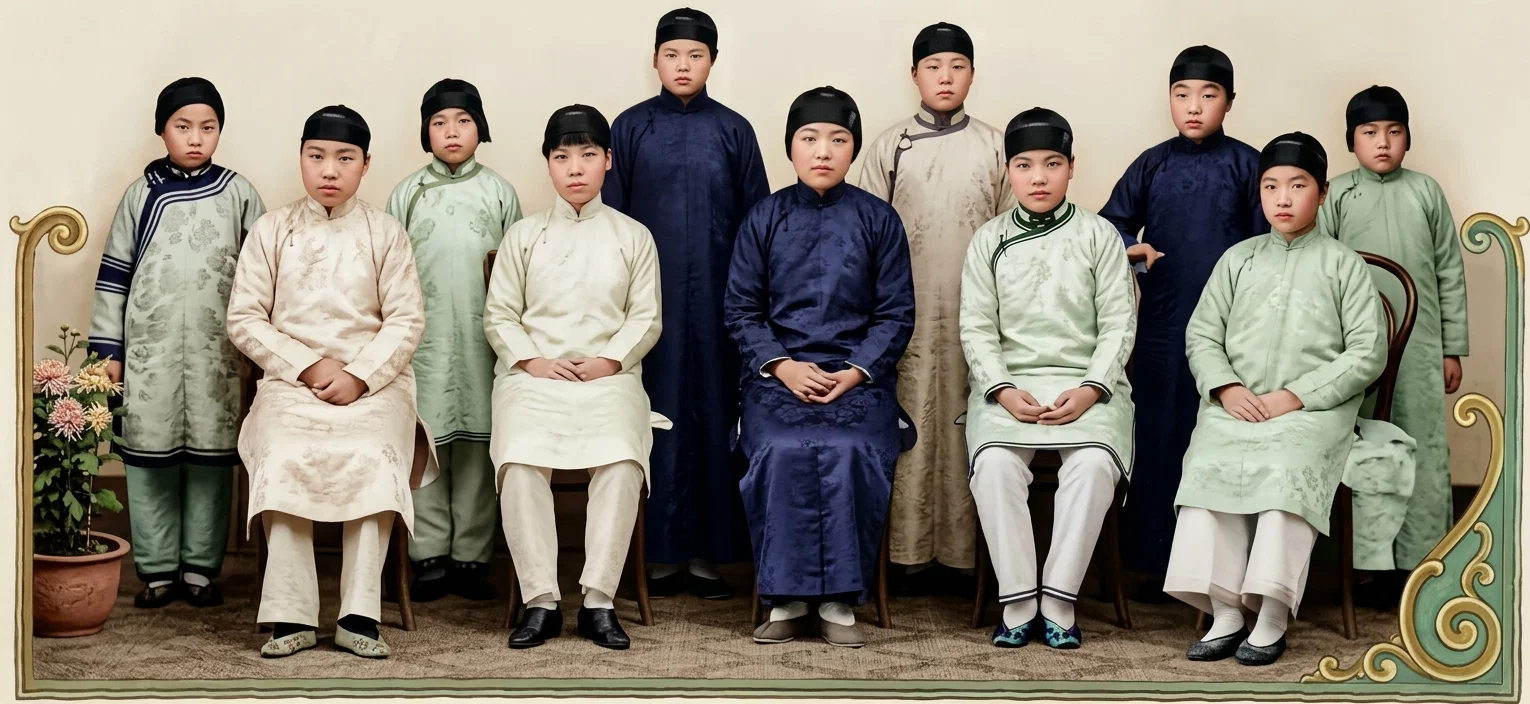
PUPILS OF THE CANTON (CHINA) GIRLS' SCHOOL
I am training our own women as fast as possible, so that they may be able to give Bible readings and visit the women in their homes, thus opening the Word of life to thirsty and hungry souls. They take great interest in their daily study.
What do you plan to do for these very interesting women during the coming year? You can have as definite a part in this work as those who are in the field, by remembering the work in your offerings and in earnest prayer.
DR. EMMA P. LAIRD.
Chang-sha, Hunan.
Emergency Work by the Missionary Nurse
THE work of the missionary nurse is not confined to women and children, especially in village dispensary work. Here is a note from such a nurse, Sister Louise M. Sholz, in Bengal, India:—
“Only the other day a man came who had fallen, and cut his leg almost halfway through. We had to put him under chloroform. He was very strong, and we did not have enough chloroform, so I tied him on the table, and two men and three girls held him. He had had enough of the anæsthetic so he did not realize what we did. I had to put in about twenty stitches. The man is getting along well, and the wound is healing. In this place I must do, many times, the work of a doctor, as there is no physician here. I leave the results with Him who is able to heal, and who says, ‘Be not afraid, neither be thou dismayed: for the Lord thy God is with thee whithersoever thou goest.’”
A VIEW IN FUKIEN, CHINA
“To-day we are going on a large cart to see an aged Mohammedan woman to whom we have given seven treatments for lumbago. Before coming to us, her back had been burned with a hot iron, to cure it. When we arrived at her home the first time, the room was filled with natives. I suppose nearly the whole village was present while we treated the woman. How thankful these people are! I only wish I could impress upon them that it is not I who heals, but God, through me. I can see how he gives his healing power, as I am called many times to severe cases, and without a physician.”
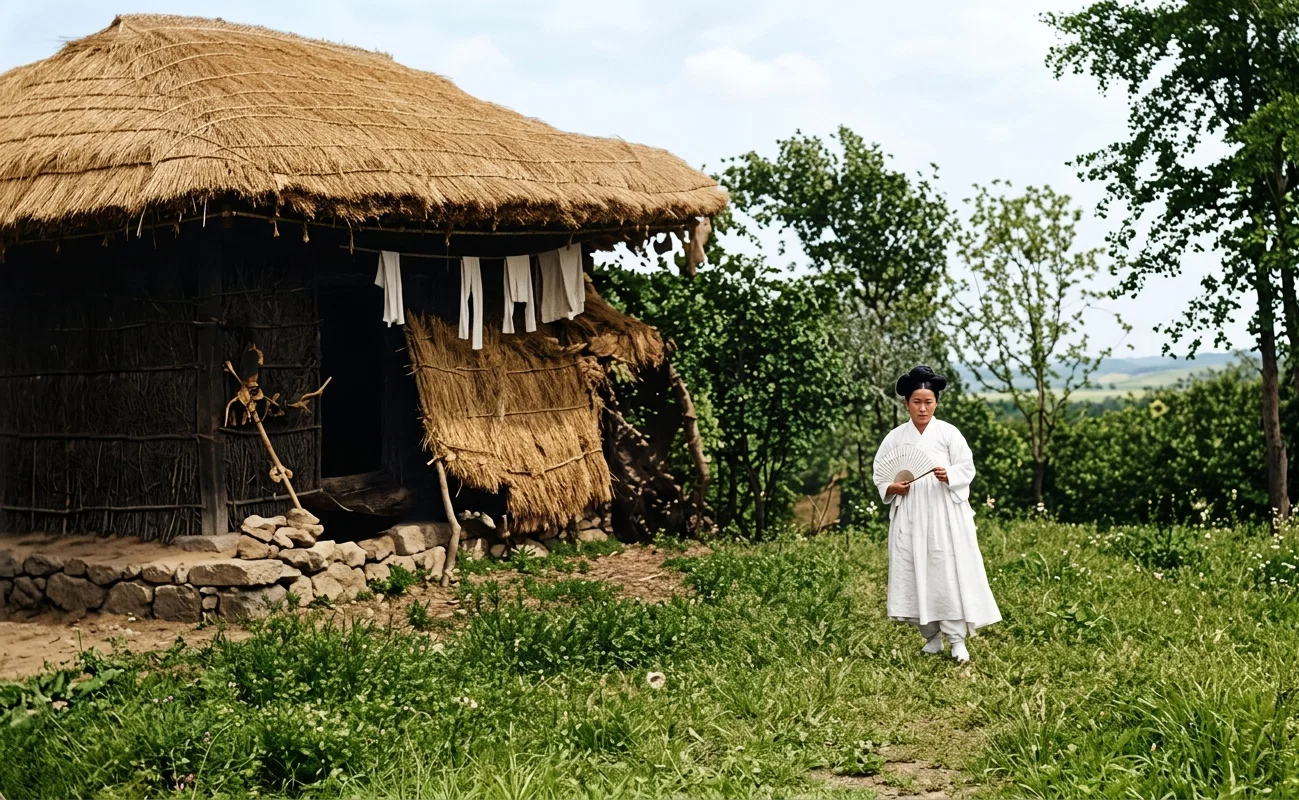
On Tour in Korea
By C. L. BUTTERFIELD
OUR women missionaries are sometimes called upon to do itinerating work, which may mean very nearly “roughing it,” as the following experience will attest:—
Miss Mimi Scharffenberg and Miss May Scott were visiting among the churches. Miscalculating the time, they were caught out in a storm and overtaken by darkness, so that they could only let the horses pick their way, which the animals did, bringing them safely to an inn at their destination. The accommodations at a Korean hotel for travelers consist simply of a hot floor (the flues running beneath the floor), with no bedding. In such a hotel, Sisters Scharffenberg and Scott spent the night.
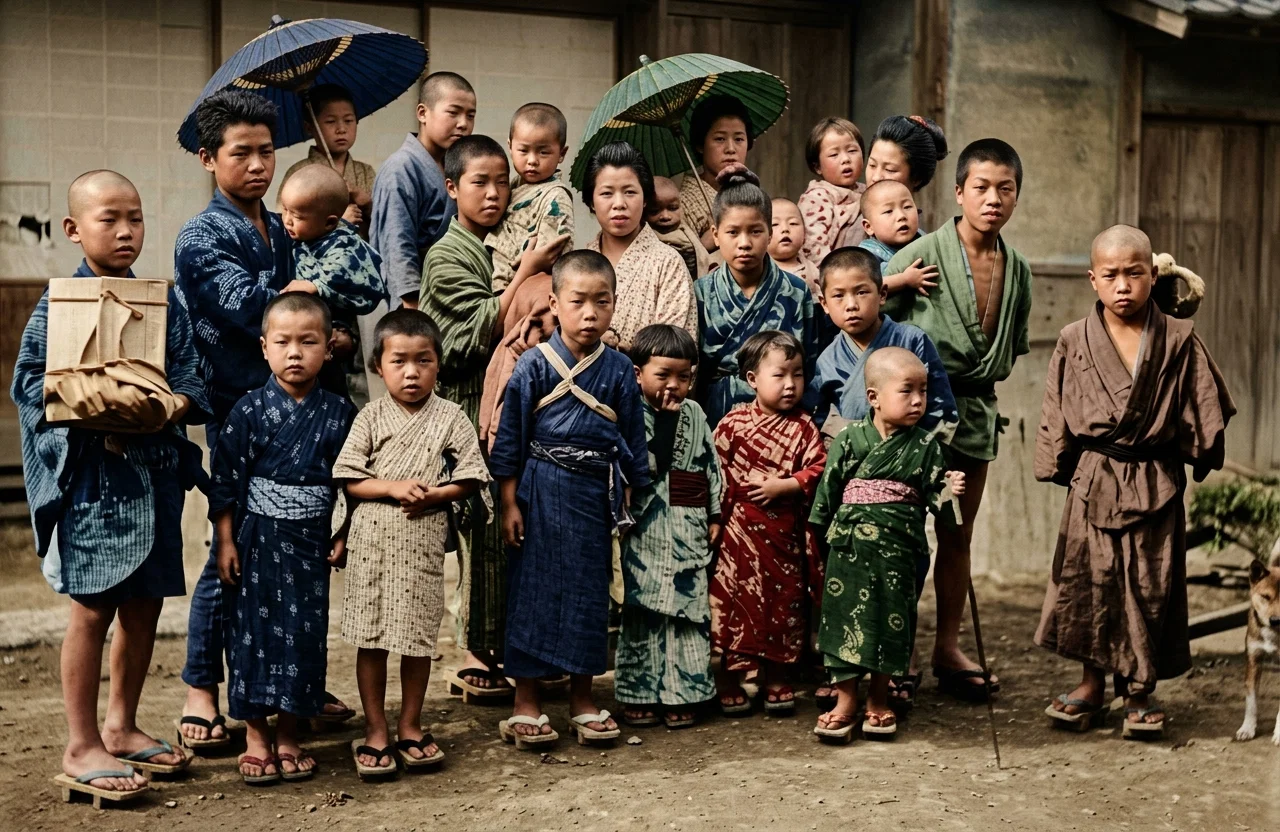
GROUP OF STREET CHILDREN IN JAPAN
Their bedding, which they had brought with them, was spread out to dry, and they lay down on the hot, hard floor in their wet clothing. Morning came at last, and their clothing was dry. That day they went to visit a new company three miles distant, taking only their Bibles, as they expected to return in the evening. But the people insisted that they spend the night there also. This meant that they would have to sleep in the newly built church. The floor was hot, but as it had never been used, it was also damp. Good could be accomplished by staying; so they remained, although the steam from the heated floor wet their clothing the second time. As they went on their way, in the morning, they passed a little stream of clear water, which served as a mirror while making their morning toilet.
Are all the children in? The night is falling,
And storm-clouds gather in the threatening west;
The lowing cattle seek a friendly shelter;
The bird hies to her nest;
The thunder crashes; wilder grows the tempest,
And darkness settles o’er the fearful din;
Come, shut the door, and gather round the hearthstone—
Are all the children in?
Are all the children in? The night is falling,
When gilded sin doth walk about the streets.
O, at the last, it biteth like a serpent!
Poisoned are stolen sweets.
O mothers! guard the feet of inexperience,
Too prone to wander in the paths of sin;
O, shut the door of love against temptation!
Are all the children in?
Are all the children in? The night is falling,
The night of death is hastening on apace; The Lord is calling, “Enter thou thy chamber,
And tarry there a space.”
And when he comes, the King in all his glory,
Who died the shameful death our hearts to win,
O, may the gates of heaven shut about us,
With all the children in!
ELIZABETH ROSSER.
Gaston, Ore.
Under Evil Influences
By Mrs. Eva Allum
ALMOST all Chinese women believe in Spiritualism, and they will tell how the spirits come and touch them, and converse with them.
One of our Bible women recently told us how the spirits tried to trouble her, but she began to sing, in a loud voice, “Revive Us Again,” and the spirits left her. She told us that at one time she had been a Spiritualist medium. Chinese women think that evil spirits can do much harm, and that they are responsible for most of the sickness of themselves and children. I have seen women stab their children with a needle till the blood flowed, in order to frighten out the evil spirit. It is not lack of affection, but ignorance. We have a faithful old woman with us who has been an earnest Seventh-day Adventist for over two years, but who, years ago, killed one of her children in this way.
Sometimes the men at our mission are quite a numerous company before a woman can be induced to come, and she, practically always, is one whose husband is a Christian, and who at home for some time past has already knelt at the family altar. Once the ice is broken, it is not difficult for others to follow.
Mrs. EVA ALLUM.
Honan.
Turkestan and Tartar Land
By J. T. BOETTCHER
SHEIK OF SYRIA
Turkestan
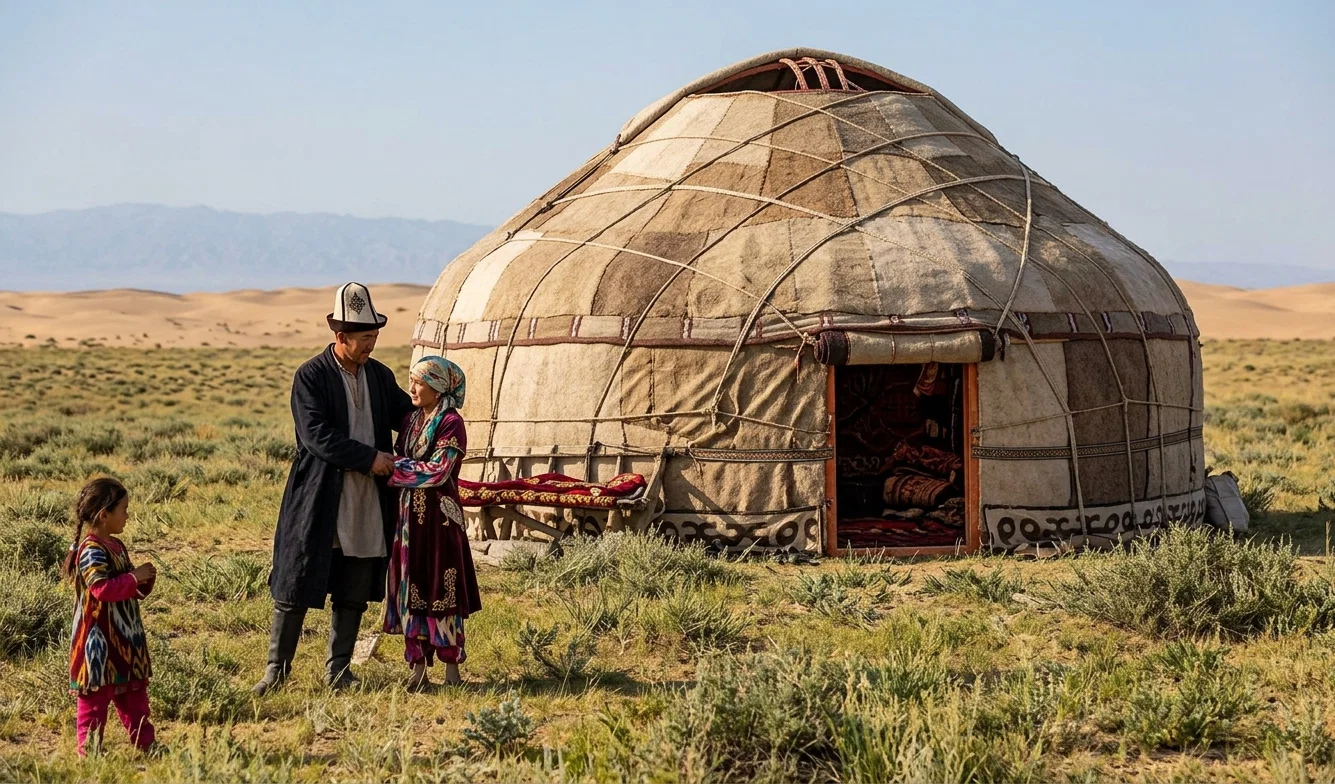
An interesting feature of my trip to Turkestan was the Kirghizen tent. Sometimes three or four of these tents stand in a group. The dwellers in the tents engage in prayer at sunrise and at sunset. They spread their carpets, wash their feet, and then, kneeling toward Mecca, chant their prayers, bowing till they touch the ground many times with their faces. They never forget nor fail to perform these morning and evening devotions. If they are on a journey, they dismount by some pool of water, wash, and pray. There is devotion enough among them, but no Christ. Their religion is a religion of works.
In their tents there is no furniture. They sleep on mats spread on the ground. In the center of the tent is the fireplace, where their rice porridge is cooked. There is no escape for the smoke except through the top of the tent. In the summer there is an opening, but in the winter there is none, and the smoke remains inside.
The women are very poorly clad, and usually remain at home, while the men are off to make a trade of some kind. They never go on foot, but ride camels, donkeys, horses, oxen, and even cows. Often two persons ride on one beast. They are honest and upright in trade, and one feels perfectly safe among them. They have many traditions from Old Testament history. For instance, I was given a rod which by them is called "Moses' staff," and was told that any one carrying it would be received in friendship by the Kirghiz.
Although I could not understand their language, there was one word which I recognized. It is a word they use in exchanging greetings, "Salem," coming from Jerusalem, and meaning "peace." But true peace of heart they know nothing of. It is for us who know the peace of God, which passeth understanding, to give to these in heathen darkness a knowledge of the blessed gospel.
J. T. BOETTCHER.
Riga, Russia.
Across the Tartar Border Into Siberia
By Mrs. J. T. Boettcher
AFTER a long journey from across the border in Asia, we reached this beautiful spot, many miles from any village, in the edge of the woods beside a small lake, where a company of believers had gathered. Here we are holding our first tent-meeting in Siberia. We expected to build a booth of the branches and leaves from the trees in which to hold our meetings, but were surprised to find a tent pitched, capable of seating one hundred persons.
A KIRGHIZEN TENT ON THE GREAT SAND DESERT OF CENTRAL ASIA
Near the lake on the land of our brethren stands a Kirghizen tent, just like those seen in Central Asia. It is the home of a Kirghizen family, who herd the cattle of the settlement. Last Friday, while looking about, we passed this tent, and went inside to visit the family. The tent is round, and contains an astonishing number of things. In the center was a fire from little sticks laid on the bare ground, the smoke escaping from an opening in the top of the tent. There were no chairs.
Our brethren tell us that these Mohammedan people are very trustworthy as herders. This afternoon, while we were singing our hymns by the side of the little lake where a young man had followed his Lord in baptism, two of the Kirghizen women came out of their tent to join us and listen to the singing. We shook hands with them to make them feel welcome, and later three of them attended one of our meetings.
After the meeting was closed, and the tent taken down, and we were packing our things to leave, the Spirit of the Lord still worked in a wonderful manner upon the people. The wife of one of our brethren said, with tears in her eyes, that she desired baptism. The brethren and sisters met together to pray, and to examine this young woman, who had resisted the Spirit of God for many years. When it was decided to have baptism at once, the son of Brother H. K. Loebsack, a promising youth of sixteen, and his sister, a bright little girl of fourteen, confessed that they had been under conviction during the meeting, and that they knew they ought to take this step. Men and women wept for joy as we left our packing, and proceeded once more to the lake, singing as we went. It was about nine o'clock in the evening, and the baptism was a most beautiful scene. All decided that the close of the meeting was the best part of all.
MRS. J. T. BOETTCHER.
On the Altar
SOME must give far more precious gifts than gold and silver. When the cable brought word of the death of Elder F. L. Mead, of our first Matabeleland station, the message was sent to the aged mother that her only son had laid down his life for Africa. By divine grace she was able to return answer from the old New Hampshire home:—
“My heart aches for the dear ones left there, and for the work he loved so much. But ‘God is my refuge and strength, a very present help in trouble,’ and he cheers and comforts me with the precious promises of his Word. I felt it when they went away; but they felt it duty to go, and I would not hold them back. I laid my sacrifice ON THE ALTAR OF AFRICA then, and I have never taken it back, and I hope I never shall, ‘The Lord liveth; and blessed be my Rock.’ I know he can give beauty for ashes, and the oil of joy for mourning, for he has done it for me, and he can do it again in his own time and way.”
Two Scenes in a Nyassaland Village
By J. C. ROGERS.
I CAN imagine a brother, a sister, who has never seen a heathen village, who was born in a Christian land, with the light and blessings of ages all about him, saying: “I am always hearing calls for missions,—money for missions, weekly offerings, yearly offerings, special offerings. I am tired of giving. I can’t afford it.”
POINT VENUS, TAHITI
Come with me, brother, sister, along a foot-path through the woods. Now we hear drums, tom-toms. Now we are nearer, we hear wailings, weird, heart-breaking. Leave the path now; go quietly, keep hidden behind trees. The wailing sounds are women’s cries.
See! there about that large hut are all the women of a dozen villages. A child is dead. Look! they bring beer and food, a sacrifice to the evil spirit. Again the wailing. You are a mother, a father. I need not show you more.
But come with me to the other side.
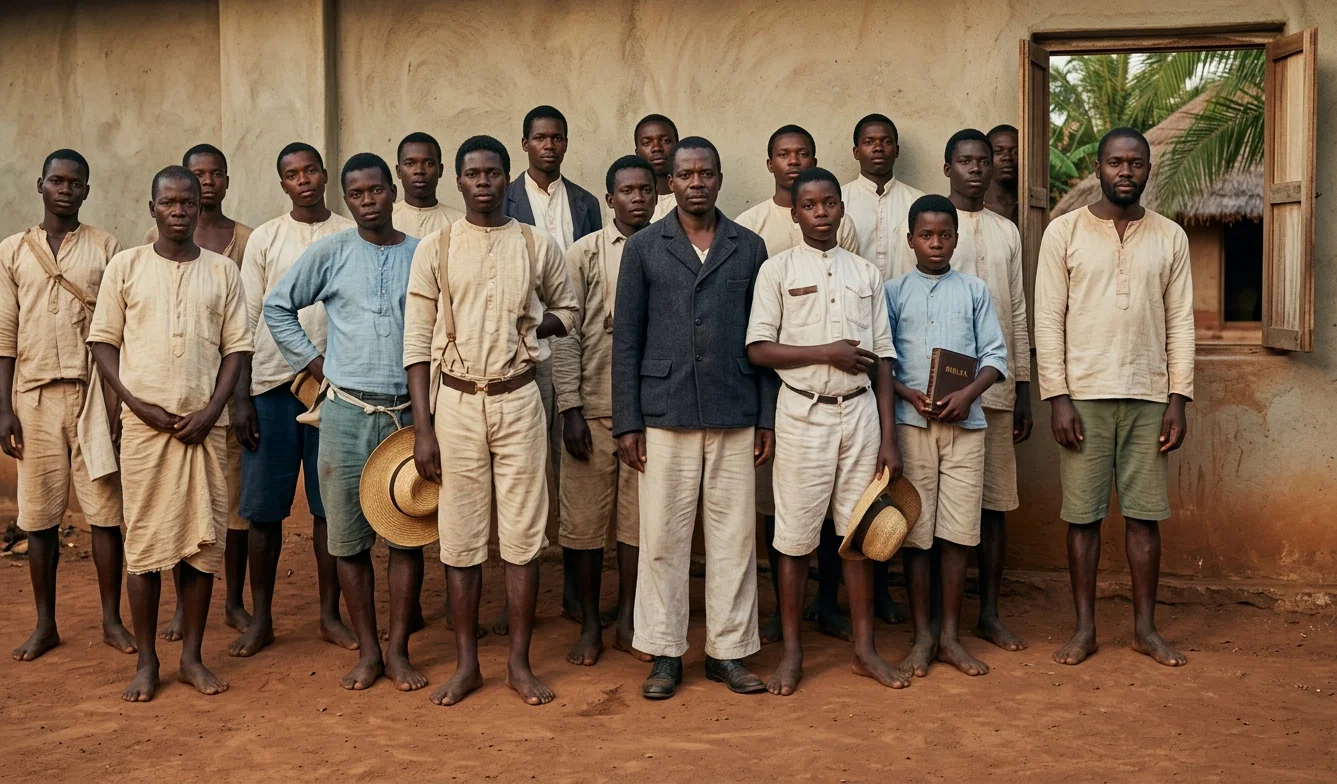
NATIVE TEACHERS, NYASSALAND. THE YOUNG MAN BY THE WALL, AT RIGHT EDGE OF WINDOW, WAS A SLAVE HUNTER BEFORE ENTERING OUR SCHOOL.
Two hundred men and boys are in the court. Now the women are coming also. They are gathering round some one. Listen!—
(“What a Friend we have in Jesus,
All our sins and griefs to bear.”)
It is one of our teachers, leading these heathen in their own tongue in that blessed hymn. Now he prays with them, and opens the Book which they have never seen. He reads, in their own tongue, words of life and comfort to the mourners.
He tells them how Jesus died and rose again, and that he died to save them also. This same teacher will come again and again, until these people put away their sacrifices for the dead, and learn to hope in Jesus.
We will open a school in that same heathen village, where some teacher will hold services every Sabbath. Some will be converted and baptized, and no doubt two or three teachers will be developed who will go to other villages. So the message will extend till all this land hears the gospel of the kingdom.
Are you sorry that you gave ten cents, ten dollars, a hundred dollars, to clothe and feed these evangelist teachers while they preach the Word to their people? I listen for your answer, and seem to hear you saying, “O, that I had a hundred lives to spend; and more means to give, for the saving of these poor souls who never tasted a Saviour’s love!” Such an answer from every one of us will soon see the work of the gospel message finished, with a glorious ingathering of souls. Let the glad time be hastened. J. C. ROGERS.
Malamulo Mission.
Native Teachers
OUR Nyassa superintendent says: “Every teacher is a preacher. It is in him. He must preach. Look at them,—Simon, in center front, from a village where his chief sells his daughters; Moses, by the window, a real warrior a few years back, catching slaves and killing; Malinki, at the right of Moses, head teacher over four village schools; Enoch, at extreme left, chief over ten villages. But the story of each life, now consecrated to Christ, would be too long.”
What Dollars Will Do in China
The superintendent of one of our Washington Sabbath-schools wrote on the blackboard, “A dollar a day for missions,” as the aim in the class contributions. Dr. A. C. Selmon, of China, who has since returned to his field, happened to be present that day. His eye caught the motto, and he jotted down three things, any one of which “a dollar a day” for one year would do in China:—
“1. This $365 would fit up two dispensaries, where hundreds of patients could be treated and cured of sore eyes, ulcers, malaria, etc. Judging by our experience, these two dispensaries would save from fifty to a hundred lives from suicide by opium. Besides, thousands of pages of literature would be scattered, and gospel talks unlimited be given.
“2. It would support fifteen Chinese Bible women, who never fail to get the women and girls of non-Christian homes to listen to the gospel.
“3. It would support twenty-three boys or girls in one of our boarding schools, to be trained as workers among their people.”
This illustrates what regular systematic giving, even in small amounts, will accomplish for the cause of missions.
Cheerful Giving
“He which soweth sparingly shall reap also sparingly; and he which soweth bountifully shall reap also bountifully. Every man according as he purposeth in his heart, so let him give; . . . for God loveth a cheerful giver.”