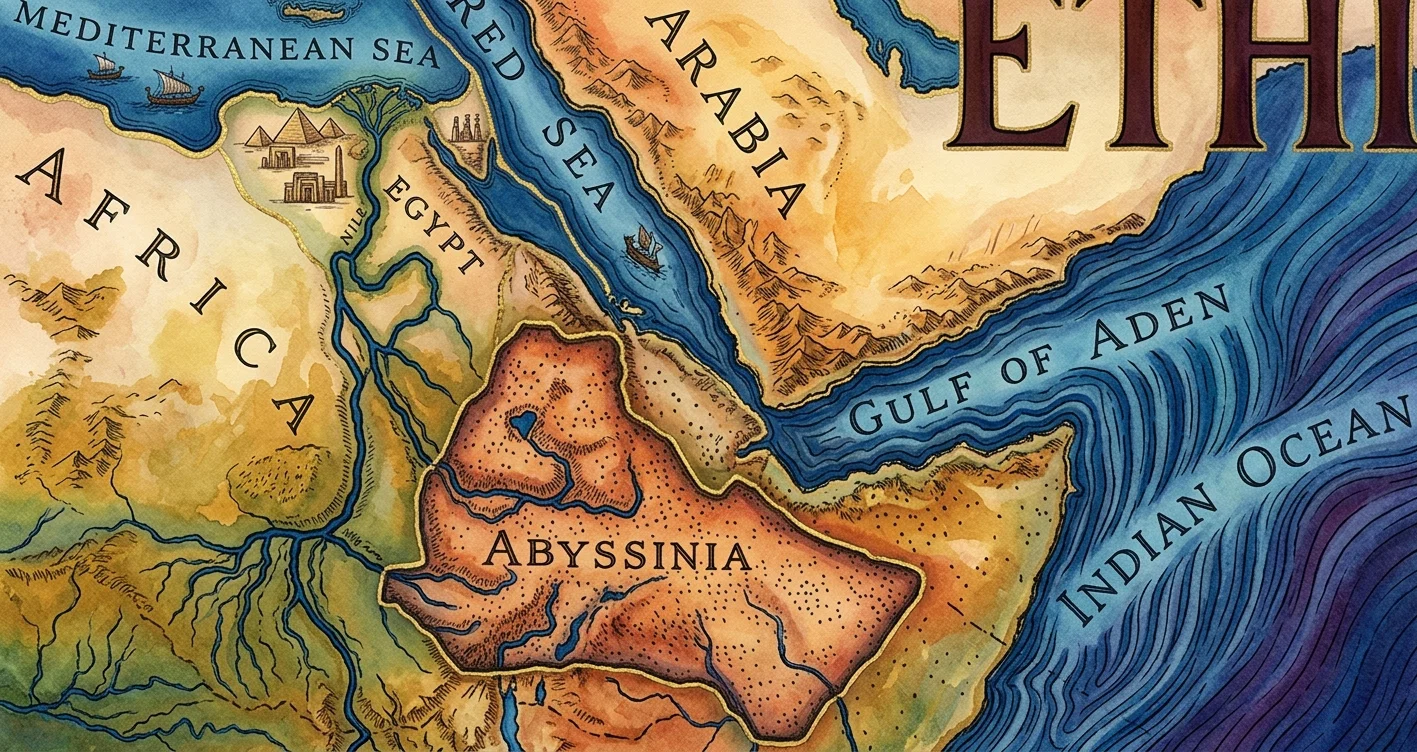
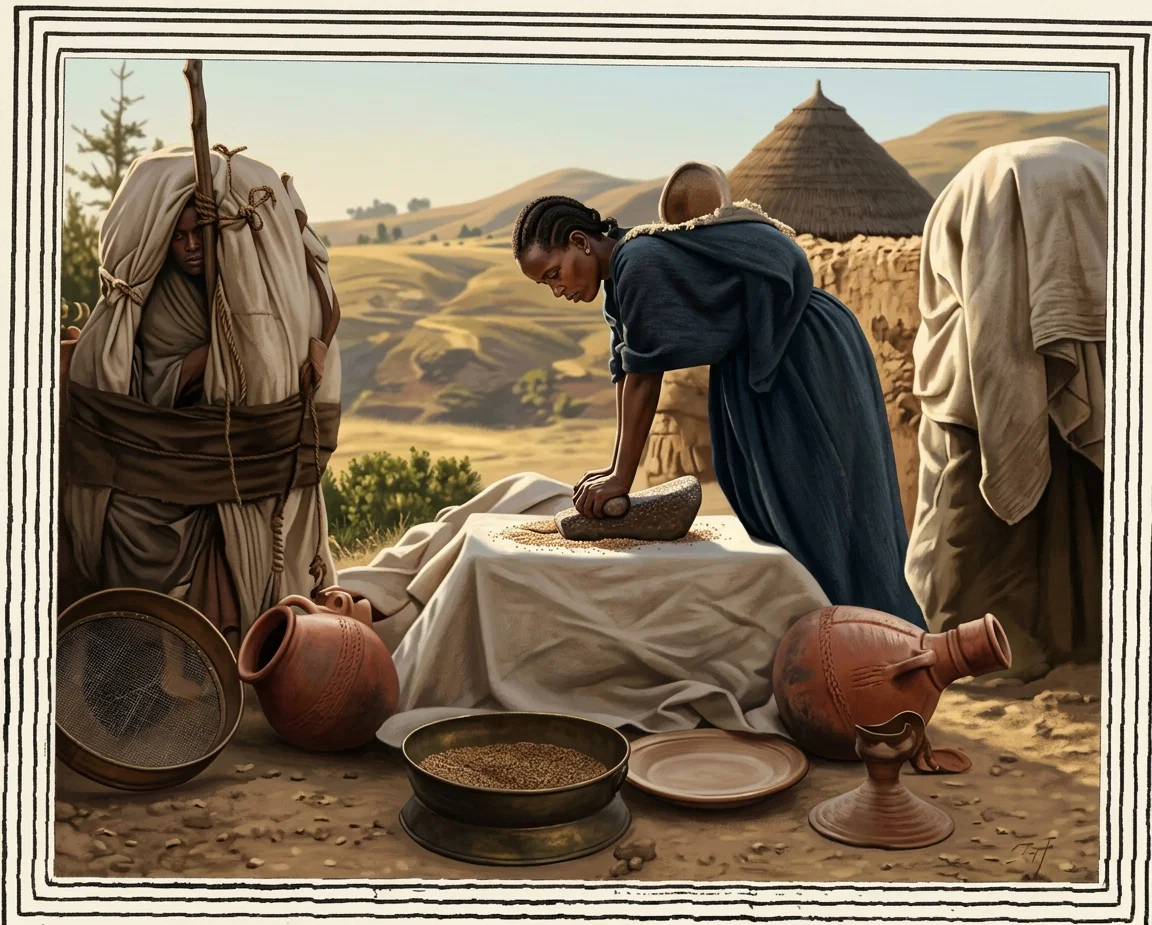
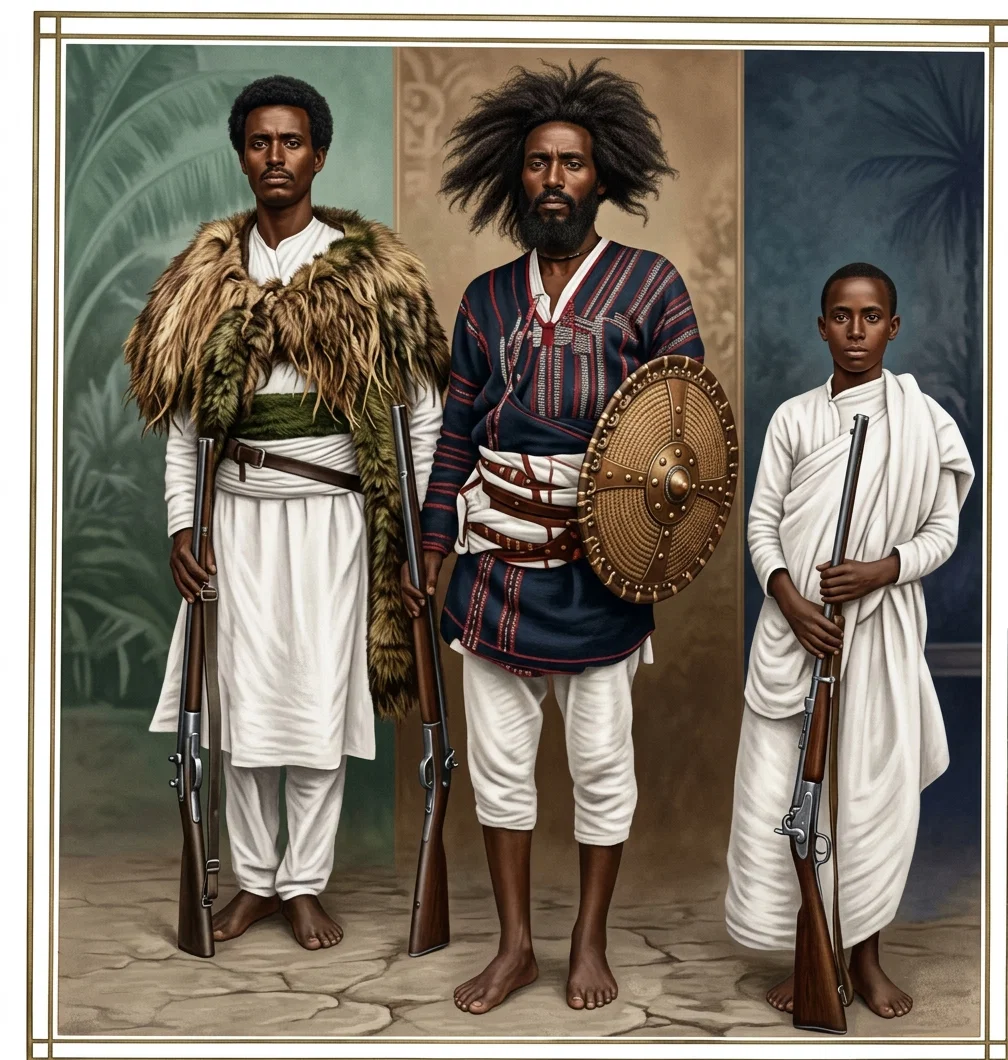
ABYSSINIA, called by the Arabs “Habesh,” signifies mixture, or confusion,—a very fitting term in view of the diversity of its inhabitants, and the strife waging among them. The great wedge-like plateau of ancient Ethiopia rises on the west side of the Red Sea to a height of eight thousand feet, sloping gradually to the west, its watercourses forming the Blue Nile. The ten million inhabitants of the highlands and the coast are made up of the Abyssinians proper, who show their Semitic origin in their brown color, becoming quite dark toward the north, the Arabs, the Jews, the dark Gallas, the genuine Negroes, and the various shades of mixture between.
Their religion and language are as varied as their color. Along the coast the Arabic and Somali tongues prevail, and with them the Mohammedan religion. In the highlands the Amharic, Tigre, and Tigrinya are used by the Abyssinians, who are nominal Christians. Interspersed among these are the Falashas, or Jews, who have a dialect of their own. To the south live several million Gallas, still mostly heathen, who use different dialects of the Galla tongue.
All the coast land is under British, French, and Italian rule, Eritrea, a possession of Italy, including some of the highlands.
Abyssinia proper is ruled by the Negus, who, associating himself with the religious traditions of the country, claims descent from Solomon, and has the Lion of the Tribe of Judah, with the cross, in his coat of arms. As absolute ruler over all his subjects, he styles himself king of kings.
The history of Abyssinia is of intense interest. That worship of the true God must have been known here at an early date, may be inferred from Acts 8:27. Christianity was introduced about the fourth century, and gained such strength that in A. D. 522 King Caleb, in order to protect the Christians in southern Arabia, made war upon that country, and held it under subjection for more than fifty years. But with the rise of Mohammedanism, the latter spread over the coast lands, and the highlands themselves were also threatened by its influence, so that in the sixteenth century the Abyssinian rulers were compelled to implore the aid of the Portuguese for their own preservation.
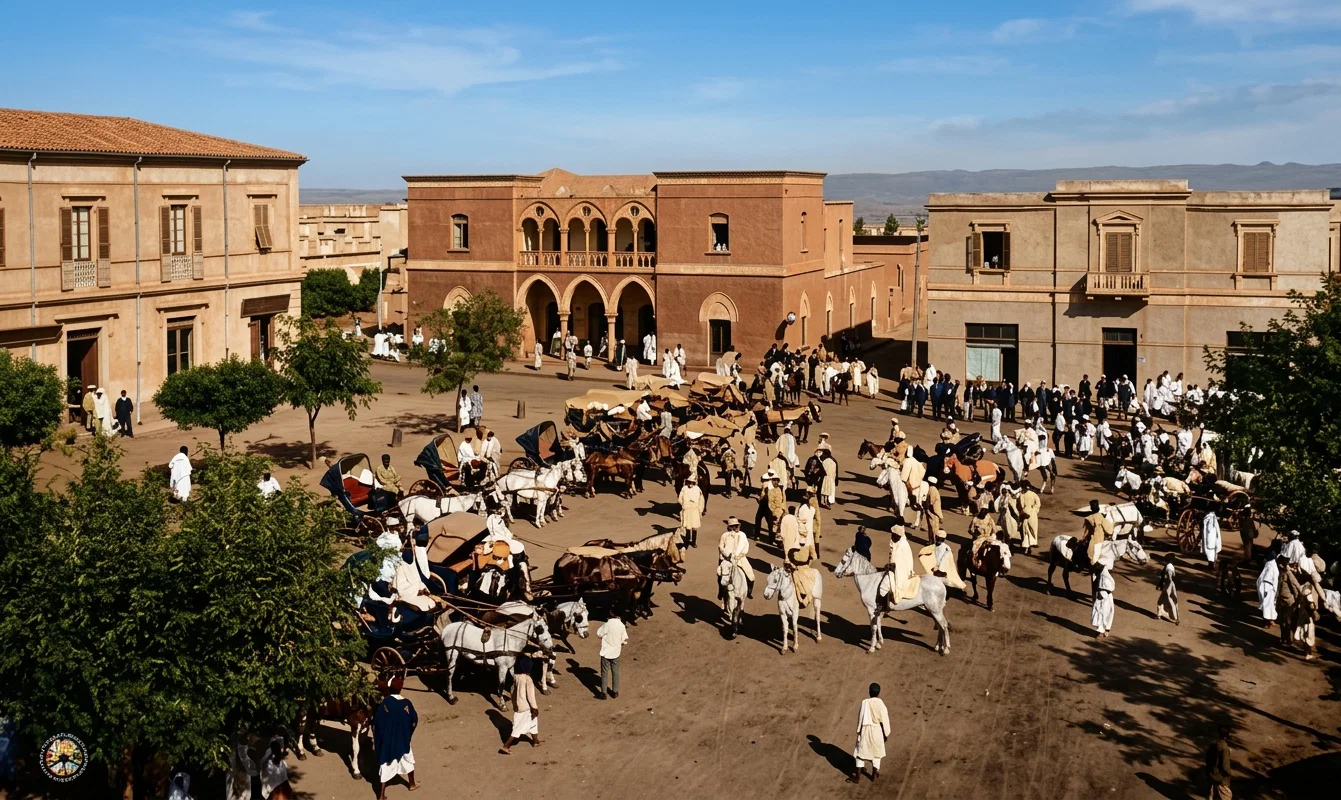
ASMARA, ON THE BORDER OF ABYSSINIA, NEAR WHICH A NEW MISSION STATION IS BEING BUILT
The Abyssinian creed is a mixture of ancient Christianity, Catholicism, and Judaism. The country swarms with priests and monks, and still has Levites and high priests. The ecclesiastical head, called the Abuna, or father, is selected from the Coptic Church, of Egypt. The churches are built after the fashion of the ancient sanctuary of Israel, the most holy place being inaccessible, and containing an ark of the testament with the decalogue. Services are held early in the morning, chiefly on the seventh day, but also on Sunday; and besides these, there are almost innumerable holidays.
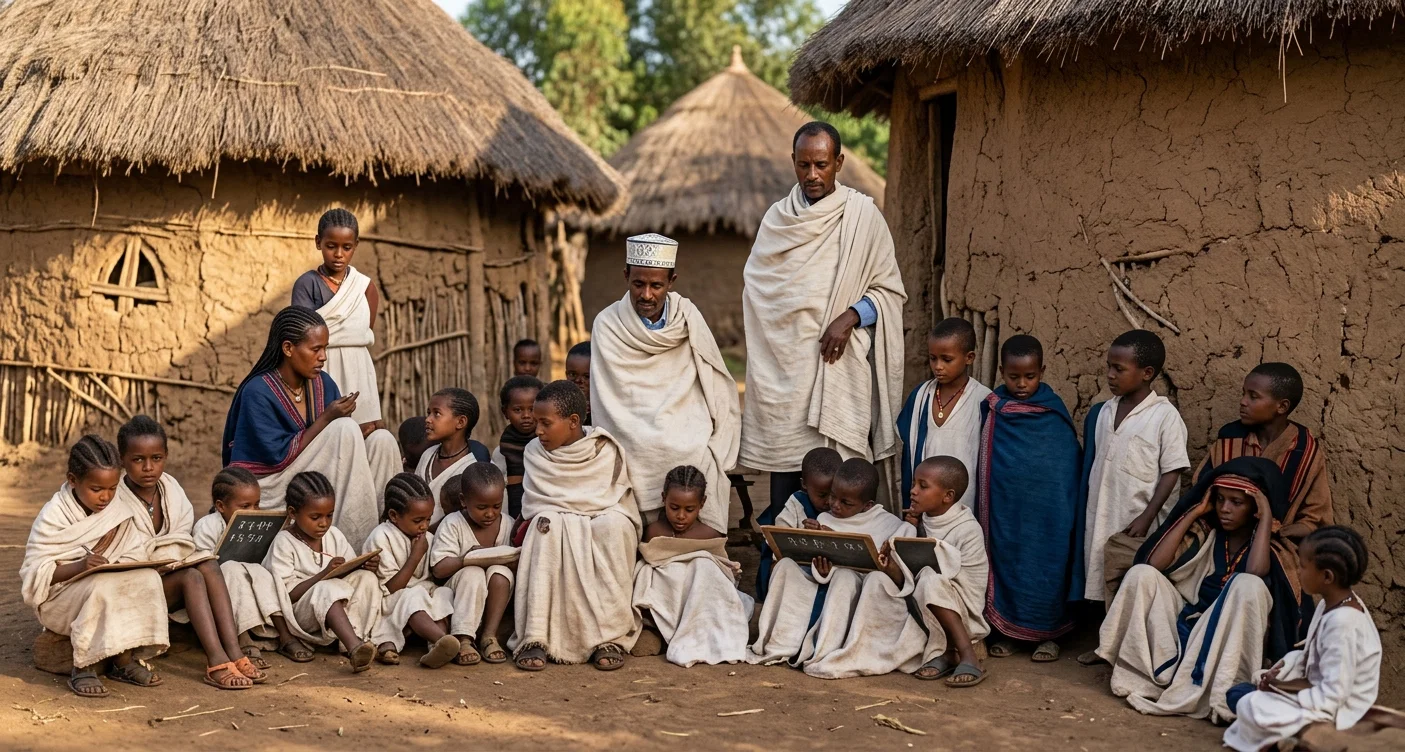
The British Bible Society has succeeded in establishing a depository in Adis Abeba, the capital, and from there distributes many copies of the Scriptures in the various tongues of Abyssinia. It has published the Bible or parts of it in the Ethiopic, Amharic, Tigre, Tigrinya, Galla, Galla-Bararetta, and Galla-Itti, also Bogos. Many of the natives read the Scriptures with such interest that some of the Bibles have been worn to shreds, and have been borrowed from house to house and reread by many different families. The late King Menelik was highly pleased with the copy sent to him, and declared, “These books we13shall keep, for they are good.” During the summer of 1907 the emperor of Abyssinia also ordered that all the children above seven years of age in his kingdom should attend school, and issued the following quaint decree, which was read in the market-place of Adis Abeba:—
“In our country, learning and wisdom have become a disgrace and abused. Learning, therefore, is now despised in this land; but if there is no teaching, the churches will become shut; and if the churches become shut, we shall find no Christians. Let now your sons and daughters who are above seven years of age attend school; otherwise the ruler will take your inheritance as a barren one, and your children shall not inherit the inheritance. I am able to give food and salary to the teacher.”
A country presenting so many interesting features, being the only one which had to a certain extent still retained the ancient Sabbath, attracted our attention nearly ten years ago, and we tried to get all the information possible concerning that field. While I was relating the incident connected with my meeting some Abyssinians in the Holy Land, our believers in Germany raised $500 to begin work in Abyssinia. After our work was opened in German and British East Africa, we tried hard to gain access to southern Abyssinia; but the British possessions adjoining this land are still closed to missionaries. Consequently, in the spring of 1907 we sent Brethren P. N. Lindegren and J. Persson as our first missionaries to begin operations among the Abyssinians, in the Italian colony of Eritrea. They settled in Asmara, the seat of the Italian governor, and began at once the study of the Tigrinya. In recent months we have sent re-enforcements, in A. Grundset and family, Dr. F. W. Vasenius and wife, of Finland, and V. E. Toppenberg. During a recent visit of the writer to that land, we purchased an Italian homestead of seventy-five acres, about a mile from Asmara, for mission and training-school headquarters, and plans were laid for the erection of the mission home, a school, and the necessary outbuildings, one of our good builders from Germany, Brother Kaltenhauser, being sent down to superintend the work of construction. Elder Grundset writes, in a recent letter:—
“We are putting the roof on the south end of the dwelling-house. By another month we hope to have it so nearly completed that it can be moved into, and then we shall be ready to begin the building of the school, the walling of the well, etc. The well will be no easy matter, as we shall have rock to deal with. I have a few prospective students, and I think we shall have no trouble to find as many as we can accommodate, for we must begin with but a few.”
The openings presented by the medical missionary work there may be best seen by a letter written by Brother Toppenberg, a nurse and evangelist:—
“The people come from all directions to the new Protestant physician, Dr. Vasenius. Sometimes as many as four, five, or six stand with their mules outside the doctor’s door early in the morning to have him help them. They bring mules to carry the hakim (doctor) and his instruments. In all the surrounding towns he is well known. The people have come as far as twenty miles for him, and brought him back again, besides paying for his services. Several times he has taken his wife with him, to assist; on one occasion he took Brother Lindegren, to help him vaccinate the people of two towns.”
One mission station is thus fairly opened. As Asmara, which has an Abyssinian population of some fifteen thousand, lies about eight thousand feet above the sea, and is the door to all northern Abyssinia, it is a most favorable location both healthwise and for opportunities to carry forward the work.
In order to prepare for the work in the leading languages, some of the brethren are studying Tigrinya, some Amharic, and others the Galla. How difficult these languages are may be seen by the fact that the Tigrinya has no fewer than two hundred sixty characters.
During the coming year we ought to start two more mission stations in this region; but here, as everywhere, the great call is for men and means. The promise of God is, “Ethiopia shall soon stretch out her hands unto God.” Let us enter the doors now opening to the gospel.
L. R. CONRADI.
Hamburg.
The Indians of Guatemala
By W. E. HANCOCK.
NEARLY all the peoples of other nations are receiving attention from the various missionary societies of the world at the present time, but the Indians are for some reason strangely neglected. South America receives many missionaries, but their efforts are directed to others rather than to the Indians, who form a large part of the population of the country. The same thing is true in Central America. Not only has the Indian been conquered, but he has been crushed in spirit and aspiration. In place of his original independence he has received nothing but superstition; his manhood has been destroyed, and he is degraded by social conditions and by intemperance.
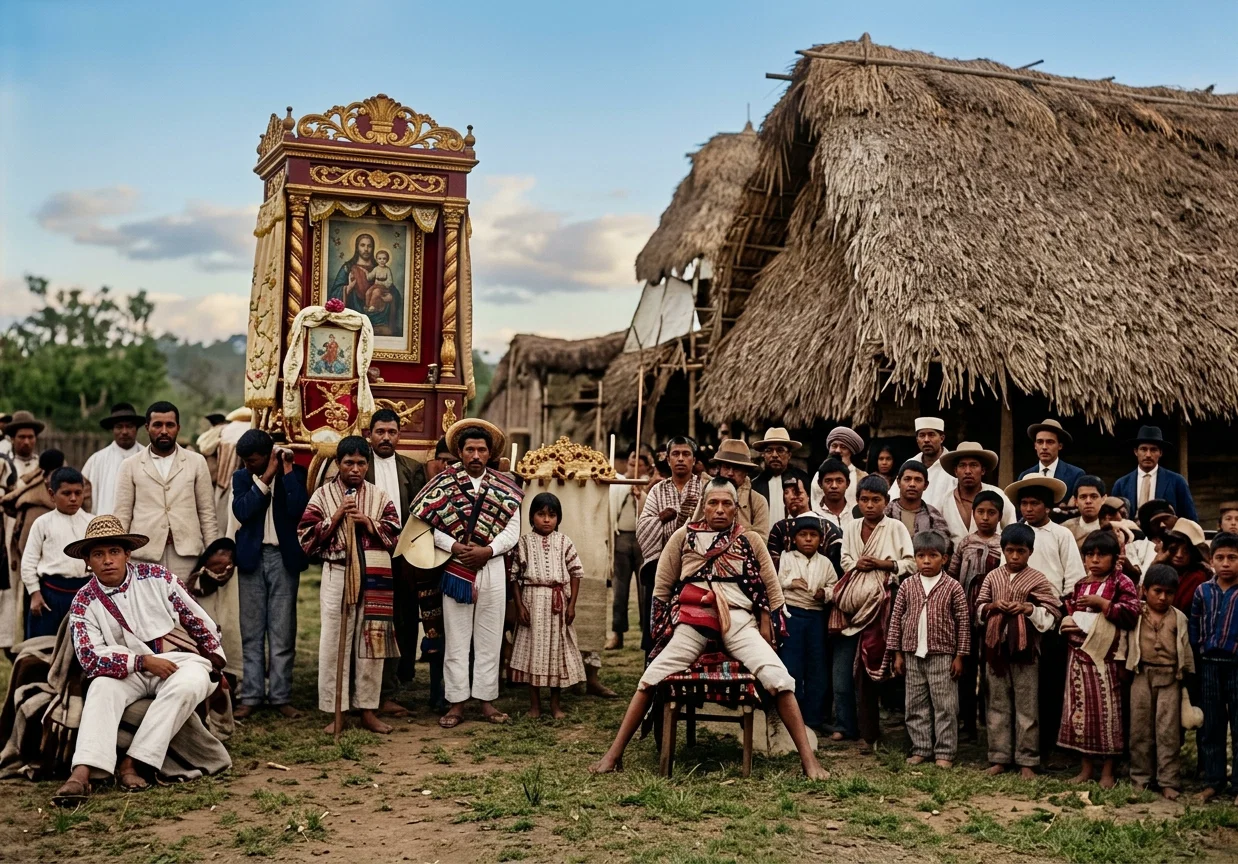
A FEAST-DAY RELIGIOUS PROCESSION IN GUATEMALA
In spite of all this, evidences of their original intelligence and independence of character still exist among some of the tribes. Traces of their ability and aptness in learning, when they have an opportunity to demonstrate these qualities, may still be seen. The Indian spends all he can earn for drink, yet he is the producer of many supplies for the white races. He is a hard and often a skilful worker. The signs which hang over places of business here are painted by Indians who have perhaps never had a lesson in this art. The Indian brings his produce fifteen or twenty miles on his head or back, and sells it very cheap; then he returns home, works his little plot of ground, and again returns. He knows nothing about skilled labor. He does not know how to cultivate the soil in order to make it more productive, nor how to utilize profitably what he produces. He needs instruction by those interested in his industrial development and in his soul's salvation.
A ZAPOTECAN (MEXICO) INDIAN GIRL
Something must be done for the Indians.15The children can be reached by teaching them to read, but the older people can be brought under the influence of the gospel only by teaching them simple Bible stories. They are natural orators, and anything told to them will be remembered and repeated later at some large gathering. Missions established among them, working in the direction indicated, would certainly bear fruit. A mission farm, located in the right place, with two or three hundred Indians gathered to work it, would become a center of influence in reaching surrounding tribes.
One such mission here is accomplishing something in this direction, and is greatly appreciated by the people in the surrounding district, because of its good influence over the Indians. They are instructed in the Bible, and their children are taught to read.
We are praying that the Lord will lay the burden upon other hearts to establish centers of this kind in this country.
W. E. HANCOCK.
Guatemala City.
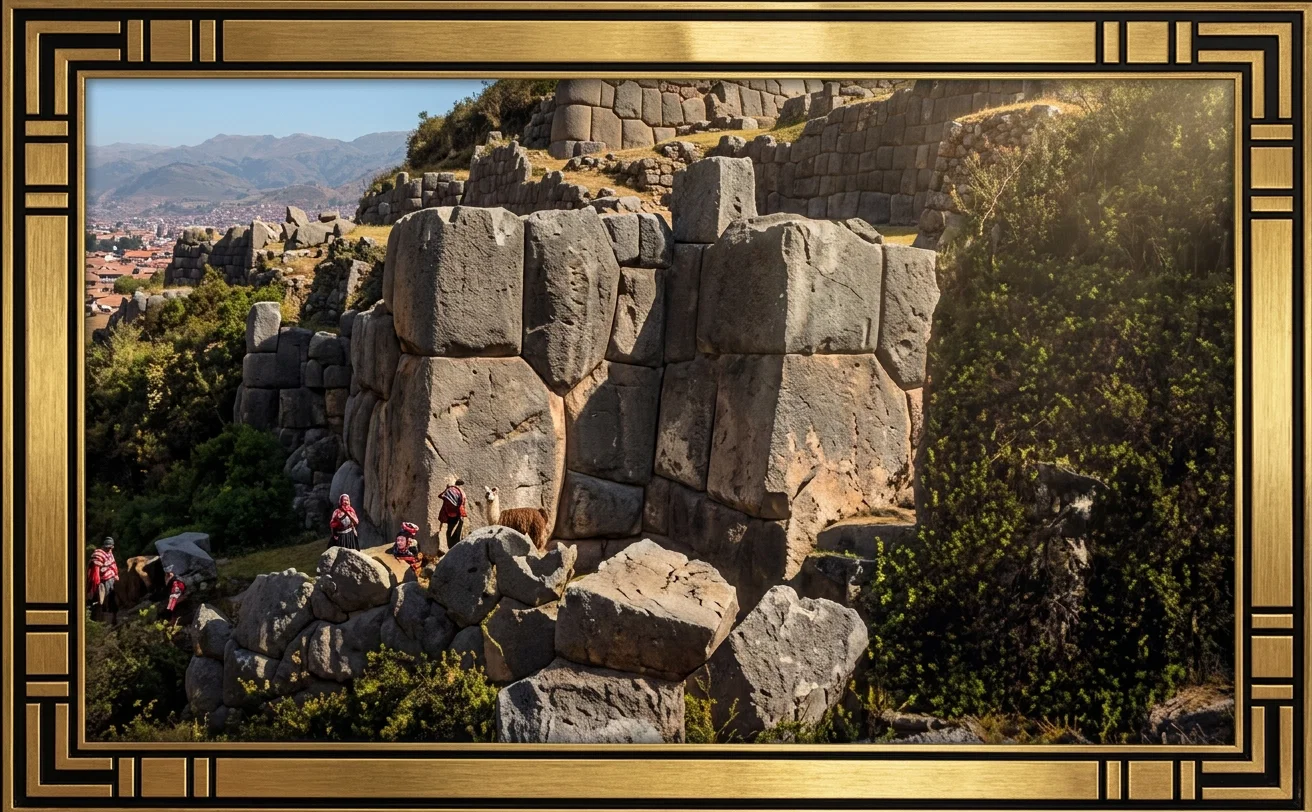
RUINS OF THE INCAS' FORTRESS, CUZCO, PERU
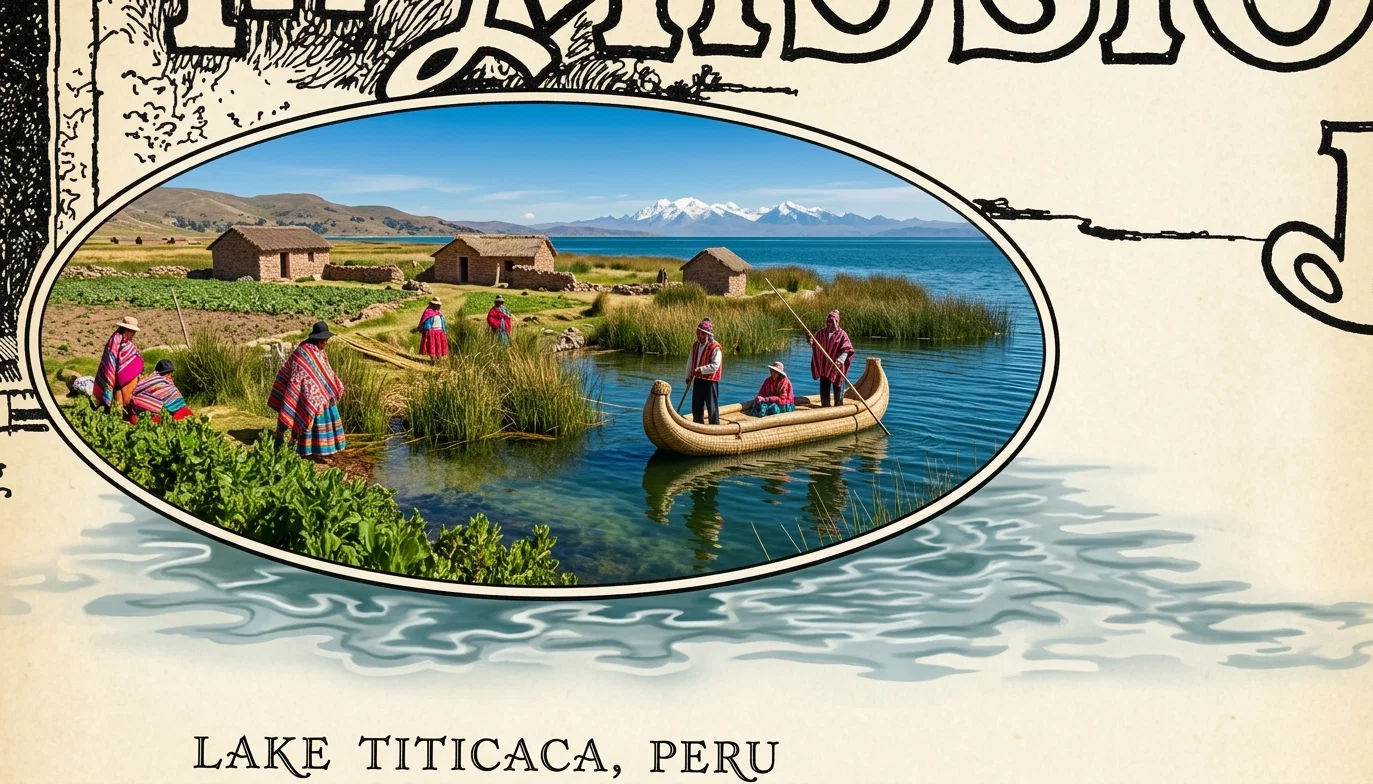
LAKE TITICACA, PERU
Among the Incas of Peru
By A. N. ALLEN.
HERE was the capital of the ancient empire of the Incas, the wealth and dazzling glory of which drew Pizarro and his bands across the Spanish main. Oppressed through the centuries, in the land of their fathers, with its ruins of departed glory, it is just and right that the Inca Indians should hear the message of the goodly land.
The largest company of Seventh-day Adventists in Peru are all Inca Indians, only a few of whom speak any language but the Haimara. They live high in the mountains, by the famed Lake Titicaca. This company, so far as I know, has never been visited by any of our workers, but is the fruit of labor done by a native of the place, Manuel Camacho, who was taken to serve in the house of a gentleman in Moquegua when a boy. While serving here, he was allowed some school privileges. Afterward learning the gospel, he desired to give it to this people. He returned to his native home, opened a school, and began teaching them the gospel story.
While in Puno with Brother W. R. Pohle, recently, we tried very hard to procure horses that we might visit this company; but, all efforts failing, we sent Brother Camacho word to come to us. The night before he received the word, he dreamed that he was in Puno (the place we were waiting in); that he met two strangers; and that in talking with them, one of them told him he had been called to give his people the gospel. After receiving our message, he came to us. I had just finished telling him that he had been called to a sacred work, and that as he could read, and his people could not, he must break the bread of life to them, when he related this dream. At present this brother has fifty-two enrolled in his school, and he reports a Sabbath attendance of from twenty-five to thirty. The priests have never ceased to persecute him. Only recently his house was surrounded by an angry mob of Indians, who, swinging clubs and threatening his life, called him to come out. This has been done several times, but each time they have retired in confusion. God protected his servant, fulfilling his word, "The angel of the Lord encampeth round about them that fear him, and delivereth them."
A. N. ALLEN.
Lima.
Our Message for the Inca
By DELWIN REES BUCKNER
DELWIN REES BUCKNER
TIME, bruskly brushing past each massive door,
His wings as sharp as pointed edged swords,
Effaced at length the graven, lying words
The gold-adorned Inca temples bore
In cult they paid the bright-rayed, radiant sun:
The helpless priest beheld his temple fall,
Or fell himself beneath some staggering wall
Where still he lies, his ministration done.
The Spaniard came, and built his human creed
On soil the heathen Inca priests had sown;
But, O! erelong, our hearts in anguish pray
That we may see some grains of gospel seed
Grow where tradition, lifeless as a stone,
Has borne for ages well-nigh endless sway.
Ambato, Ecuador.
The Indians of Bolivia
By Mrs. F. A. Stahl
THERE are two classes of Indians in Bolivia, the Aymaras and the Kechuas. There are many Aymaras in La Paz, where we live. They are a peaceful, hard-working people, most of the work in the city being done by them. They build the houses, and even make the bricks, drying them in the sun. I have seen some of them remove hills, from twenty to thirty women carrying earth in their shawls, day after day, for months, using their hands as shovels.
The streets and walks in La Paz are all paved with small stones, the paving being done by the Indians. All the farming is done by them. If you purchase anything, an Indian carries it to your home.
Most of these Indians live on the mountain or the mountainside, the home consisting of a small piece of land and a mud hut of one room. As a rule, the family is large. There are no beds, no chairs, no tables; they sit, sleep, and eat on the floor. They use no spoons, but eat with their fingers. Their food consists mostly of white bread, dry beans, and very small potatoes called chuno and tunta, which have gone through a process of freezing. They also eat what is called ahie; made of red and green peppers ground between two stones. Both men and women chew coca, the dried leaves of a native shrub, which contains a powerful stimulant. They believe that without it they would be unable to work.
These Indians are under the complete control of the Roman Catholic Church, and are kept in ignorance. They have no schools, and most of them can not even tell how old they are. But they have their feast-days, which are all controlled by the church. Then the men and women drink pure alcohol, and play and dance. I have seen them keep this up for a whole month, day and night. Many lose their lives. Mothers, with their babies on their backs, drink and dance until they fall, and in that way end their lives.
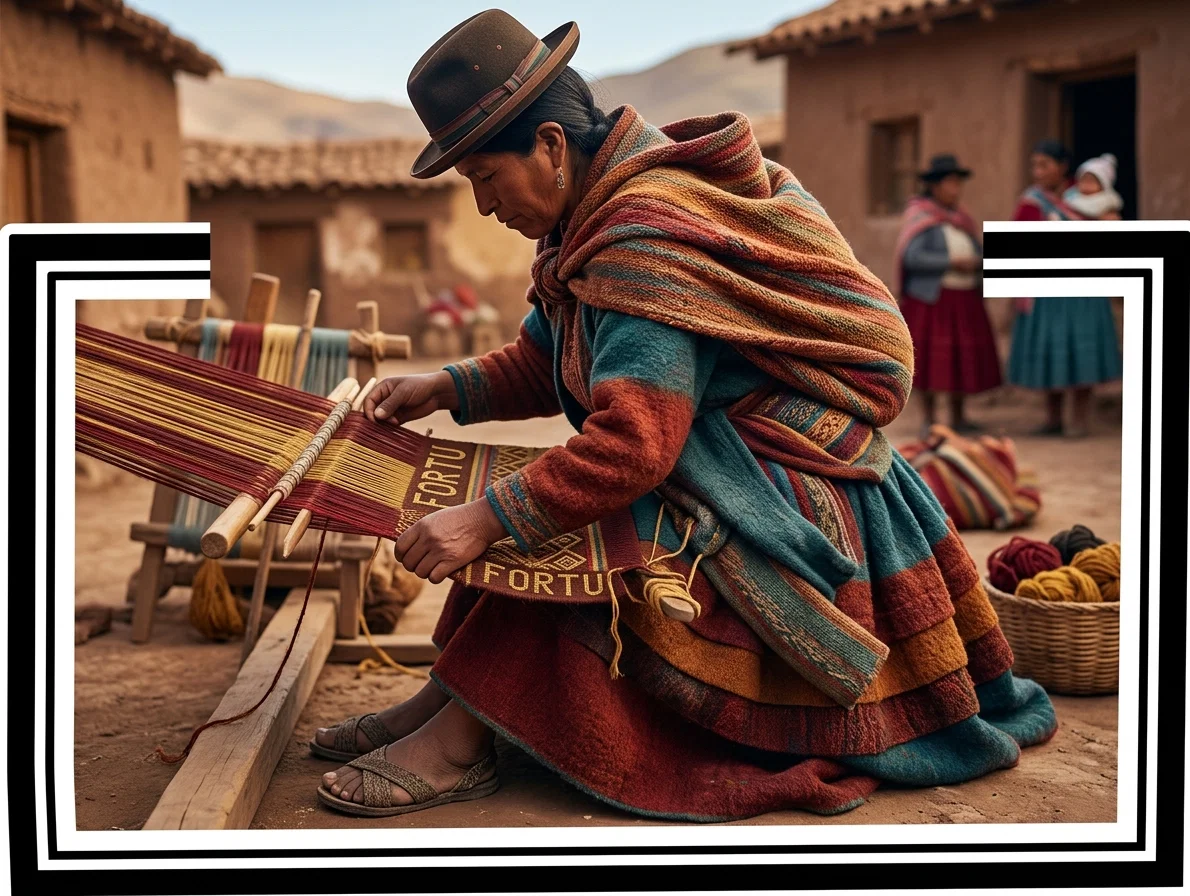
A BOLIVIAN INDIAN WOMAN WEAVING
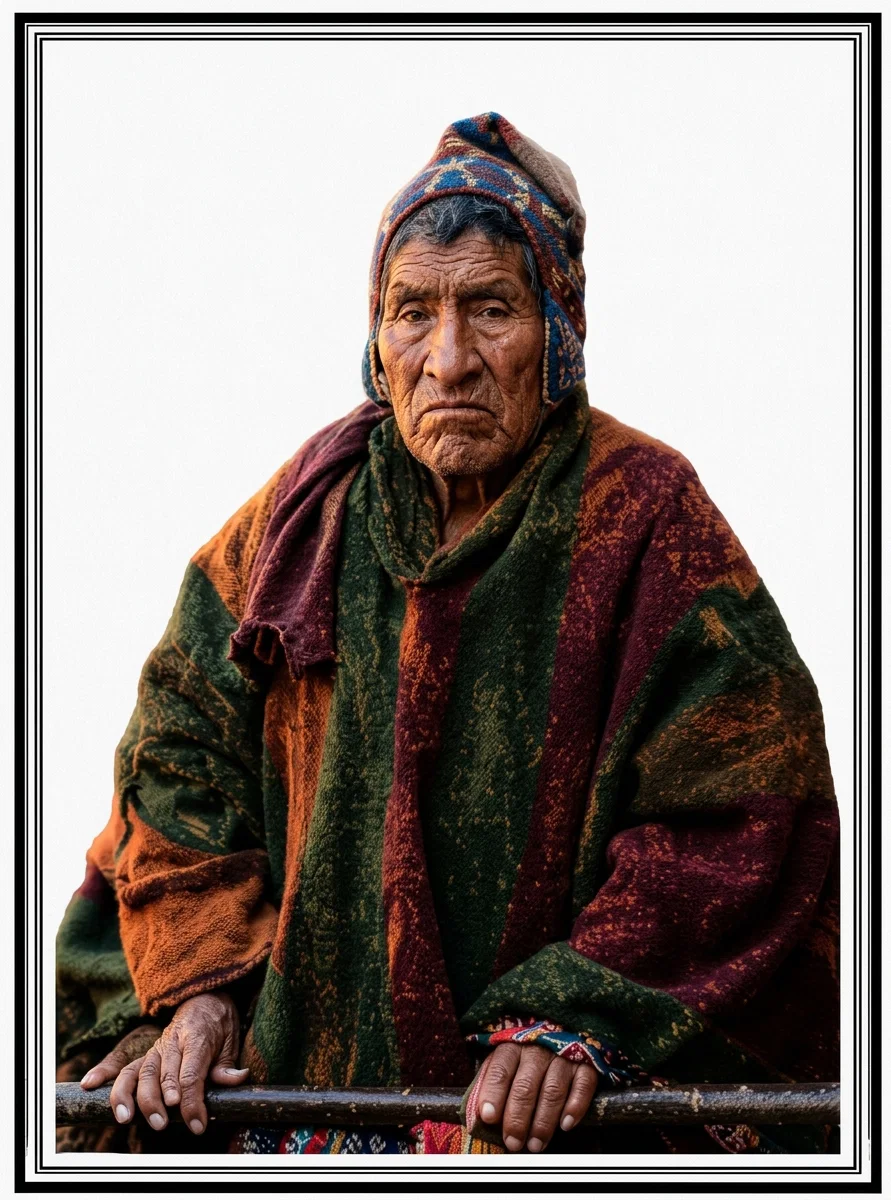
AN OLD INDIAN OF BOLIVIA
They do not desire to be in this condition; but once under the influence of alcohol, they become fiends, and have no power over themselves. In passing one of their places of feasting, my daughter noticed an Indian woman who lives on our place, and called to her not to drink but to come home. The poor woman said, “Take me home, and lock me securely in my house until to-morrow; for if they call for me, and I can open the door, I can not resist the temptation.” My daughter did as she had requested, and the woman was able to go to her work next day.
Are these people in darkness? Do they need the saving gospel message? Is it not worth while to give some of your means, and even your life, if need be, to save these poor souls? How thankful we are for the promise that those who sit in darkness shall see a great light. We need more means, more workers, and your prayers for Bolivia.
MRS. F. A. STAHL.
La Paz.
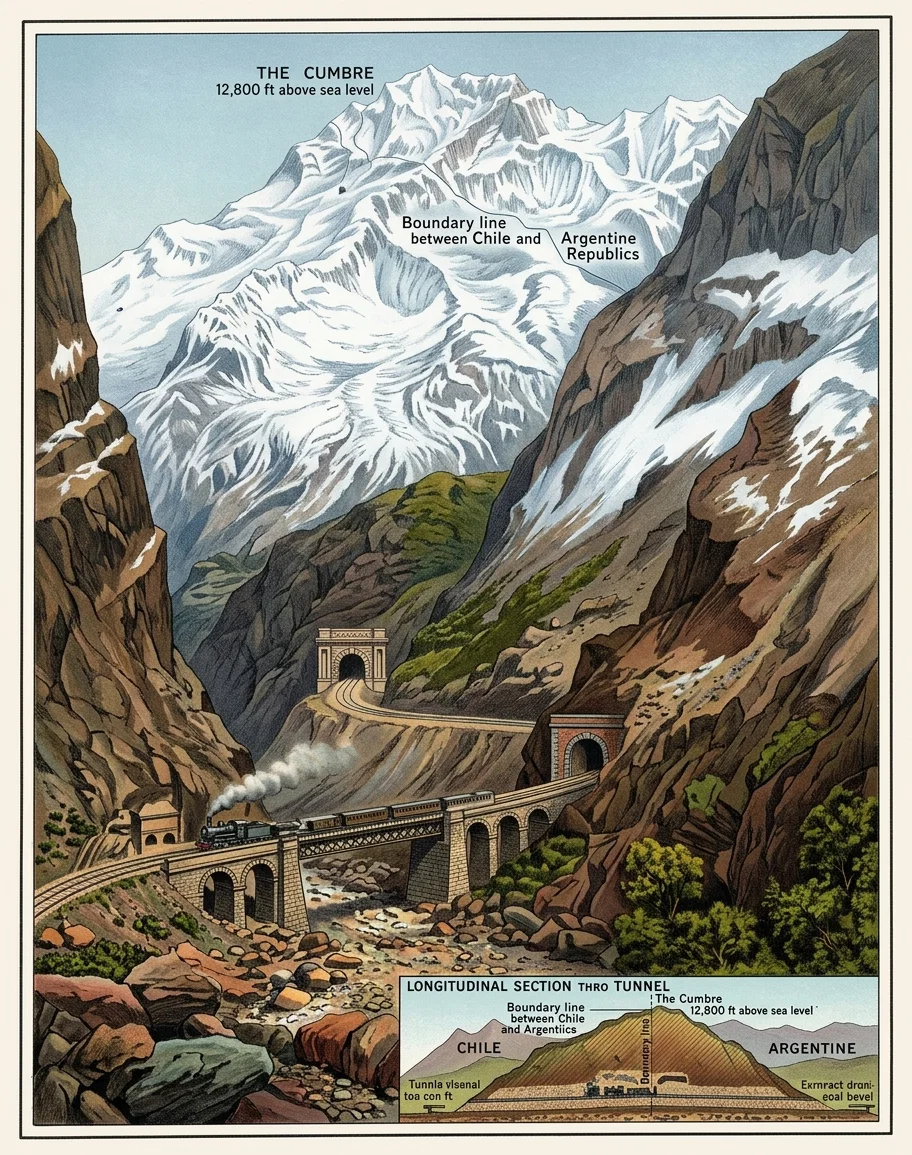
THE NEW TUNNEL JOINING ARGENTINA AND CHILE, FORMALLY OPENED APRIL 5, 1910
Immigration into Argentina
IMMIGRATION into Argentina, was as great in 1908 as into the United States in 1898.
The Longest Telegraphic Line
THE longest telegraphic line, where instantaneous communication can be maintained, is the one connecting London, England, with Calcutta and Bombay, India, a distance of 5,342 miles. And by turning a switch in one of these cities of India, London can communicate directly with Rangoon, Burma, a distance of 7,970 miles.
Supporting Missionary Preachers
“FORTY boys or girls, giving only five cents each week, will support a native preacher in the foreign field. One hundred persons giving twenty-five cents each a week, will support one or more in the mission field at home or abroad.”
In Japan
From Kobe, Japan, comes the following encouraging word of progress:—
“Doctor Noma and the workers at the sanitarium are very busy now, and they are all of good courage. They have made many friends by their faithful work. One patient has rented a piece of ground, and given the use of it for five years to the sanitarium. Another man is paying for an advertisement for them for a whole year, in the best and largest circulated paper in Japan. The principles so faithfully carried out by the workers here have found an entrance into the hearts and homes of the people. Some are showing an interest in the truth.”
“Several doctors have become interested in the work. One has sent a nurse to the sanitarium to receive a thorough training in hydrotherapy, massage, and dietetics. Another17doctor is asking for instruction in hygienic cookery and in dietetics. Another is so interested in our methods that he comes frequently from his home, twenty miles away, to receive instruction. He shows great interest in all our work, and now desires to go to America for a course of study in one of our institutions.
“God is blessing the medical work in Japan, and we are thankful that we have this part in his great work to help carry forward the message in this dark land.”