THE medical missionary work has had its place with us as an important factor in evangelical work, both at home and abroad. This work has been carried forward by the aid of city missions, visiting nurses, missionary physicians, sanitariums, and hospitals. The material growth of this work is now represented by eighty institutions, over half of which are operated by the denomination.
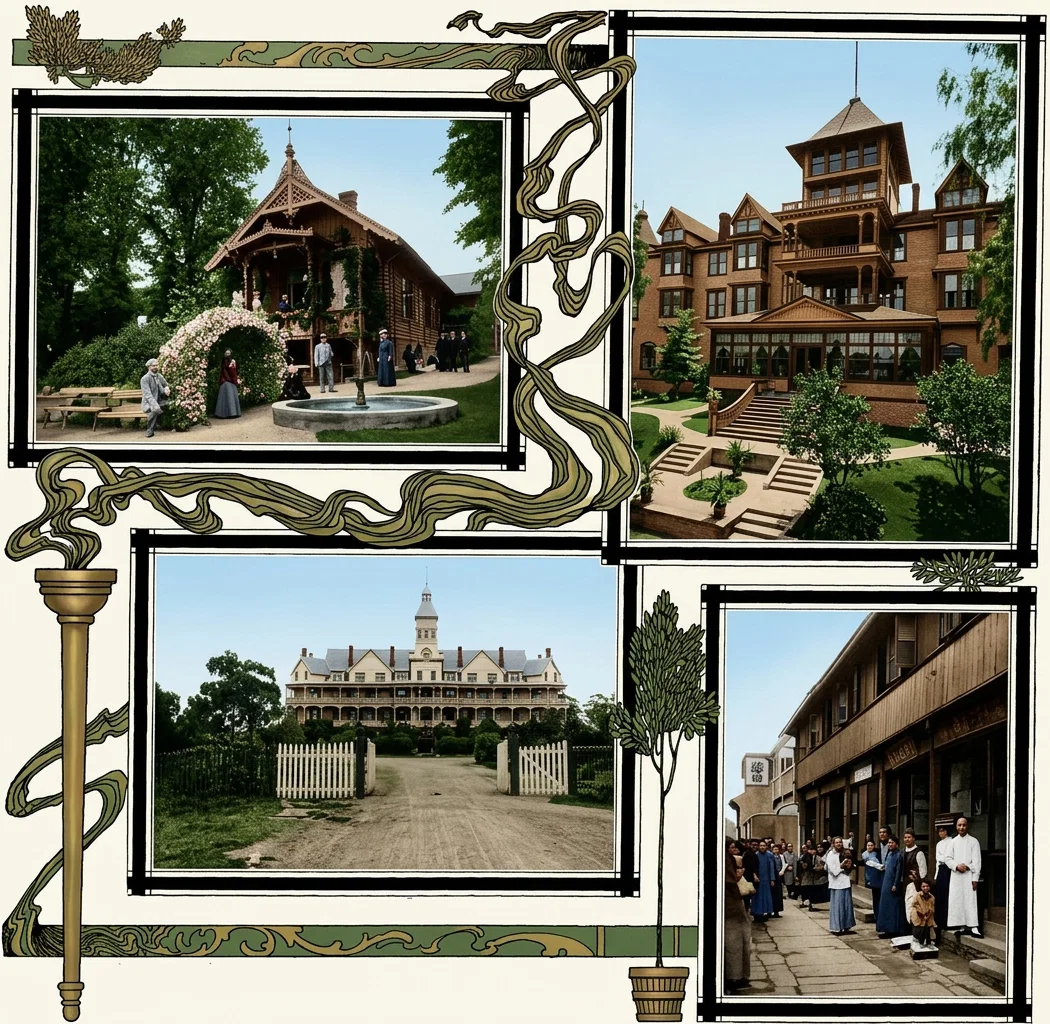
These sanitariums are situated in various parts of the world, including South Africa, India, Japan, Australia, New Zealand, Palestine, Norway, Denmark, Germany, Switzerland, Ireland, England, and the United States. A few of them are represented on these pages. There is also shown here the denominational College of Medical Evangelists, located at Loma Linda, Cal., a medical school that is duly incorporated in harmony with legal and professional requirements. Here men and women will receive a medical education that will make them the better able to fulfil the Master's great commission.
A number of training-schools for nurses are also conducted by the denomination. In these schools about one thousand young men and women are preparing for more efficient service in missionary work. Nearly two thousand persons are directly engaged in our medical missionary work, and still the number is not sufficient to meet the calls that come from all parts of the earth.
Cheering reports are received from those in the field, giving evidence of the blessing of God upon this service.
L. A. HANSEN.
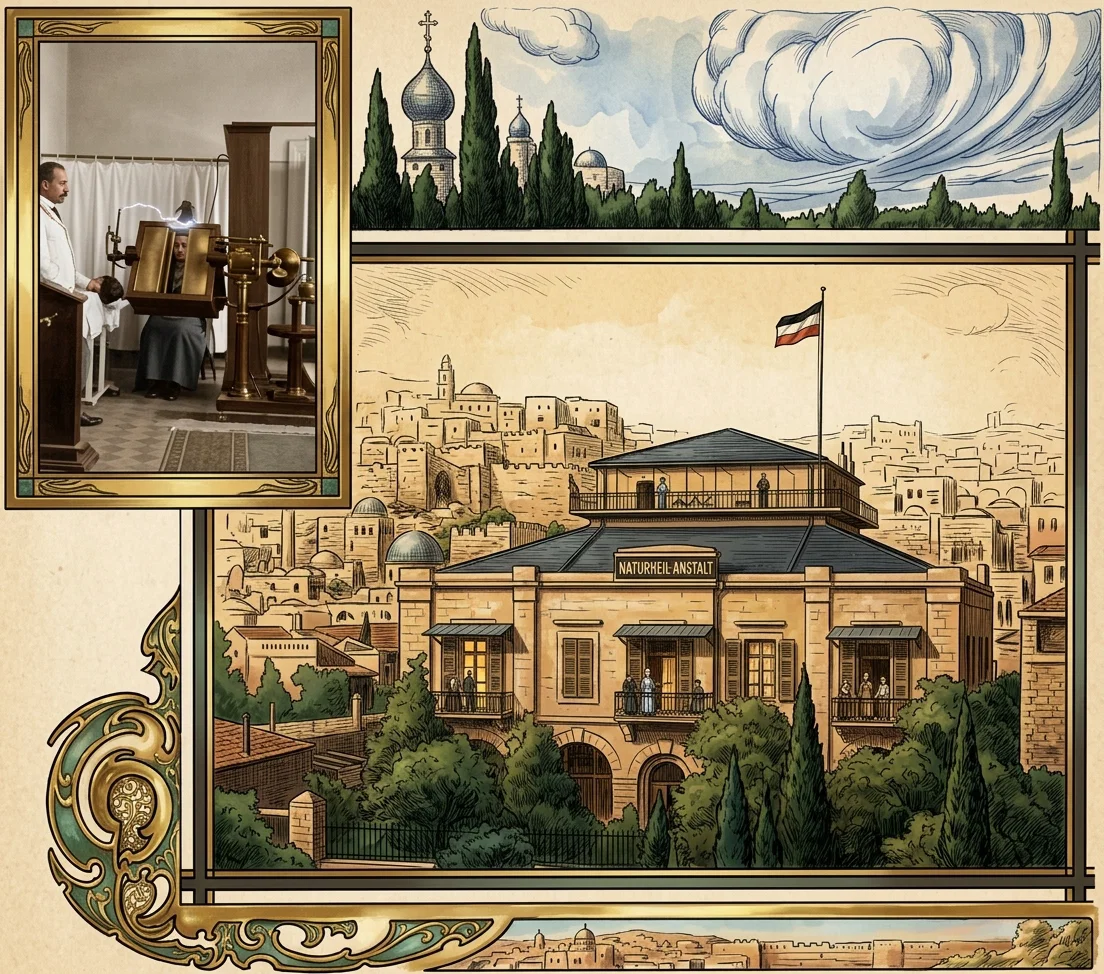
OUR MEDICAL MISSION AT JERUSALEM
A SHADED PATHWAY
LAKE GENEVA·SANITARIUM,
GRAND, SWITZERLAND
VIEW ON LAKE GENEVA
VIEW ON LAKE GENEVA
1. Skodsborg Sanitarium, Denmark. 2. (Upper right) Loma Linda (Cal.) Sanitarium. 3. Sanitarium near Sydney, Australia. 4. New Dispensary in Chekiang Province, China.
A CHINESE PRESS
AVONDALE PRESS, AUSTRALIA, WITH FOOD FACTORY IN REAR
GOSPEL PAPER-SELLERS,
CANTON, CHINA
Nurses at Work in the Jungles of India
By Louisa Scholz
MISS DELLA BURROWAY writes me, as I am away from our station taking a few days' rest, that during her five years of labor in Karmatar, India, there has never been such a busy time during the hot season as now, except when there has been an epidemic. In our work together we have often made from two to four visits every day. Many times we were out at noon in the heat, and sometimes were out all night. We traveled an average of eighteen miles a day, besides attending to our work at the dispensary. During one month we had 392 patients, gave 1,472 treatments, and made ninety-one visits. Many of these visits were made out into the jungle, so considerable time was consumed in travel.
I will mention one instance that will show how the Lord has helped us. One day we were called to a confinement case five miles from our bungalow. We always know, when such calls come, that the native midwives have exhausted their resources, and that the patient's life is in danger. We reached the village about eleven o'clock in the morning, and found the woman in very bad condition. The child had been dead several hours. We did all in our power for four hours to relieve the poor woman (not having any instruments), but without result. The people said, “Let her die.” Miss Burroway told them that God could help her, and again we asked the Lord to help us if it could glorify his name. A few minutes later the child was born, and we praised God. But the people fell down to worship me. I tried to explain to them that it was not I, but God that had worked through me. They said, “Yes, but you are our god. We can not see God, and you did it.” After the woman recovered, while the hearts of the people in the village were tender, Miss Burroway gave the stereopticon views illustrating the life of Christ.
LOUISA SCHOLZ, Missionary Nurse.
In the Land of the Judsons
Miss Ollie Oberholtzer, M. D., who has been at work in Burma three years, writes:—
“Of late I have been doing some work in the Rangoon church, and the eagerness shown to have me call and talk on health principles demonstrated their interest in this work. I also visited Meiktila, in Upper Burma. Here I met Mohammedans, Burmese, and natives of India anxious to learn concerning health principles. In Meiktila there is a real interest springing up among the Buddhists to know more about the gospel. One man ordered a Bible.”
Ministry to the physical needs is a valuable means in reaching the heart. Christ employed these methods of labor.
“We've Come, Mr. Missionary”
By A. C. ENNS.
An Incident of the Founding of Busegue Station
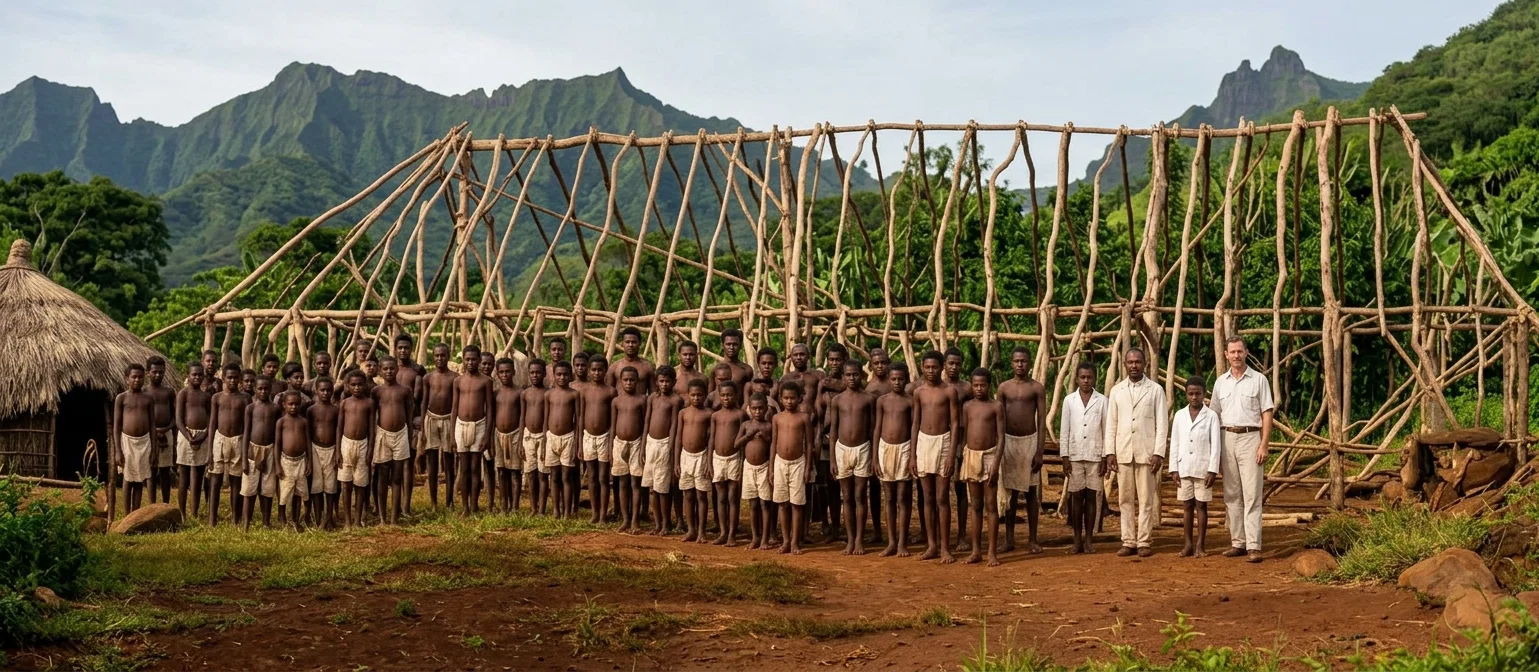
FIRST the chief's sons came with a drill as soldiers that is known only in the German army. They presented front, and in a chorus said, “Tamekuja Bwana Mwalim” (We've come, Mr. Missionary).
“Well, what is it you want, my sons?” I said.
“We want to learn to read, during which time we want to live with you.”
“Well, but you can not appear before me again naked, nor so dirty.”
After a moment of quiet, as they evidently were struck with my firmness, they began to get uneasy. Finally they took breath, and asked: “But what shall we do? We have no clothes. Shall we wear skins of goats?”
“No, indeed! don't appear in goatskins. Buy clothes, and keep yourselves clean.”
“But we are too small to hoe and plant our own fields, so we can sell peanuts and buy clothes. And mother's field is not enough to eat and sell also.”
“All right, I am building a school, for which I shall have need of thatch and sticks. You may work for me until my school is finished, which will be enough to pay for your clothes” (consisting of a white jacket, and a piece of American cloth to tie about the loins).
“But how many days will we have to work?”
“Twelve days, if you work all day fast.”
“Ndie Bwana Mwalim” (Yes, Mr. Missionary), was the answer in a chorus, and with considerable satisfaction, off19went the whole squad, keeping step as well as they could, which was not faultlessly. This illustrates the need of this great mission field for Christian schools and teachers.
“WE’VE COME, MR. MISSIONARY,” AND THIS IS THE WAY THEY CAME
A. C. ENNS.
Victoria Nyanza Mission, German East Africa.
Victoria Nyanza Mission, German East Africa.
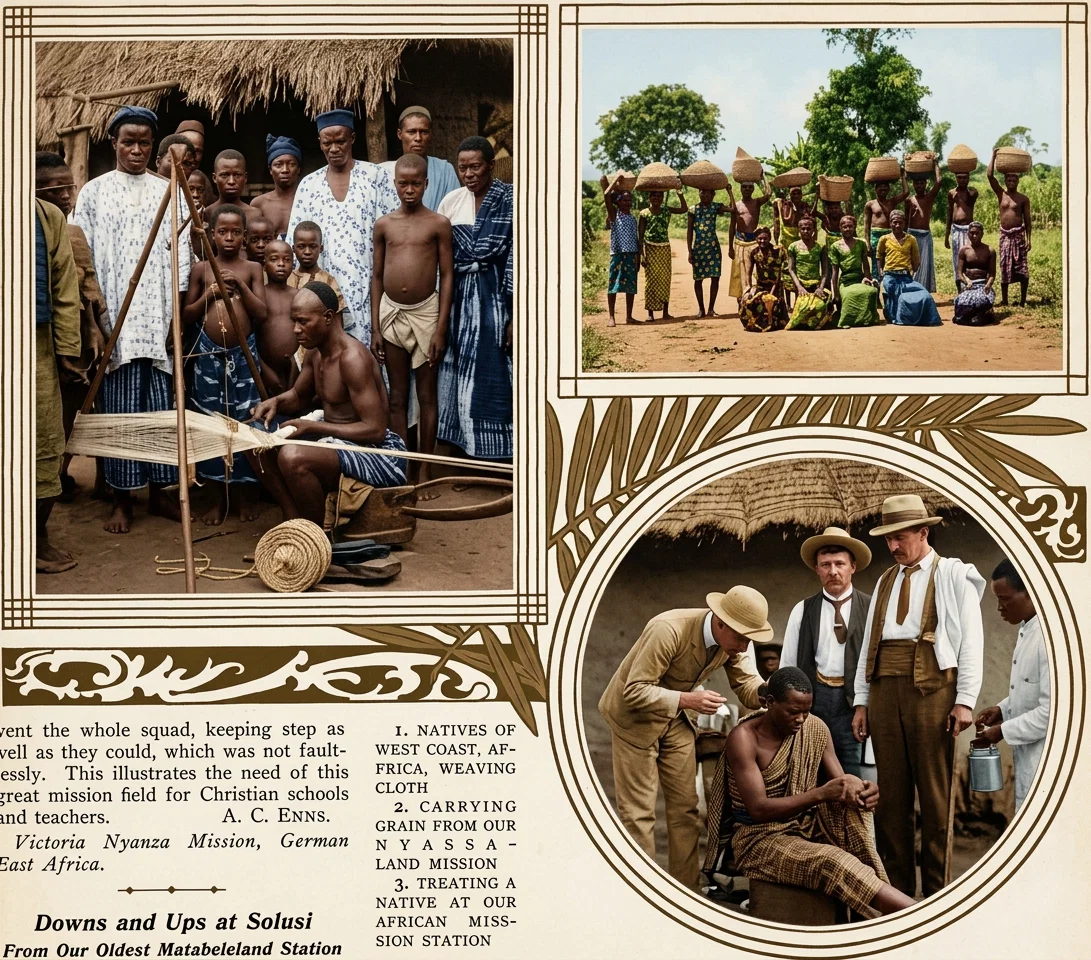
NATIVES OF WEST COAST, AFRICA, WEAVING CLOTH
CARRYING GRAIN FROM OUR NYASSA-LAND MISSION
TREATING A NATIVE AT OUR AFRICAN MISSION STATION
With Our INDUSTRIAL MISSIONS in AFRICA
By B. Ohme
Planting the Ntanda School
FIVE hours’ journey from our Vuasu station, in the Pare Mountains, up-hill and down, through stream and tangle, brought us to Ntanda, where the chief lived. He welcomed us, and we asked him to call in his chiefs in the neighboring districts to talk about a school.
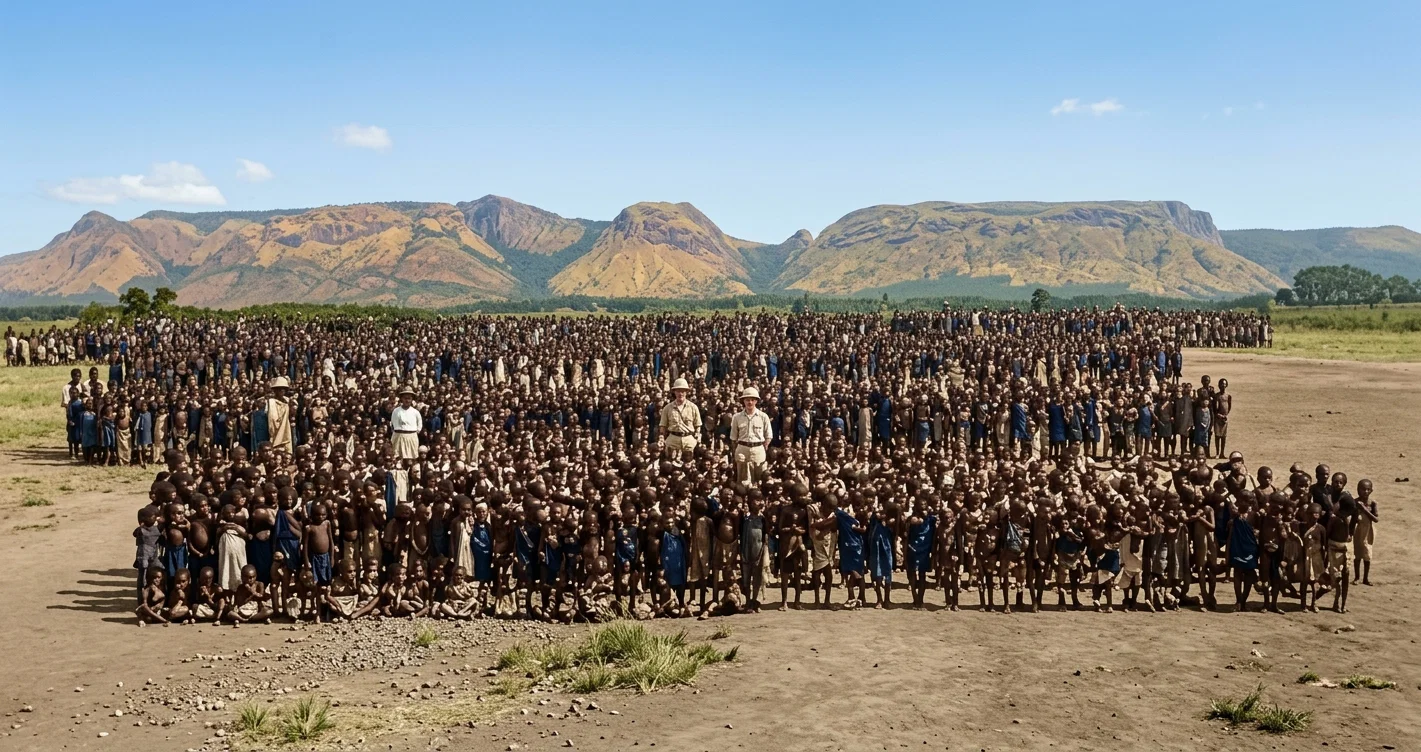
THE SIX HUNDRED NATIVE CHILDREN WHO ASKED ADMITTANCE TO ONE OF OUR MISSION SCHOOLS IN EAST AFRICA, BUT FOR LACK OF ROOM WERE DENIED
We then pitched our tent, a little distance from the village. Early in the morning we were awakened by the biting of ants. They were the detested visiting ants, thousands of which were running about the tent. We had to hasten away with our clothes into the open, and our boys made a border of hot ashes around the tent. Said one of the boys: “The ants have been brought here through the witchcraft of the people, to prevent the erection of a school in this neighborhood.” But I strengthened his faith with the words: “If God be for us, who can be against us?”
As the sun rose, those who had been invited from the neighboring mountains came marching in. After we had greeted them, and they had formed a circle around me, I began to tell them of the creation of the world, and how sin had come. I spoke of the plan of salvation, and of the second coming of Christ, who would judge the world. They listened quietly, interrupting now and then when something seemed impossible to them. Many also laughed.
As I told them that God had a warning message for all the world, and had sent us to help them and to instruct their children, and to teach them how they should pray to the great God, they were not at once in harmony with this plan; for, they said, they needed their children now during the famine to protect their corn from the wild hogs and from the monkeys. I told them how God allows famine, that we may think of him who gives the rain and the sun and the harvests in their season; for the Wapare worship their ancestors, whose spirits they greatly fear. They also pray to the exhumed skulls for the gift of cattle and goats, for the blessing of children, for rain, for health—yea, even for everlasting life itself.
As I now urged these people assembled before me to worship the living God, who can not die, who created them, and who made the skulls which they adored; and as I asked that they send their children to school, only two hours each day, after which they might work in the fields as heretofore, there arose among the people a peaceful murmur which showed that they were satisfied with the suggestion. We then chose the place upon which we had pitched the tent as a building site for the school, and they were ready to help in the erection of the schoolhouse.
Year by year we are seeing the words fulfilled: “And the Gentiles shall come to thy light, and kings to the brightness of thy rising.” God is teaching us how we are to take up the work of educating the children of the Pare people. Dur ing the year, we were enabled to open six new schools, with three hundred fifty pupils, who are daily instructed by baptized missionary helpers.
B. OHME.
German East Africa.
Downs and Ups at Solusi
By M. C. Sturdevant.
From Our Oldest Matabeleland Station
FROM before the advance of civilization the natives had been moving away, and our school attendance was dropping off. We felt seriously over the situation. The feeling of the chiefs was bitter toward all school work. As I went out among the kraals, I found the trouble was with the parents and chiefs. I tried to persuade them to send their young people to school, or let us put schools in their villages. The young people grew courageous, and said to the chiefs that if they would not let teachers come, they would run away and go to school anyhow. Some of the chiefs saw that the youth meant it, so gave consent for me to send teachers. Soon we had seven out-schools running, and our home station began to fill up. We now have ninety-two boarding students, and the usual number coming in from the outside. Our hands and our houses are more than full, and on Sabbath days our church building will hardly accommodate the people. Never did the young people seem more hungry for an education than now. We praise God and take courage.
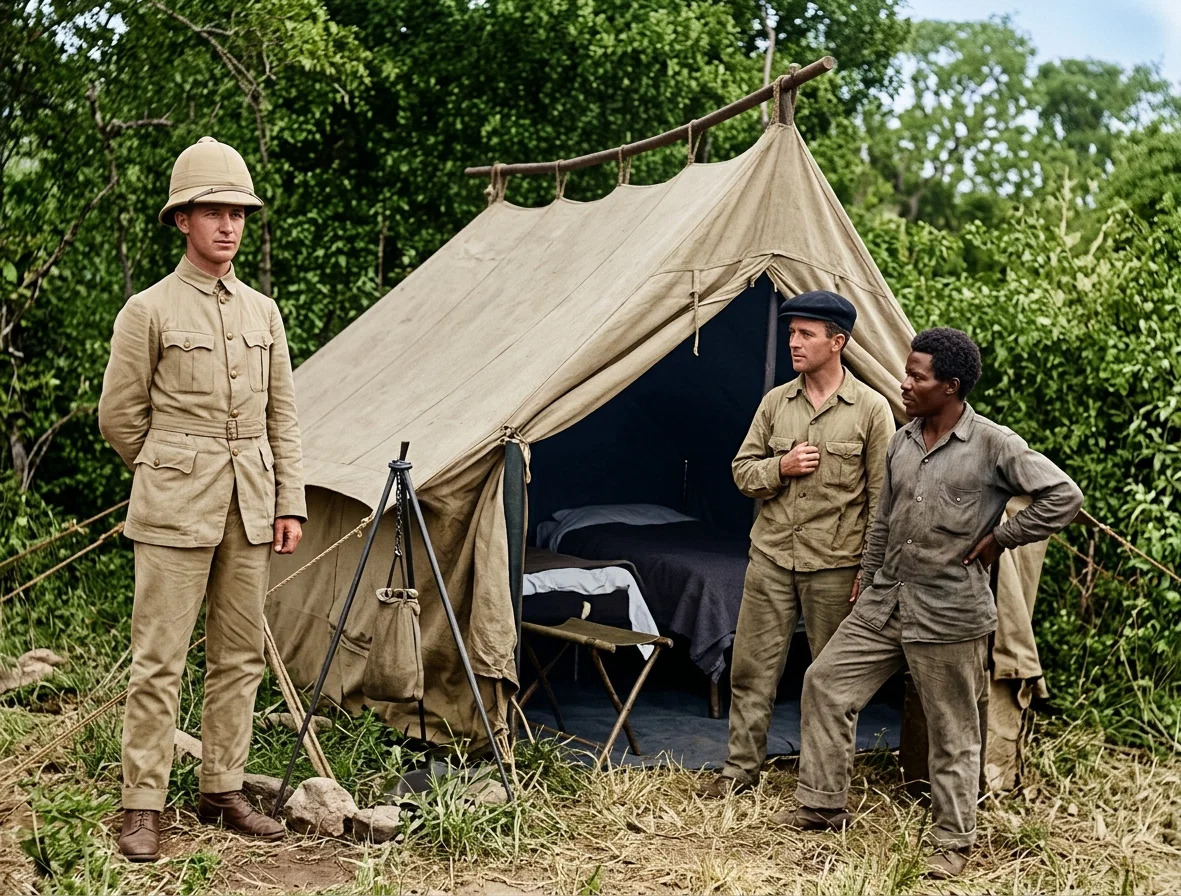
PROSPECTING IN GERMAN EAST AFRICA
FOR MISSION SITE
The church work has also advanced the past year. Thirty-three have been baptized, and many others desire to take this step, but we think it well for them to wait till they can be thoroughly proved. We have about three hundred acres of land under cultivation, besides the store and stock to care for, so our hands are filled to the utmost. Yet God has blessed our efforts, and given us fruit for our labors. I can truly say the work for this mission never looked more encouraging.
M. C. STURDEVANT.
A Workshop in the Wilds
By A. A. Carscallen
We have an excellent carpenter and blacksmith shop, and during the year we have purchased a fine set of carpenter tools, and are doing good work with them now. We were supplied with a turning-lathe several months ago, and as we had no power to turn it, I made use of an old bicycle that was left here by a government employee, who had run into a ditch, and broken the frame of his machine. I removed the tire from the back wheel, and wound the rim full of cord to level it so it would hold a belt. I then made a frame after the order of a grindstone frame, and fastened the wheel in, fastening the pedals and sprocket-wheel at the bottom of the frame, and putting the chain in place. We then lined the wheel up with the pulley of the lathe, and put on the belt. We can now run the turning-lathe at great speed by simply turning the pedals.
We have made good progress with the language, and are getting a few books written, which will always be a help to those who come to work in this field. We have a Kavirondo-English dictionary written, and an English-Kavirondo quite well along. A primer for use in the school is almost completed, and a grammar of the language is being written.
A. A. CARSCALLEN.
Kavirondo Mission, British East Africa.
A Child Married to an Idol
A LITTLE girl of seven was married to the idol god of the temple — which usually means commitment to an evil life. “Tied to a stone,” they call it. In the darkness of the night this bright, innocent little one stood before the stone god in the temple courts, and was heard pleading, “Let me die! O, let me die!”
Latin America
By N. Z. Town.
THE whole world is awakening to the vastness and variety of the resources and possibilities of the twenty republics which reach from Mexico and Cuba on the north to Argentina and Chile on the south, a section of the western hemisphere which includes every variety of climate and product, and representatives of nearly every people.
The total exports and imports of Latin America amount annually to over $2,000,000,000. Argentina alone, with a population of 6,000,000, has a yearly foreign trade of over $700,000,000, a total greater than that of Japan or China. Buenos Aires, the largest city south of the equator, has a population of 1,250,000, and is growing faster than any city in the United States except New York and Chicago. In Buenos Aires is to be found one of the best-equipped newspaper offices in the whole world.
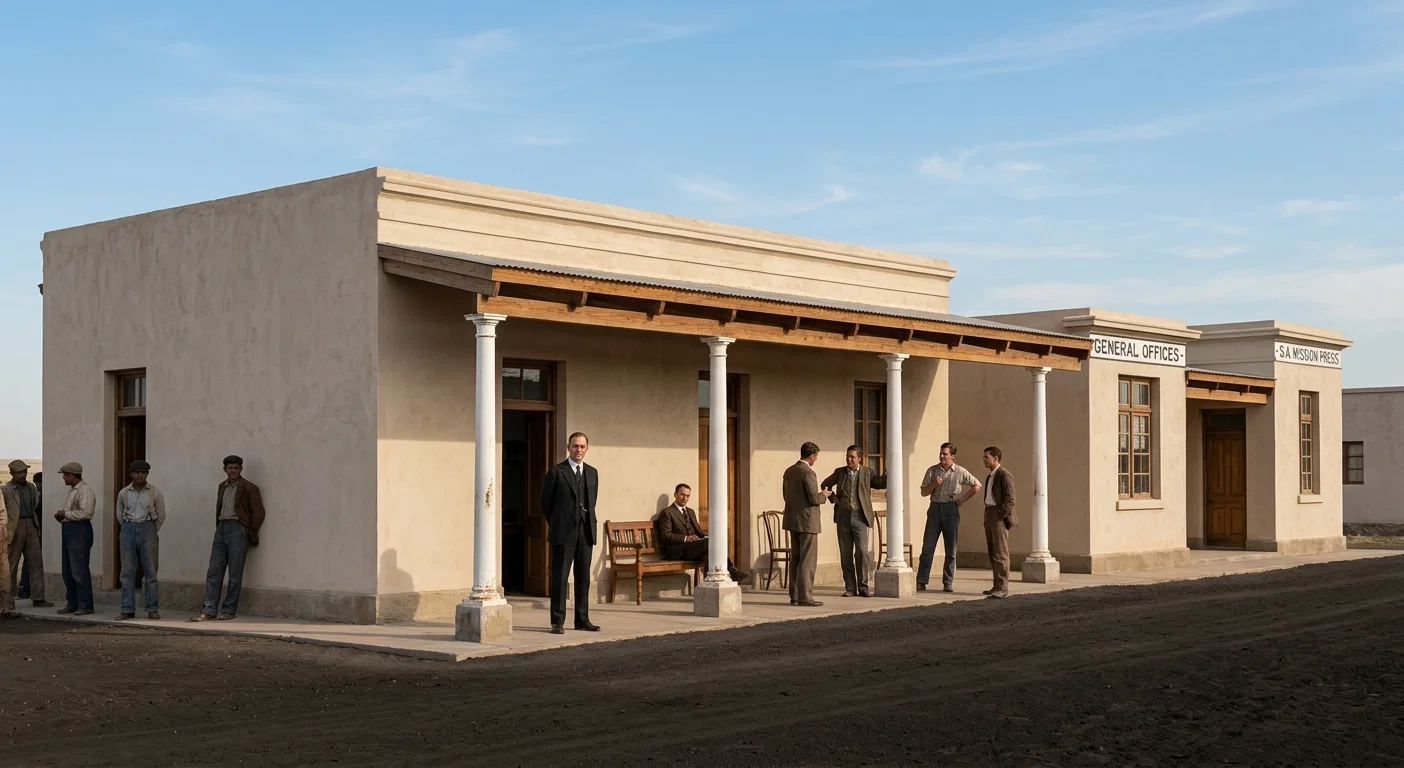
GENERAL OFFICES, INCLUDING PRINTING, FOR SOUTH AMERICA
But intellectually and spiritually these countries are as dark as they are prosperous commercially. In South America from fifty to eighty-five per cent of the people are illiterate, and the number of illegitimate births ranges from eighteen to sixty-eight per cent in the different republics.
The missionary can not but be thankful for the financial progress that is being made, as this enables him more readily to place the gospel in printed form in the homes of this needy people. The Lord is especially blessing the colporteur work throughout Latin America. One worker says:—
“In spite of the fact that eighty-six per cent of the people of Brazil can neither read nor write; in spite of the long distances the poor boys have to travel; in spite of the hot season; in spite of the heavy taxes the canvassers are compelled to pay; in spite of the fact that our workers are inexperienced; and in spite of all the walls the enemy can erect, the battle is on, and the record of sales is continually running higher.”
During the year 1909 the American Bible Society distributed in South America over 60,000 Bibles, Testaments, and Bible portions, an increase of 15,000 copies over the previous year. During the year 1908 the publishing house that prints our Spanish books shipped to the Spanish-speaking fields books to the value of $15,000; in 1909, to the value of $25,000; and during the first six months of 1910, books were sent to the value of $43,000.
The outlook for gospel work in the Spanish-speaking fields was never brighter than at present. The workers in those fields are earnestly pleading with the Foreign Mission Board to send them more men and more means, that they may provide better facilities, and carry the work with greater rapidity while circumstances are so favorable. “The harvest truly is plenteous, but the laborers are few; pray ye therefore the Lord of the harvest, that he will send forth laborers into his harvest.”
N. Z. Town.
Washington, D. C.
In Many Tongues
By E. R. PALMER
In their missionary operations, the Seventh-day Adventists have found the circulation of Bibles and other religious literature to be an important factor, and in nearly every country where mission stations have been opened, small printing-plants have been established. These presses are publishing the good news of salvation in Spanish in Old Mexico; in Spanish, Portuguese, and German in South America; in English, Bengali, Hindu, and Santali in India; in the respective languages of the countries in Japan, Korea, and China; while others in the States and in Europe publish literature in French, German, Danish, Swedish, Spanish, Dutch, Hungarian, Russian, Bohemian, Rumanian, Latonian, Esthonian, and others—a total of sixty-three languages. E. R. PALMER.
Washington, D. C.
China
By R. F. COTTRELL
It is estimated that from the beginning of our work, in 1902, to the close of 1908, the entire circulation of our publications in China was 18,000,000 pages. In 1909 the output was 40,533,400 pages—a very remarkable increase, though an average of only one page to every tenth person. The printing work in Shanghai has been greatly retarded by having no suitable quarters; and to make matters more difficult, half the meager equipment in rented quarters was destroyed by fire last December. The crying need is for means to build a printing-plant to spread the printed page among China’s millions.
The Chinese are pre-eminently a people of books. Buddhism converted them, not by preaching, but by literature. The essay, the pamphlet, the placard, and more recently the newspaper, are the common means of disseminating ideas. Christianity must make a larger use of this method if it is to supersede Buddhism and Confucianism.
R. F. COTTRELL.
Shanghai.
Brazil
By John Lipke
SOME years ago a Brazilian living in the interior of the state of Bahia bought an illustrated Bible. He read parts of it, but nothing seemed to make an impression upon him; he did not obey its teachings. Later he passed through some difficulties. The experience led him to read the Bible, and he received much consolation. He was then ready to obey the Word of God. Through reading the Scriptures he became converted. He found that he must observe the Sabbath, and thought he was the only person in the world who kept it. He began to preach in the market and at street corners, and wrote articles on the Sabbath question for a secular paper.
This brother has been anxiously waiting a long time for a minister to visit, instruct, and baptize himself and others. Recently he wrote that every month for a whole year he has sent a man “with animals” a day’s journey to the landing-place of the steamer to get a minister—but in vain. He writes that the people of the place are astir; they desire to obey the truth, but have no one to teach them. It will take a minister eighteen days by train, steamer, and horseback to reach them.
Sao Paulo. JOHN LIPKE.
Japan
By H. KUNIYA.
I AM now working in Hiroshima with the students. When we came here, some told us that we would never succeed in selling Christian papers in this city, which is the central place of the Buddhists. But, trusting in the Lord, we started to sell. The first day's work demonstrated clearly that the papers could be sold, and, more than that, that a large number could be sold. Brother Y. Seino sold 215 of Owari No Fukuin, our Japanese paper, besides a number of tracts, in one day, working about six and one-half hours. In two weeks (though it rained several days) we sold 1,622 copies of our paper and 686 books and tracts. Our force is made up of eight persons, including myself.
Hiroshima. H. KUNIYA.
Korea
By C. L. Butterfield
ONE colporteur began work last July, and we have been well pleased with the sales made, considering the time he has been able to work, and the kind of literature he had to handle. Our list of salable literature is yet very small, but we are working hard to get more; for we believe that colporteurs will do well in this field. The people are anxious to read, and there are almost unlimited possibilities before us in this work. We are greatly in need of a publishing house and a new printing-press.
C. L. BUTTERFIELD.
Seoul.
The Work in Syria
The editor of the Missionary Review of the World, speaking of work being done in Syria, says:—
“The work in Syria has always been fourfold, and can be understood only when this is borne in mind,—preaching, teaching, translating, and publishing. If we were to select any department of the Syrian work as permanent, it would be translation and publication.”
The Ministry of the Colporteur
ONE writer says: “The ministry of the colporteur is humble in principle, but none the less far-reaching in its results. The striking testimony paid by E. A. Anderson, a missionary in Honan, China, to his two colporteurs, may be applied with equal truth to the whole body of their colleagues: ‘From an evangelistic point of view, the work they accomplish is admirable. How few, comparatively, would hear the gospel were it not for the colporteurs.’”