Your ShelfYour Projects

Signs of the Times, Vol. 22, No. 36.

GOD REQUIRES IMPOSSIBILITIES

Signs of the Times

Sep 10, 1896

Pacific Press Publishing Company · Oakland, California · Sep 10, 1896

GOD REQUIRES IMPOSSIBILITIES.

The above may seem unreasonable, unjust, and inconsistent, but it is none of these, altho it is strictly true. A correspondent writes us from Missouri that we are inconsistent, in teaching that obedience to the commandments of God is necessary, and then saying that “the term ‘saint’ is applied only to those whom God has made holy. Man of himself is asinner. ‘All have sinned and come short of the glory of God.’ Man can not make himself one whit better by anything which he may do of himself.”
We think there is no inconsistency or conflict in these statements. Note:—
1. God requires obedience to his law. That obedience means life. Disobedience means death. “In the way of righteousness [right doing] is life.” Prov. 12: 28. “If thou wilt enter into life, keep the commandments.” Matt. 19: 17. God has given us in ten commandments the summary of all moral principles; the transgression of these is sin (1 John 3: 4; Rom. 7: 7), and “the wages of sin is death” (Rom. 6: 23). The death is in the sin as the tree is in the seed; for “sin, when it is fullgrown, bringeth forth death.” (James 1: 15, R. V.) So much for God’s requirements.
2. Man is a sinner. “All have sinned, and come short of the glory of God.” (Rom. 3: 23.) The glory of God, therefore, is that of which man would not have come short if he had not sinned. The opposite of sin is righteousness, goodness. The law, the reflect of God’s character, is righteous and good, and spiritual (Ps. 119: 138, 142, 144; Rom. 7: 12, 14); and if man had by faithful obedience wrought out the law in his own character, he would have been righteous and holy and good and spiritual, glorifying God by bearing much fruits of righteousness (John 15: 8; Eph. 5: 9). But man, instead of doing this, sinned, became a slave of sin, under bondage to sin. (Rom. 7: 14.) Therefore it is now true that there is “none righteous, no, not one.” “There is none that doeth good, no, not one.” (Rom. 3: 10, 12.) God’s glory is his goodness. (Ex. 33: 18, 19.) Man, a sinner, can not do God’s goodness; in other words he can not keep God’s good, holy, and righteous law. Man can not of himself do what God requires of him. Jesus says, “Without me ye can do nothing.” (John 15: 5.) Therefore God requires of sinful man impossibilities. Man can not of himself do them. The burden of Paul’s argument in Rom. 7: 7–25 is to show that the law is holy and good and spiritual, but he, a carnal man, could not keep it.
3. Is God, therefore, unjust?—By no means. While he requires of sinful man what sinful man can not do, he has made provision in the requirement for the doing of what he requires. Does he say, “Honor thy father and thy mother”?—He who in faith will submit to do the command will find in the command itself power to perform it. Does God say, “Remember the Sabbath day to keep it holy”?—He who in faith submits to the power that gave the command, will find in the command power to perform it. “The words that I speak unto you,” says the Word of God, “they are spirit and they are life.” (John 6: 63.) That word recreates, makes holy, cleanses the heart, that wholly receives it. The sinner is thus made righteous by the power of the word through faith. See John 15: 3; 17: 17; Eph. 5: 26; 1 Peter 1: 22. Then, being made righteous, man can, by the grace of God, and only by his grace, do righteousness; for “he that doeth righteousness is righteous, even as He [God] is righteous.” (1 John 2: 7.) God makes us righteous that we may walk righteously. The tree must be good in order to bear good fruit.
This great truth is illustrated by the impotent (powerless, helpless) man at the pool of Bethesda. See John 5: 1–9. He had in himself no power to rise and walk, but when Jesus spoke and the man received his words, those words gave power to obey. See also the miracle recorded in Acts 3: 1–16. The word of God is all-potent to do for us or in us just what it commands to be done, or promises to do if we will receive it. So while God demands impossibilities of carnal man, he will in the very requirement, if it is received with all the heart, make the carnal man spiritual, able by his grace to be obedient in all things.

Our Rest

“There remaineth therefore a rest to the people of God.” Heb. 4:9.

The Lord’s Rest

This rest, as we learn from the connection, is the Lord’s rest. The promise is left us of entering into his rest. Verse 1.

Present Rest

That rest is not something to which we are to look forward, but it is to be enjoyed in the present. It is a rest that “remaineth.” It has existed since the days of old, and has not been withdrawn.

Resting Now

Evidence of the truth of this is found in the fact that the rest that remains is the Lord’s rest. The Lord is not looking forward to a time when he can rest, but is resting now. He calls us to share his rest with him, saying, “Come unto me, all ye that labor and are heavy laden, and I will give you rest.” Matt. 11:28.

From the Beginning

Since what time has this rest been ready for man? The answer is: “The works were finished from the foundation of the world.” Heb. 4:3. A finished work means rest; and so we read in the next verse that “God did rest the seventh day from all his works.” The Sabbath day—God’s rest—is the sign or seal of creation complete and perfect. “God saw everything that he had made, and, behold, it was very good.” Gen. 1:31. And then he rested from his work. From that time—from the close of the sixth day—God’s rest has been ready for man.

Edenic Rest

And at that time man—the new man whom God had created—entered upon that rest. “The Lord God took the man, and put him into the garden of Eden to dress it and to keep it.” Gen. 2:15. “Eden” means “pleasure” or “delight.” A very literal rendering of the Hebrew would be that the Lord took the man and “caused him to rest in the garden of delight.” Work was given him, but it was work without weariness.

The Rest Lost

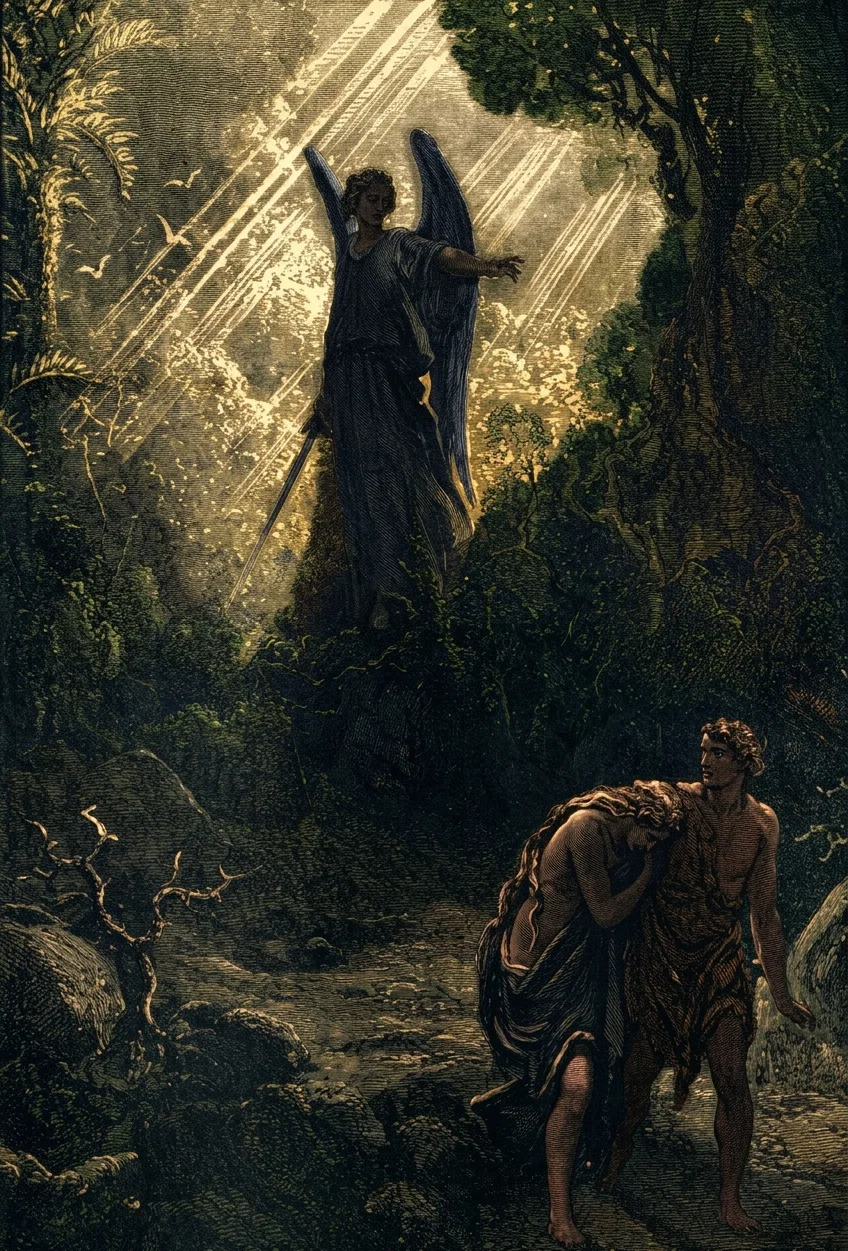
But the man did not continue in that rest. He disobeyed the word of God, and thus lost the rest that was in it. God said, “Because thou hast hearkened unto the voice of thy wife, and hast eaten of the tree, of which I commanded thee, saying, Thou shalt not eat of it; cursed is the ground for thy sake; in sorrow shalt thou eat of it all the days of thy life; thorns also and thistles shall it bring forth to thee; and thou shalt eat the herb of the field; in the sweat of thy face shalt thou eat bread, till thou return unto the ground.”

The Seal of the Rest

Nevertheless God’s rest remained. The Sabbath—the perfect rest of the new earth—still was left to man, as an evidence that God had not cast him off, and as a pledge of the rest in the earth again made new. This perfect Sabbath rest, the seal of a new creation, is found in Christ. “In him were all things created.” Col. 1:16, R. V. “If any man be in Christ, he is a new creature.” 2 Cor. 5:17. Since man lost his rest only by sin, he recovers it only by the righteousness of God in Christ.

Rest in Labor

God’s rest, however, does not mean lazy idleness. Altho God entered into his rest at the creation, Jesus said, “My Father worketh hitherto and I work.” John 5:17. He works by means of his word, on the strength of which he rested. If that word works in us, we also shall find rest in labor. “For we are his workmanship, created in Christ Jesus unto good works.” Eph. 2:10. Just as when God made man he set him to work, yet gave him rest, so when he makes the man new, he makes him new in order that he may work, yet it is restful work.

Rest in Christ

And that is what the Saviour’s call teaches us. When he invites the weary to come to him for rest, he immediately adds, “Take my yoke upon you and learn of me.” Being yoked up with him, we work with him, and he works in us. His works were all done by the word of God. If we, like him, give heed to every word of God, we shall do the works, and find the rest. Who will accept the gracious invitation?
E. J. W.

IS THE “OLD GUARD” DEAD?

Somewhere about two score years ago a devoted woman wrote, “The church has fallen, the beautiful church, And her shame is her boast and pride.” The shameless ways that were then used to squeeze money from the reluctant church members and the uninterested worldling, were generally rebuked by the religious press and from many pulpits with unsparing severity; but now scarcely a voice is raised against methods even more shameless. Among the later schemes are feet auctions, in which the feet of females—ought we to say “ladies”?—are exposed for sale and auctioned off to the highest bidder, the rest of the person being hidden behind a curtain till after the foot show is over. The Union Signal commenting on an affair of this kind, says:—
It is generally supposed, however, that the church has a trusty old guard, a saving few among the mature heads and pious hearts, which shuts out the stream of worldliness which the young and thoughtless sometimes seek to turn upon it. But what shall we say when even the guard goes to sleep, and allows Trilby to ply her charms within the sacred altar of the church for gold?
It was said of Napoleon’s favorite body of troops, “The old guard dies, but never surrenders.” Is not the “old guard” in many of the popular churches dead? or dying? or in the “guard-house” as “old fogies”? After describing a wretched scene of this kind, the Signal continues:—
Was this not simply an appeal to the sensuous nature? If we are amazed that young ladies were found willing to pander to the lower nature of the young men for the express purpose of squeezing money out of them, willing to thus debase and degrade themselves, what shall we say of sober, elderly people, who could not make the plea of the uninformed, unthinking, unsophisticated, allowing such things? Were such performances common in the church, there would be little hopes of saving our young people from the dance hall and the brothel, to say nothing of inciting them to an ideal manhood and womanhood, from which should come an ideal civilization, representing the highest, the purest, the best, possibilities of mankind. Let such entertainments continue, and we might expect in time a renewal of the worst phases of the Greek Eleusinian mysteries.
But may we not expect their continuance? We have the ancient mysteries, sports, gladiatorial contests, holy days, such as Sunday and Easter, the early sunrise worship with face to the sun, why not the Eleusinian mysteries? It is only the mystery of God—Christ in the heart—that can prevent as absolute a lapse from him, while professing his name, as heathenism presents; but the church is endeavoring to counterfeit the mystery of God by bringing in the kingdom of Christ “through the gateway of politics.”
Would to God that none of these things existed in the church of Christ. We are pained as we note them. But they do exist, and the Inspired Word told us eighteen centuries ago that they would exist as signs of the last days. See 2 Tim. 3:1–5, and elsewhere. The only reformation is an individual turning to God with all the heart. There never has been true reformation in the church of any other kind. But that reformation leads to “the commandments of God and the faith of Jesus.” The church as a whole will not take these. But will not you, reader?

Studies in Romans

Confirming the Promises.
With this number we finish our study of the book of Romans. While the study has covered a long time, and there have been many articles, it has not nevertheless been exhaustive. Indeed, it is impossible to have an exhaustive study of the Bible; for no matter how thoroughly we study any portion of it, we shall still find ourselves but upon the threshold. The more we study the Bible, the more will our best study seem to be only preliminary to further study that will be seen to be necessary. But altho we can not expect ever to exhaust the truth, so that we can say that we have it all, we may be sure that as far as we have gone we have only the truth. And this assurance arises not from any wisdom that we have, but solely from adhering closely to the word of God, and not allowing the alloy of human ideas to mingle with its pure gold.
The portion of Scripture which we have before us in this study, namely, from the eighth verse of the fifteenth chapter of Romans to the close of the sixteenth chapter, is long, but it is difficult to find any place for dividing it, especially since much of it is devoted to personal matters. On account of the length of it, we have not reprinted the text. Many verses will however be found in the course of the lesson, and it is expected that the student will carefully read the entire portion from the Bible itself.
“A Minister of the Circumcision.”—“Jesus Christ was a minister of the circumcision.” Bear this in mind. Shall we learn from it that he saves only the Jews?—By no means; but we must learn from it that “salvation is of the Jews.” John 4:22. “Jesus Christ our Lord” was “made of the seed of Davidaccording to the flesh.” Rom. 1:3. He is the “root of Jesse,” which stands “for an ensign of the people,” to which the gentiles seek. Isa. 11:10; Rom. 15:12. The gentiles who find salvation must find it in Israel. None can find it anywhere else.
“The Commonwealth of Israel.”—In writing to the brethren at Ephesus, the apostle Paul refers to the time before they were converted as the time when they were “gentiles in the flesh,” and says, “At that time ye were without Christ, being aliens from the commonwealth of Israel, and strangers from the covenants of promise, having no hope, and without God in the world.” Eph. 2:11, 12. That is, outside of Israel there is no hope for mankind. They who are “aliens from the commonwealth of Israel” are “without Christ,” and “without God in the world.” In Christ Jesus we are brought to God. But being brought to God we are “no more strangers and foreigners, but fellow-citizens with the saints, and of the household of God.” Verses 18, 19. Therefore we have two things most clearly and positively taught, namely, That none are saved unless they are of the house of Israel; and, That none are of the house of Israel except those who are in Christ.
Confirming the Promises.—“Jesus Christ was a minister of the circumcision for the truth of God, to confirm the promises made unto the fathers.” That shows that all the promises of God to the fathers were made in Christ. “For how many soever be the promises of God, in him is the yea; wherefore also through him is the Amen.” 2 Cor. 1:20. “To Abraham and his seed were the promises made. He saith not, And to seeds, as of many; but as of one, And to thy seed, which is Christ.” Gal. 3:16. There was therefore never any promise made to the fathers which was not to be obtained only through Christ, and therefore through the righteousness which is by him.
Christ Not Divided.—Jesus Christ is declared to be a minister of the circumcision. Suppose now we hold that the promises to the fathers mean the natural descendants of Abraham, Isaac, and Jacob; we should then be shut up to the conclusion that only those natural descendants,—those who are circumcised,—can be saved. Or, at least, we should be driven to the conclusion that Christ does something for them that he does not do for the rest of mankind. But Christ is not divided. All that he does for one man he does for every man. All that he does for any man he does through his cross; and he is crucified but once. “God so loved the world, that he gave his only-begotten Son, that whosoever believeth in him should not perish, but have everlasting life.” Therefore since Christ is the minister of the circumcision to confirm the promises made unto the fathers, it is evident that those promises included all mankind. “There is no difference between the Jew and the Greek; for the same Lord over all is rich unto all that call upon him.” Rom. 10:12. “Is he the God of the Jews only? is he not also of the gentiles? Yes, of the gentiles also; seeing it is one God, which shall justify the circumcision by faith, and uncircumcision through faith.” Rom. 3:29, 30.
The “Tabernacle of David.”—At the time when the apostles and elders were assembled in Jerusalem, Peter told how he had been used by the Lord to carry the Gospel to the gentiles. Said he, “God, which knoweth the hearts, bare them witness, giving them the Holy Ghost, even as he did unto us; and put no difference between us and them, purifying their hearts by faith.” Acts 15:8, 9. Then James arose, and said, “Simeon hath declared how God at the first did visit the gentiles, to take out of them a people for his name. And to this agree the words of the prophets; as it is written, After this I will return, and will build again the tabernacle of David, which is fallen down; and I will build again the ruins thereof, and I will set it up; that the residue of men might seek after the Lord, and all the gentiles, upon whom my name is called, saith the Lord, who doeth all these things. Known unto God are all his works from the beginning of the world.” Acts 15:14–18. That is, the house of David is to be built up only by the preaching of the Gospel to the gentiles, and the taking from them of a people for God. And this was the purpose of God from the beginning, as the prophets testify. “To him give all the prophets witness, that through his name whosoever believeth in him shall receive remission of sins.” Acts 10:43.
“The Blessing of Abraham.”—Again we read that “Christ hath redeemed us from the curse of the law, being made a curse for us . . . that the blessing of Abraham might come on the gentiles through Jesus Christ; that we might receive the promise of the Spirit through faith.” Gal. 3:13, 14. The curse that Christ was made for us, was the cross, as is stated in the words omitted from the text just quoted. Therefore we learn that the promises to the fathers were assured only by the cross of Christ. But Christ tasted death for every man. Heb. 2:9. He was “lifted up, that whosoever believeth in him should not perish, but have eternal life.” John 3:14, 15. Therefore the promises made to the fathers were simply the promises of the Gospel, which is “to every creature.” By the cross Christ confirms the promises made to the fathers, in order “that the gentiles might glorify God for his mercy.”
“One Fold, and One Shepherd.”—In the tenth chapter of John we find some of the most beautiful, tender, and encouraging words of the Lord Jesus. He is the Good Shepherd. He is the gate by which the sheep enter into the fold. He gives his life to save the sheep. Then he says, “And other sheep I have, which are not of this fold; them also I must bring, and they shall hear my voice; and there shall be one fold, and one Shepherd.” Verse 16. Therefore when his work is completed, there will be but one fold, and he will be the Shepherd. Let us see who will compose that flock.
The Lost Sheep.—In the fifteenth chapter of Luke, that wonderful bouquet of blessed illustrations of the love and mercy of the Saviour, Jesus represents his work as that of the shepherd going to seek the lost and wandering sheep. Now who are the sheep that he is seeking? He himself gives the answer: “I am not sent but unto the lost sheep of the house of Israel.” Matt. 15:24. This is emphatic. He is sent to none except to the lost sheep of the house of Israel. Therefore it is evident that all the sheep whom he finds, and whom he brings back to the fold, will be Israel. And so it is just as evident that the “one fold” will be the fold of Israel. There will be no other fold, since it is to be “one fold.” And he will be the Shepherd. To-day, as well as in the days of old, we may pray, “Give ear, O Shepherd of Israel, thou that leadest Joseph like a flock; thou that dwellest between the cherubim, shine forth.” Ps. 80:1.
The Characteristic of the Sheep.—Those who are following Christ are his sheep. But he has “other sheep.” There are many who are not now following him, who are his sheep. They are lost and wandering, and he is seeking them. What determines who are his sheep? Hear him tell: “The sheep hear his voice.” “Other sheep I have, which are not of this fold; them also I must bring, and they shall hear my voice.” “Ye believe not, because ye are not of my sheep, as I said unto you. My sheep hear my voice.” John 10:3, 16, 26, 27. When he speaks, those who are his sheep will hear his voice, and come to him. The word of the Lord is the test as to who are his sheep. Every one, therefore, who hears and obeys the word of the Lord, is of the family of Israel; and those who reject or neglect the word, are eternally lost. “If ye be Christ’s, then are ye Abraham’s seed, and heirs according to the promise.” Gal. 3:29.
“One Faith.”—We may now stop to see how this that the apostle has said about Christ’s being the minister of the circumcision, to confirm the promises made to the fathers, in order that the gentiles might glorify God, connects with what he has said in the fourteenth chapter, and in the preceding part of this. “Him that is weak in the faith receive ye, but not to doubtful disputations.” Mark this: They who are to be received “as Christ also received us to the glory of God,” are those who have the faith. Now there is but “one faith,” as there is but “one Lord.” Eph. 4:5. And faith comes by hearing the word of God. Rom. 10:17. Since there is to be but one fold, and Christ, the one Shepherd, is not divided, there must be no division in the fold. Disputings, which come from human wisdom and human ideas, are to be left out, and the word of God alone followed. That allows of no disputing, since it tells every one and the same thing. This is the rule: “Wherefore laying aside all malice, and all guile, and hypocrisies, and envies, and all evil speakings, as newborn babes, desire the sincere milk of the word, that ye may grow thereby; if so be ye have tasted that the Lord is gracious.” 1 Peter 2:1–3.
Faith, Hope, Joy, and Peace.—“Now the God of hope fill you with all joy and peace in believing, that ye may abound in hope, through the power of the Holy Ghost.” Here we have faith and hope, joy and peace. The God of hope is to fill us with all joy and peace in believing, and this is to be by the power of the Holy Ghost. This connects the present instruction with that of the fourteenth chapter, where we are told that “the kingdom of God is not meat and drink; but righteousness, and peace, and joy in the Holy Ghost.”
The Gospel Commission.—When Jesus was about to leave this world, he told his disciples that they should first receive power by the Holy Spirit, and then, said he, “Ye shall be witnesses unto me both in Jerusalem, and in all Judea, and in Samaria, and unto the uttermost part of the earth.” Acts 1:8. “To the Jew first, and also to the Greek,” but to all alike, and the same Gospel to all. So Paul declared that his work as a minister of the Gospel consisted in “testifying both to the Jews, and also to the Greeks, repentance toward God, and faith toward our Lord Jesus Christ.” Acts 20:21. So in our lesson he tells us that as “the minister of Jesus Christ to the gentiles, ministering the Gospel of God,” he had, “through mighty signs and wonders, by the power of the Spirit of God,” “fully preached the Gospel of Christ” “from Jerusalem and round about unto Illyricum.” Rom. 15:16–19.
Partaking the Same Spiritual Things.—The apostle, speaking of his desire to visit the Romans, said that he hoped to see them when he took his journey into Spain; “but now,” said he, “I go unto Jerusalem to minister unto the saints. For it hath pleased them of Macedonia and Achaia to make a certain contribution for the poor saints which are at Jerusalem. It hath pleased them verily; and their debtors they are. For if the gentiles have been made partakers of their spiritual things, their duty is also to minister unto them in carnal things.” A very simple statement, but it shows that the gentiles received nothing except that which came from the Jews. The spiritual things of which the gentiles had been made partakers came from the Jews, and were ministered to them by Jews. Both partook of the same spiritual meat, and therefore the gentiles showed their gratitude by ministering to the temporal necessities of the Jews. So here again we see but one fold and one Shepherd.
The God of Israel.—Many times in the Bible God is declared to be the God of Israel. Peter, full of the Holy Spirit, immediately after the healing of the lame man, said to the people, “The God of Abraham, and of Isaac, and of Jacob, the God of our fathers, hath glorified his Son Jesus.” Acts 3:13. Even in this age, therefore, God is identified as the God of Abraham, Isaac, and Jacob,—the God of Israel. God desires to be known and remembered, and so we read his words, “Speak thou also unto the children of Israel, saying, Verily my Sabbaths ye shall keep; for it is a sign between me and you throughout your generations; that ye may know that I am the Lord that doth sanctify you.” “Wherefore the children of Israel shall keep the Sabbath, to observe the Sabbath throughout their generations, for a perpetual covenant. It is a sign between me and the children of Israel forever; for in six days the Lord made heaven and earth, and on the seventh day he rested, and was refreshed.” Ex. 31:13, 16, 17. God is the God of Israel. True, he is the God of the gentiles also, but only as they accept him, and become Israel through the righteousness by faith. But Israel must keep the Sabbath. It is the sign of their connection with God.
Greetings.—Two-thirds of the last chapter of Romans consists of greetings. “Greet Priscilla and Aquila my helpers in Christ Jesus.” “Likewise greet the church that is in their house.” “Greet Mary, who bestowed much labor on us.” “Salute Andronicus and Junia, my kinsmen.” “Greet Amplias my beloved in the Lord.” “Salute Urbane, our helper in Christ, and Stachys my beloved.” “Salute Tryphena and Tryphosa, who labor in the Lord.” “Salute Philologus, and Julia, Nereus, and his sister, and Olympias, and all the saints which are with them.” And so the list runs, including both men and women impartially. Let one but read that blessed list, realizing that it shows not only the largeness and heartiness of Paul’s sympathy, but also the special care which the Holy Spirit has for each individual member of the household of faith, singling them out by name, and there will be no questioning as to why such things were written.
But one thing is very significant, and that is the fact that there is no mention of Peter, who is claimed to have been “the first Bishop of Rome.” We may sometimes learn as much by what the Bible does not say as by what it does say. From what is not said in this place we may learn that so far from being Bishop of Rome, Peter was not in Rome at all when Paul wrote, and that if he was ever in Rome it was after the Epistle to the Romans was written, and long after the church was established and flourishing there. For it is most certain that in saluting the members of the church by name he would not have omitted the name of the chief person in it, whose hospitality he had once shared in Jerusalem for fifteen days. Of course there is abundance of the most positive evidence that neither the church of Christ nor the church of Rome was founded upon Peter; but if there were no other, this testimony of the sixteenth chapter of Romans would be sufficient to settle the matter.
In Conclusion.—“Now to him that is able to establish you according to my Gospel and the preaching of Jesus Christ, according to the revelation of the mystery which hath been kept in silence through times eternal, but now is manifested, and by the scriptures of the prophets, according to the commandment of the eternal God, is made known unto all the nations unto obedience of faith; to the only wise God, through Jesus Christ, to whom be the glory for ever. Amen.” R.V.
What a magnificent conclusion! It reaches from eternity to eternity. The Gospel of God is the thing of the ages. It was kept secret in the mind of God from times eternal. Christ “was foreordained before the foundation of the world.” 1 Peter 1:19, 20. But now the mystery is “made manifest.” Not simply is it made manifest by the preaching of the apostles, but “according to the commandment of the everlasting God,” “by the scriptures of the prophets” it is “made known to all nations, for the obedience of faith.” The Gospel plan originated in the mind of God in the eternity of the past; patriarchs, prophets and apostles have worked in unison in making it manifest; and “in the ages to come” it will be both the science and the song of the redeemed “of all nations, and kindreds, and people, and tongues,” who shall gather with Abraham, Isaac and Jacob in the kingdom of God, and will say, “Unto him that loved us, and washed us from our sins in his own blood, and hath made us kings and priests unto God and his Father; to him be glory and dominion for ever and ever. Amen.” E. J. W.

THE SABBATH AND THE SUNDAY.

Some Historical Facts Worth Remembering.

THERE are many persons who have not time to read long arguments; to such we wish to present some simple facts on the much agitated and vitally important question of the Sabbath. The chronology used is Usher’s, down to the events in the life of Jesus, when Hale’s is used.

In Bible Times.

It is a Fact—
1. That in the beginning the Sabbath was instituted by the Creator in three distinct acts—he rested on the seventh day, he blessed it, he sanctified it, or set it apart, for man (Mark 2:27), hence for the race. Gen. 2:2, 3. B.C. 4004
2. That the Sabbath was undoubtedly observed as a worship day. Margin of Gen. 4:3, compare Num. 28:9, 10. About B.C. 3980
3. That a reform took place on the Sabbath in Egypt through Moses, suppressed by Pharaoh. Ex. 5:5–9. Note Pharaoh’s complaint in verse 5. B.C. 1491
4. That Israel were led out of Egypt that they might serve God. Ex. 8:1. B.C. 1491
5. That the first test of service was the observance of the Sabbath. Ex. 16:4, 26–30. B.C. 1491
6. That a few days later God’s voice proclaimed, and his finger wrote, in the very heart of the moral law the law of the Sabbath, basing it on the facts of its institution, 2,513 years before. Ex. 20:8–11; 24:12; 31:18. B.C. 1491
7. That for forty years the Lord pointed out the definite day by a three-fold weekly miracle in the fall of the manna, showing that one day only, namely the seventh, of the weekly cycle, could be the Sabbath, holy to the Lord. Exodus 16. B.C. 1491–1451
8. That the Sabbath is a sign of the Godhead, the creative power of God, and hence a test of obedience. Ex. 3:17; Eze. 20:20. B.C. 1491
9. That the Sabbath is also a sign of God’s power to redeem, sanctify and save. (Deut. 4:34–37; Ex. 15:13; Deut. 5:15; Eze. 20:12), an exercise also of creative power (Eph. 2:10). B.C. 1491
10. That the universal idolatrous worship at this time and for centuries later was the worship of the sun, the most abominable and degrading of all pagan worship. Sunday is “the wild solar holiday of all pagan times.”—North British Review, vol. 18, p. 409. See also any standard English dictionary; Schaff-Herzog Ency., article “Sunday;” Jennings’s “Antiquities,” book 3, chapter 3; Talbot W. Chambers, Old Testament Student, January, 1886; Encycl. Brit. article, “Phœnicia,” vol. 18, pp. 802, 803.
11. That against sun-worship God warned his people under penalty of death. Deut. 4:19; 13:6–11. B.C. 1451
12. That these heathen religions had their “times,” and the special “time” of the sun-worship was the Sun day, “the wild solar holiday.” The worship of these gods and the observance of these times were expressly forbidden of God.Lev. 19:26; Deut. 18:10, 11. B.C. 1490, 1451
12. That notwithstanding this the first idolatry of Israel was the licentious worship of the Egyptian sun-god Apis, or sacred bull. Ex. 32:1–6. B.C. 1491
13. That as the custom of sun-worshipers was to turn the face to the east in worship, the door of God’s temple was placed toward the east, while the center of worship, the ark of God, was placed toward the west, so that the worshiper at the door would of necessity turn his face to the west, and would thus show he was not a sun-worshiper. Ex. 26:18, 20, 22, 26. B.C. 1491
14. That Israel’s greatest and worst idolatry was the worship of the sun under the name of the Phenician sun-god Baal. See 1 Kings 16:31–33; 18:17–29; Eze. 8:5–16. B.C. 906, 594
15. That when Israel went into the idolatry of sun-worship, they always transgressed God’s Sabbath. Compare Eze. 8:16 with Eze. 20:24–26, and Jer. 7:9, 10; 17:21–23. B.C. 593, 601
16. That God promised rich blessings through his prophet for faithful Sabbath keeping to both Jews and Gentiles. Isa. 56:1–7; 58:1, 13, 14. B.C. 698
17. A partial reform in Sabbath observance was wrought through Nehemiah, but it was in many cases of form rather than spirit. Neh. 13:15–22. B.C. 445
18. That among the first reforms wrought by Jesus Christ was to bring Sabbath observance back to the basis of the Sabbath law. John 5:9; Matt. 12:1–12; John 9:14. In A.D. 28
19. That the Sabbath day—the seventh day—is specifically shown to be the day just before the first day of the week. Matt. 28:1; Mark 16:1, 2. A.D. 31
20. That this day, which came just before the first day of the week, is the Sabbath according to the commandment (Luke 23:56; 24:1), and therefore the seventh day of the commandment (Ex. 20:8–11), is the seventh day of the week. A.D. 31
21. That “the first day of the week,” after which Christ rose from the dead, is ever mentioned as a day of secular activity, of anxiety, and unrest on the part of the apostles, but never as a holy day or day of worship. See Luke 24.
22. That all through the Acts of the apostles the seventh day, the day observed by the Jews, is the only day known by the sacred title of the Sabbath. See Acts 13:42, 44; 15:21; 16:13; 17:2; 18:4. A.D. 63
23. That the first day is ever known by no other name than plain first day of the week in the eight times of its occurrence. Matt. 28:1; Mark 16:2, 9; Luke 24:1; John 20:1, 19; Acts 20:7; 1 Cor. 16:2. A.D. 38–96
24. That the Jews kept but the one weekly Sabbath, namely, the seventh day, and that in this they had “the form of knowledge and of the truth in the law,” hence the day they kept was after the knowledge and truth of God. It was the right day wrongly kept.
25. That the last mention of the Sabbath of the Creator is in Rev. 1:10 under the title “the Lord’s day.” See Mark 2:28; Ex. 20:10; Isa. 58:13. A.D. 96
Here are Bible facts, dear reader, relative to the Sabbath and Sunday during the Bible times of earth’s history. Search the records, that you may know the truth, and, knowing it, decide for God and eternal life.
Continue reading: Genuine Faith