Your ShelfYour Projects

Signs of the Times, Vol. 23, No. 43.

Editorial

Signs of the Times

Nov 4, 1897

Pacific Press Publishing Company · Oakland, California · Nov 4, 1897

Editorial
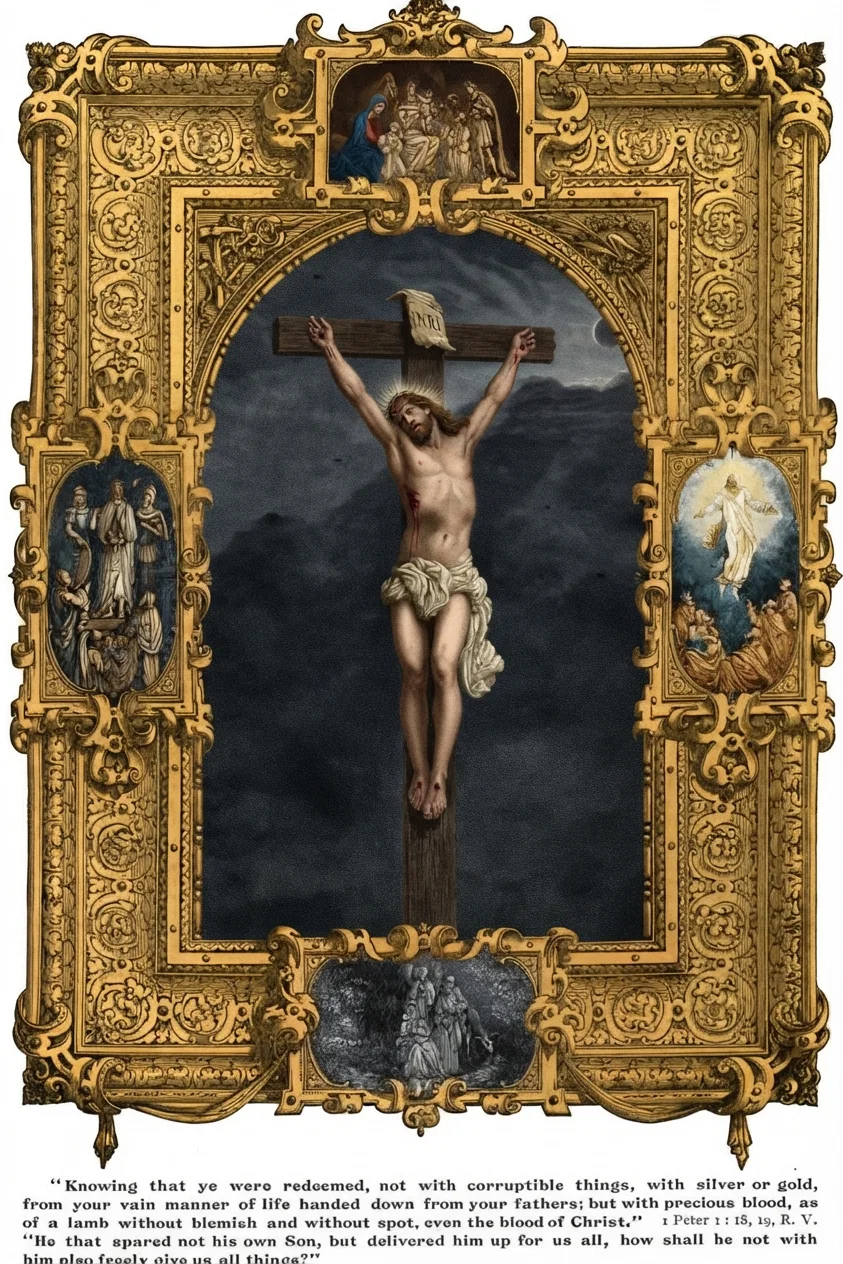
Acceptance with God.—Many people hesitate to make a start to serve the Lord, because they fear that God will not accept them; and thousands who have been professed followers of Christ for years are still doubting their acceptance with God. For the benefit of such I write, and I would not bewilder their minds with speculations, but will endeavor to give them the simple assurance of God's Word.
A Purchased Possession.—"Will the Lord receive me?" I reply by another question, Will a man receive that which he has bought? If you go to the store and make a purchase, will you receive the goods when they are delivered? Of course you will; there is no room for any question about it. The fact that you bought the goods, and paid your money for them, is sufficient proof, not only that you are willing, but that you are anxious, to receive them. If you did not want them, you would not have bought them. Moreover, the more you paid for them the more anxious you are to receive them. If the price that you paid was great, and you had almost given your life to earn it, then there can be no question but that you will accept the purchase when it is delivered. Your great anxiety is lest there should be some failure to deliver it.
Now let us apply this simple, natural illustration to the case of the sinner coming to Christ. In the first place, he has bought us. "What? know ye not that your body is the temple of the Holy Ghost which is in you,
which ye have of God, and ye are not your own? For ye are bought with a price." 1 Cor. 6:19, 20.
The price that was paid for us was his own blood—his life. Paul said to the elders of Ephesus: "Take heed therefore unto yourselves, and to all the flock, over the which the Holy Ghost hath made you overseers, to feed the church of God, which he hath purchased with his own blood." Acts 20:28. "For as much as ye know that ye were not redeemed with corruptible things, as silver and gold, from your vain conversation [manner of life] received by tradition from your fathers; but with the precious blood of Christ, as of a lamb without blemish and without spot." 1 Peter 1:18, 19. He "gave himself for us." Titus 2:14. He "gave himself for our sins, that he might deliver us from this present evil world, according to the will of God and our Father." Gal. 1:4.
"Knowing that ye were redeemed, not with corruptible things, with silver or gold, from your vain manner of life handed down from your fathers; but with precious blood, as of a lamb without blemish and without spot, even the blood of Christ." 1 Peter 1: 18, 19, R. V. "He that spared not his own Son, but delivered him up for us all, how shall he not with him also freely give us all things?" Rom. 8: 32.
He bought not a certain class, but the whole world of sinners. "For God so loved the world, that he gave his only-begotten Son." John 3:16. Jesus said, "The bread that I will give is my flesh, which I will give for the life of the world." John 6:51. "For when we were yet without strength in due time Christ died for the ungodly." "God commendeth his love toward us, in that, while we were yet sinners, Christ died for us." Rom. 5:6, 8.
The price paid was infinite, therefore we know that he very much desired that which he bought. He had his heart set on obtaining it. He could not be satisfied without it. See Phil. 2:6-8; Heb. 12:2; Isa. 53:11.
It Was His Bargain.—"But I am not worthy." That means that you are not worth the price paid, and therefore you fear to come lest Christ will repudiate the purchase. Now you might have some fear on that score if the bargain were not sealed, and the price were not already paid. If he should refuse to accept you, on the ground that you are not worth the price, he would not only lose you, but also the amount paid. Even thothe goods for which you have paid are not worth what you gave for them, you yourself would not be so foolish as to throw them away. You would rather get some return for your money than get nothing.
But, further, you have nothing to do with the question of worth. When Christ was on earth in the interest of the purchase, he "needed not that any should testify of man; for he knew what was in man." John 2:25. He made the purchase with his eyes open, and he knew the exact value of that which he bought. He is not at all disappointed when you come to him and he finds that you are worthless. You have not to worry over the question of worth; if he, with his perfect knowledge of the case, was satisfied to make the bargain, you should be the last one to complain.
For, most wonderful truth of all, he bought you for the very reason that you were not worthy. His practised eye saw in you great possibilities, and he bought you, not for what you were then or are now worth, but for what he could make of you. He says, "I, even I, am he that blotteth out thy transgressions for mine own sake." Isa. 43:25. We have no righteousness, therefore he bought us, "that we might be made the righteousness of God in him." Says Paul: "For in him dwelled all the fulness of the Godhead bodily. And ye are complete in him, which is the Head of all principality and power." Col. 2:9, 10.

How Christ Gets Glory.—Here is the whole process:—

"We all . . . were by nature the children of wrath, even as others. But God, who is rich in mercy, for his great love wherewith he loved us, even when we were dead in sins, hath quickened us together with Christ (by grace ye are saved), and hath raised us up together, and made us sit together in heavenly places in Christ Jesus; that in the ages to come he might show the exceeding riches of his grace in his kindness toward us through Christ Jesus. For by grace are ye saved through faith; and that not of yourselves; it is the gift of God; not of works, lest any man should boast. For we are his workmanship, created in Christ Jesus unto good works, which God hath before ordained that we should walk in them." Eph. 1:3-10.
We are to be "to the praise of the glory of his grace." This we could not be if we were originally worth all he paid for us. There would in that case be no glory to him in the transaction. He could not, in the ages to come, show in us the riches of his grace. But when he takes us, worth nothing, and at the last presents us faultless before the throne, it will be to his everlasting glory. And then there will not be any to ascribe worthiness to themselves. Throughout eternity, the sanctified hosts will unite in saying to Christ: "Thou art worthy; . . . for thou wast slain, and hast redeemed us to God by thy blood out of every kindred, and tongue, and people, and nation; and hast made us unto our God kings and priests." "Worthy is the Lamb that was slain to receive power, and riches, and wisdom, and strength, and honor, and glory, and blessing." Rev. 5:9, 10, 12.
The Doubting "But."—Surely all doubt as to acceptance with God ought to be set at rest. But it is not. The evil heart of unbelief still suggests doubts. "I believe all this, but—." There, stop right there; if you believed you wouldn't say "but." When people add "but" to the statement that they believe, they really mean, "I believe, but I don't believe." But you continue: "Perhaps you are right, but hear me out. What I was going to say is, I believe the Scripture statements that you have quoted,
but the Bible says that if we are children of God we shall have the witness of the Spirit, and will have the witness in ourselves; and I don't feel any such witness, therefore I can't believe that I am Christ's. I believe his Word, but I haven't the witness." I understand your difficulty; let me see if it can not be removed.
As to your being Christ's, you yourself can settle that. You have seen what he gave for you. Now the question is, Have you delivered yourself to him? If you have, you may be sure that he has accepted you. If you are not his, it is solely because you have refused to deliver to him that which he has bought. You are defrauding him. He says, "All day long I have stretched forth my hands unto a disobedient and gainsaying people." Rom. 10:21. He begs you to give him that which he has bought and paid for, yet you refuse, and charge him with not being willing to receive you. But if from the heart you have yielded yourself to him to be his child, you may be assured that he has received you.
In His Word.—Now as to your believing his words, yet doubting if he accepts you, because you don't feel the witness in your heart, I still insist that you don't believe. If you did, you would have the witness. Listen to his Word: "He that believeth on the Son of God hath the witness in himself; he that believeth not God hath made him a liar, because he believeth not the record that God gave of his Son." 1 John 5:10. To believe in the Son is simply to believe his Word and the record concerning him. And "he that believeth on the Son of God hath the witness in himself." You can't have the witness until you believe; and as soon as you do believe, you have the witness. How is that?—Because your belief in God's Word is the witness. God says so: "Now faith is the substance of things hoped for, the evidence of things not seen." Heb. 11:1. If you should hear God say with an audible voice that you are his child, you would consider that sufficient witness. Well, when God speaks in his Word, it is the same as tho he spoke with an audible voice; and your faith is the evidence that you hear and believe. "The Spirit itself beareth witness with our spirit, that we are the children of God." Rom. 8:16. How is the witness given?—By the Word. There the witness is written, and the Holy Spirit brings to our remembrance the words recorded.
Go On unto Perfection.—This assurance does not warrant us in relaxing our diligence and settling down contentedly, as tho we had gained perfection. We must remember that Christ accepts us not for our sake, but for his own sake; not because we are perfect, but that in him we may go on unto perfection. He blesses us, not because we have been so good that we have deserved a blessing, but in order that in the strength of the blessing we may turn away from our iniquities. Acts 3:26. To every one that believes in Christ, the power—right or privilege—is given to become the sons of God. John 1:12, margin. It is by the "exceeding great and precious promises" of God through Christ that we are "made partakers of the divine nature." 2 Peter 1:4.

WITNESSING FOR GOD.

A Study in the Apocalypse.

“THE Revelation of Jesus Christ, which God gave him to show unto his servants; . . . and he sent and signified it by his angel unto his servant John; who bare witness of the Word of God, and of the testimony of Jesus Christ, even of all things that he saw. Blessed is he that readeth, and they that hear the words of the prophecy, and keep the things which are written therein; for the time is at hand.” Rev. 1:1-3, R. V.
In the SIGNS OF THE TIMES of October 14 a brief study was given of the first verse of the first chapter of the Revelation. We there learned that the book was not designed of God to be a mere compendium of prophetic forecasts, interspersed with practical instruction and exhortation, but is, indeed, to every child of faith, the revelation of Jesus Christ, the revelation of the Godhead in him; for that was the revelation which God gave him to give to his servants. We also learned how wonderfully wise and good God’s plan was in revealing himself through Jesus Christ, and associating with him in that revelation both angels and men, that all may at last in the glad harvest time rejoice together in the joy of the Lord.

Essentials of a Good Witness.

“Who bare witness of the Word of God.” It is an important thing (1) that a witness should know what he testifies, and (2) that he should testify to the truth. A witness who hears only from some one else is of no value in a court. What he might testify of hearing about a thing, or reading about it, would be ruled out of any competent court as irrelevant, and the witness would be set aside as incompetent. One must know himself before he can bear witness.
Jesus Christ, our great Example, is called “the faithful and true Witness.” He testified of what he knew. Hear him: “We speak that we do know, and testify that we have seen.” John 3:11. “I do nothing of myself, but as the Father hath taught me, I speak these things.” John 8:28. “No man hath seen God at any time; the only-begotten Son, which is in the bosom of the Father, he hath declared him.” John 1:18. He knew the Word, the truth; for it was all given through him. 1 Cor. 8:6. Therefore he was the Incarnate Word and Incarnate Truth. John 1:1-3; 14:6. He therefore knew God, and was the faithful and true Witness of the Father.

A Twofold Witness.

God establishes no mission or work in the world by one witness. He who comes bearing no other witness of his mission save his own claim, his own works, his own words, is a false witness. Said Jesus, “If I bear witness of myself, my witness is not true.” John 5:31. But again he said: “It is also written in your law that the testimony of two men is true. I am one that bear witness of myself, and the Father that sent me beareth witness of me.” John 8:17, 18.
How did the Father bear witness of Christ and his mission? He did it through John the Baptist, he did it by a voice from heaven proclaiming Jesus to be his Son. But the Jews could have declared that John and Jesus were in collusion, and that the voice from heaven was the work of magic. There was greaterwitness than this, however. Through all the ages, from Moses to Malachi, God had borne witness to the mission of his Son through his holy Word. His Spirit had inspired the prophets. Holy men of God had spoken as they were moved by the Holy Ghost. 1 Peter 1:21. The Spirit of God in the prophets had foretold the coming of the Just One. They had told the time and manner of his coming; the work he would do, the character he would bear. And this witness had been with the Jews from the beginning. “Ye search the Scriptures, because ye think that in them ye have eternal life; and these are they which bear witness of me.” John 5:39, R. V. This was the Father’s witness to his Son.
What was the other witness that testified to the same things as did the Scriptures? It is not the witnesses of two men, but the witness (singular) of two men is true. God witnessed of his Son in his Word. The other witness was God witnessing of his Son in his Son. Said Jesus, “But the witness that I have is greater than that of John; for the works which the Father hath given me to accomplish, the very works that I do, bear witness of me, that the Father hath sent me.” John 5:36, R. V. “The words that I speak unto you, I speak not from myself; but the Father abiding in me, he doeth his works.” John 14:10, R. V.
God in Christ Jesus was witnessing with God in his Word. It was a present witness, and present work witnessing with the infallible witness of the ages. And therefore when this twofold witness was laid before that people, and rejected, they were justly condemned. See John 15:21-25.
Again: God’s Word is a lamp and light to his children (Prov. 6:23; Ps. 119:105; 2 Peter 1:19), but when Jesus Christ was in the world, he was the Light of the world (John 8:12; 9:5). The light of his life was the light of the Word in life witnessing with the written Word.

Witnessing in Us.

“As He is so are we in this world.” 1 John 4:17. Said the Lord to his people through his prophet, “Ye are my witnesses, saith the Lord, that I am God.” Isa. 43:10, 12. But in order that they might be faithful and true witnesses, Jesus prays thus for them: “Sanctify them through the truth; thy Word is truth.” And then thus sanctified, “as thou hast sent me into the world, even so have I sent them into the world.” John 17:17, 18. Thus could they be faithful and true witnesses.
God is one; his Word, his truth is one. His doctrine is not many, but one. The faith of Jesus is one. To witness truly, his people must bear the same message, the Gospel of God’s Word, not only in preaching, but in living; that all converted through that message should be one. “Neither pray I for these alone; but for them also that shall believe on me through their word; that they all may be one; as thou, Father, art in me, and I in thee, that they also may be one in us; that the world may believe that thou hast sent me.” John 17:20, 21.
So with Paul. He did not merely proclaim empty words, preaching about God. He declares: “When it pleased God, . . . who called me by his grace, to reveal his Son in me, that I might preach him among the heathen.” Gal. 1:15, 16. He must know Christ before he could preach him. He must know the Gospel before he bore it to the world. John must eat the book before he gave its message. God’s great witness of the ages is in his Holy Word; but the confirming witness to an unbelieving world is—must be—in the lives of his people. The living epistle must agree with the written epistle.
O, how many false witnesses there are! Jesus Christ was condemned by false witnesses, whose “witness agreed not together.” How many there are who condemn him to-day by professedly holding up his Word of truth, while giving that Word the lie in their lives!
John bore “witness of the Word of God.” He did it by voice and pen; he did it in holy living. He told them of the power of that Word in the creation of the heavens and the earth, and in changing the characters of men; he demonstrated the power of that Word in his own life. It was because of this that the powers of evil were aroused, and John was banished to Patmos. But the Word and the witness still testify.
“Ye are my witnesses, saith the Lord.” God has intrusted his case in the hands of his people. Reader, are you witnessing for God? If not, why not? Do you not know him? Then get acquainted with him. It is not presumption. He invites you so to do. He gives eternal life in that knowledge. John 17:3. Go to him. Take his Word for all in all. Give him yourself. Follow that Word. Let it work in you the works of God as it did in Jesus Christ. So shall peace come to your soul, and you shall be a witness of God’s goodness, power, and love.

PETER'S FALL.

WHILE in the upper chamber, just previous to his betrayal, Jesus poured forth the burden of his soul in words of comfort, of counsel, and of prayer which would ever remain imprinted on the hearts and minds of his disciples. But throughout his whole discourse, he made no mournful allusion to his own sufferings and death. The Shepherd knows he will be smitten, that the rod lifted in his Father's hand will fall heavily upon him because of the law transgressed, but he thinks only of his followers. His heart of tenderest love is ever seeking to cheer them, and to prepare them for their disappointment and his absence. Looking around upon the little flock so soon to be left without a shepherd, he tenderly said: "Let not your heart be troubled; ye believe in God, believe also in me. In my Father's house are many mansions; if it were not so, I would have told you. I go to prepare a place for you. And if I go and prepare a place for you, I will come again, and receive you unto myself; that where I am, there ye may be also."
Christ longed to have his disciples understand the privileges and advantages coming to them through his death upon the cross. If they had heeded these last lessons, what instruction they would have received! One who loved them was seeking to give them special instruction. He was thinking of them, praying for them. His eye read every phase of their experience during the terrible ordeal through which he was about to pass. O, if they could have looked into that heart of infinite love! If they could only have seen how sorry he was for them! Had they known more of Jesus, more of the deceptions of the human heart; if they could have known of the sorrow of Christ's heart, that the Shepherd was to be smitten and his sheep scattered; had they but comprehended that hewas to gather them again, to speak to them with comforting assurance, they would have known more what his great sacrifice meant.
The last supper ended, Christ bent his steps toward the place of his severest suffering in humanity. Jesus had often resorted to Gethsemane with his disciples for meditation and prayer; but never before had he visited the spot with a heart so full of sorrow. In tones of deepest anguish he addressed his disciples: "All ye shall be offended because of me this night; for it is written, I will smite the Shepherd, and the sheep of the flock shall be scattered abroad."
The period that is to answer to the prophetic past has come, and Jesus takes his disciples over the terrible scenes about to be enacted. He speaks of their scattering and forsaking him at the very time when he most needs their sympathy and their prayers. But he does not allow this thought of sadness to leave a depressing gloom upon them. He wants their hearts to know no fear, but to trust in him. He revives them with hope, assuring them that he will break the fetters of the tomb. "After I am risen," he says, "I will go before you into Galilee."
But now Peter feels that he must speak, and assure his Master that he will never be guilty of forsaking his Lord. "Tho all men should be offended because of thee," he says, "yet will I never be offended."
Peter did not realize that in this very assertion he was refusing caution and reproof from Christ. The time had come when silence was eloquence, when to think in quietness was far better than any speech he could have made. But Peter knew so little of his own heart that he denied the truthfulness of Christ's statement.
In answer Jesus said, "Verily I say unto thee, that this night before the cock crow, thou shalt deny me thrice." Jesus could see the future. He could read even the thoughts of the heart. He knew that Peter's first denial would not stop there. His first denial would give occasion to deny again, and the second brought circumstances in its train to lead him to deny the third time, and that with cursing and swearing.
On one occasion Christ had declared to his hearers: "Verily, verily I say unto you, Except ye eat the flesh of the Son of man, and drink his blood, ye have no life in you. Whoso eateth my flesh and drinketh my blood, hath eternal life; and I will raise him up at the last day. For my flesh is meat indeed, and my blood is drink indeed. He that eateth my flesh, and drinketh my blood, dwelleth in me, and I in him. As the living Father hath sent me, and I live by the Father; so he that heareth me, even he shall live by me." These words were spoken to test them; and when they heard them, many of his disciples said among themselves, "This is an hard saying, who can hear it?" The spiritual perception of these followers could not grasp Christ's words, and "from that time many of his disciples went back, and walked no more with him." Turning to the twelve, Jesus said, "Will ye also go away?" But Peter answered him, "Lord, to whom shall we go? thou hast the words of eternal life. And we believe and are sure that thou art that Christ, the Son of the living God."
What honor Peter might have done his Lord had he received his words. When tempted to deny his Lord it was his privilege to solicit Christ's help as earnestly as when, ready to sink beneath the tempestuous waves, he cried, "Lord, save, or I perish." Then his cry for help brought him a hand that grasped his own; and now, had he said: "Lord, I receive thy word; altho I can not see that it is possible. I love thee, but I do not know myself; and I ask thee to save me from denying thee, whom I so love," Christ would have saved him from himself. He would have asked for him help of his heavenly Father. He would have prayed that Peter might have been made watchful over his temper, vigilant when most strongly assailed by the enemy, wide-awake to Satan's wily assaults. Then how watchful Peter would have been to maintain his loyalty to Christ! While others might deny their Lord, he would have remained steadfast. He would have listened silently, and learned of Jesus how to conduct himself under charges and provocation, and in the darkest hour. Then he would have come close to the Saviour, and would have done honor to Christ.
But he proved unfaithful, unworthy of being the depository of the rich treasure of God's grace. At this time Peter should have been examining himself. How distrustful of self should he have been! But he refused to admit that the picture presented before him was correct, and in the place of inviting research, altho the Holy Spirit of God had revealed to him the character he would manifest under test and trial, he refused to accept it.
Peter should have taken it for granted that Jesus knew him better than he knew himself. He should have humbled his heart, and asked for special grace that this thing might not be. But this opportunity presented to him he lost by not heeding or believing the warning given. In a most decided manner he declared, "Tho I should die with thee, yet will I not deny thee." Peter was thoroughly honest in this assertion, but he was not half as wise as he thought himself to be. He was ignorant of himself. He did not realize his own weakness. He needed a distrust of self, and deeper views of God. If he had humbled his soul before God, in the place of denying the searching and reading of his inmost soul, he would have said with the prophet, "Wo is me; for I am undone; because I am a man of unclean lips."
And so it is to-day. The reason why so many of Christ's professed disciples fall into grievous temptation, and make work for repentance, is that they are deficient in a knowledge of themselves. Here is where Peter was so thoroughly sifted by the enemy. Here is where thousands will make shipwreck of faith. But, altho we may have temptations, altho we may be beset by the wily foe, yet if we have the fear of God before us, angels that excel in strength will be sent to our help, and we shall be more than a match for the powers of darkness. Jesus lives. He died to make a way of escape for a fallen race, and he lives to-day to make intercession for us. As we travel in the narrow way, and have to contend with principalities and powers and meet the opposition of foes, we should bear in mind that provision has been made for us. Help has been laid upon One that is mighty, and through him we may conquer.
MRS. E. G. WHITE.
(Concluded next week.)

THEY HAVE IT NOW.

At the recent state convention of the California W. C. T. U., at Modesto, the following, among other resolutions, was adopted:—
Resolved, That we use our influence to secure a sabbath rest day, believing the sabbath of vital importance to the preservation of our Christian and national life; also that we will do all we can, in co-operation with other societies, to secure the closing of saloons on Sunday.
Now why, dear, good sisters, should you exert any influence at all? A Sabbath rest day is already secured and has been since the creation. God ordained the Sabbath then. The record is found in Gen. 2:2, 3. He affirmed the same day for the same reasons from the blazing, quaking mount. Ex. 20:8-11. Our Lord Jesus Christ confirmed it in his teaching and life, and on the cross. Matt. 5:17-20; Luke 4:16; Matt. 19:17; Titus 2:14. Why not take this Sabbath day forever secured? "Forever, O Lord, thy word is settled in heaven." Sisters, why cling to Sunday? Any attempt to establish it by law will prove ineffectual. Man can not make holy that which God has not sanctified. Neither can man destroy that which God has made holy. It seems to us that it would be so much easier and better for Christian women to espouse and observe the cause that Christ did.

All Anxiety About the Future Has Its Root in Atheism

“ALL anxiety about the future has its root in atheism. Whoever believes in God can not worry.”

Pleasure in Standing Upon Truth

"No PLEASURE is comparable to the standing upon the vantage-ground of truth."

BREATHINGS.

[Written on Pitcairn Island, 1876.]
How FULL of grief that heart must be That has no solid rest on Thee, And only sin in self could see— That grief was mine!
How sweet to know in every hour When sorely tried by Satan's power, That Jesus has the greater power— This faith be mine!
How great the joy that heart must have That fully trusts Thy power to save, Nor fears the darkness of the grave— Such joy be mine!
O sweet the love that whispers, Come, In heaven there is sufficient room, And there's your everlasting home— Such love be mine!
What pleasure equals those above Where constant, free, unchanging love The gracious Saviour's presence prove?— That bliss be mine!
O happiness, forever there, The Saviour's love and joy to share, Forever freed from every snare— This lot be mine!
And shall I ever rise to dwell Where saints their Saviour's goodness tell, In saving them from death and hell?— This hope is mine!
ROSA YOUNG.
Oakland, Cal.

THE TRUE CIVILIZER.

"It is easy to confound causes with effects," the S. S. Times well says. "Summer showers do not so often lower the temperature as the lowering temperature produces the showers. Christianity is a cause, civilization is an effect, or result. It was the testimony of one of the great missionaries that civilization never civilizes; for it is only a condition of society, not a moving power. When God drops out of the social and individual consciousness of men, civilization deteriorates. When Christ takes possession, civilization advances. He who can say, 'Christ liveth in me,' has within himself the sure power by which civilization can move forward and upward."

AN UNCERTAIN SOUND.

A CONFERENCE of Presbyterian ministers has lately been held at Toccoa, Ga., to consider the subject of the second coming of Christ. It is referred to in the public prints as a "premillennial conference," because those who have taken part in it believe that Christ will come before the thousand years referred to in Revelation 20, which period of time is popularly known among Biblical writers as the "millennium." At the conclusion of this conference the results of their study and investigation were given to the world by these ministers in the following declarations:—
  1. We declare the Word of God to be our only source of knowledge and our only rule of faith, with reference to the doctrine of our Lord's coming.
  2. As we know that the prophecies of the Old Testament concerning the first coming of Christ were fulfilled in their normal or natural sense, so we believe that the prophecies of the Old Testament and of the New Testament concerning his second coming, will be fulfilled in the same way.
  3. We believe that these scriptures clearly teach the personal, visible, and premillennial return of our Lord.
  4. We believe that the present dispensation is not for the conversion of the world, but elective, as clearly stated in the Scriptures.
  5. The duty of the church during the absence of her Lord is to watch and pray, to work and wait, to go into all the world and preach the Gospel to every creature, and thus hasten his coming.
  6. We believe that the glorious results, following the coming of Christ in the universal triumph of the Gospel, are to be brought about by the power of the Holy Ghost, even as the Word of God everywhere declares.
  7. We believe that while the fact of our Lord's return is certain, the time thereof is uncertain, according to his own words.
The first five statements are in harmony with the Scriptures; but the last two propositions are very wide of the truth. Nowhere do the Scriptures tell of any "glorious results following the coming of Christ in the universal triumph of the Gospel." When Christ comes that will be the end of the Gospel, except as those who have embraced it will forever enjoy the favor of God. The "triumph" suggested by this conference is an increased salvation of souls after Christ's coming, but we make bold to say that the "Word of God everywhere declares" that there is neither mercy nor salvation offered to the unrepentant after Jesus comes. He comes "in flaming fire taking vengeance on them that know not God, and that obey not the Gospel of our Lord Jesus Christ." Then "all kindreds of the earth shall wail because of him." The Holy Ghost will then have finished his work, for in the last days, as well as in the days of Noah, God's "Spirit will not always strive with man."
The idea here advanced by the conference that the coming of Christ is to be the signal for a great and remarkable work of grace is directly contrary to the Scriptures, and is productive of the most mischievous consequences; for it leads many to delay the preparation for the coming of the Lord, and that at a time and mid events so startling and thrilling in their suggestiveness of the near coming of the Lord,that they should alarm and awaken the most stolid. If this convention of preachers does not say, "My Lord delayeth his coming," it does make that coming so full of hopeful promise to the sinner that all fear of it is removed.
The seventh and last proposition is as faulty as the sixth. Nothing but the "fact" that he will return is "certain," all else is "uncertain." Surely so much study of the subject ought to have brought to the light something more than the fact that Christ would at some time return. Many signs are given by Christ himself that will indicate when that coming is near, and the watchers are forewarned that when they see these things come to pass, they are to "know that he is near, even at the door." They are even to lift up their heads (Luke 21:28), indicating an expectancy of his immediate return. Does not the knowledge and expectancy that the coming of the Lord is near, knowledge based upon his own Word, when these signs are fulfilled, make his coming among the "certain" things that we may soon expect? As no one had a right to proclaim Christ's coming to be near before those signs were given, so, at least, no one has a right to deny their significance, now that they have been given. They were given that we might know the time, not that we are to know the day or the hour, but the time,—that "this generation [that see the signs] shall not pass, till all these things be fulfilled." And when those living in this age, with all the signs past and present to show that the great day of the Lord is near, meet in convention to discuss this great subject, and then come to the conclusion that we can know nothing of the time, that it is "uncertain," what is this but giving the trumpet an uncertain sound; and "if the trumpet give an uncertain sound, who shall prepare himself to the battle?"
The "evil servant," after the signs of Christ's coming have been given, declares, "My Lord delayeth his coming," he is not certain that his coming is near; he does not give "meat in due season"—truth adapted for the times. See Matt. 24:45-48. But the wise servant in that day gives meat in due season; and as the wise servant is exactly the opposite of the evil servant, and the evil servant says, "My Lord delayeth his coming," it is certain, then that the wise servant says that the Lord is coming, and in saying this, he gives meat in due season,—the very truth that the Lord wants given at that time,—at this time, for these signs have been given.
The prophetical command for God's watchmen of to-day is, "Blow the trumpet in Zion, and sound an alarm in my holy mountain; let all the inhabitants of the land tremble; for the day of the Lord cometh, for it is nigh at hand." Those who fulfil this prophecy will give the trumpet a certain sound. This warning is the same as that foretold in the great threefold warning of Rev. 14:6-12. It is now sounding, and when it has finished, the decree will go forth, "He that is unjust, let him be unjust still; and he which is filthy, let him be filthy still; and he that is righteous; let him be righteous still; and he that is holy, let him be holy still. And, behold, I come quickly; and my reward is with me, to give every man according as his work shall be." Thus, after Christ's coming, no more changes of character will be made, but an irrevocable decree will make all to remain as they are, and they will then receive their reward according to their works. May we give the trumpet a certain sound, that we may at last hear the Master say, "Well done."
Continue reading: THE GOOD SHEPHERD