VIII. The Twofold Witness to the Divine Mission of Jesus
THE HEART OF THE ORION NEBULA
THE SAVIOUR OF MEN
THERE is, or has been, no greater mission than that of Jesus of Nazareth — or more stupendous fraud. It is either true or false. If it is true, nothing transcends it in importance; if false, there was never greater deception, and that deception concerning the things of eternal import. If true, the hope of millions is assured; if false, millions have trusted, toiled, suffered, died, in vain.
May we know that His mission was, nay, is true? Did those who preceded Him, who looked through the dim shadows of millenniums, centuries, generations to be, hope in vain? Did Enoch and Noah and Abel and Abraham and Moses and David and Elijah and Isaiah and Malachi, and hundreds of others, follow a vain quest?
Are the promises of God, backed oftentimes by mighty miracle and marvelous revelation, to be set aside by last-day science and skeptical evolution as mere chimeras, figments of disordered imagination, or dim legends of primitive medicine-men?
Was Jesus Himself uncertain of His mission? Did Simeon and Anna and John and Peter and Luke and Paul build faith on an insecure foundation?
We can not believe that they did, that all these hopes of the past were in vain. We believe that the twofold witness of God proves otherwise. A small portion of this evidence we will examine in this article, and leave a great mass of detail testimony for other occasions, or for the reader to study as he will. It is all found in the Word.
Keep ever in mind as we examine, God's law of witness. There must be at least two agreeing witnesses whose testimonies can not in any respect be collusive. The witnesses could not agree together beforehand as to what their testimony should be. If there were any probability of this in ancient times, the witnesses were examined separately to learn if there were such collusion. (See the History of Susanna in the Apocrypha.)
We have therefore the right to expect that the same law will hold good, that God will send His divine Son with unimpeachable testimony to His divine mission. John the Baptist bore witness to Jesus, but John's witness might be questioned. It could be argued that there was a possibility of collusion between Jesus and John. John's testimony alone was worthless. John himself, in his discouragement in the dungeon of Machærus, wavered in his faith as to whether Jesus was the Messiah, and was only assured by the twofold witness of the divine mission of the One to whom he bore witness. This was "the greater witness" than that of John.
Our Lord believed that witness, and this is how He states it to the skeptical Pharisees: "It is also written in your law, that the testimony of two men is true. I am one that bear witness of Myself, and the Father that sent Me beareth witness of Me." The Father and the Son,—how do they bear witness?
Read again: "And the Father Himself, which hath sent Me, hath borne witness of Me." "Ye search the Scriptures, because ye think that in them ye have eternal life; and these are they which bear witness of Me." John 5:37, 39. The inspired Scriptures is one of the ways God bore witness to His Son. Let us note some of the many particulars which stand out like mile-posts, from the dawn of the promises in Eden lost, recorded in Genesis, to Malachi, the messenger of God, the last recorded prophecy.6
Some Particulars
We note first that as through the woman sin entered into the family of man, it must be the seed of the woman which crushes the foe and conquers. Gen. 3: 15.
2. God chose one of the sons of Noah,—Shem; one of the sons of Terah,—Abraham; one of the sons of Abraham,—Isaac; one of the sons of Isaac,—Jacob; one of Jacob's twelve sons,—Judah; and of the families which sprang from Judah that of Jesse; and of Jesse, Jesse's son David, through whom on the human side the Messiah was to come; and the long genealogy of the patriarchs and royal family was kept with scrupulous exactness by the Jews until the time when Jesus of Nazareth was born. The ancestral rolls of other tribes save Judah and Levi were utterly lost because no promise of God was connected with their fulfilment, but in the case of these two tribes the record was kept.
3. The time the Messiah was to be manifested was clearly foretold. It was to be at the end of sixty-nine weeks of years from the going forth of the commandment to restore and build Jerusalem, which occurred in B.C. 457. See Dan. 9: 24-27; Ezra 7: 7. Those years ended in A.D. 27.
4. The very town that should be honored as our Lord's birthplace was told us more than six centuries before He came. Micah the Morashtite prophesied, 'But thou, Bethlehem Ephrathah, which art little to be among the thousands of Judah, out of thee shall One come forth unto Me that is to be ruler in Israel; whose goings forth are from of old, from everlasting.' Micah 5: 2.
5. The Messiah's work and ministry, His lowly life, His rejection by His people, the injustice shown Him in His trial, His death with malefactors, His burial with the rich, the agony of His life as He bore upon His heart the sins of men, His very words upon the cross, were all foretold in such scriptures as Isaiah 53, Psalm 22, Isa. 61: 1-3.
The Response in the Life of Jesus
This is the second witness. Hear Him: 'But the witness which I have is greater than that of John; for the works which the Father hath given Me to accomplish, the very works that I do, bear witness of Me, that the Father hath sent Me.' John 5: 36.
The works of Jesus were in and of themselves mighty and convincing, but they were many fold more evidential when agreeing with God's witness of the ages—His word. Note the fulfilment of the above particulars.
1. The Deliverer was to be of the seed of the woman. Read Luke the third chapter, the genealogy of Jesus which is traced backward to Adam, the son of God, and of course through the female portion of the race from that time.
2. Read in connection with the third chapter of Luke the first chapter of Matthew, in which is traced the royal pedigree of our Lord. Luke tells us that He came through Adam and Enoch and Noah, and Matthew takes up the genealogy from the time of Abraham, traces it down through David and Solomon, to the time when Jesus Himself was born. We sometimes weary over the long genealogies given in the Word, and yet they bear mighty and important witness to the divinity of that Word. It is said that a Chinese on one occasion was converted or was led to Christ through His genealogy. He thought that One who had as long a pedigree as that traced back through so many honorable characters, must be certainly worthy of consideration, so he studied His life and gave himself to Christ.
3. The Old Testament prophesied the time when the Messiah should appear. 'Messiah' means 'anointed,' and Jesus was anointed at His baptism. Luke 4: 18; Acts 10: 38. Jesus was baptized in the spring of A.D. 27, as recorded in Mark 1: 9. Our Lord met the very time when it was predicted that He should come, and declared, 'The time is fulfilled, . . . repent ye, and believe the gospel.' Mark 1: 15.
4. Micah had declared more than six hundred years before Christ that Jesus should be born in Bethlehem, and we find the apostle Matthew leaving us this record: 'Now when Jesus was born in Bethlehem of Judea in the days of Herod the king.' Matt. 2: 1. God in His providence brought Mary and Joseph to the little town predicted of ancient times. He was born where the prophecy declared He would be; He was manifested as the Messiah when the prophet declared He would be.
5. We need not dwell on the other particulars as recorded in Psalm 22; Isaiah 53; 61: 1-3, and other predictions of the Old Testament. The whole life of Jesus testifies to the truth of all these. He needed only to call the attention of His unbelieving, doubting, discouraged disciples, after His resurrection, to the Scriptures of truth throughout to enable them to see that He whom they had given up as dead was fulfilling all that God had before written, from Genesis to Malachi. God had predicted the life of Christ in His word; Christ had lived it out in His life.
Note the positive assurance which we have in this twofold witness, or, these two agreeing witnesses: first, the Father's testimony in the Scriptures which had been written from fourteen hundred years to four hundred years before Christ was born. All this testimony was ultimate authority with the Jews. They could not say that Jesus the son of Joseph had by artifice deceived them by writing His own life in advance, or by tampering with the sacred writings which they themselves possessed. Those writings had existed among the Jews for hundreds of years, copied with reverential and scrupulous care. There was no doubt in their minds concerning this, and Jesus was 'not yet fifty years old.' Nearly three hundred years before, these writings had been translated into Greek, and copies had been scattered, we may well believe, throughout the Grecian world. Jesus had not tampered with these Grecian copies. Here was one infallible witness which men would not at all question.
Secondly, Jesus was in harmony with all these prophecies, not in words alone, but in deeds, in character, in the whole history of His life. Here was absolute agreement between the unchangeable witness of the recorded truth of God and the testimony of the work and life of Christ; and when the Spirit of God had predicted these things of the Messiah, and then when Jesus had met them all in His own life, the conclusion would be unavoidable that God had given Him these works to do, and that His mission was indeed divine. This absolute agreement with the infallible Scriptures made another infallible witness to the Messiahship of Jesus, the two together being absolutely unimpeachable.
The Scriptures of truth that testified of Christ before He came compose now the Old Testament; the writings which record His works compose the New Testament. These two are the living, unshaken testimony to the divine mission of our Lord. They are the two witnesses to the truth of Christianity which stand before the Lord of the whole earth, and ever will stand. Rev. 11: 3-12. Praise God for the sure evidence! No other system can furnish the same; no other prophet or teacher could or can present such credentials. Seemingly humble in origin of person and mission, both came from the highest heaven. Dying an ignominious death as a criminal, condemned by the Jews as a blasphemer and by Pilate as a traitor, He seemed to lay a poor foundation for His followers to build upon, but it was the undying rock of all truth for all time. Faith can there fold her wings and rest. Hope anchored to this evidence is secure.
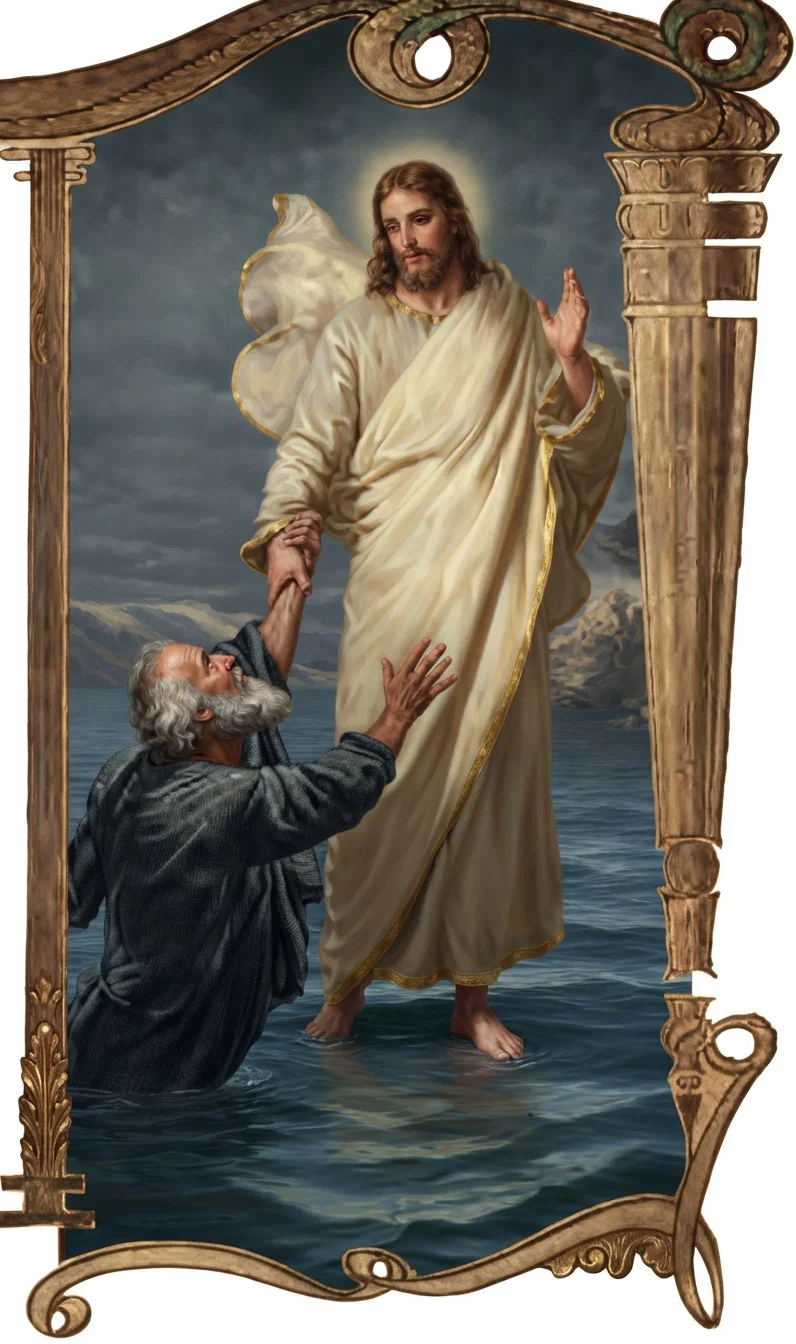
JESUS, THE SAVIOUR OF MEN. Plockhorst
Christianity and Civilization
It is said that Dr. Stewart, who lately died in Africa, was asked, "Why don't you civilize your people first and then make them Christians?" He answered, "We don't do work twice over; when we have made them Christians we have made them civilized."
No Job for a Hard Drinker
“No young man ever was given a job, even as a porter in a saloon, on the strength of the recommendation that he was a hard drinker.”
Church Fairs and Giving
By Editor
THERE is so much that is right and commendable in the spirit and purpose of those who seek to secure money for the Lord's work through fairs and sales, that it is, for many, extremely difficult to see why the church fair should be unqualifiedly condemned. A long-time and appreciative reader in Missouri asks:
"Why is it any more wrong for women to contribute of their baking, etc., to be sold for the church, than for a bakery or restaurant to give money to the church of which its proprietors are members?"
The Lord's work ought to be supported by free-will giving, and by nothing else. Nothing but such giving is recognized or enjoined in the Scriptures. When people buy the cakes and pies that good women have baked for a church sale, these purchasers are not giving outright to the Lord, as they ought to do if they would help at all. They are getting a large return for their money. Thus the spirit of giving is stifled or corrupted by every church sale. The motive of the women who bake and work hard is good; but their method is harmful. The case of the bakery is entirely different. People are not asked to purchase its wares in order to help the Lord's work. They buy at the bakery in order to meet their own needs; the idea of giving is not confused with the transaction. If the proprietors of the bakery then wish to give to the church a portion or all of their profits, their action is an outright gift.
Giving is giving; and buying is buying; and the two things can not mix. When the public is asked to buy in order to help that which ought to be supported only by gifts, the public is being robbed of its giving privileges.—Sunday School Times.
What Prayer Has Wrought
By Dr. Ryland
PRAYER has divided seas, rolled up flowing rivers, made flinty rocks gush into fountains, quenched flames of fire, muzzled lions, disarmed vipers and poisons, marshaled the stars against the wicked, stopped the course of the moon, arrested the sun in its rapid race, burst open iron gates, recalled souls from eternity, conquered the strongest devils, commanded legions of angels down from heaven. Prayer has bridled and chained the raging passions of man, and routed and destroyed vast armies of proud, daring, blustering atheists. Prayer has brought one man from the bottom of the sea, and carried another in a chariot of fire to heaven.—Dr. Ryland.
Knowledge or Power?
ONE day of God's own power is worth more than a lifetime of mere knowledge of the truths of God. W. B. Anderson, of India, uttered a warning last summer, at the Mussoorie convention, against the theoretical knowledge of spiritual things: "Perhaps we never miss the morning devotional hour. We have whole passages of the Bible at our tongue's end. We have read widely in systems of theology. We have constructed a great system of truth for ourselves. We know all about the theory of prayer. We have become sure of these things with a certain knowledge." Yet, as the speaker declared, this may all be only a phantom with which we deceive ourselves. We may be spiritually powerless in the midst of this accumulated knowledge. For spiritual power consists not in mere knowledge, but comes only through the presence of a Person, Jesus Christ. Only as we yield to Christ and draw continually upon Him will He fill us and flow out from us in the fulness of the power of God.—Sunday School Times.
My Divine Helper
By Llewellyn A. Morrison
By Llewellyn A. Morrison
"Because Thy loving-kindness is better than life, my lips shall praise Thee." Ps. 66:3.
When trials beset me
I praise the Most High;
He doth not forget me
When dangers are nigh;
My burdens He shareth
That others may see;
My crosses He beareth
In mercy to me.
He teacheth my spirit
The ways of the Word;
He telleth the merit
Of Jesus, my Lord;
He sings of the sweetness
He hath for His own—
The perfect completeness
His love maketh known.
There is no true gladness
But what He doth send;
There can not be sadness
If He is my Friend;
For on Him relying
All ills I endure.
So, living and dying,
My soul is secure.
The years of the mortal
Are pregnant with pain,
I strive for the portal
Of freedom again;
I trust, tho in blindness,
To win, out of strife:
"For Thy loving-kindness
Is better than life."
San Francisco, California.
Dreams of the Unseen
"How many go forth at morning,
Who never come home at night;
And hearts have broken for harsh words spoken,
That sorrow can ne'er set right.
We have careful thoughts for the stranger,
And smiles for the sometime guest,
But oft for our own the bitter tone,
Tho we love our own the best."
Columbia's Call
By Editor
[The following lines are the words to a patriotic song entitled "Columbia's Call," written by H. H. Fowler. It is gotten out in sheet music form and is receiving favorable comment as a patriotic song by some of the leading educators of the country. Copies of the song may be had for 50 cents by addressing the author, 2550 35th Ave., Oakland, California.—Ed.]
Come, let us gather, one and all,
The free, the true, the brave;
Whom none need ever dare enthrall,
And who will have no slave;
And let us sing our country's songs,
To cheer, to guide, to brace;
For now to us and ours belongs
The leading of the race.
Let's sing of mountains high and grand,
The woods, the lakes, the streams;
Where, under Nature's kindly wand,
One freely roams or dreams;
Of life, as seen in all its forms,
On hill, in vale and plain;
And how the sun and fresh'ning storms
Bring flowers, fruit, and grain.
Let's sing our country's thrilling lore,
The glad, the sad, the quaint;
And deeds, in days that come no more,
Of settler, soldier, saint;
For so we should remember those
Who pressed from sea to sea;
When, from the western wilds, uprose
The empire of the free.
As once our forebears blazed the way,
Through lands which then were new,
And, by their stand, a better day
To all men brought to view,
So let our slogan "Forward" be,
If we our goal would reach;
While order, justice, liberty,
Conserve the rights of each.
To us was left a sacred trust,
Its sign our star-lit flag;
May we ne'er trail it in the dust,
Nor in our efforts lag,
But with true hearts and ready minds,
Pursue our high ideal,
Which in the right its pleasure finds,
And seeks each other's weal.
The Best Literature
THE loftiest, sweetest, purest literature in the world is between the covers of the Old Testament. It outlives the ancient parchment rolls, papyrus leaves, and has witnessed dynasties crumble and empires vanish like momentary apparitions. It has dethroned kings and covered them with sackcloth and ashes. Ah, what kind of literature is this? When Solon and Justinian are forgotten, Moses will still blaze in the constellation of earth's mightiest. When Plato's rainbow of moralisms fades away forever, Solomon will still sit upon the throne, king of sages. When the eloquence of Demosthenes has echoed for the last time, Isaiah's beautiful utterances will still kindle holy ambitions and inspire noble deeds. "Be ye mindful always of His covenant; the word which He commanded to a thousand generations."—Word and Way.
Moses and Consecrated Talents
By Ellen G. White
Moses became great, because he used his talents to do the work of God, and an increase of talents was then given him. He became eloquent, patient, self-reliant, and competent to do the greatest work ever entrusted to mortal man. This is the effect upon character whenever men give themselves to God with the whole soul, and listen for His commands that they may obey them.—E. G. W.
Sunshine and Shadow
"All sunshine would wither, all shadow would blight;
But mingling them wisely, the Father of Light
Through pleasure and sunshine, through sorrow and showers,
Brings on to perfection our souls and His flowers."
What means this swelling tide of wo,
That looms along the shores of earth,
These angry clouds—once far and low—
That now o'ershadow all our mirth?
On land and sea, yea, in the sky,
Destruction rides a swifter steed
Than in the peaceful days gone by
When men were not as gnarled by greed.
What mean these curses filled with hate,
Which from the rich man's servants fall,
The turmoil at the factory gate
That tells of hearts o'errun with gall?
What mean these palaces and feasts
Where gold is spent with wanton waste,
And cats and dogs and pampered beasts
Eat dainties poor men never taste?
What mean the broken homes where strife
Has robbed the angel Love of breath,
While pagan laws call man and wife
To break the vows they made "till death"?
What mean these frenzied female bands
Who tramp our streets with brazen tread,
Or hiding bombs and fiery brands,
Destruction dire around them spread?
And saddest of the whole array
Which threatens with such dread portent,
What mean these heedless shepherds, pray,
While danger broods, in slumber pent?
What mean all these? would'st know forsooth,
And read aright the signful sky?
Then haste thee to the fount of truth,
And hear the voice of Wisdom cry.
When men are filling to the brim
Their cup of sin and shame and wo,
And demons work with savage vim
To cause the winds of strife to blow;
When judgment hangs on poised wing
Above the lost and guilty world,
The voice divine says, "Heaven's King
His signal banners shall unfurl."
In heaven and earth, on land and sea,
Shall signs and tokens then appear;
Sun, moon, and stars shall all agree
To warn men the great day is near.
The darkened sun, the bloody moon,
The myriad stars that fell as hail;
The light that failed men at high noon
And made the hearts of millions quail:
The hurricane that sweeps the earth
As with a demon's besomed hand;
The reckless flood that brings a dearth
Of bread and water in the land;
The cankered gold of millionaires,
The bitter curse of toilers robbed,
The broken vows of faithless "pairs,"
The tales by fallen sisters sobbed,
What mean they all?—This the reply:
When ye see these, know He is near,
The Judge of all in earth and sky,
The King of Kings, doth soon appear.
Before Him comes "unmingled wrath"
From heaven's offended throne, where Love
Has stood so long to keep the path
Of mercy open from above.
Then shall the door of mercy close
To all who have refused its call;
Rejected Love shall meet His foes,
And fiery indignation fall.
"A time of trouble" then shall be,
Such as the nations never heard.
At home, abroad, on land and sea,
Shall fall the judgments of His word.
The mountains shall be soaked with blood,
Proud cities of the earth shall fall,
And earthquake, hail, and fiery flood
Complete the overthrow of all.
O would'st thou find a hiding-place
In that dread hour of wrath divine?
Then haste—to-day accept His grace
And make the King of Heaven thine.
The Holy Scriptures
I. What They Comprise
1. By what terms does Jesus designate the Old Testament Scriptures?
"The law of Moses, and the prophets, and the Psalms." Luke 24: 44.
"And beginning from Moses and from all the prophets, He interpreted to them in all the Scriptures the things concerning Himself." Verse 27.
2. What did He say to the Jews?
"Ye search the Scriptures, because ye think that in them ye have eternal life; and these are they which bear witness of Me." John 5: 39.
3. How does Paul, when writing to Timothy, refer to them?
"From a child thou hast known the Holy Scriptures, which are able to make thee wise unto salvation through faith which is in Christ Jesus." 2 Tim. 3: 15.
NOTE.—The Holy Scriptures, or Holy Writings, of the Jews consisted of the Old Testament books which we have to-day. They divided them into the Law, the Prophets, and the Hagiographa (Holy Writings), sometimes called the Psalms, because the Psalms is the first book in the latter division. The Law includes the first five books of the Bible; the Prophets comprise Joshua, Judges, 1 and 2 Samuel, 1 and 2 Kings, Isaiah, Jeremiah, Ezekiel, and Hosea to Malachi inclusive; the Holy Writings include Psalms, Proverbs, Job, Song of Solomon, Ruth, Lamentations, Ecclesiastes, Esther, Daniel, Ezra, Nehemiah, 1 and 2 Chronicles. These, as the above scriptures and many others clearly show, were approved and endorsed by our Lord and His apostles.
4. What promise did Jesus give His apostles as to their teaching?
"But the Comforter, even the Holy Spirit, whom the Father will send in My name, He shall teach you all things, and bring to your remembrance all that I said unto you." John 14: 26; 16: 13-15.
5. What does Paul say of the apostolic writings?
"Which things also we speak, not in words which man's wisdom teacheth, but which the Spirit teacheth." 1 Cor. 2: 13.
6. How does the apostle Peter class the writings of Paul?
"Even as our beloved brother Paul . . . wrote unto you; as also in all his epistles, speaking in them of these things; wherein are some things hard to be understood, which the ignorant and unsteadfast wrest, as they do also the other Scriptures, unto their own destruction." 2 Peter 3: 15, 16.
NOTE.—In this text the apostle Peter classes the writings of the apostle Paul among the "other Scriptures," the Old Testament Scriptures. And the words of the apostle Paul place the New Testament writings with the Holy Scriptures.
II. Inspiration of the Scriptures
1. What is said of the inspiration of the Scriptures?
"All Scripture is given by inspiration of God, and is profitable." 2 Tim. 3: 16.
NOTE.—A more literal rendering would be, "All Scripture is GOD-BREATHED." Whether we take "All Scripture" as in the common version, or "Every Scripture inspired of God," as in the revisions, we are at no loss, if we regard the context, as to the meaning of the term. The apostle refers to the Holy Scriptures which Timothy the Jew had known from a child, the Old Testament Scriptures. See the previous verse. Note also that it is NOT the writers which are inspired, or God-breathed, but the Scriptures, the writings.
2. What does another say as to how these Scriptures came to us?
"Holy men of God spake as they were moved by the Holy Ghost." 2 Peter 1: 21.
"Concerning which salvation the prophets sought and searched diligently, who prophesied of the grace that should come unto you: searching what time or what manner of time the Spirit of Christ which was in them did point unto, when it testified beforehand the sufferings of Christ, and the glories that should follow them." 1 Peter 1: 10, 11.
NOTE.—This last scripture shows clearly that it was the Spirit of Christ as well as the Father which inspired the Word. Therefore He is called the Word, the One through whom the Father gave all things. John 1: 1-3; 1 Cor. 8: 6. The whole Bible is therefore "the word of Christ" which ought to "dwell richly" in the souls of His children.
3. What other instances may be mentioned as to the claim of inspiration for the Word?
"The Spirit of Jehovah spake by me, and His word was upon my tongue." David, in 2 Sam. 23: 2.
"Which the Holy Spirit spake before by the mouth of David concerning Judas." Acts 1: 16.
"Wherefore, even as the Holy Spirit saith, To-day if ye shall hear His voice." Quotation from the Psalms.—Heb. 3: 7.
"And the Scripture [alluding to a Psalm] can not be broken." John 10: 35.
"Which was spoken through Isaiah the prophet." Matt. 8: 17.
"Well spake the Holy Spirit through Isaiah the prophet unto your fathers." Acts 28: 25.
"Hear the word of Jehovah." Isa. 1: 10.
"And the word of Jehovah came to me, saying." Jer. 2: 1.
"And the word of Jehovah came unto me." Eze. 6: 1.
"The word of Jehovah that came to Joel." Joel 1: 1.
See also Hosea 1: 1; Jonah 1: 1, et al.
NOTE.—It is everywhere the word of Jehovah, the word of the Lord, the Holy Spirit. The man is God's willing instrument. God is the Master. While the words are the words of Moses, of David, of Jeremiah, of Ezekiel, of Hosea, of Paul, of James, of Peter, they are also the words of God. The words, the style, bear the impress of the character of the man through whom God spoke, nevertheless they are the words of God. It is as tho a musician, wishing to affect a great mass of people, should play on various instruments, such as piano, organ, harp, guitar, cornet, drum, fife, bag-pipe, etc. Some souls would be affected by the harsher instrument who would not be touched at all by the softer, more perfect one. The music would bear the stamp of the instrument, but it would also reveal that a master was producing the best music of which the various instruments were capable. So God has used learned and ignorant men, great men and small men. The work has different standards of excellence; but it is always the best which can be produced from the men God has used. By using men of all kinds of temperaments and all walks of life, He reaches men of all classes.
III. Sufficiency of the Scriptures
1. What is said of the sufficiency of the Scriptures?
"All Scripture is given by inspiration of God, and is profitable for doctrine, for reproof, for correction, for instruction in righteousness; that the man of God may be perfect, thoroly furnished unto all good works." 2 Tim. 3: 16, 17.
2. What plea does Jesus make for His disciples as to that Word?
"Sanctify them through Thy truth: Thy word is truth." John 17: 17.
3. How did He Himself meet the fierce temptations of the enemy?
By "It is written," meeting each suggestion of the enemy by words from Deuteronomy. Matt. 4: 1-11.
NOTE.—It is worthy of note that Jesus used in His own personal experience in meeting the onslaught of the adversary, weapons drawn from the book of Deuteronomy, a portion of Scripture which the "higher critics" have little or no use for. It is better to follow the "Man of Nazareth."
4. What did the psalmist declare God's word to be?
"Thy word is a lamp unto my feet, and a light unto my path." Ps. 119: 105.
5. From what did that Word hid in the heart save him?
"Thy word have I hid in mine heart, that I might not sin against Thee." Ps. 119: 11.
6. How was he kept from the paths of the destroyer?
"Concerning the works of men, by the word of Thy lips I have kept me from the paths of the destroyer." Ps. 17: 4.
7. Of what is that word the basis?
"So then faith cometh by hearing, and hearing by the word of God." Rom. 10: 17.
8. What is said of its might?
"For the word of God is quick, and powerful, and sharper than any two-edged sword, piercing even to the dividing asunder of soul and spirit, and of the joints and marrow, and is a discerner of the thoughts and intents of the heart." Heb. 4: 12.
9. To what is it likened?
"Is not My word like as a fire? saith the Lord; and like a hammer that breaketh the rock in pieces?" Jer. 23: 29.
10. How does it compare with the word of men?
"The prophet that hath a dream, let him tell a dream; and he that hath My word, let him speak My word faithfully. What is the chaff to the wheat? saith the Lord." Jer. 23: 28.
NOTE.—How futile and foolish it is in the light of the above scriptures to form human creeds and endeavor to establish by decree or anathema, or ordain by civil law some human conception of God's word. All that a creed can express are human ideas of God's ever-living word. A creed seeks to confine, circumscribe, and bind about the truth of God. It holds men to the dead past instead of to the living present. It leads men to turn from the Spirit and power of God, promised to unify His church, and to seek that unity in human means,9pledges, resolutions, federations, civil power. The creed and federation spirit is born of lack of faith in the word of God and a fear that God can not or will not care for His own. God's word is all-sufficient.
11. How long will that word endure?
"The word of our God shall stand forever." Isa. 40: 8.
"Heaven and earth shall pass away: but My words shall not pass away." Luke 21: 33.
12. How does God regard His word?
"I will worship toward Thy holy temple, and praise Thy name for Thy loving-kindness and for Thy truth: for Thou hast magnified Thy word above all Thy name." Ps. 138: 2.
The True Protestant Position
The Bible and the Bible Only
THE Bible, I say, the Bible only, is the religion of Protestants!" Nor is it of any account in the estimation of the genuine Protestant HOW EARLY a doctrine originated, if it is not found in the Bible. He learns from the New Testament itself that there were errors in the time of the apostles, and that their pens were frequently employed in combating those errors. Hence if a doctrine be propounded for his acceptance, he asks, Is it to be found in the inspired Word? Was it taught by the Lord Jesus Christ and His apostles? If they knew nothing of it, no matter to him whether it be discovered in the musty folio of some ancient visionary of the third or fourth century, or whether it spring from the fertile brain of some modern visionary of the nineteenth, if it is not found in the sacred Scriptures, it presents no valid claim to be received as an article of his religious creed. . . .
The great question at issue between popery and Protestantism is this: Is the Bible only to be received as the rule of faith, or THE BIBLE AND TRADITION TOGETHER? Is no doctrine to be received as matter of faith unless it is found in the Bible, or may a doctrine be received upon the mere authority of tradition, when it is confessedly not to be found in the sacred Scriptures?
The whole Christian world, both nominal and real, are divided by this question into two great divisions. The consistent and true-hearted Protestant, standing upon this rock, "THE BIBLE AND THE BIBLE ONLY," can admit no doctrine upon the authority of tradition; the papist and the Puseyite place tradition side by side with the Bible, and listen to its dictates with a reverence equal to, or even greater than, that which they pay to the sacred Scriptures themselves; and he who receives a single doctrine upon this mere authority of tradition, let him be called by what name he will, by so doing steps down from the Protestant rock, passes over the line which separates Protestantism from popery, and can give no valid reason why he should not receive all the earlier doctrines and ceremonies of Romanism upon the same authority.—Darling, "History of Romanism," Book 1, page 67.
The Scriptures as God’s Revelation
From the "Advance Almanac and Manual of Congregationalism"
V. We believe that the Scriptures of the Old and New Testament are the record of God's revelation of Himself in the work of redemption; that they are written by men under the special guidance of the Holy Spirit; that they are able to make wise unto salvation; and that they constitute the authoritative standard by which religious teaching and human conduct are to be regulated and judged.—Page 56, Creed of 1883.