Your ShelfYour Projects

Signs of the Times, Vol. 42, No. 8.

Significant Changes in Seventy Years

Signs of the Times

Feb 23, 1915

Pacific Press Publishing Association · Mountain View, California · Feb 23, 1915

Significant Changes in Seventy Years
Modern Modes of Travel — The Increase of Knowledge — Our Fathers Knew Nothing of These Things — What Does It All Mean?
By E. E. Andross
UNDER the above caption, the following editorial appeared in the Los Angeles Tribune, December 16, 1914:
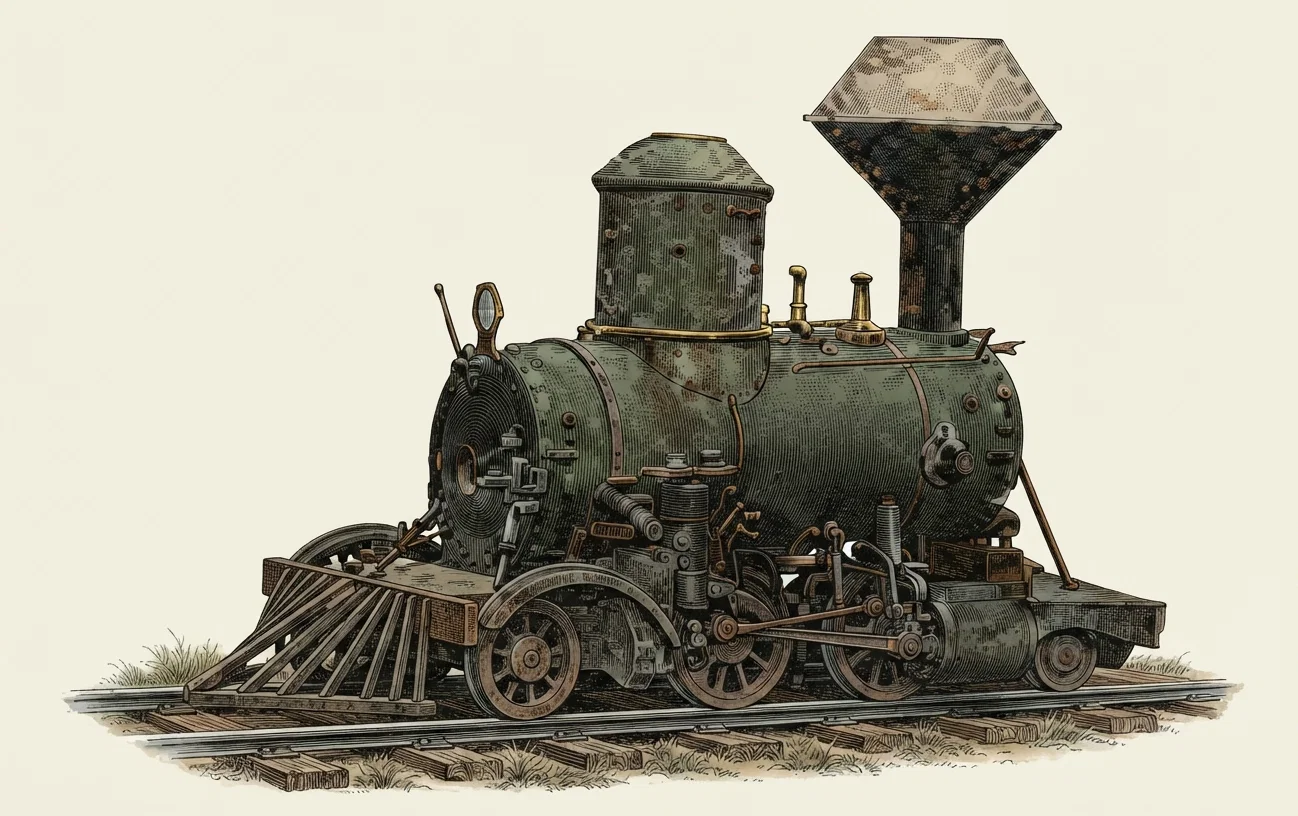
LOCOMOTIVE BUILT IN 1865 — THE FIRST OVER THE SIERRAS
"Discussing the project to construct a steel railroad across the American continent, Senator Dayton, of New Jersey, made the following statement in the senate on February 23, 1844: 'The power of steam to reach that country has been suggested. Talk of steam communication — a railroad to the mouth of the Columbia! A railroad across 2,500 miles of desert, prairie, and mountains! The smoke of an engine through those terrible fissures of that great rocky ledge where the smoke of the volcano has rolled before! Who is to make this vast internal — rather external — improvement? All the mines of Mexico and Peru disemboweled would scarcely pay a penny of the cost.'
"To the New Jersey senator of seventy years ago the construction of a transcontinental steam road did seem like an extravagant dream, concerning which the use of extravagantly doubtful expressions was warranted. If the senator were here now, he could take his choice of half a dozen transcontinental routes, and then run on down to Mexico, at least, to find the mines still not disemboweled.
"But more to his astonishment, possibly, would be his realization of the practical utilization of electricity. Were he here now, he would find work under way for the electrification of the Chicago, Milwaukee & St. Paul road through the Rockies in pursuance of a project which is to cost from $13,000,000 to $15,000,000. 'Many things have taken place in the past seventy years.'"

THE WORLD HAD JUST AWAKENED

Great changes have surely taken place during the past seventy years. As we compare the world of seventy years ago with the world of to-day, it seems to have been just beginning to waken from the sleep of centuries. The modern methods of railway and steamship travel, making possible the present splendid system of rapid transit, were then in their experimental stages. Not until an exposition in Berlin, Germany, in 1879, was the practicability of electro-motor traction demonstrated. Within this period, the electric telegraph system has come into practical use for rapid communication. Marvelous indeed have been the changes that have come about in all departments of scientific knowledge during these seventy years.

WHY THIS SUDDEN CHANGE?

Why these great changes within the short period of one generation, after the world had moved on in the old way for nearly sixty centuries? After recording four distinct lines of prophecy, covering the history of earthly kingdoms from the days of ancient Babylon and Medo-Persia to the establishment of the eternal kingdom of glory, the prophet Daniel was undoubtedly extremely anxious to know the meaning of all that he had seen and heard; but the angel said to him, "Thou, O Daniel, shut up the words, and seal the book, even to the time of the end: many shall run to and fro, and knowledge shall be increased." Dan. 12: 4.
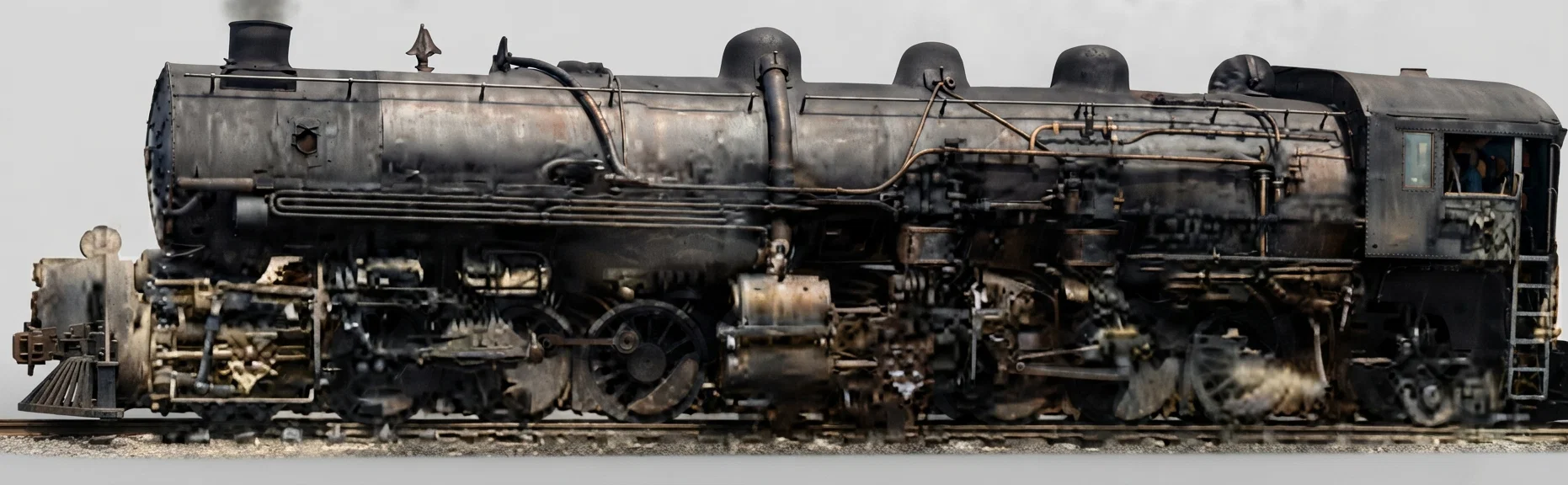
MALLET COMPOUND ENGINE, WEIGHT 800 TONS
"Shut up the words, and seal the book," was the command from the angel, "even to the time of the end." "The time of the end" was a fixed period, which began in 1798, and will terminate with the end itself, at the appearing of our Lord Jesus Christ. Till "the time of the end" was reached, the book of Daniel was to be "shut up" and "sealed."

PROPHECY OF THE OPEN BOOK

The beloved disciple John on Patmos saw a "mighty angel come down from heaven, clothed with a cloud: and a rainbow was upon his head, and his face was as it were the sun, and his feet as pillars of fire: and he had in his hand a little book open." Rev. 10: 1, 2. The prophet then "went unto the angel, and said unto him, Give me the little book. And he said unto me, Take it, and eat it up. . . . And he said unto me, Thou must prophesy again before many peoples, and nations, and tongues, and kings." Verses 9-11.
This prophecy undoubtedly represents a religious movement based on some prophetic book of the Bible; and immediately our minds revert to the book of Daniel, which the prophet was instructed to shut up till the time of the end. If we find that the prophecy indicates that this movement was to take place after the beginning of the time of the end (1798), we will have good reason for the conclusion that the open book in the hand of the angel was the book of Daniel.
The tenth chapter of Revelation, and part of the eleventh, are thrown in parenthetically between the sixth and seventh trumpets of Revelation 9 and 11. The sixth trumpet closed with the loss of the independence of the Turkish power in 1840; and after a brief period covered by the word "quickly" (Rev. 11: 14), the seventh trumpet began to sound in 1844.

THE LONGEST PROPHETIC PERIOD

The longest prophetic period in the Scriptures — the 2,300 days of Dan. 8: 14 — began 457 B. C., and terminated in 1844 A. D. This period of 2,300 days is fixed unchangeably by the remarkable fulfillment of certain parts of it in the baptism and crucifixion of the Saviour. At the expiration of the prophetic period in 1844, He entered upon the work of cleansing the heavenly sanctuary. At that time, our great High Priest passed through the veil separating the holy from the most holy apartment of the heavenly sanctuary, "the Judgment was set,and the books were opened." Dan. 7: 10. The world-wide message of Rev. 14: 6, 7 was then due:
"And I saw another angel fly in the midst of heaven, having the everlasting gospel to preach unto them that dwell on the earth, and to every nation, and kindred, and tongue, and people, saying with a loud voice, Fear God, and give glory to Him; for the hour of His Judgment is come: and worship Him that made heaven, and earth, and the sea, and the fountains of waters."

PROVISION FOR QUICK WORK

This message must be carried to "every nation, and kindred, and tongue, and people," in a very brief period; hence provision must be made for a quick work to be accomplished. The messengers bearing such a message must hasten to every part of the earth. Every provision must be made for its publication in all the tongues of earth, and it must then be carried on the wings of the wind to the remote corners of the world.
With confidence, yet with all humility, we may say with the Saviour, "This day is this scripture fulfilled in your ears." Luke 4: 21.
Since 1844, in the providence of God, a people have been raised up, small at first, but "like to a grain of mustard seed, which a man took, and sowed in his field: which indeed is the least of all seeds: but when it is grown, it is the greatest among herbs, and becometh a tree, so that the birds of the air come and lodge in the branches thereof." Matt. 13: 31, 32. This people, known as Seventh-day Adventists, are inspired with the profound conviction that God has brought them into existence to preach this very message to all the world. They believe that the wonderful facilities for rapid transit and swift communication even to the farthest corners of the earth, the marvelous development in the art of printing, and all other inventions that have largely been produced within the past seventy years, and that help to bring the world to our very doors, were designed of the Lord as aids in the preaching of the everlasting gospel to all the world in this generation.
"And this gospel of the kingdom shall be preached in all the world for a witness unto all nations; and then shall the end come." Matt. 24: 14.

THE JUDGMENT MESSAGE

Truly great changes have occurred during these seventy years; and this has not been by mere chance, but under the overruling providence of the supreme Head of the universe. The time had come for the mystery of God to be finished; for the proclamation to be made in all the earth, "The hour of His Judgment is come"; for the last invitation of mercy to be given. A people must be raised up to do this work, to fulfill the prophecy. In every instance in the past, when "the fullness of time" came for the accomplishment of a certain work of which the prophets had spoken, the thing came to pass at just the right time; for "the Scripture cannot be broken." John 10: 35. When, therefore, the time came for "the mystery of God to be finished," a people appeared upon the stage of action burdened to give the very message then due, "Fear God, and give glory to Him; for the hour of His Judgment is come: and worship Him that made heaven, and earth, and the sea, and the fountains of waters." Rev. 14: 7.
The distinguishing features of the people who are to fulfill this scripture are, they "keep the commandments of God, and the faith of Jesus." Verse 12. The Seventh-day Adventist people, as indicated by their name, observe the seventh day as the Sabbath "according to the commandment," instead of the first day of the week. They believe very ardently that "there is none other name under heaven given among men, whereby we must be saved," than the blessed name of Jesus; that there is salvation in none other.

A WORLD-EMBRACING MOVEMENT

Beginning their work in obscurity in 1844, they are now conducting work in 48 non-Protestant countries and 20 non-Christian countries, containing 85 per cent of the population of the world. Their workers in these lands are using 84 languages orally, and are distributing literature in 68 languages. Work is conducted in 170 main mission stations and 100 substations. 507 churches have been organized in non-Protestant and non-Christian lands, with 18,287 adherents. 5,208 laborers are devoting their entire time to the advancement of this message. In 1913, 122,386 believers contributed $2,866,727.40 for the advancement of the cause they love, and the hastening, as they sincerely believe, of the coming of Christ. This represented a per capita contribution of $23.42. They believe that with the baptism of the Holy Spirit in the latter rain, as the apostolic believers received the early rain on Pentecost, the whole world may soon hear the gospel of the kingdom, and the way be prepared for the return of the King.
Surely we may truly say, "What a change in these seventy years!" But, dear reader, has your heart been changed, and are you ready for the great change so soon to take place in this old world, for the breaking of the eternal day with the advent of our glorious Lord? If not, delay no longer, but quickly prepare to stand before Him.

The Battle of Armageddon Not a Full End

THE Scriptures inform us that through the agency of evil spirits, the kings of the earth and the whole world will be gathered to the battle of the great day of God Almighty. Rev. 16:14-16. According to the word of God, this great international struggle for supremacy will take place at Armageddon, situated about fifty miles north of Jerusalem. It is easily approached from the north and the south and from the Mediterranean Sea.
In the midst of this great battle, it is said of Christ, "Behold, I come as a thief." Rev. 16:15. The wicked who have not been slain in battle will be destroyed by the brightness that surrounds the coming King and His attendant host of mighty angels. Matt. 25:31; 2 Thess. 2:8. The righteous dead, from Adam down to the last saint who has been laid away to rest, will then be raised to life and immortality, and with the transformed living righteous, will be conveyed by the angels to meet the Prince of peace in mid-air. Matt. 24:31; 1 Thess. 4:16-18. This takes all the righteous to heaven, to live and reign with Christ a thousand years. Rev. 20:4.
During this period of time, the earth is covered with the dead bodies of the wicked. Satan is to be bound for the same length of time in the pit—the chaotic condition of the earth, where he has done his deceptive work. Rev. 20:1-3. He is bound by a chain of circumstances. The righteous are in heaven, beyond his reach, and he is surrounded with the dead bodies of those he has deceived and ruined. This gives the archdeceiver time and opportunity to contemplate what his rebellion against God has accomplished.
At the coming of the Just One, the cities of the earth will be broken down. With the cities demolished and the world depopulated, the earth becomes a charnel house. None are left to lament or bury the lifeless bodies. Jer. 25:31-33; 4:23-26.
Although the battle of Armageddon and the coming of Christ leave the earth desolate, yet it is not a full end. "For thus hath the Lord said, The whole land shall be desolate; yet will I not make a full end." Jer. 4:27. The full end comes at the expiration of the one thousand years, which terminates the reign of the saints with Christ in heaven. At the close of this period of time, the city of God descends to the earth. The Mount of Olives cleaves asunder, and the New Jerusalem is located thereon. It is at this time that living waters will issue forth from Jerusalem. Zech. 14:4, 8; Rev. 21:2.
At the termination of the one thousand years, the rest of the dead—the wicked—are raised to life. Rev. 20:5. This liberates Satan. He heads the innumerable host, they surround "the beloved city" "on the breadth of the earth," and fire from heaven devours them. Rev. 20:8, 9. Then sin and sinners will be no more. There will be no repetition of hostilities. The word of God declares, "He will make an utter end: affliction shall not rise up the second time." Nahum 1:9.
The events that take place at the close of the one thousand years, constitute not only a full end, but also a full restitution. The flames that devour the wicked purify the earth from the curse that rests upon it. The Creator restores the earth to its Edenic beauty, and it becomes the eternal abode of the righteous. "Thou sendest forth Thy Spirit, they are created" (restored to life), says the psalmist, "and Thou renewest the face of the earth." Ps. 104:30. The prophet Isaiah declares, "Behold, I create new heavens and a new earth." Isa. 65:17. And the Saviour said, "Blessed are the meek: for they shall inherit the earth." Matt. 5:5. The Prince of peace will then take the throne of David, and the ravages of war will be feared and felt no more forever.
E. HILLIARD.

Prayer

PRAYER is the key that unlocks our heavenly Father’s great storehouse. An abundance of everything needful to supply whatever our necessities demand, is ever on hand; and there is always an attendant at the entrance who will cheerfully render obliging service to our various requests. All can come “without money and without price.”
The principal requirement on our part is faith; for the promise is, Ask, believe, and receive. The generous Provider never turns one away empty who with faith and trust makes known his needs, and with full confidence believes he will receive whatever is for his best good.
Mrs. H. E. SAWYER-HOPKINS.

The Power to Change the Life

The Leaven That Works in the Heart—None Too Low to Be Reached—Angels Sing, and God and Christ Rejoice, over Transformations

By Mrs. E. G. White
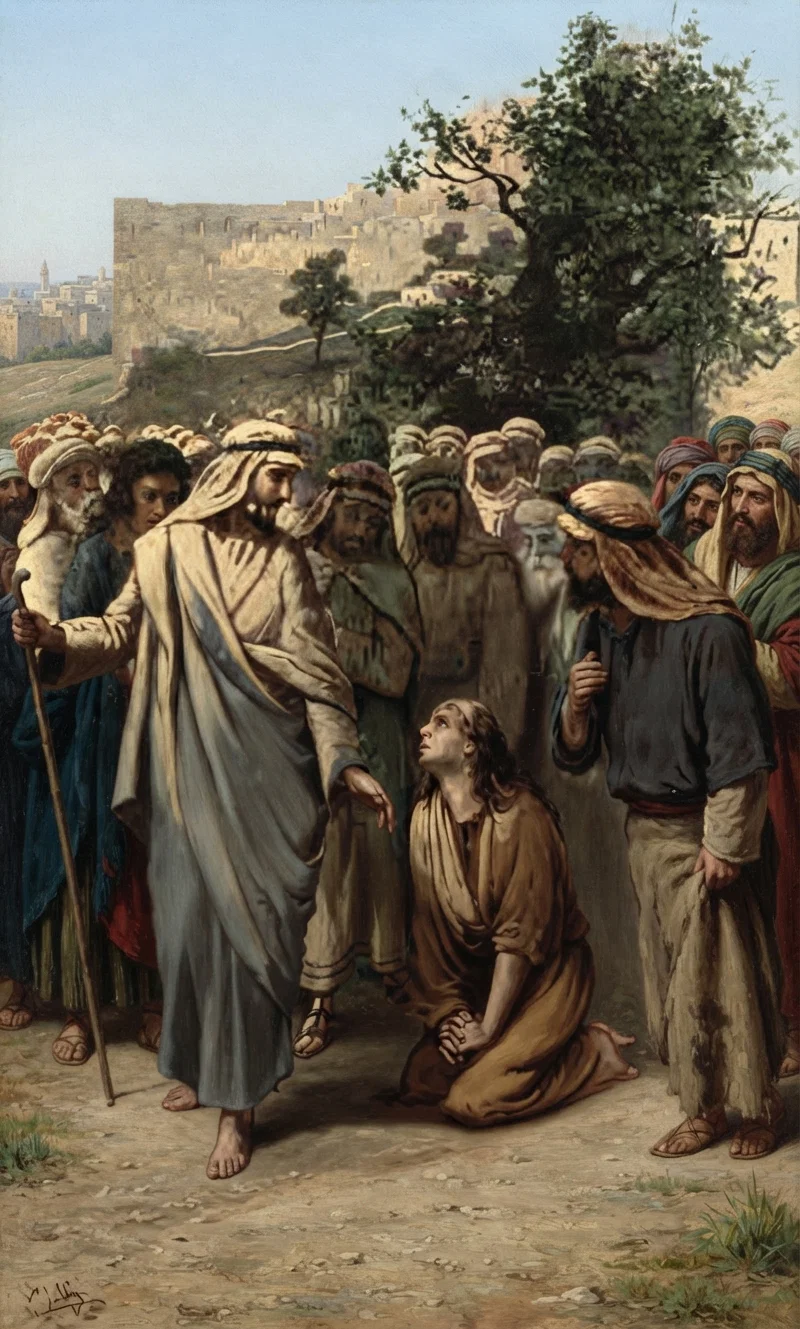
MANY educated and influential men had come to hear the Prophet of Galilee. Some of these looked with curious interest upon the multitude that had gathered about Christ as He taught by the sea. In this great throng, all classes of society were represented. There were the poor, the illiterate, the ragged beggar, the robber with the seal of guilt upon his face, the maimed, the dissipated, the merchant and the man of leisure, high and low, rich and poor, all crowding upon one another for a place to stand and hear the words of Christ. As these cultured men gazed upon the strange assembly, they asked themselves, Is the kingdom of God composed of such material as this? The Saviour replied by a parable.

LIKE THE LEAVEN IN THE MEAL

"The kingdom of heaven is like unto leaven, which a woman took, and hid in three measures of meal, till the whole was leavened." Matt. 13:33.
Among the Jews, leaven was sometimes used as an emblem of sin. At the time of the Passover, the people were directed to remove all the leaven from their houses, as they were to put away sin from their hearts. Christ warned His disciples, "Beware ye of the leaven of the Pharisees, which is hypocrisy." Luke 12:1. And the apostle Paul speaks of the "leaven of malice and wickedness." 1 Cor. 5:8. But in the Saviour's parable, leaven is used to represent the kingdom of heaven. It illustrates the quickening, assimilating power of the grace of God.
None are so vile, none have fallen so low, as to be beyond the working of this power. In all who will submit themselves to the Holy Spirit, a new principle of life is to be implanted, the lost image of God is to be restored in humanity.

CANNOT TRANSFORM HIMSELF

But man cannot transform himself by the exercise of his will. He possesses no power by which this change can be effected. The leaven—something wholly from without—must be put into the meal before the desired change can be wrought in it. So the grace of God must be received by the sinner before he can be fitted for the kingdom of glory. All the culture and education which the world can give, will fail of making a degraded child of sin a child of heaven. The renewing energy must come from God. The change can be made only by the Holy Spirit. All who would be saved, high or low, rich or poor, must submit to the working of this power.
As the leaven, when mingled with the meal, works from within outward, so it is by the renewing of the heart that the grace of God works to transform the life. No mere external change is sufficient to bring us into harmony with God. There are many who try to reform by correcting this or that bad habit, and they hope in this way to become Christians, but they are beginning in the wrong place. Our first work is with the heart.
A profession of faith and the possession of truth in the soul are two different things. The mere knowledge of truth is not enough. We may possess this, but the tenor of our thoughts may not be changed. The heart must be converted and sanctified.
The man who attempts to keep the commandments of God from a sense of obligation merely—because he is required to do so—will never enter into the joy of obedience. He does not obey. When the requirements of God are accounted a burden because they cut across human inclination, we may know that the life is not a Christian life. True obedience is the outworking of a principle within. It springs from the love of righteousness, the love of the law of God. The essence of all righteousness is loyalty to our Redeemer. This will lead us to do right, because right doing is pleasing to God.

IT WORKS INVISIBLY

The leaven hidden in the flour works invisibly to bring the whole mass under its leavening process. So the leaven of truth works secretly, silently, steadily, to transform the soul. The natural inclinations are softened and subdued. New thoughts, new feelings, new motives, are implanted. A new standard of character is set up,—the life of Christ. The mind is changed. The faculties are roused to action in new lines. Man is not endowed with new faculties, but the faculties he has are sanctified. The conscience is awakened. We are endowed with traits of character that enable us to do service for God.

WHY THE UNHOLY TEMPER?

Often the question arises, Why, then, are there so many, claiming to believe God's word, in whom there is not seen a reformation in words, in spirit, and in character? Why are there so many who cannot bear opposition to their purposes and plans, who manifest an unholy temper, and whose words are harsh, overbearing, and passionate? There is seen in their lives the same love of self, the same selfish indulgence, the same temper and hasty speech, that is seen in the life of the worldling. There is the same sensitive pride, the same yielding to natural inclination, the same perversity of character, as if the truth were wholly unknown to them. The reason is that they are not converted. They have not hidden the leaven of truth in the heart. It has not had opportunity to do its work. Their natural and cultivated tendencies to evil have not been submitted to its transforming power. Their lives reveal the absence of the grace of Christ, an unbelief in His power to transform the character.
All classes of society were represented.
The truths of the word of God meet man's great practical necessity,—the conversion of the soul through faith. These grand principles are not to be thought too pure and holy to be brought into the daily life. They are truths which reach to heaven and compass eternity, yet their vital influence is to be woven into human experience. They are to permeate all the great things and all the little things of life.
Received into the heart, the leaven of truth will regulate the desires, purify the thoughts, and sweeten the disposition. It quickens the faculties of the mind and the energies of the soul. It enlarges the capacity for feeling, for loving.

THE MAN IS A MYSTERY

The world regards as a mystery the man who is imbued with this principle. The selfish, money-loving man lives only to secure for himself the riches, honors, and pleasures of this world. He loses the eternal world from his reckoning. But with the follower of Christ these things will not be all-absorbing. For Christ's sake he will labor and deny self, that he may aid in the great work of saving souls who are without Christ and without hope in the world. Such a man the world cannot understand, for he is keeping in view eternal realities. The love of Christ, with its redeeming power, has come into the heart. This love masters every other motive, and raises its possessor above the corrupting influence of the world.
The word of God is to have a sanctifying effect on our association with every member of the human family. The leaven of truth will not produce the spirit of rivalry, the love of ambition, the desire to be first. True, heaven-born love is not selfish and changeable. It is not dependent on human praise. The heart of him who receives the grace of God overflows with love for God and for those for whom Christ died. Self is not struggling for recognition. He does not love others because they love and please him, because they appreciate his merits, but because they are Christ's purchased possession. If his motives, words, or actions are misunderstood or misrepresented, he takes no offense, but pursues the even tenor of his way. He is kind and thoughtful, humble in his opinion of himself, yet full of hope, always trusting in the mercy and love of God.
The apostle exhorts us, "As He which hath called you is holy, so be ye holy in all manner of conversation; because it is written, Be ye holy; for I am holy." 1 Peter 1:15, 16.The grace of Christ is to control the temper and the voice. Its working will be seen in politeness and tender regard shown by brother for brother; in kind, encouraging words. An angel presence is in the home. The life breathes a sweet perfume, which ascends to God as holy incense. Love is manifested in kindness, gentleness, forbearance, and long-suffering.
The countenance is changed. Christ, abiding in the heart, shines out in the faces of those who love Him and keep His commandments. Truth is written there. The sweet peace of heaven is revealed. There is expressed a habitual gentleness, a more than human love.

ANGELS SING, AND GOD AND CHRIST REJOICE

The leaven of truth works a change in the whole man, making the coarse refined, the rough gentle, the selfish generous. By it the impure are cleansed, washed in the blood of the Lamb. Through its life-giving power it brings all there is of mind and soul and strength into harmony with the divine life. Man, with his human nature, becomes a partaker of divinity. Christ is honored in excellence and perfection of character. As these changes are effected, angels break forth in rapturous song, and God and Christ rejoice over souls fashioned after the divine similitude.

THE BURNING LAMP

The Growth of the Christian—We Are to Develop and Advance—How the Work Is Accomplished
By Roderick S. Owen
“YE ARE THE LIGHT”
“YE ARE THE LIGHT”
This is the fifth of several short studies by Elder Owen on the fifteenth chapter of Genesis. Each study is complete in itself, and presents some part of the experience of Abraham that entered into the work which made him the mighty man of faith.
“AND it came to pass, that, when the sun went down, and it was dark, behold a smoking furnace, and a burning lamp that passed between those pieces.” Gen. 15: 17.
Abraham, having prepared his sacrifice, and having walked between the parts thereof, waited throughout the day for God to give some manifestation of His presence. The record tells us that “when the sun went down, and it was dark, behold a smoking furnace, and a burning lamp,” “passed between those pieces.” These were symbols of the divine presence, giving Abraham a pledge of the covenant of liberty between God and man.

MANIFESTATIONS OF GOD’S WORKING

There must be some significance in this peculiar representation of God’s presence. Both the burning lamp and the smoking furnace must symbolize manifestations of God’s power and work in consummating this covenant with the children of Abraham. Let us consider first the burning lamp.
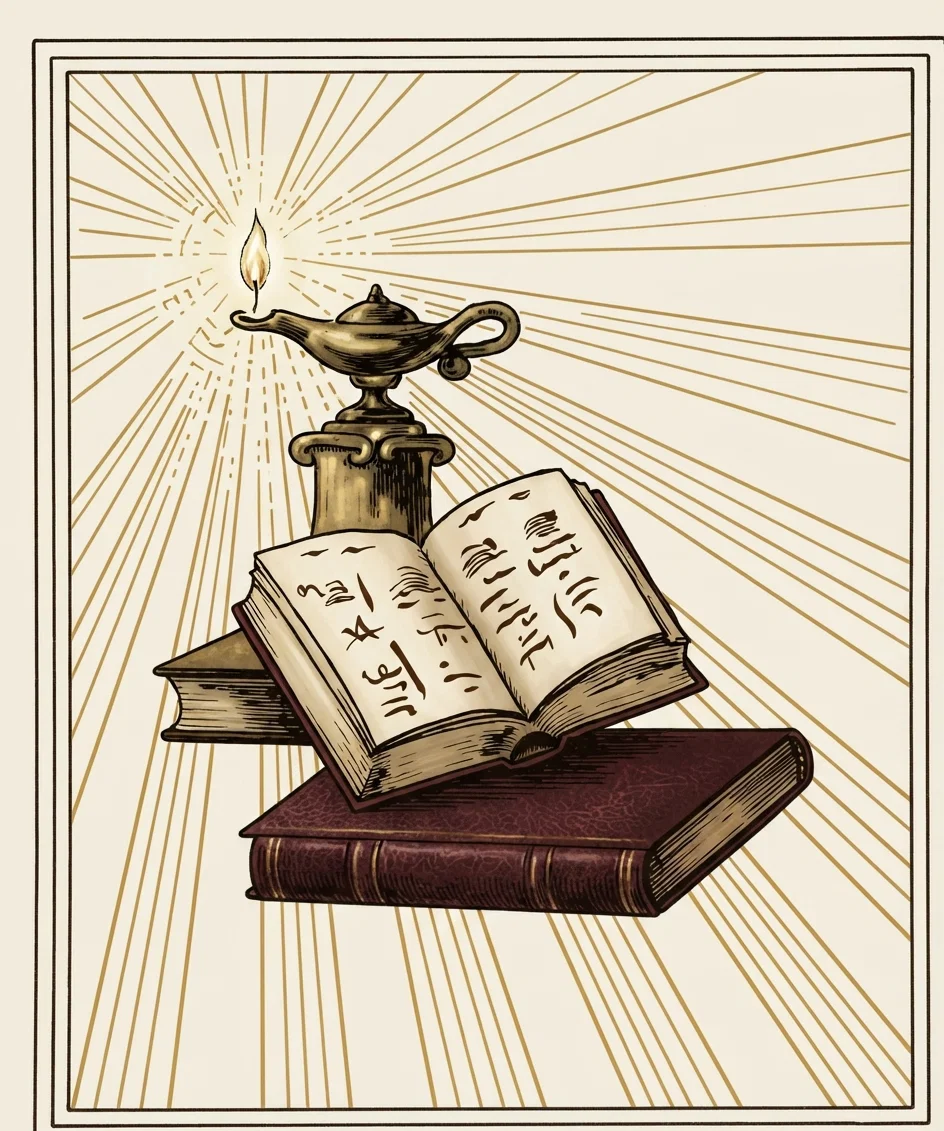
In the Bible, we find both the word and the Spirit of God spoken of as a lamp. “Thy word is a lamp unto my feet, and a light unto my path.” Ps. 119: 105. “There were seven lamps of fire burning before the throne, which are the seven Spirits of God.” Rev. 4: 5. Seven denotes fullness or completeness. Seven lamps, then, denote the full or complete work of the Holy Spirit. Hence we conclude that the burning lamp represented the work done for us and in us by the Spirit of God.

BORN THROUGH THE WORD

Jesus, in talking to Nicodemus, said, “Ye must be born again”; and, “Except a man be born from above,” “born of the Spirit,” “he cannot see the kingdom of God.” But Peter says of God’s children, “Being born again, not of corruptible seed, but of incorruptible, by the word of God, which liveth and abideth forever.” 1 Peter 1: 23. Thus we find we are born of the Spirit through the Word; but
again we are told that “whatsoever is born of God sinneth not; but he that is begotten of God keepeth himself, and that wicked one toucheth him not.” 1 John 5: 18.
The Scriptures plainly teach that there are steps by which that degree of perfection is reached, or steps we must take in becoming fully and completely the children of God. And in all these steps, we must be guided by the Spirit through the Word. Speaking of the Spirit, Jesus said: “When He is come, He will reprove [or convince] the world of sin, and of righteousness, and of judgment: of sin, because they believe not on Me; of righteousness, because I go to My Father, and ye see Me no more.” John 16: 8-10.

HOW SIN IS SHOWN

Convince of sin! This He does through the law; for Paul says: “I had not known sin, but by the law: for I had not known lust, except the law had said, Thou shalt not covet.” Rom. 7: 7. Brought thus face to face with the law, we find ourselves under condemnation. Under this conviction we are led to Calvary, where we find One who was willing to die in our stead, and who nailed all our sins to His cross. We are here convinced that we are sinners because we do not believe on Jesus, for all sin is but the outworking of a lack of confidence in God; and the revelation of the character of God in the death on Calvary, revealing the love of God to us, brings vividly and impressively before us the magnitude of our sin of unbelief.
When we contemplate the ascension of Christ to heaven, and the fact that He remains there in the very presence of the Father, we know that in Him is perfect righteousness; for no sin can dwell with God. Seeing in Him just what we need, even perfect righteousness, we grasp Him by faith as our substitute, and are justified from our past sins.

CONDEMNATION IS GONE

“There is therefore now no condemnation to them which are in Christ Jesus, who walk not after the flesh, but after the Spirit. For the law of the Spirit of life in Christ Jesus hath made me free from the law of sin and death.” Rom. 8: 1, 2. In this we have taken the first step in the covenant of freedom.
“Therefore being justified by faith, we have peace with God through our Lord Jesus Christ: by whom also we have access by faith into this grace wherein we stand, and rejoice in hope of the glory of God. And not only so, but we glory in tribulations also: knowing that tribulation worketh patience; and patience, experience; and experience, hope; and hope maketh not ashamed; because the love of God is shed abroad in our hearts by the Holy Ghost which is given unto us.” Rom. 5: 1-5.

THE PROCESS OF DEVELOPMENT

When we have taken the first step, we find there lies before us a process of development. We are to grow up into Christ, our living head, in all things, until we reach the measure of the stature of the fullness of Christ. We are to be overcomers. We are to go on to perfection. And this we will do by walking after the Spirit, and not after the flesh; for the flesh still seeks the paths of sin, but the Spirit the path of righteousness.
The Spirit uses the law in leading us to perfection; for “the law of the Lord is perfect, converting the soul: the testimony of the Lord is sure, making wise the simple.” Ps. 19: 7. So while we find our flesh drawing us still toward sin, we must reckon ourselves “dead indeed unto sin [transgression of the law], but alive unto God,” “and be not conformed to this world,” but be transformed by the renewing of the mind, that we may prove—demonstrate—“what is that good, and acceptable, and perfect, will of God,” by putting on the Lord Jesus Christ, and making no “provision for the flesh, to fulfill the lusts thereof”; and standing fast “in the liberty wherewith Christ hath made us free,” we find ourselves walking in the steps of our father Abraham, and advancing in the covenant of liberty.
The Spirit imparts to us a knowledge of sin by the law, and then writes that same law in our hearts, thus bringing us to the place where we will delight to do His will. In completing the covenant of liberty, that law must be written in its entirety, just as it was before written on the two tables of stone. For of the new covenant, which is the covenant of liberty, we read: “Behold, the days come, saith the Lord, that I will make a new covenant with the house of Israel, and with the house of Judah: not according to the covenant that I made with their fathers in the day that I took them by the hand to bring them out of the land of Egypt; which My covenant they brake, although I was an husband unto them, saith the Lord: but this shall be the covenant that I will make with the house of Israel; After those days, saith the Lord, I will put My law in their inward parts, and write it in their hearts; and will be their God, and they shall be My people.” Jer. 31: 31-33.

THE FINISHED WORK

And that this work is to be done by the Spirit, is clearly set forth by the apostle Paul, who in writing to the Corinthians said, “For as much as ye are manifestly declared to be the epistle of Christ, . . . written not with ink, but with the Spirit of the living God; not on tables of stone, but on the fleshy tables of the heart.” When this is done, we are apostles or representatives of Christ; for of Him it is written, “I delight to do Thy will, O My God: yea, Thy law is within Myheart.” Being like Him, we shall be able to see Him as He is. 1 John 3: 2. And in Zech. 3: 9 Christ is set forth as the stone placed before Joshua, that rock upon which we must all fall and be broken.
Thus if we place ourselves, without reserve, in Christ’s hands, He by the law of God, which is perfectly engraved in His heart, and by the Holy Spirit, which is upon Him, will search out every particle of our sin, and implant the law within our minds and hearts. Thus when, by the Spirit, we are led through justification by faith, and have mortified the deeds of the body, and have grown up into Christ, our living head, and have the law written in our hearts, and when Jesus, in the Judgment, shall have blotted out our sins, then the burning lamp shall have completed its work for us, and we shall fully stand in the covenant of liberty.
Continue reading: A DANGEROUS PROPOSAL