Probably in the life of no Scripture character is the instability of human resolution and determination shown as it is in the life of Simon surnamed Peter, one of the disciples of our Lord. That he loved his Lord ardently and impetuously there can be no doubt. He would have given his life for Him. He had been the first to boldly confess Jesus as the Christ on more than one occasion. When Jesus was apprehended in the garden of Gethsemane, it was Peter who drew his sword and would have laid down his life in defense of the Master.
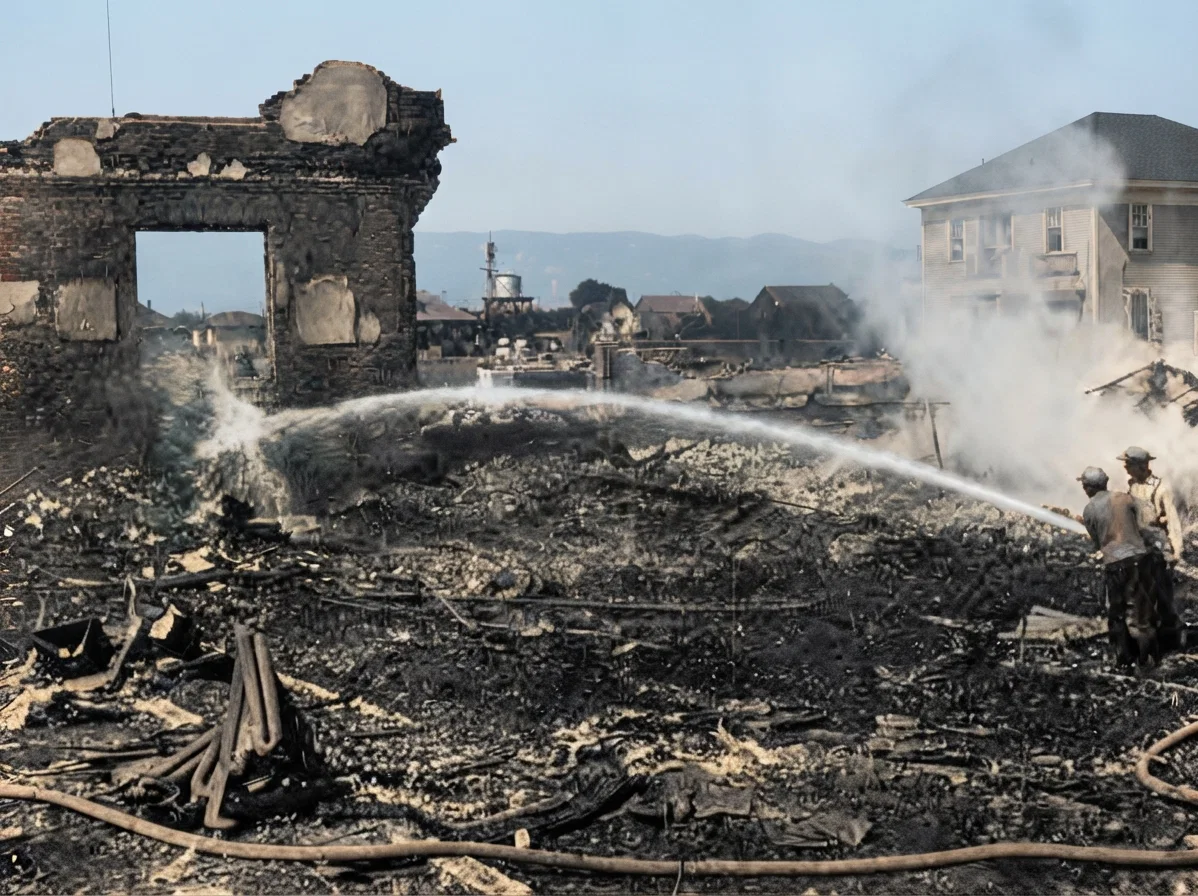
FIGHTING THE FIRE.
There was, however, an element of selfishness in Peter's character which the apostle did not realize. He believed in the ultimate triumph of Christ, but he wanted that triumph to be brought about in his own way. So when, as recorded in Matthew 16, Jesus foretold the time of His humiliation, His betrayal, and death, Peter rebuked Him therefor, saying, "Be it far from Thee, Lord; this shall not be unto Thee." It would seem from a superficial view that the words of Peter were prompted by his love for Christ. He doubtless thought so himself. But through all the superficiality the Master saw the selfishness, which Peter did not. Christ's humiliation meant the humiliation of His followers. His crucifixion meant to them public disgrace; and Peter was not willing to endure this. Whether he realized it or not, that was his motive. It was selfishness which prompted his words which our Saviour thus rebuked: "Get thee behind Me, Satan; thou art an offense unto Me; for thou savorest not the things that be of God, but those that be of men." It was a cutting reproof, but it was just what the bold, impetuous, unreflecting disciple needed; it was what would confirm his faith in the Master in after days, though not heeded at the time.
Failure to Learn the Lesson.
That it was not then heeded by Peter is evident from subsequent events. At the last supper, when the lesson of humility had been taught the disciples, especially the sons of Zebedee (Luke 22:24-26 compared with Mark 10:35-42), Jesus again shows His tender regard for Peter: "Simon, Simon, behold, Satan hath desired to have you, that he may sift you as wheat; but I have prayed for thee, that thy faith fail not; and when thou art converted, strengthen thy brethren." Luke 22:31, 32.
But the bold disciple was not yet convinced. He replied, "Lord, I am ready to go with Thee, both to prison, and to death." It was doubtless true, if it could have been in Peter's way. But it was not this bravery which Jesus was impugning. There is a courage which stands unblanched before the greatest physical danger, which will quail and shrink before some moral test. Peter referred to the one, Jesus to the other. He knew that Peter was morally weak, that while he might face physical danger, he would shrink before that test which would probe his selfish motives. Jesus showed this in His words to the disciple, that Satan desired him to sift him as wheat. The enemy would not come where Peter felt so guarded, but he would assail him, as he does all, on his weaker points. Jesus wished the breach left open in the wall of Peter's character to be built up. Peter persisted in not seeing the danger.
Ignorance of Self.
Then Jesus gives him another proof of his divine presence, which the apostle would remember in after days. After Peter had vehemently stated, "Although all shall be offended, yet will not I," Jesus says, "Verily I say unto thee, That this day, even in this night, before the cock crow twice, thou shalt deny Me thrice." Is not this enough, this solemn asseveration of the Master?—No, Peter thinks that he knows his own heart best. He again declares, "more vehemently," "If I should die with Thee, I will not deny Thee in anywise." Mark 14:29-31. And the emphatic words were echoed by the rest. Oh, how little they knew of the human heart! How many times is the history of Peter enacted over in the lives of poor mortals now, who think that they know more than God!
Jesus then goes to Gethsemane, taking the disciples with Him who had been especially reproved on that night, that He might show His love for them, that they might be better prepared by prayer for the conflict, and that He might have their companionship in His darkest hours of trial. But those who had said that they could drink of His cup and be baptized with His baptism were sleeping, and even ardent Peter could not watch one hour with the Master while His soul was passing through the agony of death. "Watch and pray," He tells them, and then mournfully shows the cause of their weakness,—"The spirit truly is ready, but the flesh is weak." He was treading the winepress alone, and not even His own disciples were with Him.
Man's Way Not God's Way.
The soldiers came after that hour of trial, led on by Judas and servants of the priests. Peter, true to his physical bravery, smites the foremost one and cuts off his right ear. Jesus heals the wound made by His rash follower, and commands Peter to put up his sword. Peter's way was not God's way yet. Instead of accepting with all his heart the admonitions of Christ, Peter becomes offended, and with the others forsakes his Lord. But the impulse to flee is soon overcome on the part of Peter and another disciple, evidently John. They returned, and it is said of the latter than he "went in with Jesus into the palace of the high priest." John 18:15. He identified himself with Christ. His overpowering love for the Master would not suffer him to do otherwise, and doubtless his acquaintance with the high priest helped him in this matter. But, however it was, he kept close to his Lord, and thereby prevented any possibility of denying Him.
"Following Afar Off."
Not so with Peter. Jesus would not let him have his own way; the disciple was offended. He followed his Lord, partly from his love for Him, partly out of curiosity, expecting doubtless that Christ would by His divine power scatter His enemies. But Peter would wait for that before he identified himself in that scoffing crowd with "the lowly Man of Nazareth," so he followed, but "followed afar off." Through John's influence he was admitted into the palace of the high priest.11When he came in, the damsel, seeing him brought in by one who came in with Jesus, says, “Art not thou also one of this Man’s disciples?” Peter was taken unawares, and he answered, “I am not.” It was the first step. He could not go to Christ after these words, so, instead of making his way to the Master’s side, as did John, he, in what he meant should be an indifferent manner, mingled with the servants and soldiers around the fire, kindled on that cold spring night.
Denying His Master.
He stood there warming himself, thinking, no doubt, of his sore disappointment, instead of watching and praying. He was again and again asked if he were not Jesus’ disciple, but he as often denied, even with cursing and swearing. The Lord heard—He knew it all before. He turned and looked upon Peter, not with anger, but grief, and the disciple’s heart was broken. Peter knew then how well Christ knew him.
Had Peter heeded the first reproof, he would not have fallen. Had he believed the second, he would probably have resisted. But he would not, and after repeated reproofs he became sensitive, and, separating himself from Jesus, he “followed afar off.” By three evangelists this is told in circumstantial detail; it is implied in the other. It reveals the secret of the denial. It made him susceptible to the enemy’s temptation; it made Satan’s success possible. Had he been close to Jesus, he would have never been asked the question, “Art not thou also one of this Man’s disciples?” Everybody would have known it; every word and act and look would have proclaimed that he loved the “Man of Sorrows” above all earthly flattery or emoluments.
The Lesson to Us.
Fellow-Christians, may we not learn a lesson here? When we deny Christ, is it not because we have been following “afar off”? Has not reproof made us sensitive in our selfishness, and have we not brooded over this till the Master was far in advance? Are pride, ambition, avarice, pleasure, between us and Christ? Do some need to ask to ascertain if we are Christ’s disciples? What assurance then have we that we will not deny the Lord even as did Peter? And then to us must come rebuke and humiliation as to him.
Let this day, if we have failed to identify ourselves with Christ, mark a new era in our lives. Let us go in “with Jesus,” if need be, to the judgment hall, to condemnation, to loss of reputation, to death; at all hazards keep with Him, but let us not be found by the adversary following “afar off,” or warming ourselves in an indifferent manner in the company of scoffers. The lesson is for us. How do you follow Christ? Our only hope is to be in Christ and to have Christ in us. Our only safety in the highways or byways of earth is to walk with Christ.
The Argument of Slur.
By Editor
WHEN the enemies of truth fail to accomplish their purpose by means of what might be considered legitimate contention, they usually resort to the argument of slur. The last resort is to make the advocates of righteousness appear mean and insignificant in the eyes of the people at large.
When Moses demanded of Pharaoh, in the name of the Lord, that he should let Israel go free, he replied: "Who is the Lord, that I should obey His voice to let Israel go? I know not the Lord, neither will I let Israel go." But his attempt to belittle the God of his slaves was fraught with great disaster.
When David went forth in the name of the Lord to meet Goliath, the giant "disdained him; for he was but a youth, and ruddy, and of a fair countenance. And the Philistine said unto David, Am I a dog, that thou comest to me with staves? And the Philistine cursed David by his gods. And the Philistine said to David, Come to me, and I will give thy flesh unto the fowls of the air, and to the beasts of the field." But a pebble from the leather sling of the shepherd boy brought the giant boaster to the ground in ignominious defeat.
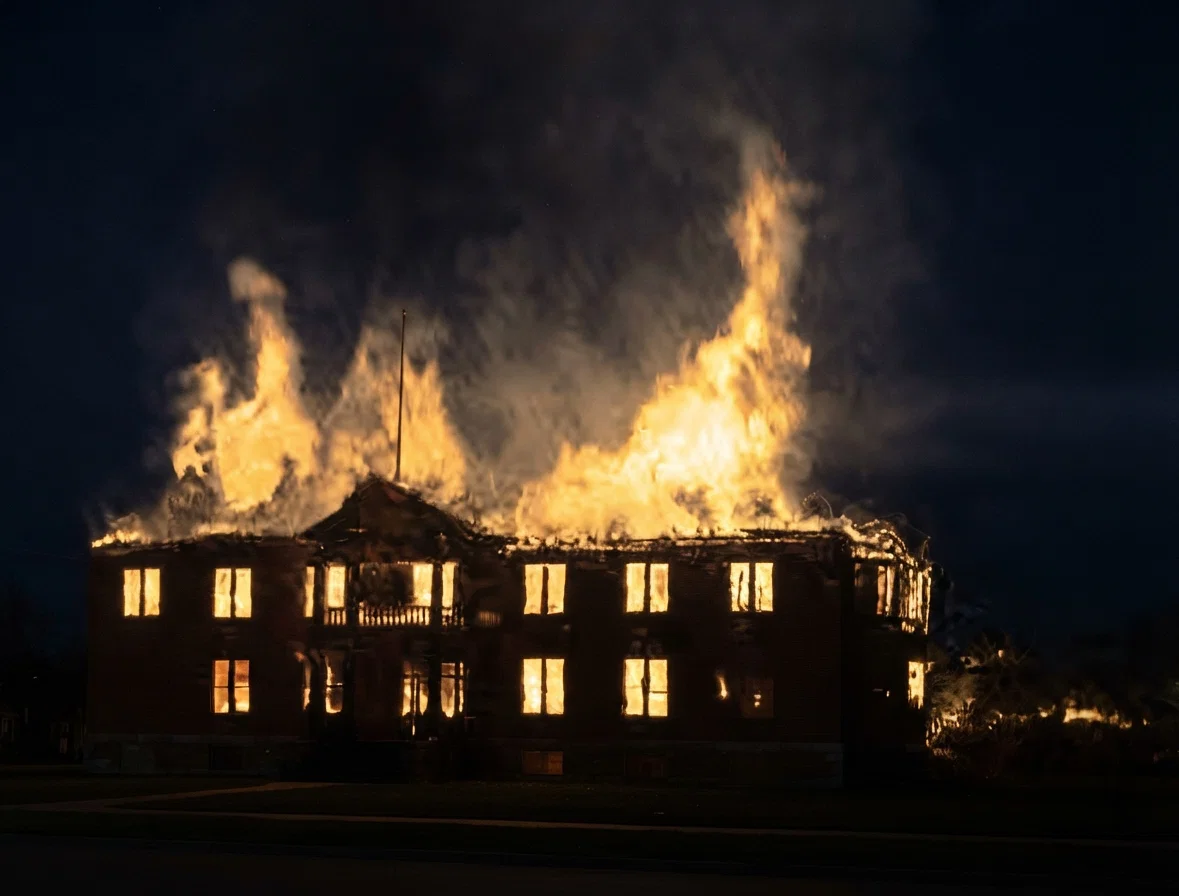
ANOTHER FIRE SCENE.
Sennacherib came against Jerusalem with great display of power, and sought to discourage Hezekiah by making light of his God. "No god of any nation or kingdom was able to deliver his people out of mine hand, and out of the hand of my fathers; how much less shall your God deliver you out of mine hand?" This slur was repeated with much emphasis in the ears of the people of Jerusalem; but "the Lord sent an angel, which cut off all the mighty men of valor, and the leaders and captains in the camp of the king of Assyria. So he returned with shame of face to his own land." See 2 Chron. 32:9-23.
Nebuchadnezzar, king of Babylon, set up a golden image and commanded all his officers to worship it. But three Hebrew captives refused, when the king ordered that they be thrown into a fiery furnace, saying, "Who is that god [with special reference to the God of Israel] that shall be able to deliver you out of my hands?" In a very short time, however, he saw that his fiery furnace could not have any effect on the servants of the God whom he had despised, and he was constrained to admit that "there is no other god that can deliver after this sort."
When Jesus of Nazareth came into the world to save sinners, He was "despised and rejected of men." The learned men said, "How knoweth this Man letters, having never learned?" The Pharisees said, "We know that God spake unto Moses; as for this fellow, we know not whence He is." His disciples were also disdained; their accusers said, "Have any of the rulers or of the Pharisees believed on Him? But this people who knoweth not the law are cursed." In all controversies with Christ, He always silenced His opponents with the Scriptures; hence they resorted to the argument of slur and innuendo, and finally they put Him to death. But He arose triumphant over all His foes, and sits at the right hand of His Father in heaven.
Coming down to later times, the real reformers, religious and political, have been despised and belittled by the powers whose oppression and corruption they have exposed and resisted. Luther, the Wesleys, the heroes of the American Revolution, and others too numerous to mention, have had to meet the argument of slur. And it has been demonstrated again and again that the only effective answer is the Word of God, the general principles of justice and mercy, and lives and works that bring to naught the slurs of those12who are driven to the use of such weapons against the truth.
Such men as Jefferson had to meet, and in his case his name has yet to meet, the charge of being an enemy of Christianity because he consistently contended for religious liberty.
It is true that in all ages there are many people carried away by the smart wit of the argument of slur. In all the instances to which we have referred, this argument had great weight for a time, even convincing the weak minded, but, worst of all, frightening those who know its fallacy but lack the moral stamina to stand up against it.
To-day there is a persistent effort being made by the so-called National Reform Association, and the so-called Bureau of Reform, to eradicate religious liberty in this country for all excepting those who support the intolerant movement. The argument of slur is a stock argument with them. Such epithets as "infidel," "traitor," "anarchist" are on the tongue's end of the average National Reform orator. But that which seems to express the limit of slur is the name Seventh-day Adventist. To class one in this category is deemed an answer to every argument based on the Scriptures, and every appeal to the fundamental principles of the Declaration of Independence and the Constitution of the United States. The little "one-seventh of one per cent." of population specification is sufficient in their minds to overthrow the religious liberty declarations of Christ Himself, together with all the patriotic doctrines of the fathers of the republic, and those who have maintained them since. And the millions of other people who still believe in the civil and religious rights of all classes are supposed to be silenced by the dread of being called Seventh-day Adventists.
But the intolerant religionists of Christ's day called Him Beelzebub, "the prince of devils," and those who maintain and proclaim His principles can afford to bear a name indicative of their faith, even if it is made an offensive epithet by the enemies of truth.
Report Undelivered Papers
By Editor
If your neighbor or friend has not received his paper, please inform us at once. Our mailing list is not up to date, but we are anxious to correct all mistakes if you will let us know.
THE SIGNS OF THE TIMES
THE DOCTRINE OF CHRIST.
IN the ninth verse of the second epistle of John we are told that "whosoever transgresseth, and abideth not in the doctrine of Christ, hath not God. He that abideth in the doctrine of Christ, he hath both the Father and the Son." In the Revised Version, instead of "doctrine" we have "teaching." It is erroneously supposed by many that the teaching of Christ is only to be found in the New Testament. This mistake leads many people to misunderstand, and then to oppose, the truth.
When Christ was a Teacher on earth, He taught the people to "search the Scriptures," yet there were no "holy Scriptures" in existence save those of the Old Testament. Why were they to search those Scriptures?—Because they testified of Christ (John 5:39); they contained the Gospel of Christ (1 Peter 1:24, 25; Isa. 40:6). The spiritual teaching of the church led by Moses in the wilderness was the teaching of Christ. "They drank of that spiritual Rock that followed them [margin, went with them]; and that Rock was Christ." 1 Cor. 10:4. And the Spirit of Christ was in the prophets to signify and to testify beforehand the sufferings of Christ, and the glory that should follow. And this caused the prophets to search diligently for that salvation. 1 Peter 1:10, 11.
There were no "holy Scriptures" aside from the Old Testament when the apostle assured Timothy that the holy Scriptures were able to make him "wise unto salvation through faith which is in Christ Jesus." And this was emphasized by the further assurance that "all Scripture is given by inspiration of God, and is profitable for doctrine, for reproof, for correction, for instruction in righteousness; that the man of God may be perfect, thoroughly furnished unto all good works."
The doctrine of Christ in both the Old and New Testaments is that He should suffer for our sins. Isa. 53:4-6; Matt. 1:21; John 3:16.
In both the Old and New Testaments the teaching of Christ is that there shall be a new heaven and a new earth in which righteousness shall prevail. Isa. 65:17-19; 2 Peter 3:10-13; Rev. 21:1-4.
In both Testaments the teaching of Christ is that the meek shall inherit the earth. Ps. 37:9-11, 22; Matt. 5:5.
We have outlined briefly a few salient points in the doctrine, or teachings of Christ, as taught in the Old and New Testaments. All the Scriptures are God's Word, given by the inspiration of His Spirit, and Christ instructs us that we are to live by "every word that proceedeth out of the mouth of God."
Turning again to the second epistle of John, we read in the tenth verse, "If there come any unto you, and bring not this doctrine [or teaching of Christ], receive him not into your house, neither bid him God speed; for he that biddeth him God speed is partaker of his evil deeds."
I WILL NEVER LEAVE THEE.
I will never, never leave thee,
I will never thee forsake;
I will guide, and save, and keep thee,
For My Name and mercy's sake;
Fear no evil,
Only all My counsel take.
When the storm is raging round thee
Call on Me in humble prayer;
I will fold My arms around thee,
Guard thee with the tend'rest care:
In the trial,
I will make thy pathway clear
When the sky above is glowing,
And around thee all is bright,
Pleasure like a river flowing,
All things tending to delight;
I'll be with thee,
I will guide thy steps aright.
When thy soul is dark and clouded,
Filled with doubt and grief and care,
Through the mists by which 'tis shrouded,
I will make the light appear,
And the banner
Of My love I will uprear.
ABIDE WITH ME.
By Henry F. Lyte
Abide with me! Fast falls the eventide;
The darkness deepens; Lord with me abide!
When other helpers fail, and comforts flee,
Help of the helpless, O, abide with me!
Swift to its close ebbs out life's little day;
Earth's joys grow dim, its glories pass away;
Change and decay in all around I see;
O Thou who changest not, abide with me!
Not a brief glance I ask, nor passing word,
But as Thou dwell'st with Thy disciples, Lord,
Familiar, condescending, patient, free,
Come, not to sojourn, but to abide with me!
I need Thy presence every passing hour;
What but Thy grace can foil the tempter's power?
Who, like Thyself, my guide and stay can be?
Through cloud and sunshine, Lord, abide with me!
I fear no foe, with Thee at hand to bless;
Ills have no weight, and tears no bitterness;
Where is death's sting? where, grave, thy victory?
I triumph still, if Thou abide with me.
—Henry F. Lyte.
TO OUR CONTRIBUTORS.
By Editor
We feel inexpressibly sad to say that some of you are sharers with us in our loss. At the time of our fire we had quite a large quantity of good matter on hand, some sent to us with the request that it be returned if not used, and in every respect of course we designed to accede to their wishes; but the fire has consumed every line of our copy, and we feel that we are indeed losers in very much of this loss. We had on hand a large quantity of original poems; they are all gone. One or two serial articles that we were about to begin in the SIGNS are gone, together with some musical contributions that were worthy of publication, and would have been published in a short time. We wish that it were in our power to reproduce them, but it is not.
We still ask our old contributors to remember us. Those, too, who have sung such sweet songs in the SIGNS in the poems they have sent; we ask them also to remember us still. If any of our friends can send us good photographs of historical places, or characters, or current events near them without too much trouble, we would be glad to receive these.
The Sabbath.
1. When and how was the Sabbath instituted?
It was instituted at Creation. "On the seventh day God ended His work which He had made; and He rested on the seventh day from all His work which He had made. And God blessed the seventh day, and sanctified it; because that in it He had rested from all His work which God created and made." Gen. 2:2, 3.
2. Was there any change in the Sabbath up to the time of Moses?
On Sinai God repeated His Sabbath law. "Remember the Sabbath day to keep it holy. Six days shalt thou labor and do all thy work; but the seventh day is the Sabbath of the Lord thy God; in it thou shalt not do any work, thou, nor thy son, nor thy daughter, thy manservant, nor thy maidservant, nor thy cattle, nor thy stranger that is within thy gates; for in six days the Lord made heaven and earth, the sea, and all that in them is, and rested the seventh day; wherefore the Lord blessed the Sabbath day, and hallowed it." Ex. 20:8-11.
3. Was there any mention of the Sabbath day between Creation and Sinai?
One month before coming to Sinai Moses reminded the Israelites of the Sabbath. When the manna was given, they were directed to gather a double portion on the sixth day and prepare it for the Sabbath. He said, "Six days shall ye gather it; but on the seventh day, which is the Sabbath, in it there shall be none." Ex. 16:26.
4. What special blessing is attached to the Sabbath day?
"If thou turn away thy foot from the Sabbath, from doing thy pleasure on My holy day; and call the Sabbath a delight, the holy of the Lord, honorable; and shalt honor Him, not doing thine own ways, nor finding thine own pleasure, nor speaking thine own words; then shalt thou delight thyself in the Lord; and I will cause thee to ride upon the high places of the earth, and feed thee with the heritage of Jacob thy father; for the mouth of the Lord hath spoken it."
5. Did Christ make any change in the Sabbath law?
Hear His own words: "Think not that I am come to destroy the law, or the prophets; I am not come to destroy, but to fulfil. For verily I say unto you, Till heaven and earth pass, one jot or one tittle shall in no wise pass from the law, till all be fulfilled." Matt. 5:17, 18. "The Sabbath was made for man, and not man for the Sabbath. Therefore the Son of man is Lord also of the Sabbath." Mark 2:27, 28. Christ taught Sabbath reform, but not a change of the day.
6. How did His followers observe the Sabbath?
On seeing Christ laid in the tomb, "they returned, and prepared spices and ointments; and rested the Sabbath day according to the commandment. Now upon the first day of the week, very early in the morning, they came unto the sepulcher, bringing the spices which they had prepared, and certain others with them." Luke 23:56; 24:1.
7. How did Paul observe the Sabbath?
At Corinth he worked at his trade of tent-making, with Aquila and Priscilla, but on the Sabbath he taught the people in the synagog. This he did for a year and a half at one time. Acts 18:1-4, 11.
8. How long will the Sabbath be a recognized institution?
"As the new heavens and the new earth, which I will make, shall remain before Me, saith the Lord, so shall your seed and your name remain. And it shall come to pass, that from one new moon to another, and from one Sabbath to another, shall all flesh come to worship before Me, saith the Lord." Isa. 66:22, 23.
WHAT IS THE TRUE SABBATH OBSERVANCE?
By Pauline Schilberg
IN the beautiful discourse on the "Bread of Life," Jesus said that the bread which He would give for the life of the world was His flesh; but "the Jews strove among themselves, saying, How can this Man give us His flesh to eat?" The Saviour, however, told them plainly, "Except ye eat the flesh of the Son of Man, and drink His blood, ye have no life in you." In this He stated a truth which the carnal heart can not grasp, and therefore the Jews did not understand. "The natural man receiveth not the things of the Spirit of God." Spiritual things* must be spiritually discerned. "It is the Spirit that quickeneth; the flesh profiteth nothing; the words that I speak unto you, they are spirit, and they are life."
In the beginning God created the heavens and the earth. The heavens and the earth and all the host of them were finished in six days. On the seventh day God ended His work and rested; and He blessed the seventh day and sanctified it, because that in it He had rested. It is Jehovah's rest; the word "sabbath" itself means rest. God put His rest into the seventh day, then He blessed the Sabbath, and sanctified it.
But why did God rest? Was it because He had become weary and fatigued in the great work of creation? The Word says that the Lord rested on the seventh day, and was refreshed. Ex. 31:17. God is a Spirit, therefore He must have been refreshed spiritually; for, "Hast thou not known? Hast thou not heard, that the everlasting God, the Lord, the creator of the ends of the earth, fainteth not, neither is weary? There is no searching of His understanding." Isa 40:28. "Behold, He that keepeth Israel shall neither slumber nor sleep." Ps. 121:4.
The Lord made man in His image, in His own likeness; He made him upright, perfect, and holy; then He made the Sabbath—perfect, holy, sanctified—and gave it to man. Man could thus enjoy the Sabbath. He could enter into his Creator's rest. God made the Sabbath for man, and not man for the Sabbath. Mark 2:27, 28. The Jews' conception of the Sabbath was that it was against man, and not for him. No other commandment was so hedged and so covered with traditions as the fourth. This was because they did not see the spirituality of the law. They had not permitted God to "take away their stony heart, and give them a heart of flesh, and put a new spirit within them"; so they could not enter into God's rest, could not keep the Sabbath; they could not understand spiritual things.
"But now thus saith the Lord that created thee, O Jacob, and He that formed thee, O Israel, Fear not; for I have redeemed thee, I have called thee by thy name; thou art Mine." Our Creator is also our Redeemer. God blessed the man before he gave him the Sabbath; being a blessed and holy man, he could keep and enjoy the holy day. But "all have sinned, and come short of the glory of God." Rom. 3:23.
Therefore, before we can enter into God's rest, before we can keep His Sabbath day holy, we must be blessed of God—even with the blessing which is the forgiveness of sins. We must cease from our own works, the works of the flesh, of self, and allow the Lord Jesus to sanctify us wholly. The temple must be cleansed. "Create in me a clean heart, O God, and renew a right spirit within me." Ps. 51:10. "For we are His workmanship, created in Christ Jesus unto good works which God hath before ordained that we should walk in them." Eph. 2:10. This is simply recreation by the same power.
The Lord has given us His Sabbath as a sign of this blessed experience. Eze. 20:12, 20. Unless this experience is ours we do not keep the Sabbath. We cannot keep the Sabbath unless we are at peace with God, unless He is dwelling in our heart by faith. There is more in the Sabbath than simply the refraining from labor and partaking of physical rest. It soon becomes irksome to those who find in it nothing more than this; their thoughts and conversation run along the same lines as on the other days of the week. Except such become converted, sooner or later they lose even the form. The Lord calls upon such to take their foot off the Sabbath (Isa. 58:13); to come out of Babylon; to return to our God, and He will have mercy on them, and will abundantly pardon. Then shall we delight ourselves in the Lord, and His Sabbath will be a delight to us. Those who have become "a new creation" will not endeavor to force men to be religious, neither will they attempt to enforce a spurious sabbath by civil law; for Jesus said, "My kingdom is not of this world, else would My servants fight."
The Lord is soon coming. His salvation is near to come, and His righteousness to be revealed. The time for the repairing of the breach is here (Isa. 58:12), and blessed are we if we keep the Sabbath from polluting it. Isa. 56:2. Those who will not make themselves acquainted with God, who do not enter into His rest here, can not enter into the rest that remaineth, unto God's everlasting kingdom; for there God's children come to worship before Him from one Sabbath to another. Isa. 66:23.
Signs and Little Friend Files
By Editor
Please do not forget to let us know soon what you have in Signs and Little Friend files up to date. It will be of great help to us.
FAITH.
By H. C. Balsbaugh
GOD requires a complete faith. This is for the highest welfare of man, because there is a reasonable foundation for it. God therefore justly holds men accountable for it.
The Foundation of Faith.
The life of God reaches into the past and future beyond our thought and historical record. The things of nature everywhere testify that there is a Creator, and His works and workings bear witness of knowledge, wisdom, and power as much greater than the works of man as the heavens are higher than the earth. In this is abundant evidence of the Creator's fitness to govern the world.
Nature attests the truthfulness of the Bible. An honest mind may be confirmed in this by the record found in the first chapter of Genesis, which is only an example of many others found in the Bible. The works and word of God are a harmony. Before making the living moving creature He provided for its necessities—air, water, and food; and further for the highest gratification of all the senses with which He endowed the creature. See Gen. 2:8, 9. This declares God's goodness and love from the beginning, while the boundless variety of creation declares the perfect knowledge and wisdom of God. Let all, including the infidel, consider that this truth of harmony is a great witness of condemnation against all unbelievers.
Because of men's imperfections upon every side they can not see as God sees. Therefore the natural man is at variance with God. After the same manner there is unlikeness between father and child. Tho the father's knowledge is not perfect, it is much greater than the child's. How unreasonable then that God should ever be called unrighteous. The natural man lives but a short time; God lives forevermore. Think, by comparison, how small at best is the knowledge and wisdom of man, and how small must be his view of life and duty, while God ever has a full, perfect view, since He knows all things. In this reasonable light read Acts 15:18.
These evidences of God's fitness to instruct and direct man are an open and standing appeal to believe God in the way He has chosen to reveal Himself. Truly, God has been mindful to furnish for every man an intelligent and satisfying foundation for faith. Read Rom. 10:17.
Faith and Its Purpose.
We must learn to see as God sees. How?—By faith in God. A child has an inner sense, a something to make him know that he is connected with some one greater than himself, or a helper. That helper is his father. The child becomes acquainted with his father through the father's words and actions, and thus learns to have confidence in his father. And while learning the lesson of faith he is learning to see as the father sees, thereby seeing far beyond his own experience and knowledge. So is man's relation to God. According to his faith in God he sees things and life as God sees. The Bible reveals the mind and will of God, and gives an account of the world by history and prophecy from the creation to the end of time. Thus the man of faith has a view of the whole human race, of heaven, and of earth, and knows that "The Lord is righteous in all His ways and holy in all His works." Ps. 145:17; also Hosea 14:9.
Jesus is the perfect example of faith for every man. Rev. 14:12; John 14:6. His life, His words and acts, reveal His faith. In Jesus we see perfect obedience by reason of perfect faith. And this record is given that men everywhere may have Christlike faith. "Without faith it is impossible to please God." Heb. 11:6. Read the whole chapter for many illustrations of faith.
By Faith Is Peace and Refuge in God.
The Scriptures prophesy a time (Luke 18:8) when true faith will be very small on the earth. That condition of the world is a sign of the near coming of Christ, and that very condition is true of the world now. Unbelief of the Scriptures is the cause of it. In 2 Tim. 3:1-5, is a prophecy of the state of the professed church in the last days. In Luke 21:25-27 is a prophecy of the state of the world. These prophecies portray the sins, calamities, and signs that are fulfilling now.
Ponder the fearful state of men's minds as now, in the more frequent visitations of earthquakes, tidal waves, volcanic eruptions, storms, floods, and fires, they experience how helpless is the arm of flesh. These things are both signs and judgments, to instruct and warn men that they may turn to God in faith and make Him their sure peace and refuge. Isa. 26:3; Ps. 46:1-3. Seek first the kingdom of God and His righteousness (Matt. 6:33), and will to do His will (John 7:17). In these references are words of solemn, sober truth. By the words of Scripture all men will be judged. John 12:46-50.