Ballarat lies about one hundred miles west of Melbourne, and is one of the principal cities of Victoria, containing about fifteen thousand inhabitants. It is in a mining district, and is quite American in its ways. Eld. Corliss and myself visited the place before the tent was pitched in Melbourne. We found quite a number who had been investigating the Scriptures and had become interested in such doctrines as the nature of man and the second coming of Christ. One family, consisting of a man and his wife and two daughters, had received some reading matter from Eld. Israel, and had commenced that day to keep the Sabbath. We visited them, and felt much of the sweet Spirit of God while engaged in prayer with them. We there formed many pleasant acquaintances. A few weeks later, Bro. Arnold and myself visited them again, and found that the interest of some had increased. We arranged for an agency for the Bible Echo, when it should be published. These efforts were but the beginning of a good work.
In May, Eld. Israel visited Ballarat, and raised quite an interest by holding Bible readings from house to house. When he had been there about a week he had readings almost every night, attended by from twelve to twenty of the most intelligent class.
After each reading was over, the people would remain together till eleven o’clock, talking on the subjects presented, and, although they saw that to obey would conflict with their business interests, and separate them from friends, yet they esteemed the friendship of God and the riches of Christ of far more value than any consideration of a worldly character. The following extract from the leading paper of the place will illustrate this fact:—
“It is remarkable what sacrifices some business people are prepared to make for conscience’ sake. This remark is drawn forth by a notice in the window of a Bridge Street firm, to the effect that in future their establishment will not be open on Saturdays until sunset. The members of the firm in question are not of the Hebrew persuasion, but it seems that they are connected with a new religious sect which has sprung up in Ballarat,100and which, after close research into the Scriptures, particularly the book of Exodus, has come to the conclusion that it is contrary to the law of the Almighty to enter into any business on Saturday until the orb which gives us light has set.”
In a few weeks Bro. Israel was joined by Eld. Corliss, who began public meetings. Under date of July 12, Bro. I. writes: “We are now holding meetings in the Alfred Hall, which we are able to have for five meetings a week, including Sundays. It costs us ten shillings ($2.44) a night, and two shillings and sixpence (61 cents) when we use it in the day-time. The room will seat from four hundred to four hundred and fifty. We have held seventeen meetings, and the contributions have been seventeen pounds, ten shillings, and five and a half pence ($85.34). There are from two hundred and fifty to three hundred persons present most of the time. They are of the best class of citizens. There is a deep interest manifested, and the whole city is stirred. At the first Sabbath meeting there were sixty present. The covenant was presented for the first time, and twenty-two signed it. Seven more have signed since then. We organized a Sabbath-school the 26th of June, in which a good interest was manifested.”
Under date of Aug. 2, Eld. Corliss writes: “We have brought out the most testing truths, and now in the seventh week the audience ranges from two hundred to two hundred and fifty. Last night was very stormy, yet two hundred or more were present. Books have not sold very rapidly on account of the hard times, yet the book sales I think will amount to about eleven pounds ($54). The collections at the door have thus far amounted to over thirty-five pounds, and will doubtless reach forty pounds ($194) by next Sunday night. We have, therefore, been able to pay our hall rent and board bills, and for all our advertising during the meetings. Forty-five have signed the covenant.”
They now have a church at Ballarat who are actively engaged in doing all that is in their power to advance the work.
THE CANVASSING WORK.
Bro. Wm. Arnold, who went with us to Australia, has devoted his energies to the sale of “Thoughts on Daniel and the Revelation.” As soon as we became settled after our arrival, he began his work. The difficulties with which he had to contend were not less trying than those met in other branches of the work. He had to learn to adapt himself to the people. There were great difficulties to be encountered in the delivery of the books, as rents are secured by the week, and when he came to the time set for delivering the books, many of his subscribers had moved away. With some, also, there seemed to be a feeling that a promise made to an American canvasser was not a very sacred thing anyway. But in time success attended his efforts, and some days he sold as many as fifteen copies. During the first four months he sold one thousand books, and has now enlisted others to work with him so as to gain an experience in the canvassing business. This is a very essential phase of the work in such a field. Other books were not sold so rapidly. The greatest efforts were put forth for the sale of this work, although a goodly number of “The Great Controversy,” Vol. IV., and some health works, were disposed of.
THE PUBLISHING WORK.
It was evident from the first that it would be necessary to publish a paper in Australia which would ably defend and correctly represent the doctrines of present truth in the Colonies, and present the progress of the work in America and Europe. There were various reasons why this should be done: 1. Home production is the pride of the Colonies.101They want something in advance of the mother country. 2. It was necessary to properly represent ourselves to the people, and to meet the opposition of the press, when every outside avenue was closed against us. To write to America or to England and get a return would require at least two months, and would therefore be out of the question. 3. To issue only a small sheet occasionally, lacked the appearance of permanency, and would be looked upon as an advertisement, hence its influence would not be salutary. Accordingly, arrangements were made for publishing, and in January, 1886, we began to issue a sixteen-page monthly paper, called, The Bible Echo and Signs of the Times. This gave an influence and strength to our work, exceeding our most sanguine expectations.
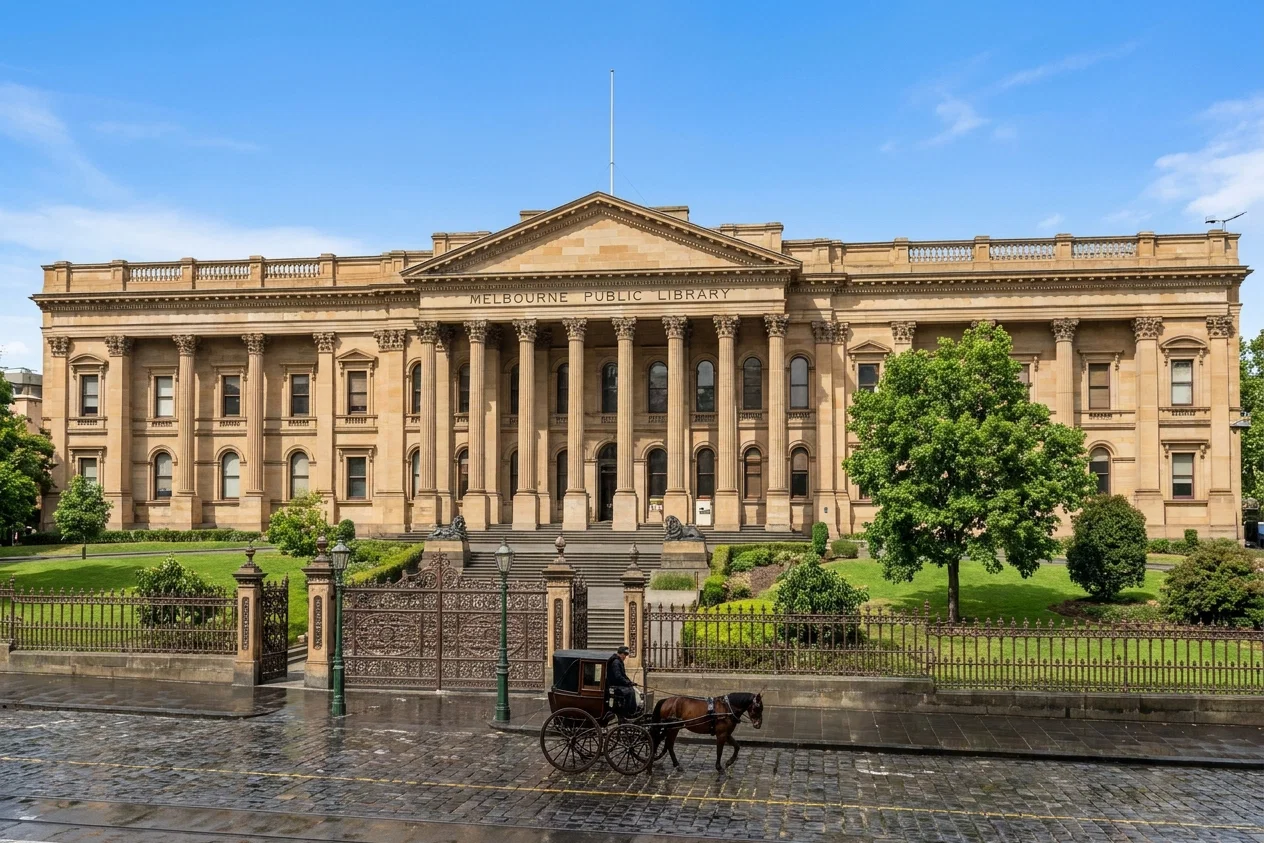
Melbourne Public Library.
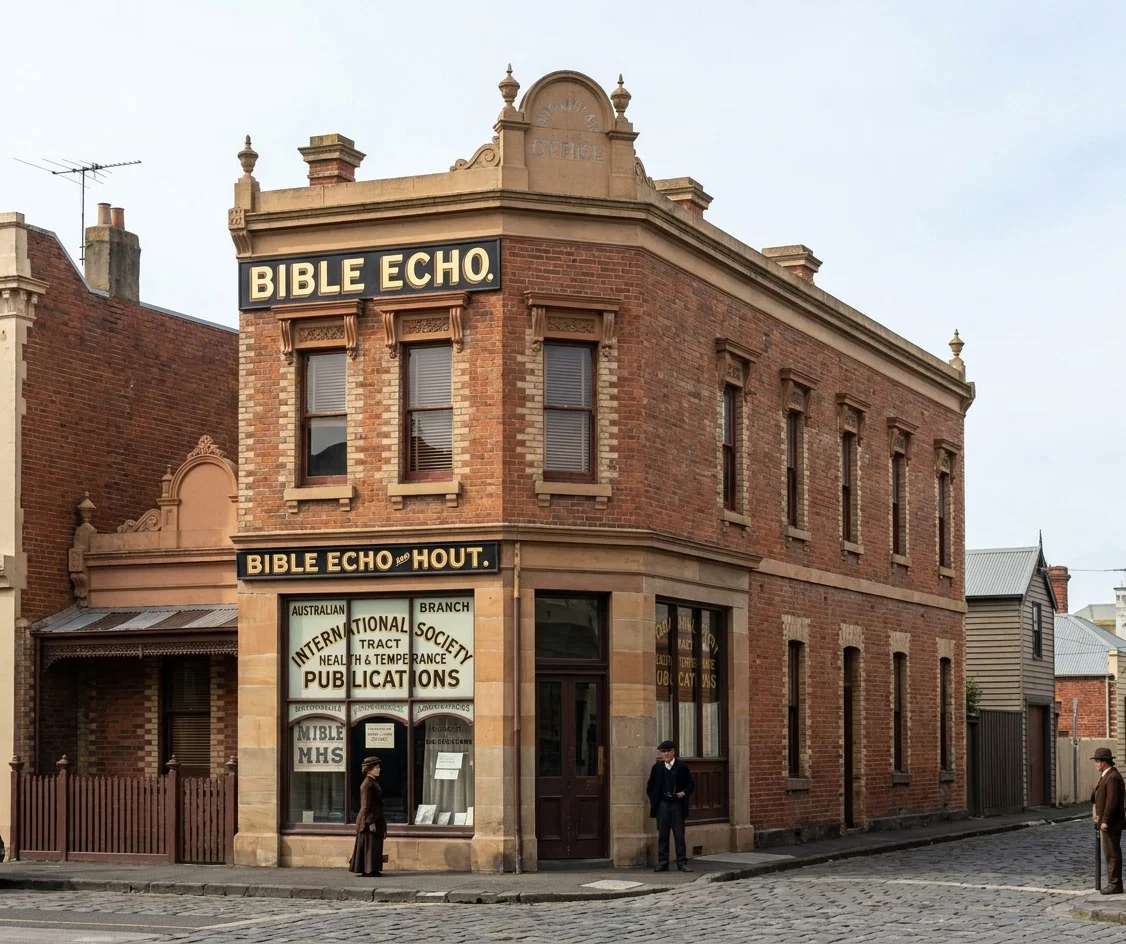
Bible Echo Office, North Fitzroy, Victoria.
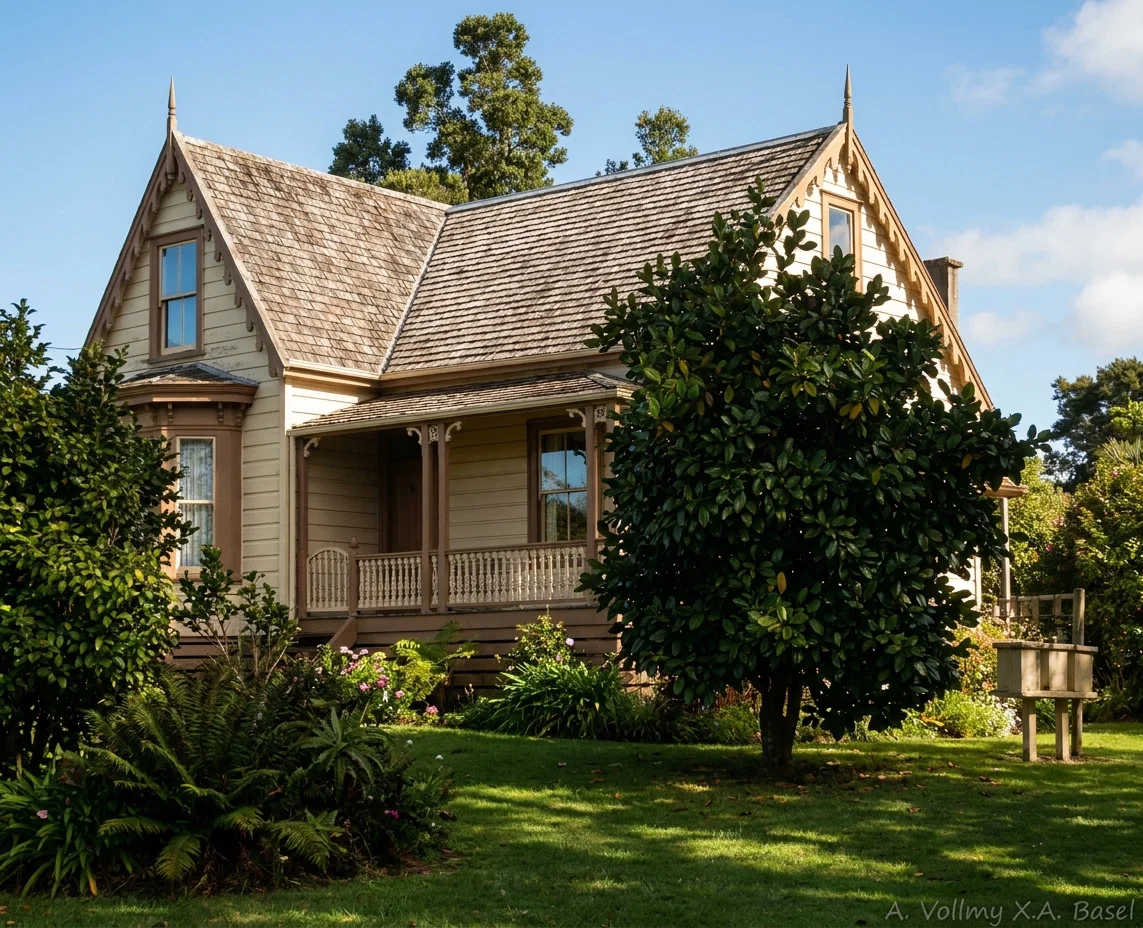
Joseph Hare's House, Kaeo, N. Z.
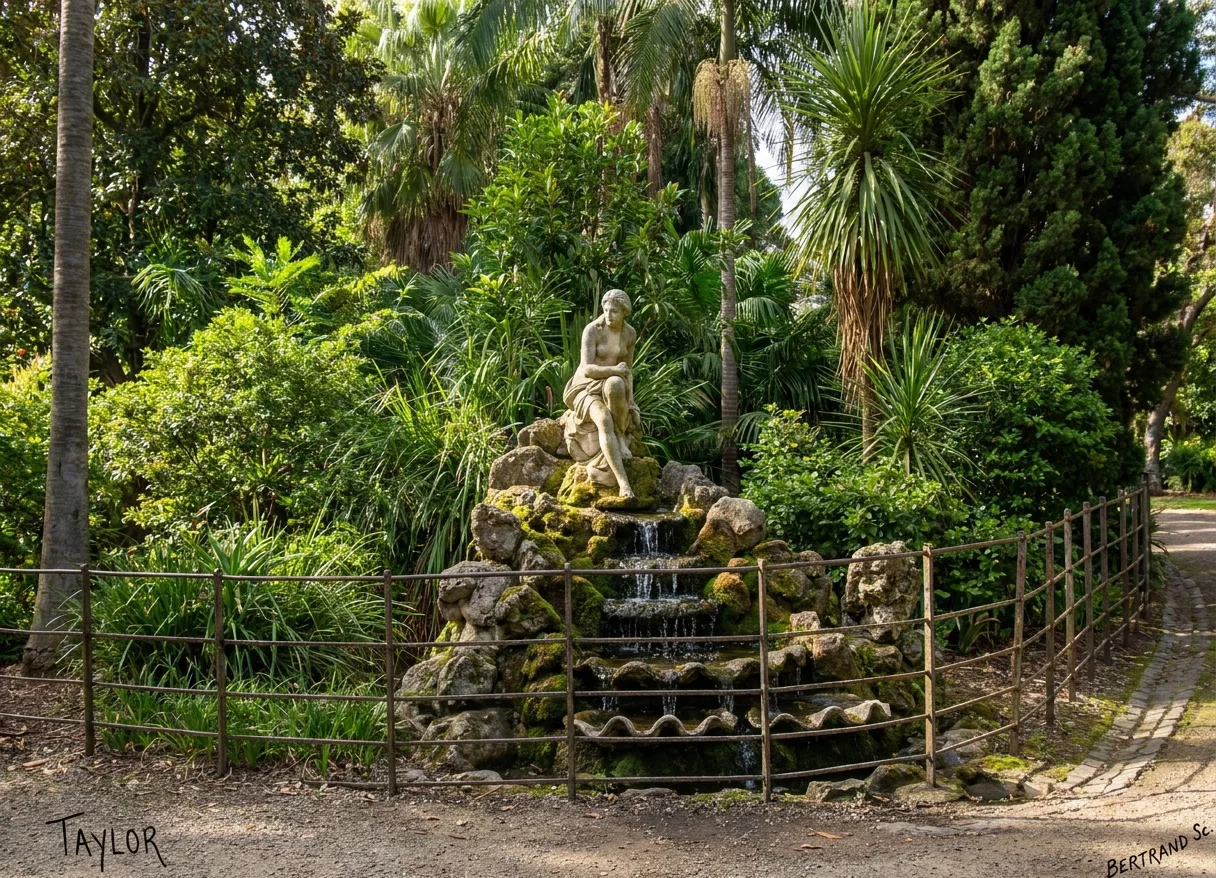
FITZROY GARDENS.
A printing outfit was purchased, consisting of one large Wharfdale press and one small press, a two-and-one-half horse-power gas engine, a stitching machine, a paper cutter, and type and material for the printing work, at a cost of over $4,000. Messrs. Miller and Wood, two young men just starting in the printing business, sold out and united their interest with that of the Bible Echo office. The office is located in one of the suburbs of Melbourne, about four miles from the post-office. Busses and cable cars run constantly, save for a few hours at night. The fare is threepence.
By publishing the Echo we gained an influence among the more wealthy business people, with some of whom we had already become acquainted. It also introduced us favorably into many homes, as it was evident that we had come to stay and to be of their number. All other religious papers, so far as we learned, are largely supported by paid advertisements, and the absence of this feature in ours did not work against us, but rather gave us influence. One gentleman to whom we showed the paper, seeing that it contained no paid advertisements, remarked that it “ought to be placed in a gold frame and hung in the hall.” He inquired how we were supported, and how we could afford to publish at so small a price a paper containing no advertisements. After we informed him how our friends in America had supported us so far, he said that such a work as we were doing was commendable, and should receive the support of the people of Melbourne. He gave us a check for fifteen pounds ($74), and letters of introduction to a number of his friends, who, he said, ought to help us more than that, as they were in better circumstances than he.
A large number of agents were employed to sell the Bible Echo, but only a few of these were successful. Of the first number of the paper we published an edition of six thousand, and three thousand of the following numbers. Readers could be obtained, however, for five or ten thousand, and our list of subscribers could be largely increased, if we had experienced helpers to do the work of sending out the papers. During the first three months, about four hundred paying subscribers were obtained. Besides this a large number of copies were sold by agents and others. The mailing and free distribution of the paper accomplishes more here toward getting subscribers than does the same work in America. After receiving papers, the people seem to feel under moral obligation to pay for them.
From Sydney, New South Wales, publishers can send their papers free to all the Colonies; and from Tasmania they can send them free to all the world. From Victoria and all the other Colonies the postage is one cent per paper, if they go through the post-office. If we had sufficient help to establish a mission in Sydney, a Sydney edition of the paper might be published, and mailed free to all parts of that field. At each session of the parliament of New South Wales an effort is made to change the102postal laws, but thus far without success.
FINANCIAL AID.
The Sunday morning before I left Australia for New Zealand, we called the leading brethren together, and made a statement to them of the financial standing of the mission. We stated the cost of the publications that had been sent to the Colonies, the time we had spent with them, the expense of getting there, etc. This we did that they might know something of the expense of the mission, not that we expected them to do much toward making up the sum. We told them that, had we remained six months longer, we contemplated organizing a publishing association. We also told them how such organizations were effected in America, the brethren themselves taking shares, and owning the property; and stated that we thought in six months more they would have been able to form such an association themselves.
This drew forth a response from one of the brethren who had charge of a large flouring establishment. He said: “We Englishmen are so slow that we have not realized what you were doing. While we have scarcely begun to comprehend the fact that you are here, you have raised up a church, and begun to publish a paper. We are astonished; but after awhile we shall come to comprehend these things, and when we do, we shall be prepared to do whatever is consistent.”
In anticipation of the wants of the publishing work, we had sent to America in September for two thousand dollars; but as this sum was not received in November, December, or January, we had been obliged to give our note for the amount at ten per cent interest. This we also explained in the meeting, and suggested that if any of our brethren had money which they could loan us at a lower rate, it would be thankfully received. In a few days, one of the brethren voluntarily gave us fifty pounds, and then loaned us four hundred pounds ($1,948) at three per cent interest for three years, stating that the interest might go into the publishing fund. Bro. Arnold had proposed to pay for the large press, two hundred and forty pounds; Bro. Corliss for the engine, one hundred and ten pounds; and I for the small press, forty-five pounds. It can be readily seen that with their present numbers and prospects, an organization could soon be effected, and the printing office be owned by the friends in Australia. There is no doubt that the brethren in New Zealand would also be willing to help liberally in the publishing interest, although New Zealand and Australia will always be separate fields of labor.
NEW ZEALAND.
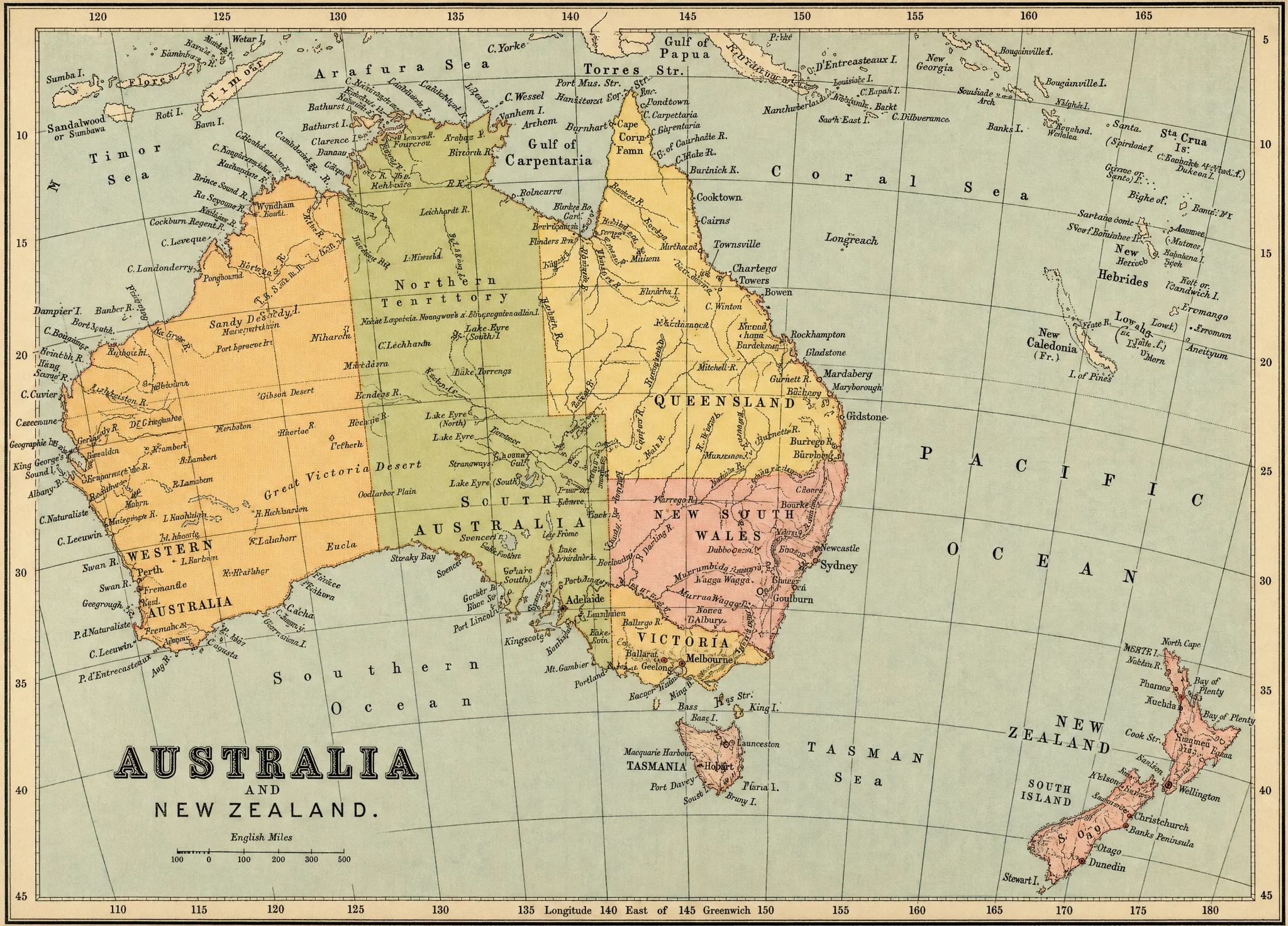
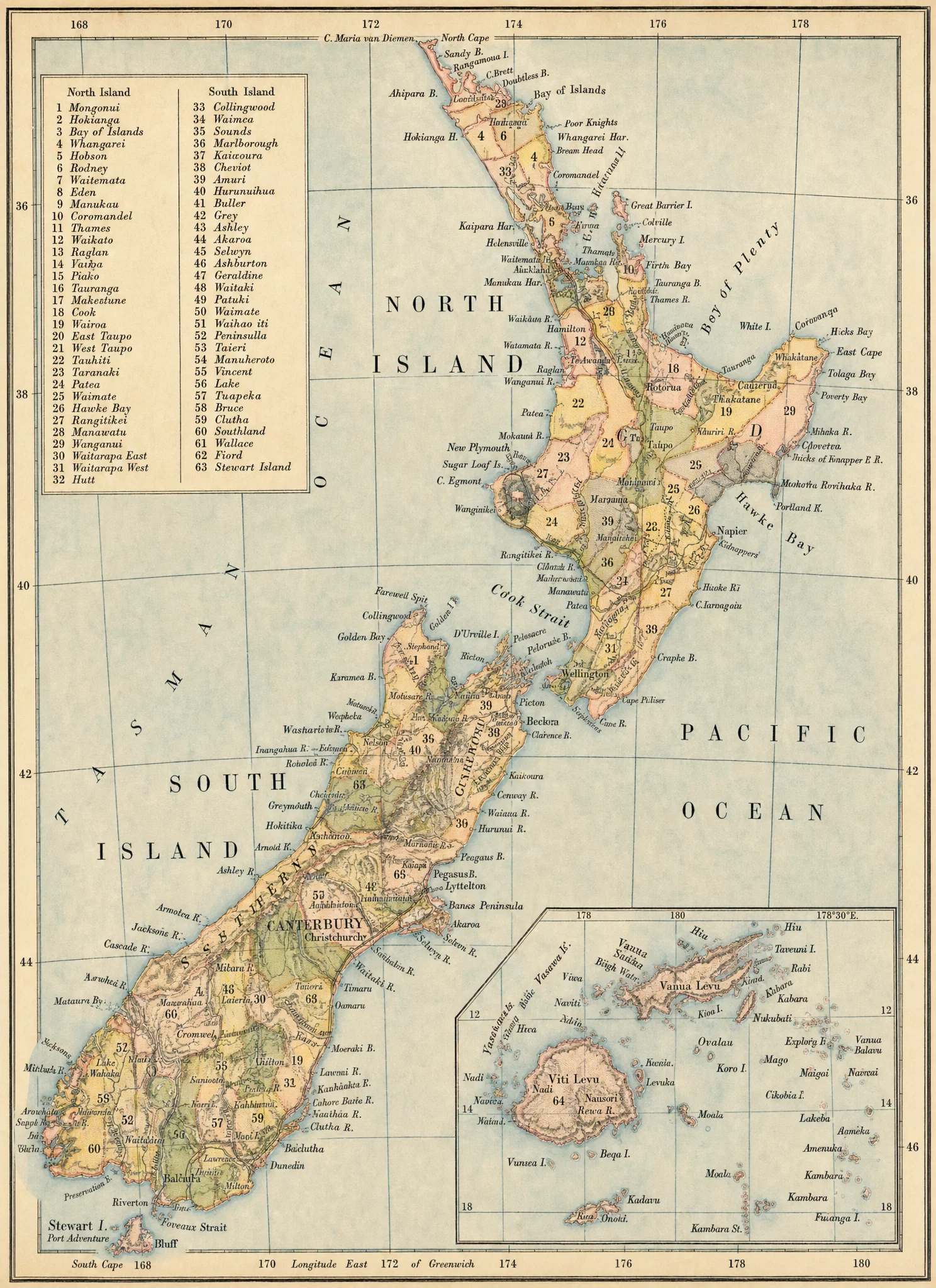
The Colony of New Zealand is one of the most interesting and prosperous Colonies in the British dominions. It consists of two large and several small islands lying in the Pacific Ocean, between the parallels 34° 15′ and 47° 30′ south latitude, and between the meridians 166° and 179° east longitude. They are about six thousand miles from San Francisco, and thirteen thousand miles from London, direct.
The total area is 104,403 square miles, forming an extent of country greater than that of England and Scotland put together. The North Island is five hundred miles in length, and varies from six miles to two hundred and fifty in width. The South Island is five hundred and fifty miles in length, and has an average breadth of one hundred and twenty miles. These two islands are separated from each other by Cook Strait, eighteen miles in width. It is said that the isthmus of Auckland, on the North Island, is one of the most remarkable volcanic districts on the earth. Within a radius of ten miles there are no less than sixty-three separate points103of eruption. About one hundred and sixty miles south, and in the center of the island, is the burning mountain, Tongariro, six thousand feet high, in constant action with occasional eruptions. There is a similar volcano on the White Island. Hot lakes, boiling springs, and hissing geysers,—numerous in what is called the Lake District,—all testify to the presence of the volcanic agency. Earthquakes have been felt since the formation of the Colony.
The most striking and important feature of New Zealand, is an extensive mountain range, which, interrupted by Cook Strait, runs throughout the whole length of the two islands, in the direction of southwest to northeast, from the South Cape to the East Cape. In the South Island the main range attains its grandest development. Its peaks, capped with snow, and decked with alpine glaciers, render it worthy of the name of Southern Alps. From its center rises Mount Cook, 13,200 feet above the level of the sea, almost as high as Mount Blanc.
Mount Egmont, in the North Island, is eight thousand feet high, and is always crowned with snow; and there are several other mountains from five to six thousand feet in height. Seven thousand five hundred feet is the snow line. On the North Island, the thermometer takes but a narrow range. The mean annual temperature is fifty-seven degrees, and that of the South Island, fifty-two degrees. The mean daily range is under twenty degrees, and the extreme range, thirty degrees. The nights are twelve degrees colder than the days. Farmers do not find it necessary to house their cattle in the winter.
Animal life is scarce in New Zealand. Besides two species of bats, a small rat was the only mammal before Cook, the navigator, introduced the pig. There are no snakes, nor any venomous reptiles, only a small black spider. Among the insect life, mosquitoes are numerous in the forests, and in swampy places, but are rarely troublesome in the settled districts. A small fly, called the sand fly, infests sandy ground. Harmless lizards are plentiful. Evergreen forests, tangled, somber, and silent, cover large tracts of the country.
The following statistics of New Zealand were published in 1880: “In 1850, at the end of the first decade, the population of New Zealand was 26,000; in 1860, 99,000; in 1870, 256,000. During each decade it has steadily increased. Of the 414,412 inhabitants in March, 1878, it was found that 108,175 were born in England and Wales; 47,949 in Scotland; 43,758 in Ireland; 16,991 in Australia; 174,126 in New Zealand, of British parents; 20,840 in other British possessions; 18,505 foreigners; and 9,401, origin not stated.” The census of 1881 gives the population as 489,933, and it is estimated that at the end of 1883 the population exceeded 584,000. America cannot boast of more freedom from caste than does New Zealand.
Public roads are comparatively few, travel by land being performed principally on horseback, except in or near the cities and larger towns. Reference to the map will show that nearly all the cities are on the sea-coast, or very near it, and consequently the principal means of conveyance is by water. Auckland with its suburbs, on the northeastern coast of North Island, is a city of about forty-five thousand inhabitants. It is the headquarters of navigation for the various islands of the Pacific Ocean. Wellington, situated at the southern point of North Island, is a city of about the same size, and is the capital of New Zealand. Dunedin, on the southeast of South Island, contains about forty thousand inhabitants. This city is sometimes called the Chicago of New Zealand. Here are the headquarters of the New Zealand Union Steam-ship Company. The buildings of this city in particular compare well in beauty and elegance with those of the principal American104cities. Christchurch, on the northwest of the same island, is a city of about twenty-five thousand inhabitants. Both of these cities are important commercial centers in the coasting trade with Australia and other parts. Invercargill, which is composed largely of the Scotch element, is also a city of importance. These, with many smaller cities situated near the coast, containing from three to twelve thousand inhabitants, communicate with each other principally by water. Some are connected by railway. The New Zealand Union Steam-ship Company run a line of vessels from Auckland, around the coast of New Zealand, and across to Australia. It requires two weeks to go from Auckland to Melbourne, for these vessels stop at the principal ports during the day, and run from port to port during the night.
About the middle of October, 1885, I went to New Zealand to visit the principal cities there, for the purpose of securing agents for the Bible Echo, intending to return to Australia in time to assist in getting out the January number. We had decided that our paper must be a sixteen-page monthly. At first we thought that a smaller sheet would do; but after issuing a four-page trial number, we were satisfied that a larger paper was necessary. Our present views are that our paper is none too large, and that it ought to be issued oftener.
On reaching Auckland, I found many opportunities to send the truth to the different islands of the Pacific. There are regular lines of steamers from Auckland to the Friendly, the Society, and the Fiji Islands. Nearly every captain and under-officer on these vessels was ready to co-operate with us in placing packages of our publications in the hands of proper persons to distribute on the different islands. All these islands are settled more or less by Europeans; but the prospect that the truth will meet with much success in these islands is not very flattering. The people are not friendly to foreign missionaries, and the natives are mostly of a low order.
At Auckland we found a denomination called Christians, who correspond very nearly to the first-day Adventists of America. These had a class, or school, in which different points of doctrine were discussed every Thursday night. Each member of the class is permitted to introduce any subject he chooses. I was invited to present those doctrines wherein we differed from them. This was done freely, and it resulted in a discussion on the Sabbath question with their pastor, Mr Aldrich. They held another class of the same nature at Mount Eden, one of the suburbs of Auckland. Here we introduced the personal and visible coming of Christ. As the result of this discussion, a number began to keep the Sabbath of the fourth commandment.
One of the first to embrace the truth in Auckland was Bro. Edward Hare. He and his wife commenced to keep the Sabbath before I had been with them three weeks. Since he fully committed himself to the truth, he has given all his time to the selling of our publications, and to distributing them on board of vessels; and his wife has opened correspondence with various persons on the different islands. They both devote a large share of their time to personal missionary work and to correspondence. He is a general agent for our works, and has in his employ a number of other agents. From the commission on the publications sold by agents, he nearly supports himself. Bro. Hare made his principal business that of selling “The Great Controversy,” Vol. IV., although he has sold “Thoughts on Daniel and the Revelation,” and other publications. Up to September of this year, he had disposed of about $2,000 worth of books. About five hundred copies of Vol. IV. have been sold in Auckland and vicinity.
In former years Bro. Hare had fitted himself for a missionary to the Maories,105the native New Zealanders, and he now has a great burden for them. After he saw the light upon the Sabbath, he was anxious that I should visit his father and mother, who resided in Kaeo, one hundred and sixty miles north of Auckland.
AUSTRALIA AND NEW ZEALAND.
NEW ZEALAND.
THE FIJI ISLANDS
(on the same scale as New Zealand)
It was the beautiful valley of Kaeo, that first received the Gospel. Mr. Marsden, the principal chaplain of New South Wales, had become greatly interested for the savages of New Zealand, and after much opposition, because the savages had become embittered against the whites, and had gone into cannibalism, he was permitted in 1814, to go and establish a mission among them. Forty-one years after the first convert in the Christian faith was baptized, Joseph Hare and his family moved to the place, and twenty-one years later, in this same valley, himself, wife, and other members of his family, were baptized, after embracing the Sabbath.
Agreeably to his son’s request, I visited Kaeo, and became much interested in Father Hare and his family. For twenty years he had been a school-master in the north of Ireland. By his present and his former marriage, and by the former marriage of his present wife, he has a family of twenty-four children. Sixteen of these are married and have children. Many of them are men of means, and hold honorable positions in society.
At the invitation of Father Hare, who was a local preacher for the Methodists, I occupied the pulpit the three Sundays while I was there. Father Hare and his son Robert, who also was a local preacher, afterward embraced the truth, and Robert, relinquishing all his former plans, sailed in less than one month for America, where he has been attending the Healdsburg College, and during the summer of 1886, labored acceptably with the tent. It was no small sacrifice for him to relinquish all his cherished plans for life, to fit himself to proclaim an unpopular truth. Later, another young man went to America to fit himself for the work of the ministry.
During this first visit at Kaeo, which continued over three Sabbaths and First-days, we held meetings in a hall almost every evening, and in the day-time we visited from house to house, holding Bible readings. As the result of this visit, two families took their stand for the truth; but their numbers were so few that they did not hold public meetings.
In January I returned to Melbourne, and on the way visited the various cities on the coast, in many of which we found good openings for the presentation of the truth. In many places there were those who had received our publications from America, and who were anxious to hear on the subjects of the Sabbath and the second coming of Christ.
The newspapers here are more liberal than those in Australia, and seem willing to publish reports of our work in America. The people believe in giving each denomination a fair chance, and they encourage those of other views to come into their community. But the religious leaders are as determined to monopolize the ground as they are anywhere else, and the opposition was as great in Auckland as in Australia; but it proceeded only from the churches. The newspapers generally sympathize with the new-comers.
The first of March, after a short stay in Australia, I returned to New Zealand on my way to America. I found the friends still holding firmly to the truths which they had received at the time of my first visit, and the interest to hear, instead of diminishing, had deepened and extended. At the same time the opposition had grown more fierce from those who had rejected the truth. Bro. Edward Hare had placed our publications, including a bound volume of the Signs, on nearly all the steamers sailing from Auckland. While on the steamer going from Kaeo, we could not find the volume of the Signs which had been placed upon the table; but by inquiry we learned that a gentleman who was going to a popular watering place had106become so interested in reading it that he was anxious to take it with him, and had obtained permission of the stewardess to do so. We found several persons from India who had seen our publications there, and who testified to the interest taken in them by the people in that country.
My second visit to Kaeo was one long to be remembered. Baptism had never been administered in that vicinity and the people entertained strange ideas concerning the dress to be worn by the candidates. I did not learn of this, however, until after our first baptism; but I saw clearly that there was something that hindered those from going forward in the ordinance who were thoroughly convinced that it was their duty. But at our first baptism the people saw that there was nothing improper in the ceremony. From this time it seemed that the Spirit of God triumphed over the powers of darkness in a most remarkable manner. Three were converted the night of the baptism, and three others took their stand for the truth within a few days. The second day after the baptism eight more were baptized, and the day I left I learned of several others who would have been baptized had I remained longer. Some who had felt that they never could keep the Sabbath on account of their business, then decided to do so. From correspondence we learn that since our visit to this place all have continued steadfast, and others have taken their stand. In September, 1886, including children and grandchildren, some of whom are very small, there were forty of Father Hare’s numerous family keeping the Sabbath.
It was on Tuesday at five o’clock P. M. that we met for our last baptism. We then celebrated the ordinances at the house of Father Hare, organized a church as far as we could, arranged for a Sabbath-school, and on Wednesday I left them, and they held their first public Sabbath meeting alone. Thus a number of this company were converted and baptized, and united with the newly organized church and Sabbath-school, who had not yet kept a Sabbath. But the evidence that God accepted the work was as conclusive as in cases of six months’ standing.
Our anxiety for the success of their first Sabbath meeting was not greater than theirs. On Monday, while at Auckland, I received the following telegram: “Services and Sabbath-school well attended. Isa. 12:1, 2.” “And in that day thou shalt say, O Lord, I will praise thee; though thou wast angry with me, thine anger is turned away, and thou comfortedst me. Behold, God is my salvation; I will trust, and not be afraid; for the Lord Jehovah is my strength and my song; he also is become my salvation.” We returned the following: “Telegram received. 1 Cor. 15:57, 58.” “But thanks be to God, which giveth us the victory through our Lord Jesus Christ. Therefore, my beloved brethren, be ye steadfast, unmovable, always abounding in the work of the Lord, forasmuch as ye know that your labor is not in vain in the Lord.” Since then we have received encouraging letters from them. They soon organized a course of Bible readings which they hold each night in the week except Sunday. They also undertook the task of carrying the truth to every family in that section of the country.
I know of no place where there was greater need of ministerial help than in the Colony of New Zealand. We sold over twenty pounds’ (about $100) worth of publications there, and received many subscriptions for the Bible Echo. The brethren use six hundred copies of the Echo per month in their missionary work, and are ready to support the work in that Colony, even if two ministers could be sent them. They also feel such anxiety for their children that they would gladly build a school-house and pay the expenses of a teacher from America, could107they thus obtain one that would teach Bible truth in connection with the sciences.
One sister who did the work for a family of nine or ten persons, including six children, the youngest but six years of age, became so much interested for them that she took one hour each day to teach them present truth. The oldest was baptized before I left.
One lady who took her stand for the truth in Kaeo did so reluctantly and with deep feeling, fearing great opposition from her mother whom she dearly loved. During the greater part of her life she had been a worthy member of the Methodist church. She requested me to visit her mother when I returned to Auckland. I had been in Auckland but a few hours, when a lady called to see me. To my surprise she was the mother of this lady in Kaeo who had embraced the Sabbath. She said that the Signs of the Times had fallen into her hands, and she had become interested in the doctrines it taught. One of our prophetic charts hung in the room where we were, and I briefly explained to her the symbols on it. She then said that when she was a girl she lived in the north of Ireland, and that in 1843 she there heard preaching on those very subjects from a chart similar to the one I had. She became so interested in the Advent doctrine at that time that her father forbade her attending the meetings, so she had heard nothing more on those subjects from that time to the present. This interview revived in her mind what she had heard forty-three years ago, and she was quite sure that we were right in our positions. She said that she would observe the Sabbath hereafter, and that she was interested to read further on the subjects of present truth.